-
1
Grind and Soak the Fruit
10 Mins active + overnight soak
Room temperature, about 21°C (70°F)
Rinse the prunes, raisins and currants briefly and drain. Working in batches, blitz the prunes, raisins, currants and glacé cherries in a food processor with the port wine, adding just enough liquid to let the blades turn, until you have a thick, smooth paste with no whole fruit left. Scrape it into a large bowl or jar, stir in 120 ml of the dark rum, cover tightly and leave at room temperature overnight — or for weeks in the fridge, topping up with a splash of rum now and then, the way Antiguan bakers do.
Grind the fruit, do not just chop it: the paste is what gives black cake its smooth, pudding-like crumb instead of a lumpy fruit cake.
Done when: A thick, dark paste that holds its shape on a spoon, with no whole fruit visible.
-
2
Make the Browning
5 Mins • Caramelising
Low heat — sugar caramelises at about 170°C (340°F)
If you are using store-bought browning, skip this step. Put 30 g of brown sugar in a small, heavy saucepan over low heat and stir constantly with a wooden spoon as it melts, then darkens to a deep mahogany — this takes about 3 minutes and it can turn from perfect to bitter in seconds, so watch it the whole time. The moment it is very dark, take it off the heat and stir in a spoon of port to stop the cooking. Let it cool completely before it goes anywhere near the batter.
Practise the browning once before baking day if you have never made it — burnt sugar that tastes bitter will spoil the whole cake, and it cannot be fixed afterwards.
Done when: A very dark, almost black syrup that smells of toffee, not smoke; cooled and pourable.
-
3
Cream the Butter, Sugar and Eggs
10 Mins • Beating
Room temperature, about 21°C (70°F)
Heat the oven to 135°C (275°F) and line a 23 cm (9 inch) round tin with parchment paper, letting the paper stand a little above the rim. Beat the softened butter and brown sugar together for about 5 minutes until pale and fluffy. Beat the eggs in a separate bowl with the lime zest, vanilla and almond essence, then add the egg mixture to the butter a little at a time, beating well after each addition so the batter does not split.
Butter and eggs must both be at room temperature — cold eggs straight from the fridge will curdle the creamed butter.
Done when: A pale, fluffy butter-sugar cream with the eggs fully beaten in and no curdled look.
-
4
Fold in the Fruit, Flour and Browning
5 Mins • Folding
Room temperature, about 21°C (70°F)
Sift the flour, baking powder, cinnamon, nutmeg and allspice together. Add the soaked fruit paste to the creamed butter in three parts, mixing gently, then add the flour in four parts, folding with a spatula until you no longer see dry flour. Stir in the molasses and the browning, a tablespoon at a time, until the batter is a deep, even brown-black. Scrape the batter into the lined tin and smooth the top.
Fold, do not beat, once the flour goes in — beating develops gluten and makes a tough, rubbery cake instead of a tender one.
Done when: A thick, dark batter, evenly coloured, that drops slowly from the spatula.
-
5
Bake Low and Slow
90 Mins • Baking
Oven 135°C (275°F)
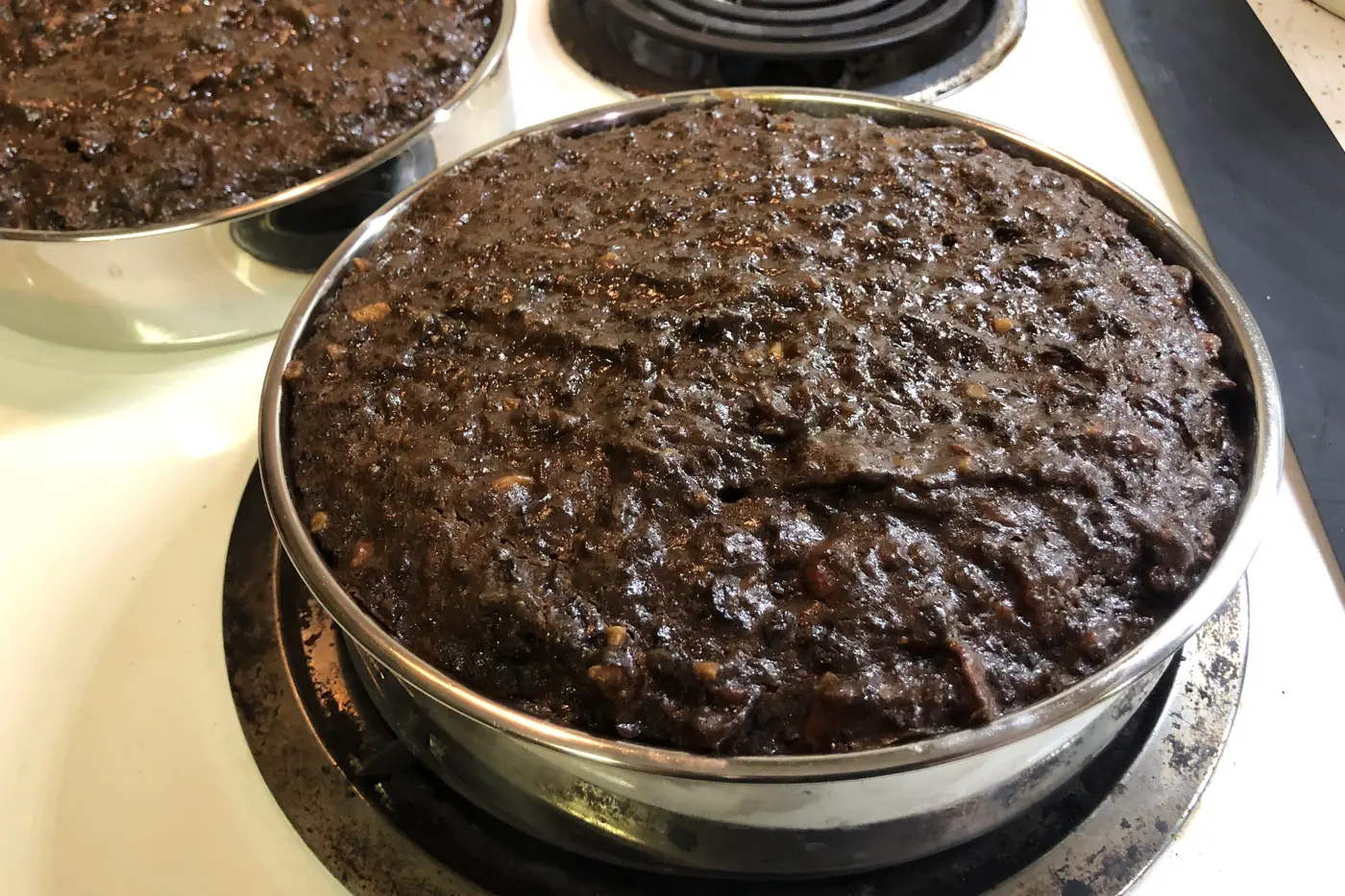
Bake at 135°C (275°F) for about 90 minutes. Do not open the oven for the first hour. The cake is done when a skewer pushed into the centre comes out clean and the top feels set but still a little soft — black cake should be moist and pudding-like inside, not dry. If the skewer shows wet batter, give it 10 more minutes and test again. The centre of the cake should reach about 95°C (200°F).
A low oven is the whole secret: at 150°C (300°F) or higher the top browns too fast and the middle stays raw. Trust the low temperature and the long bake.
Done when: Skewer comes out clean; top is set and dark; the cake has pulled very slightly away from the tin.
-
6
Brush with Rum and Rest
5 Mins • Finishing
Hot from the oven, about 135°C (275°F)
As soon as the cake comes out of the oven, prick the top all over with a skewer and brush the remaining 30 ml of dark rum over it, spreading it evenly with a pastry brush. Leave the cake in the tin for 20 minutes, then lift it out on its parchment and wrap it tightly in cling film while it is still just warm. Rest the cake for at least 3 days before slicing — the flavour deepens every day — and brush it with a little more rum every couple of days if you like.
Do not slice the cake on baking day: it will seem undercooked and crumbly when hot, and it firms up and tastes far better after its rest.
Done when: Cake wrapped tight, smelling of rum and spice, set aside to rest for at least 3 days.
 Antigua and Barbuda
1h 10m

 Spain

 Vietnam