-
1
Mix and Knead the Dough
15 Mins
Milk lukewarm, about 35°C (95°F)
Warm 200 ml of the milk to lukewarm, about 35°C (95°F), and whisk in the yeast with 1 tablespoon of the sugar. Leave it for 5 minutes until it foams. Tip the flour into a large bowl with the remaining dough sugar, the salt, the beaten eggs, half the vanilla and the lemon zest. Pour in the yeasty milk and mix to a shaggy dough, then knead on a clean surface for 8 minutes until smooth. Work in the soft butter a little at a time, kneading until the dough is soft, smooth and slightly tacky.
Add the butter only after the dough has come together — butter added too early coats the flour and the dough will not develop.
Done when: A soft, smooth dough that springs back slowly when poked.
-
2
First Rise
60 Mins
Warm spot, about 25°C (77°F)
Shape the dough into a ball, put it in a lightly oiled bowl, cover with a clean cloth and leave in a warm spot until doubled in size, about 1 hour.
A turned-off oven with the light on is the most reliable warm spot in a cool kitchen.
Done when: Dough doubled, airy, and holding a dent when poked gently.
-
3
Make the Pastry Cream
15 Mins
Simmer, about 95°C (200°F)
While the dough rises, make the pastry cream. Heat the remaining 160 ml of milk in a small pan until it just simmers. In a bowl, whisk the egg yolks with the 40 g of sugar, the cornstarch and the rest of the vanilla until pale. Pour the hot milk over the yolks in a thin stream, whisking all the time, then return the mixture to the pan and cook over medium heat, stirring constantly, for 2 to 3 minutes until thick enough to coat a spoon. Scrape into a bowl, press cling film directly onto the surface and cool.
The cling film on the surface stops a skin forming while the cream cools — do not skip it.
Done when: A thick, glossy cream that holds its shape on a spoon.
-
4
Shape the Assortment
20 Mins
No heat — room temperature, about 20°C (68°F)
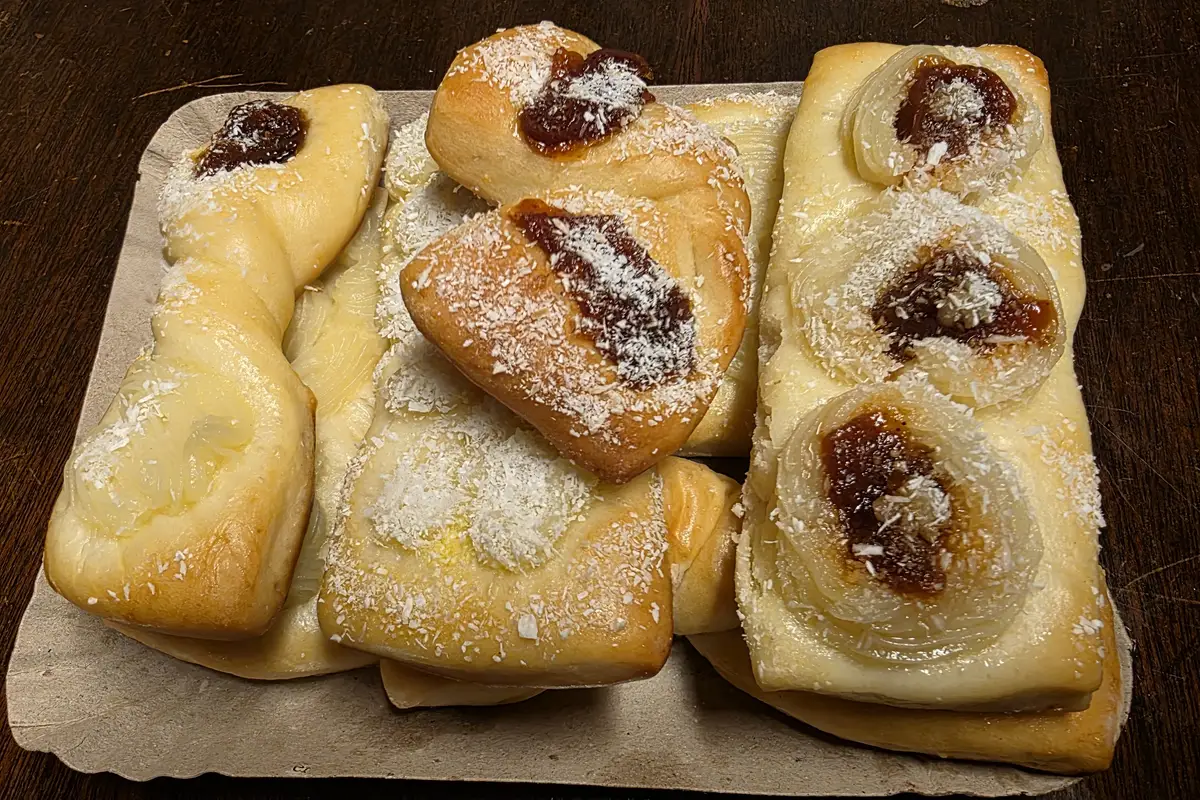
Knock the risen dough back gently and divide it into 16 equal pieces. Shape 6 into flat squares and press a cube of quince paste into the centre of each; shape 5 into rounds and spoon a dollop of the cooled pastry cream on top of each; shape the last 5 into rectangles, fold them loosely, and leave them plain for coconut. Set them well spaced on two lined baking trays.
Keep the pieces the same size so they bake in the same time — a small piece beside a large one will burn while the other is still pale.
Done when: 16 neat pieces — 6 with quince, 5 with cream, 5 plain — spaced on the trays.
-
5
Second Rise
30 Mins
Warm spot, about 25°C (77°F)
Cover the trays loosely with a clean cloth and leave the pastries in a warm spot until puffy and nearly doubled, about 30 minutes. Heat the oven to 180°C (350°F) while they rise.
Do not let the second rise go too far — over-proved pastries collapse in the oven instead of springing up.
Done when: Pastries puffy, soft to the touch, and almost touching their neighbours.
-
6
Bake and Glaze
20 Mins
180°C (350°F)
Bake for 18 to 20 minutes until deep golden and puffed. While they bake, simmer the remaining 60 g of sugar with 60 ml of water for 3 minutes until slightly syrupy. As soon as the pastries come out of the oven, brush them generously with the warm syrup until they shine, then scatter the desiccated coconut over the top while the glaze is still wet.
Brush the glaze on while the pastries are hot — cold pastry will not take the shine, and the coconut will not stick.
Done when: Deep golden, puffed, glossy with syrup, coconut clinging to the tops.
auto_awesome Finishing Touches & Plating
Cool the facturas for 10 minutes on the tray, then eat them warm, while the glaze is still slightly sticky — that is how they are served in every Buenos Aires confitería.

 Argentina
1h 25m