
Curated recipes from 193 countries  •  New seasonal Mediterranean issue out now

Overview

Argentine Fruit Salad

Ensalada de Frutas, Argentine Fruit Cup, Ensalada de Fruta

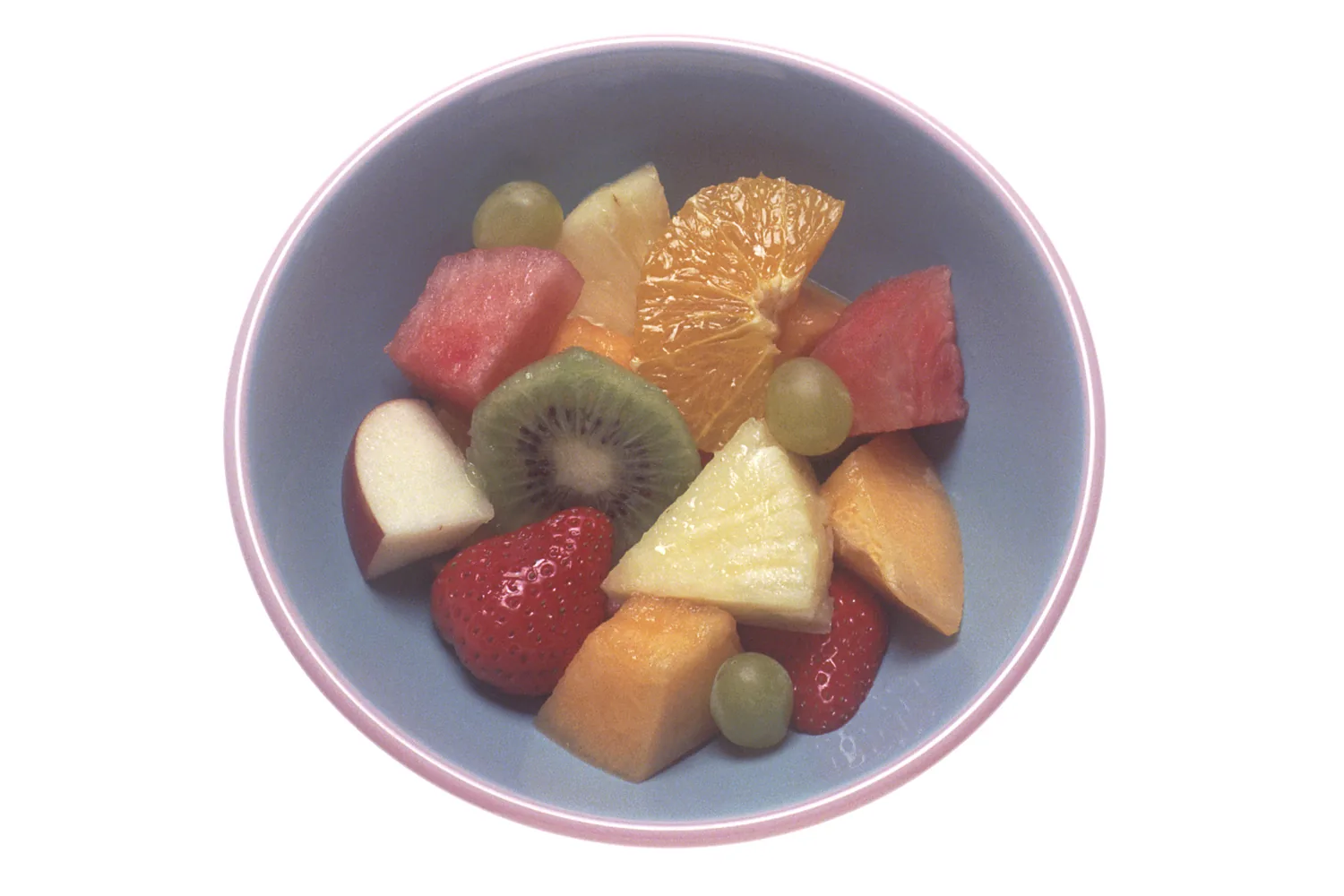
This argentine fruit salad recipe makes the classic ensalada de frutas: banana, apple, orange, peach, strawberry, kiwi, pineapple and grapes, cut small and left to swim in ice-cold orange juice with lemon and a little sugar. One serving is about 299 g.

Ensalada de frutas is the fruit salad Argentina grew up on: a bowl of chopped seasonal fruit left to swim in ice-cold juice, served at family asados, summer afternoons and celebrations, often with a scoop of ice cream. The Argentine version is famously juicy — the fruit is cut small and served with plenty of liquid to spoon up, sometimes with soda or sparkling wine added for grown-ups. It is a dish of the country’s European immigrant tables, where a big bowl of fruit at the end of a long meal is both dessert and refreshment.

Pairs well with: Vanilla ice cream, whipped cream, or a glass of sparkling water

Provenance

Argentina flag Argentina

Argentine Family Classic

Latin America & Caribbean

Time Dedication

25m

25m prep • 0m cook

Batch Yield

6 Servings

192 kcal per serving

1 serving ≈ 299 g

Technical Skill

Easy

Easy (No-Cook)

Meal Timing & Digestive Fit

Breakfast

Not Advised

Lunch

Inappropriate

Dinner

Inappropriate

Snack & Tea

Ideal Light Bite

Occasions: Summer afternoons, family asados, birthdays, Christmas and New Year tables Cost: Low — about $1.50 per serving at home
A blue bowl of colourful mixed fruit salad with kiwi, strawberry, pineapple, orange and grapes on a white background

Argentine Family Classic

Photo: Renee Comet (Photographer), Public domain, via Wikimedia Commons

The Heritage Formulary

Measured Ingredients

Estimated cost: Low — about $1.50 per serving at home (USD)

A good Argentine fruit salad is ice-cold and juicy, with the fruit cut small and the juice cold enough to spoon up like a drink.

Execution Methodology & Culinary Technique

Step-by-Step Cooking Guide

Active 25m
P

Prep Stage: Fruit, Juice & Chilling

25 Mins • Chopping & Mixing

Squeeze the lemon and orange juice first, then cut the firm fruit — apple, orange, peach, pineapple and kiwi — into small, even pieces and drop them straight into the lemon juice so they never brown. The soft fruit goes in last, then the juice and sugar, and the whole bowl goes into the fridge to get ice-cold.

Maestro Tip: Cut everything small and even: small pieces soak up the juice and are easy to eat with a spoon.

  1. 1

    Squeeze the Citrus

    5 Mins Room temperature

    Squeeze the lemon juice into a large bowl and the orange juice into a jug. Keep the bowl of lemon juice ready beside your chopping board.

    Lemon juice is your anti-browning insurance — have it ready before you cut a single piece of fruit.

    Done when: A bowl of lemon juice and a jug of orange juice, ready to go.

  2. 2

    Cut the Firm Fruit

    10 Mins Room temperature

    Dice the apple, orange, peach, pineapple and kiwi into small, even pieces, dropping each batch into the lemon juice and tossing as you go. Halve the grapes and add them too.

    Cut the fruit over the bowl so every drop of juice lands in the salad, not on the board.

    Done when: Small, even pieces of firm fruit, glossy with lemon juice.

  3. 3

    Add the Soft Fruit

    5 Mins Room temperature

    Slice the bananas last, quarter the strawberries, and fold them gently into the bowl with the rest of the fruit. Toss once, gently, so the soft fruit keeps its shape.

    Bananas brown within minutes, so they always go in last and just before the juice.

    Done when: All the fruit in the bowl, bananas still pale and strawberries bright red.

  4. 4

    Pour Over the Juice and Sugar

    5 Mins Room temperature

    Stir the sugar into the orange juice until it dissolves, then pour it all over the fruit. Stir gently once more so every piece is coated and sitting in juice.

    The salad should be juicy enough to spoon up like a drink — that is the Argentine way.

    Done when: Fruit swimming in cold orange juice, with liquid to spare.

  5. 5

    Chill and Serve

    30 Mins Fridge temperature, about 4°C (40°F)

    Cover the bowl and chill for at least 30 minutes until ice-cold. The 30 minutes of chilling is passive time on top of the 25 minutes of preparation. Serve in bowls or glasses with plenty of juice spooned over, and scatter with torn mint.

    Serve it as cold as you can: a warm fruit salad is a sad one.

    Done when: Ice-cold fruit in plenty of juice, mint scattered on top.

Finishing Touches & Plating

Serve ice-cold in bowls or glasses with plenty of the juice spooned over, and eat it the same day while the fruit is still bright and firm.

Nutritional Physiology & Benefits

Nutrition

Energy

192

kcal / serving

Protein

2g

Complete AA

Carbs

49g

Complex

Fats

1g

Healthy

Per serving (6 servings · 1 serving ≈ 299 g)
Energy192 kcal
Protein2 g
Carbohydrates49 g
Fat1 g
Fibre5.6 g
Sugar37.2 g
Sodium3 mg
Per 100g
Energy64 kcal
Protein0.8 g
Carbohydrates16.3 g
Fat0.2 g
Fibre1.9 g
Sugar12.4 g
Sodium1 mg

Nutrition values are estimated — calculated from USDA FoodData Central values for the listed ingredients.

Vitamins & minerals: Oranges, kiwi and strawberries provide vitamin C; bananas add potassium and vitamin B6, and pineapple adds manganese. All nutrition values are estimated.

Eight Fruits, No Cooking

Eight different fruits in one bowl, and not a single minute of cooking — just chopping and chilling.

Vitamin C in Every Spoonful

Oranges, kiwi, strawberries and pineapple make this one of the easiest ways to get a big dose of vitamin C.

25 Minutes, One Bowl

Twenty-five minutes of chopping, one bowl to wash, and the fridge does the rest.

Food Pairings

What to Eat With

To optimize nutrient absorption and elevate the sensory depth, pair with these authentic accompaniments:

More Pairings

Vanilla Ice Cream

A scoop of vanilla ice cream melting into the cold juice is how Argentine families most often serve it.

Whipped Cream

A cloud of lightly whipped cream on top turns the fruit bowl into a proper dessert.

Drinks

Sparkling Water

Ice-cold sparkling water beside the bowl is refreshing and keeps the meal light.

Sauces

Dulce de Leche

A spoonful of dulce de leche drizzled over the fruit adds a caramel note that Argentines love.

Full Menus

Full Menu: Asado, Salad & Ice Cream

Fruit salad with vanilla ice cream after grilled meats at an asado, with sparkling water to drink.

Complete menu

Argentine fruit salad after grilled meats at an asado, with vanilla ice cream and sparkling water.

Digestive Guardrails

What NOT to Combine

To prevent digestive distress, sluggishness, or palate clash, avoid pairing the dish with these elements:

Cutting the Banana First

Banana cut first sits browning on the board while you chop everything else, and the whole bowl looks tired. Cut bananas last, straight into the lemon juice. This is general food information, not medical advice.

Leaving It Overnight

Left overnight, the fruit goes soft, the juice turns cloudy and the flavours flatten — and cut fruit kept too long can spoil. Make it the day you eat it and finish it within hours. This is general food information, not medical advice.

Using Unripe or Overripe Fruit

Unripe fruit stays hard and sour no matter how long it sits in juice, and overripe fruit collapses into mush. Choose fruit that is ripe but still firm. This is general food information, not medical advice.

General information only, not medical advice — consult a doctor for personal dietary decisions.

Who Should Eat It

Who Should Eat

  • General adultsA refreshing, naturally sweet snack for most adults; 192 calories a serving.
  • ChildrenChildren love the colours and the sweet juice; cut the pieces small and serve it ice-cold.
  • ElderlySoft, easy to chew and easy to digest; serve a smaller portion if the citrus feels sharp.
  • Pregnant womenFresh washed fruit and juice are fine; wash every piece well and eat it freshly made. Ask your clinician if unsure.
  • Breastfeeding womenA hydrating, vitamin-rich snack; the citrus is gentle for most people.
  • AthletesAbout 49 g of carbohydrate per serving for quick energy after training, with plenty of fluid.
  • Weight gainAt 192 calories a serving, this is a light snack; add ice cream or dulce de leche to make it bigger.
  • Weight lossKeep to one serving and skip the ice cream — the fruit and juice are filling for very few calories.

Health Conditions — Adjust or Avoid

Conditions

  • DiabetesAbout 49 g of carbohydrate and 37 g of sugar per serving from fruit and added sugar; keep the portion as stated and skip extra sugar. Ask your clinician about portions.
  • High blood pressureSodium is only about 3 mg per serving, so this is one of the lowest-salt desserts you can serve. Ask your clinician about portions.
  • Kidney diseaseBananas and oranges are high in potassium, so keep the portion as stated and do not eat it every day. Ask your clinician.
  • GoutFruit is low in purines, but the fructose in sweet fruit can raise uric acid if eaten in large amounts; keep to one serving. Ask your clinician.
  • Stomach issuesCitrus juice and raw fruit can sting a sensitive stomach; eat a small portion and skip the extra lemon. Ask your clinician if unsure.
  • Cardiovascular diseaseNo fat and almost no sodium, with fibre from eight fruits — a heart-friendly dessert as written. Ask your clinician about portions.
  • Fatty liverThe fruit sugars add up, so keep to one serving and leave out the added sugar if your clinician advises it. Ask your clinician about portions.
  • Food allergiesContains strawberry and kiwi, which some people react to, and no gluten, egg, dairy or nuts as written. Ask your clinician if unsure.
  • Special therapeutic dietsVegan and gluten-free as written. For a lower-sugar version, leave out the added sugar and use more orange juice; ask your clinician.

If you have a medical condition, consult your doctor before changing your diet.

Storage & Use

Storage & Use

How to store
Keep covered in a sealed container in the fridge, with the fruit sitting in its juice.
In the fridge
Up to 1 day at 4°C (40°F) or below; best within a few hours of making it.
In the freezer
Up to 1 month as frozen fruit for smoothies, though the texture softens completely.
How to reheat
Do not reheat — this salad is served ice-cold.
Freezing recommended
No — it is best eaten fresh and cold the day it is made.
Signs it has spoiled
Fizzy or sour smell, slimy fruit, or cloudy, fermenting juice — throw it away.

More recipes to explore

Golden baked Argentine beef empanadas with crimped edges on a plate Argentina flag Argentina 1h 25m
Lunch •Buenos Aires Heritage

Argentine Empanadas

Argentine empanadas are half-moon pastries of short, flaky wheat pastry — no yeast, no puff — folded over a savoury filling of seasoned ground beef, onion, hard-boiled egg, green olives and a few raisins, then sealed with the classic rope crimp called the repulgue and baked until deep gold. This is the beef empanada de carne found in bakeries and rotisseries across Buenos Aires. One serving (two empanadas) is about 260 g.

Hearty & Satisfying

Golden baked pastry wrapped around spiced beef, olive and egg — the hand-held lunch Argentina runs on.

Pairs Well With
Chimichurri & a simple green salad
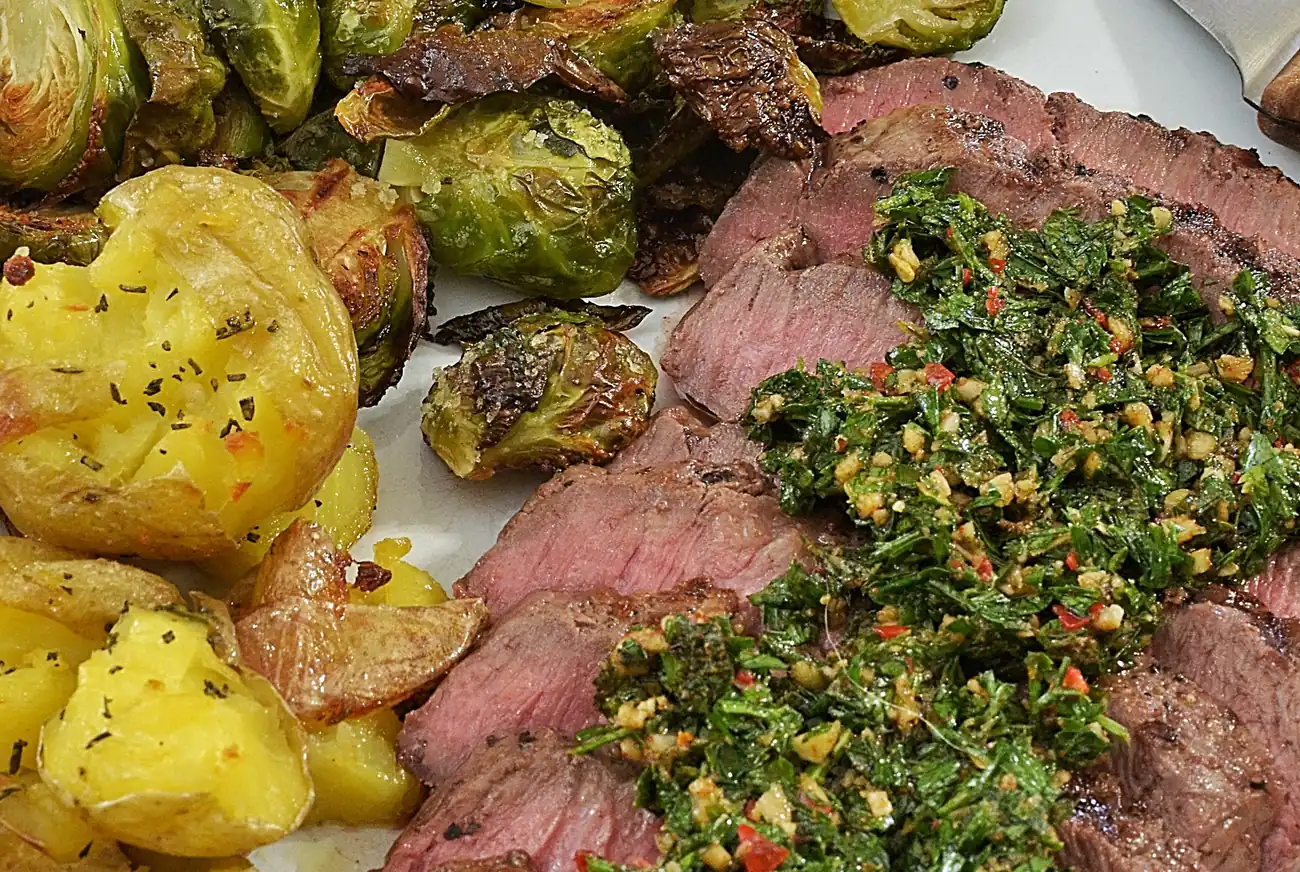
Sliced flat iron steak topped with green chimichurri on a plate Argentina flag Argentina 32m
Dinner •Pampas Asado Heritage

Chimichurri Steak

Chimichurri steak is the centrepiece of the Argentine asado: a thick sirloin grilled over high heat until charred outside and juicy inside, rested, sliced, and served with chimichurri — the raw sauce of parsley, garlic, oregano, red wine vinegar and olive oil that Argentina puts on almost everything grilled. The sauce is made first so its flavours can meld while the steak cooks. One serving is about 215 g.

High-Protein & Satisfying

A thick grilled sirloin, rested and sliced, drowned in bright garlicky chimichurri — the heart of the Argentine asado.

Pairs Well With
Roasted potatoes & grilled vegetables
High Protein
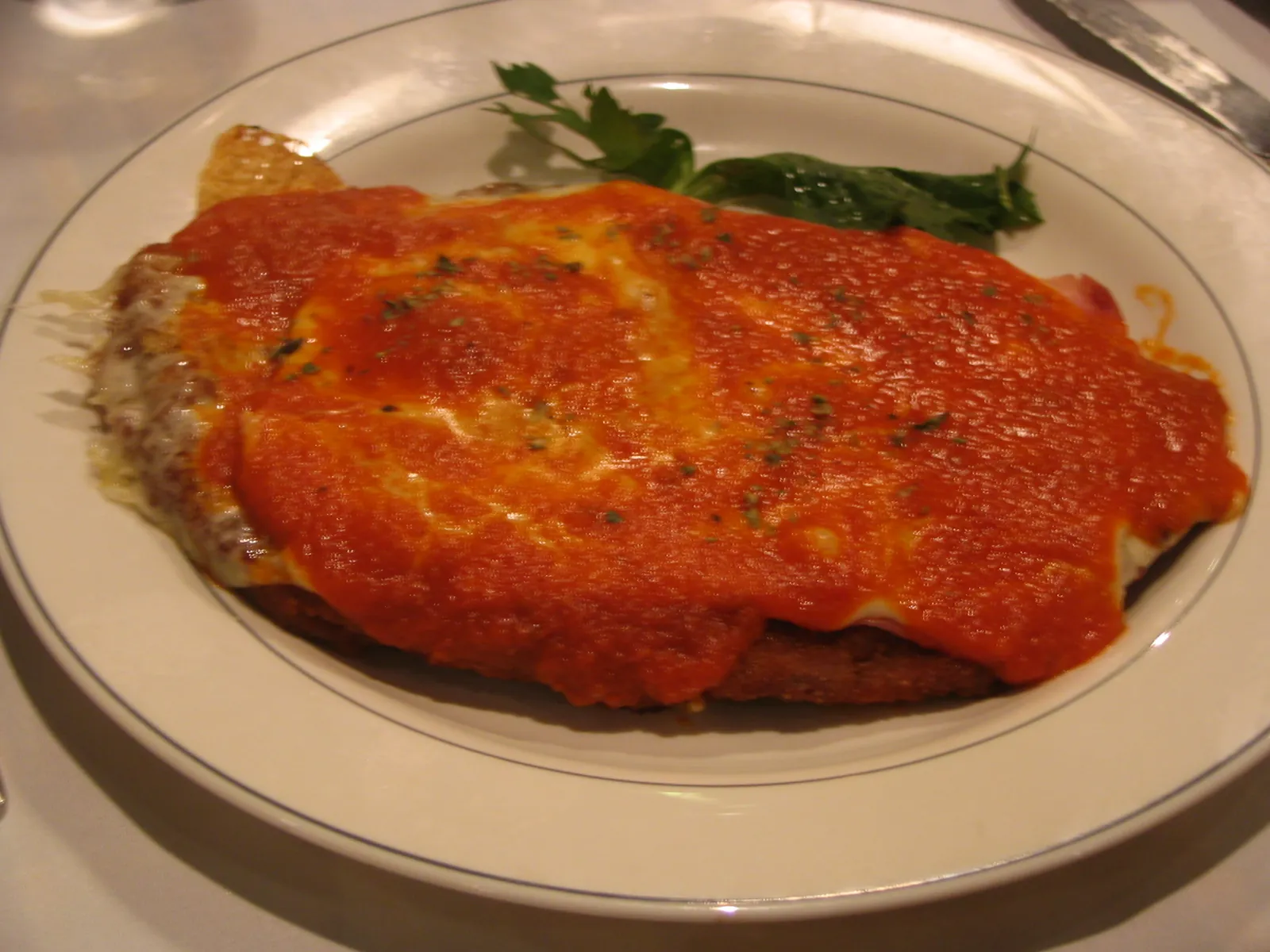
Breaded milanesa steak topped with tomato sauce and melted cheese Argentina flag Argentina 45m
Dinner •Buenos Aires Heritage

Milanesa a la Napolitana

Milanesa a la napolitana starts as a milanesa — a thin beef steak pounded flat, dredged in flour and egg, coated in breadcrumbs and fried until crisp — and then becomes something else entirely: topped with tomato sauce, a slice of ham and a blanket of mozzarella, it goes back into the oven until the cheese bubbles. It is the dish Argentine families order at the neighbourhood bodegon, always with French fries. One serving is about 350 g, before the fries.

Comforting & Satisfying

A crisp breaded steak, fried golden, then finished in the oven under tomato sauce, ham and bubbling mozzarella — Argentina's favourite comfort plate.

Pairs Well With
French fries & a green salad
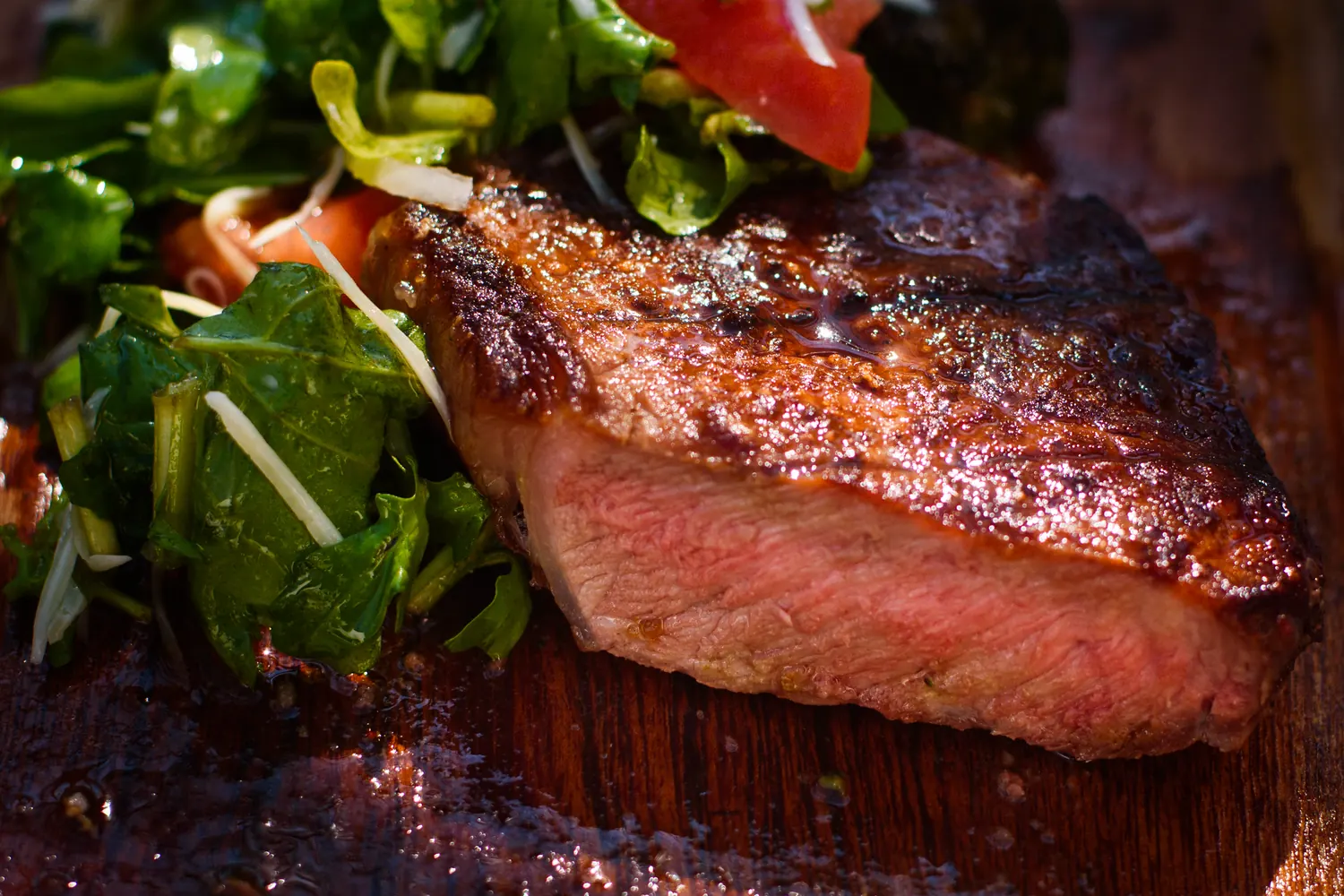
A grilled bife de chorizo steak, pink inside, with green salad on a wooden board Argentina flag Argentina 2h 30m
Dinner •Buenos Aires Parrilla Heritage

Argentine Asado

This argentine asado recipe is the full Sunday parrillada: tira de asado, vacio, entrana and bife de chorizo, plus chorizo, morcilla, mollejas and chinchulines, all cooked slowly over quebracho charcoal embers and seasoned with nothing but coarse salt. It opens with provoleta, grilled provolone with oregano, and the meat is served piece by piece as each cut is ready, with chimichurri and salsa criolla on the table. One serving is about 460 g.

High-Protein & Satisfying

A slow mixed grill of beef cuts, chorizo, morcilla and achuras over quebracho embers, opened with grilled provoleta and served with chimichurri and salsa criolla.

Pairs Well With
Chimichurri, salsa criolla & Malbec
High Protein

The Dinner Gazette

Never wonder what’s for dinner again

One email a week with easy dinner ideas from around the world — ingredients, steps and nutrition, tested in our kitchen first.

Delivered every Thursday morning. Unsubscribe anytime.