Curated recipes from 193 countries  •  New seasonal Mediterranean issue out now

Overview

Argentine Medialunas

Medialunas de Manteca, Argentine Sweet Croissants

This argentine medialunas recipe bakes 12 golden, honey-glazed crescents from an egg-enriched dough laminated with butter, softer and sweeter than a French croissant. One serving is about 221 g (two medialunas), best eaten warm with coffee or mate.

Medialunas travelled to the Río de la Plata with European bakers in the 19th century, when French-style croissants met the sweet tooth of Buenos Aires. Argentine bakers made the pastry smaller, enriched the dough with egg, milk and honey, and brushed the baked crescents with a sugar syrup glaze, creating a softer, sweeter pastry that is now a symbol of the porteño café. Two kinds are sold in every confitería: medialunas de manteca, made with butter like this recipe, and the flatter, flakier medialunas de grasa, made with beef fat.

Pairs well with: Hot coffee with milk or yerba mate, plus a glass of fresh orange juice.

Provenance

Argentina flag Argentina

Buenos Aires Heritage

Latin America & Caribbean

Time Dedication

4h 20m

240m prep • 20m cook

Batch Yield

6 Servings

783 kcal per serving

1 serving ≈ 221 g

Technical Skill

Advanced

Hard (Laminated Dough)

Meal Timing & Digestive Fit

Breakfast

Prime Morning Fit

Lunch

Inappropriate

Dinner

Inappropriate

Snack & Tea

Inappropriate

Occasions: Slow weekend breakfasts, café-style mornings, brunch with friends, afternoon tea Cost: Low — about $1–2 per serving at home
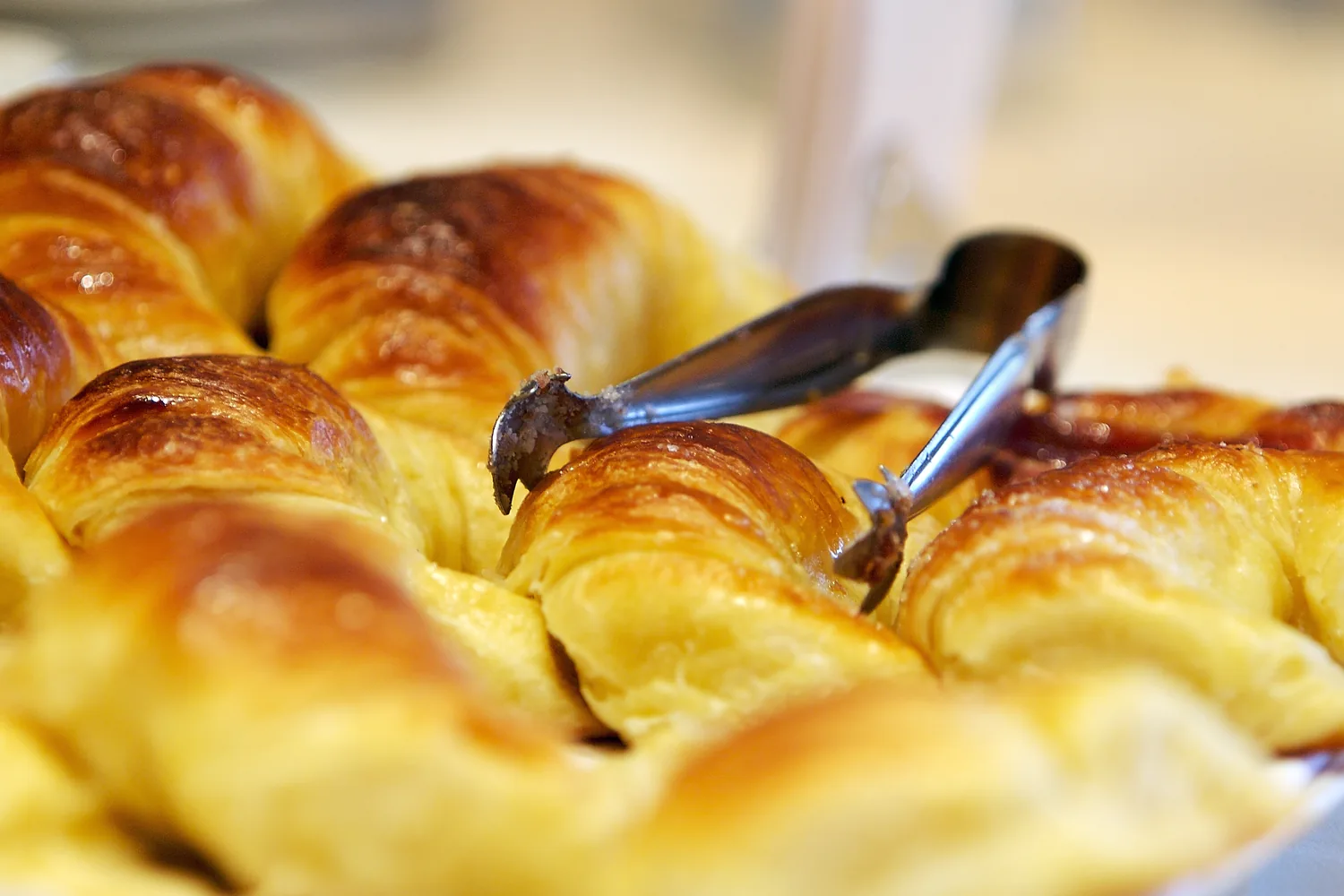
Golden Argentine medialunas, glossy sweet croissants, piled in a Buenos Aires bakery

Buenos Aires Heritage

Photo: David, CC BY 2.0, via Wikimedia Commons

The Heritage Formulary

Measured Ingredients

Estimated cost: Low — about $1–2 per serving at home (USD)

Made the classic de manteca way: an egg-enriched dough, a butter block folded in three times, crescent shaping, and a hot sugar-syrup glaze.

Execution Methodology & Culinary Technique

Step-by-Step Cooking Guide

Active 4h 20m
P

Prep Stage: Mix, Rise, Laminate & Shape

240 Mins • Mixing, Rising, Laminating & Shaping

Mix the enriched dough with milk, egg, sugar, honey and yeast, then let it rise for 1 hour. Beat the cold butter with 25 g flour into a flat square, enclose it in the dough, and roll and fold three times with 30-minute chills in between. Roll the dough thin, cut triangles, roll them into crescents, and proof for 45 minutes before baking.

Maestro Tip: Keep everything cold during lamination — if the butter softens and leaks, chill the dough for 30 minutes before continuing, or the layers will melt away.

  1. 1

    Mix the Enriched Dough

    15 Mins Warm milk 40°C (105°F)

    Warm 300 ml milk to about 40°C (105°F), stir in the honey and yeast, and leave 10 minutes until foamy. Mix 500 g flour with the sugar and salt, add the yeasted milk, 1 egg, the vanilla and the lemon zest, and knead for 8–10 minutes until smooth and slightly tacky. Knead in the 20 g softened butter until the dough is soft and elastic.

    Milk hotter than 46°C (115°F) will kill the yeast — it should feel warm on your wrist, not hot.

    Done when: A smooth dough that springs back slowly when poked.

  2. 2

    First Rise

    60 Mins Warm spot, about 25°C (77°F)

    Shape the dough into a ball, place it in a lightly oiled bowl, cover, and leave in a warm spot for about 1 hour until doubled in size. While it rises, beat the 225 g cold butter with the 25 g flour into a flat square about 15 cm across, wrap it, and chill it.

    A turned-off oven with the light on is a perfect warm spot for rising dough.

    Done when: Doubled in size; a poked dent stays instead of springing back.

  3. 3

    Laminate the Butter Block

    30 Mins Fridge 4°C (40°F)

    Roll the risen dough into a square, place the cold butter square in the centre, and fold the dough over it like an envelope, sealing the edges. Roll the packet into a long rectangle, fold it in thirds like a letter, wrap, and chill for 30 minutes.

    Roll gently and evenly — pressing too hard squeezes the butter out of the edges and ruins the layers.

    Done when: A neat folded rectangle with no butter leaking from the seams.

  4. 4

    Roll, Fold and Chill Again

    20 Mins + 60 Mins Chill Fridge 4°C (40°F)

    Repeat the roll-and-fold twice more, chilling 30 minutes between folds, for three folds in total. After the last fold, chill the dough for a final 30 minutes so it is firm and easy to cut.

    Always roll away from the centre, never back and forth, to keep the butter layers even.

    Done when: Dough is firm, cold, and holds its shape when cut.

  5. 5

    Shape the Crescents

    20 Mins Room temperature

    Roll the dough into a rectangle about 3 mm thick, then cut it into long triangles about 8 cm wide at the base. Roll each triangle up tightly from the wide end to the point, curve the ends inwards to make a crescent, and place seam-side down on lined baking trays.

    Stretch the triangle base slightly as you roll so the crescent is plump in the middle and tapered at the tips.

    Done when: Twelve neat crescents, evenly spaced so they can puff without touching.

  6. 6

    Final Proof and Egg Wash

    45 Mins Warm spot, about 25°C (77°F)

    Cover the trays loosely and proof for about 45 minutes until the crescents are puffy and almost doubled. Heat the oven to 190°C (375°F). Beat the second egg with 15 ml milk and brush it gently over the tops.

    Brush lightly — a puddle of egg wash in the folds will glue the layers together.

    Done when: Puffy, wobbly crescents with visible layers at the edges.

  7. 7

    Bake and Glaze

    20 Mins Oven 190°C (375°F)

    Bake for 18–20 minutes until deep golden brown and puffed. While they bake, simmer 80 g sugar with 100 ml water for 3–4 minutes until slightly syrupy. As soon as the medialunas come out of the oven, brush them generously with the warm syrup until they shine.

    Glaze while the pastries are still hot — the syrup soaks in and sets to a sticky shine instead of sitting on top.

    Done when: Deep golden, crisp outside, soft inside, with a sticky sweet glaze.

Finishing Touches & Plating

Cool the medialunas for 10 minutes on the tray, then eat them warm while the glaze is still slightly sticky — that is how they are served in every Buenos Aires café.

Nutritional Physiology & Benefits

Nutrition

Energy

783

kcal / serving

Protein

14g

Complete AA

Carbs

98g

Complex

Fats

37g

Healthy

Per serving (6 servings · 1 serving ≈ 221 g)
Energy783 kcal
Protein14 g
Carbohydrates98 g
Fat37 g
Fibre2.9 g
Sugar31.0 g
Sodium700 mg
Per 100g
Energy355 kcal
Protein6.3 g
Carbohydrates44.5 g
Fat16.9 g
Fibre1.3 g
Sugar14 g
Sodium317 mg

Nutrition values are estimated — calculated from USDA FoodData Central values for the listed ingredients.

Vitamins & minerals: Milk, eggs and butter supply calcium, vitamin A and B vitamins, while the enriched flour adds iron and B vitamins.

About 783 kcal per Serving of Two

Two medialunas with coffee make a substantial breakfast, with about 13.8 g of protein from the milk, eggs and flour to carry you to lunch.

Calcium from Milk and Butter

The milk and butter in the dough supply calcium, which is part of a normal diet for bones and teeth.

Made from Simple Pantry Ingredients

Flour, milk, eggs, butter, sugar and yeast — nothing artificial, and you control the sweetness of the glaze.

Food Pairings

What to Eat With

To optimize nutrient absorption and elevate the sensory depth, pair with these authentic accompaniments:

Drinks

Coffee with Milk

The classic partner: hot milky coffee softens the sweet glaze and balances the buttery pastry.

Yerba Mate

Bitter mate is the traditional Argentine counterpoint to a sweet medialuna, and the two are made for each other at breakfast.

Fresh Orange Juice

A cold glass of orange juice cuts through the butter and refreshes the palate between bites.

More Pairings

Dulce de Leche

Split a warm medialuna and spread it with dulce de leche for the full confitería treatment — sweet on sweet, the Argentine way.

Complete menu

Serve two warm medialunas with a café con leche and fresh orange juice for a classic Buenos Aires breakfast, then a light fruit salad later in the morning.

Digestive Guardrails

What NOT to Combine

To prevent digestive distress, sluggishness, or palate clash, avoid pairing the dish with these elements:

Eating Many at Once on an Empty Stomach

Medialunas are rich in butter and sugar, so several on an empty stomach can feel heavy and may upset a sensitive stomach. One or two with coffee is the usual serving. This is general food information, not medical advice.

Skipping the Chill Between Folds

Laminating warm dough melts the butter into the dough instead of keeping it in layers, giving flat, greasy pastries instead of flaky ones. Chill whenever the dough softens. This is general food information, not medical advice.

General information only, not medical advice — consult a doctor for personal dietary decisions.

Who Should Eat It

Who Should Eat

  • General adultsA rich, sweet breakfast pastry — two medialunas with coffee is a satisfying start, about 783 kcal per serving.
  • ChildrenChildren love them warm with milk; one medialuna is usually enough, as they are sweet and buttery.
  • ElderlySoft and easy to chew when fresh, but rich — one medialuna with coffee or milk is the comfortable portion.
  • Pregnant womenFine as an occasional breakfast when the eggs and milk are fresh and the pastry is baked right through; keep to one or two. Ask your clinician about portions.
  • Breastfeeding womenAn energy-rich breakfast that is easy to eat one-handed; pair it with milk or juice rather than eating several alone.
  • AthletesUseful as a quick high-energy breakfast before a long session, with about 98.2 g of carbohydrate per serving of two.
  • Weight gainEnergy-dense and easy to eat, so two or three with milky coffee suit weight gain when eaten as part of a full day of food.
  • Weight lossAbout 783 kcal for two, before coffee and fillings, so keep it to one medialuna and skip the extra glaze if you are watching energy.

Health Conditions — Adjust or Avoid

Conditions

  • DiabetesHigh in sugar and refined flour, about 98.2 g carbohydrate per serving of two, so keep to one medialuna and eat it with protein such as cheese or yogurt. Ask your clinician about portions.
  • High blood pressureAbout 700 mg sodium per serving of two comes mostly from the salt in the dough, so one medialuna is a better portion and salty fillings are best avoided. Ask your clinician about portions.
  • Kidney diseaseThe dough is rich in refined flour, sugar and butter, so portions should be small and occasional. Ask your clinician about portions.
  • GoutSweet pastries are not a classic gout trigger, but the sugar load is high, so keep the portion to one medialuna. Ask your clinician about portions.
  • Stomach issuesButtery laminated pastry can feel heavy and may worsen reflux or indigestion; eat slowly, one at a time, and avoid eating them on an empty stomach. Ask your clinician about portions.
  • Cardiovascular diseaseHigh in butter and sugar, about 37.4 g fat per serving of two, so this is an occasional treat rather than a daily breakfast. Ask your clinician about portions.
  • Fatty liverThe sugar glaze and refined flour add up quickly, so keep to one medialuna and do not make it a daily habit. Ask your clinician about portions.
  • Food allergiesContains wheat (gluten), milk, egg and butter. Not suitable for people with wheat, dairy or egg allergy. Ask your clinician about safe alternatives.
  • Special therapeutic dietsNot suitable for gluten-free, dairy-free, egg-free or low-sugar therapeutic diets as written. Ask your clinician before adapting it.

If you have a medical condition, consult your doctor before changing your diet.

Storage & Use

Storage & Use

How to store
Cool completely, then keep in an airtight container or bread bag at room temperature.
In the fridge
Keeps 2 days in the fridge at 4°C (40°F) or below, in a sealed container, but the crumb dries out — room temperature is better.
In the freezer
Up to 1 month in a sealed bag; freeze the day they are baked, before glazing, for the best result.
How to reheat
Reheat in a 160°C (320°F) oven for 5–8 minutes until warm and crisp, to 74°C (165°F) inside if reheating filled ones; brush with a little syrup after warming if the glaze has faded.
Freezing recommended
Yes — freeze unglazed.
Signs it has spoiled
Stale, dry crumb, sour or rancid smell from the butter, or any mould.

More recipes to explore

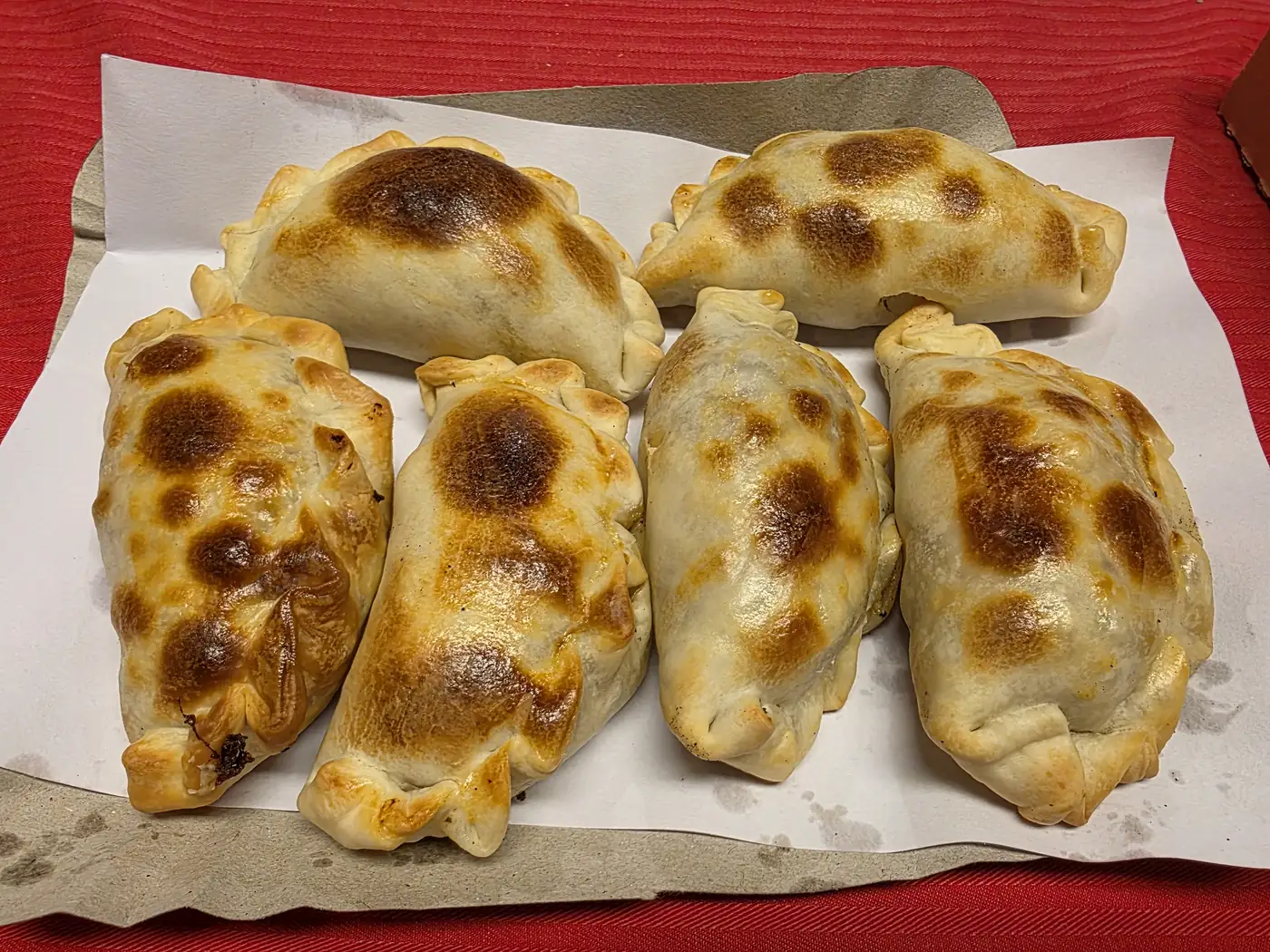
Golden baked Argentine beef empanadas with crimped edges on a plate Argentina flag Argentina 1h 25m
Lunch •Buenos Aires Heritage

Argentine Empanadas

Argentine empanadas are half-moon pastries of short, flaky wheat pastry — no yeast, no puff — folded over a savoury filling of seasoned ground beef, onion, hard-boiled egg, green olives and a few raisins, then sealed with the classic rope crimp called the repulgue and baked until deep gold. This is the beef empanada de carne found in bakeries and rotisseries across Buenos Aires. One serving (two empanadas) is about 260 g.

Hearty & Satisfying

Golden baked pastry wrapped around spiced beef, olive and egg — the hand-held lunch Argentina runs on.

Pairs Well With
Chimichurri & a simple green salad
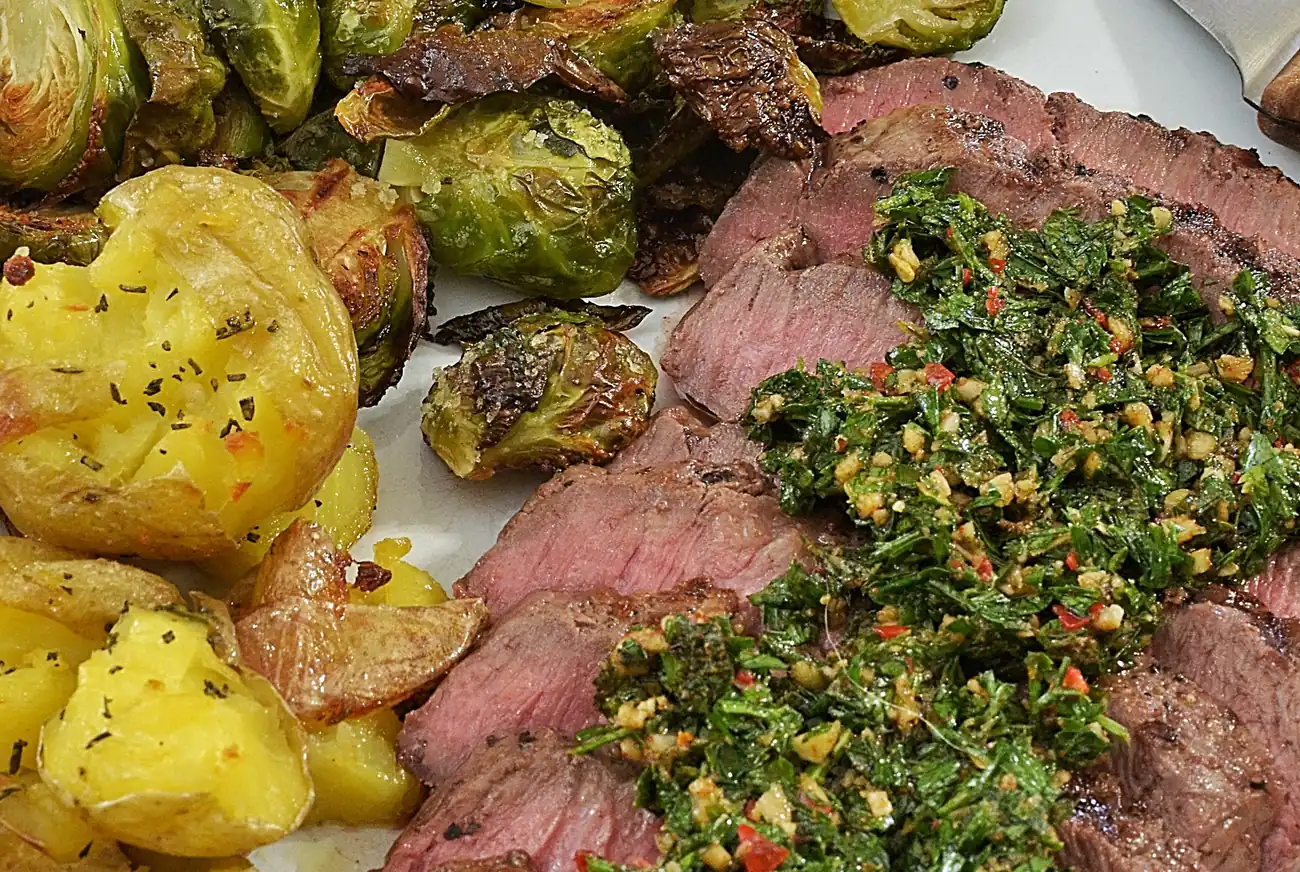
Sliced flat iron steak topped with green chimichurri on a plate Argentina flag Argentina 32m
Dinner •Pampas Asado Heritage

Chimichurri Steak

Chimichurri steak is the centrepiece of the Argentine asado: a thick sirloin grilled over high heat until charred outside and juicy inside, rested, sliced, and served with chimichurri — the raw sauce of parsley, garlic, oregano, red wine vinegar and olive oil that Argentina puts on almost everything grilled. The sauce is made first so its flavours can meld while the steak cooks. One serving is about 215 g.

High-Protein & Satisfying

A thick grilled sirloin, rested and sliced, drowned in bright garlicky chimichurri — the heart of the Argentine asado.

Pairs Well With
Roasted potatoes & grilled vegetables
High Protein
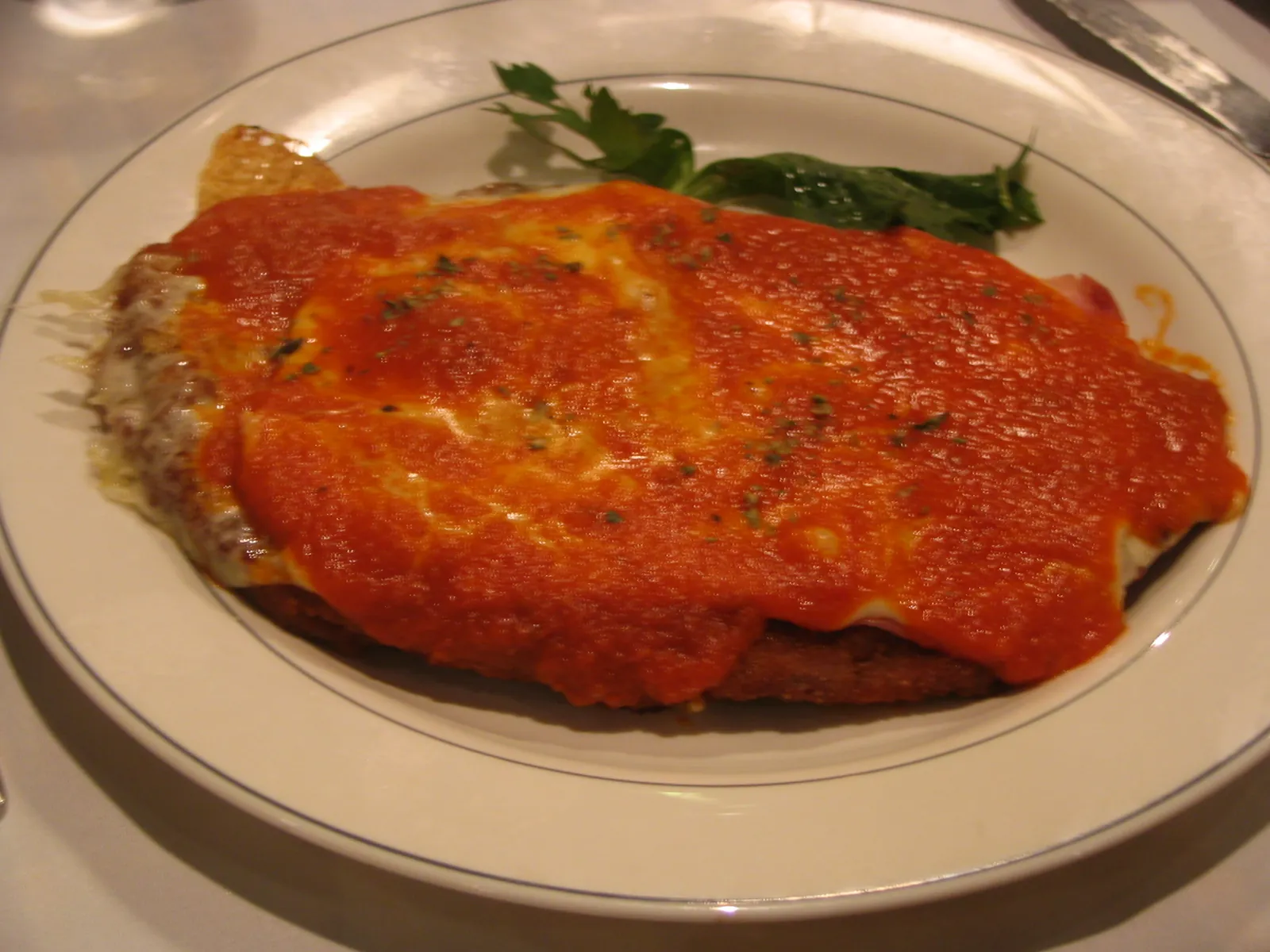
Breaded milanesa steak topped with tomato sauce and melted cheese Argentina flag Argentina 45m
Dinner •Buenos Aires Heritage

Milanesa a la Napolitana

Milanesa a la napolitana starts as a milanesa — a thin beef steak pounded flat, dredged in flour and egg, coated in breadcrumbs and fried until crisp — and then becomes something else entirely: topped with tomato sauce, a slice of ham and a blanket of mozzarella, it goes back into the oven until the cheese bubbles. It is the dish Argentine families order at the neighbourhood bodegon, always with French fries. One serving is about 350 g, before the fries.

Comforting & Satisfying

A crisp breaded steak, fried golden, then finished in the oven under tomato sauce, ham and bubbling mozzarella — Argentina's favourite comfort plate.

Pairs Well With
French fries & a green salad
A grilled bife de chorizo steak, pink inside, with green salad on a wooden board Argentina flag Argentina 2h 30m
Dinner •Buenos Aires Parrilla Heritage

Argentine Asado

This argentine asado recipe is the full Sunday parrillada: tira de asado, vacio, entrana and bife de chorizo, plus chorizo, morcilla, mollejas and chinchulines, all cooked slowly over quebracho charcoal embers and seasoned with nothing but coarse salt. It opens with provoleta, grilled provolone with oregano, and the meat is served piece by piece as each cut is ready, with chimichurri and salsa criolla on the table. One serving is about 460 g.

High-Protein & Satisfying

A slow mixed grill of beef cuts, chorizo, morcilla and achuras over quebracho embers, opened with grilled provoleta and served with chimichurri and salsa criolla.

Pairs Well With
Chimichurri, salsa criolla & Malbec
High Protein

The Dinner Gazette

Never wonder what’s for dinner again

One email a week with easy dinner ideas from around the world — ingredients, steps and nutrition, tested in our kitchen first.

Delivered every Thursday morning. Unsubscribe anytime.