-
1
Poach the Cod and Keep the Water
6 Hours 5 Mins • Soaking + Gentle Boil
Poaching at a boil, 100°C (212°F)
Drain the soaked cod, put it in a small pan, cover with boiling water and cook for 5 minutes. Drain the fish through a sieve set over a bowl and keep that water — it is the liquid the rice will cook in. When the cod is cool enough to handle, pull it into flakes with your fingers, removing any bones and skin. The cod must reach at least 63°C (145°F) at its thickest point, and it is done when it flakes easily and is opaque all the way through.
Do not throw the poaching water away: it carries the cod's flavour into the rice, and that is what makes this a cod rice rather than a plain tomato rice.
Done when: Cod flakes into soft white pieces with no translucent centre; the water smells gently of the sea.
-
2
Build the Tomato and Pepper Base
10 Mins • Medium Heat
Medium heat, about 175°C (350°F) in the pot
Heat the olive oil in a wide, heavy casserole over medium heat. Add the sliced onion and cook for about 5 minutes until soft and starting to colour, then add the garlic and fry for 1 minute more. Add the diced tomatoes and red pepper with the bay leaves and cook for another 5 minutes until the tomatoes soften, release their juice and the mixture turns thick and fragrant.
Give the onion its full 5 minutes before the tomato goes in — onion that is still raw when the tomato arrives never quite softens, and the base stays sharp.
Done when: The base is thick, deep red, and the oil at the edges is stained orange-red.
-
3
Add the Cod and the Rice
5 Mins • Medium Heat
Medium heat, about 175°C (350°F) in the pot
Stir the flaked cod into the tomato base and cook for 2 minutes so it warms through and takes up the flavour. Add the rinsed Carolino rice and fry for another 2 minutes, stirring so every grain is coated in the red base. Pour in the white wine to deglaze the pot and let it bubble until the sharp smell of alcohol has gone, about 1 minute.
Frying the rice in the base before any liquid goes in is what keeps the grains separate in a wet rice — skip it and the dish turns to porridge.
Done when: Every grain is glossy and stained red, and the wine has almost evaporated.
-
4
Cook the Rice, a Ladle at a Time
25 Mins • Gentle Simmer
Gentle simmer, about 95°C (203°F)
Start adding the hot cod poaching water a ladle at a time, stirring well between additions and waiting until the liquid is mostly absorbed before adding more. Keep the pot at a gentle simmer and cook for about 25 minutes in total, until the rice is tender but still offers a little resistance when you bite it. This is a wet rice: it should stay creamy and spoonable, with a little loose liquid around the grains, not dry like a pilaf and not thin like a soup.
Add the water slowly and taste as you go — the rice decides when it is done, not the clock, and the last ladle is the difference between creamy and mushy.
Done when: Rice is tender with a slight bite, the pot is creamy and wet, and the cod is hot through at 63°C (145°F) or above.
-
5
Rest, Butter and Serve
5 Mins • Off the Heat
Resting off the heat, about 70°C (158°F) falling
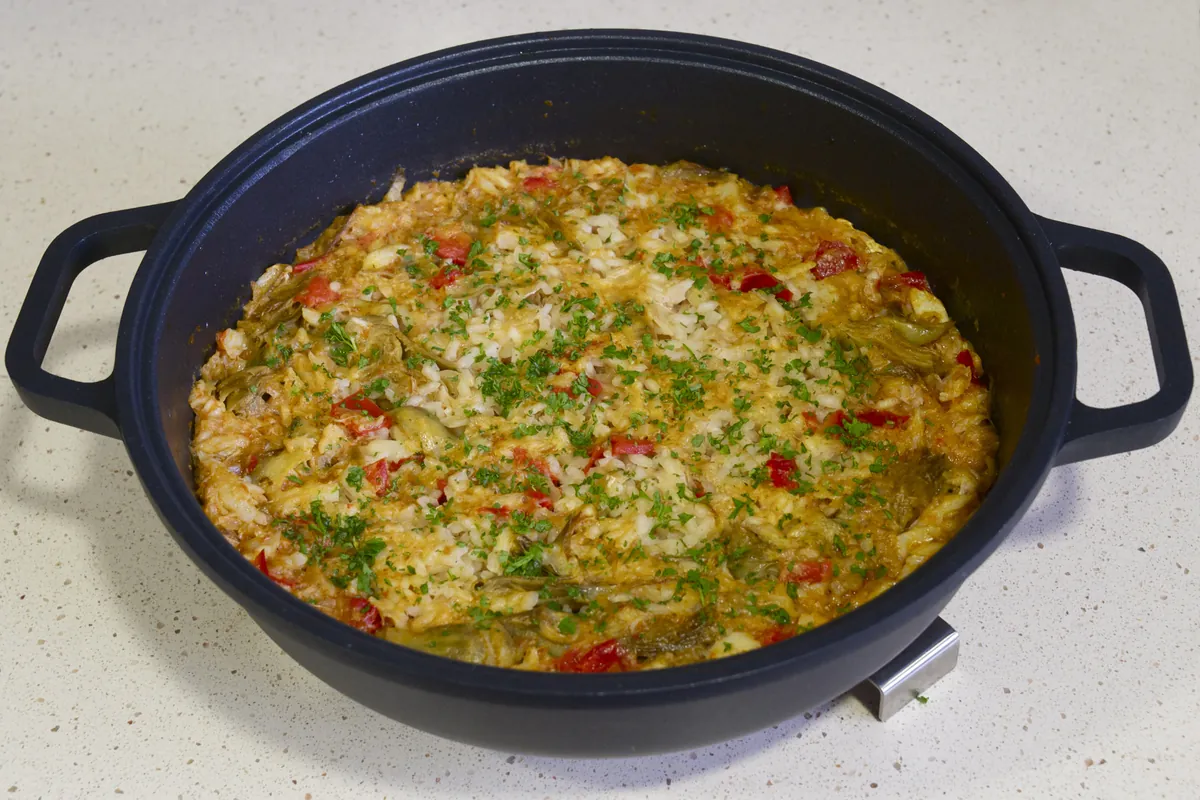
Take the pot off the heat, fish out the bay leaves, and stir in a splash more of the hot poaching water and the cold butter until it melts into the rice. Cover and rest for 5 minutes so the grains finish in their own steam. Taste before adding any salt — the cod may have seasoned the pot already — then add salt and black pepper only if needed, and scatter the chopped parsley over the top with a drizzle of olive oil.
The rest is part of the cooking in this arroz de bacalhau recipe: the rice drinks up the last of the liquid and the butter turns the pot glossy without any cream.
Done when: The rice is creamy and glossy, the parsley is bright green, and a spoon dragged through the pot leaves a trail that slowly closes.
auto_awesome Finishing Touches & Plating
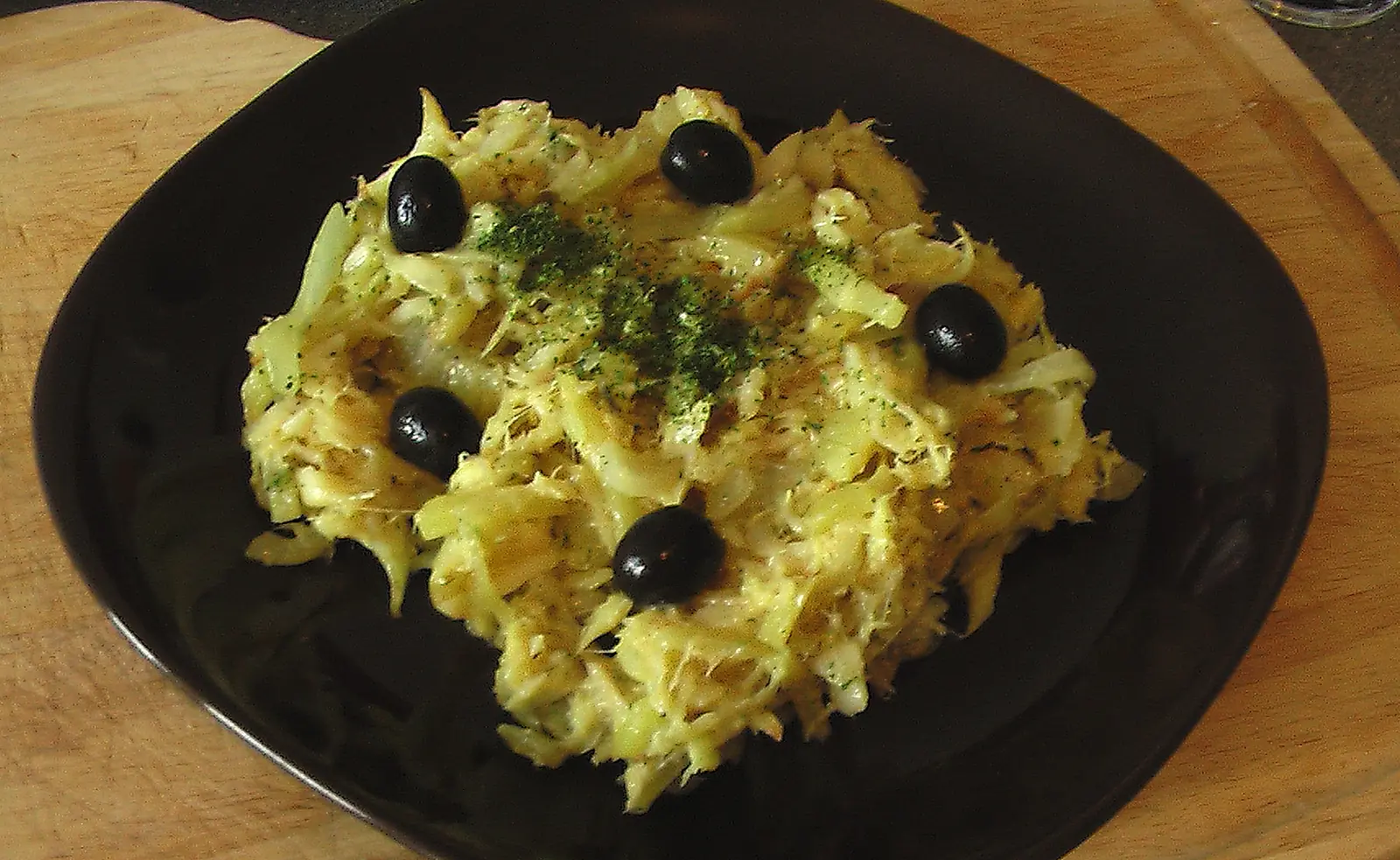
Bring the whole casserole to the table on a board, with a ladle and a bowl of extra parsley, and serve in deep bowls while it is still steaming. That is the whole point of this arroz de bacalhau recipe: the pot, not the plate, is the serving dish, and the rice is at its best in the first ten minutes, while it is still creamy and wet.

 Portugal
50m