Curated recipes from 193 countries  •  New seasonal Mediterranean issue out now

Overview

Arroz de Pato

Portuguese Duck Rice, Duck Baked in Rice, Arroz de Pato no Forno

This arroz de pato recipe cooks duck legs until tender, shreds the meat, and bakes it with rice, chorizo and bacon in the duck's own stock until the top turns crisp and golden. The rice drinks up the duck stock, so every grain tastes of duck. One serving is about 500 g.

Arroz de pato is one of Portugal's great rice dishes, and it is built on thrift: a duck is cooked, its stock is saved, and the rice is cooked in that stock, so nothing is wasted. The dish is a fixture of home cooking and of the tasca, the small Portuguese tavern, where it is baked in a wide clay dish until the top crisps. Chorizo and bacon are the usual partners, and orange — zest in the rice, slices on the side — is the Portuguese answer to the richness of the duck. Unlike the Spanish arroz or the Peruvian arroz con pato, which is green with herbs and cooked on the stove, the Portuguese version is defined by the oven and the crisp golden top.

Pairs well with: A green salad, orange slices and a glass of red wine from the Douro.

Provenance

Portugal flag Portugal

Portuguese Comfort Classic

Mediterranean & Italy

Time Dedication

2h 30m

30m prep • 120m cook

Batch Yield

4 Servings

1049 kcal per serving

1 serving ≈ 500 g

Technical Skill

Intermediate

Medium (Baked Rice)

Meal Timing & Digestive Fit

Breakfast

Not Advised

Lunch

Hearty Midday Main

Dinner

Ideal Hearty Main

Snack & Tea

Inappropriate

High Protein Occasions: Sunday family lunches, celebration dinners, cold-weather comfort meals Cost: Moderate — about $7–9 per serving at home
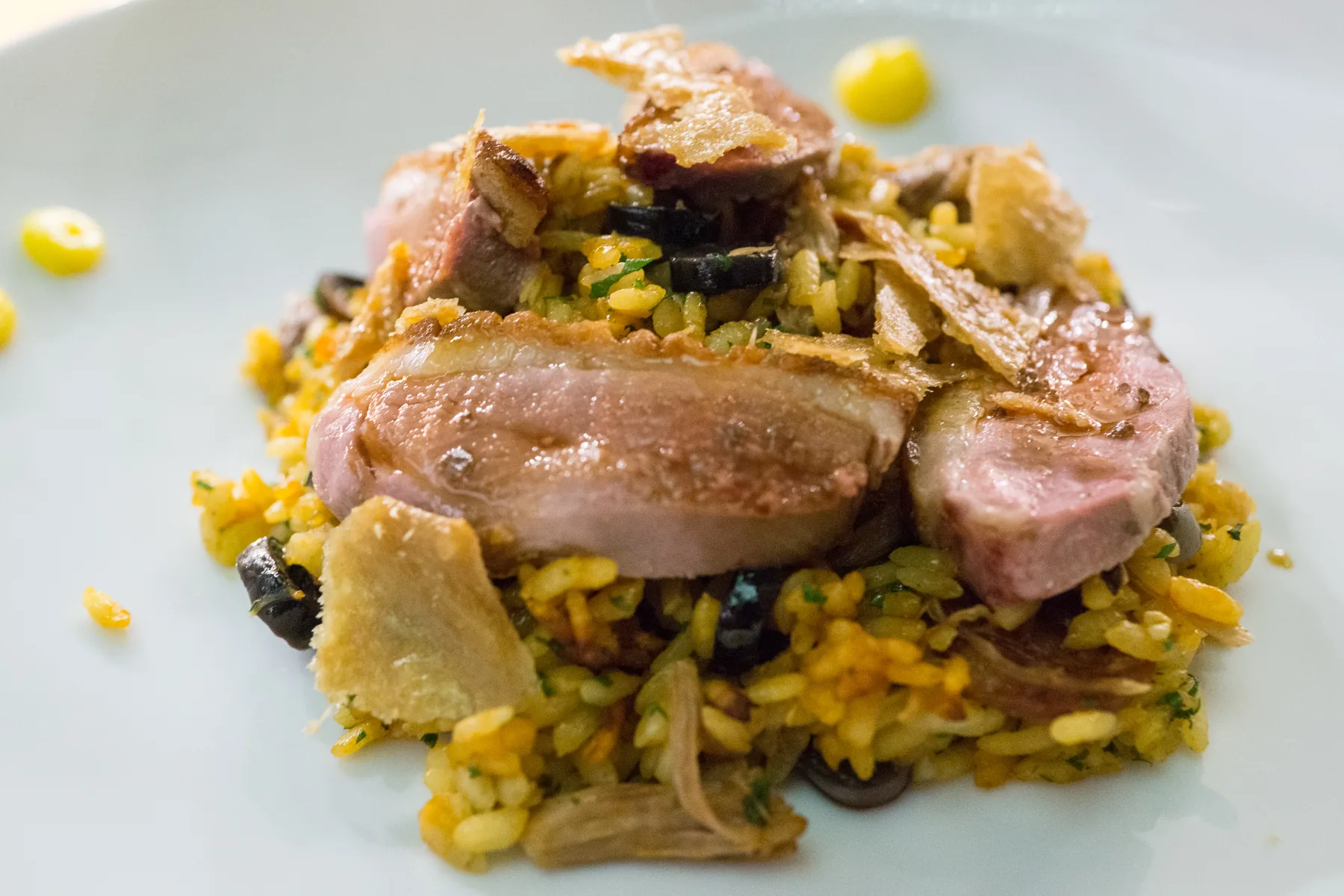
Sliced roast duck over golden rice with black olives and crisp cracklings on a white plate

Portuguese Comfort Classic

Photo: Edsel Little, CC BY-SA 2.0, via Wikimedia Commons

The Heritage Formulary

Measured Ingredients

Estimated cost: Moderate — about $7–9 per serving at home (USD)

Duck cooked until tender, shredded and baked into rice in its own stock, with chorizo and a crisp golden top.

Execution Methodology & Culinary Technique

Step-by-Step Cooking Guide

Active 2h 30m
P

Prep Stage: Ready the Duck and the Sofrito (30 Mins)

30 Mins

Rinse the rice until the water runs clear and leave it to drain. Dice the bacon, slice the chorizo, chop the onion, carrot and tomato, crush the garlic, halve the olives and zest the orange. Put the duck legs in a pot with the bay leaves and 1 litre of cold water, ready to cook. The duck stock is made in step 1, so nothing else needs doing ahead.

Maestro Tip: Rinsing the rice keeps the grains separate instead of sticky.

  1. 1

    Cook the duck legs

    60 Mins Gentle simmer, ~90°C (195°F)

    Put the duck legs and bay leaves in a pot with 1 litre of cold water and a pinch of salt. Bring to a gentle simmer and cook for about 60 minutes, until the meat is tender and nearly falling off the bone, with an internal temperature of at least 74°C (165°F). Lift the legs out, strain the cooking liquid and skim off the fat to give about 700ml of duck stock. When the legs are cool enough to handle, shred the meat and discard the bones.

    Keep the pot at a bare simmer: boiling hard makes the duck stringy.

    Done when: Duck tender, meat shredding easily, internal temperature at least 74°C (165°F).

  2. 2

    Make the sofrito

    12 Mins Medium heat, ~160°C (320°F)

    Heat the olive oil in a wide ovenproof pan or casserole over medium heat. Fry the bacon for 3 minutes until it starts to crisp, then add the onion, carrot and garlic and cook for 5 minutes until soft. Stir in the tomato and cook for 2 more minutes, then pour in the white wine and let it bubble for 2 minutes.

    Let the wine bubble until the sharp alcohol smell fades before adding the rice.

    Done when: Onion soft and golden, tomato broken down, wine reduced.

  3. 3

    Cook the rice in duck stock

    18 Mins Gentle simmer, ~90°C (195°F)

    Stir the rinsed rice into the pan with the chorizo, olives and orange zest. Pour in the 700ml of warm duck stock, season with the salt and pepper, and bring to a gentle simmer. Cover and cook for about 18 minutes, until the rice is almost tender and most of the stock is absorbed.

    Do not stir the rice once the stock goes in: stirring makes it gluey.

    Done when: Rice almost tender, stock mostly absorbed, grains still separate.

  4. 4

    Fold in the duck and bake

    25 Mins Oven 200°C (400°F)

    Fold the shredded duck meat gently through the rice, level the surface and drizzle over a spoonful of the reserved duck fat or a little olive oil. Bake uncovered at 200°C (400°F) for about 20 to 25 minutes, until the top is golden and crisp in places and the rice is fully tender.

    A wide, shallow dish gives more crisp golden top than a deep pot.

    Done when: Top golden and crisp, rice tender, edges sizzling.

  5. 5

    Rest and serve

    5 Mins Resting, ~60°C (140°F)

    Take the dish out of the oven and let it rest for 5 minutes. Scatter the chopped parsley over the top and serve straight from the dish, making sure each portion gets some of the crisp top and some duck.

    Resting lets the last of the stock settle into the rice instead of pooling.

    Done when: Rice settled, top crisp, parsley bright green.

Finishing Touches & Plating

Serve straight from the baking dish with the parsley on top and orange slices on the side. The crisp top is the best part — spoon it out with the rice underneath.

Nutritional Physiology & Benefits

Nutrition

Energy

1049

kcal / serving

Protein

43g

Complete AA

Carbs

71g

Complex

Fats

63g

Healthy

Per serving (4 servings · 1 serving ≈ 500 g)
Energy1049 kcal
Protein43 g
Carbohydrates71 g
Fat63 g
Fibre3.2 g
Sugar4.1 g
Sodium1057 mg
Per 100g
Energy210 kcal
Protein8.5 g
Carbohydrates14.2 g
Fat12.6 g
Fibre0.6 g
Sugar0.8 g
Sodium211 mg

Nutrition values are estimated — calculated from USDA FoodData Central values for the listed ingredients.

Vitamins & minerals: Duck supplies iron, zinc and B vitamins; the rice adds B vitamins, and the tomato, carrot and parsley add vitamin A and vitamin C.

Protein and Iron from Duck

One serving carries about 42.6 g protein from the duck, chorizo and bacon, and duck is a good source of iron.

Stock, Not Water

Cooking the rice in the duck's own stock means nothing from the duck is wasted and the rice is full of flavour.

One Dish, Done in the Oven

Everything finishes together in one dish, so the rice stays moist underneath while the top crisps.

Food Pairings

What to Eat With

To optimize nutrient absorption and elevate the sensory depth, pair with these authentic accompaniments:

Vegetables

Green Salad with Orange

A simple green salad with orange segments cuts through the richness of the duck and echoes the orange zest in the rice.

Sides

Crusty Bread

Crusty bread is there to mop up any stock left in the dish, the way it is served in Portugal.

Drinks

Douro Red Wine

A red wine from the Douro stands up to the duck and chorizo without overpowering the rice.

Full Menus

Orange Slices to Finish

Fresh orange slices after the rice cleanse the palate and are the classic Portuguese way to end a rich meal.

Complete menu

Arroz de pato with a green salad with orange segments, crusty bread and a Douro red wine, finishing with fresh orange slices.

Digestive Guardrails

What NOT to Combine

To prevent digestive distress, sluggishness, or palate clash, avoid pairing the dish with these elements:

Stirring the Rice While It Cooks

Stirring releases starch and turns the rice gluey instead of keeping the grains separate. Leave it alone once the stock is in. This is general cooking information, not medical advice.

Undercooking the Duck

Duck legs must reach 74°C (165°F) all the way through. Undercooked duck is a food safety risk, so check with a thermometer. This is general food information, not medical advice.

General information only, not medical advice — consult a doctor for personal dietary decisions.

Who Should Eat It

Who Should Eat

  • General adultsRich at about 1,049 kcal per serving — a filling dinner for most adults.
  • ChildrenThe duck is rich and the chorizo is salty and spiced; serve children plain shredded duck with rice and hold back the chorizo.
  • ElderlyTender and easy to chew, but the dish is rich and salty, so keep the portion modest.
  • Pregnant womenThe duck is cooked well through, but the dish is very rich and salty; keep to a small portion. Ask your clinician about portions.
  • Breastfeeding womenFilling and energy-dense; one serving is a full meal.
  • AthletesAbout 42.6 g protein per serving makes this a useful recovery meal after a hard session.
  • Weight gainEnergy-dense at about 1,049 kcal per serving, so it suits weight gain.
  • Weight lossAbout 1,049 kcal per serving with a high fat content; keep to one serving and load the plate with salad.

Health Conditions — Adjust or Avoid

Conditions

  • DiabetesAbout 71.1 g carbohydrate per serving from the rice; watch the rice portion. Ask your clinician about portions.
  • High blood pressureOne serving carries about 1,057 mg sodium from the chorizo, bacon and salt, so keep the portion small. Ask your clinician about portions.
  • Kidney diseaseHigh in protein and salt, which matter for some kidney diets, so keep portions modest. Ask your clinician about portions.
  • GoutDuck and cured meats are rich in purines, so this dish is best avoided in a gout flare. Ask your clinician about portions.
  • Stomach issuesVery rich and fatty at about 63.0 g fat per serving; eat a small portion slowly. Ask your clinician about portions.
  • Cardiovascular diseaseHigh in saturated fat at about 63.0 g total fat per serving; keep it an occasional dish. Ask your clinician about portions.
  • Fatty liverEnergy-dense at about 1,049 kcal per serving with a high fat content; keep the portion as stated. Ask your clinician about portions.
  • Food allergiesContains no gluten, egg, milk or nuts as written; people with a pork allergy should not eat it. Ask your clinician about safe alternatives.
  • Special therapeutic dietsFits a gluten-free and dairy-free diet as written; not suitable for a low-purine or low-fat diet, and any therapeutic diet should be discussed with a clinician.

If you have a medical condition, consult your doctor before changing your diet.

Storage & Use

Storage & Use

How to store
Cool quickly and store covered in the fridge.
In the fridge
Keeps 2 days in the fridge at 4°C (40°F) or below.
In the freezer
Up to 1 month; freeze in portions.
How to reheat
Reheat in a covered dish in the oven at 180°C (350°F) until steaming hot, to 74°C (165°F); sprinkle with a little water first so the rice does not dry out.
Freezing recommended
Only if needed — best eaten fresh, when the top is crisp.
Signs it has spoiled
Sour smell, slimy rice, or mould.

More recipes to explore

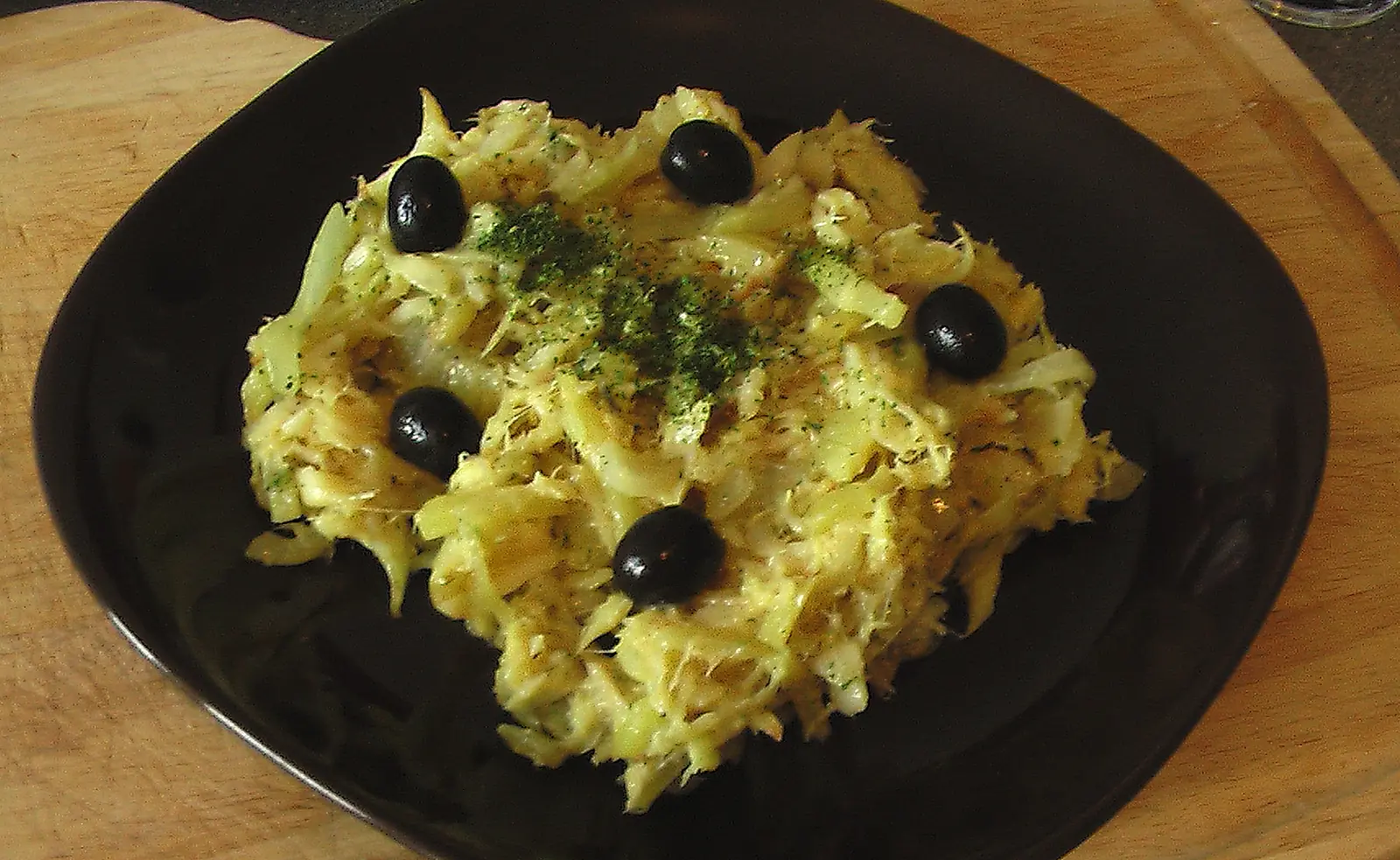
A plate of bacalhau à brás — shredded salt cod with egg and matchstick potatoes, black olives and parsley Portugal flag Portugal 50m
Dinner •Lisbon Tavern Classic

Bacalhau à Brás

Bacalhau à brás recipe: desalted shredded cod, golden matchstick potatoes and softly scrambled egg, finished with black olives and parsley. One serving is about 350 g.

Comfort & Protein

Shredded salt cod folded with egg and crisp matchstick potatoes — a filling, protein-rich Lisbon supper.

Pairs Well With
A simple green salad and a glass of vinho verde
High Protein
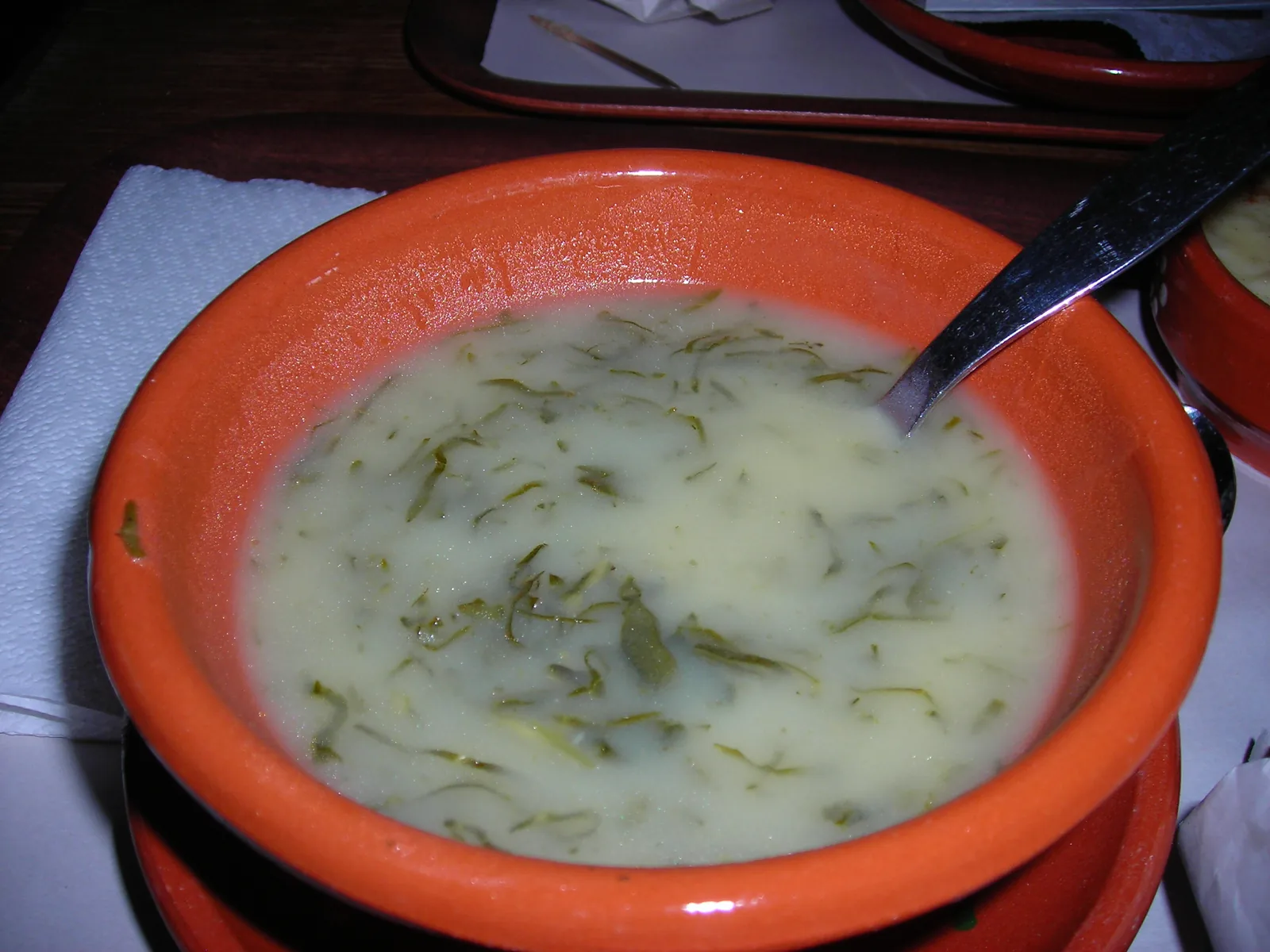
A terracotta bowl of caldo verde — pale potato soup with shredded green kale and a spoon Portugal flag Portugal 50m
Dinner •Minho National Soup

Caldo Verde

Caldo verde recipe: creamy potato soup blended smooth, with ribbons of kale and slices of chouriço, finished with a thread of olive oil. One serving is about 590 g.

Comfort & Warmth

Silky potato soup with finely shredded kale and smoky chouriço — Portugal's best-loved bowl.

Pairs Well With
Crusty broa bread and a glass of vinho verde
Soups & Broths
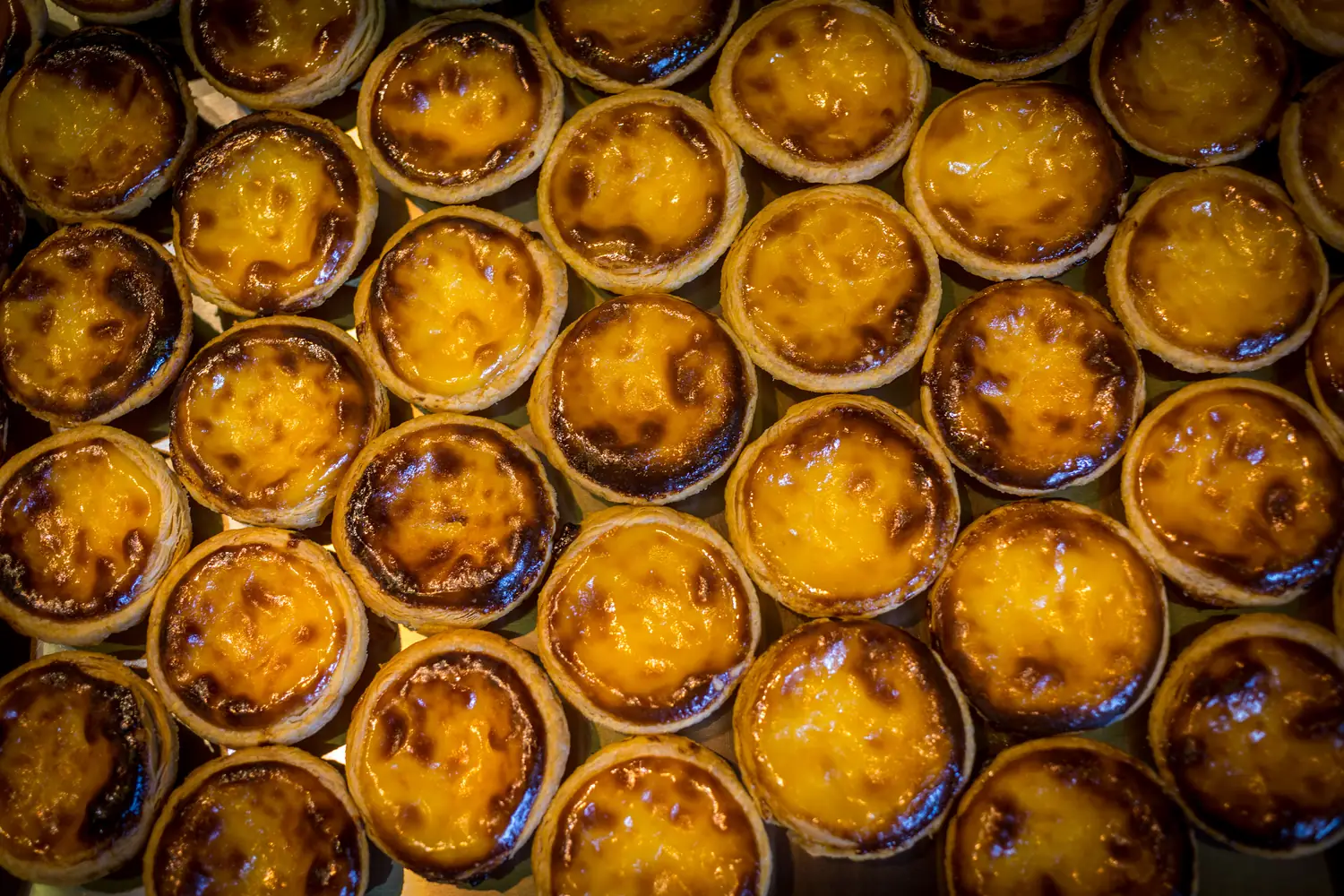
A tray of pastel de nata — golden custard tarts with blistered, caramelised tops in flaky pastry Portugal flag Portugal 50m
Snack & Tea •Belém Monastery Tart

Pastel de Nata

Pastel de nata recipe: shatteringly crisp puff pastry shells filled with warm, vanilla-cinnamon egg custard, baked until blistered on top. One serving is about 187 g (2 tarts).

Sweet Treat

Crisp, flaky pastry cups filled with cinnamon-scented egg custard, blistered in a very hot oven.

Pairs Well With
A small strong coffee (bica) and a dusting of cinnamon
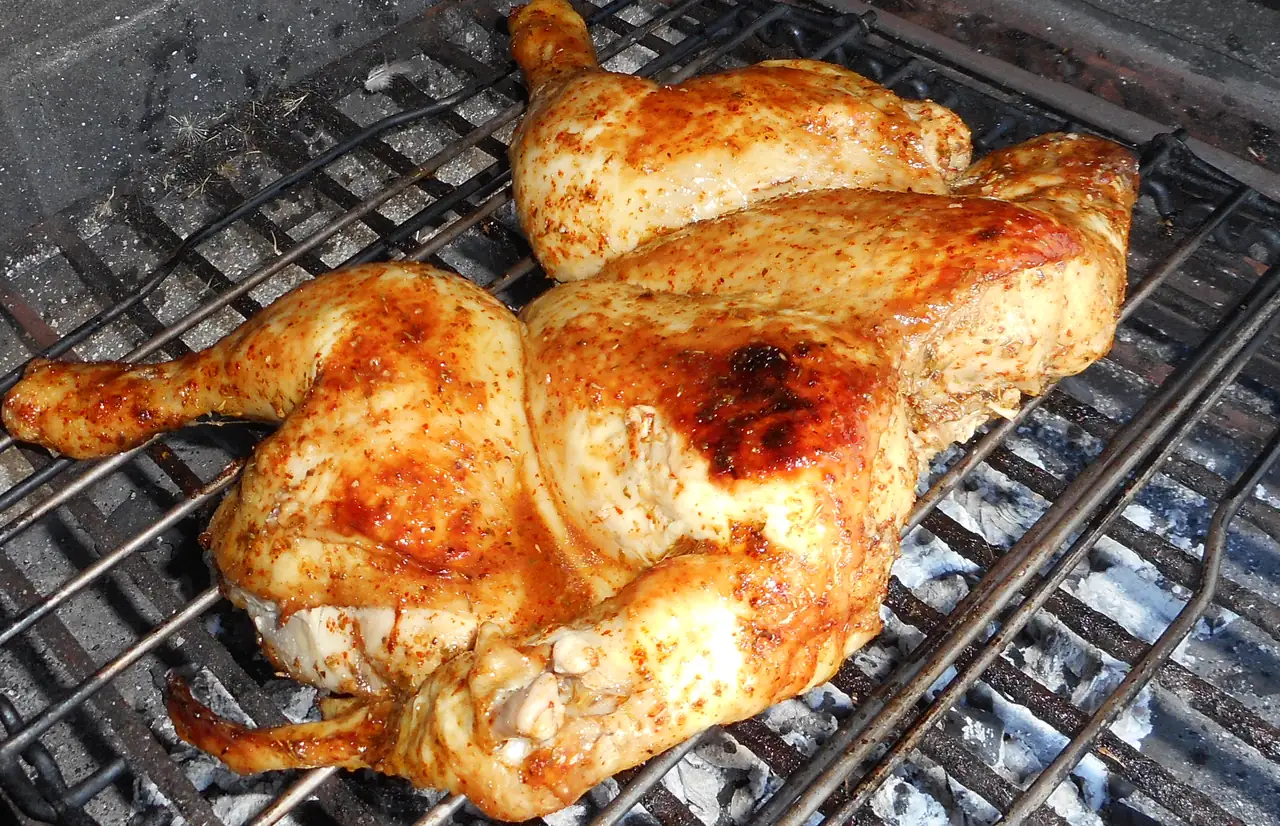
Butterflied piri piri chicken grilling over charcoal, golden-red with chilli spice Portugal flag Portugal 55m
Dinner •Algarve Heritage

Frango Piri Piri

Frango piri piri is Portugal's most famous chicken: a whole bird butterflied flat, rubbed with a fiery paste of piri piri chillies, garlic, lemon and paprika, then grilled over charcoal until the skin turns crisp and red-gold. This piri piri chicken recipe is the Algarve way — an overnight marinade, a hot grill, and a warm butter baste at the end. One serving is about 210 g.

Spicy Char-Grill

A butterflied chicken marinated in piri piri chilli, garlic and lemon, grilled over charcoal until the skin is crisp and reddened.

Pairs Well With
Chips, tomato-onion salad and a cold beer.
High Protein

The Dinner Gazette

Never wonder what’s for dinner again

One email a week with easy dinner ideas from around the world — ingredients, steps and nutrition, tested in our kitchen first.

Delivered every Thursday morning. Unsubscribe anytime.