
Curated recipes from 193 countries  •  New seasonal Mediterranean issue out now

Overview

Australian Damper

Bush Damper

This australian damper recipe is the bush bread of the Australian outback: a round, crusty soda loaf made from flour, water, baking powder and salt — no yeast, no kneading, no waiting. One serving is about 88 g. It bakes in about 35 minutes and is best eaten warm with butter and golden syrup.

Damper was the bread of the Australian bush in the 1800s, baked by stockmen and swagmen who carried flour, baking powder and salt in their swags and cooked the loaf in a camp oven buried in the ashes of the fire. The name comes from damping, or moistening, the flour with water. It is often confused with Irish soda bread, but the two are different loaves: Irish soda bread is raised with sour buttermilk and baked in an oven, while damper is raised with plain water and baking powder and was traditionally baked in the coals of a campfire. Today damper is still baked in camp ovens at campfires across Australia, and in home ovens when the fire is too far away.

Pairs well with: Butter & golden syrup

Provenance

Australia flag Australia

Australian Classic

Oceania & Pacific

Time Dedication

45m

10m prep • 35m cook

Batch Yield

8 Servings

206 kcal per serving

1 serving ≈ 88 g

Technical Skill

Easy

Easy (One Bowl)

Meal Timing & Digestive Fit

Breakfast

Not Advised

Lunch

Inappropriate

Dinner

Inappropriate

Snack & Tea

Ideal Light Bite

Occasions: Campfires, barbecues, picnics, soup nights, Australia Day Cost: Very low — about $0.30–0.50 per serving at home
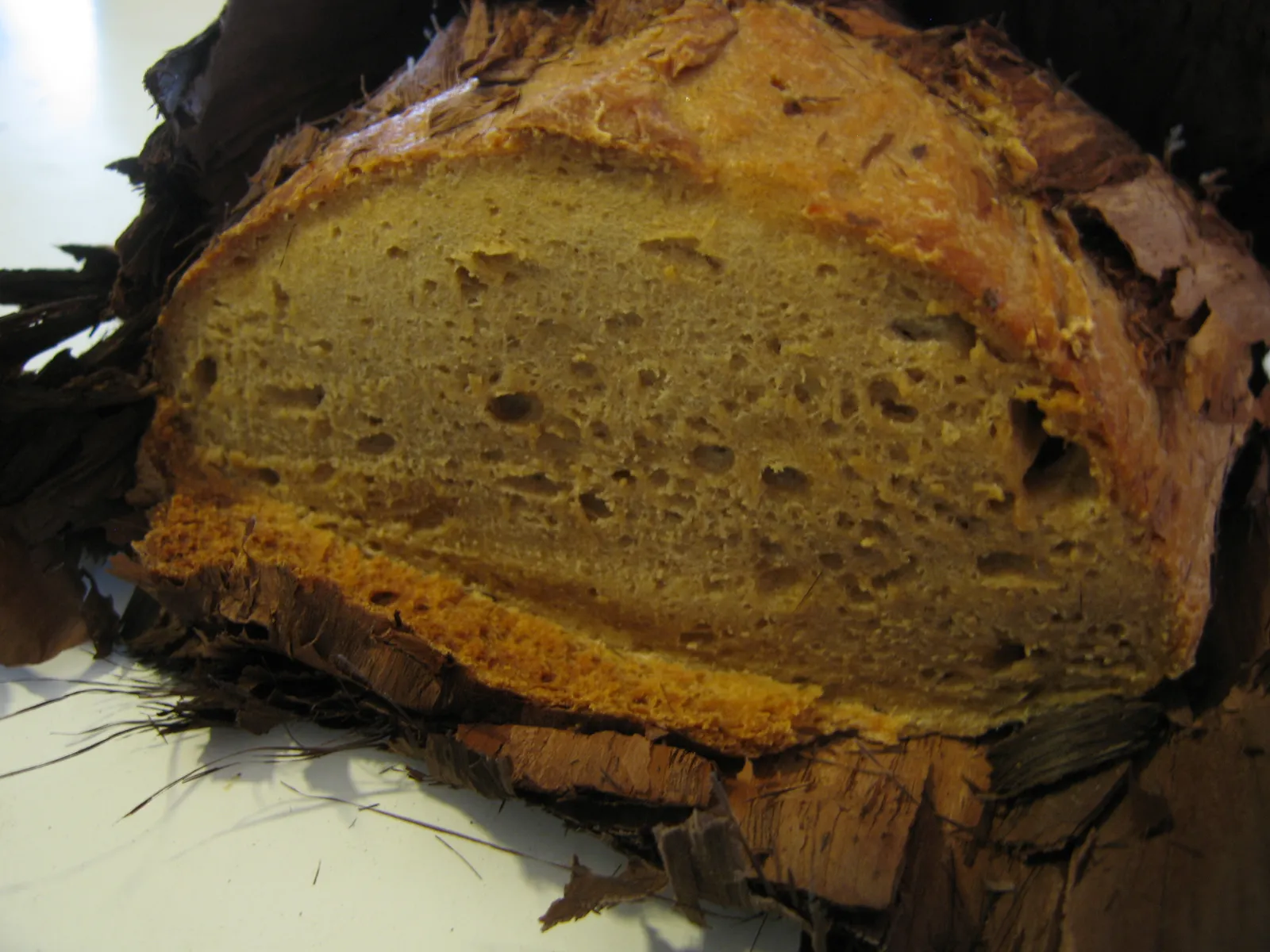
A sliced rosemary beer damper loaf resting in paperbark

Australian Classic

Photo: foam, CC BY-SA 2.0, via Wikimedia Commons

The Heritage Formulary

Measured Ingredients

Estimated cost: Very low — about $0.30–0.50 per serving at home (USD)

The crust should be deep gold and sound hollow when tapped; the crumb should be close and soft, not doughy.

Execution Methodology & Culinary Technique

Step-by-Step Cooking Guide

Active 45m
P

Prep Stage: Flour, Water, Fire

10 Mins • Sifting, Mixing

Sift the flour, baking powder and salt into a large bowl and make a well in the middle. Pour in most of the water and mix with a knife or your hand until a soft, slightly sticky dough forms, adding the last of the water only if the dough needs it. Have a floured tray or a camp oven ready before you shape the loaf.

Maestro Tip: A soft dough makes a soft loaf: if the dough feels stiff, add water a spoonful at a time until it is just sticky.

  1. 1

    Mix the dry ingredients

    3 mins Room temperature, about 20°C (68°F)

    Sift the flour, baking powder and salt into a large bowl. This takes a minute and matters: baking powder in one pocket of the dough will leave a bitter spot and an uneven rise.

    Sifting is the only mixing the dry ingredients need — do not stir them for minutes.

    Done when: An even, lump-free flour mix.

  2. 2

    Add water and form the dough

    4 mins Room temperature, about 20°C (68°F)

    Make a well in the flour, pour in about 250 ml of the water and mix with a table knife, drawing the flour in from the sides. Add the rest of the water a spoonful at a time until a soft, slightly sticky dough comes together. Turn it onto a floured board and knead very briefly — 30 seconds, no more — just until it holds together.

    Handle it as little as possible: damper is not kneaded like yeast bread.

    Done when: A soft, slightly sticky dough that holds its shape.

  3. 3

    Shape and score

    3 mins Room temperature, about 20°C (68°F)

    Pat the dough into a round about 20 cm across and 4 cm thick — flatter than a yeast loaf, so the heat reaches the middle. Place it on a floured baking tray or in a greased camp oven, dust the top with flour and cut a cross about 1 cm deep across the top.

    The cross is not decoration: it lets the thick loaf bake through to the centre.

    Done when: A flat round with a floured top and a cross cut into it.

  4. 4

    Bake

    35 mins 200°C (400°F)

    Bake in a hot oven at 200°C (400°F) for 30-35 minutes, or in a camp oven over coals with hot coals on the lid, until the crust is deep gold and the loaf sounds hollow when you tap the base. A skewer pushed into the middle should come out clean and dry.

    In a camp oven, turn the oven a quarter turn every 10 minutes so one side does not burn.

    Done when: Deep gold crust, hollow sound when tapped, clean skewer.

  5. 5

    Cool and serve

    10 mins Room temperature, about 20°C (68°F)

    Move the loaf to a wire rack and let it cool for at least 10 minutes before cutting — the crumb is still setting, and cutting it hot makes it gummy. Serve warm in thick slices with butter and golden syrup, or beside soup.

    Wrap the loaf in a clean tea towel while it cools: it keeps the crust from going hard.

    Done when: A loaf that slices cleanly, with a close, soft crumb.

Finishing Touches & Plating

Eat it warm, in thick slices, with plenty of butter — damper is at its best in the first hour out of the oven, and it is the bread that turns a bowl of soup into a meal.

Nutritional Physiology & Benefits

Nutrition

Energy

206

kcal / serving

Protein

6g

Complete AA

Carbs

43g

Complex

Fats

1g

Healthy

Per serving (8 servings · 1 serving ≈ 88 g)
Energy206 kcal
Protein6 g
Carbohydrates43 g
Fat1 g
Fibre1.5 g
Sugar0.2 g
Sodium406 mg
Per 100g
Energy235 kcal
Protein6.6 g
Carbohydrates49.5 g
Fat0.6 g
Fibre1.7 g
Sugar0.2 g
Sodium464 mg

Nutrition values are estimated — calculated from USDA FoodData Central values for the listed ingredients.

Vitamins & minerals: Thiamin, niacin and folate (flour), with small amounts of iron and magnesium.

Slow-Release Energy

Each slice carries about 43 g of carbohydrate, which makes damper a steady, filling snack or a solid base for soup.

No Yeast, No Waiting

Because baking powder does the lifting, damper goes from bowl to oven in 10 minutes and is on the table in 45 — no rising, no proving, no planning ahead.

Four Pantry Ingredients

Flour, water, baking powder and salt are all most kitchens already hold, so damper costs almost nothing and needs no special shopping.

Food Pairings

What to Eat With

To optimize nutrient absorption and elevate the sensory depth, pair with these authentic accompaniments:

Sauces

Butter & Golden Syrup

The classic way to eat damper: warm bread, melting butter and a drizzle of golden syrup is the taste of an Australian campfire.

Soups

Pumpkin Soup

Damper and pumpkin soup are the traditional Australian pair — the bread is made for dunking, and the soup needs something to mop it up with.

Drinks

A Pot of Billy Tea

Strong black tea brewed in a billy is the bush drink for damper; the tannin cuts the richness of the butter.

Sides

Cheese & Pickles

A slab of sharp cheddar and a pickled onion turn a slice of damper into a ploughman's lunch with an Australian accent.

Complete menu

Serve thick slices of warm damper with butter and golden syrup beside a bowl of pumpkin soup, with a pot of billy tea to drink.

Digestive Guardrails

What NOT to Combine

To prevent digestive distress, sluggishness, or palate clash, avoid pairing the dish with these elements:

Overworking the Dough

Kneading damper like yeast bread develops the gluten and makes a tough, heavy loaf. Mix just until it holds together — 30 seconds of kneading is enough. This is general information, not medical advice.

Cutting It Hot

Slicing the loaf straight from the oven tears the crumb and makes it gummy, because the inside is still setting. Wait at least 10 minutes before the first cut. This is general information, not medical advice.

Storing It Warm in Plastic

Wrapping a warm loaf in plastic traps steam and turns the crisp crust soft and damp. Cool it on a rack first, then wrap it in a tea towel or a paper bag. This is general information, not medical advice.

General information only, not medical advice — consult a doctor for personal dietary decisions.

Who Should Eat It

Who Should Eat

  • General adultsA cheap, filling snack for most adults; one or two slices with butter or beside soup make a light meal.
  • ChildrenA mild, plain bread children usually accept; serve warm with butter and golden syrup, or with jam.
  • ElderlySoft and easy to chew when fresh; serve a thin slice with butter rather than a thick crusty one.
  • Pregnant womenGenerally suitable; it is a plain bread with no raw ingredients, and the salt is modest at one slice.
  • Breastfeeding womenGenerally suitable; the carbohydrate provides energy, and the bread is best eaten fresh and warm.
  • AthletesA useful carbohydrate snack before or after training; pair it with cheese for protein.
  • Weight gainA good choice — eat two or three slices with butter and cheese to lift the calories cheaply.
  • Weight lossOne thin slice with soup is a sensible snack; skip the golden syrup, which adds sugar without filling you up.

Health Conditions — Adjust or Avoid

Conditions

  • DiabetesAbout 43 g of carbohydrate per slice, so count the slices — one with soup is usually enough — and ask your clinician about fitting it into your meal plan.
  • High blood pressureAbout 406 mg of sodium per slice from the salt and baking powder; keep to one slice and ask your clinician about portion size.
  • Kidney diseaseLow in protein, so people with kidney disease should treat it as a carbohydrate food, not a protein food, and ask their clinician about portions.
  • GoutA low-purine food made from flour and water, but keep portions moderate and ask your clinician if gout is a concern.
  • Stomach issuesPlain bread is usually gentle on the stomach; eat it warm and fresh, and ask your clinician if symptoms persist.
  • Cardiovascular diseaseLow in fat with no added sugar, so a plain slice fits a heart-friendly pattern; watch the butter you spread on it, and ask your clinician.
  • Fatty liverLow in fat and free of added sugar, so a plain slice is a light choice; skip the golden syrup and ask your clinician about your plan.
  • Food allergiesContains wheat (gluten). People with a wheat allergy or coeliac disease must not eat this loaf; a gluten-free flour blend can be used instead, and ask your clinician.
  • Special therapeutic dietsVegetarian as written; for a gluten-free version use a gluten-free flour blend and check the baking powder label, and ask your clinician or dietitian.

If you have a medical condition, consult your doctor before changing your diet.

Storage & Use

Storage & Use

How to store
Cool completely on a wire rack, then wrap in a clean tea towel or a paper bag. Do not wrap it warm in plastic.
In the fridge
Not recommended — the fridge dries damper out. Keep at room temperature for 2 days instead.
In the freezer
Up to 3 months; slice the loaf first and freeze the slices in a bag, so you can thaw one at a time.
How to reheat
Reheat slices in a 180°C (350°F) oven for 8-10 minutes until hot all the way through, to 74°C (165°F); a dry oven restores the crust.
Freezing recommended
Yes — sliced, it freezes very well and thaws in minutes.
Signs it has spoiled
Mould (white, green or black spots), sour smell, or a hard, dry crumb that will not soften — discard, do not taste to check.

More recipes to explore

A slice of golden meat pie with rich beef filling on a plate Australia flag Australia 1h 25m
Lunch •Australian Classic

Australian Meat Pie

The Australian meat pie is a single-serving pie with a shortcrust base, a filling of ground beef simmered in a thick, dark gravy with onion and carrot, and a golden pastry lid. It is the food of football grounds, bakeries and road trips across Australia, eaten by hand with tomato sauce. This recipe makes four individual pies with a proper gravy that stays inside the pie instead of running out. One pie is about 360 g.

Hearty & Satisfying

A hand-held pie with a crisp shortcrust base, a rich beef gravy filling and a golden lid — Australia's most famous food.

Pairs Well With
Tomato sauce & mashed potato
Pavlova meringue cake topped with whipped cream, strawberries and blueberries Australia flag Australia 2h 40m
Snack & Tea •Australian Classic

Australian Pavlova

Pavlova is a meringue cake with a crisp, crackled shell and a soft, marshmallowy middle, crowned with softly whipped cream and fresh fruit. It is named after the Russian ballerina Anna Pavlova, who toured Australia and New Zealand in the 1920s, and both countries claim it — in Australia it is the dessert of Christmas Day and summer barbecues, served with strawberries, kiwi and blueberries. One serving is about 135 g.

Light & Celebratory

A crisp meringue shell with a soft marshmallow centre, piled with whipped cream and fresh fruit — Australia's celebration dessert.

Pairs Well With
Fresh berries & passion fruit
Chocolate and coconut lamington squares on a plate Australia flag Australia 1h
Snack & Tea •Australian Classic

Australian Lamingtons

Lamingtons are squares of light vanilla sponge, dipped in a thin chocolate icing and rolled in desiccated coconut until every side is coated. They are named after Lord Lamington, Governor of Queensland in the 1890s, and they are the cake of Australian school fetes, bake sales and afternoon tea — best eaten the day after baking, when the icing has soaked slightly into the sponge. This recipe makes 16 lamingtons; one serving is two squares, about 155 g.

Sweet & Comforting

Squares of vanilla sponge dipped in chocolate icing and rolled in coconut — the cake Australia eats with its afternoon tea.

Pairs Well With
A cup of tea & fresh berries
A golden chicken parmigiana topped with melted mozzarella and tomato sauce, served with chips and salad on a white plate Australia flag Australia 55m
Dinner •Australian Classic

Chicken Parmigiana

This chicken parmigiana recipe makes the pub classic Australians call the parma (or parmi, if you are from South Australia): a crumbed chicken breast fried until golden, topped with tomato sauce, a slice of leg ham and a thick blanket of mozzarella, then grilled until bubbling. It is the dish ordered at more Australian pubs than any other, and it cooks at home in under an hour. One serving is about 340 g.

Hearty Pub Comfort

Golden crumbed chicken under tomato sauce, ham and bubbling mozzarella, with chips and salad on the side.

Pairs Well With
Hot chips & garden salad
High Protein

The Dinner Gazette

Never wonder what’s for dinner again

One email a week with easy dinner ideas from around the world — ingredients, steps and nutrition, tested in our kitchen first.

Delivered every Thursday morning. Unsubscribe anytime.