-
1
Soak and Boil the Keluak Nuts
3 Days Passive + 30 Mins Boil
Boiling water, 100°C (212°F)
Soak the 12 buah keluak nuts in a large bowl of cold water for 3 days, changing the water every day and scrubbing the shells on the last day. On cooking day, drain them, cover with fresh water and boil for 30 minutes at a rolling boil, then drain. This soaking and boiling is what makes the nuts safe to eat — never skip it, and never eat the nuts raw.
Keep the nuts weighed down under a small plate so they stay under the water while soaking.
Done when: Shells clean, nuts softened; discard any nut that smells sharp, chemical or rotten.
-
2
Crack the Nuts and Pound the Flesh
15 Mins
No heat — room temperature, about 20°C (68°F)
Tap the smooth end of 6 of the boiled nuts with a pestle or the back of a heavy knife to crack the shell, then scoop out the black flesh with a teaspoon and pound it in a mortar into a thick, dark paste. Leave the other 6 nuts whole, with a small crack at one end, so they simmer in the gravy and can be scooped at the table. Set the empty shells aside.
Wear gloves if you can — keluak flesh stains fingers black.
Done when: A smooth, oily black paste, and 6 whole cracked nuts ready for the pot.
-
3
Blend the Rempah
10 Mins
No heat — room temperature, about 20°C (68°F)
Put the 150 g shallots, 30 g garlic, 80 g red chillies, 40 g galangal, 8 g turmeric, 20 g ginger, 30 g candlenuts and 15 g belacan in a blender with a splash of water and blend into a thick, even paste, scraping down the sides once or twice. Meanwhile, squeeze the soaked tamarind pulp through a strainer and keep the juice; discard the fibres and seeds.
Add water a spoonful at a time — a watery rempah spatters in hot oil and never fries properly.
Done when: A thick, smooth, deep orange-red paste that holds its shape on a spoon.
-
4
Fry the Rempah Until the Oil Splits
10 Mins
Medium heat, about 160°C (320°F)
Heat the 45 ml oil in a large heavy pot over medium heat, then add the rempah and fry for about 10 minutes, stirring often, until it darkens, smells deeply fragrant and the oil starts to separate at the edges. Add the bruised lemongrass and the torn kaffir lime leaves and fry for 1 minute more.
Do not rush this step — a properly fried rempah is the difference between a flat gravy and a rich one.
Done when: The paste is dark, glossy and fragrant, with beads of oil at the edges.
-
5
Simmer the Chicken in Tamarind Gravy
45 Mins
Gentle simmer, about 90°C (195°F); chicken to 74°C (165°F) at the thickest part
Add the 1,200 g chicken pieces to the pot and turn them in the rempah until coated. Pour in the tamarind juice, the 500 ml water and the 25 g palm sugar, then bring to a boil, lower the heat and simmer gently, covered, for about 45 minutes, turning the chicken once halfway, until the chicken is tender and the thickest part reads at least 74°C (165°F) on a thermometer.
Keep the simmer gentle — hard boiling toughens the chicken and clouds the gravy.
Done when: Chicken tender, juices running clear, and the gravy starting to thicken.
-
6
Add the Keluak and Thicken the Gravy
15 Mins + 5 Mins Rest
Gentle simmer, about 90°C (195°F)
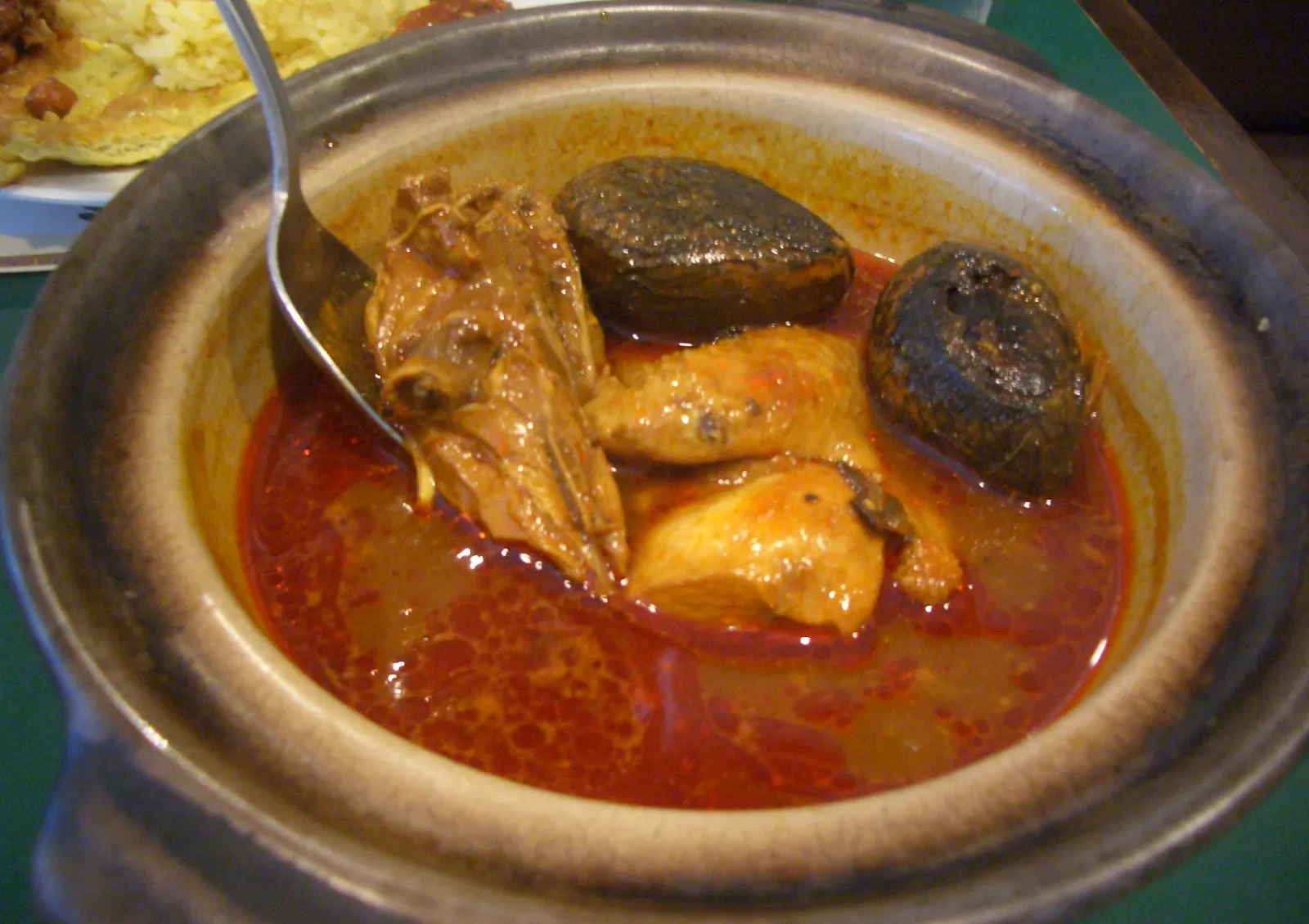
Stir the keluak paste into the gravy and add the 6 whole cracked nuts, then simmer uncovered for about 15 minutes until the gravy turns thick, dark and glossy and coats the chicken. Taste, then add the 5 g salt only if needed — the belacan is already salty. Take the pot off the heat and rest for 5 minutes before serving, so the gravy settles and the chicken stays juicy.
The gravy should coat a spoon, not run off it — if it is still thin, simmer 5 minutes more.
Done when: A thick, dark, glossy gravy clinging to the chicken, with the whole black nuts visible.

 Malaysia
1h 10m