Curated recipes from 193 countries  •  New seasonal Mediterranean issue out now

Overview

Badrijani Nigvzit

Nigvziani Badrijani, Eggplant Rolls with Walnut Filling, Badridjani

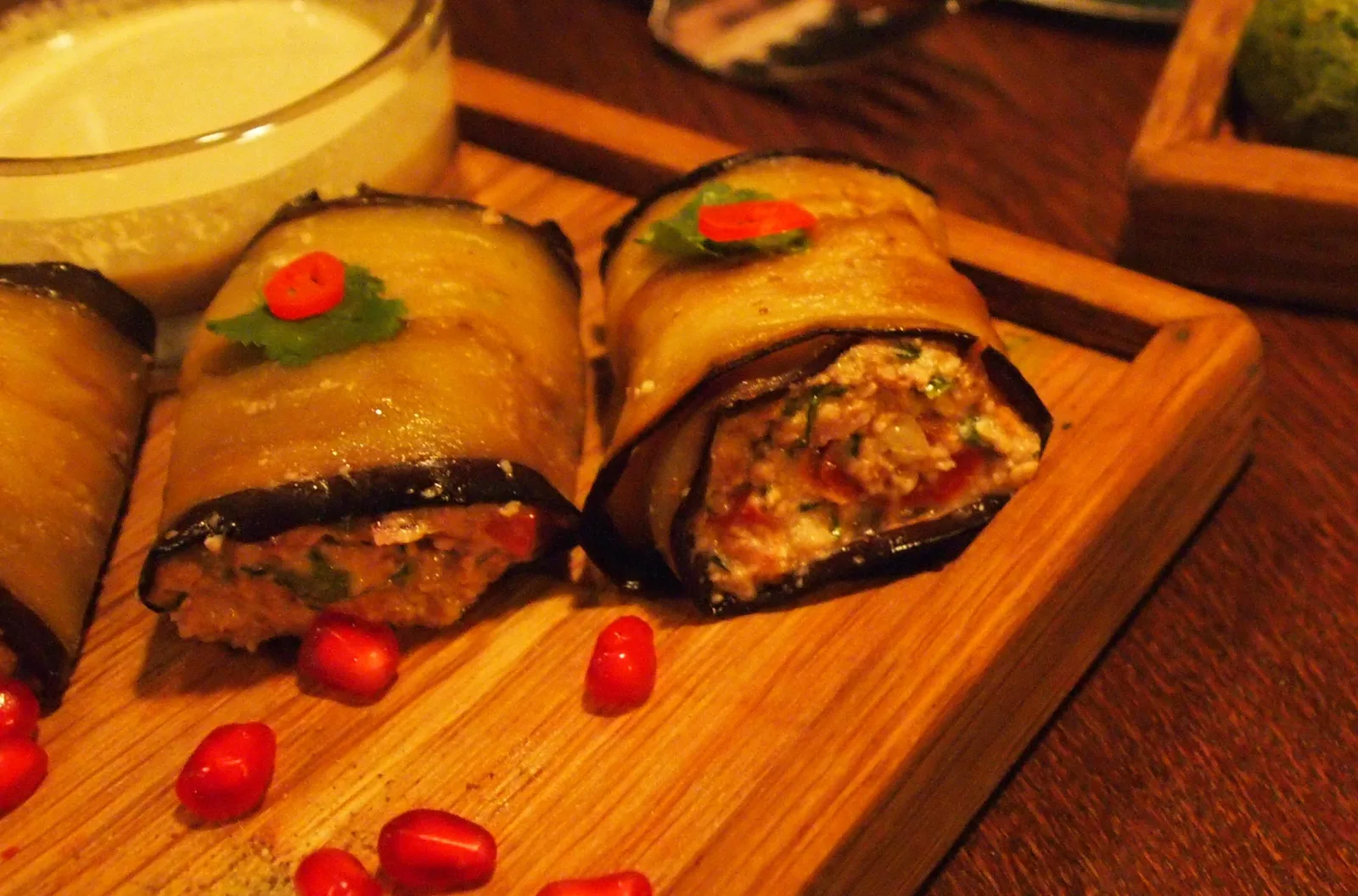
Thin slices of fried eggplant rolled around a garlicky walnut paste, scattered with pomegranate seeds and fresh coriander. This badrijani recipe is a favourite of the Georgian supra feast: rich, herby and completely plant-based. One serving is about 200 g.

Badrijani nigvzit — literally eggplant with walnuts — is one of the most recognisable starters on the Georgian supra, the long feast table where dishes are shared and toasts are made. Walnuts are the backbone of Georgian cooking, ground into sauces, stews and fillings, and here they are blended with garlic, blue fenugreek and vinegar into a paste that is rolled inside fried eggplant and finished with pomegranate seeds.

Pairs well with: Warm lavash, tomato and cucumber salad, and a glass of dry white wine

Provenance

Georgia flag Georgia

Georgian Supra Classic

Nordic & European

Time Dedication

55m

30m prep • 25m cook

Batch Yield

4 Servings

395 kcal per serving

1 serving ≈ 200 g

Technical Skill

Intermediate

Medium (Fry & Roll)

Meal Timing & Digestive Fit

Breakfast

Not Advised

Lunch

Prime Metabolic Fit

Dinner

Ideal Hearty Main

Snack & Tea

Inappropriate

Occasions: Supra feasts, summer lunches, picnic spreads, vegetarian gatherings Cost: Low — about $3–4 per serving at home
Badrijani nigvzit — golden fried eggplant rolls filled with walnut-garlic paste, topped with pomegranate seeds and coriander on a wooden board

Georgian Supra Classic

Photo: salvagekat, CC BY-SA 2.0, via Wikimedia Commons

The Heritage Formulary

Measured Ingredients

Estimated cost: Low — about $3–4 per serving at home (USD)

Fried until golden, rolled while pliable, and served at room temperature so the filling stays cool and garlicky.

Execution Methodology & Culinary Technique

Step-by-Step Cooking Guide

Active 55m
P

Prep Stage: Slice, Salt & Blend

30 Mins

Slice the eggplants lengthwise into 5 mm strips, salt them generously and leave for 15 minutes while you toast the walnuts. Blend the walnuts with the garlic, coriander, blue fenugreek, chilli, vinegar and water into a thick, spreadable paste.

Maestro Tip: Salt draws water out of the eggplant so the slices fry golden instead of soaking up oil — pat them really dry before they hit the pan.

  1. 1

    Slice and Salt the Eggplant

    15 Mins, Plus 15 Mins Resting Room temperature, about 21°C (70°F)

    Trim the ends off the 2 eggplants and slice them lengthwise into 5 mm (1/4 inch) strips — you should get about 12 slices from 600 g. Lay them on a tray, sprinkle with half the salt (2 g) and leave for 15 minutes until beads of moisture appear.

    Slice as evenly as you can; a thick slice will not roll, and a paper-thin one tears. A mandoline set to 5 mm makes this easy.

    Done when: The slices look damp and slightly limp, with moisture beading on the surface.

  2. 2

    Make the Walnut Filling

    10 Mins Room temperature, about 21°C (70°F)

    Toast the 150 g walnuts in a dry pan for 3 minutes until fragrant, then cool for 2 minutes. Tip them into a food processor with the grated garlic, 15 g of the chopped coriander, ground coriander, blue fenugreek, chilli flakes, the remaining 2 g of salt, the 15 ml red wine vinegar and 30 ml water. Blend until you have a thick paste the consistency of hummus, adding a teaspoon more water only if it will not spread.

    Stop the processor and scrape the sides down once — a paste that is too runny leaks out of the rolls, so keep it thick.

    Done when: The paste is smooth, pale brown, and holds its shape on a spoon.

  3. 3

    Fry the Eggplant

    15 Mins 175°C (350°F)

    Pat the eggplant slices completely dry with paper towels. Heat the sunflower oil in a wide frying pan over medium-high heat until it shimmers at about 175°C (350°F). Fry the slices in batches for 3–4 minutes per side until soft and lightly golden, then lift them onto a paper-towel-lined tray. About 40 g of the oil is absorbed in total.

    Do not crowd the pan — slices that touch steam instead of frying and turn soggy.

    Done when: The slices are golden at the edges, soft enough to bend without snapping, and no longer raw-white inside.

  4. 4

    Cool and Drain

    5 Mins Room temperature, about 21°C (70°F)

    Leave the fried slices on the paper towels for 5 minutes until they are cool enough to handle and the surface oil has drained away.

    Blot the tops gently with a second paper towel — dry slices grip the filling and roll neatly.

    Done when: The slices are warm, not hot, and dry to the touch.

  5. 5

    Fill and Roll

    10 Mins Room temperature, about 21°C (70°F)

    Lay a slice flat, spread about a tablespoon of walnut paste over the wide end, and roll it up firmly into a coil. Repeat with the remaining slices and paste, placing each roll seam-side down on a serving plate.

    Spread the paste on the wide end only — paste spread over the whole slice squeezes out when you roll.

    Done when: Each roll is a neat coil that holds its shape without a cocktail stick.

  6. 6

    Garnish and Serve

    5 Mins Serve at room temperature, about 21°C (70°F)

    Scatter the 60 g pomegranate seeds and the remaining whole coriander leaves over the rolls. Serve at room temperature, or chill for up to 2 hours first — the flavours settle and the rolls slice cleanly when cold.

    Chilling firms the filling, so if you serve them cold, take them out of the fridge 15 minutes before eating.

    Done when: The rolls are glossy, ruby-flecked with pomegranate, and hold their shape when picked up.

Finishing Touches & Plating

Serve the rolls at room temperature on a flat plate, scattered with pomegranate seeds and coriander leaves — they are at their best within a few hours of rolling, when the eggplant is still supple and the filling is cool and garlicky.

Nutritional Physiology & Benefits

Nutrition

Energy

395

kcal / serving

Protein

8g

Complete AA

Carbs

19g

Complex

Fats

35g

Healthy

Per serving (4 servings · 1 serving ≈ 200 g)
Energy395 kcal
Protein8 g
Carbohydrates19 g
Fat35 g
Fibre8.4 g
Sugar8.4 g
Sodium396 mg
Per 100g
Energy198 kcal
Protein4 g
Carbohydrates9.5 g
Fat17.6 g
Fibre4.2 g
Sugar4.2 g
Sodium198 mg

Nutrition values are estimated — calculated from USDA FoodData Central values for the listed ingredients.

Vitamins & minerals: Vitamin E and magnesium (walnuts), vitamin C and folate (pomegranate, coriander), potassium and fibre (eggplant). Nutrition values are estimated.

Fully Plant-Based

Every ingredient comes from plants, so the rolls suit vegan and vegetarian tables with no substitution needed.

Walnuts Bring Healthy Fats and Fibre

With 150 g of walnuts across 4 servings, each roll brings plant fats, about 8 g of fibre per serving, and magnesium.

Light Starter, Big Flavour

At about 395 kcal a serving, the rolls are a satisfying starter that leaves room for the rest of a Georgian table.

Food Pairings

What to Eat With

To optimize nutrient absorption and elevate the sensory depth, pair with these authentic accompaniments:

Sides

Warm Lavash

Soft flatbread is the natural partner: it scoops up any walnut paste that escapes and turns the rolls into a fuller lunch.

Pkhali (Spinach and Walnut Pate)

Another walnut-based Georgian starter, pkhali shares the same garlicky, herby language, so the two sit happily on one supra table.

Vegetables

Tomato and Cucumber Salad

Crisp, juicy tomato and cucumber with red onion cut through the rich walnut filling and refresh the palate between rolls.

Drinks

Dry White Wine

A dry Georgian white such as Rkatsiteli has the acidity to balance the oily walnut paste without overpowering the herbs.

Complete menu

Serve three badrijani rolls per person with warm lavash, a tomato and cucumber salad, and pkhali — a classic Georgian supra opening.

Digestive Guardrails

What NOT to Combine

To prevent digestive distress, sluggishness, or palate clash, avoid pairing the dish with these elements:

A Heavy Cream Dip

The walnut filling is already rich in fat, so a mayonnaise or cream dip adds a large amount of fat on top; a sharp tomato salad is the lighter contrast. This is general information, not medical advice.

Under-Salted Eggplant

Skipping the salting step leaves the slices watery, so they steam rather than fry and the rolls turn soggy. This is general cooking advice, not medical advice.

General information only, not medical advice — consult a doctor for personal dietary decisions.

Who Should Eat It

Who Should Eat

  • General adultsA rich, herby starter — two or three rolls make a generous lunch portion.
  • ChildrenSuitable, but keep the chilli flakes out for young children and cut the rolls into bite-size pieces.
  • ElderlySoft and easy to chew; serve at room temperature and skip the chilli if spice is a problem.
  • Pregnant womenPlant-based and low in sugar; watch the portion, as walnuts make it energy-dense.
  • Breastfeeding womenA good plant-based option; the walnuts supply fats and protein while breastfeeding.
  • AthletesA useful plant-protein starter, though the protein per serving is modest — pair with beans or cheese for a full training meal.
  • Weight gainEnergy-dense from walnuts and frying oil, so it suits a weight-gain plate in normal portions.
  • Weight lossTasty but calorie-dense — one or two rolls with a big salad is the lighter way to enjoy it.

Health Conditions — Adjust or Avoid

Conditions

  • DiabetesLow in sugar and carbohydrate per serving; the walnut fat slows digestion, but keep portions modest and ask your clinician about portions.
  • High blood pressureContains about 396 mg of sodium per serving; skip the extra salt on the eggplant if you watch sodium, and ask your clinician.
  • Kidney diseaseWalnuts are high in potassium and the dish is moderate in protein; people with kidney disease should ask their clinician before eating large portions.
  • GoutWalnuts are not a purine-rich food, and the dish contains no meat; still, ask your clinician if gout flares are a concern.
  • Stomach issuesFried eggplant and raw garlic can trouble sensitive stomachs — eat a small portion first and skip the chilli flakes.
  • Cardiovascular diseaseThe fat is mostly unsaturated plant fat from walnuts, which fits a heart-friendly pattern in modest portions; ask your clinician.
  • Fatty liverFried food and a rich nut paste make this a heavier choice; one or two rolls with salad is the lighter option, and ask your clinician if you follow a liver-friendly diet.
  • Food allergiesContains tree nuts (walnuts) — a major allergen. Do not serve to anyone with a walnut or tree-nut allergy; the dish is otherwise free of gluten, dairy, egg and soy.
  • Special therapeutic dietsNaturally vegan and gluten-free as written; check any bought flatbread served alongside, and ask your clinician or dietitian about fitting it into a therapeutic diet.

If you have a medical condition, consult your doctor before changing your diet.

Storage & Use

Storage & Use

How to store
Cool quickly and store in a sealed container in the fridge.
In the fridge
Up to 2 days.
In the freezer
Not recommended — the eggplant turns watery on thawing.
How to reheat
Best eaten cold or at room temperature; if you prefer them warm, heat gently in an oven at 150°C (300°F) for 5 minutes, never in a microwave, which makes them soggy.
Freezing recommended
No — the texture does not survive freezing.
Signs it has spoiled
Sour smell, slimy surface, or dark spots on the eggplant.

More recipes to explore

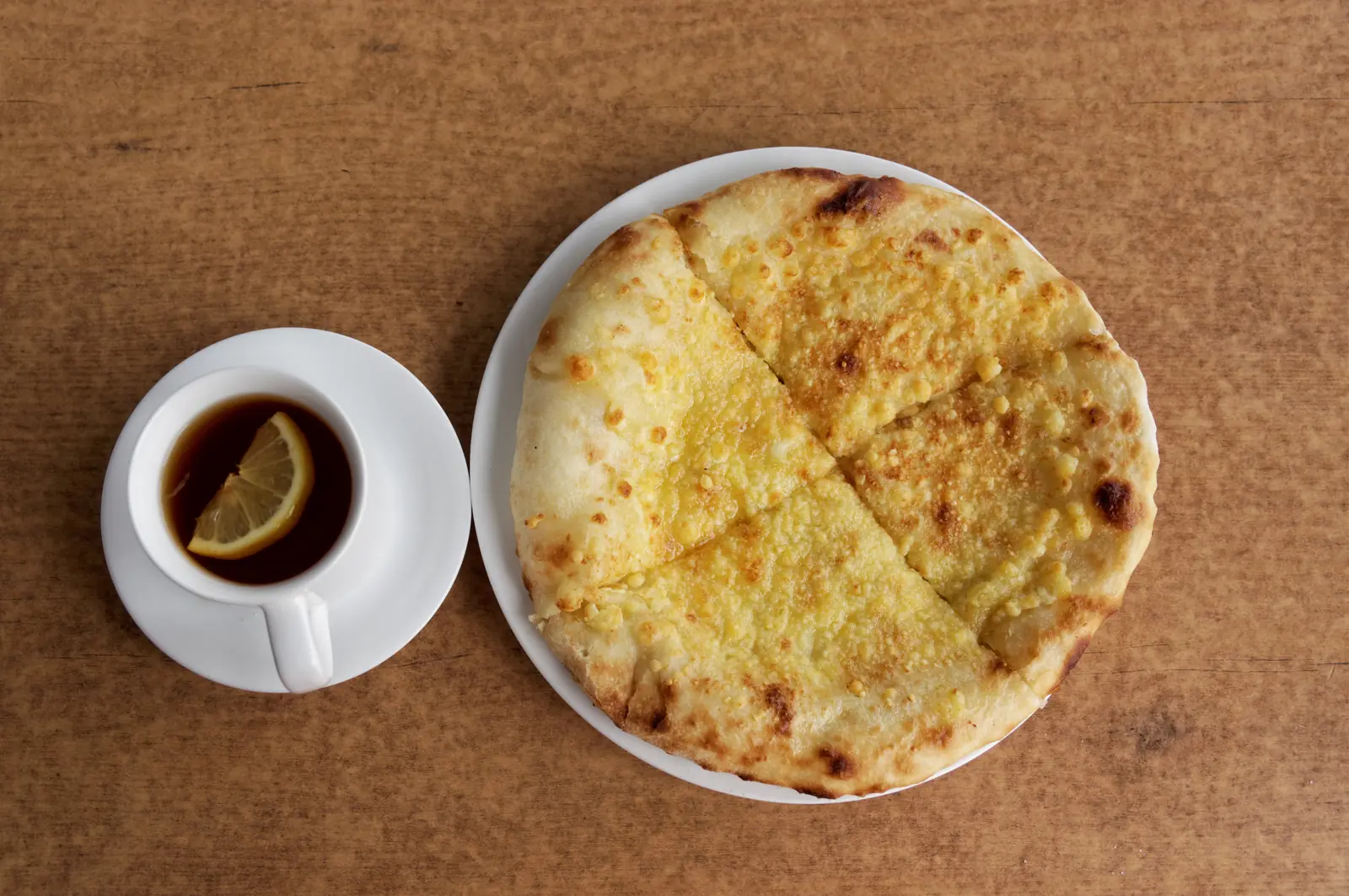
A round golden khachapuri cheese bread, sliced into wedges, served with a cup of tea Georgia flag Georgia 1h 20m
Lunch •Georgian Heritage

Khachapuri

This khachapuri recipe bakes a soft yeasted dough around a filling of sulguni and feta until the crust turns golden and the cheese melts into strings. It is the Imeruli version of Georgia's national dish: round, flat and cut into wedges, eaten hot with the hands. One serving is about 241 g.

Comfort & Warmth

A round, golden flatbread stuffed with molten sulguni and feta — Georgia's national dish, best eaten hot from the oven.

Pairs Well With
Fresh tomatoes, herbs & black tea
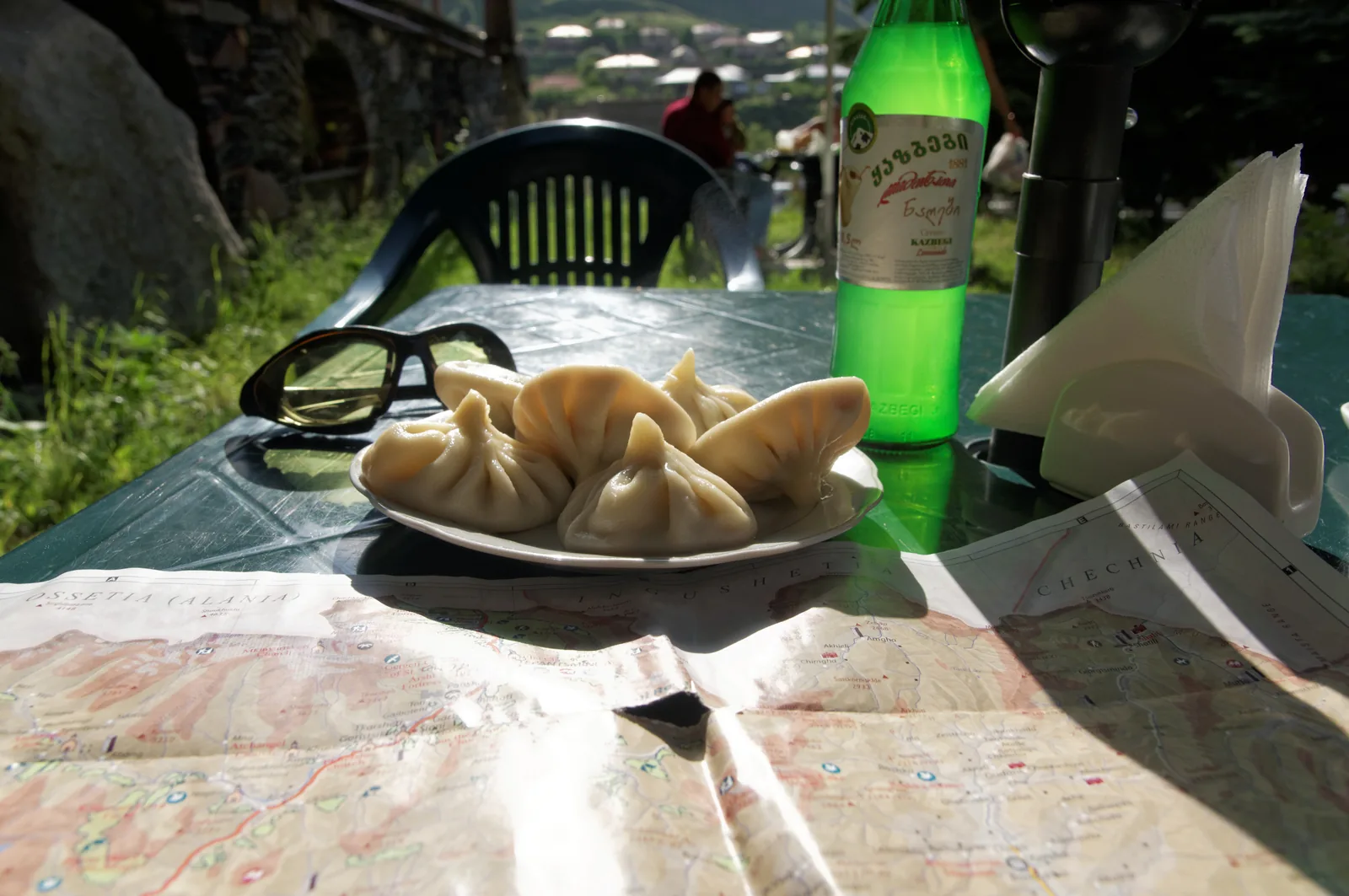
A plate of khinkali soup dumplings with their knotted tops, served outdoors in Kazbegi, Georgia Georgia flag Georgia 1h 15m
Dinner •Georgian Heritage

Khinkali

This khinkali recipe wraps a juicy filling of beef, pork, onion and herbs in thin wheat dough, pleats each parcel into a little purse and boils them until the meat makes its own broth inside. Khinkali come from the mountain regions of Georgia and are eaten by hand, holding the topknot. One serving is about 346 g.

Comfort & Warmth

Pleated dough parcels filled with juicy spiced meat — Georgia's famous soup dumplings, eaten by hand with black pepper.

Pairs Well With
Black pepper, fresh herbs & Georgian beer
High Protein
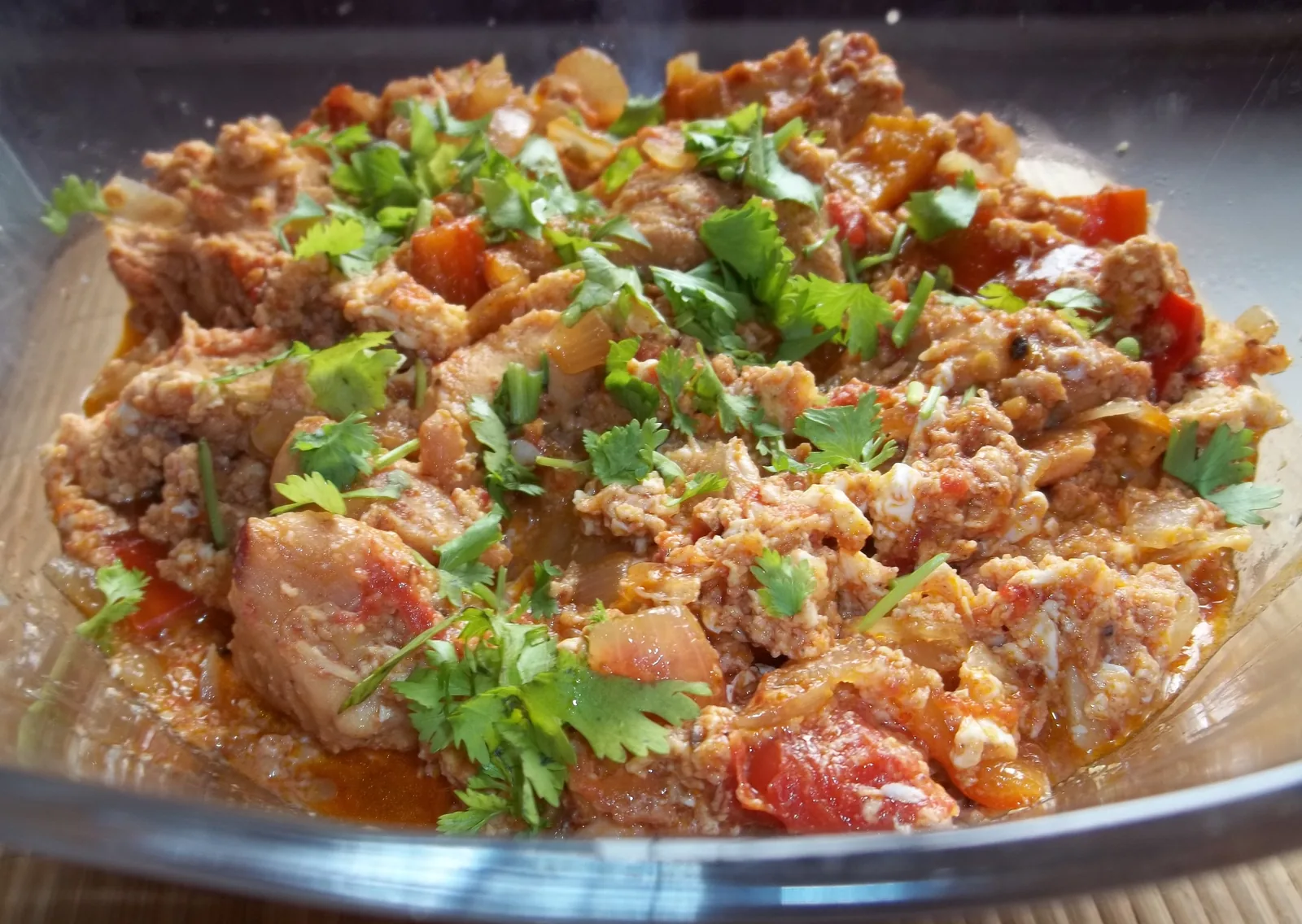
A glass dish of chakhokhbili, chicken stewed in tomato sauce with peppers and fresh coriander Georgia flag Georgia 1h 10m
Dinner •Georgian Heritage

Chakhokhbili

This chakhokhbili recipe browns chicken thighs, then braises them slowly in crushed tomatoes, onions, peppers and garlic until the meat falls off the bone and the sauce turns rich and sweet. It is Georgia's everyday chicken stew, loaded with fresh coriander at the end. One serving is about 494 g.

Comfort & Warmth

Chicken braised slowly in tomatoes, onions and peppers with fresh coriander — Georgia's fragrant, herb-loaded one-pot stew.

Pairs Well With
Lavash bread, rice & fresh coriander
High Protein
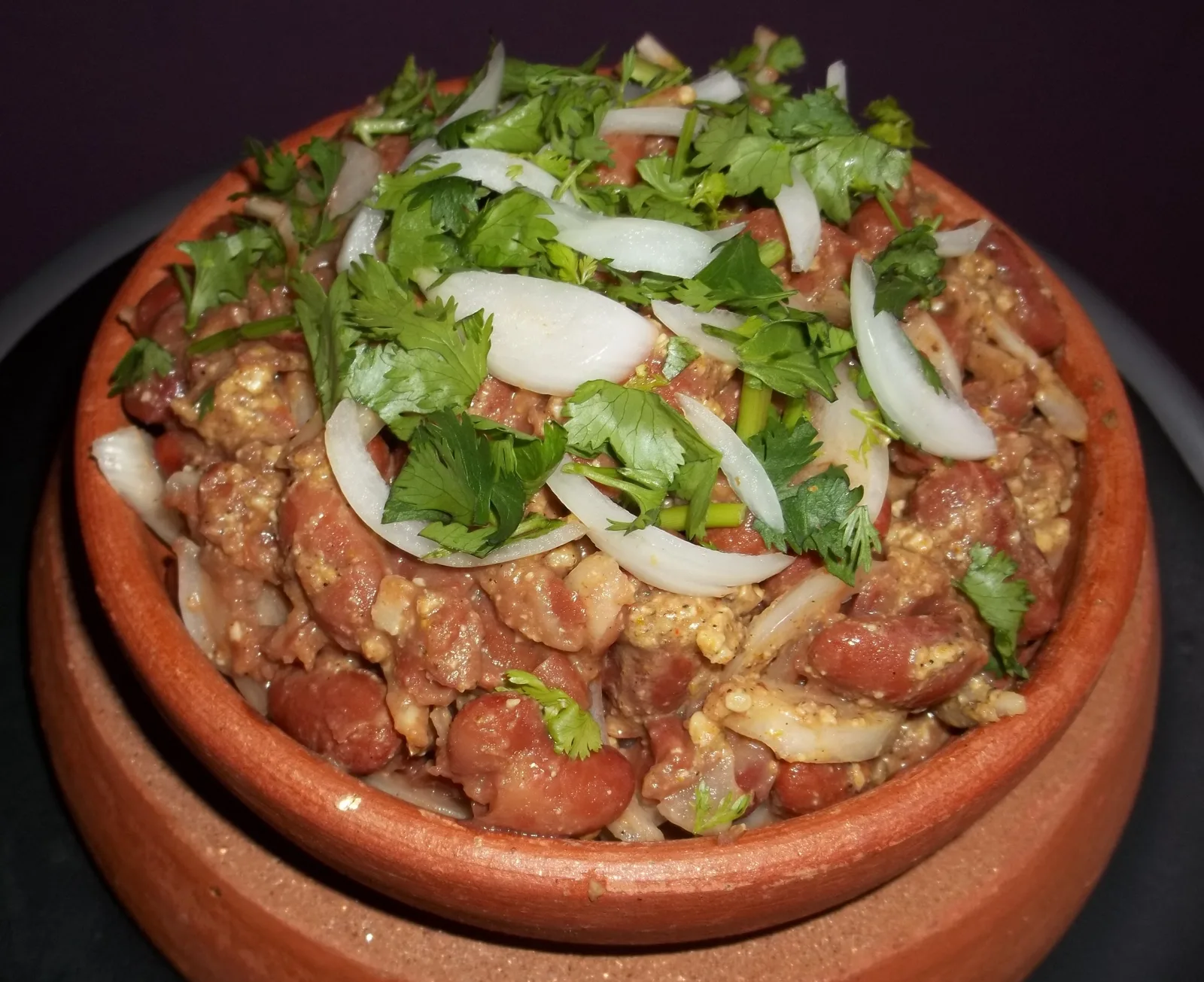
A clay pot of lobio: red kidney beans in a walnut sauce, topped with fresh coriander leaves and raw onion rings. Georgia flag Georgia 1h 20m
Dinner •Georgian Everyday Heritage

Lobio

This lobio recipe simmers red kidney beans until soft, then mashes them with a walnut, garlic and blue fenugreek paste, so the stew turns thick, nutty and fragrant. Fresh coriander, raw onion rings and pomegranate seeds go on top just before serving. One serving is about 260 g, served hot in a clay pot or deep bowl with cornbread.

Comfort & Warmth

A slow-cooked Georgian kidney bean stew with ground walnuts, blue fenugreek and fresh coriander, served hot in a clay pot.

Pairs Well With
Cornbread (mchadi) and a glass of Georgian red wine or sparkling water.

The Dinner Gazette

Never wonder what’s for dinner again

One email a week with easy dinner ideas from around the world — ingredients, steps and nutrition, tested in our kitchen first.

Delivered every Thursday morning. Unsubscribe anytime.