
Curated recipes from 193 countries  •  New seasonal Mediterranean issue out now

Overview

Bahamian Cracked Conch

Cracked Conch, Bahamian Fried Conch

This bahamian cracked conch recipe is the national dish of the Bahamas: queen conch is pounded thin — 'cracked' — dipped in seasoned flour, egg and cracker crumbs, then fried until the crust is golden and shattering while the conch inside stays tender. It arrives at the table as a proper main plate, usually beside peas and rice, with tartar sauce and lime. One serving is about 212 g.

Cracked conch is the national dish of the Bahamas, and its name describes the cooking: the tough queen conch is 'cracked' — pounded flat with a mallet — before it is breaded and fried. It is the centrepiece of the Bahamian fish fry, sold from the shacks of Arawak Cay in Nassau and from beach stalls across the Family Islands, always with peas and rice on the side.

Pairs well with: Peas and rice, tartar sauce & lime

Provenance

Bahamas flag Bahamas

Nassau Heritage

Latin America & Caribbean

Time Dedication

45m

30m prep • 15m cook

Batch Yield

4 Servings

486 kcal per serving

1 serving ≈ 212 g

Technical Skill

Intermediate

Medium (Pounding & Frying)

Meal Timing & Digestive Fit

Breakfast

Not Advised

Lunch

Hearty Midday Main

Dinner

Ideal Hearty Main

Snack & Tea

Inappropriate

Occasions: Sunday dinner, Fish fry, Family gathering, Beach day Cost: Medium — about $5–6 per serving at home (conch is the main cost)
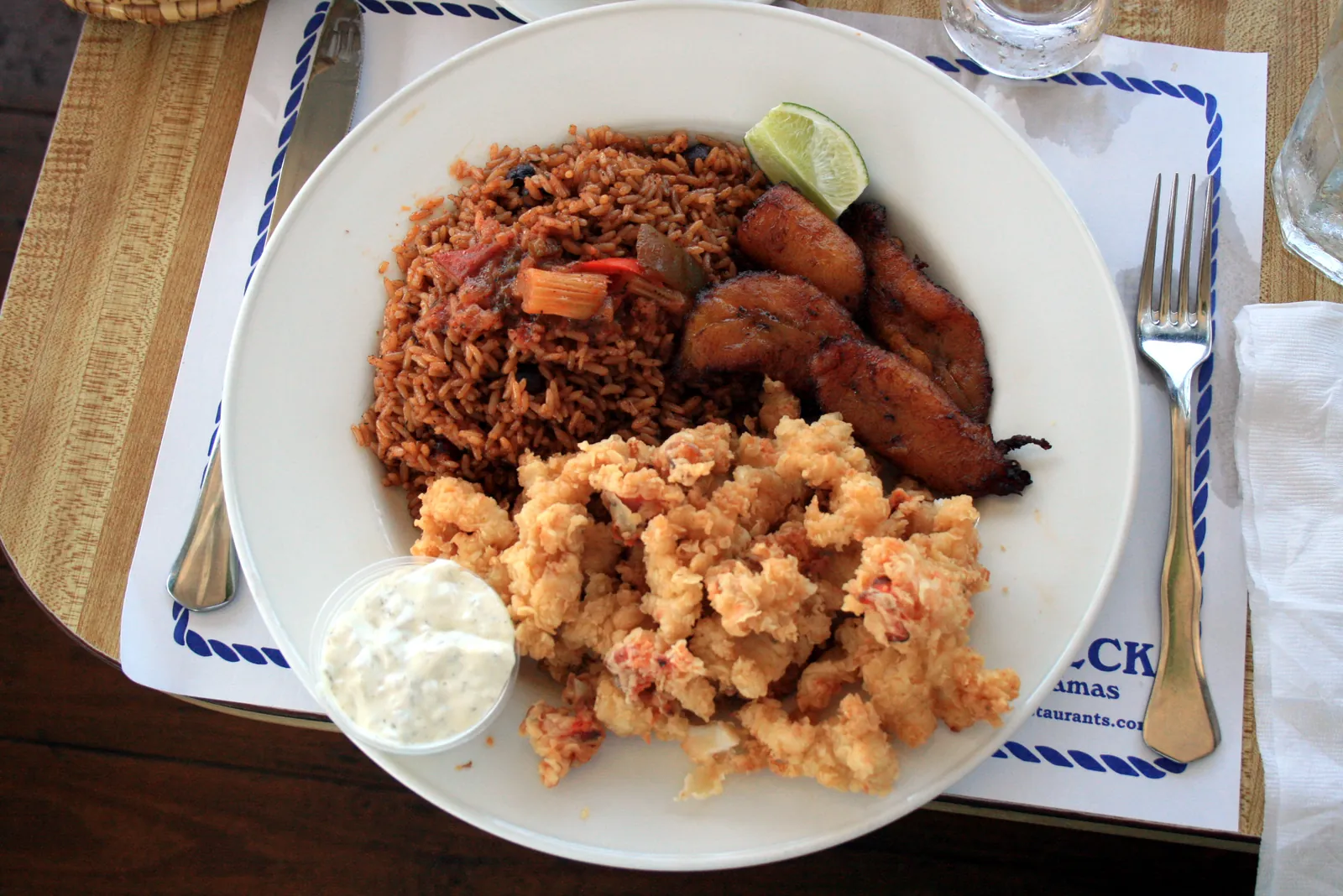
A plate of golden fried cracked conch with peas and rice, plantain and tartar sauce

Nassau Heritage

Photo: rubixcuben, CC BY 2.0, via Flickr

The Heritage Formulary

Measured Ingredients

Estimated cost: Medium — about $5–6 per serving at home (conch is the main cost) (USD)

Made with real queen conch, pounded thin by hand and fried in small batches so the crust stays crisp.

Execution Methodology & Culinary Technique

Step-by-Step Cooking Guide

Active 45m
P

Prep Stage: Crack, Season & Set Up the Breading Line

30 Mins • Pounding & Breading

Slice the conch into steaks and pound each one thin between cling film — this 'cracking' is what makes tough conch tender. Set out three shallow bowls: seasoned flour, egg wash with garlic and lime, and cracker crumbs. Dredge each steak in flour, dip in egg, press into crumbs, and rest the breaded steaks for 10 minutes so the coating sticks.

Maestro Tip: Pound evenly from the centre outwards — thin spots tear, thick spots stay chewy.

  1. 1

    Pound the Conch Thin

    15 Mins Room temperature, ~21°C (70°F)

    Lay each conch steak between two sheets of cling film and pound with the flat side of a meat mallet until it is about 5 mm thick and roughly doubled in size. Season both sides lightly with a pinch of salt.

    Work gently and evenly — you are tenderising, not shredding. If a steak tears, press it back together; the crumbs will hold it.

    Done when: Each steak is thin, even and supple, with no thick chewy centre.

  2. 2

    Bread the Steaks

    10 Mins Room temperature, ~21°C (70°F)

    Dredge each steak in the seasoned flour and shake off the excess. Dip it in the egg wash so it is coated all over, then press it firmly into the cracker crumbs on both sides. Lay the breaded steaks on a tray and rest for 10 minutes.

    Keep one hand for the dry bowls and one for the egg wash — your fingers stay clean and the crumbs stay dry.

    Done when: Every steak is evenly coated with crumbs that cling firmly and do not fall off when lifted.

  3. 3

    Fry Until Golden

    10 Mins Medium-high heat, oil at 180°C (355°F)

    Heat the oil to 180°C (355°F). Fry the steaks in batches of two for 2 to 3 minutes per side, until the crust is deep golden and crisp. Lift out with tongs and drain on a wire rack.

    Do not fry more than two at a time — the steaks are wide and the oil must stay hot, or the crumbs soak up grease.

    Done when: The crust is deep golden and crisp, and the conch inside is hot and tender, reaching at least 63°C (145°F).

  4. 4

    Rest & Serve

    5 Mins Serve hot, above 63°C (145°F)

    Rest the fried conch for 2 minutes on the rack, then plate with peas and rice, tartar sauce and lime wedges. Sprinkle with a little extra lime juice just before serving.

    Resting on a rack, not on paper, keeps the underside crisp.

    Done when: The crust is still crackling and the plate is ready to eat at once.

Finishing Touches & Plating

Serve the cracked conch straight from the pan, golden and crisp, with peas and rice, tartar sauce and plenty of lime.

Nutritional Physiology & Benefits

Nutrition

Energy

486

kcal / serving

Protein

46g

Complete AA

Carbs

37g

Complex

Fats

14g

Healthy

Per serving (4 servings · 1 serving ≈ 212 g)
Energy486 kcal
Protein46 g
Carbohydrates37 g
Fat14 g
Fibre2.0 g
Sugar1.5 g
Sodium1301 mg
Per 100g
Energy229 kcal
Protein21.5 g
Carbohydrates17.2 g
Fat6.8 g
Fibre1 g
Sugar0.7 g
Sodium612 mg

Nutrition values are estimated — calculated from USDA FoodData Central values for the listed ingredients.

Vitamins & minerals: Vitamin B12 and iron (conch), vitamin C (lime and jalapeno), vitamin B6 (garlic). Nutrition values are estimated.

Very High in Lean Protein

Each serving carries about 45 g of protein from the conch, with little fat of its own.

Simple, Honest Coating

Flour, egg and cracker crumbs — a light, crisp crust that lets the flavour of the conch come through.

A Full Plate, Not a Snack

Served with peas and rice and a fresh salad, cracked conch makes a complete, satisfying dinner.

Food Pairings

What to Eat With

To optimize nutrient absorption and elevate the sensory depth, pair with these authentic accompaniments:

Sides

Bahamian Peas and Rice

The classic partner: soft, savoury pigeon-pea rice soaks up the juices and turns the fried conch into a full Bahamian plate.

Sauces

Tartar Sauce

Cool, tangy tartar sauce is the traditional dip — its sharpness cuts the richness of the fried crust.

Vegetables

Coleslaw

Crisp, vinegary coleslaw refreshes the palate between bites of hot fried conch.

Drinks

Cold Kalik Beer or Limeade

A cold Bahamian lager or a sharp limeade is the fish-fry drink of choice with fried food.

Complete menu

Start with conch fritters, follow with cracked conch, Bahamian peas and rice and coleslaw, and finish with fresh mango or pineapple.

Digestive Guardrails

What NOT to Combine

To prevent digestive distress, sluggishness, or palate clash, avoid pairing the dish with these elements:

Skipping the Pounding

Unpounded conch stays tough and rubbery no matter how long you fry it; the pounding is what makes it tender, so do not skip it. This is general information, not medical advice.

Frying in Oil That Is Too Cool

Oil below about 170°C (340°F) soaks into the crumbs instead of crisping them, leaving greasy, heavy conch; keep the oil hot and fry in small batches. This is general information, not medical advice.

General information only, not medical advice — consult a doctor for personal dietary decisions.

Who Should Eat It

Who Should Eat

  • General adultsThe Bahamas' national dish — a proper dinner plate of crisp fried conch with peas and rice.
  • ChildrenChildren usually enjoy the crunchy coating; cut the steak into strips for dipping and keep the jalapeno out of their portion.
  • ElderlyTender pounded conch is easy to chew, but fried food is heavy — a smaller steak with extra coleslaw suits older eaters best.
  • Pregnant womenConch cooked through to at least 63°C (145°F) and served hot is fine; keep portions moderate and ask your clinician if you are unsure about shellfish.
  • Breastfeeding womenA filling, protein-rich dinner that suits breastfeeding; the chilli heat is mild, so taste first.
  • AthletesVery high in protein, so it refuels well after training — though it is fried, so eat it a few hours before, not right before, exercise.
  • Weight gainEnergy-dense with protein and a fried crust, so it suits people who need extra calories.
  • Weight lossFried and fairly salty, so keep the portion to one steak, skip extra sauce, and load the plate with coleslaw and salad.

Health Conditions — Adjust or Avoid

Conditions

  • DiabetesThe cracker-crumb coating adds carbohydrate, so keep the portion to one steak and count the rice as well; ask your clinician about portions.
  • High blood pressureConch is naturally salty and this serving carries about 1,301 mg sodium, so people watching salt should eat a small portion and skip extra salty sauces; ask your clinician.
  • Kidney diseaseHigh in protein and sodium from the conch and salt; people with kidney disease should watch portion size and ask their clinician.
  • GoutConch is a shellfish and is moderate in purines; a large portion may not suit people prone to gout — ask your clinician.
  • Stomach issuesFried food can feel heavy on a sensitive stomach; eat slowly, keep the portion modest, and leave out the jalapeno if needed.
  • Cardiovascular diseaseFried in oil, so the dish is higher in fat; people with cardiovascular disease should keep portions small and eat it with salad and coleslaw; ask your clinician.
  • Fatty liverFried coating adds fat and energy; keep portions modest and balance the plate with fresh vegetables; ask your clinician.
  • Food allergiesContains conch (shellfish), wheat (flour and cracker crumbs) and egg. People with a shellfish, wheat or egg allergy must not eat this dish. If you have any food allergy, check every ingredient and ask your clinician.
  • Special therapeutic dietsNot suitable as a low-sodium, low-fat or gluten-free therapeutic diet without changes (less salt, baked instead of fried, gluten-free crumbs); discuss adaptations with your clinician or dietitian.

If you have a medical condition, consult your doctor before changing your diet.

Storage & Use

Storage & Use

How to store
Cool completely, then store the fried steaks in an airtight container lined with paper towel.
In the fridge
2 days.
In the freezer
Up to 1 month (freeze the breaded raw steaks for best results).
How to reheat
Reheat in a hot oven at 200°C (400°F) for 8 to 10 minutes until crisp and steaming hot throughout, to 74°C (165°F); do not microwave — the crumbs go soggy.
Freezing recommended
Yes, up to 1 month; freeze the breaded raw steaks on a tray, then bag them and fry from frozen, adding 1 to 2 minutes per side.
Signs it has spoiled
Sour or fishy smell, slimy texture, or mould.

More recipes to explore

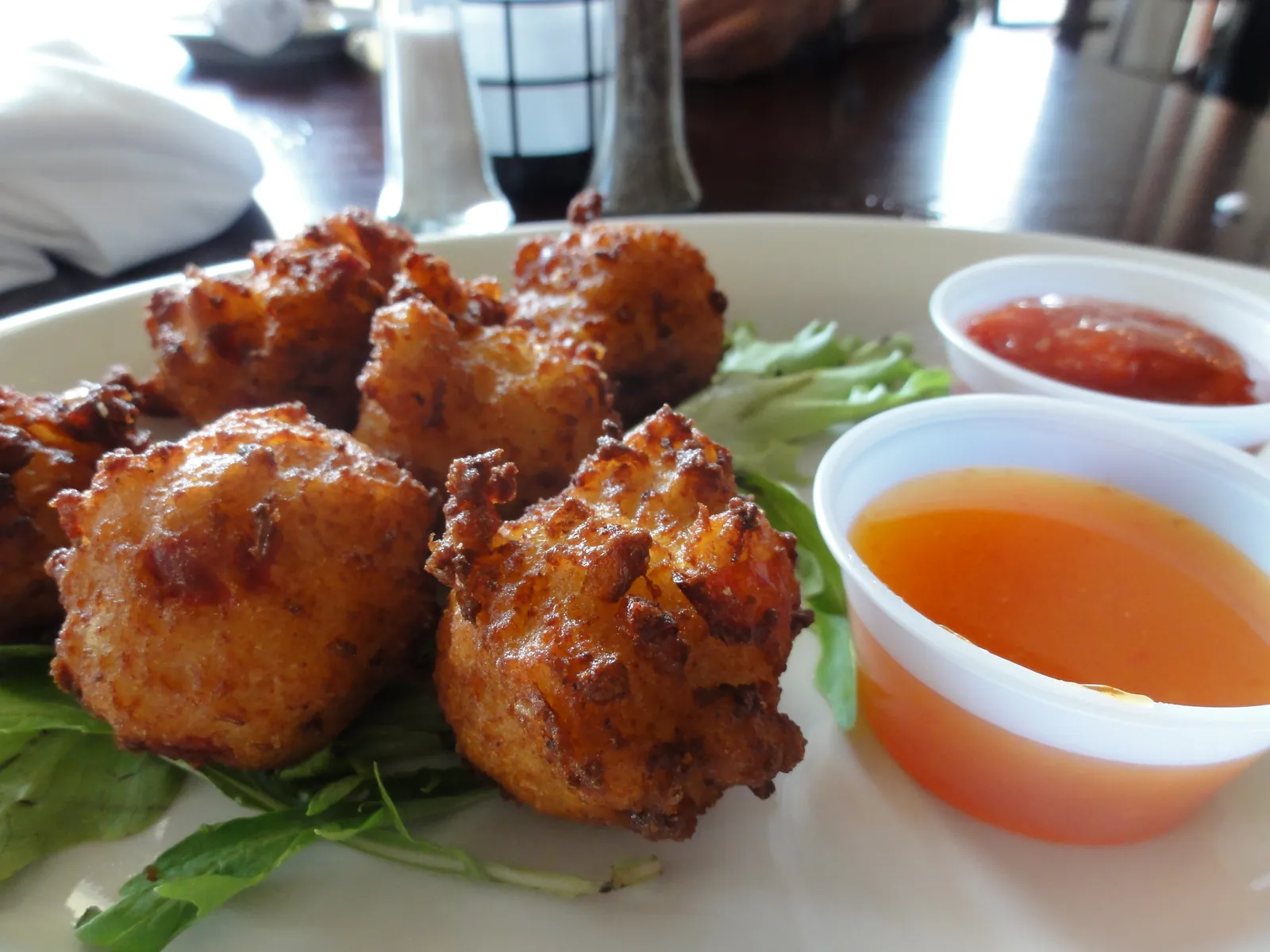
A plate of golden-brown Bahamian conch fritters with two small bowls of dipping sauce Bahamas flag Bahamas 45m
Snack & Tea •Nassau Heritage

Bahamian Conch Fritters

This bahamian conch fritters recipe turns tender queen conch into crisp, golden balls: the conch is minced and folded into a cornmeal batter with onion, sweet pepper, celery and a little heat from jalapeno, then deep-fried until the outside shatters and the inside stays soft and savoury. They are the snack every Bahamian fish fry starts with, best eaten hot from the oil with cocktail sauce or a squeeze of lime. One serving is about 200 g (5 fritters).

Island Snack & Sharing

Crisp golden balls of minced queen conch, cornmeal and island peppers, fried hot and served with a cool dipping sauce.

Pairs Well With
Cocktail sauce, lime wedges & a cold Kalik beer
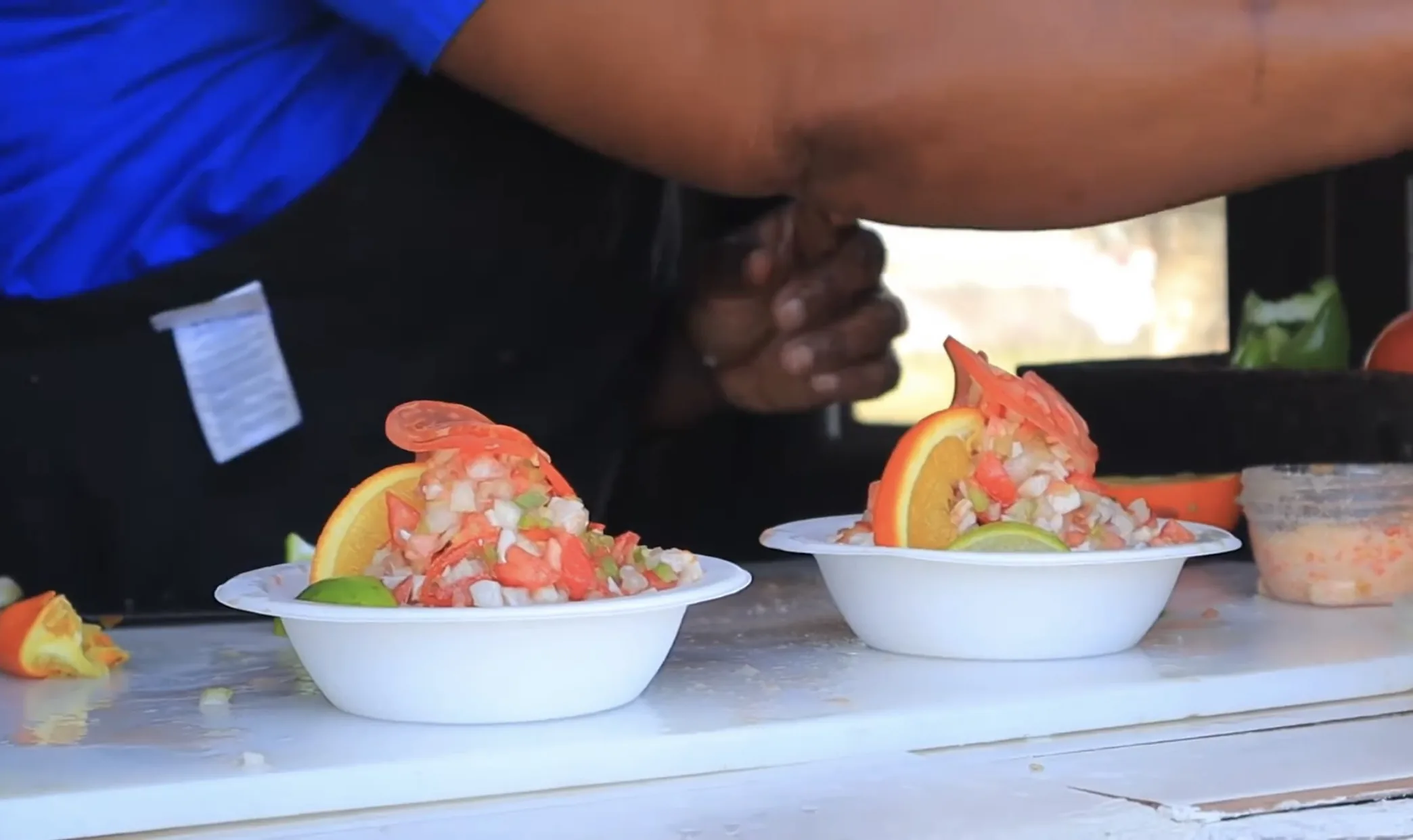
Two bowls of Bahamian conch salad — finely diced raw conch with tomato, onion and peppers — garnished with orange and lime wedges at a Nassau fish-fry stall Bahamas flag Bahamas 45m
Lunch •Nassau Heritage

Bahamian Conch Salad

This bahamian conch salad recipe is the Bahamas' answer to ceviche: raw queen conch, tenderised and diced small, tossed with tomato, sweet onion, green pepper, celery and cucumber, then cured in fresh lime and orange juice with a little goat pepper heat. No stove, no frying — the citrus does the work, firming the conch and turning it opaque at the edges while the vegetables stay crisp. It is the dish Nassau's fish-fry vendors chop to order, piled high in a bowl and eaten cold with a spoon. One serving is about 362 g.

Fresh & Light Island Lunch

Raw queen conch cured in lime juice with tomato, onion and peppers, served cold as a bright, high-protein salad.

Pairs Well With
Johnny cake, crackers & a cold Kalik beer
High Protein
Bœuf bourguignon — French beef braised in red wine France flag France 4h
Dinner •Burgundy Terroir

Bœuf Bourguignon

Beef braised gently in red wine until the connective tissue melts into a velvet, gelatin-rich sauce — the classic Burgundy Sunday dinner.

Cellular Repair

Beef braised in red wine until spoon-tender, with mushrooms and pearl onions.

Pairs Well With
Parsnip Purée & Steamed French Haricots Verts
High Protein
Vietnamese braised pork belly with golden eggs in caramel sauce Vietnam flag Vietnam 1h 45m
Dinner •One Pot

Vietnamese Braised Pork and Eggs

Pork belly slowly braised in coconut water and caramel until meltingly tender, with golden eggs that soak up the sweet-savoury sauce — the Vietnamese family dish that tastes better the next day.

Comfort & Sustained Energy

Slow-braised pork belly and eggs in coconut water and caramel.

Pairs Well With
Steamed rice & pickled mustard greens
High Protein

The Dinner Gazette

Never wonder what’s for dinner again

One email a week with easy dinner ideas from around the world — ingredients, steps and nutrition, tested in our kitchen first.

Delivered every Thursday morning. Unsubscribe anytime.



