-
1
Beat the Cheese and Sugar
5 Mins
No heat — room temperature
Beat the softened cream cheese with the sugar and salt on medium speed for about 3 minutes, scraping the bowl twice, until completely smooth with no lumps at all.
If the cheese is still cold, the batter will stay lumpy no matter how long you beat it — softening is not a step you can skip.
Done when: The mixture is pale, smooth and lump-free.
-
2
Add the Eggs One at a Time
5 Mins
No heat — room temperature
Add the eggs one at a time, beating for about 30 seconds after each one until it disappears into the batter before adding the next. Scrape the bowl down once halfway through.
One at a time is not fussiness — eggs added all at once make the batter split and bake unevenly.
Done when: The batter is glossy, smooth and pourable, with no streaks of egg.
-
3
Add Cream, Vanilla and Flour
5 Mins
No heat — room temperature
Pour in the cream and vanilla and beat on low until just combined. Sift in the flour and beat on low for 30 seconds more, just until it disappears. Pour the batter into the lined tin and tap it once on the counter to pop any large bubbles.
Stop as soon as the flour vanishes — beating after that whips in air, and air makes the cake crack instead of sinking gently.
Done when: The batter is smooth, thin enough to pour, and sits level in the tin.
-
4
Bake Until Deeply Burnt
50 Mins
Oven 220°C (425°F)
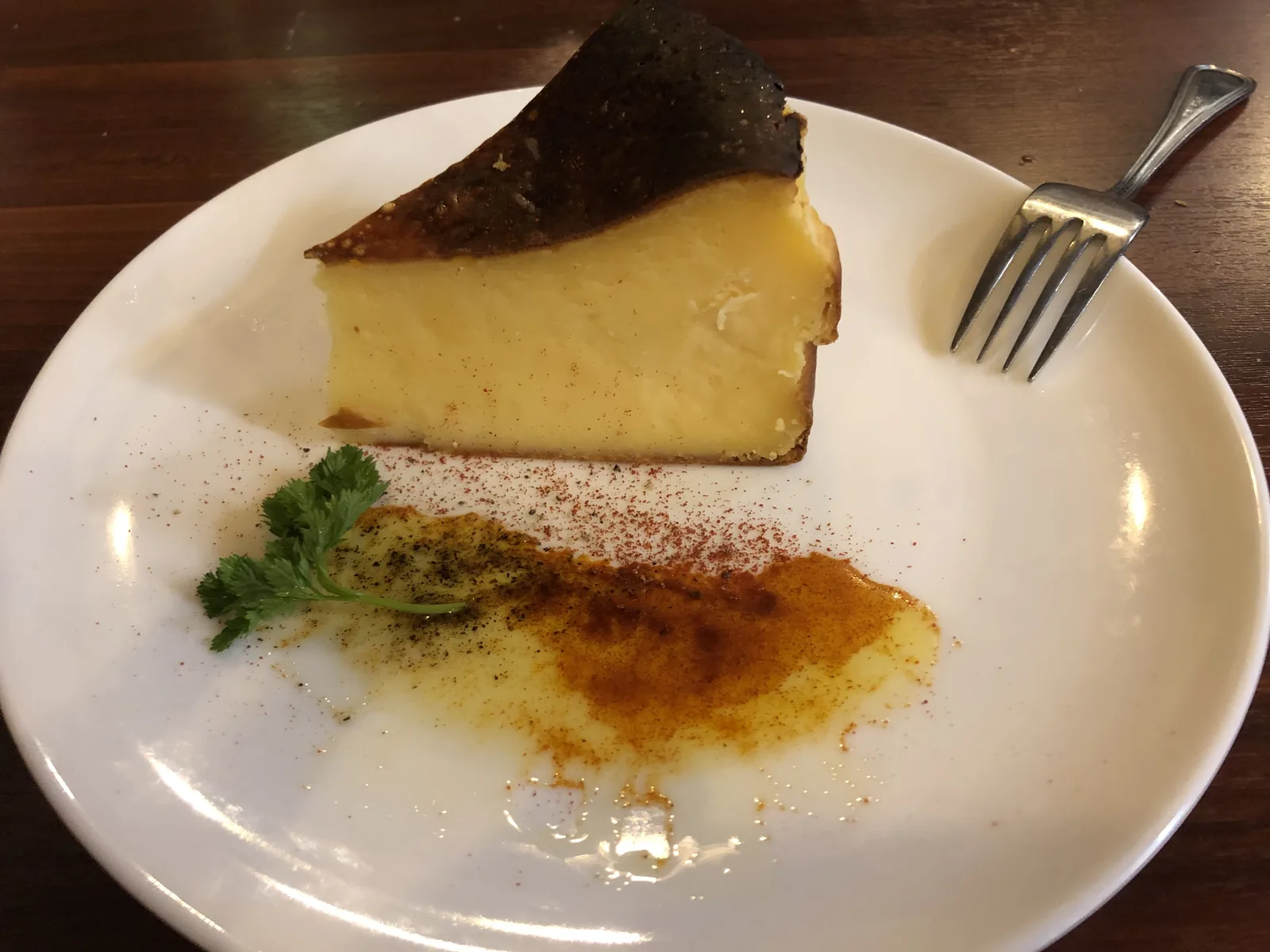
Bake at 220°C (425°F) for about 50 minutes, until the top is deeply browned — almost black in places — and the cake has risen high above the tin. The centre should still wobble like jelly when you shake the tin gently; that wobble is the custardy middle, not underbaking. The eggs set well above 71°C (160°F) during the bake.
Do not open the oven to check. The first time, trust the clock and the smell: when the top looks burnt, it is done. A pale top means a firm, ordinary cheesecake.
Done when: The top is dark mahogany to almost black, the cake has risen and started to sink at the edges, and the centre jiggles.
-
5
Cool and Chill Before Slicing
5 Mins active, plus 4 hours chilling
No heat — cool to room temperature, then chill
Cool the cake in the tin for 1 hour — it will sink as it cools, which is exactly right — then chill in the fridge for at least 4 hours, or overnight. Unclip the tin, peel the parchment back, and slice with a long, thin knife wiped clean between cuts.
Cutting it warm is tempting and always a mistake: a warm Basque cheesecake slumps off the knife. Cold, it slices clean and the centre stays creamy.
Done when: The cake is cold and firm enough to slice, with a pale, creamy centre under the dark top.
auto_awesome Finishing Touches & Plating
Serve the chilled cheesecake in thick slices, straight from the fridge, with nothing more than berries on the side — the burnt top and the custardy centre are the whole show.


 Spain
15m