Curated recipes from 193 countries  •  New seasonal Mediterranean issue out now

Overview

Belgian Pralines

Belgian Chocolates, Chocolats Pralinés, Belgian Bonbons

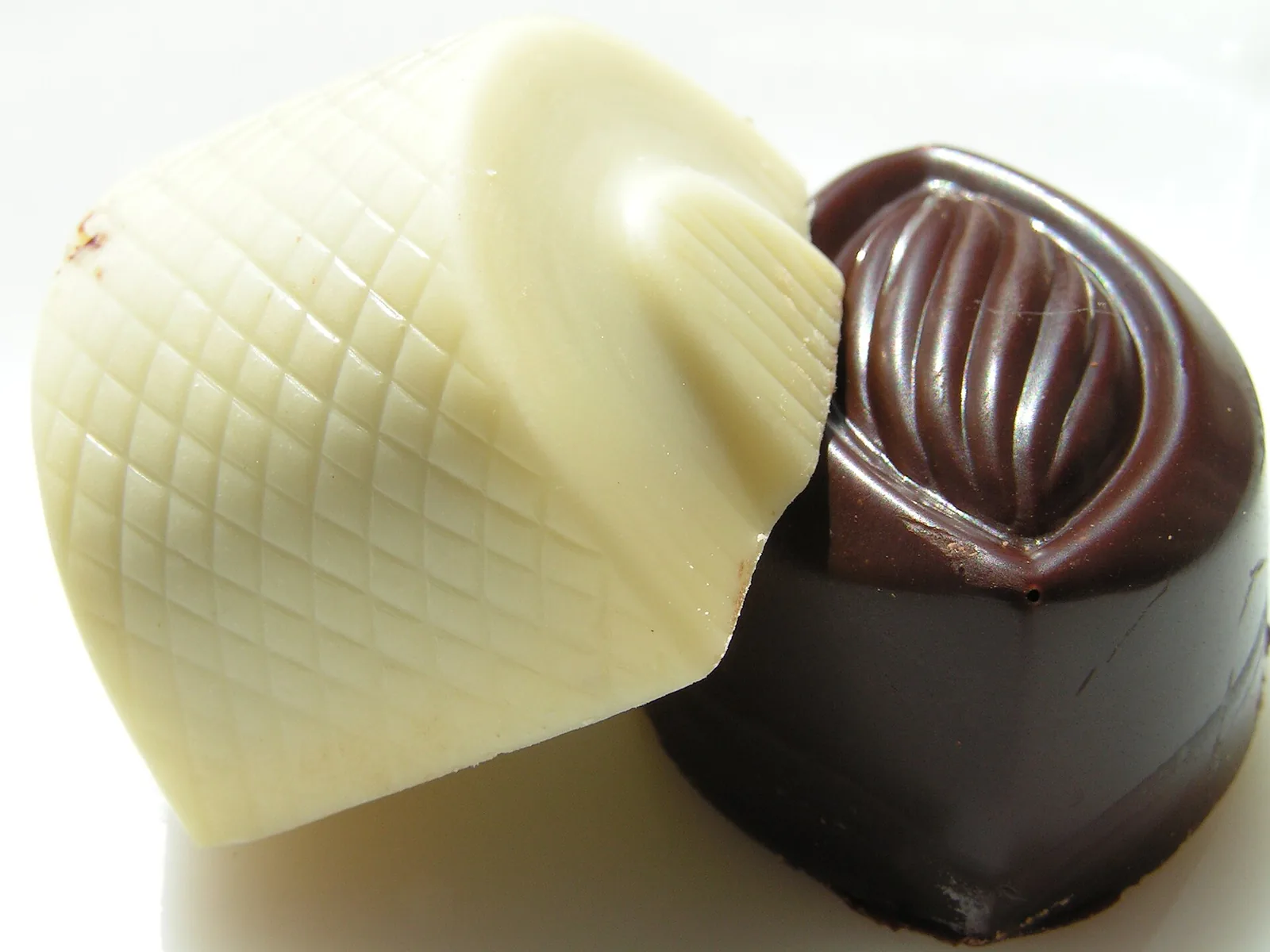
This belgian pralines recipe makes 24 moulded chocolates the Brussels way: a thin, glossy shell of dark chocolate around two fillings — a hazelnut praliné made from caramelised hazelnuts, and a soft milk-chocolate ganache. They are not truffles, which are rolled balls of ganache dusted in cocoa; a praline is a filled shell, made in a mould, with a snap when you bite it. One serving is three pralines, about 70 g.

The modern Belgian praline was invented in Brussels in 1912 by Jean Neuhaus II, a Swiss-born chocolatier. His grandfather had opened a pharmacy in Brussels in 1857 and sold chocolates to make the medicines taste better; Jean Neuhaus II took the idea further and replaced the medicine with a soft filling, moulding a hollow chocolate shell around it. The name came from the older French praline, a caramelised almond sweet said to be named after the cook of Marshal du Plessis-Praslin in the 17th century — but the Belgian version was new: a filled shell, decorated and sold in the elegant ballotin box that Neuhaus also invented. Brussels is still the home of the praline, and its chocolate shops — Neuhaus, Godiva, Leonidas, Mary — sell dozens of varieties, from hazelnut praliné to salted caramel, coffee and cherry.

Pairs well with: Black coffee & dessert wine

Provenance

Belgium flag Belgium

Brussels Classic

Nordic & European

Time Dedication

2h

100m prep • 20m cook

Batch Yield

8 Servings

397 kcal per serving

1 serving ≈ 70 g

Technical Skill

Advanced

Advanced (Tempering & Moulding)

Meal Timing & Digestive Fit

Breakfast

Not Advised

Lunch

Inappropriate

Dinner

Inappropriate

Snack & Tea

Ideal Light Bite

Occasions: Christmas, Valentine's Day, gifts, celebrations, afternoon coffee, dinner parties Cost: Medium — about $2–3 per serving at home
Two glossy Belgian chocolate pralines, one white chocolate and one dark chocolate, on a white surface

Brussels Classic

Photo: David Wilmot, CC BY 2.0, via Wikimedia Commons

The Heritage Formulary

Measured Ingredients

Estimated cost: Medium — about $2–3 per serving at home (USD)

A true Belgian praline is a moulded chocolate shell with a soft filling — hazelnut praliné, ganache, caramel or marzipan — never a rolled truffle ball dusted in cocoa.

Execution Methodology & Culinary Technique

Step-by-Step Cooking Guide

Active 2h
P

Prep Stage: Fillings and Tempering

100 Mins • Fillings, Tempering and Moulds

Toast the hazelnuts and rub off their skins. Make the praliné and the ganache, and set both aside to cool. Meanwhile melt and temper the dark chocolate for the shells and warm the polycarbonate praline moulds so they are not cold to the touch.

Maestro Tip: Work in a cool room, about 20°C (68°F), and keep your hands dry — water and warmth are the two enemies of tempered chocolate.

  1. 1

    Make the Hazelnut Praliné

    15 Mins Medium heat, about 175°C (350°F)

    Toast the hazelnuts in a dry pan over medium heat for 5 minutes until fragrant, then rub them in a tea towel to remove the skins. Melt the sugar in a clean pan over medium heat, without stirring, until it turns a deep amber caramel. Tip in the warm hazelnuts, stir once, and pour the mixture onto baking paper to cool completely. Break it up and blitz in a food processor until it turns into a smooth, spoonable praliné paste.

    Do not stir the sugar while it melts, or it will crystallise — swirl the pan gently instead.

    Done when: The paste is smooth, glossy and flows slowly off a spoon.

  2. 2

    Make the Ganache

    10 Mins Gentle heat, about 80°C (175°F)

    Heat the cream in a small pan until it just starts to steam, then pour it over the chopped milk chocolate in a bowl. Leave it for 2 minutes, then stir gently from the centre until smooth and glossy. Stir in the butter a piece at a time until it melts in. Leave the ganache at room temperature until it is thick enough to pipe, about 30 minutes.

    Stir from the centre outward in small circles — vigorous whisking whips in air and makes the ganache grainy.

    Done when: The ganache is smooth, glossy and holds a soft peak when lifted on a spoon.

  3. 3

    Temper and Mould the Shells

    20 Mins Tempering: melt to 45°C (113°F), cool to 31°C (88°F)

    Melt two-thirds of the dark chocolate in a bowl over a pan of barely simmering water until it reaches 45°C (113°F). Take it off the heat, stir in the remaining chopped chocolate and the cocoa butter, and keep stirring until the chocolate cools to 31°C (88°F) and feels cool on your lip. Spoon or pour it into the praline moulds, tap out the air bubbles, then turn the moulds upside down over the bowl and let the excess drip out, leaving a thin, even shell. Scrape the tops clean and leave for 10 minutes until the shells are set.

    Use a thermometer — tempering is a temperature game, and guessing is how shells turn dull and streaky.

    Done when: The shells are thin, even and glossy, and they hold their shape when the mould is tipped.

  4. 4

    Fill the Shells

    15 Mins Room temperature, about 20°C (68°F)

    Pipe or spoon a little praliné into half the shells and a little ganache into the other half, filling each to just below the rim. Tap the moulds gently to settle the fillings, then leave for 10 minutes so the tops firm slightly before sealing.

    Do not overfill — filling that touches the rim stops the base from sealing and the pralines will leak.

    Done when: Each shell is filled just below the rim, with no filling on the edges.

  5. 5

    Seal, Chill and Unmould

    60 Mins Cool room, about 20°C (68°F)

    Spoon a thin layer of the remaining tempered chocolate over the fillings to seal each praline, scrape the moulds clean, and leave them in a cool room for about 60 minutes until fully set. Turn the moulds over and tap gently — the pralines should drop out with a shine. Store in paper cases in a cool, dry place.

    Never chill pralines in the fridge to hurry them — condensation dulls the shine and can make the shells bloom.

    Done when: The pralines release cleanly from the moulds, glossy and firm, with a snap when bitten.

Finishing Touches & Plating

Unmould the pralines onto a cool tray and let them sit for 10 minutes. Serve two or three per person in small paper cases, with black coffee or tea — the shine on the shells and the snap when you bite them are the signs the tempering worked.

Nutritional Physiology & Benefits

Nutrition

Energy

397

kcal / serving

Protein

5g

Complete AA

Carbs

26g

Complex

Fats

31g

Healthy

Per serving (8 servings · 1 serving ≈ 70 g)
Energy397 kcal
Protein5 g
Carbohydrates26 g
Fat31 g
Fibre4.4 g
Sugar18.2 g
Sodium19 mg
Per 100g
Energy567 kcal
Protein7.2 g
Carbohydrates37.5 g
Fat44.4 g
Fibre6.2 g
Sugar26 g
Sodium27 mg

Nutrition values are estimated — calculated from USDA FoodData Central values for the listed ingredients.

Vitamins & minerals: Vitamin E and magnesium (hazelnuts), iron (dark chocolate), calcium (milk chocolate, cream), B vitamins (hazelnuts, cream).

Real Hazelnut Filling

Hazelnuts bring vitamin E, magnesium and fibre to the praliné filling, so the nutty centre is more than just sweet.

Dark Chocolate, In Measure

Dark chocolate carries cocoa flavanols and a little iron, and a small serving is a satisfying way to enjoy it.

Small Bite, Big Energy

A few pralines pack a lot of energy into a small bite, which is why they are traditionally eaten one or two at a time, slowly.

Food Pairings

What to Eat With

To optimize nutrient absorption and elevate the sensory depth, pair with these authentic accompaniments:

Drinks

Black Coffee

Bitter, unsweetened black coffee cuts through the rich chocolate and resets the palate between pralines.

Dessert Wine

A small glass of sweet dessert wine echoes the caramel notes of the praliné and makes a single praline feel like a course.

Unsweetened Tea

Unsweetened tea with a little milk is a gentle, warming partner that does not compete with the chocolate.

Sides

Fresh Raspberries

A few fresh raspberries add a sharp, juicy contrast to the rich chocolate and the sweet fillings.

Complete menu

Serve the pralines as the sweet end of a Belgian evening: after a plate of moules-frites or a stoofvlees, with black coffee or a small glass of dessert wine, two or three per person in paper cases.

Digestive Guardrails

What NOT to Combine

To prevent digestive distress, sluggishness, or palate clash, avoid pairing the dish with these elements:

Heat and Damp While Moulding

Hot, humid kitchens and warm hands melt tempered chocolate and dull its shine; work in a cool room and handle the moulds by their edges. This is a cooking tip, not medical advice.

Very Sweet Drinks With Pralines

Very sweet drinks double up on the pralines' sugar and dull the chocolate; water, black coffee or unsweetened tea are the better match. This is general nutrition information, not medical advice.

General information only, not medical advice — consult a doctor for personal dietary decisions.

Who Should Eat It

Who Should Eat

  • General adultsA little luxury with coffee; two or three pralines are a generous serving.
  • ChildrenChildren love the sweet fillings; keep the serving small and skip the coffee-flavoured pieces.
  • ElderlySoft and easy to eat; serve two or three with a cup of tea.
  • Pregnant womenGenerally fine in a small serving; the fillings are cooked and the chocolate is pasteurised, but keep the portion modest.
  • Breastfeeding womenGenerally fine in a small serving; the caffeine in dark chocolate is very low at this portion size.
  • AthletesA quick, energy-dense treat after training, best paired with something with protein rather than eaten alone.
  • Weight gainA good choice: energy-dense, easy to eat, and a few pralines add up fast.
  • Weight lossTake one praline and eat it slowly with black coffee; the box is easy to over-eat, so portion it out first.

Health Conditions — Adjust or Avoid

Conditions

  • DiabetesHigh in sugar (about 18 g per serving of three pralines); take one praline and skip the rest, and ask your clinician about portion size.
  • High blood pressureVery low in sodium (about 19 mg per serving); the concern is the sugar and fat, not the salt.
  • Kidney diseaseModerate in potassium from the hazelnuts and chocolate; a single praline is safest, and ask your clinician about portion size.
  • GoutLow in purines; a sweet chocolate is generally fine occasionally, though the sugar is best kept modest.
  • Stomach issuesRich chocolate and hazelnuts can be heavy on a sensitive stomach; a single praline, eaten slowly, is usually easier.
  • Cardiovascular diseaseHigh in saturated fat from the chocolate, butter and cream; enjoy occasionally and favour a single praline.
  • Fatty liverRich in sugar and saturated fat; keep it an occasional treat and favour a single praline.
  • Food allergiesContains tree nuts (hazelnuts), milk (butter, cream, milk chocolate) and soy (lecithin in most chocolate). Naturally free of gluten and egg, but check every chocolate label.
  • Special therapeutic dietsIf you follow a prescribed low-sugar or low-fat diet, take a single praline and skip the rest, and check with your clinician.

If you have a medical condition, consult your doctor before changing your diet.

Storage & Use

Storage & Use

How to store
Store in paper cases in a sealed container in a cool, dry place, away from strong smells.
In the fridge
2 weeks in the fridge in a sealed container; bring to room temperature for 20 minutes before eating.
In the freezer
Up to 3 months in a sealed container, layered with baking paper; thaw in the fridge, then bring to room temperature.
How to reheat
No reheating — pralines are eaten at cool room temperature.
Freezing recommended
Yes — the pralines freeze well for up to 3 months.
Signs it has spoiled
White or grey bloom on the surface, a stale or rancid smell, or a soft, melted texture.

More recipes to explore

Moules-frites — a black pot of steamed mussels with herbs, served with golden fries at a Brussels brasserie Belgium flag Belgium 1h
Dinner •Brussels Brasserie Classic

Moules-Frites

This moules frites recipe makes the plate Belgium is proudest of: a black pot of mussels steamed open in white wine, shallots and cream, served with a heap of crisp, twice-cooked fries and a pot of mayonnaise. The mussels are sweet and briny, the broth is made for dipping, and the fries stay crisp if you keep them out of the pot. One serving is about 350 g.

Seaside Comfort

Sweet mussels steamed in white wine and cream, piled next to golden twice-cooked fries.

Pairs Well With
Crisp Belgian lager & mayonnaise
High Protein
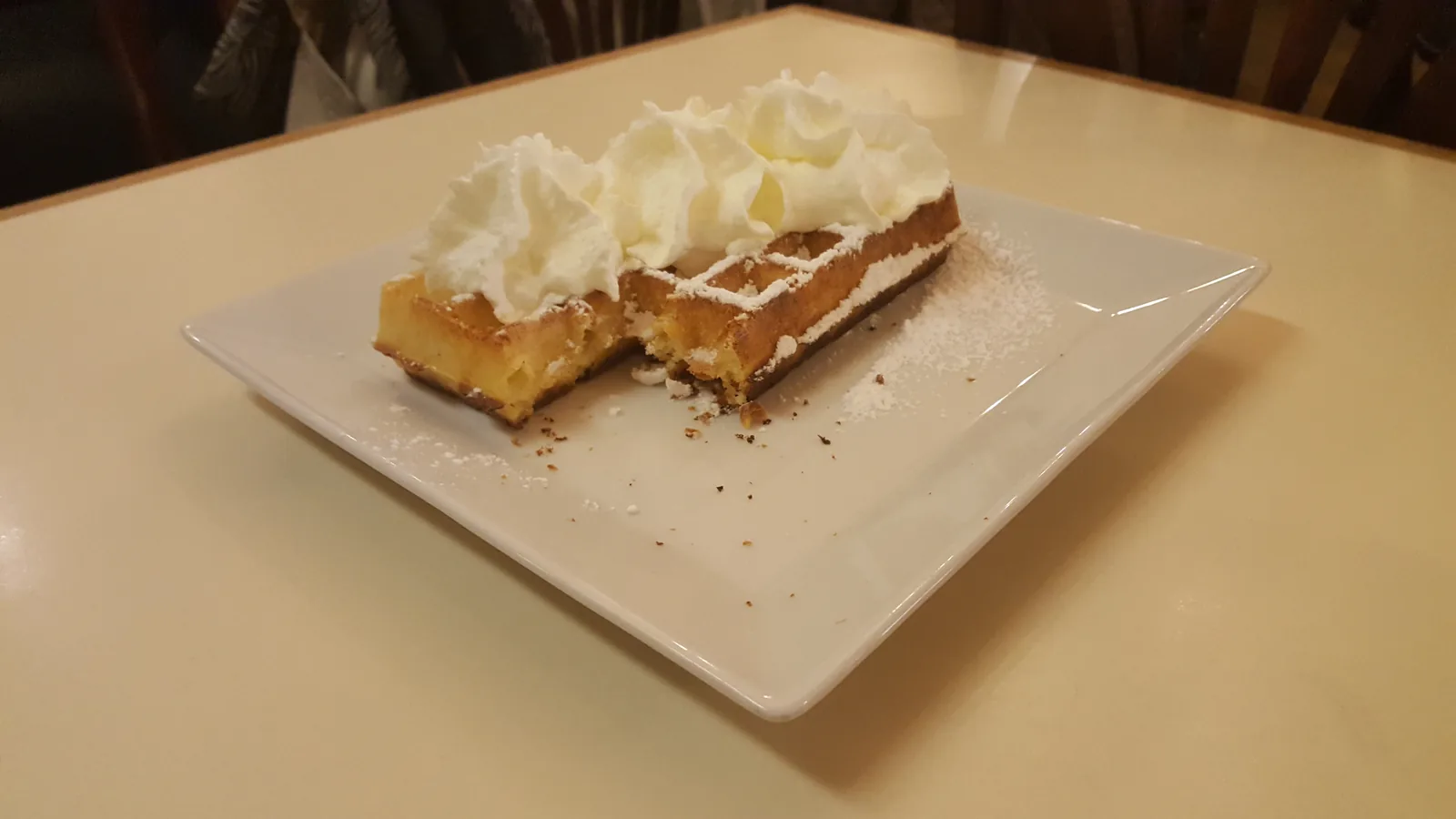
Belgian waffles — a golden Brussels waffle topped with whipped cream and icing sugar on a white plate Belgium flag Belgium 1h 35m
Breakfast •Brussels Bakery Classic

Belgian Waffles

This Belgian waffles recipe makes the light, yeasted kind: a risen batter cooked in a hot iron until the outside is crisp and golden and the inside stays soft and airy. The deep pockets hold butter, syrup or berries, and a dusting of icing sugar is all they really need. This recipe makes 8 waffles; one serving is 2 waffles, about 210 g. Nutrition is for the plain waffles, before toppings.

Weekend Breakfast Treat

Light, yeasted Brussels waffles with deep pockets, crisp outside and soft inside.

Pairs Well With
Strong coffee & fresh berries
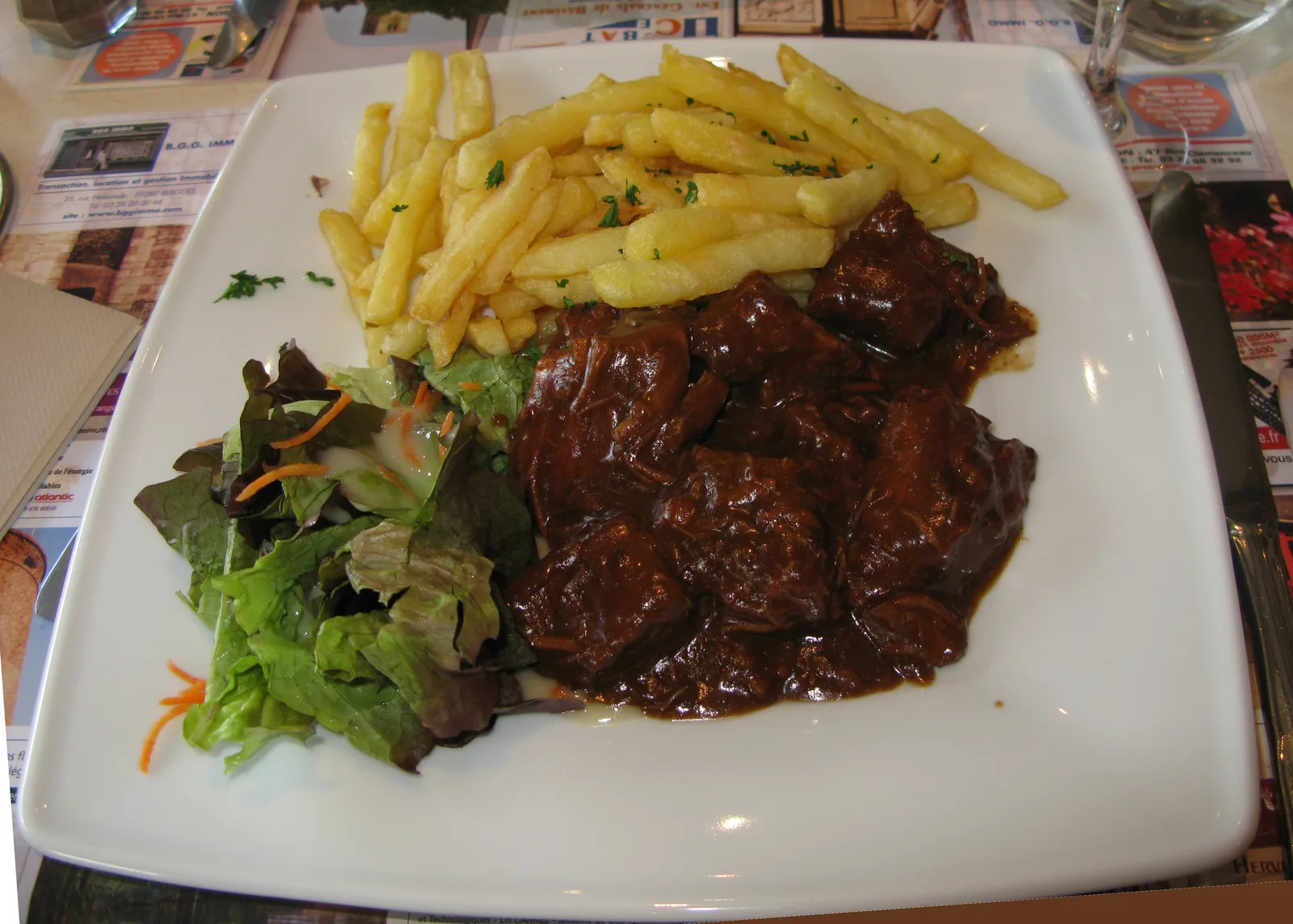
Carbonade flamande — dark beer-braised beef stew with fries and a small salad on a white plate Belgium flag Belgium 2h 55m
Dinner •Flemish Farmhouse Classic

Carbonade Flamande

This carbonade flamande recipe is Flanders' answer to the French beef stew: chunks of beef braised for hours in dark Belgian ale with sweet caramelised onions, thyme and bay, thickened the old way with slices of bread spread with mustard. The sauce turns dark, glossy and sweet-sour, and the beef goes spoon-tender. One serving is about 250 g, not counting the fries or potatoes served alongside.

Slow Sunday Comfort

Beef braised low and slow in dark Belgian ale with onions and mustard bread.

Pairs Well With
Dark Belgian ale & fries
High Protein
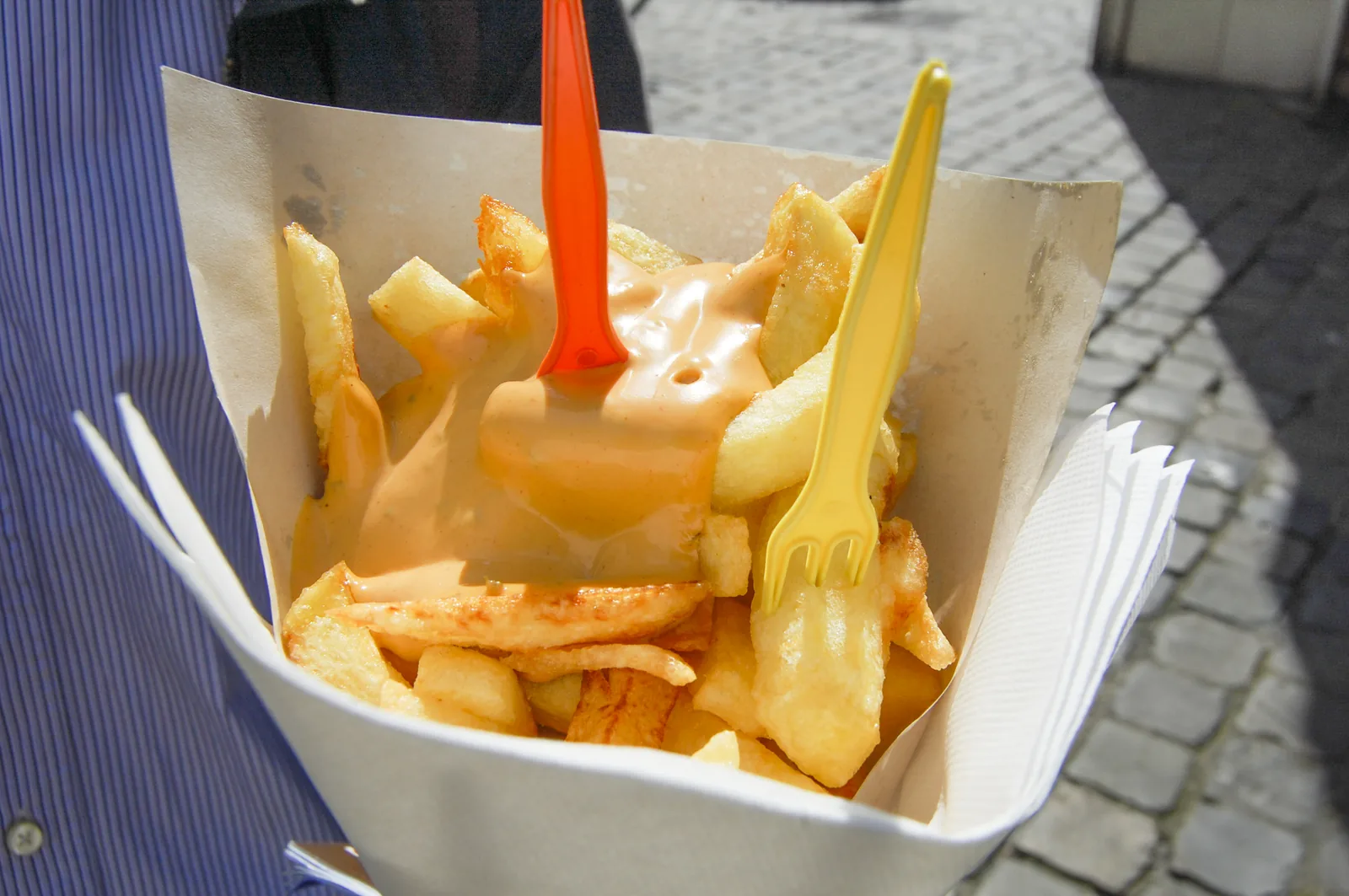
A paper cone of golden Belgian fries topped with andalouse sauce and two small plastic forks. Belgium flag Belgium 55m
Snack & Tea •Brussels Friterie Classic

Belgian Fries

Belgian fries are the real thing: thick batons of floury potato, fried twice — once gently to cook them through, once hot to shatter the outside — and served in a paper cone with andalouse sauce. One serving is about 253 g.

Crisp & Golden

Thick-cut potatoes fried twice in vegetable oil — crisp outside, fluffy inside, with andalouse sauce.

Pairs Well With
Serve hot in a paper cone with andalouse sauce and a cold lager.
Quick Prep (<30m)

The Dinner Gazette

Never wonder what’s for dinner again

One email a week with easy dinner ideas from around the world — ingredients, steps and nutrition, tested in our kitchen first.

Delivered every Thursday morning. Unsubscribe anytime.