

Curated recipes from 193 countries  •  New seasonal Mediterranean issue out now

Overview

Belgian Rijstepap

Flemish Rice Porridge

This Belgian rijstepap recipe simmers short-grain rice slowly in whole milk with a pinch of salt until thick and creamy, then sweetens it and serves it hot, with a knob of butter melting on top and a dusting of cinnamon. One serving is about 278 g.

Rijstepap — literally 'rice porridge' — is the old farmhouse dish of Flanders, short-grain rice simmered slowly in milk until it turns thick and spoonable. In Brabant it became a celebrated regional dish and takes a starring role at the annual Brueghel Feesten, the Flemish folk festivals. The plain home version is breakfast food, served hot with butter and cinnamon sugar, while festive Brabant bowls are dressed with saffron, vanilla and dark brown sugar that melts into a molasses-like syrup.

Pairs well with: A mug of milky coffee or hot chocolate, and a slice of buttered brown bread

Provenance

Belgium flag Belgium

Flemish Farmhouse Classic

Nordic & European

Time Dedication

55m

5m prep • 50m cook

Batch Yield

4 Servings

383 kcal per serving

1 serving ≈ 278 g

Technical Skill

Easy

Easy (One Pot)

Meal Timing & Digestive Fit

Breakfast

Prime Morning Fit

Lunch

Inappropriate

Dinner

Inappropriate

Snack & Tea

Inappropriate

Occasions: Weekend breakfast, cold mornings, light supper Cost: Low — about $1 per serving at home
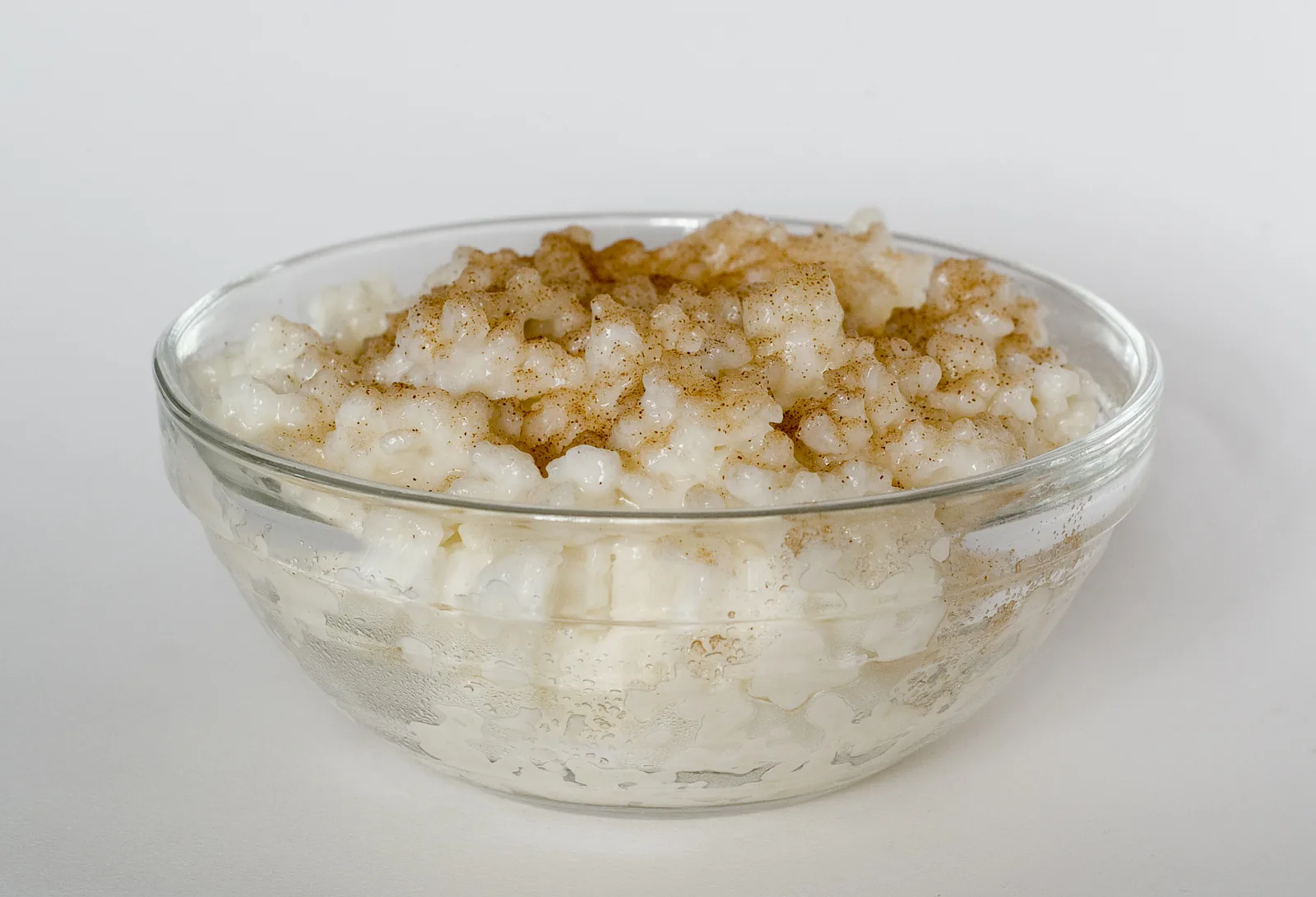
A glass bowl of creamy Belgian rijstepap rice porridge dusted with cinnamon

Flemish Farmhouse Classic

Photo: Alice Wiegand, CC BY-SA 3.0, via Wikimedia Commons

The Heritage Formulary

Measured Ingredients

Estimated cost: Low — about $1 per serving at home (USD)

A good rijstepap is thick and creamy with soft, distinct grains — never stiff, gluey or scorched.

Execution Methodology & Culinary Technique

Step-by-Step Cooking Guide

Active 55m
P

Prep Stage: Rinse and Measure

5 Mins • Measuring

Rinse the rice in cold water until the water runs almost clear, then drain it well. Measure the milk, sugar, butter and cinnamon, and set a heavy-bottomed pot beside the stove.

Maestro Tip: Rinsing washes off loose surface starch, so the porridge turns creamy instead of gluey — the thickness you want comes from slow cooking, not from dusty rice.

  1. 1

    Rinse the Rice

    5 Mins Cold water (~20°C / 68°F)

    Put the rice in a sieve and rinse under cold running water, swishing it with your hand, until the water runs almost clear. Drain it well.

    Rinsing keeps the porridge creamy instead of gluey — the thickness you want comes from slow cooking, not from dusty rice.

    Done when: The rinse water runs almost clear and the rice is well drained.

  2. 2

    Warm the Milk and Rice

    5 Mins Medium heat, gentle simmer ~95°C (203°F)

    Put the rinsed rice, whole milk and salt in a heavy-bottomed pot. Stir once, then warm over medium heat, stirring now and then, until the milk just reaches a gentle simmer. Do not let it boil hard.

    A heavy pot spreads the heat and stops the milk scorching on the bottom — never walk away while milk is coming to a simmer.

    Done when: The milk is steaming and bubbling gently around the edges, not rolling at a boil.

  3. 3

    Simmer Low and Slow

    35 Mins Low heat, gentle simmer ~90°C (194°F)

    Turn the heat right down, cover the pot with the lid ajar, and simmer for about 35 minutes, stirring every few minutes and scraping the bottom, until the grains are completely soft and the porridge is thick and creamy.

    Stir from the bottom so the rice does not catch — a little patience here is the whole dish.

    Done when: The porridge coats the spoon and the grains are soft all the way through.

  4. 4

    Sweeten and Rest

    5 Mins Off the heat (cooling, ~70°C / 158°F)

    Take the pot off the heat and stir in the sugar and half the cinnamon. Put the lid on and rest for 5 minutes — the porridge thickens as it stands, so stop while it still looks a little loose.

    Sugar goes in near the end: added too early it can make the milk catch and the grains cook unevenly.

    Done when: The porridge is glossy, thick and creamy, and holds its shape briefly on the spoon.

  5. 5

    Serve Hot with Butter

    5 Mins Serving hot, ~65°C (149°F)

    Ladle the porridge into warm bowls, set a knob of butter on each one, and dust with the rest of the cinnamon. Serve at once, while the butter is still melting into the hot porridge.

    Warm the bowls with hot water first — cold bowls steal the heat from a hot porridge in seconds.

    Done when: The butter is melting into a golden pool on top of each bowl.

Finishing Touches & Plating

Take the pot off the heat when the porridge still looks a little loose — it thickens as it stands. Stir in the sugar and half the cinnamon, rest for 5 minutes, then ladle into warm bowls and top each one with a knob of butter and the rest of the cinnamon.

Nutritional Physiology & Benefits

Nutrition

Energy

383

kcal / serving

Protein

10g

Complete AA

Carbs

57g

Complex

Fats

12g

Healthy

Per serving (4 servings · 1 serving ≈ 278 g)
Energy383 kcal
Protein10 g
Carbohydrates57 g
Fat12 g
Fibre0.8 g
Sugar27.7 g
Sodium205 mg
Per 100g
Energy138 kcal
Protein3.7 g
Carbohydrates20.6 g
Fat4.5 g
Fibre0.3 g
Sugar10 g
Sodium74 mg

Nutrition values are estimated — calculated from USDA FoodData Central values for the listed ingredients.

Vitamins & minerals: Calcium, phosphorus and vitamin B12 (milk), vitamin B1 (rice).

Gentle Morning Energy

Rice and milk give slow carbs with a little protein, so a bowl of rijstepap keeps you going through the morning without the crash of a sugary cereal.

Five Pantry Ingredients

Rice, milk, sugar, butter and cinnamon — nothing processed, nothing you cannot pronounce, just a pot and a little patience.

Warm and Easy to Digest

Served hot and soft, the porridge is gentle on the stomach, which is why it has long been a breakfast for children, grandparents and anyone needing something kind in the morning.

Food Pairings

What to Eat With

To optimize nutrient absorption and elevate the sensory depth, pair with these authentic accompaniments:

Drinks

Milky Coffee or Hot Chocolate

A mug of milky coffee or hot chocolate suits the porridge's sweetness, and a little bitterness in the cup balances the butter and cinnamon.

Sides

Buttered Brown Bread

A slice of buttered brown bread turns the bowl into a full breakfast, and something wholesome to dunk while the porridge cools to eating temperature.

More Pairings

Stewed Apples or Pears

A spoonful of tart stewed apple or pear cuts through the richness of the milk and butter and adds a fresh, fruity note to the bowl.

A Handful of Berries

Fresh raspberries or blueberries bring sharpness and colour, and their juice streaks nicely through the pale, creamy porridge.

Complete menu

Serve Belgian rijstepap hot for breakfast with milky coffee and buttered brown bread, and finish the bowl with stewed apples on the side.

Digestive Guardrails

What NOT to Combine

To prevent digestive distress, sluggishness, or palate clash, avoid pairing the dish with these elements:

Very Sweet Toppings

The porridge is already sweetened, so jam, syrup or chocolate sauce on top piles on a lot of sugar at once — cinnamon and a little extra sugar are enough. This is general guidance, not medical advice.

Leaving It Out for Hours

Milk porridge spoils quickly at room temperature; cool leftovers fast and get them into the fridge within 2 hours, and never leave a bowl out all morning.

General information only, not medical advice — consult a doctor for personal dietary decisions.

Who Should Eat It

Who Should Eat

  • General adultsA comforting hot breakfast — sweet, creamy and easy to enjoy.
  • ChildrenVery suitable; soft, mild and easy to eat. Serve it warm, not piping hot, and keep the portion small.
  • ElderlyExcellent — soft, warm and easy to chew and digest.
  • Pregnant womenGenerally suitable in a normal portion; the milk adds calcium. Keep the sugar in mind.
  • Breastfeeding womenGenerally suitable; the milk and rice give gentle energy for the morning.
  • AthletesA useful pre-training breakfast — slow carbs plus a little protein, eaten 1–2 hours before exercise.
  • Weight gainA good choice — take a generous bowl with an extra knob of butter.
  • Weight lossA good choice in a small bowl — the porridge is filling; skip the extra butter and keep the sugar light.

Health Conditions — Adjust or Avoid

Conditions

  • DiabetesThe rice and sugar are both sources of sugar — keep the bowl small and ask your clinician about portion size.
  • High blood pressureMost of the sodium comes from the pinch of salt; keep it small and use unsalted butter. Ask your clinician about a suitable portion.
  • Kidney diseaseLimit the portion (potassium and phosphorus from milk); ask your clinician about portion size.
  • GoutEat occasionally and in smaller portions — the dish is sweet and rich in milk fat.
  • Stomach issuesUsually gentle and soothing; eat it warm rather than very hot if your stomach is sensitive.
  • Cardiovascular diseaseKeep the bowl modest — the dish is sweet and the butter adds saturated fat.
  • Fatty liverKeep the portion small, go easy on the sugar and skip the extra butter on top.
  • Food allergiesContains milk. Naturally gluten-free — just check any bread served alongside for wheat.
  • Special therapeutic dietsIf you follow a prescribed low-sugar or low-sodium diet, use less sugar and salt, and check with your clinician.

If you have a medical condition, consult your doctor before changing your diet.

Storage & Use

Storage & Use

How to store
Cool quickly, cover the surface with cling film to stop a skin forming, and store in an airtight container.
In the fridge
3 days.
In the freezer
Up to 1 month, though the texture turns slightly grainy.
How to reheat
Warm gently in a pan over low heat with a splash of milk, stirring, until hot; reheat to 74°C (165°F).
Freezing recommended
Yes, but the texture is best fresh from the fridge.
Signs it has spoiled
Sour smell, curdled look, or mould on the surface.

More recipes to explore

Moules-frites — a black pot of steamed mussels with herbs, served with golden fries at a Brussels brasserie Belgium flag Belgium 1h
Dinner •Brussels Brasserie Classic

Moules-Frites

This moules frites recipe makes the plate Belgium is proudest of: a black pot of mussels steamed open in white wine, shallots and cream, served with a heap of crisp, twice-cooked fries and a pot of mayonnaise. The mussels are sweet and briny, the broth is made for dipping, and the fries stay crisp if you keep them out of the pot. One serving is about 350 g.

Seaside Comfort

Sweet mussels steamed in white wine and cream, piled next to golden twice-cooked fries.

Pairs Well With
Crisp Belgian lager & mayonnaise
High Protein

Belgian waffles — a golden Brussels waffle topped with whipped cream and icing sugar on a white plate Belgium flag Belgium 1h 35m
Breakfast •Brussels Bakery Classic

Belgian Waffles

This Belgian waffles recipe makes the light, yeasted kind: a risen batter cooked in a hot iron until the outside is crisp and golden and the inside stays soft and airy. The deep pockets hold butter, syrup or berries, and a dusting of icing sugar is all they really need. This recipe makes 8 waffles; one serving is 2 waffles, about 210 g. Nutrition is for the plain waffles, before toppings.

Weekend Breakfast Treat

Light, yeasted Brussels waffles with deep pockets, crisp outside and soft inside.

Pairs Well With
Strong coffee & fresh berries
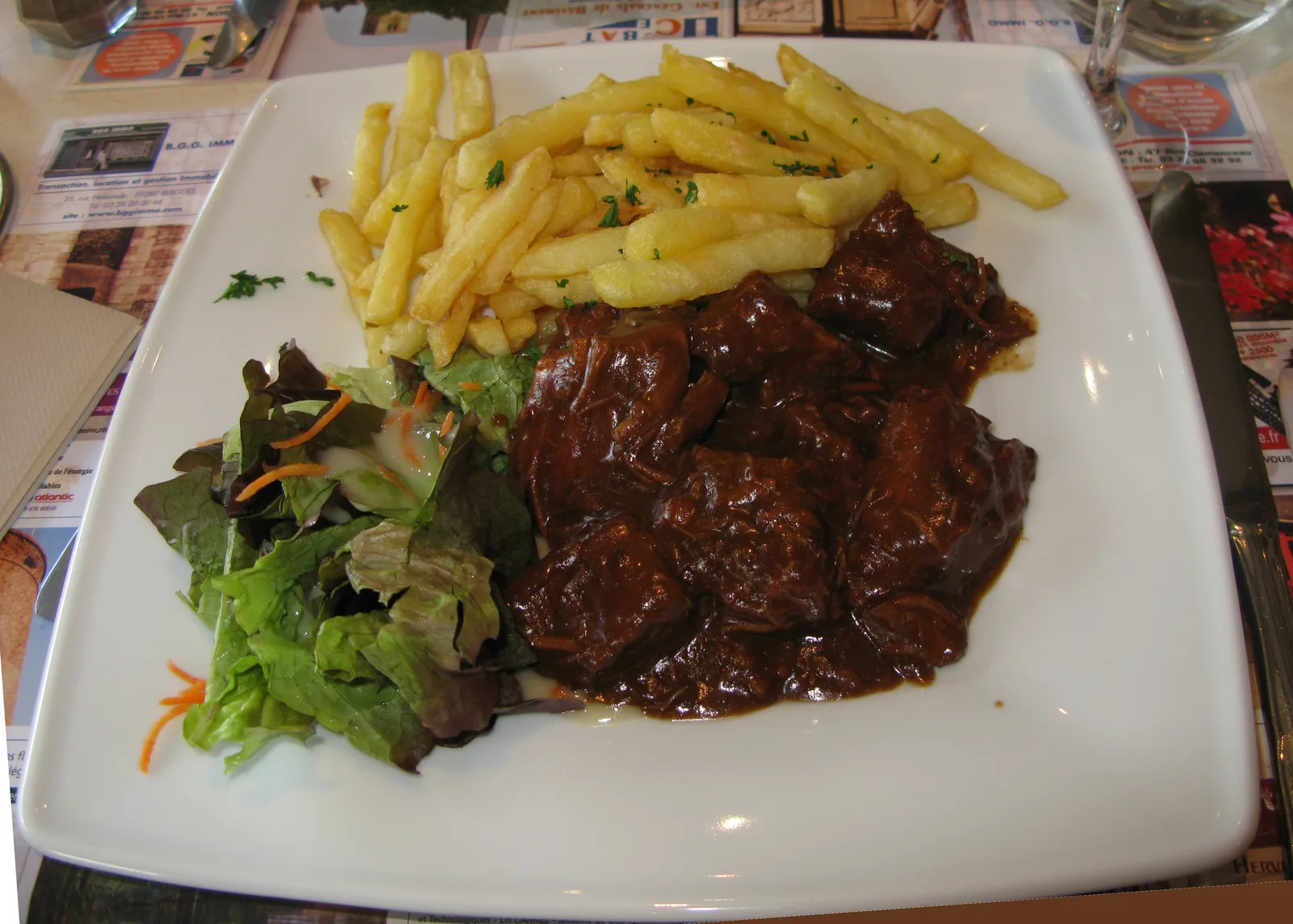
Carbonade flamande — dark beer-braised beef stew with fries and a small salad on a white plate Belgium flag Belgium 2h 55m
Dinner •Flemish Farmhouse Classic

Carbonade Flamande

This carbonade flamande recipe is Flanders' answer to the French beef stew: chunks of beef braised for hours in dark Belgian ale with sweet caramelised onions, thyme and bay, thickened the old way with slices of bread spread with mustard. The sauce turns dark, glossy and sweet-sour, and the beef goes spoon-tender. One serving is about 250 g, not counting the fries or potatoes served alongside.

Slow Sunday Comfort

Beef braised low and slow in dark Belgian ale with onions and mustard bread.

Pairs Well With
Dark Belgian ale & fries
High Protein
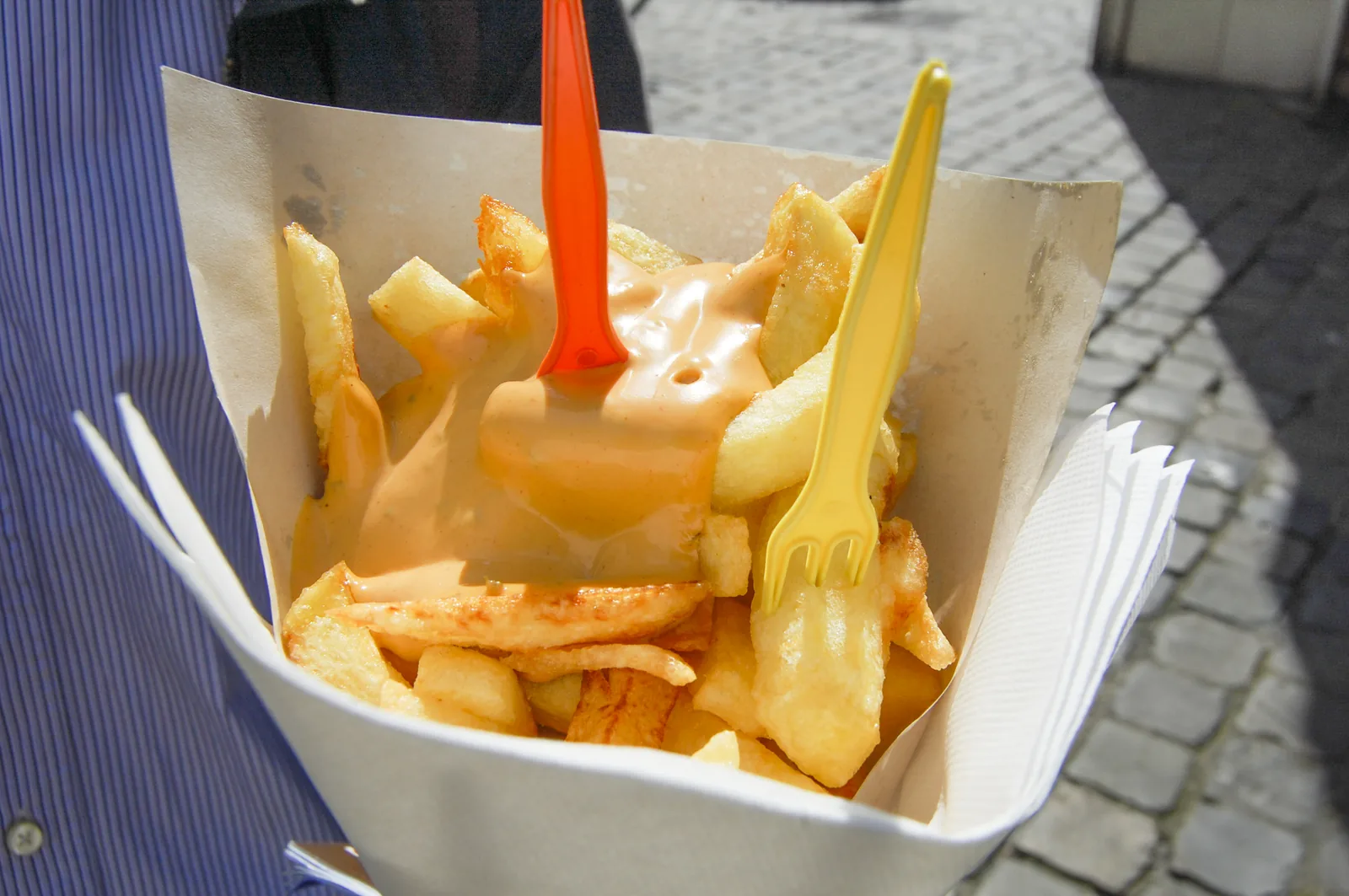
A paper cone of golden Belgian fries topped with andalouse sauce and two small plastic forks. Belgium flag Belgium 55m
Snack & Tea •Brussels Friterie Classic

Belgian Fries

Belgian fries are the real thing: thick batons of floury potato, fried twice — once gently to cook them through, once hot to shatter the outside — and served in a paper cone with andalouse sauce. One serving is about 253 g.

Crisp & Golden

Thick-cut potatoes fried twice in vegetable oil — crisp outside, fluffy inside, with andalouse sauce.

Pairs Well With
Serve hot in a paper cone with andalouse sauce and a cold lager.
Quick Prep (<30m)

The Dinner Gazette

Never wonder what’s for dinner again

One email a week with easy dinner ideas from around the world — ingredients, steps and nutrition, tested in our kitchen first.

Delivered every Thursday morning. Unsubscribe anytime.