
Curated recipes from 193 countries  •  New seasonal Mediterranean issue out now

Overview

Berner Platte

Bernese Platter, Bernerplatte, Bernese Meat Platter

This berner platte recipe is Bern's celebratory meat platter: smoked pork, pork sausages and bacon piled over sauerkraut with green beans and boiled potatoes, mustard on the side. It is a feast dish, built for sharing at the table. One serving is about 390 g.

Bernese tradition says the platter was born from a victory feast: after the Bernese won the Battle of Neuenegg on 5 March 1798, the story goes, the city's cooks pooled every meat they had — smoked pork, bacon, sausages and more — and served it all at once over sauerkraut and beans. Whether or not the feast happened exactly that way, the dish became Bern's great celebration meal, the one cooked for festivals and large family gatherings. The sauerkraut and beans underneath are the point: they stretch the precious meats and soak up their juices.

Pairs well with: Boiled potatoes, mustard & a Swiss lager

Provenance

Switzerland flag Switzerland

Bernese Feast Classic

Nordic & European

Time Dedication

1h 20m

20m prep • 60m cook

Batch Yield

6 Servings

539 kcal per serving

1 serving ≈ 390 g

Technical Skill

Intermediate

Medium (Big Platter)

Meal Timing & Digestive Fit

Breakfast

Not Advised

Lunch

Hearty Midday Main

Dinner

Ideal Hearty Main

Snack & Tea

Inappropriate

High Protein Occasions: Festivals, family gatherings, cold-weather feasts, Swiss food nights Cost: Moderate — about $5–6 per serving at home
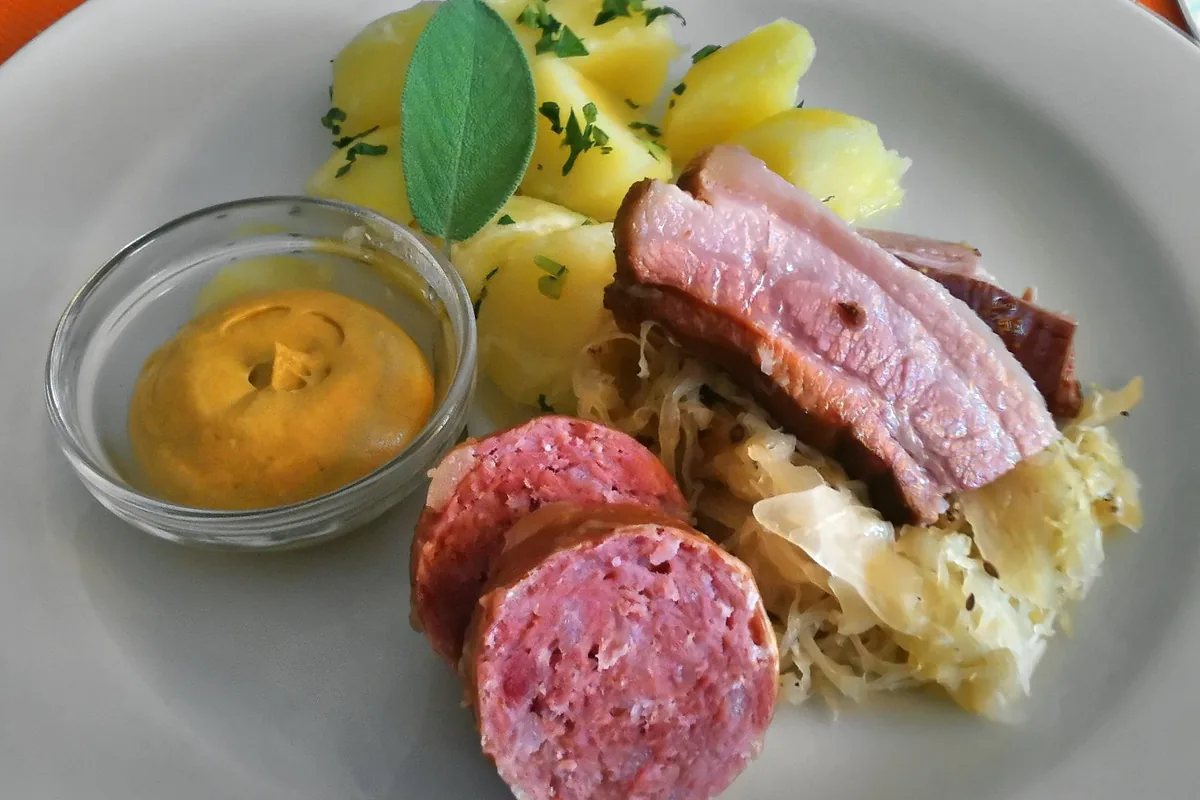
A plate of Berner Platte with sliced sausage, smoked pork, sauerkraut, boiled potatoes and mustard

Bernese Feast Classic

Photo: Sandstein, CC BY 3.0, via Wikimedia Commons

The Heritage Formulary

Measured Ingredients

Estimated cost: Moderate — about $5–6 per serving at home (USD)

A home-style Berner Platte with smoked pork, sausages and bacon over sauerkraut, with beans and boiled potatoes.

Execution Methodology & Culinary Technique

Step-by-Step Cooking Guide

Active 1h 20m
P

Prep Stage: Meats, Kraut and Potatoes

20 Mins • Big Platter

Slice the smoked pork, prick the sausages, cut the bacon into strips, drain the sauerkraut and trim the beans. Scrub the potatoes and put them on to boil first — they take the longest. The sauerkraut goes on next, and the meats last, so everything finishes together.

Maestro Tip: Start the potatoes first and the sauerkraut second — the meats only need 25 minutes.

  1. 1

    Simmer the Sauerkraut

    40 Mins Gentle simmer, about 95°C (203°F)

    Put the sauerkraut in a pot with a splash of water and simmer gently, partly covered, for about 40 minutes until soft and mellow. Drain well and keep warm.

    A bay leaf and a few juniper berries in the kraut are the traditional Bernese touch.

    Done when: The kraut is soft, mild and steaming, not sharp.

  2. 2

    Boil the Potatoes

    25 Mins Boiling water, 100°C (212°F)

    Boil the potatoes whole in their skins in salted water for about 20–25 minutes until a knife slides in easily. Drain, peel while warm and toss with half the butter.

    Boiling in the skins keeps the potatoes from going watery.

    Done when: A knife slides into the potato with no resistance.

  3. 3

    Cook the Green Beans

    10 Mins Boiling water, 100°C (212°F)

    Boil the green beans in salted water for about 8 minutes until tender but still bright green. Drain and toss with the rest of the butter.

    Do not overcook them — they should still have a little bite against the soft kraut.

    Done when: The beans are tender, bright green and still snappy.

  4. 4

    Cook the Meats

    25 Mins Gentle simmer, about 95°C (203°F)

    Poach the sausages gently in simmering water for about 15 minutes until cooked through to at least 71°C (160°F) inside — never let the water boil hard or the skins will split. Warm the smoked pork slices and bacon strips in the same water for the last 10 minutes until hot through, about 74°C (165°F).

    A gentle simmer, not a rolling boil, is what keeps the sausages whole.

    Done when: The sausages are firm and hot through, and the pork and bacon are steaming.

  5. 5

    Assemble the Platter

    5 Mins Serving hot, about 70°C (158°F)

    Spread the sauerkraut over a large warm platter, arrange the sliced pork, sausages and bacon on top, and pile the potatoes and green beans around the edge. Serve at once with the mustard on the side.

    Warm the platter first — a cold platter steals the heat from the meats in minutes.

    Done when: The platter is piled high, steaming, with the meats on top and the potatoes around the edge.

Finishing Touches & Plating

Carry the platter to the table whole and let everyone help themselves — the Berner Platte is a shared feast, not a plated dish.

Nutritional Physiology & Benefits

Nutrition

Energy

539

kcal / serving

Protein

35g

Complete AA

Carbs

30g

Complex

Fats

32g

Healthy

Per serving (6 servings · 1 serving ≈ 390 g)
Energy539 kcal
Protein35 g
Carbohydrates30 g
Fat32 g
Fibre6.5 g
Sugar4.5 g
Sodium2286 mg
Per 100g
Energy138 kcal
Protein8.9 g
Carbohydrates7.6 g
Fat8.1 g
Fibre1.7 g
Sugar1.2 g
Sodium586 mg

Nutrition values are estimated — calculated from USDA FoodData Central values for the listed ingredients.

Vitamins & minerals: Vitamin B12, thiamin and niacin (pork), iron and zinc (meat), vitamin C and vitamin K (sauerkraut, green beans), potassium (potatoes).

High in Protein

About 34.5 g of protein per serving from the pork, sausages and bacon.

Fermented Sauerkraut

Sauerkraut is fermented cabbage — a source of fibre and vitamin C with very few calories.

Real Vegetables on the Side

Green beans and potatoes bring fibre, potassium and vitamin C to a very meaty plate.

Food Pairings

What to Eat With

To optimize nutrient absorption and elevate the sensory depth, pair with these authentic accompaniments:

Sides

Boiled Potatoes

Waxy boiled potatoes are the traditional base — they soak up the meat juices and the kraut.

Vegetables

Green Beans with Butter

Buttered green beans give the platter colour, freshness and a second vegetable against the rich meats.

Sauces

Dijon Mustard

Sharp mustard is essential with smoked pork and sausage — it cuts the fat and wakes up the palate.

Drinks

Swiss Lager

A cold Swiss lager is the classic drink with a Berner Platte — light, cold and cleansing.

Complete menu

Berner Platte with boiled potatoes, green beans, mustard and a cold Swiss lager.

Digestive Guardrails

What NOT to Combine

To prevent digestive distress, sluggishness, or palate clash, avoid pairing the dish with these elements:

A Second Helping of Meat Straight Away

At about 539 kcal a serving with about 2,286 mg of sodium, this is a salty, energy-dense feast — take one serving and load the rest of the plate with potatoes and beans. This is general nutrition information, not medical advice.

Boiling the Sausages Hard

A rolling boil splits sausage skins and dries out the meat — poach them gently at a simmer instead. This is general cooking information, not medical advice.

General information only, not medical advice — consult a doctor for personal dietary decisions.

Who Should Eat It

Who Should Eat

  • General adultsA feast dish, not an everyday dinner; one serving with plenty of potatoes and beans.
  • ChildrenServe a small portion of sausage and potato; cut the meat into small pieces.
  • ElderlyThe meats are soft and easy to chew; keep the portion modest because it is salty.
  • Pregnant womenFine when the meats are cooked through; keep the portion modest and load up on the beans.
  • Breastfeeding womenA filling, protein-rich meal; the potatoes and beans give lasting energy.
  • AthletesAbout 34.5 g of protein per serving makes this a strong post-training dinner.
  • Weight gainAn energy-dense feast that suits a higher-energy day.
  • Weight lossSalty and rich; choose a small portion of meat with mostly beans and potatoes.

Health Conditions — Adjust or Avoid

Conditions

  • DiabetesAbout 29.8 g of carbohydrate per serving, mostly from the potatoes; watch the potato portion and ask your clinician about portion size.
  • High blood pressureAbout 2,286 mg of sodium per serving — very high, mostly from the cured meats and sauerkraut; ask your clinician before eating this dish.
  • Kidney diseaseHigh in protein, potassium and sodium; ask your clinician whether this portion suits your plan.
  • GoutPork and bacon are moderately high in purines; a smaller portion is the safer choice — ask your clinician.
  • Stomach issuesSauerkraut and fatty cured meats can be heavy on a sensitive stomach; keep the portion modest.
  • Cardiovascular diseaseHigh in saturated fat and sodium from the cured meats; keep portions small and favour the beans and potatoes.
  • Fatty liverAn energy-dense, fatty platter; a small portion with mostly vegetables is the lighter way to enjoy it.
  • Food allergiesContains mustard — the main allergen in this recipe; check sausage labels for gluten and milk.
  • Special therapeutic dietsFollow your clinician's guidance on sodium and saturated fat; this is general information, not medical advice.

If you have a medical condition, consult your doctor before changing your diet.

Storage & Use

Storage & Use

How to store
Cool the leftovers completely, then store the meats, kraut and potatoes in separate covered containers in the fridge.
In the fridge
2 days in the fridge.
In the freezer
Up to 2 months for the meats; the potatoes and beans do not freeze well.
How to reheat
Reheat the meats and kraut in a covered pot over low heat until hot through, about 74°C (165°F); boil fresh potatoes rather than reheating old ones.
Freezing recommended
Only for the meats — the platter is best eaten fresh, the day it is made.
Signs it has spoiled
Sour or off smell, slimy meat, or mould on the sauerkraut.

More recipes to explore

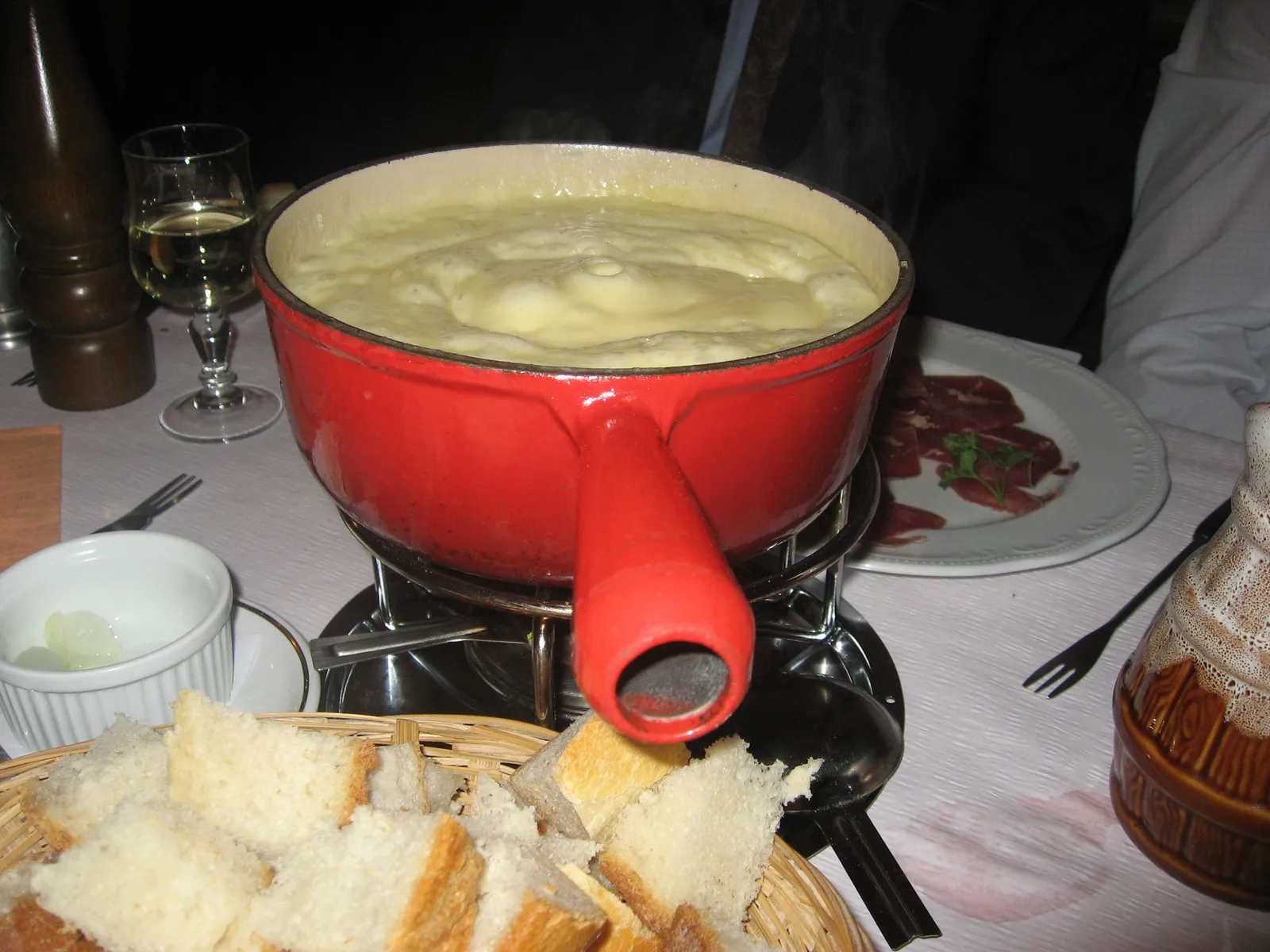
A red fondue pot of melted cheese with bread cubes and a glass of white wine Switzerland flag Switzerland 40m
Dinner •Swiss Alpine Classic

Swiss Cheese Fondue

Swiss cheese fondue is the Alps in a pot: Gruyere and Emmental melted slowly into dry white wine with garlic and a splash of kirsch, kept warm at the table while everyone dips cubes of bread into the bubbling cheese. One serving is about 310 g.

Comfort & Togetherness

Gruyere and Emmental melted in white wine, shared from one pot.

Pairs Well With
Cubes of crusty bread, boiled potatoes and cornichons on the side
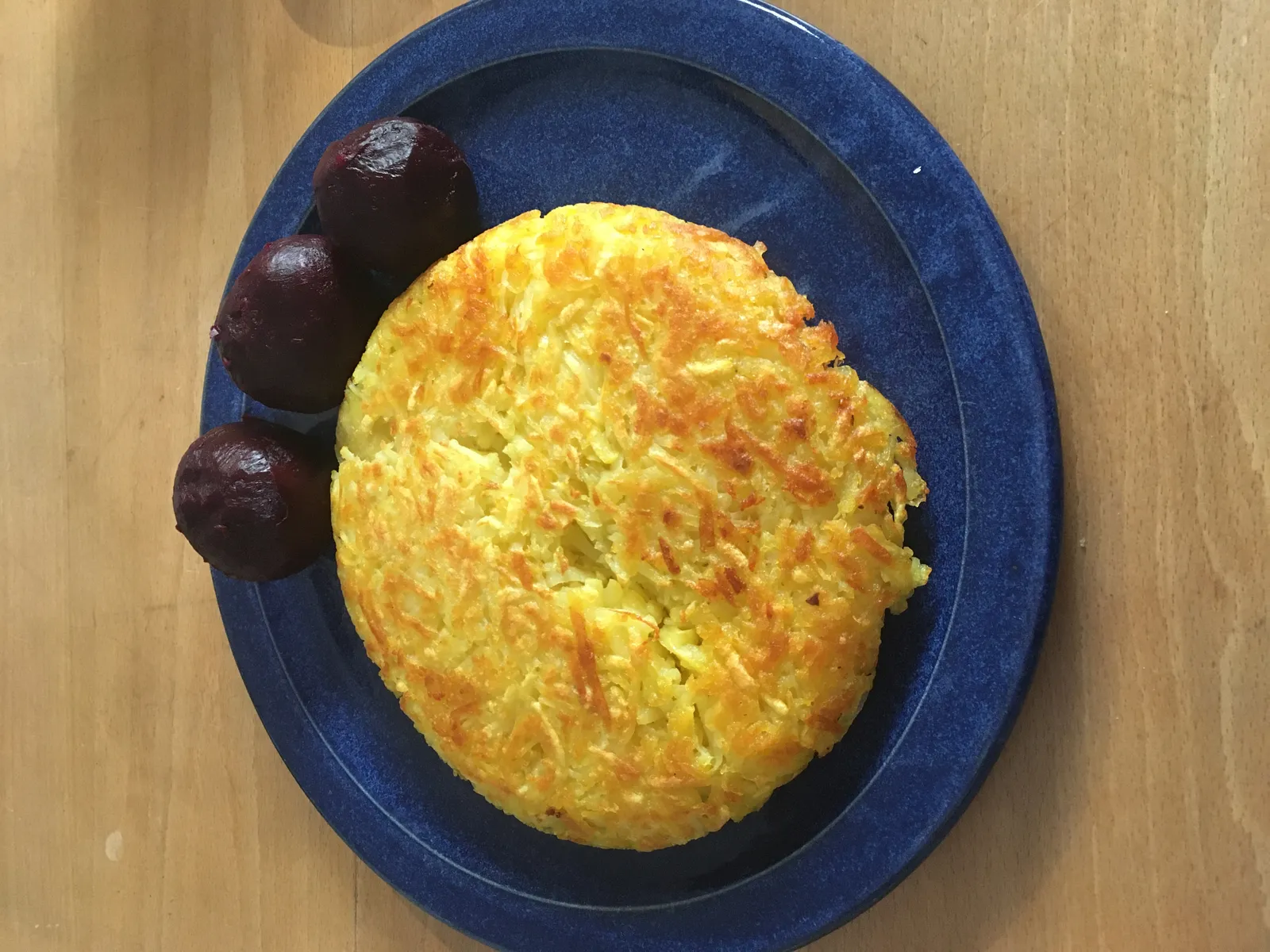
A large golden rosti potato cake on a blue plate Switzerland flag Switzerland 40m
Lunch •Bernese Farmhouse Classic

Rösti

Rösti is Switzerland's crisp potato cake: grated potato pressed into one large golden disc and fried in butter until the outside shatters and the inside stays soft, then topped with a fried egg. One serving is about 240 g.

Simple & Satisfying

One large crisp cake of grated potato, pan-fried in butter and topped with a fried egg.

Pairs Well With
A fried egg on top and a simple green salad with sharp vinaigrette
Quick Prep (<30m)
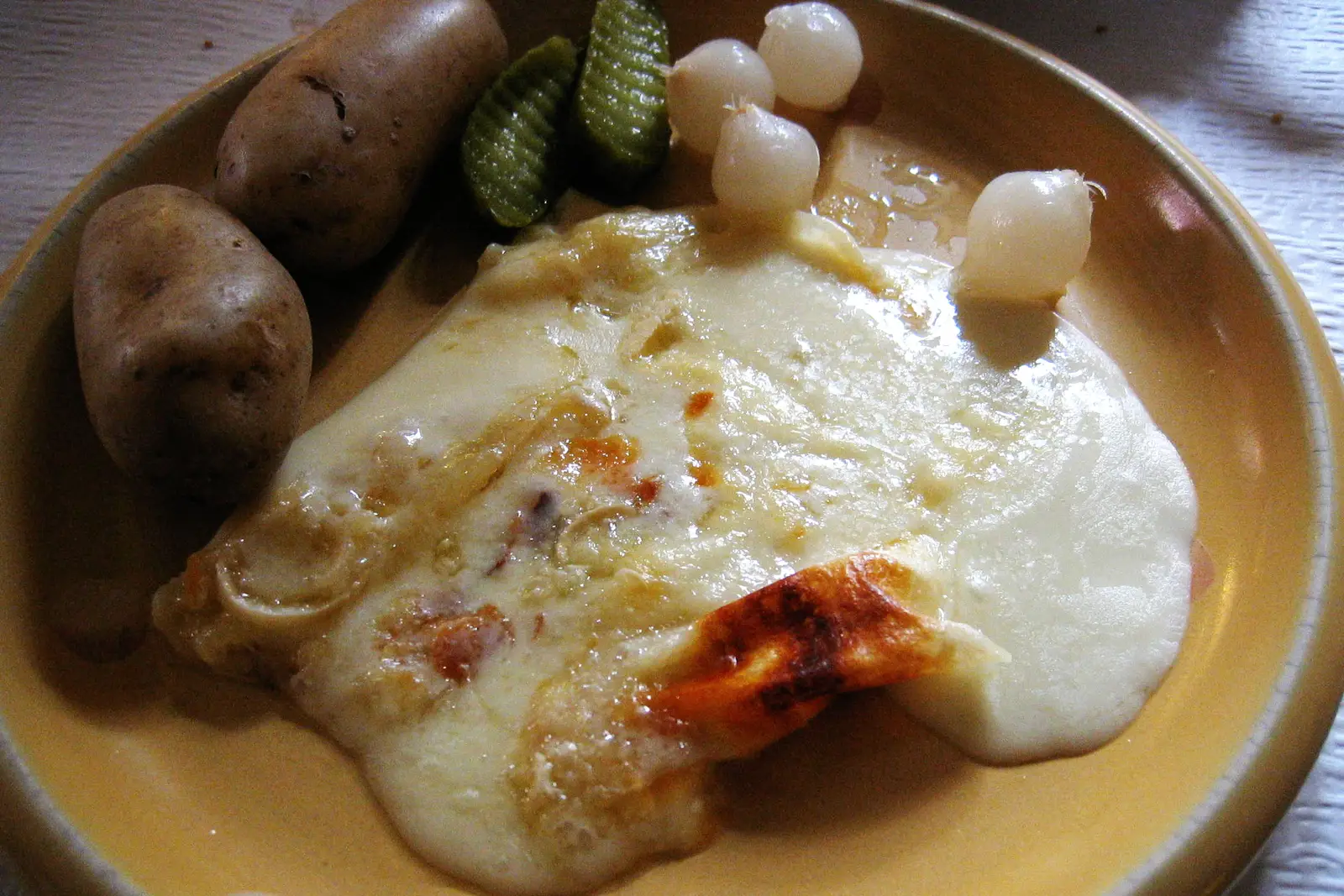
Melted raclette cheese scraped over a plate with boiled potatoes and pickles Switzerland flag Switzerland 40m
Dinner •Valais Alpine Classic

Raclette

Raclette is the Swiss Alps' other great melted-cheese meal: a half-wheel of raclette cheese is warmed until the cut face bubbles, then scraped in ribbons over boiled potatoes, with cornichons and pickled onions to cut the richness. One serving is about 365 g.

Comfort & Togetherness

Melted raclette cheese scraped over boiled potatoes with pickles.

Pairs Well With
Boiled potatoes, cornichons, pickled onions and a green salad
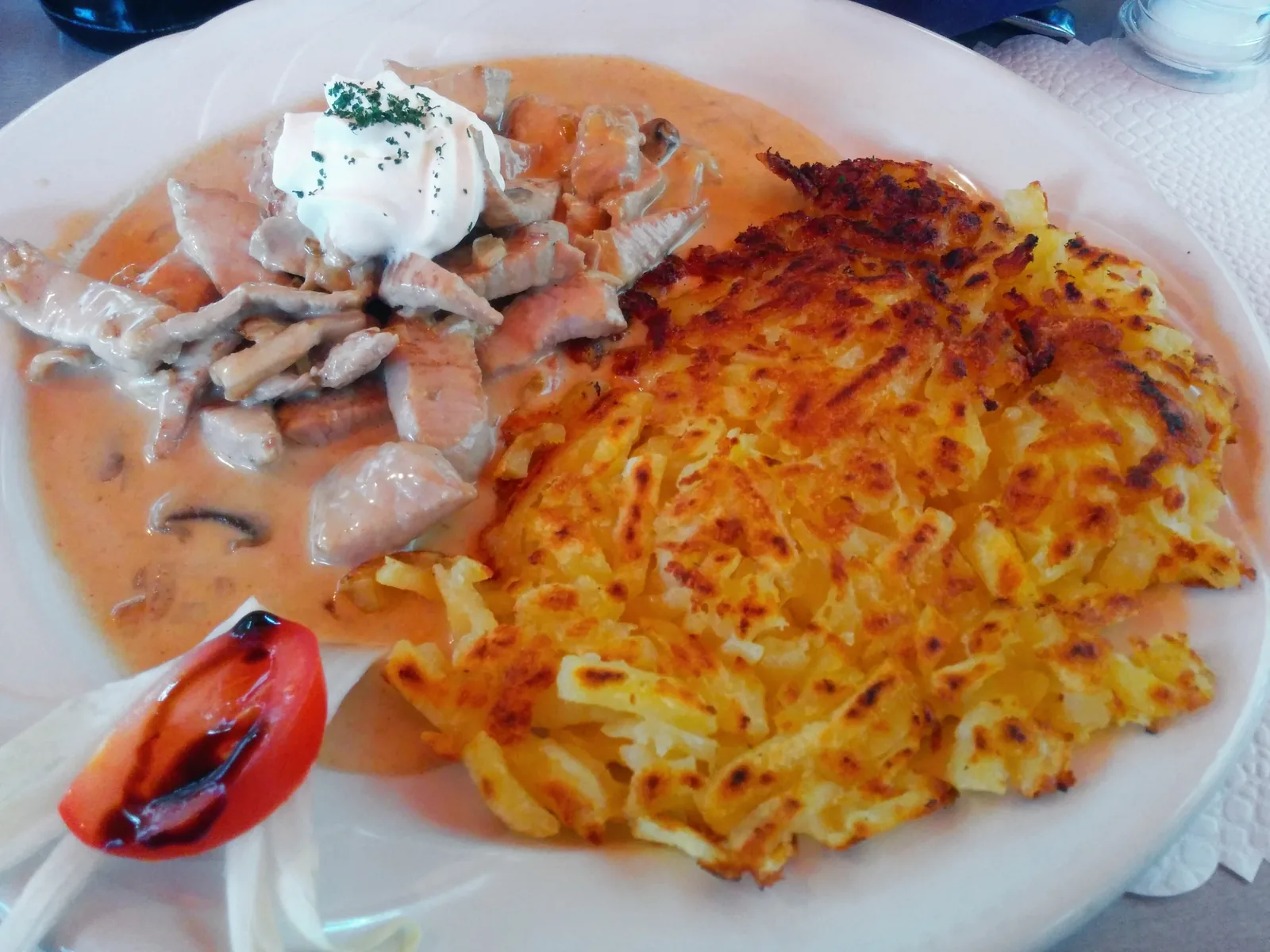
A plate of Zürcher Geschnetzeltes — veal strips in cream sauce with a dollop of cream — beside golden rösti. Switzerland flag Switzerland 40m
Dinner •Zurich Classic

Zürcher Geschnetzeltes

Zürcher Geschnetzeltes is Zurich's signature dish: thin strips of veal quickly seared, then finished in a white-wine and cream sauce with mushrooms and onion. One serving is about 335 g, before the rösti it is traditionally served with.

Rich & Comforting

Tender strips of veal in a white-wine cream sauce with mushrooms — Zurich's classic, with rösti.

Pairs Well With
Serve with golden rösti and a glass of dry Swiss white wine.
High Protein

The Dinner Gazette

Never wonder what’s for dinner again

One email a week with easy dinner ideas from around the world — ingredients, steps and nutrition, tested in our kitchen first.

Delivered every Thursday morning. Unsubscribe anytime.