-
1
Soak the beans and rice overnight
8 hours (passive)
No heat
Rinse 200 g of split skinned mung beans and 45 g of sweet glutinous rice in several changes of cold water, then cover with plenty of cold water and leave to soak overnight, at least 8 hours. Drain well in the morning; you should have about 2 3/4 cups of plumped beans and rice.
Do not skip the soak: dry beans will not grind into a batter, and the pancake will be gritty. If you are short on time, soak in hot water for 2 hours instead.
Done when: Beans are plump, soft enough to squash between your fingers, and the rice is opaque and swollen.
-
2
Grind the batter
5 minutes
No heat
Put the drained beans and rice in a blender with 60 ml of water and blend until coarse and thick, like porridge. Scrape down the sides once or twice. The batter should be thick enough to mound on a spoon, not pour like cream.
Add the water a splash at a time — too much water makes a soft, pale pancake that will not crisp. A few whole bean pieces left in the batter are fine and traditional.
Done when: Thick, coarse, porridge-like batter that holds its shape on a spoon.
-
3
Fold in the pork, kimchi and vegetables
5 minutes
No heat
Transfer the batter to a large bowl. Add the ground pork, chopped kimchi, mung bean sprouts, scallion lengths, minced garlic, beaten egg, 30 ml soy sauce, salt, black pepper and 10 ml sesame oil. Mix with a spoon until everything is evenly distributed.
Break the pork into small pieces as you mix so no single bite is all meat. Taste a tiny spoonful of batter for salt before frying — the kimchi is already salty, so hold back if it tastes seasoned enough.
Done when: Every spoonful shows beans, pork, kimchi and sprouts evenly mixed, with no pockets of plain batter.
-
4
Make the dipping sauce
3 minutes
No heat
In a small bowl, stir together 45 ml soy sauce, 15 ml rice vinegar, 5 ml sesame oil, the toasted sesame seeds, the finely chopped scallion and the gochugaru. Set aside; the sauce keeps for a day in the fridge.
Make the sauce first if you like it cold — a chilled sauce against the hot pancake is the classic contrast.
Done when: Sauce is mixed, with the sesame seeds and scallion floating through it.
-
5
Fry the first three pancakes
12 minutes
Medium-high heat (190°C / 375°F)
Heat 30 ml of vegetable oil in a large non-stick or cast-iron pan over medium-high heat until it shimmers. Spoon in about 1 cup of batter per pancake (3 pancakes at a time) and spread each into a round about 15 cm (6 inches) across with the back of a spoon. Fry for 3–4 minutes per side until deep golden and crisp at the edges, pressing gently with a spatula. The pork inside must be fully cooked through.
Do not crowd the pan and do not move the pancake for the first 2 minutes — it needs undisturbed contact with the hot oil to form its crisp crust. Add a little more oil if the pan dries out.
Done when: Both sides deep golden-brown and crisp; the edge crackles when pressed and the centre is steaming hot, with the pork cooked through.
-
6
Fry the rest and serve hot
12 minutes
Medium-high heat (190°C / 375°F)
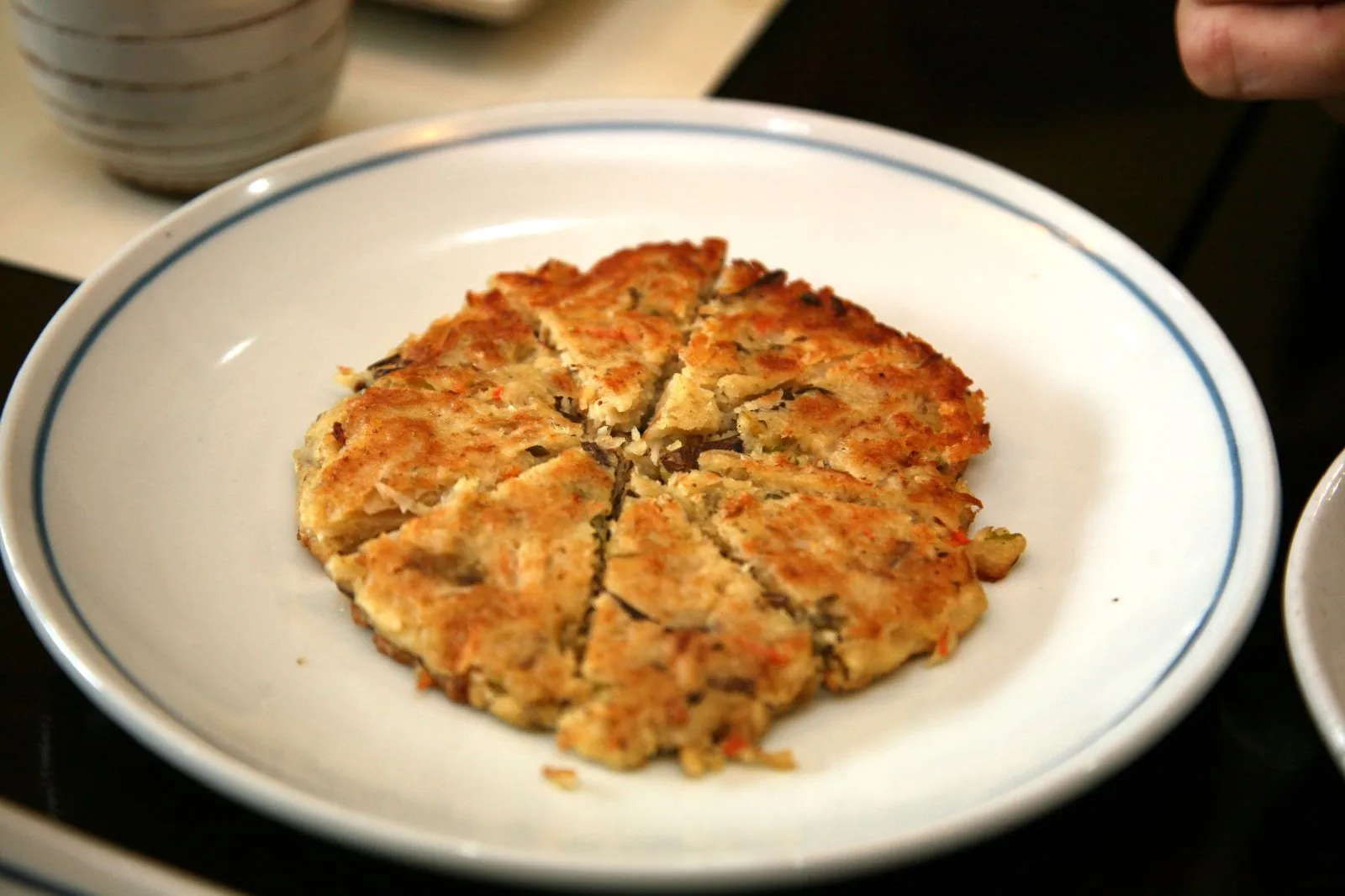
Wipe the pan if any crumbs have darkened, add the remaining oil, and fry the last 3 pancakes the same way. Cut each pancake into wedges with kitchen scissors or a knife, pile on a plate, and serve at once with the dipping sauce. Bindaetteok is at its best in the first 10 minutes, while the crust is still crisp.
Keep finished pancakes warm in a low oven at 120°C (250°F) on a wire rack while the rest fry — never stack them, or the steam will soften the crust.
Done when: All 6 pancakes golden and crisp, cut into wedges and steaming hot.
auto_awesome Finishing Touches & Plating
Cut each pancake into wedges, serve straight from the pan with the soy-vinegar dipping sauce, and eat while the crust is still crisp — bindaetteok waits for no one.

 South Korea
1h 5m