Curated recipes from 193 countries  •  New seasonal Mediterranean issue out now

Overview

Baechu Kimchi

Baechu-kimchi, napa cabbage kimchi

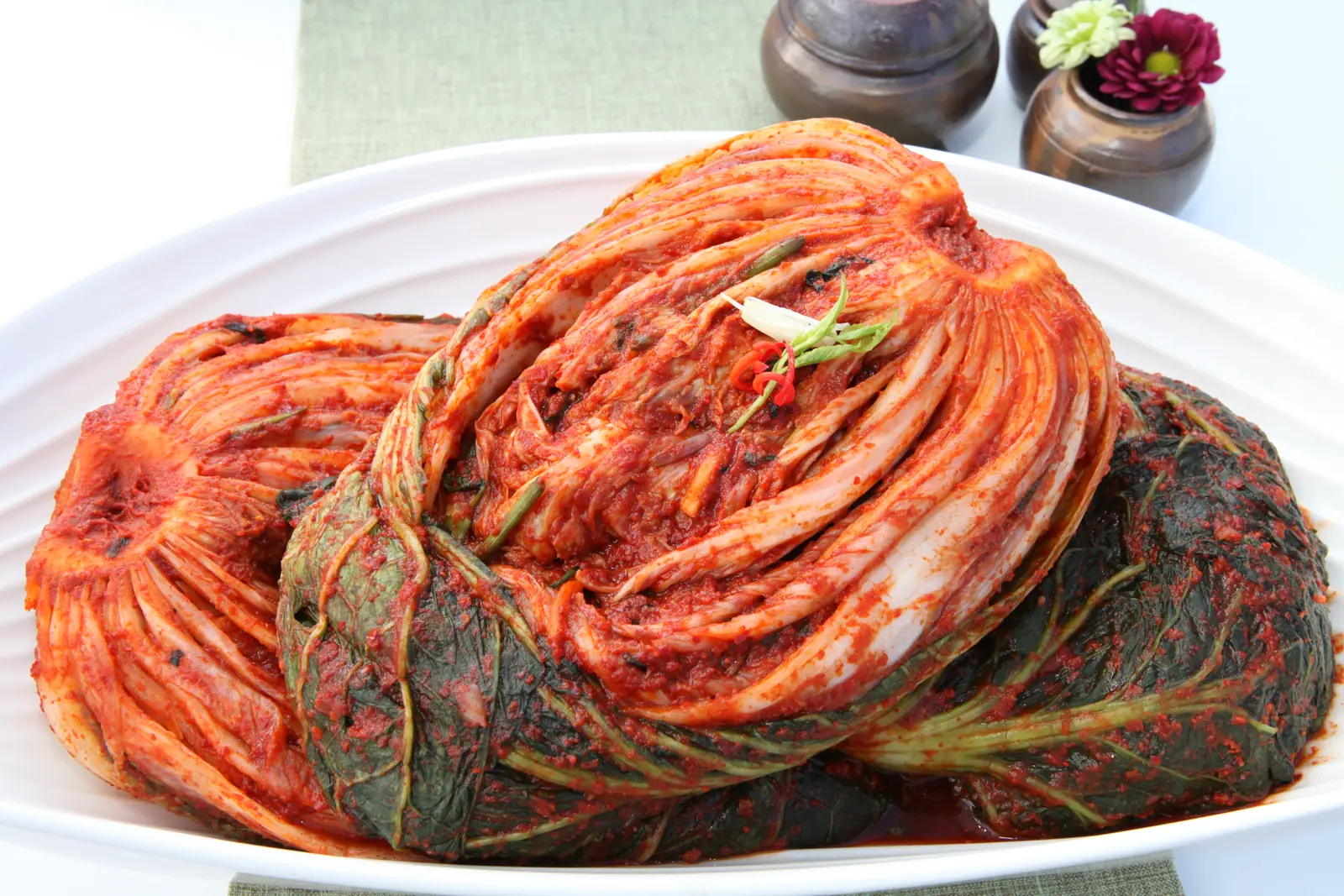
This kimchi recipe turns one head of napa cabbage into classic baechu kimchi: salted leaves packed with a bright red gochugaru paste, then left to ferment until tangy and fizzy. It is the spicy southern-style kimchi most people picture when they hear the word kimchi, and it keeps for weeks in the fridge. One serving is about 165 g.

Kimchi is Korea's oldest everyday food: vegetables have been salted and fermented on the peninsula for well over a thousand years. Napa cabbage only arrived in Korea in the late 19th century, and whole-cabbage kimchi much like today's version is described in Siuijeonseo, a cookbook from around that time. The communal autumn kimchi-making, kimjang, was inscribed by UNESCO on the Representative List of the Intangible Cultural Heritage of Humanity in 2013.

Pairs well with: Serve a small bowl with steamed rice, grilled meat or a fried egg.

Provenance

South Korea flag South Korea

Korean Kimjang Heritage

East & South Asia

Time Dedication

2h 35m

150m prep • 5m cook

Batch Yield

8 Servings

73 kcal per serving

1 serving ≈ 165 g

Technical Skill

Intermediate

Medium (Fermentation)

Meal Timing & Digestive Fit

Breakfast

Not Advised

Lunch

Hearty Midday Main

Dinner

Ideal Hearty Main

Snack & Tea

Inappropriate

Fermented / Gut Health Occasions: Kimjang season, family meals, barbecue sides, everyday banchan Cost: Low — about $1–2 per serving at home
Whole heads of baechu kimchi coated in red gochugaru paste on a white platter

Korean Kimjang Heritage

Photo: gwangju kimchi, CC BY-SA 2.0, via Wikimedia Commons

The Heritage Formulary

Measured Ingredients

Estimated cost: Low — about $1–2 per serving at home (USD)

Good baechu kimchi is crisp, not soggy, with a bright red paste, a clean sour tang and a gentle fizz — never mushy, and never just salty.

Execution Methodology & Culinary Technique

Step-by-Step Cooking Guide

Active 2h 35m
P

Prep Stage: Salt, Soak, Julienne

30 Mins active + 2 hours salting • Large Bowl & Pot

Quarter the cabbage and salt it first — it needs 2 hours to wilt while you julienne the radish, cut the scallions and make the rice porridge. Everything for the paste should be measured before the cabbage is rinsed, because the leaves need packing as soon as they are drained.

Maestro Tip: Start the salting before anything else; the 2 hours of waiting is when all the other prep happens.

  1. 1

    Salt the cabbage

    2 hours Room temperature, about 20°C (68°F)

    Quarter the cabbage (900 g) lengthwise through the core and sprinkle the coarse sea salt (60 g) between the leaves, working it into the thick white ribs. Set the quarters in a large bowl, cover, and leave for 2 hours, turning once halfway, until the leaves are wilted and bend without snapping.

    The leaves are ready when a thick rib bends like a soft noodle instead of cracking.

    Done when: Leaves limp and flexible, ribs bend without snapping.

  2. 2

    Make the rice porridge

    5 minutes Medium heat 90°C (194°F)

    Whisk the glutinous rice flour (50 g) into the water (250 ml) in a small pot, then cook over medium heat for about 5 minutes, stirring constantly, until it turns into a thick, glossy porridge. Take it off the heat and let it cool to room temperature — hot porridge would cook the garlic and dull the flavour.

    Keep stirring to the end; the porridge thickens suddenly and catches on the bottom if you stop.

    Done when: Thick, smooth and glossy, like a thin custard.

  3. 3

    Mix the seasoning paste

    10 minutes Room temperature, about 20°C (68°F)

    Stir the cooled porridge with the gochugaru (30 g), fish sauce (45 ml), sugar (15 g), minced garlic (24 g) and grated ginger (10 g) until it is a smooth, deep-red paste. Fold in the julienned radish (150 g) and scallions (50 g) so every strand is coated.

    Wear gloves from here on — gochugaru stains hands and stings small cuts.

    Done when: Even deep-red paste, vegetables coated, no dry flakes left.

  4. 4

    Rinse and drain the cabbage

    10 minutes Room temperature, about 20°C (68°F)

    Rinse each salted quarter 2 to 3 times under cold running water to wash off the excess salt, then squeeze gently and let the quarters drain cut-side down for 10 minutes. Taste a rib: it should be pleasantly salty, not fiercely so.

    Do not skip the rinse — unrinsed cabbage makes kimchi too salty to eat.

    Done when: Leaves clean, pleasantly salty, drained but still damp.

  5. 5

    Pack the paste between the leaves

    15 minutes Room temperature, about 20°C (68°F)

    Working with one quarter at a time, spread a spoonful of paste between the leaves from the outside in, coating each leaf evenly but not overloading it. Fold each quarter in half, roll it loosely, and pack it snugly into a clean 2-litre glass jar or kimchi container, pressing down so no air pockets remain.

    Pack tightly but leave 3 cm of headroom — the kimchi bubbles and rises as it ferments.

    Done when: Every leaf coated red, quarters packed tight, no air pockets.

  6. 6

    Ferment, then refrigerate

    1–2 days Room temperature 20°C (68°F), then fridge 4°C (40°F)

    Close the lid loosely and leave the jar at room temperature for 1 to 2 days until you see small bubbles and the paste smells pleasantly sour. Tighten the lid and move the jar to the fridge, where the kimchi keeps for 3 to 4 weeks and keeps getting tangier.

    In a warm kitchen 1 day is enough; taste on day 1 and refrigerate when the sourness suits you.

    Done when: Bubbles in the jar, sour tangy smell, leaves still crisp.

Finishing Touches & Plating

Serve the kimchi cold from the fridge in a small bowl, cut into bite-size pieces if you like — it is at its best after a week, when the sourness has deepened but the leaves are still crisp.

Nutritional Physiology & Benefits

Nutrition

Energy

73

kcal / serving

Protein

3g

Complete AA

Carbs

15g

Complex

Fats

1g

Healthy

Per serving (8 servings · 1 serving ≈ 165 g)
Energy73 kcal
Protein3 g
Carbohydrates15 g
Fat1 g
Fibre3.2 g
Sugar4.9 g
Sodium986 mg
Per 100g
Energy44 kcal
Protein1.8 g
Carbohydrates9.3 g
Fat0.4 g
Fibre1.9 g
Sugar2.9 g
Sodium598 mg

Nutrition values are estimated — calculated from USDA FoodData Central values for the listed ingredients.

Vitamins & minerals: Vitamin C and vitamin K from the cabbage and radish, vitamin A from the gochugaru, and iron from the fermented vegetables. Nutrition values are estimated.

Naturally fermented

The sourness comes from lactic acid bacteria that grow during fermentation, the same kind of fermentation used for sauerkraut and pickles.

Very low in calories

At about 73 kcal a serving, kimchi adds big flavour, fibre and crunch to a plate without adding much energy.

Fibre and vitamin C

Cabbage, radish and scallions bring fibre and vitamin C, and the gochugaru adds vitamin A — a small serving covers several nutrients at once.

Food Pairings

What to Eat With

To optimize nutrient absorption and elevate the sensory depth, pair with these authentic accompaniments:

Sides

Steamed rice

Plain rice is kimchi's natural partner — its mild, soft bulk cools the chilli heat and soaks up the spicy juices.

Grilled pork belly

Rich, fatty grilled pork needs something sharp and sour to cut through it, and kimchi's acidity and crunch do exactly that.

Fried egg

A soft fried egg on rice with kimchi is a classic quick meal — the yolk softens the heat and the kimchi wakes the whole plate up.

Drinks

Cold barley tea

Unsweetened roasted barley tea is the everyday Korean table drink, and its nutty coolness balances the spice without adding sweetness.

Complete menu

Serve baechu kimchi with steamed rice, grilled pork belly and a fried egg, plus cold barley tea — finish with a few slices of Asian pear if you want something sweet afterwards.

Digestive Guardrails

What NOT to Combine

To prevent digestive distress, sluggishness, or palate clash, avoid pairing the dish with these elements:

Storing it warm for weeks

Kimchi left at room temperature after the first 1 to 2 days keeps fermenting fast, turns very sour and soft, and can overflow the jar. Refrigerate it once it tastes right. This is general information, not medical advice.

Using a metal container

The acid in fermenting kimchi can react with unlined metal and pick up a metallic taste. Use glass, ceramic or food-grade plastic instead. This is general information, not medical advice.

General information only, not medical advice — consult a doctor for personal dietary decisions.

Who Should Eat It

Who Should Eat

  • General adultsA small daily serving fits easily into a balanced diet; the salt is the only thing to watch if portions are large.
  • ChildrenFine for children who like spice, in a small portion — start with a mild batch using half the gochugaru, and rinse a piece before serving if it is too hot.
  • ElderlySoft, easy to chew and low in calories; the salt means portions should stay small for anyone watching sodium.
  • Pregnant womenFermented vegetables are generally safe in pregnancy when the jar is clean and the kimchi is refrigerated; if the kimchi smells off or has mould, throw it out. Ask your clinician if unsure.
  • Breastfeeding womenFine in a normal portion; very spicy food can occasionally unsettle a sensitive baby, so try a small amount first.
  • AthletesA useful low-calorie flavour boost after training, but at only 3.0 g of protein a serving it needs a protein partner such as eggs or meat.
  • Weight gainAt 73 kcal a serving it adds almost no energy, so pair it with rice and protein rather than eating it on its own.
  • Weight lossA good choice: high in fibre and volume for few calories, so a generous spoonful makes a plain bowl of rice feel like a full meal.

Health Conditions — Adjust or Avoid

Conditions

  • DiabetesOne serving carries about 15.4 g of carbohydrate, mostly from the cabbage and the small amount of added sugar; the fibre slows digestion. Keep to one serving and ask your clinician about portion size.
  • High blood pressureAt about 986 mg of sodium per serving this is a salty food, mostly from the brining salt and fish sauce. Keep portions small and ask your clinician.
  • Kidney diseaseKimchi is high in sodium and potassium from the cabbage, so it may not fit a restricted diet. Ask your clinician or dietitian before eating it regularly.
  • GoutKimchi itself is low in purines, but it is often eaten with meat and alcohol, which matter more for gout. Keep portions modest and ask your clinician if you have gout.
  • Stomach issuesChilli, garlic and acidity can trigger reflux or discomfort for some people. If that is you, eat a smaller portion with rice, and ask your clinician if symptoms persist.
  • Cardiovascular diseaseLow in fat and calories with good fibre, which fits a heart-friendly pattern well; the salt is the part to watch. Ask your clinician about how often it fits your diet.
  • Fatty liverLow in fat and energy with good fibre, so it suits a lighter plate; the small amount of added sugar is the part to keep modest. Ask your clinician for personalised advice.
  • Food allergiesContains fish (fish sauce) — use the soy-sauce substitute if you have a fish allergy. Otherwise free of gluten, dairy, egg, nuts and soy as written. Ask your clinician if you have a food allergy.
  • Special therapeutic dietsSuitable for vegan diets with the soy-sauce substitute, and for gluten-free diets as written; for a low-sodium therapeutic diet, rinse the cabbage an extra time and halve the fish sauce. Ask your clinician or dietitian before adapting it.

If you have a medical condition, consult your doctor before changing your diet.

Storage & Use

Storage & Use

How to store
Keep in a sealed glass jar or kimchi container, always pressing the kimchi down under its own brine.
In the fridge
Keeps 3–4 weeks in the fridge at 4°C (40°F) or below; it gets tangier over time.
In the freezer
Do not freeze — freezing destroys the crisp texture and the live cultures.
How to reheat
Do not reheat; kimchi is eaten cold or at room temperature. Leftover kimchi past its best is better cooked into stews such as kimchi jjigae, heated to 74°C (165°F).
Freezing recommended
No — freezing ruins the texture.
Signs it has spoiled
Mould on the surface, slimy leaves, or a rotten smell instead of a clean sour smell — discard if any appear.

More recipes to explore

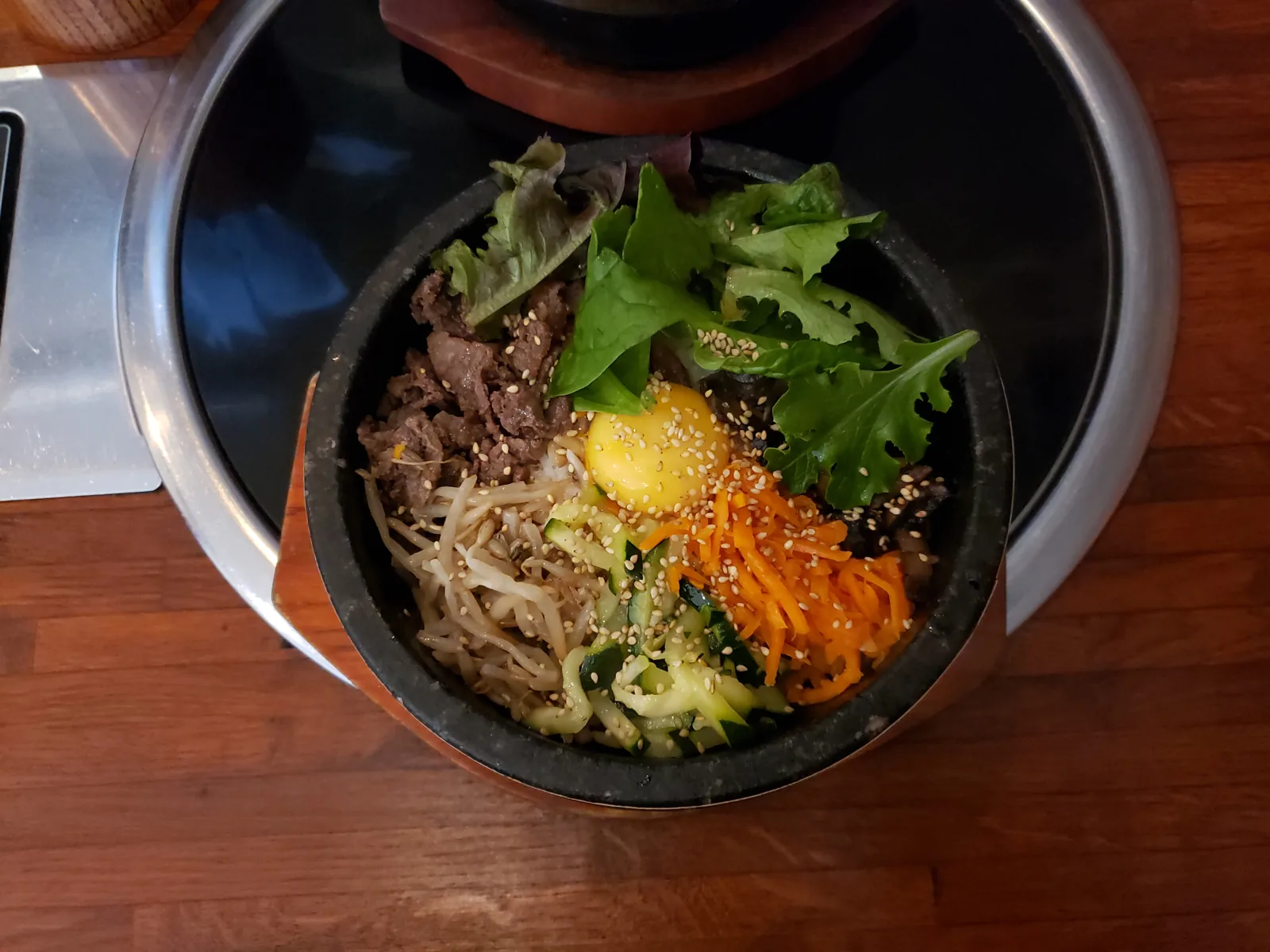
Dolsot bibimbap in a hot black stone bowl — bulgogi beef, egg yolk, carrots, zucchini, bean sprouts and sesame seeds over rice South Korea flag South Korea 1h 5m
Dinner •Korean Heritage

Bibimbap

This bibimbap recipe builds Korea's most famous rice bowl the dolsot way: hot rice in a sizzling stone pot, ringed with five separately seasoned namul vegetables, bulgogi beef and a fried egg, with gochujang to stir through at the table. The stone bowl crisps the bottom layer of rice into golden nurungji while you eat. One serving is about 510 g.

Colourful & Satisfying

Warm rice, five seasoned vegetables, bulgogi beef and a fried egg, mixed at the table with gochujang.

Pairs Well With
Kimchi, kongnamul-guk (bean sprout soup) & barley tea
Korean fried chicken pieces coated in a glossy red yangnyeom glaze South Korea flag South Korea 45m
Dinner •Korean Heritage

Korean Fried Chicken

This Korean fried chicken recipe is the real thing: boneless chicken in a thin potato-starch batter, fried twice — once to cook it through, once at higher heat to drive out moisture and shatter the crust — then tossed in a glossy yangnyeom glaze of gochujang, honey and garlic. The double fry is what keeps the skin crisp under the sauce. One serving is about 250 g.

Crispy & Bold

Double-fried chicken in a thin potato-starch crust, tossed in a sticky sweet-spicy yangnyeom glaze.

Pairs Well With
Pickled radish (chikin-mu), cold beer & steamed rice
High Protein • Quick Prep (<30m)
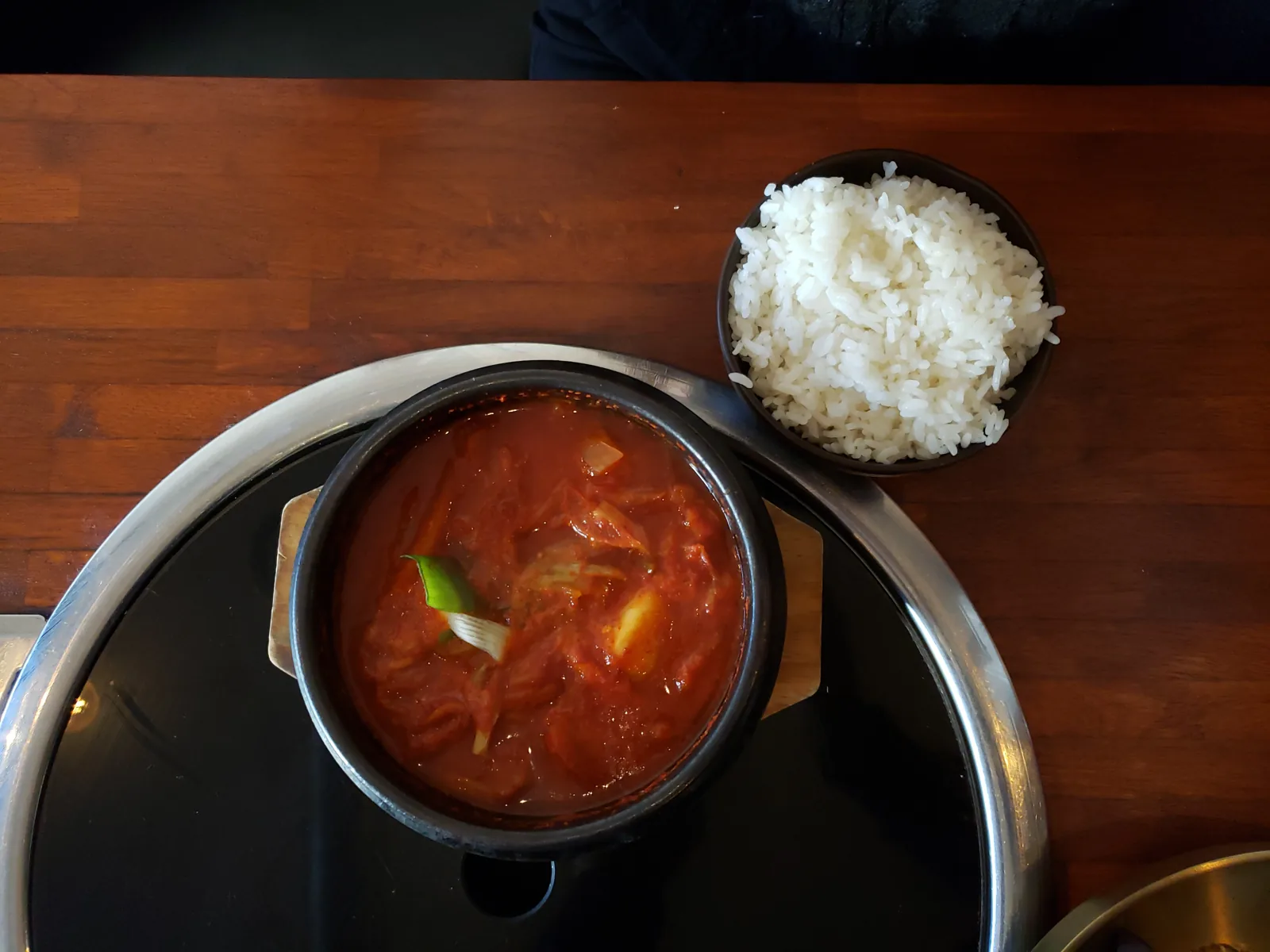
Kimchi jjigae — a red kimchi stew with tofu and spring onions in a black stone pot, served with a bowl of rice South Korea flag South Korea 45m
Dinner •Korean Heritage

Kimchi Jjigae

This kimchi jjigae recipe is the Korean comfort stew: aged, well-fermented kimchi fried with pork belly, then simmered in its own brine with tofu until the broth turns brick-red and rich. It is a stew, not the kimchi itself — the North Korean white kimchi published earlier is the pickled cabbage, while this is what you cook with it. One serving is about 425 g.

Comfort & Warmth

Aged kimchi and pork belly simmered in kimchi brine with tofu — sour, spicy and deeply savoury.

Pairs Well With
Steamed rice, fried egg & banchan
Soups & Broths • Fermented / Gut Health
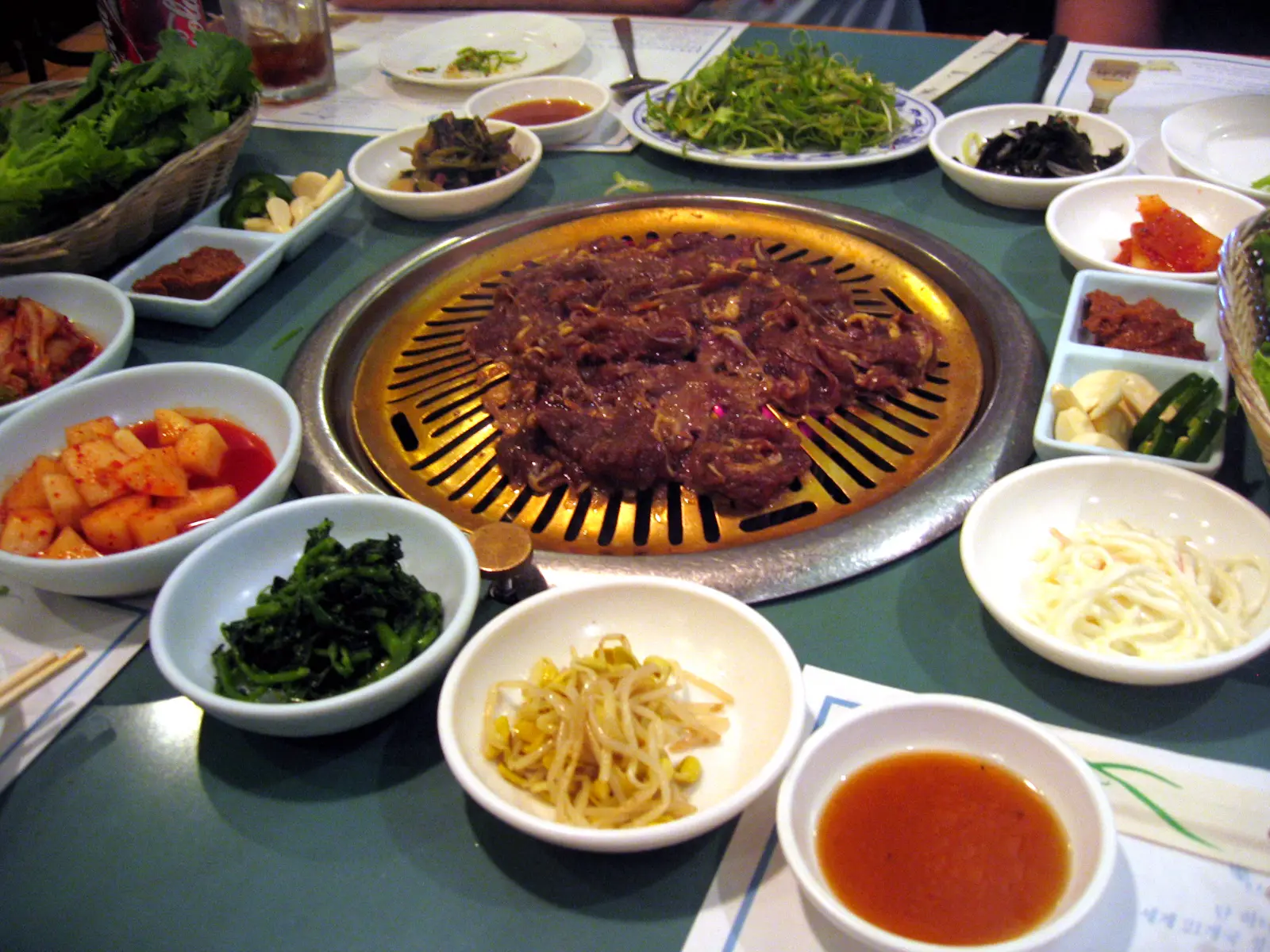
Bulgogi beef grilling on a round tabletop grill surrounded by small bowls of kimchi and banchan South Korea flag South Korea 52m
Dinner •Korean BBQ Heritage

Bulgogi

This bulgogi recipe marinates paper-thin beef sirloin in soy sauce, grated Asian pear, garlic and sesame, then sears it in a ripping-hot pan so the sugary marinade caramelises at the edges. It cooks in minutes and lands on the table glossy, smoky and deeply savoury. One serving is about 240 g.

Sweet, Smoky & Charred

Thin-sliced beef in a sweet soy, pear and sesame marinade, seared fast until the edges char — the centrepiece of a Korean barbecue table.

Pairs Well With
Serve with steamed rice, kimchi and lettuce leaves for wrapping.
High Protein

The Dinner Gazette

Never wonder what’s for dinner again

One email a week with easy dinner ideas from around the world — ingredients, steps and nutrition, tested in our kitchen first.

Delivered every Thursday morning. Unsubscribe anytime.