
Curated recipes from 193 countries  •  New seasonal Mediterranean issue out now

Overview

Bollo de Yuca

Bollos de Yuca, Colombian Steamed Cassava Rolls, Yuca Bollos

This bollo de yuca recipe makes the soft steamed cassava rolls of Colombia's Caribbean coast. Fresh cassava is peeled, parboiled until just soft, then ground and kneaded with crumbled queso fresco, butter, a little sugar and grated coconut. The dough is shaped into rolls, wrapped in corn husks and boiled until tender and fragrant. One roll is about 238 g.

Bollo de yuca is the steamed roll of Colombia's Caribbean coast, where cassava — not wheat — is the everyday starch. In the departments of Bolívar, Atlántico and Córdoba, bollos are sold warm from baskets at markets and bus stops, each roll wrapped in a corn husk that keeps it hot and perfumes it faintly as it steams. The recipe is a cousin of the better-known bollo limpio, the steamed corn roll of the same coast: where bollo limpio is made from white hominy corn, bollo de yuca is made from the cassava root itself, ground and kneaded with queso fresco and butter. It is breakfast food first — eaten with hot chocolate, coffee or grilled chorizo — and the husk is unwrapped at the table, still steaming.

Pairs well with: Hot chocolate, coffee, or grilled chorizo

Provenance

Colombia flag Colombia

Colombian Caribbean Classic

Latin America & Caribbean

Time Dedication

1h 15m

45m prep • 30m cook

Batch Yield

6 Servings

464 kcal per serving

1 serving ≈ 238 g

Technical Skill

Intermediate

Medium (Wrapping)

Meal Timing & Digestive Fit

Breakfast

Prime Morning Fit

Lunch

Inappropriate

Dinner

Inappropriate

Snack & Tea

Inappropriate

Occasions: breakfast, family lunch, Caribbean coast table, market snack Cost: Low — about $1–2 per serving at home
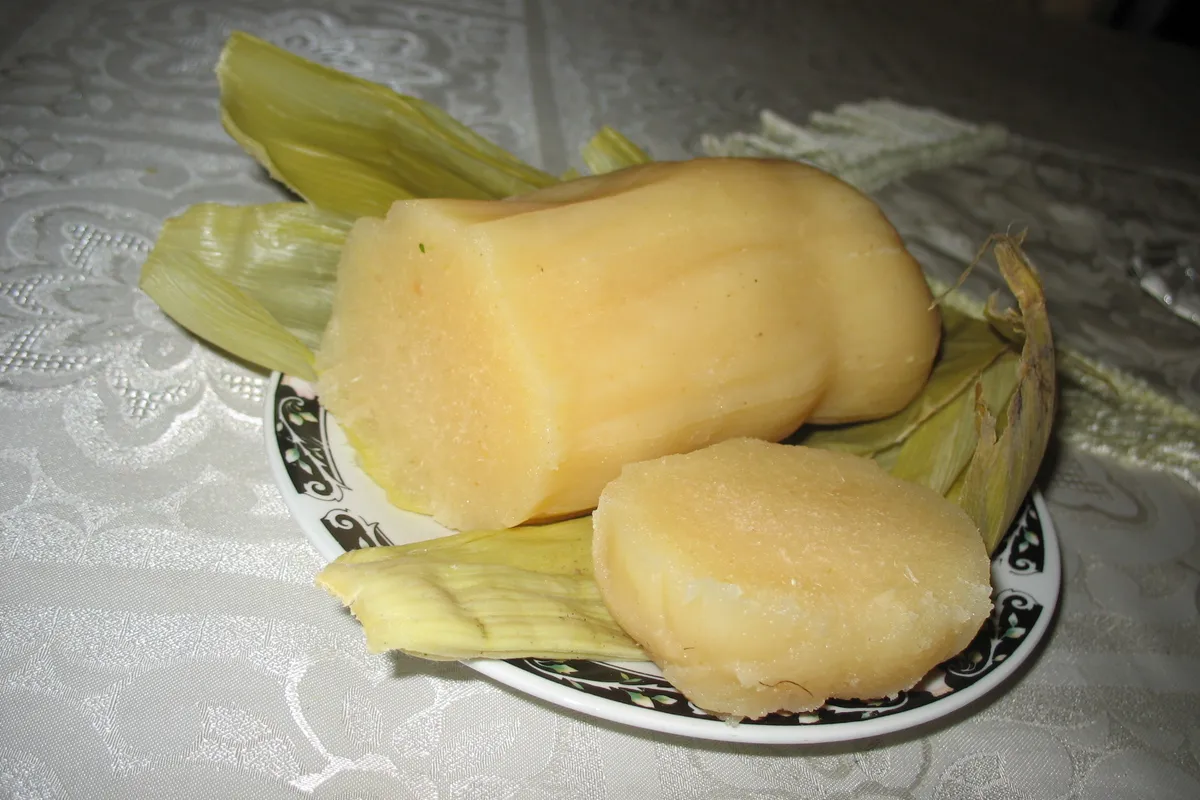
Steamed bollo de yuca rolls wrapped in corn husks on a plate

Colombian Caribbean Classic

Photo: Jdvillalobos, CC BY 3.0, via Wikimedia Commons

The Heritage Formulary

Measured Ingredients

Estimated cost: Low — about $1–2 per serving at home (USD)

A true bollo de yuca is steamed in a corn husk, pale and tender, with the mild flavour of queso fresco and the faint sweetness of coconut; nutrition is estimated from USDA values.

Execution Methodology & Culinary Technique

Step-by-Step Cooking Guide

Active 1h 15m
P

Prep Stage: Peel, Parboil, Grind and Wrap

45 Mins • Peeling, Parboiling, Grinding, Wrapping

Peel the cassava thickly, cut it into chunks and pull out the woody core running down the centre of each piece. Put the chunks in a large pot, cover with water and boil for about 20 minutes, until just soft enough to pierce with a fork but still firm — overcooked cassava turns gluey and will not grind well. Drain and let it cool just enough to handle, then grind it through the fine plate of a meat grinder or grate it finely. Knead in the crumbled queso fresco, softened butter, sugar, grated coconut and salt until the dough is even and holds together. Soak the corn husks in warm water until pliable, then shape the dough into 6 rolls, wrap each one snugly in a husk and fold the ends under.

Maestro Tip: The cassava must be just soft, not mushy. If it falls apart when you pierce it, it has gone too far — start the grind while it is still warm and firm.

  1. 1

    Peel and Cut the Yuca

    10 Mins Room temperature

    Peel the cassava thickly, cutting away the brown skin and the pinkish layer beneath it. Cut the roots into chunks about 8 cm long, then split each chunk and pull out the woody core running down the centre.

    Peel thickly — the skin and the pinkish layer under it are bitter.

    Done when: Clean white chunks with the woody core removed.

  2. 2

    Parboil Until Just Soft

    20 Mins Boiling, about 100°C (212°F)

    Put the cassava chunks in a large pot, cover with cold water and bring to a boil. Boil for about 20 minutes, until a fork goes in with slight resistance but the pieces still hold their shape. Drain well.

    Start checking at 15 minutes — young cassava cooks fast.

    Done when: A fork goes in with slight resistance; the pieces hold their shape.

  3. 3

    Grind and Knead the Dough

    15 Mins Room temperature

    While the cassava is still warm, grind it through the fine plate of a meat grinder, or grate it finely on a box grater. Turn it into a large bowl and knead in the crumbled queso fresco, softened butter, sugar, grated coconut and salt until the dough is even and holds together when squeezed.

    Work the dough while it is still warm — it binds better.

    Done when: A smooth, even dough that holds its shape when rolled.

  4. 4

    Wrap the Bollos in Corn Husks

    10 Mins Room temperature

    Soak the corn husks in warm water for 10 minutes until soft and flexible, then pat them dry. Divide the dough into 6 equal pieces and shape each one into a roll about 12 cm long. Lay each roll on a husk, roll it up snugly and fold the ends under, tying with a thin strip of husk if needed.

    Wrap snugly but not tight — the dough swells slightly as it steams.

    Done when: 6 neat parcels, husks folded under so they will not open in the pot.

  5. 5

    Boil the Wrapped Bollos

    30 Mins Boiling, about 100°C (212°F)

    Pack the wrapped bollos upright in a large pot, cover with water and weigh them down with a heatproof plate so they stay submerged. Bring to a boil and cook for 30 minutes.

    A plate on top keeps the parcels under the water so they cook evenly.

    Done when: Husks deepened in colour; a roll feels firm and springs back when pressed.

  6. 6

    Rest, Unwrap and Serve

    5 Mins Room temperature

    Lift the bollos out with tongs and let them rest for 5 minutes. Unwrap them at the table, while they are still hot, and serve with butter, hot chocolate or grilled chorizo.

    Unwrap at the table — the husk keeps the roll hot and is part of the experience.

    Done when: Warm, pale, tender rolls that slice cleanly.

Finishing Touches & Plating

Serve the bollos warm, unwrapped at the table — soft steamed cassava with melted queso fresco, kept hot in their corn husks.

Nutritional Physiology & Benefits

Nutrition

Energy

464

kcal / serving

Protein

8g

Complete AA

Carbs

79g

Complex

Fats

14g

Healthy

Per serving (6 servings · 1 serving ≈ 238 g)
Energy464 kcal
Protein8 g
Carbohydrates79 g
Fat14 g
Fibre4.0 g
Sugar5.5 g
Sodium647 mg
Per 100g
Energy195 kcal
Protein3.2 g
Carbohydrates33 g
Fat5.7 g
Fibre1.7 g
Sugar2.3 g
Sodium272 mg

Nutrition values are estimated — calculated from USDA FoodData Central values for the listed ingredients.

Vitamins & minerals: Vitamin C and potassium from the cassava, and calcium from the queso fresco. Nutrition is estimated.

Slow, steady energy

About 78.7 g of carbohydrate per roll, mostly slow starch from the cassava, with the cheese and butter making it a filling breakfast.

Made from whole foods

Fresh cassava, cheese, butter and coconut, wrapped in corn husks — no packaged mix, no preservatives.

Naturally gluten-free

Cassava is naturally free of gluten, and the rolls are steamed, not fried, so they stay light.

Food Pairings

What to Eat With

To optimize nutrient absorption and elevate the sensory depth, pair with these authentic accompaniments:

Drinks

Hot Chocolate

Thick Colombian hot chocolate is the classic partner — the sweet, milky drink against the mild, savoury roll.

Coffee

A strong black coffee, or a tinto, is the everyday way to eat bollos for breakfast on the coast.

Full Menus

Grilled Chorizo

Bollos de yuca are traditionally served with grilled chorizos or butifarras — the salty, smoky sausage against the soft, mild roll.

As a Breakfast with Eggs

Serve a warm bollo with scrambled eggs and fresh cheese for a full Caribbean coast breakfast.

Complete menu

Serve the bollos warm for breakfast with hot chocolate and grilled chorizo, or as a side with a Colombian lunch of soup and rice.

Digestive Guardrails

What NOT to Combine

To prevent digestive distress, sluggishness, or palate clash, avoid pairing the dish with these elements:

Do Not Overcook the Cassava

Cassava boiled until mushy turns gluey and will not grind into a dough. Pull it out while it is still firm, about 20 minutes. This is general food information, not medical advice.

Do Not Wrap the Rolls Loosely

A loose husk lets water in and the roll falls apart in the pot. Wrap snugly and fold the ends under, tying with a strip of husk if needed. This is general food information, not medical advice.

General information only, not medical advice — consult a doctor for personal dietary decisions.

Who Should Eat It

Who Should Eat

  • General adultsA filling breakfast roll — one bollo with hot chocolate is a full, satisfying start to the day.
  • ChildrenSoft, mild and easy to eat; let the roll cool for a minute after unwrapping, as it comes out of the pot very hot.
  • ElderlySoft and easy to chew; serve warm with a drink, and watch the salt if sodium is a concern.
  • Pregnant womenFine as a breakfast food — the cheese is cooked through in the boiling. Ask your clinician if you are watching salt or blood sugar.
  • Breastfeeding womenFilling and energy-rich, with about 78.7 g of carbohydrate per roll; a good breakfast choice.
  • AthletesA handy slow-energy breakfast with about 78.7 g of carbohydrate per roll, best eaten with a protein food such as eggs.
  • Weight gainEasy to enrich: add a second roll, or serve with butter and a glass of hot chocolate.
  • Weight lossAt about 464 kcal a roll it is a heavy breakfast; take one roll and skip the butter.

Health Conditions — Adjust or Avoid

Conditions

  • DiabetesAbout 78.7 g of carbs per roll, mostly cassava starch. Keep to one roll and pair it with eggs rather than sweet chocolate. Ask your clinician about portion size.
  • High blood pressureAbout 647 mg of sodium per roll, mostly from the queso fresco and the added salt. Ask your clinician about your sodium target.
  • Kidney diseaseModerate in potassium from the cassava, so it may not suit a restricted diet. Ask your clinician before making it a regular food.
  • GoutLow in purines, but a starchy, filling food eaten often can still add up. Keep it an occasional breakfast and ask your clinician if flare-ups are frequent.
  • Stomach issuesSteamed and mild, so it is usually gentle on the stomach; eat it warm and fresh rather than reheated. Ask your clinician if symptoms persist.
  • Cardiovascular diseaseThe butter and queso fresco add saturated fat, so keep the portion to one roll and balance the rest of the day. Ask your clinician about fitting it into your eating plan.
  • Fatty liverA starchy, energy-rich roll — best kept as a breakfast food, one roll at a time. Ask your clinician for personal guidance.
  • Food allergiesContains milk (queso fresco and butter) and coconut. It is naturally gluten-free, but check your cheese label. Ask your clinician about safe substitutes.
  • Special therapeutic dietsNot suitable for a dairy-free diet as written; the queso fresco is the heart of the roll. Ask your clinician or dietitian about your specific plan.

If you have a medical condition, consult your doctor before changing your diet.

Storage & Use

Storage & Use

How to store
Cool completely, then wrap each bollo in its husk in plastic wrap or store in an airtight container.
In the fridge
3 days in the fridge, still wrapped in the husks.
In the freezer
Up to 1 month, wrapped in husks and sealed in a bag; thaw overnight in the fridge.
How to reheat
Reheat in the husk in a steamer or in boiling water for 10 minutes, or unwrap and warm in a 180°C (350°F) oven for 10 minutes. Do not microwave in the husk — it dries out.
Freezing recommended
Yes, wrapped in husks.
Signs it has spoiled
Sour smell, a slimy surface, or mould on the husk or the roll — discard, do not taste to check.

More recipes to explore

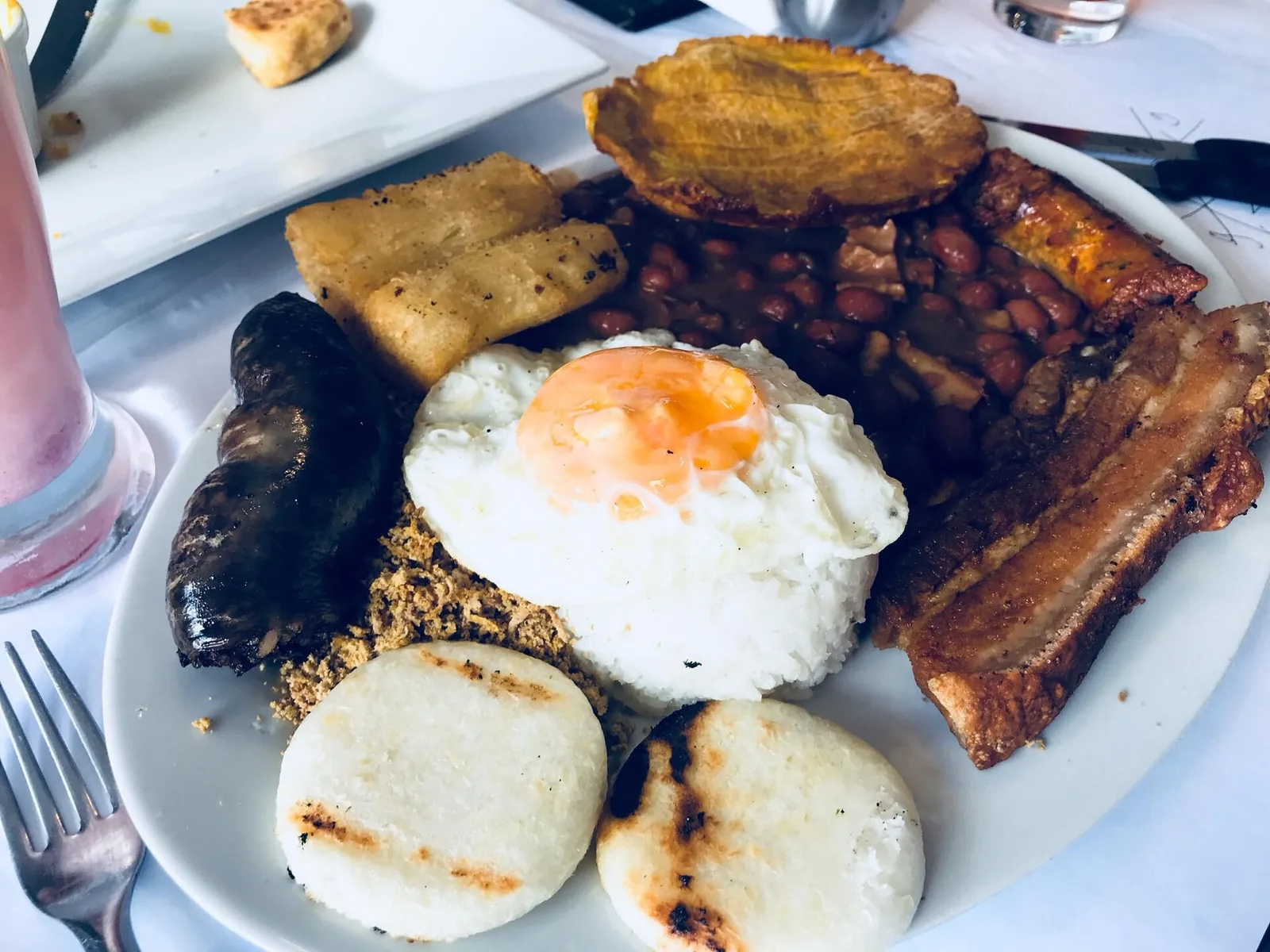
Bandeja paisa on a white plate with red beans, white rice, a fried egg, chicharrón, morcilla, chorizo, fried plantain and two small arepas Colombia flag Colombia 2h
Lunch •Antioquia Heritage

Bandeja Paisa

This bandeja paisa recipe builds the famous platter from Antioquia: red beans simmered with pork, white rice, crisp chicharrón, seasoned ground beef, chorizo and morcilla, a fried egg, sweet fried plantain, avocado, hogao sauce and a small grilled arepa. Every part is cooked separately, then piled onto one wide plate so each bite can mix a little of everything. One serving is about 894 g.

Hearty & Filling

A generous Antioquia platter of beans, rice, meats, egg, plantain and avocado, built to fuel a long working day.

Pairs Well With
A cold glass of panela lemonade or a light lager, with a small green salad on the side.
A stack of golden grilled Colombian arepas on a white plate, with a glass of orange juice beside them Colombia flag Colombia 35m
Breakfast •Andean Heritage

Colombian Arepas

This Colombian arepas recipe turns pre-cooked white cornmeal, warm water, butter and cheese into round corn cakes that are grilled until crisp outside and soft inside. The cheese is kneaded right into the dough, so every bite is savoury and gently melty. Colombian arepas are thinner and plainer than the stuffed Venezuelan kind: they are a breakfast bread, split open and filled at the table. One serving is about 220 g, two arepas.

Comfort & Warmth

Golden grilled corn cakes made from white masarepa, with melting cheese kneaded into the dough.

Pairs Well With
Hot chocolate or coffee, with butter and a slice of fresh cheese on the side.
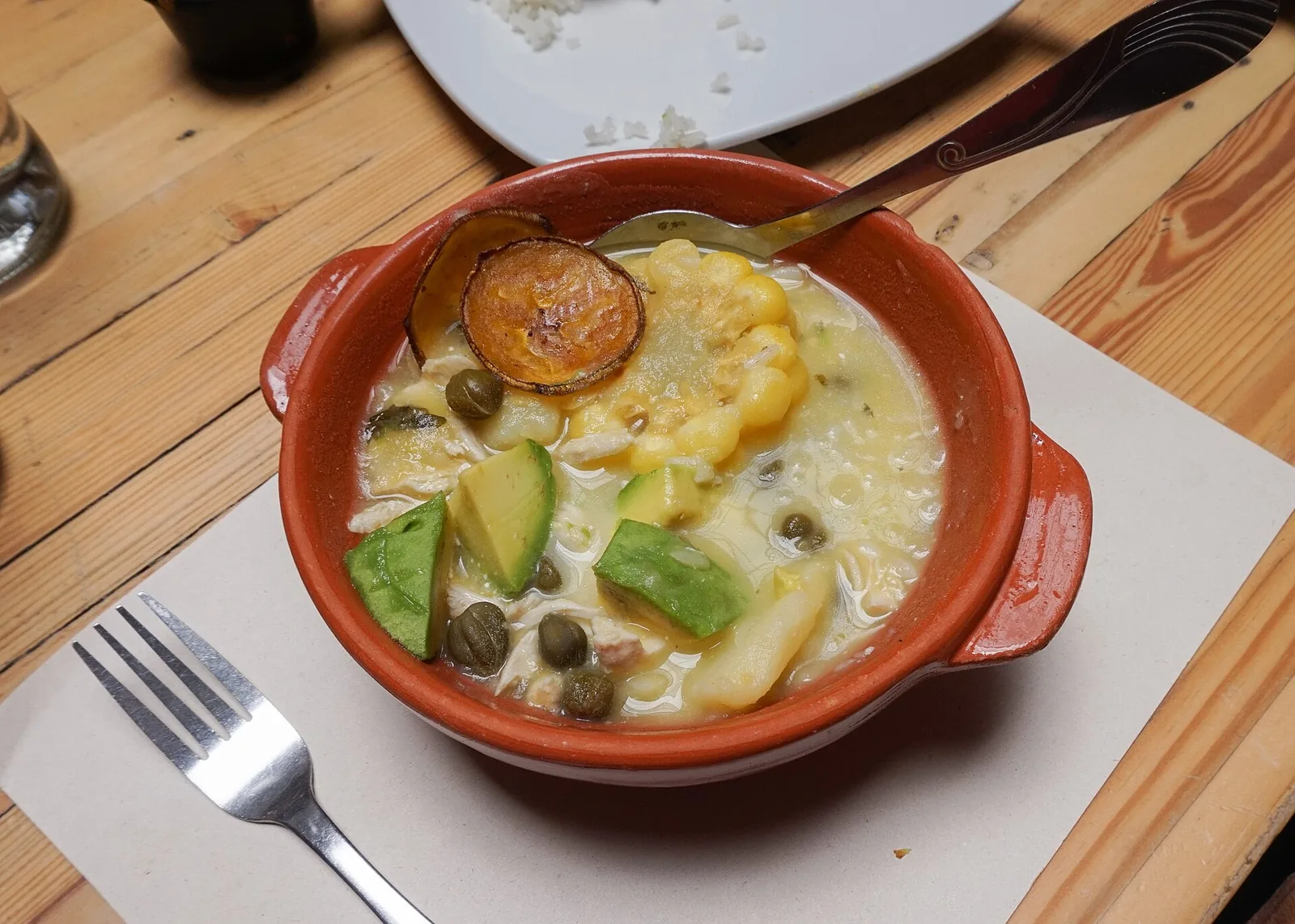
A bowl of ajiaco in a clay bowl, thick golden soup with corn, avocado, capers and shredded chicken Colombia flag Colombia 1h 30m
Lunch •Bogotá Heritage

Ajiaco

This ajiaco recipe is Bogotá's signature soup: chicken simmered with corn on the cob and three kinds of potato — pastusa, sabanera and criolla — until the criolla melts and thickens the broth golden. The herb guascas gives it its unmistakable earthy flavour, and every bowl is finished at the table with heavy cream, briny capers and sliced avocado. One serving is about 750 g, soup and toppings together.

Comfort & Warmth

Bogotá's thick chicken and potato soup, flavoured with guascas and served with cream, capers and avocado.

Pairs Well With
White rice and a small side salad, with the cream, capers and avocado passed around the table.
Soups & Broths
A platter of lechona with golden rice, roast pork pieces, green peas and a fried plantain Colombia flag Colombia 6h
Dinner •Tolima Heritage

Lechona

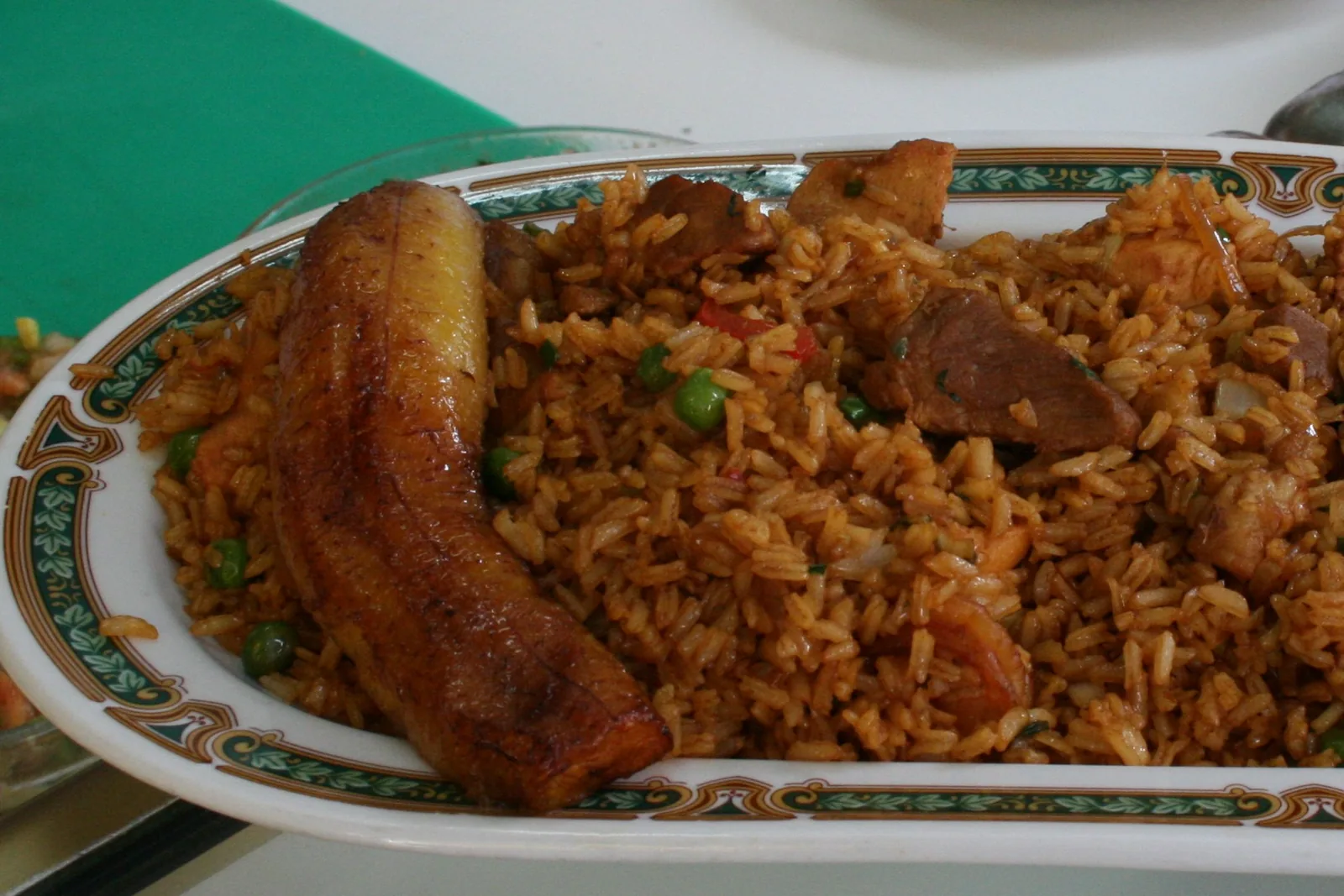
Lechona is Tolima's great festive roast: a deboned pig — here a pork shoulder with its skin — stuffed with rice and peas, sewn shut and roasted for hours until the meat is spoon-tender and the skin crackles. It is served chopped, a spoon of golden rice with every piece of pork, with arepas and fried plantain on the side. One serving is about 444 g.

Festive & Filling

Pork shoulder stuffed with rice and peas, roasted for hours until the meat is tender and the skin crackles.

Pairs Well With
White arepas, fried plantain and a cold beer
High Protein

The Dinner Gazette

Never wonder what’s for dinner again

One email a week with easy dinner ideas from around the world — ingredients, steps and nutrition, tested in our kitchen first.

Delivered every Thursday morning. Unsubscribe anytime.