
Curated recipes from 193 countries  •  New seasonal Mediterranean issue out now

Overview

Bougatsa

Bougatsa Tyri, Greek Cheese Bougatsa, Cheese-Filled Phyllo Parcels

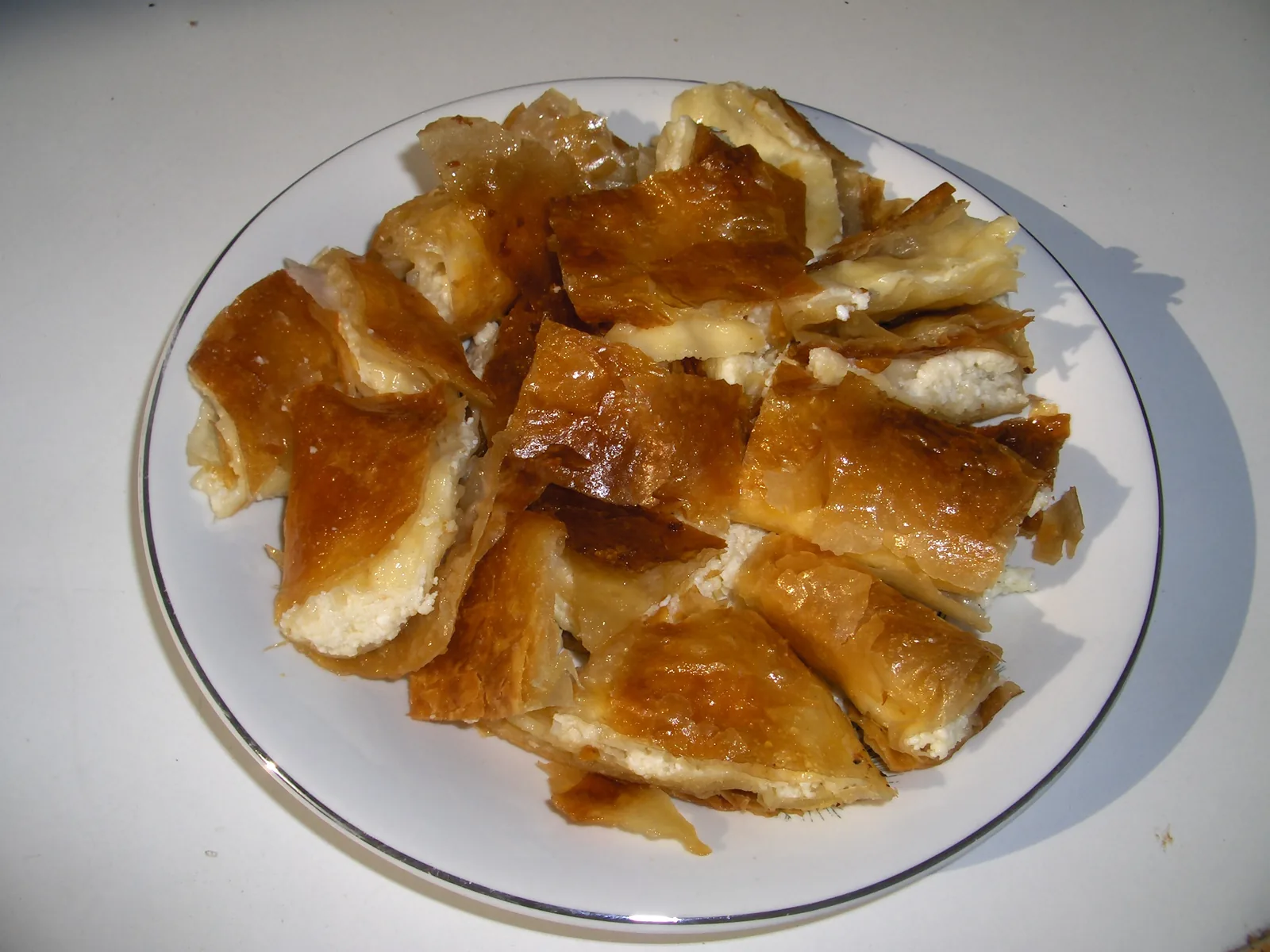
This bougatsa recipe is the cheese version of Greece's famous phyllo pastry: thin sheets of filo brushed with butter, folded into flat parcels around a soft filling of feta and anthotyro, then baked until shattering-crisp and cut into squares. It is the savoury sister of the sweet custard bougatsa — no sugar, no syrup, just salty cheese and buttery pastry, best eaten warm from the oven with your fingers. One serving is about 118 g.

Bougatsa takes its name from the Byzantine Greek pogatsa, from the Latin panis focacius, literally 'hearth bread'. Its modern version comes from northern Greece, above all the cities of Serres and Thessaloniki, where specialist shops called bougatsadika sell it all day as a breakfast or mid-morning snack. There are many fillings — the sweet semolina-custard version is the best known — but the cheese version, made with feta or mizithra, is the savoury classic, baked for about 30 minutes, cut into small pieces and served hot. In Chania, Crete, the cheese bougatsa is made with local mizithra and sometimes finished with a dusting of sugar and cinnamon.

Pairs well with: Cucumber salad, olives & Greek coffee

Provenance

Greece flag Greece

Thessaloniki Bakery Classic

Mediterranean & Italy

Time Dedication

1h 5m

35m prep • 30m cook

Batch Yield

8 Servings

343 kcal per serving

1 serving ≈ 118 g

Technical Skill

Intermediate

Medium (Filo Parcels)

Meal Timing & Digestive Fit

Breakfast

Not Advised

Lunch

Inappropriate

Dinner

Inappropriate

Snack & Tea

Ideal Light Bite

Occasions: Mid-morning snacks, bakery breakfasts, picnics, light lunches, party platters Cost: Low — about $2–3 per serving at home
Golden-brown cheese bougatsa cut into squares on a white plate, with crisp phyllo pastry and a soft white cheese filling showing

Thessaloniki Bakery Classic

Photo: Konstantinos Stampoulis (Geraki), CC BY-SA 2.5, via Wikimedia Commons

The Heritage Formulary

Measured Ingredients

Estimated cost: Low — about $2–3 per serving at home (USD)

A good cheese bougatsa is crisp all the way through: the top shatters, the base is golden, and the cheese filling is soft and set, never runny.

Execution Methodology & Culinary Technique

Step-by-Step Cooking Guide

Active 1h 5m
P

Prep Stage: Mix the Cheese, Keep the Filo Damp

35 Mins • Mixing & Folding

Bougatsa is a race against drying filo: once a sheet is out, it stiffens in minutes. Crumble the feta, add the anthotyro, beaten eggs, milk, pepper, nutmeg and salt, and mix into a thick, spoonable filling before you touch the pastry. Melt the butter, line a baking tray with parchment, and lay a damp tea towel over the filo stack — then work two sheets at a time, brushing each one with butter before you fold.

Maestro Tip: Mix the filling first and the pastry second. Every minute the filo waits uncovered is a minute it turns brittle.

  1. 1

    Mix the Cheese Filling

    10 Mins No heat — about 20°C (68°F)

    Crumble the feta into a bowl, add the anthotyro, beaten eggs, milk, pepper, nutmeg and salt, and stir until thick and spoonable — not runny. Taste: it should be salty and tangy from the feta, with just a whisper of nutmeg. If the feta is very salty, leave the pinch of salt out.

    The filling should hold its shape on a spoon; if it slides off, add a spoonful more anthotyro.

    Done when: The filling is thick, creamy and spoonable, and tastes salty-tangy with a hint of nutmeg.

  2. 2

    Fold the Parcels

    15 Mins No heat — about 20°C (68°F)

    Lay one filo sheet on the worktop and brush it all over with melted butter, then lay a second sheet on top and brush that too. Spoon one eighth of the filling in a line along one short end, fold the two long sides in over the filling, then roll the parcel up into a flat, neat rectangle, seam-side down. Repeat to make 8 parcels, keeping the unused filo under the damp towel the whole time.

    Roll firmly but gently: a tight roll keeps the cheese inside, a rough one tears the filo and the filling leaks out in the oven.

    Done when: Eight flat, even parcels, seams underneath, with no filling escaping at the edges.

  3. 3

    Butter and Arrange

    10 Mins No heat — about 20°C (68°F)

    Set the parcels seam-side down on the lined tray, leaving a little space between them so the hot air can crisp every side. Brush the top and sides of each parcel generously with the remaining melted butter — this is what turns the filo deep golden and shattering-crisp, so do not be shy with it. This bougatsa recipe needs that final buttering: dry filo turns papery instead of crisp.

    Brush to the edges and down the sides, not just the tops: dry corners burn before the centre cooks.

    Done when: The parcels sit evenly spaced on the tray, glossy all over with butter.

  4. 4

    Bake Until Golden

    30 Mins Oven 190°C (375°F)

    Bake at 190°C (375°F) for 28–30 minutes until the parcels are deep golden-brown all over and the filo crackles when you tap it. The cheese inside should be hot and soft, and the egg in the filling must reach at least 74°C (165°F). If the tops brown too fast, lay a loose sheet of foil over the tray for the last 5 minutes.

    Do not open the oven in the first 15 minutes — the parcels puff up on the steam, and a cold draught can make them collapse.

    Done when: The parcels are deep golden and crisp, and the filling is hot and soft right through.

  5. 5

    Rest, Cut and Serve

    5 Mins Resting — about 60°C (140°F)

    Rest the parcels for 5 minutes so the filling firms up just enough to slice cleanly and the filo stays crisp. Cut each parcel into 2 squares and serve warm on a plate, straight away — bougatsa is at its best within minutes of the oven, while the pastry still shatters.

    Use a sharp serrated knife and a gentle sawing motion; pressing down crushes the crisp layers.

    Done when: Each parcel cuts into clean squares with crisp edges and a soft, creamy cheese centre.

Finishing Touches & Plating

Serve warm, cut into squares, with a cool cucumber salad or olives on the side. This bougatsa recipe is made for eating with your fingers, straight off the plate, while the filo is still shatteringly crisp.

Nutritional Physiology & Benefits

Nutrition

Energy

343

kcal / serving

Protein

12g

Complete AA

Carbs

26g

Complex

Fats

21g

Healthy

Per serving (8 servings · 1 serving ≈ 118 g)
Energy343 kcal
Protein12 g
Carbohydrates26 g
Fat21 g
Fibre1.0 g
Sugar1.0 g
Sodium675 mg
Per 100g
Energy292 kcal
Protein10.4 g
Carbohydrates22 g
Fat17.9 g
Fibre0.8 g
Sugar0.9 g
Sodium572 mg

Nutrition values are estimated — calculated from USDA FoodData Central values for the listed ingredients.

Vitamins & minerals: Calcium and phosphorus from the feta and anthotyro, vitamin B12 and choline from the eggs, and a little vitamin A from the butter. Nutrition is estimated.

Good Source of Protein

Each serving carries about 12.2 g of protein from the feta, anthotyro and eggs, which makes one parcel genuinely satisfying as a snack.

Calcium Rich

The feta and anthotyro give this pastry a good amount of calcium per serving, which supports normal bone maintenance as part of a varied diet.

Vegetarian Bakery Classic

With cheese made with vegetarian rennet, bougatsa is a fully vegetarian snack — no meat, no gelatine, just filo, cheese and egg.

Food Pairings

What to Eat With

To optimize nutrient absorption and elevate the sensory depth, pair with these authentic accompaniments:

Sides

Cucumber Salad

Cool cucumber with a little lemon and dill cuts through the rich, buttery filo and refreshes the palate between bites of cheese pastry.

Olives and Bread

A small bowl of olives adds a salty, briny note that echoes the feta, and bread is there for anyone who wants a heartier snack.

Drinks

Greek Coffee or Freddo

In Greek bakeries bougatsa is a mid-morning snack with coffee — the bitter coffee balances the salty, buttery pastry perfectly.

A Glass of White Wine

For adults, a crisp white wine matches the salty feta and the buttery filo the way it matches any cheese course.

Complete menu

Serve bougatsa warm, cut into squares, with a cucumber salad and olives, plus Greek coffee; the pastry is the snack, so keep the sides fresh and simple.

Digestive Guardrails

What NOT to Combine

To prevent digestive distress, sluggishness, or palate clash, avoid pairing the dish with these elements:

Do Not Leave It Out All Day

The egg and cheese filling is perishable: bougatsa should not sit at room temperature for more than 2 hours. Cool leftovers quickly and refrigerate them; reheat to 74°C (165°F) before eating. This is general information, not medical advice.

Watch the Salt

Feta is naturally very salty, and this pastry carries about 675 mg of sodium per serving. People watching salt should use a lower-salt feta and skip the extra pinch of salt in the filling. This is general information, not medical advice.

General information only, not medical advice — consult a doctor for personal dietary decisions.

Who Should Eat It

Who Should Eat

  • General adultsA satisfying snack or light lunch for most adults; the sodium is high, so one parcel with salad is the right portion.
  • ChildrenChildren usually love the crisp pastry and mild cheese; serve a piece warm, and check the filling is not too hot inside.
  • ElderlyOlder adults may enjoy the soft cheese filling, but the salty feta calls for a modest portion with salad.
  • Pregnant womenPregnant women should make sure the feta and anthotyro are pasteurised and the egg is cooked right through to 74°C (165°F).
  • Breastfeeding womenBreastfeeding women can eat it as a normal snack; the calcium and protein are useful, and the portion is easy to manage.
  • AthletesAthletes will like the protein and carbohydrate as a post-training snack, though the fat and salt make it a sometimes food.
  • Weight gainPeople aiming to gain weight will find this an easy, energy-dense snack — about 343 kcal per parcel with a salad on the side.
  • Weight lossPeople aiming to lose weight should take one parcel with a big salad, or make a lighter version with less butter and part-skim anthotyro.

Health Conditions — Adjust or Avoid

Conditions

  • DiabetesCarbohydrates are moderate (about 25.9 g per serving) and the protein slows digestion, so one parcel with salad fits many diabetes meal plans. Ask your clinician about portions.
  • High blood pressureSodium is about 675 mg per serving, which is high for a snack; use lower-salt feta and skip the added salt. Ask your clinician.
  • Kidney diseaseThe sodium and protein levels are moderate for one parcel; keep the portion to one piece and pair it with salad. Ask your clinician.
  • GoutCheese and egg are low in purines, so bougatsa is a relatively gout-friendly savoury snack in a single-parcel portion. Ask your clinician.
  • Stomach issuesButtery filo and rich cheese can feel heavy on a sensitive stomach; a small warm piece, well chewed, is easier than a large cold one. Ask your clinician.
  • Cardiovascular diseaseSaturated fat from the butter and cheese is high (about 21.1 g of fat per serving); an occasional single parcel with salad is the wiser way to enjoy it. Ask your clinician.
  • Fatty liverThe dish is rich in saturated fat, so people with fatty liver should treat it as an occasional snack and favour a lighter version with less butter. Ask your clinician.
  • Food allergiesContains gluten (filo), milk (feta, anthotyro, butter) and egg; check the filo packet for nut warnings. This is general information, not medical advice.
  • Special therapeutic dietsLow-sodium and low-fat diets can be met with lower-salt feta, part-skim anthotyro and olive oil instead of butter; ask your clinician or dietitian about the version that fits your plan.

If you have a medical condition, consult your doctor before changing your diet.

Storage & Use

Storage & Use

How to store
Cool completely, then store in an airtight container in the fridge. Keep pieces in a single layer if you can, so the filo stays crisp.
In the fridge
3 days — reheat in the oven to bring back the crispness.
In the freezer
2 months, baked and cooled; wrap pieces individually in foil.
How to reheat
Reheat in the oven at 180°C (350°F) for 10 minutes until crisp and hot right through, at least 74°C (165°F); avoid the microwave, which makes filo soggy.
Freezing recommended
Yes — it freezes well baked, and reheats crisp from the oven.
Signs it has spoiled
Sour smell from the cheese filling, slimy filo, or mould on the surface.

More recipes to explore

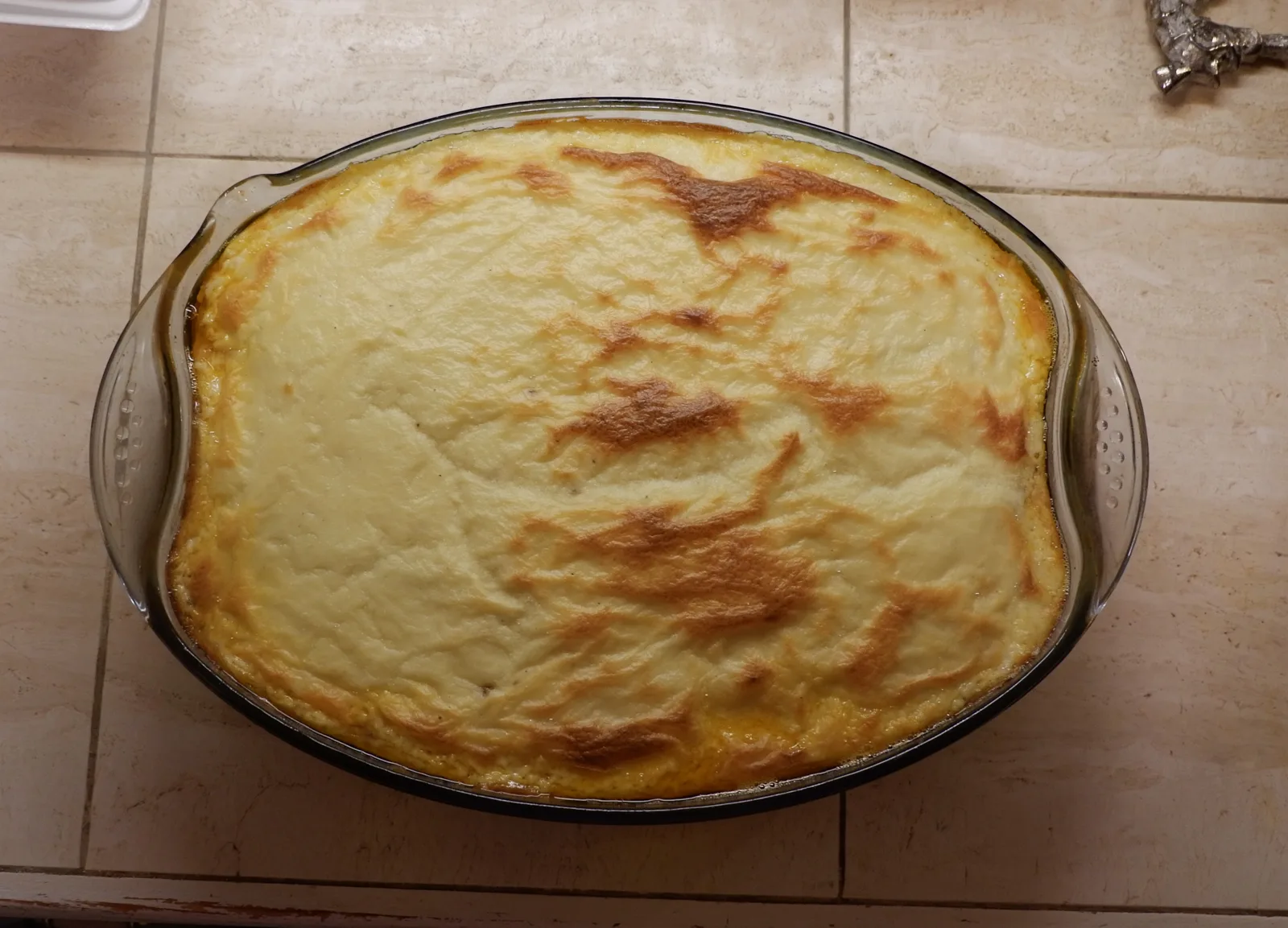
A whole Greek moussaka in a glass baking dish, its bechamel top baked golden brown with darker patches Greece flag Greece 2h
Dinner •Greek Classic

Greek Moussaka

Greek moussaka is a layered bake of fried aubergine and potato, a cinnamon-spiced beef sauce, and a thick bechamel that turns deep gold in the oven. It is the dish most Greek tavernas are judged by, and it is made for sharing at a slow family dinner. One serving is about 412 g.

Comfort & Warmth

A hearty layered bake built around aubergine, potatoes and a spiced meat sauce under a creamy bechamel topping.

Pairs Well With
Serve with a crisp Greek salad, warm bread and a glass of red wine.
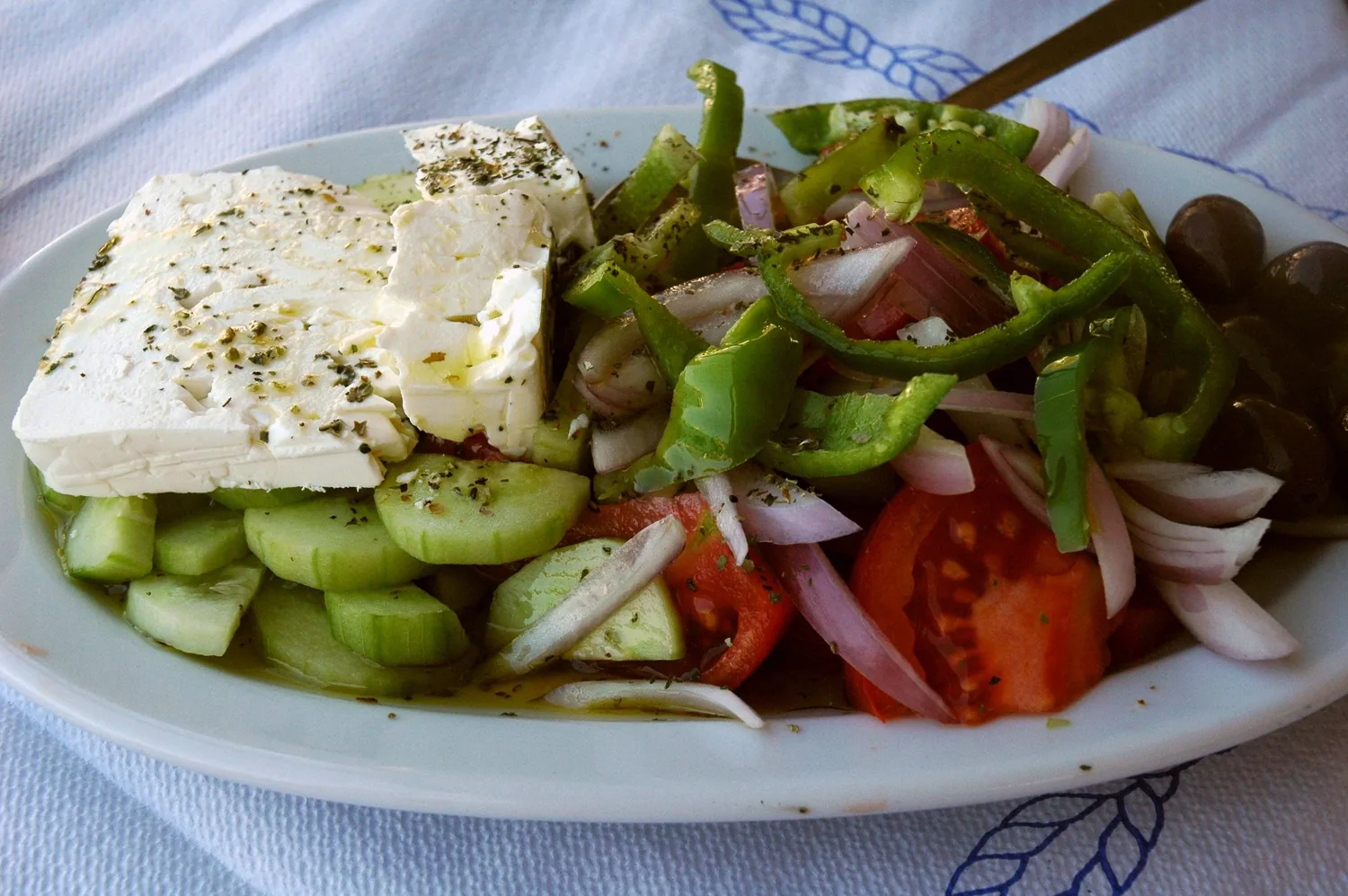
Greek salad (horiatiki) with a slab of feta sprinkled with oregano, Kalamata olives, tomato wedges, cucumber and red onion on a white plate Greece flag Greece 20m
Lunch •Aegean Table Classic

Greek Salad

This Greek salad recipe is the real horiatiki: chunky ripe tomatoes, peeled cucumber, red onion and green pepper, with Kalamata olives and a whole slab of feta on top, dressed with extra-virgin olive oil and dried Greek oregano. There is no lettuce and no heavy dressing — just summer vegetables at their best, ready in twenty minutes. One serving is about 411 g.

Fresh Summer Lunch

Crisp garden vegetables, salty feta and Kalamata olives under good olive oil — a bright, satisfying lunch with no cooking at all.

Pairs Well With
Crusty bread & grilled fish
Quick Prep (<30m)
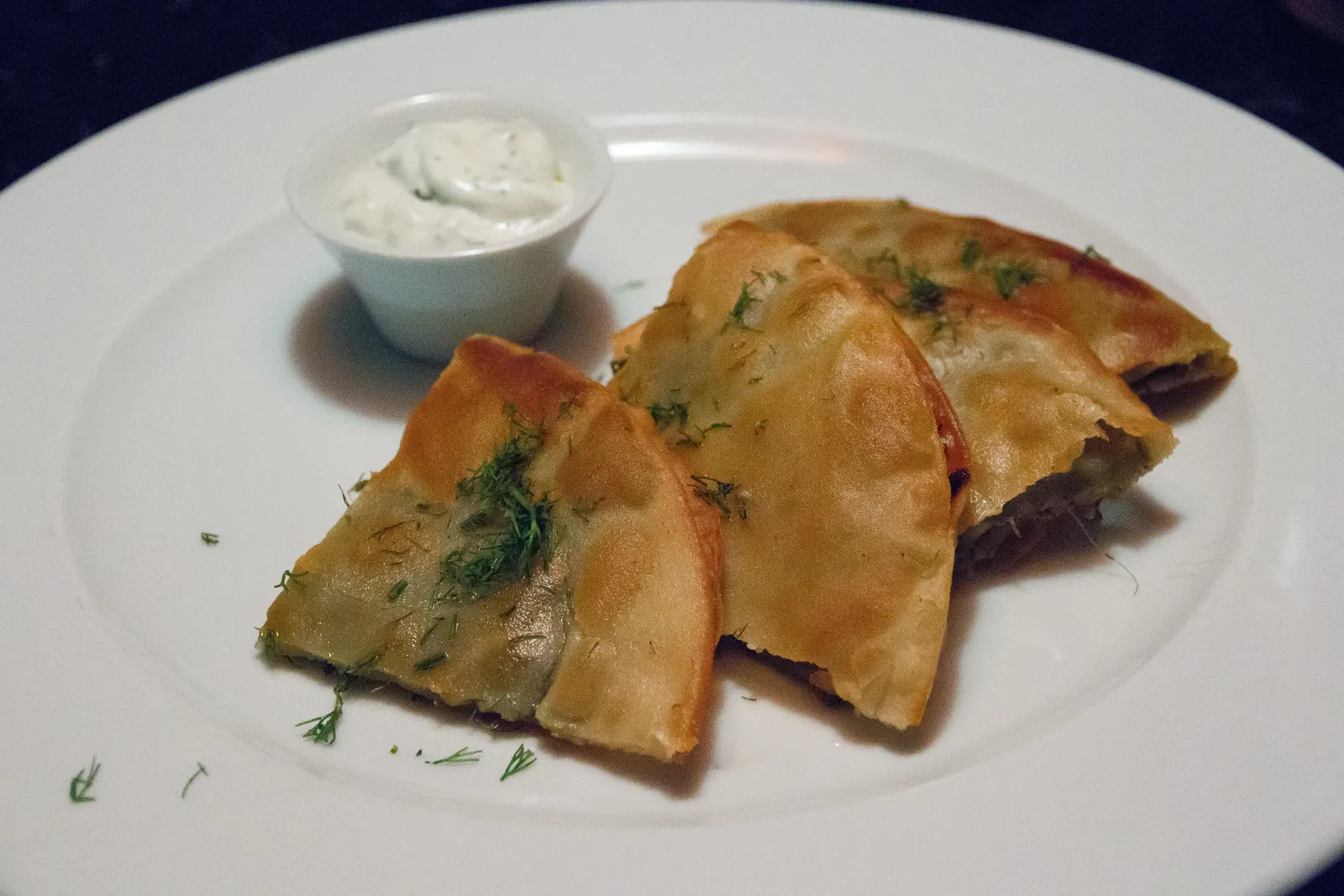
Golden spanakopita triangles sprinkled with fresh dill, served on a white plate with a small bowl of tzatziki Greece flag Greece 1h 20m
Lunch •Greek Bakery Classic

Spanakopita

This spanakopita recipe is the Greek spinach pie found in every bakery in Greece: paper-thin filo brushed with olive oil, layered over a filling of wilted spinach, salty feta, ricotta, leeks and a generous handful of fresh dill, then baked until the top shatters and the inside stays soft and savoury. It is the pie Greeks eat for lunch, take on picnics and set out on a mezze table. One serving is about 220 g.

Crisp Filo, Spinach & Feta

Layers of olive-oil-brushed filo wrapped around a spinach, feta, dill and leek filling, baked until golden and crisp.

Pairs Well With
Greek salad, tzatziki & lemon wedges
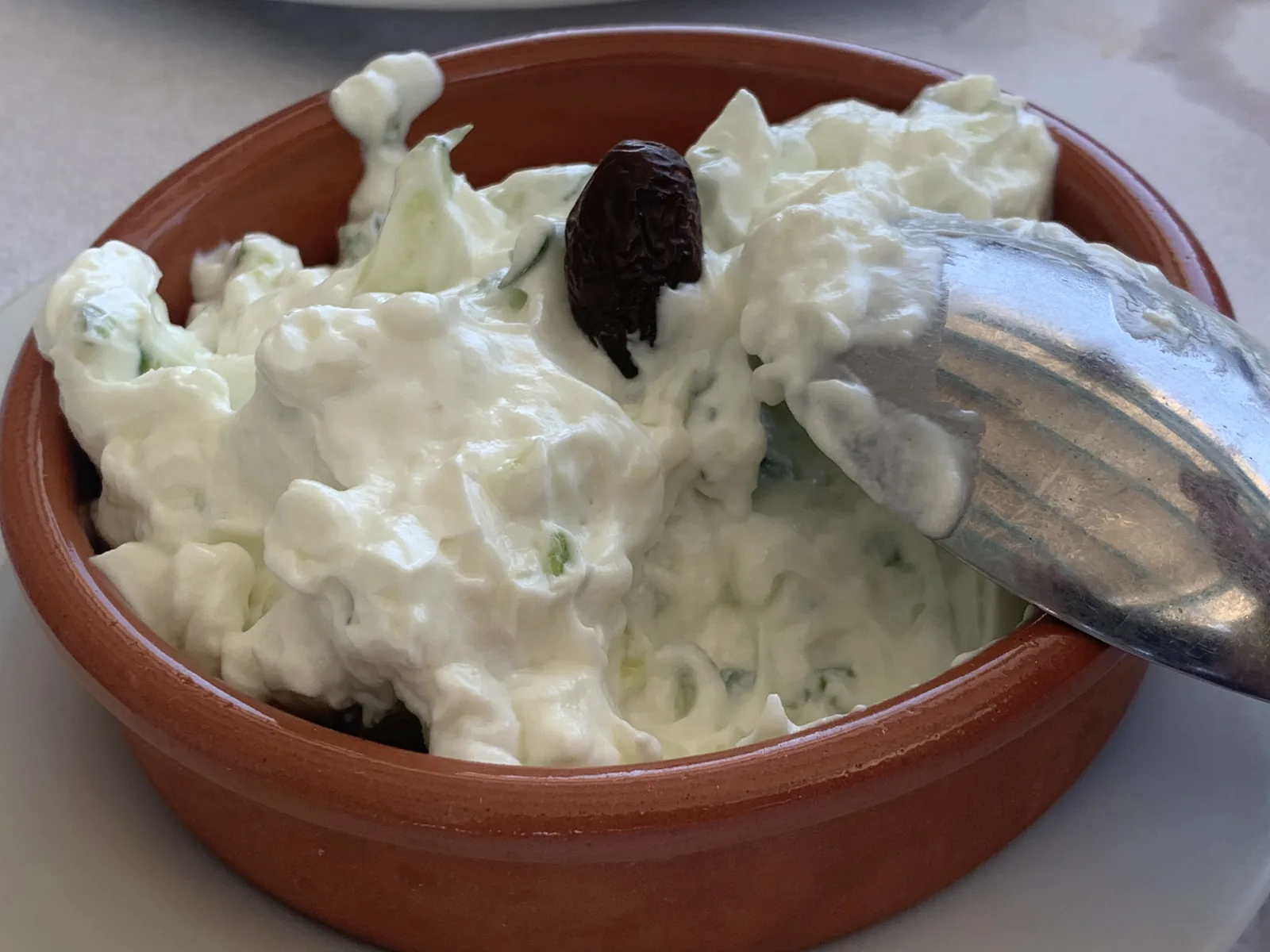
A terracotta bowl of thick white tzatziki with cucumber and a black olive, with a spoon Greece flag Greece 25m
Snack & Tea •Greek Meze Classic

Tzatziki

This tzatziki recipe is the real Greek version: thick strained yogurt, cucumber grated and squeezed bone dry, raw garlic, a thread of olive oil and a handful of dill. No cooking at all — just grating, squeezing and stirring — and the result is cool, creamy and sharp enough to cut through grilled meat. One serving is about 120 g.

Cool & Creamy

Thick Greek yogurt folded with grated cucumber, garlic and dill — the cool white dip at the heart of every Greek meze.

Pairs Well With
Spoon over grilled meat, or serve as a dip with warm pitta and raw vegetables.

The Dinner Gazette

Never wonder what’s for dinner again

One email a week with easy dinner ideas from around the world — ingredients, steps and nutrition, tested in our kitchen first.

Delivered every Thursday morning. Unsubscribe anytime.