Curated recipes from 193 countries  •  New seasonal Mediterranean issue out now

Overview

Boulets Liégeois

Boulets à la Liégeoise; Boulets Sauce Lapin; Liège Meatballs

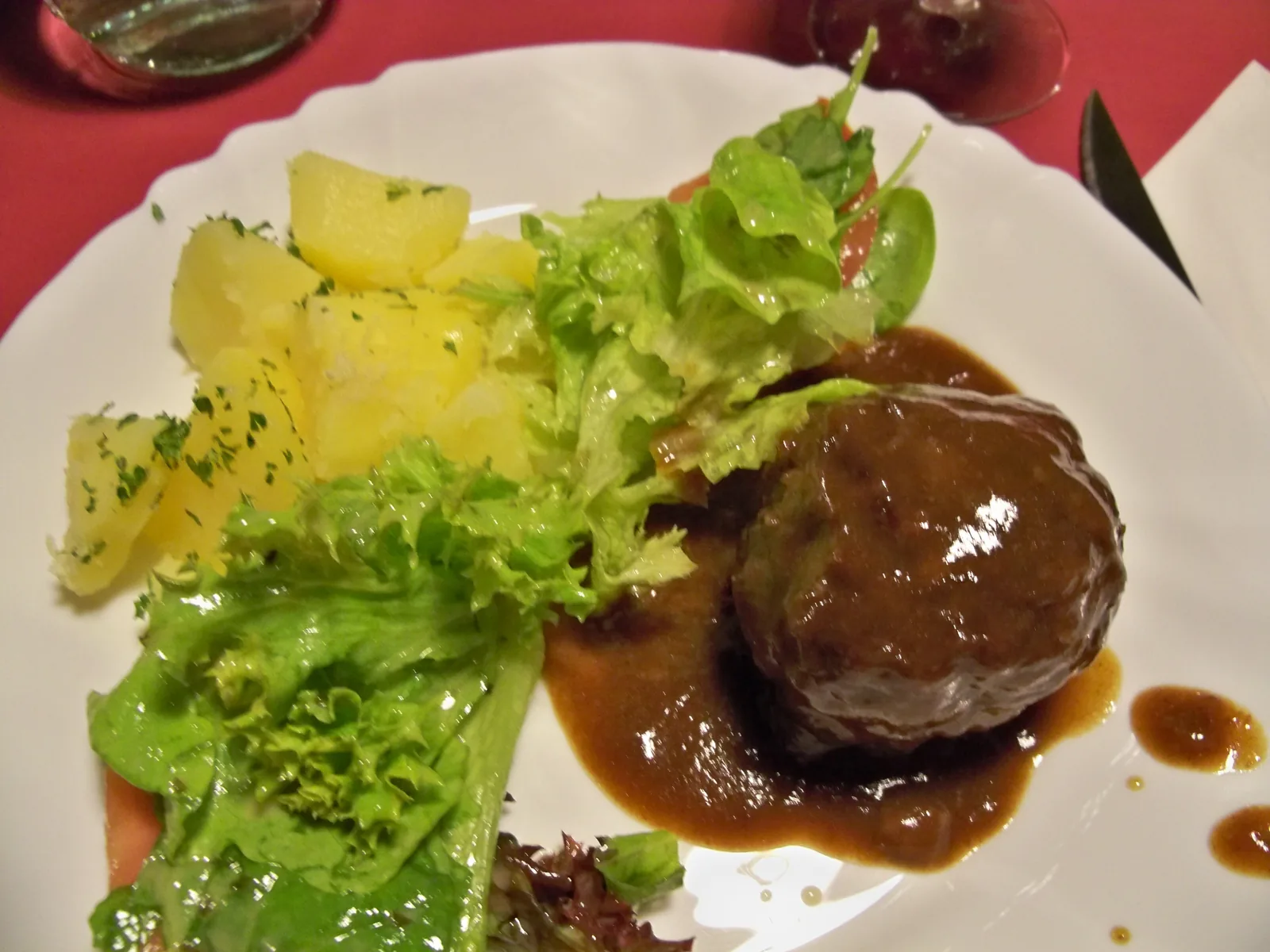
Boulets liégeois are Liège's giant meatballs — beef and pork mince, bread and parsley — simmered in sauce lapin, a sweet-sour gravy of onions, vinegar, brown sugar, dark beer and sirop de Liège, studded with raisins. One serving is about 438 g: two meatballs with sauce, before the fries they are traditionally served with. The sauce is named after Madame Géraldine Lapin, not after any rabbit.

Boulets à la liégeoise come from Liège in Wallonia, where they are the city's defining dish. The meatballs are famously large — one or two to a plate — and the sauce, called sauce lapin, is named not after rabbit but after Madame Géraldine Lapin, whose husband was a tax collector in the Liège suburbs in the early 1900s. The Confrérie du Gay Boulet, a brotherhood founded to protect the dish, keeps the traditional recipe: pork and beef mince, bread, onion and parsley, simmered in a sauce of onions, vinegar, brown sugar, sirop de Liège and raisins.

Pairs well with: Serve two meatballs per person with crisp fries and a small green salad.

Provenance

Belgium flag Belgium

Liège Walloon Classic

Nordic & European

Time Dedication

1h 20m

30m prep • 50m cook

Batch Yield

4 Servings

804 kcal per serving

1 serving ≈ 438 g

Technical Skill

Intermediate

Easy (Pan-Fry & Simmer)

Meal Timing & Digestive Fit

Breakfast

Not Advised

Lunch

Hearty Midday Main

Dinner

Ideal Hearty Main

Snack & Tea

Inappropriate

High Protein Occasions: Sunday family dinner, Belgian brasserie night, winter supper, Liège festival meal Cost: Medium — about $5–6 per serving at home
A plate with one large glossy boulet liégeois in dark sweet-sour sauce, with green salad and boiled potatoes.

Liège Walloon Classic

Photo: Marianne Casamance, CC BY-SA 3.0, via Wikimedia Commons

The Heritage Formulary

Measured Ingredients

Estimated cost: Medium — about $5–6 per serving at home (USD)

The meatballs are large — about the size of a tennis ball — and the sauce is sweet-sour, never just sweet.

Execution Methodology & Culinary Technique

Step-by-Step Cooking Guide

Active 1h 20m
P

Prep Stage: Bread Soaking, Meat Ready

30 Mins • Soaking & Chopping

Soak the bread in the milk for 10 minutes. Chop the onion and parsley for the meatballs, slice the onions for the sauce, and measure the sugar, syrup, vinegar, stock, beer and raisins. Mixing the meat by hand works best when everything is ready first.

Maestro Tip: Wet hands stop the meat sticking to your fingers when you shape the balls.

  1. 1

    Mix and Shape the Meatballs

    15 Mins • Hands On Room temperature, about 20°C (68°F)

    Squeeze the soaked bread dry and put it in a large bowl with the beef, pork, eggs, chopped onion, parsley, salt, pepper and nutmeg. Mix with your hands just until combined — do not overwork it or the meatballs turn tough. Shape into 8 large balls, about the size of a tennis ball, and roll each lightly in the breadcrumbs.

    Overmixed mince makes hard meatballs; stop as soon as the mixture holds together.

    Done when: Meatballs are even, firm and smooth, with no cracks.

  2. 2

    Brown the Meatballs

    10 Mins • Hands On Medium-high heat, pan about 190°C (375°F)

    Melt half the butter in a wide, heavy pan over medium-high heat. Brown the meatballs on all sides, about 8–10 minutes, turning gently with two spoons. They do not need to be cooked through yet — they will finish in the sauce. Lift them out to a plate.

    Brown in two batches if the pan is crowded, so they sear instead of steam.

    Done when: Meatballs are browned all over with a crisp crumb coating.

  3. 3

    Caramelise the Onions

    10 Mins • Hands On Medium heat, about 160°C (320°F)

    Lower the heat, add the rest of the butter and the sliced onions, and cook for 8–10 minutes until soft and golden. Sprinkle over the brown sugar and stir until it melts and the onions turn a light caramel colour.

    Let the sugar caramelise gently; burnt sugar turns bitter and cannot be fixed.

    Done when: Onions are soft, golden and sweet-smelling, with the sugar dissolved.

  4. 4

    Build the Sweet-Sour Sauce

    5 Mins • Hands On Medium heat, simmer about 95°C (203°F)

    Pour in the vinegar — it will hiss — then the beer and the stock. Stir in the sirop de Liège, bay leaves and cloves, scraping the browned bits off the bottom of the pan. Bring to a gentle simmer.

    Scrape the pan well; those browned bits are the deepest flavour in the sauce.

    Done when: Sauce is dark, glossy and smells sweet-sour, with no raw vinegar edge.

  5. 5

    Simmer the Meatballs in the Sauce

    25 Mins • Mostly Hands Off Low heat, gentle simmer about 95°C (203°F)

    Nestle the meatballs back into the sauce with the raisins. Cover and simmer gently for 20–25 minutes, turning the meatballs once, until they are cooked right through — 71°C (160°F) in the centre, with no pink remaining. If the sauce is thin, stir in the dissolved cornstarch and simmer 2 minutes more.

    Cut the biggest meatball open to check — ground meat must be cooked all the way through.

    Done when: Meatballs are cooked through to 71°C (160°F) and the sauce coats a spoon.

Finishing Touches & Plating

Rest the meatballs in the sauce for 5 minutes off the heat, then serve two per person, spooning the sauce and raisins generously over the top.

Nutritional Physiology & Benefits

Nutrition

Energy

804

kcal / serving

Protein

52g

Complete AA

Carbs

52g

Complex

Fats

41g

Healthy

Per serving (4 servings · 1 serving ≈ 438 g)
Energy804 kcal
Protein52 g
Carbohydrates52 g
Fat41 g
Fibre3.4 g
Sugar25.5 g
Sodium782 mg
Per 100g
Energy184 kcal
Protein11.9 g
Carbohydrates11.9 g
Fat9.5 g
Fibre0.8 g
Sugar5.8 g
Sodium179 mg

Nutrition values are estimated — calculated from USDA FoodData Central values for the listed ingredients.

Vitamins & minerals: Iron and zinc (beef and pork), vitamin B12 and niacin (meat), vitamin C (onion and parsley), potassium (raisins).

Very High in Protein

About 52 g of protein per serving makes this a genuinely filling main course that keeps you full for hours.

Iron-Rich and Satisfying

Beef and pork are rich in iron and zinc, and the raisins in the sauce add a little fibre and potassium to the plate.

Onions in Every Layer

A full 400 g of onions go into the meatballs and the sauce, so the dish gets sweetness and body from vegetables as well as from the syrup.

Food Pairings

What to Eat With

To optimize nutrient absorption and elevate the sensory depth, pair with these authentic accompaniments:

Sides

Crisp Belgian Fries

Crisp fries are the non-negotiable Liège partner — they mop up the sweet-sour sauce and their salt balances the syrup.

Boiled Potatoes With Parsley

Boiled potatoes with parsley are the softer, homestyle alternative to fries — they soak up the sauce just as well.

Vegetables

Green Salad With Vinaigrette

A simple green salad with a sharp vinaigrette cuts through the richness and gives the plate a fresh, bitter edge.

Drinks

Dark Belgian Beer

A dark Belgian beer echoes the beer in the sauce and stands up to the sweet-sour gravy.

Complete menu

Start with a small green salad, serve boulets liégeois with crisp fries as the main course, and finish with a light fruit dessert.

Digestive Guardrails

What NOT to Combine

To prevent digestive distress, sluggishness, or palate clash, avoid pairing the dish with these elements:

Undercooked Ground Meat

Ground meat must reach 71°C (160°F) inside — undercooked mince can carry harmful bacteria. Cut the biggest meatball open to check that no pink remains. This is general food-safety information, not medical advice.

Sweet Sauce and Beer

The sauce is sweetened with sugar and syrup and contains beer and vinegar — anyone avoiding sugar, alcohol or acidic foods for medical reasons should keep the portion modest and ask their clinician. This is general food information, not medical advice.

General information only, not medical advice — consult a doctor for personal dietary decisions.

Who Should Eat It

Who Should Eat

  • General adultsA rich, hearty dinner — best as an occasional main course rather than a daily meal.
  • ChildrenBig, tender meatballs in a sweet sauce usually go down well with children; serve one meatball with fries and keep the sauce mild.
  • ElderlySoft meatballs are easy to chew and high in protein; serve a modest portion with fries and a small salad.
  • Pregnant womenA good source of iron and protein; make sure the meatballs are cooked right through to 71°C (160°F) inside.
  • Breastfeeding womenHigh in protein and iron, which support recovery after birth; balance the rich sauce with salad and potatoes.
  • AthletesAbout 52 g of protein per serving makes it a strong recovery dinner, especially with fries or potatoes for carbohydrate.
  • Weight gainEnergy-dense from meat, butter and sugar, so it suits a weight-gain goal as a tasty way to add calories and protein.
  • Weight lossRich and calorie-dense with little fibre, so eat one meatball instead of two, load the plate with salad, and skip extra fries.

Health Conditions — Adjust or Avoid

Conditions

  • DiabetesAbout 52 g of carbohydrate per serving, mostly from sugar, syrup and raisins — the fries on the side add more. Ask your clinician.
  • High blood pressureSodium is about 782 mg per serving; keep the added salt light and ask your clinician about portion size.
  • Kidney diseaseProtein is very high and potassium moderate; people with kidney disease should ask their clinician about portion size.
  • GoutBeef and pork are moderate in purines; a large portion can add to uric acid, so keep it modest and ask your clinician.
  • Stomach issuesThe sauce is sweet, acidic and rich, which can sit heavily on a sensitive stomach — eat a small portion and ask your clinician if symptoms persist.
  • Cardiovascular diseaseBeef, pork and butter make this high in saturated fat; an occasional small portion is the sensible approach — ask your clinician.
  • Fatty liverRich in saturated fat and sugar, which can add to liver fat if eaten often — keep it an occasional treat and ask your clinician.
  • Food allergiesContains milk, wheat (bread, breadcrumbs, beer) and egg. The beer also contains gluten. Check labels if any of these are a concern.
  • Special therapeutic dietsThis is a general-information recipe, not a therapeutic diet. Anyone on a prescribed diet should ask their clinician or dietitian before making it a regular meal.

If you have a medical condition, consult your doctor before changing your diet.

Storage & Use

Storage & Use

How to store
Cool quickly and store the meatballs in their sauce in a sealed container; keep the fries separate.
In the fridge
Keeps 3 days refrigerated.
In the freezer
Freezes well for up to 3 months in sauce; thaw overnight in the fridge.
How to reheat
Warm gently in a covered pan over low heat to 74°C (165°F), adding a splash of stock if the sauce is too thick.
Freezing recommended
Yes — in the sauce, which keeps the meatballs moist.
Signs it has spoiled
Sour smell, slimy surface, or mould — discard if any of these appear.

More recipes to explore

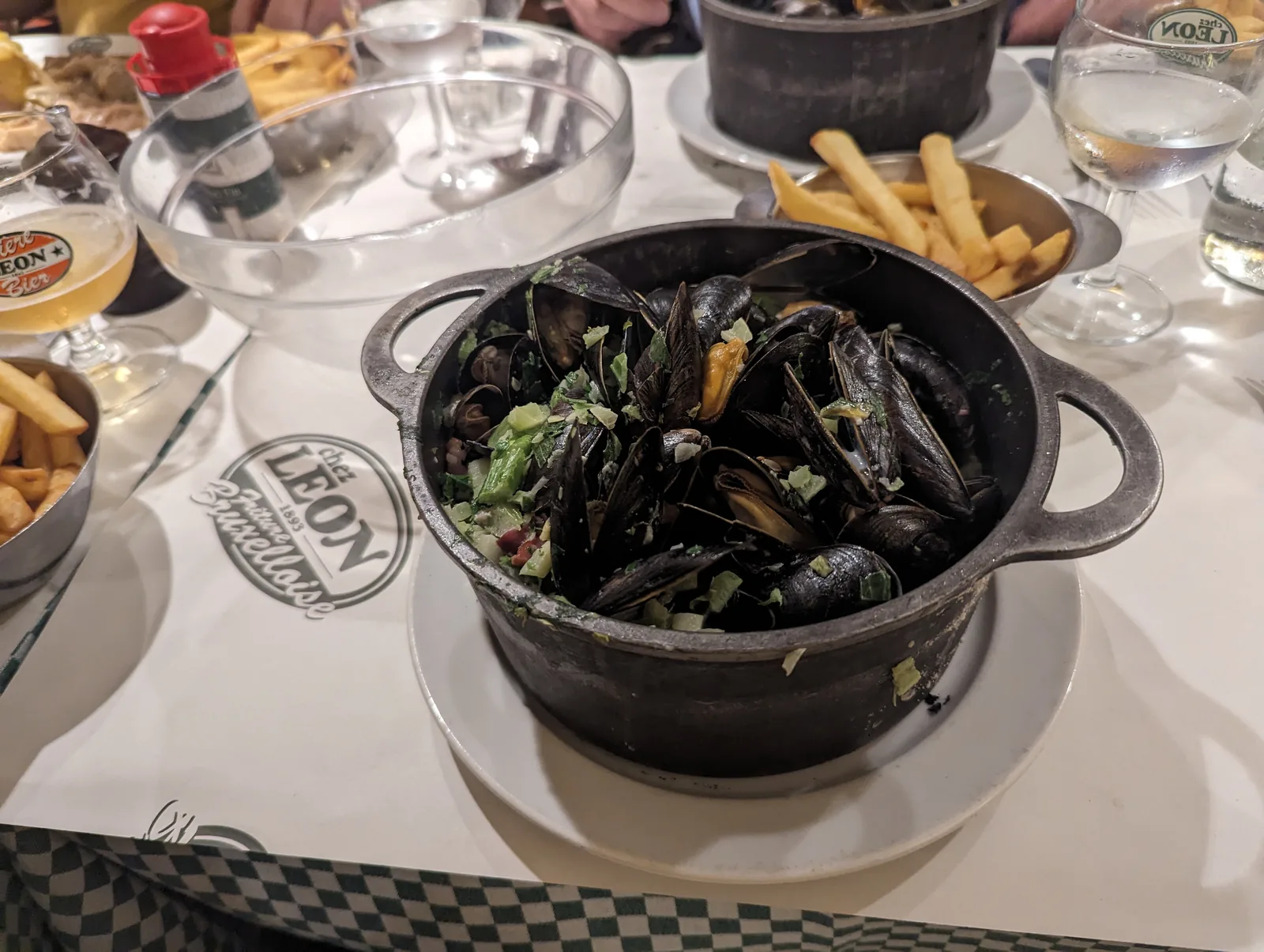
Moules-frites — a black pot of steamed mussels with herbs, served with golden fries at a Brussels brasserie Belgium flag Belgium 1h
Dinner •Brussels Brasserie Classic

Moules-Frites

This moules frites recipe makes the plate Belgium is proudest of: a black pot of mussels steamed open in white wine, shallots and cream, served with a heap of crisp, twice-cooked fries and a pot of mayonnaise. The mussels are sweet and briny, the broth is made for dipping, and the fries stay crisp if you keep them out of the pot. One serving is about 350 g.

Seaside Comfort

Sweet mussels steamed in white wine and cream, piled next to golden twice-cooked fries.

Pairs Well With
Crisp Belgian lager & mayonnaise
High Protein
Belgian waffles — a golden Brussels waffle topped with whipped cream and icing sugar on a white plate Belgium flag Belgium 1h 35m
Breakfast •Brussels Bakery Classic

Belgian Waffles

This Belgian waffles recipe makes the light, yeasted kind: a risen batter cooked in a hot iron until the outside is crisp and golden and the inside stays soft and airy. The deep pockets hold butter, syrup or berries, and a dusting of icing sugar is all they really need. This recipe makes 8 waffles; one serving is 2 waffles, about 210 g. Nutrition is for the plain waffles, before toppings.

Weekend Breakfast Treat

Light, yeasted Brussels waffles with deep pockets, crisp outside and soft inside.

Pairs Well With
Strong coffee & fresh berries
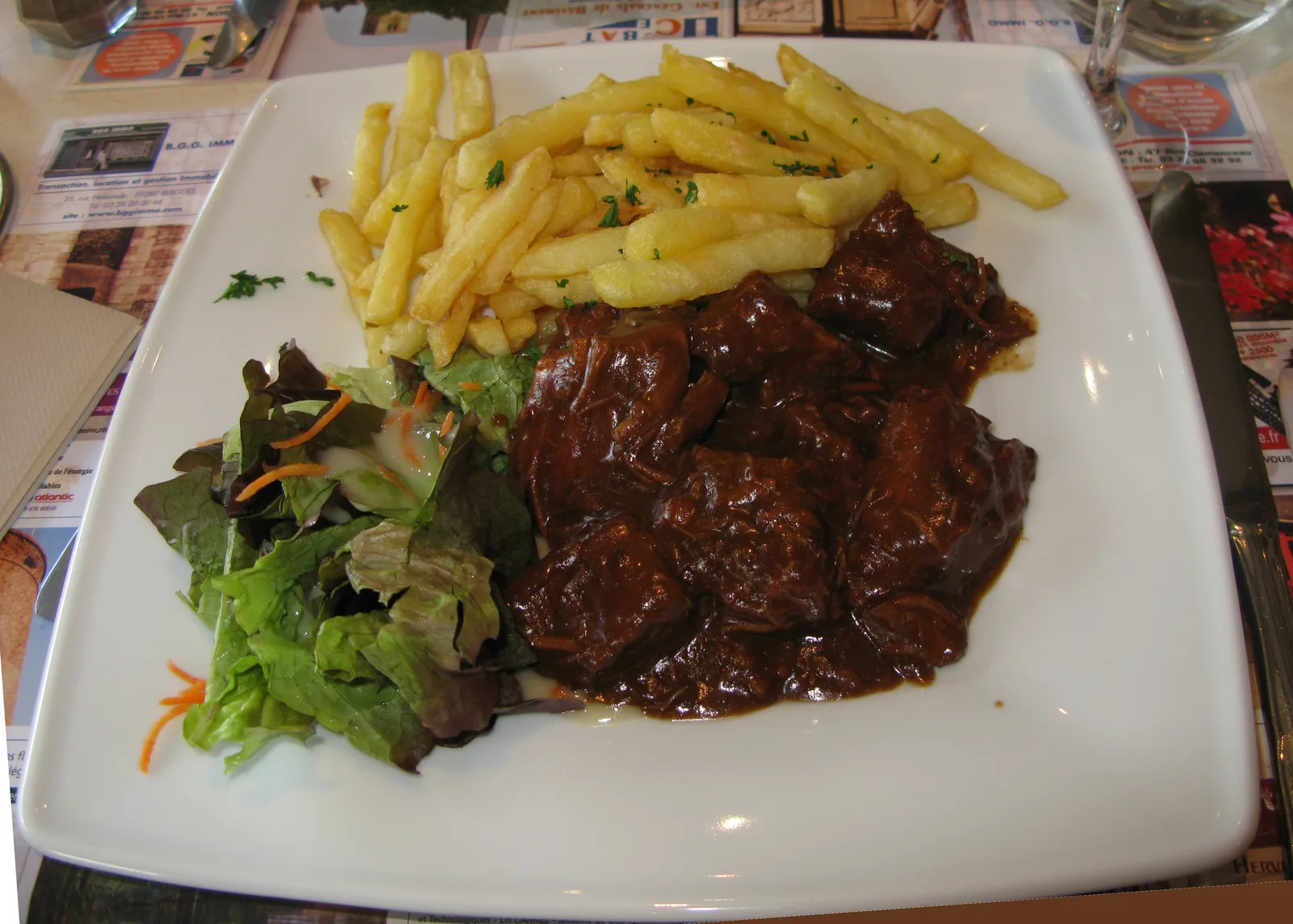
Carbonade flamande — dark beer-braised beef stew with fries and a small salad on a white plate Belgium flag Belgium 2h 55m
Dinner •Flemish Farmhouse Classic

Carbonade Flamande

This carbonade flamande recipe is Flanders' answer to the French beef stew: chunks of beef braised for hours in dark Belgian ale with sweet caramelised onions, thyme and bay, thickened the old way with slices of bread spread with mustard. The sauce turns dark, glossy and sweet-sour, and the beef goes spoon-tender. One serving is about 250 g, not counting the fries or potatoes served alongside.

Slow Sunday Comfort

Beef braised low and slow in dark Belgian ale with onions and mustard bread.

Pairs Well With
Dark Belgian ale & fries
High Protein
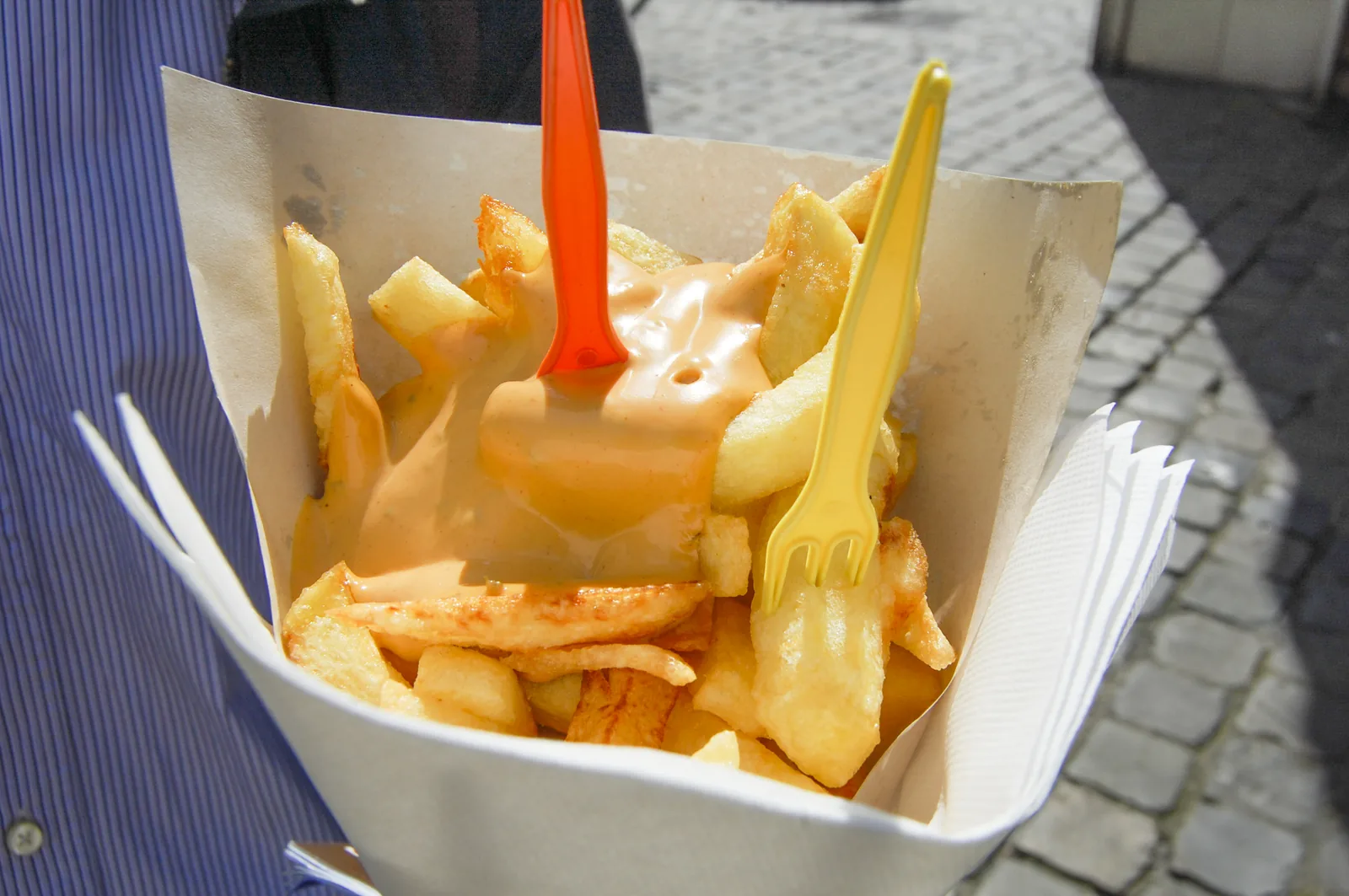
A paper cone of golden Belgian fries topped with andalouse sauce and two small plastic forks. Belgium flag Belgium 55m
Snack & Tea •Brussels Friterie Classic

Belgian Fries

Belgian fries are the real thing: thick batons of floury potato, fried twice — once gently to cook them through, once hot to shatter the outside — and served in a paper cone with andalouse sauce. One serving is about 253 g.

Crisp & Golden

Thick-cut potatoes fried twice in vegetable oil — crisp outside, fluffy inside, with andalouse sauce.

Pairs Well With
Serve hot in a paper cone with andalouse sauce and a cold lager.
Quick Prep (<30m)

The Dinner Gazette

Never wonder what’s for dinner again

One email a week with easy dinner ideas from around the world — ingredients, steps and nutrition, tested in our kitchen first.

Delivered every Thursday morning. Unsubscribe anytime.