
Curated recipes from 193 countries  •  New seasonal Mediterranean issue out now

Overview

Bündnerfleisch

Bindenfleisch, Grisons Meat, Viande des Grisons

Bündnerfleisch is Graubünden's air-dried beef: a lean cut salted with pepper, juniper and bay, then dried in cool mountain air until it turns dark ruby and slices like silk. One serving is about 50 g of thinly sliced meat. This is a curing recipe, not a quick one — it takes about 6–8 weeks from salting to slicing, and the time is the recipe.

Bündnerfleisch comes from Graubünden, the mountain canton in eastern Switzerland, where farmers have dried beef in the clear alpine air for centuries — a way to keep meat through the long winter before refrigeration. The beef is salted, pressed and hung in free-flowing air at 9–14°C, losing about half its weight and turning dark red and firm. It has been a Protected Geographical Indication (PGI) in Switzerland since 1999, which means genuine Bündnerfleisch must be made in Graubünden. Its close cousin across the border in Italy is bresaola, which is similar but never pressed.

Pairs well with: Rye bread, pickles & mountain cheese

Provenance

Switzerland flag Switzerland

Graubünden Air-Dried Beef

Nordic & European

Time Dedication

45m

45m prep • 0m cook

Batch Yield

12 Servings

128 kcal per serving

1 serving ≈ 50 g

Technical Skill

Advanced

Hard (6–8 Week Cure)

Meal Timing & Digestive Fit

Breakfast

Not Advised

Lunch

Prime Metabolic Fit

Dinner

Ideal Hearty Main

Snack & Tea

Inappropriate

Occasions: Aperitivo, hiking snacks, cheese platters, festive cold buffets, lunchboxes Cost: Medium — about $3–4 per serving at home
Tags: Beef Savory Rich
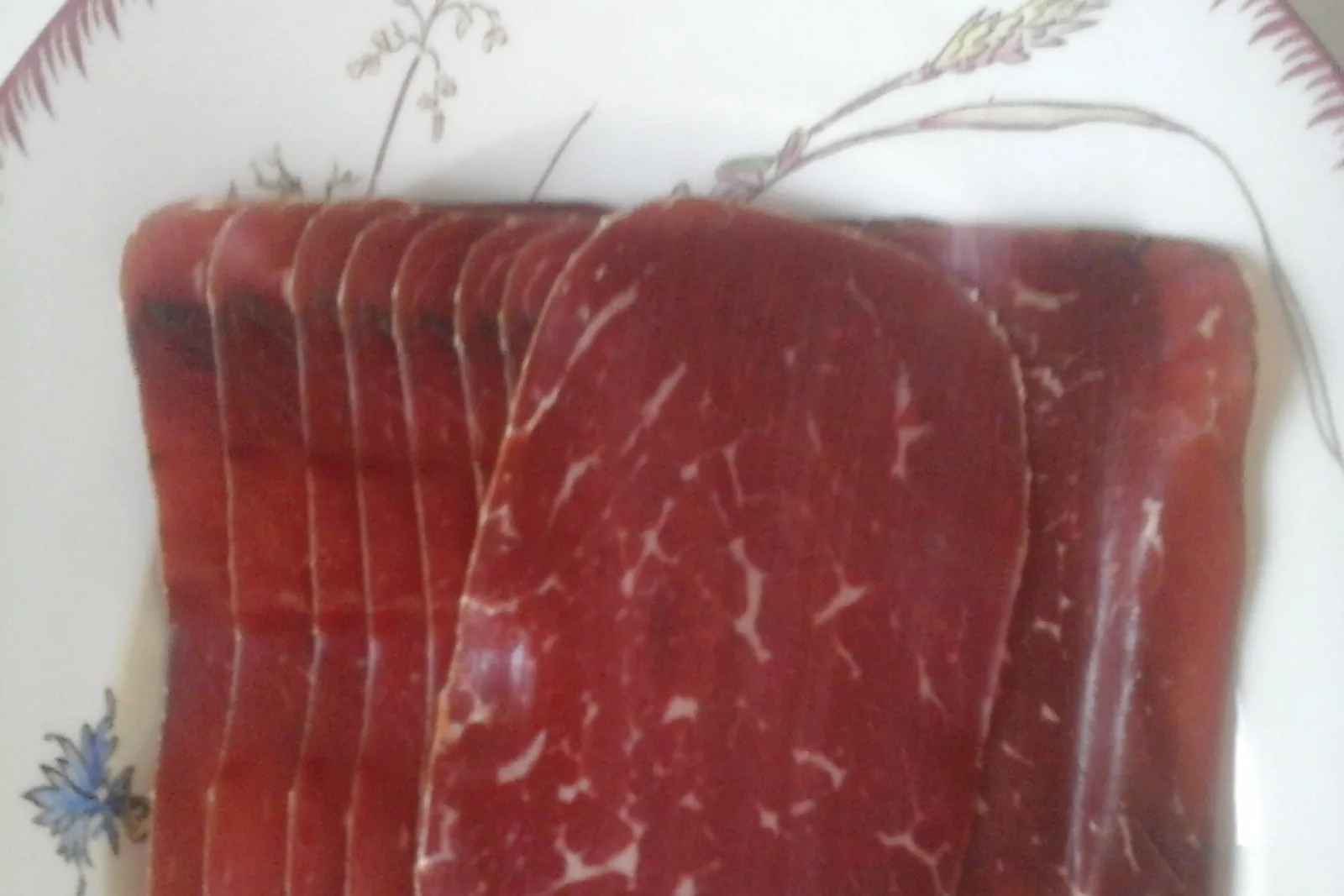
Thin slices of dark red air-dried beef, fanned out on a white plate — Bündnerfleisch ready to serve.

Graubünden Air-Dried Beef

Photo: Thomon, CC BY-SA 4.0, via Wikimedia Commons

The Heritage Formulary

Measured Ingredients

Estimated cost: Medium — about $3–4 per serving at home (USD)

A traditional home cure: salt, pepper, juniper and bay, then 4–6 weeks of cool air-drying with weekly pressing.

Execution Methodology & Culinary Technique

Step-by-Step Cooking Guide

Active 45m
P

Prep Stage: Trim, Cure Mix and Wrapping

45 Mins • One Tray, One Tub

Trim the beef completely clean, mix the salt, sugar, pepper, juniper, bay and garlic, and have a non-reactive tub, muslin and string ready. Everything must be spotlessly clean — curing leaves no room for dirt.

Maestro Tip: Trim ruthlessly: any fat left on the meat turns rancid during the long drying.

  1. 1

    Trim and Mix the Cure

    20 Mins Room temperature, about 20°C (68°F)

    Trim all fat and sinew from the beef and pat it dry. Mix the salt, sugar, cracked pepper, crushed juniper, crumbled bay and garlic, then sprinkle in the red wine so the mix is damp, like wet sand.

    The cure must be damp enough to cling — dry cure falls off the meat.

    Done when: The beef is a clean, even piece and the cure mix is damp and fragrant.

  2. 2

    Salt-Cure in the Fridge

    14 Days Fridge, about 4°C (39°F)

    Rub the cure thickly over every surface of the beef, place it in a non-reactive tub, cover and refrigerate for 14 days. Turn the meat and spoon the brine that forms back over it every 2 days.

    Keep it cold the whole time — curing at room temperature is unsafe.

    Done when: The meat is firm, darker, and sitting in its own brine; it smells of pepper and juniper.

  3. 3

    Rinse, Dry and Wrap

    15 Mins Room temperature, about 20°C (68°F)

    Rinse the cure off under cold running water, pat the beef completely dry, and wrap it tightly in muslin. Tie firmly with string, leaving a loop for hanging.

    Rinse well — surface salt left on makes the finished meat far too salty.

    Done when: The meat is clean, dry and tightly wrapped, with a hanging loop.

  4. 4

    Air-Dry with Pressing

    4–6 Weeks 10–14°C (50–57°F)

    Hang the wrapped beef in a cool, airy place at 10–14°C (50–57°F) with good airflow and 65–75% humidity — a cool cellar or a fridge set warm. Press it flat under a board with a weight for a day, once a week, to give it the classic rectangular shape. It is ready when it has lost about 40% of its weight and feels firm all the way through.

    Weigh it at the start and check weekly — 40% weight loss is the doneness test, not the calendar.

    Done when: The piece is firm, dark and rectangular, about 40% lighter than when it started.

  5. 5

    Slice Paper-Thin and Serve

    10 Mins Room temperature, about 20°C (68°F)

    Unwrap, trim any dry outer edge, and slice as thinly as you can across the grain — a long, sharp knife or a slicer helps. Fan the slices on a plate and serve at room temperature.

    Slice thin: thick slices of dried beef are chewy and overpoweringly salty.

    Done when: The slices are dark ruby, almost see-through, and bend without breaking.

Finishing Touches & Plating

Slice only what you will eat — the whole piece keeps far longer than sliced meat, and a few minutes at room temperature wakes up the flavour.

Nutritional Physiology & Benefits

Nutrition

Energy

128

kcal / serving

Protein

19g

Complete AA

Carbs

2g

Complex

Fats

4g

Healthy

Per serving (12 servings · 1 serving ≈ 50 g)
Energy128 kcal
Protein19 g
Carbohydrates2 g
Fat4 g
Fibre0.3 g
Sugar1.3 g
Sodium757 mg
Per 100g
Energy256 kcal
Protein38.1 g
Carbohydrates4.8 g
Fat7.5 g
Fibre0.6 g
Sugar2.6 g
Sodium1514 mg

Nutrition values are estimated — calculated from USDA FoodData Central values for the listed ingredients.

Vitamins & minerals: A serving provides vitamin B12 and B6 from the beef, plus iron, zinc and selenium.

Very High in Protein

About 19.1 g of protein per 50 g serving, with very little fat, makes this one of the leanest ways to eat beef.

No Cooking, No Additives

Salt, air and time do the work — no nitrates, no smoke, no preservatives in the traditional recipe.

Iron and B12

Dried beef is concentrated, so a small serving delivers useful iron, zinc and vitamin B12.

Food Pairings

What to Eat With

To optimize nutrient absorption and elevate the sensory depth, pair with these authentic accompaniments:

Sides

Dark Rye Bread and Butter

The classic way to eat it: the bread's sourness and the butter's richness soften the salt and the chew.

Mountain Cheese

A slice of nutty Alpine cheese with the beef is the traditional Graubünden platter.

Vegetables

Pickles and Pearl Onions

Sharp, cold pickles cut through the salt and the concentrated beef flavour.

Drinks

A Glass of Red Wine

A light, fruity red matches the beef without fighting it — the way it is served in Graubünden inns.

Complete menu

Bündnerfleisch with dark rye bread, butter, pickles and mountain cheese, and a glass of red wine.

Digestive Guardrails

What NOT to Combine

To prevent digestive distress, sluggishness, or palate clash, avoid pairing the dish with these elements:

Eating Large Amounts at Once

One serving already carries about 757 mg of sodium; a big plate mostly adds salt without adding pleasure. This is general nutrition information, not medical advice.

Serving to People Who Should Avoid Uncooked Cured Meat

Bündnerfleisch is never cooked, so pregnant women, young children and anyone with a weakened immune system should avoid it or ask their clinician first. This is general food-safety information, not medical advice.

General information only, not medical advice — consult a doctor for personal dietary decisions.

Who Should Eat It

Who Should Eat

  • General adultsA salty, concentrated meat; one 50 g serving with bread is plenty.
  • ChildrenNot suitable for young children — it is uncooked cured meat and very salty.
  • ElderlySoft to chew when sliced thin; keep the portion small because it is salty.
  • Pregnant womenAvoid — Bündnerfleisch is uncooked cured meat; ask your clinician if unsure.
  • Breastfeeding womenA lean, high-protein snack; the salt is the thing to watch.
  • AthletesAbout 19.1 g of protein per serving makes it a useful lean snack after training.
  • Weight gainAn easy way to add protein with very few calories — about 128 kcal a serving.
  • Weight lossLean and low in calories, but very salty, so keep it to one small serving.

Health Conditions — Adjust or Avoid

Conditions

  • DiabetesOnly about 2.4 g of carbohydrate per serving; the salt, not the sugar, is the issue.
  • High blood pressureAbout 757 mg of sodium per serving — high; a smaller portion helps.
  • Kidney diseaseHigh in sodium and potassium; ask your clinician whether this portion suits your plan.
  • GoutBeef is moderate in purines; keep the portion small and ask your clinician if unsure.
  • Stomach issuesUsually gentle on the stomach, but the salt can be harsh — eat with bread, not alone.
  • Cardiovascular diseaseLean and low in fat, but the sodium is high; an occasional small portion is the gentler choice.
  • Fatty liverLean and low in calories; the salt is the main concern.
  • Food allergiesContains beef; the cure contains no common allergens.
  • Special therapeutic dietsNot suitable for a low-sodium therapeutic diet — ask your clinician before eating.

If you have a medical condition, consult your doctor before changing your diet.

Storage & Use

Storage & Use

How to store
Keep the whole piece wrapped in muslin or baking paper in a cool, dry place, or vacuum-sealed in the fridge.
In the fridge
Whole piece, vacuum-sealed, up to 3 months at 4°C (39°F) or below; sliced meat 5–7 days.
In the freezer
Whole piece, well wrapped, up to 6 months; thaw overnight in the fridge.
How to reheat
No reheating — Bündnerfleisch is eaten cold, sliced thin, at room temperature.
Freezing recommended
Yes for the whole piece — it freezes well and slices more easily when partly thawed.
Signs it has spoiled
Slimy surface, sour or ammonia smell, or coloured mould (a little white bloom is harmless and can be wiped off).

More recipes to explore

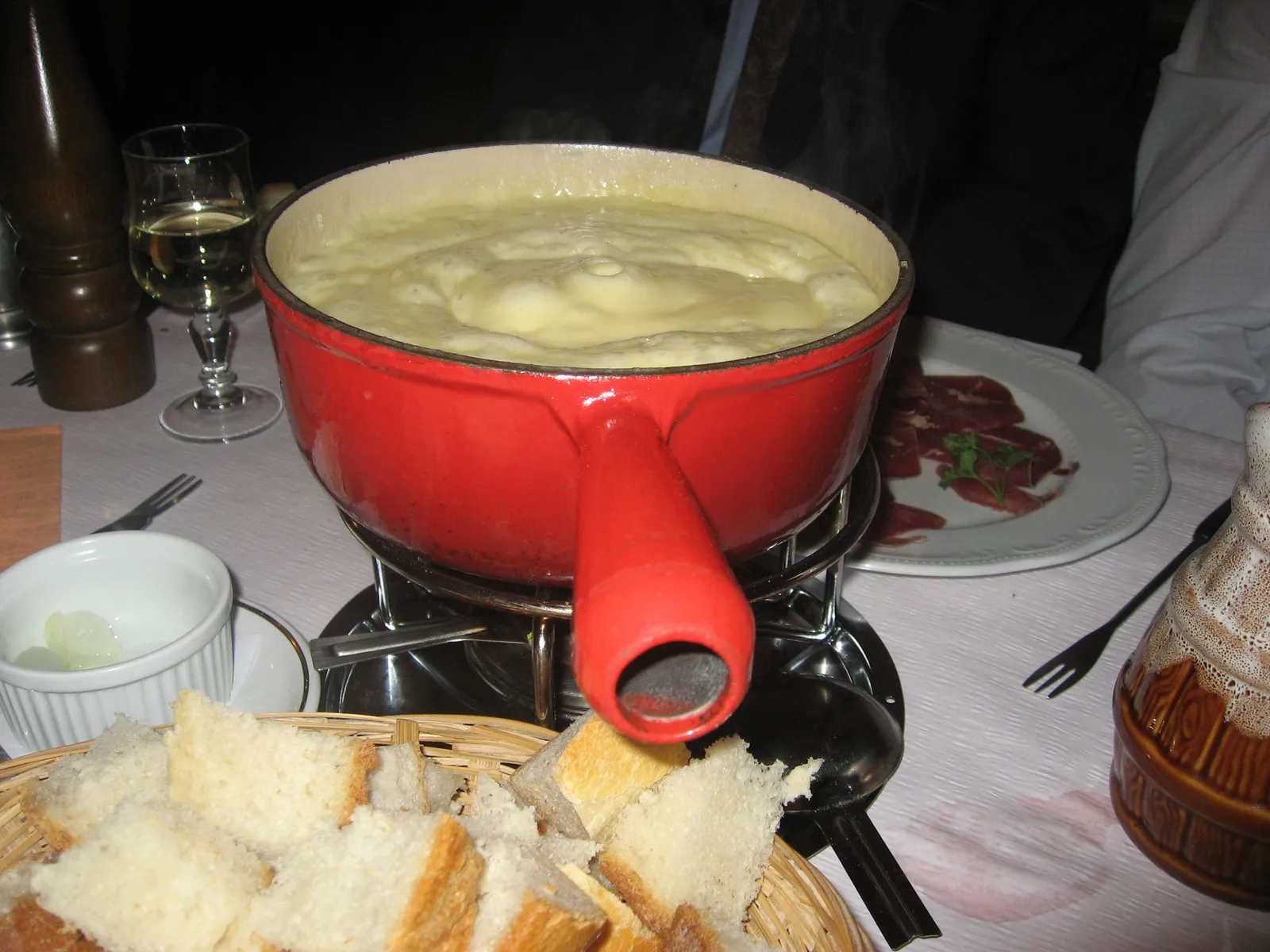
A red fondue pot of melted cheese with bread cubes and a glass of white wine Switzerland flag Switzerland 40m
Dinner •Swiss Alpine Classic

Swiss Cheese Fondue

Swiss cheese fondue is the Alps in a pot: Gruyere and Emmental melted slowly into dry white wine with garlic and a splash of kirsch, kept warm at the table while everyone dips cubes of bread into the bubbling cheese. One serving is about 310 g.

Comfort & Togetherness

Gruyere and Emmental melted in white wine, shared from one pot.

Pairs Well With
Cubes of crusty bread, boiled potatoes and cornichons on the side
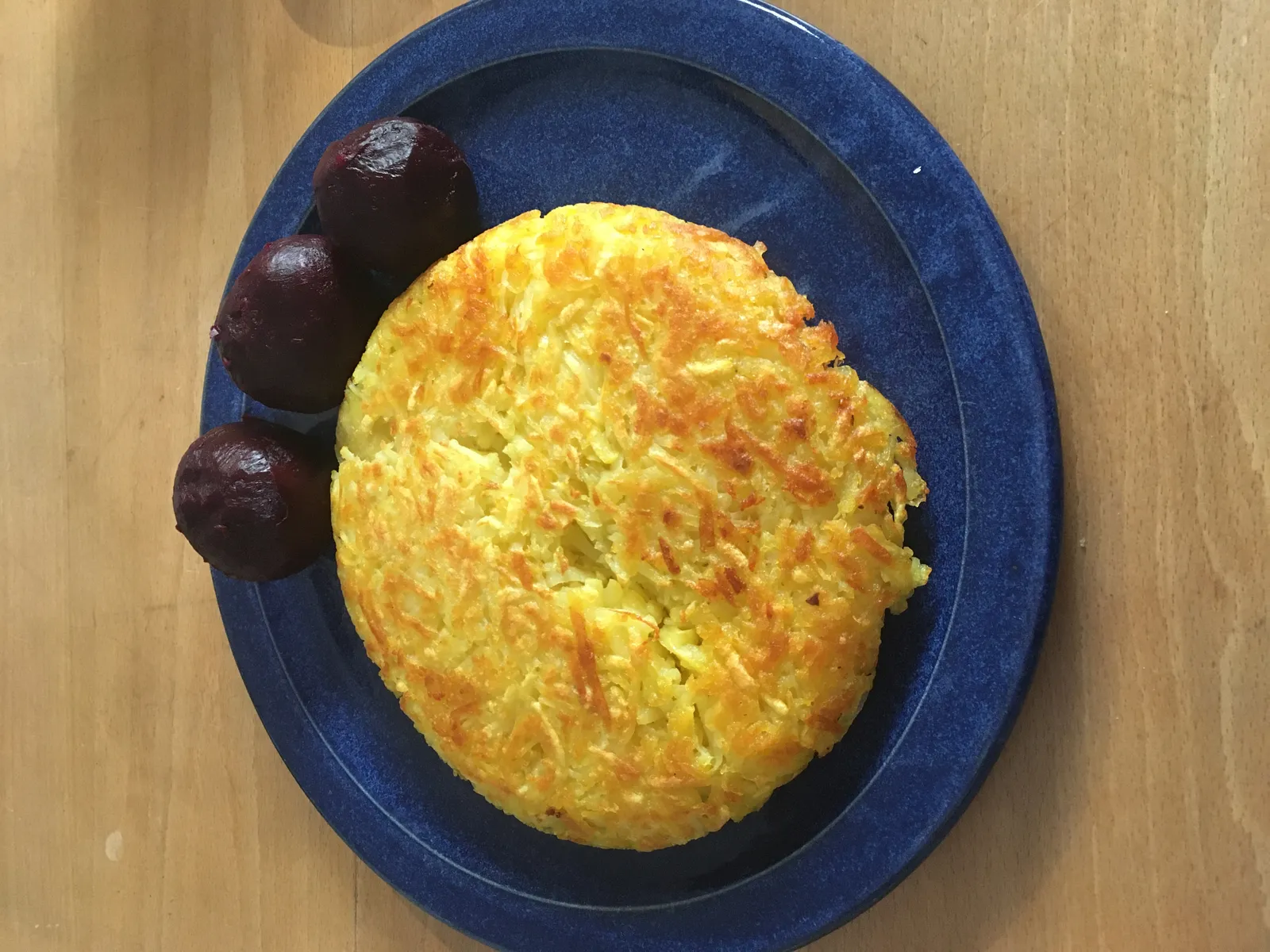
A large golden rosti potato cake on a blue plate Switzerland flag Switzerland 40m
Lunch •Bernese Farmhouse Classic

Rösti

Rösti is Switzerland's crisp potato cake: grated potato pressed into one large golden disc and fried in butter until the outside shatters and the inside stays soft, then topped with a fried egg. One serving is about 240 g.

Simple & Satisfying

One large crisp cake of grated potato, pan-fried in butter and topped with a fried egg.

Pairs Well With
A fried egg on top and a simple green salad with sharp vinaigrette
Quick Prep (<30m)
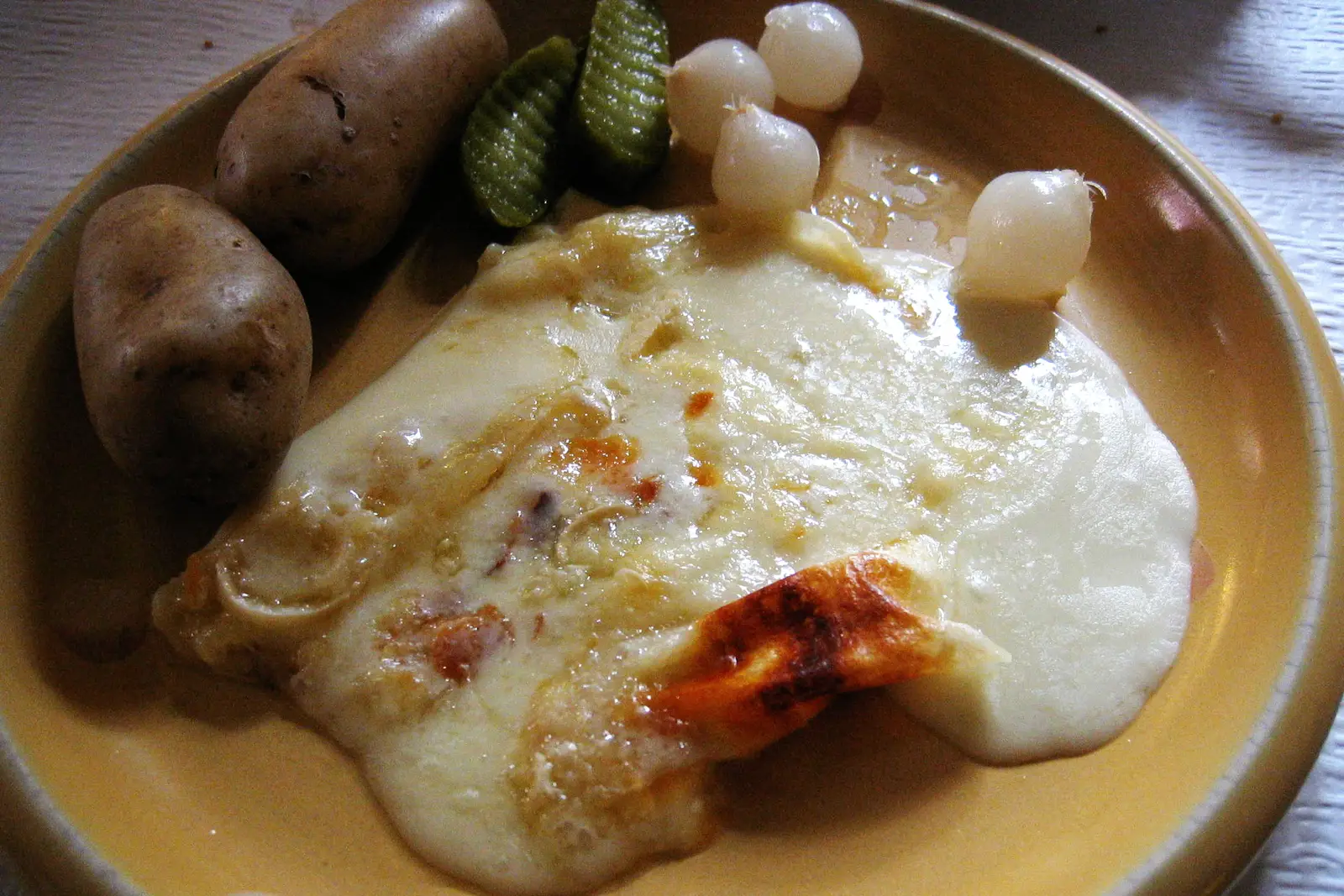
Melted raclette cheese scraped over a plate with boiled potatoes and pickles Switzerland flag Switzerland 40m
Dinner •Valais Alpine Classic

Raclette

Raclette is the Swiss Alps' other great melted-cheese meal: a half-wheel of raclette cheese is warmed until the cut face bubbles, then scraped in ribbons over boiled potatoes, with cornichons and pickled onions to cut the richness. One serving is about 365 g.

Comfort & Togetherness

Melted raclette cheese scraped over boiled potatoes with pickles.

Pairs Well With
Boiled potatoes, cornichons, pickled onions and a green salad
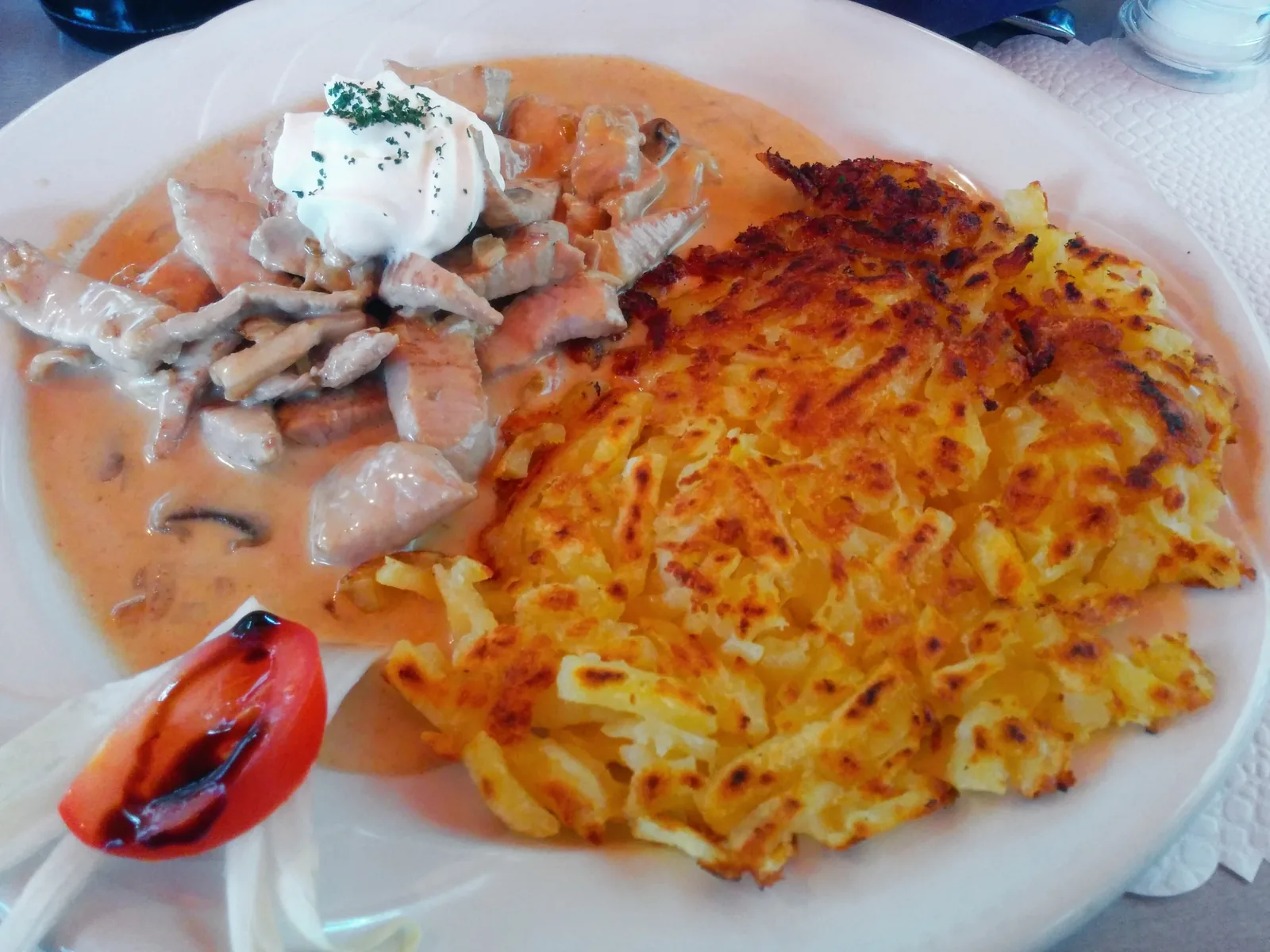
A plate of Zürcher Geschnetzeltes — veal strips in cream sauce with a dollop of cream — beside golden rösti. Switzerland flag Switzerland 40m
Dinner •Zurich Classic

Zürcher Geschnetzeltes

Zürcher Geschnetzeltes is Zurich's signature dish: thin strips of veal quickly seared, then finished in a white-wine and cream sauce with mushrooms and onion. One serving is about 335 g, before the rösti it is traditionally served with.

Rich & Comforting

Tender strips of veal in a white-wine cream sauce with mushrooms — Zurich's classic, with rösti.

Pairs Well With
Serve with golden rösti and a glass of dry Swiss white wine.
High Protein

The Dinner Gazette

Never wonder what’s for dinner again

One email a week with easy dinner ideas from around the world — ingredients, steps and nutrition, tested in our kitchen first.

Delivered every Thursday morning. Unsubscribe anytime.