Curated recipes from 193 countries  •  New seasonal Mediterranean issue out now

Overview

Caldeirada de Peixe

Portuguese Fish Stew, Caldeirada, Caldeirada Poveira

This caldeirada de peixe recipe layers monkfish, hake and squid over potatoes, peppers, onion and tomato, then simmers everything in white wine and olive oil until the broth tastes of the sea. It is the Portuguese fishermen's stew — rustic, generous and ready in 65 minutes. One serving is about 600 g.

Caldeirada takes its name from the large pot it was cooked in — in Portuguese a big cooking pot is a caldeira, and the stew made in it is a caldeirada — and it began as the fishermen's way of using the day's catch: whatever fish came off the boats, layered with potatoes, onion and tomato and simmered in wine and olive oil. The rule that defines it is the layering: vegetables at the bottom, potatoes in the middle, fish on top, cooked slowly and never stirred, so the juices run down and make the broth. Every fishing town along the Portuguese coast has its own version — Povoa de Varzim adds ray and squid, Setubal adds dogfish and mint — but the layered method and the mix of a firm fish with a flaky one stay the same.

Pairs well with: Crusty bread, a green salad and a glass of dry white vinho verde

Provenance

Portugal flag Portugal

Portuguese Fishermen's Stew

Mediterranean & Italy

Time Dedication

1h 5m

25m prep • 40m cook

Batch Yield

4 Servings

546 kcal per serving

1 serving ≈ 600 g

Technical Skill

Intermediate

Medium (Layered Stew)

Meal Timing & Digestive Fit

Breakfast

Not Advised

Lunch

Hearty Midday Main

Dinner

Ideal Hearty Main

Snack & Tea

Inappropriate

Soups & Broths Occasions: Family dinners, weekend cooking, coastal holidays, using the day's catch, winter evenings Cost: Medium — about $5–6 per serving at home
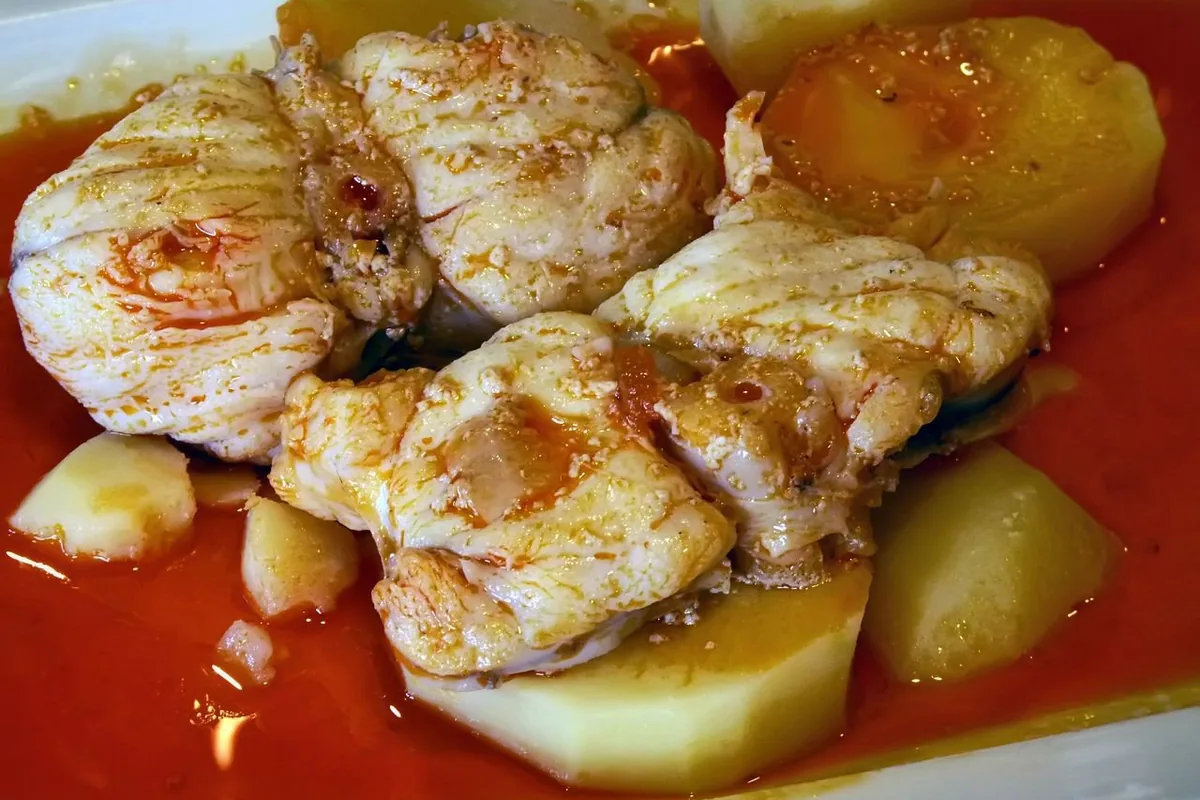
Monkfish medallions and potato slices in a rich red tomato broth, a Portuguese caldeirada de peixe

Portuguese Fishermen's Stew

Photo: juantiagues, CC BY-SA 2.0, via Wikimedia Commons

The Heritage Formulary

Measured Ingredients

Estimated cost: Medium — about $5–6 per serving at home (USD)

A good caldeirada is built in layers and never stirred — the fish stays in large pieces, the potatoes hold their shape, and the broth is clear and wine-scented. A cook following this recipe produces a layered Portuguese fish and potato stew, not a Catalan zarzuela (which is built on an almond picada and led by shellfish) and not a French bouillabaisse (which is scented with saffron and fennel and served with rouille).

Execution Methodology & Culinary Technique

Step-by-Step Cooking Guide

Active 1h 5m
P

Prep Stage: Cut the Fish and Vegetables

25 Mins • Knife and Board

Cut the 400g monkfish into thick medallions and the 400g hake into large chunks; clean the 200g squid, slice the bodies into rings and leave the tentacles whole. Peel and thickly slice the 600g potatoes, slice the 300g onions into rings, chop the 300g tomatoes, and cut the red and green peppers into strips. Slice the 12g garlic thinly and chop the 15g parsley.

Maestro Tip: Cut the fish into large pieces — small pieces fall apart during the simmer and disappear into the broth.

  1. 1

    Build the Vegetable Base

    5 Mins Room temperature, about 20°C (68°F)

    Pour 30 ml of the olive oil into a wide, heavy pot. Spread half the 300g sliced onion over the base, then half the 300g chopped tomato, half the peppers and half the 12g sliced garlic. Sprinkle with a little of the 5g salt and half the 5g paprika.

    Use the widest pot you have — a wide pot lets the layers cook evenly instead of steaming in a tall pile.

    Done when: The base of the pot is covered in an even layer of onion, tomato, peppers and garlic.

  2. 2

    Layer the Potatoes

    5 Mins Room temperature, about 20°C (68°F)

    Lay half the 600g potato rounds over the vegetables in a single layer, then repeat the onion, tomato, peppers and garlic with what is left. Season with the rest of the salt and paprika and tuck the bay leaf into the middle.

    Keep the potato rounds thick — thin slices turn to mash after 25 minutes in the broth.

    Done when: Two even layers of vegetables and potatoes, seasoned, with the bay leaf tucked in.

  3. 3

    Layer the Fish and Squid

    5 Mins Room temperature, about 20°C (68°F)

    Lay the 400g monkfish medallions, the 400g hake chunks and the 200g squid rings over the top in a single layer. Drizzle the remaining 30 ml of olive oil over the fish, then pour the 150ml white wine and the 200ml water down the side of the pot.

    Put the firmest fish (monkfish) at the bottom of the fish layer and the flakiest (hake) on top, so nothing overcooks.

    Done when: The fish sits in one layer on top, with the liquid coming about halfway up the pot.

  4. 4

    Simmer Without Stirring

    20 Mins Gentle simmer, about 95°C (200°F)

    Put the lid on, bring the pot to a gentle simmer over medium heat, then turn the heat down and cook for 20 minutes without lifting the lid or stirring. Shake the pot gently by its handles once or twice so nothing sticks, and check that the fish is opaque and flakes easily — it must reach 63°C (145°F) inside.

    Never stir a caldeirada — shaking the pot is the only movement it needs. If the broth looks dry, add a splash of hot water down the side.

    Done when: The fish is opaque and flakes in large pieces, the potatoes are tender, and the broth is fragrant. The fish has reached at least 63°C (145°F).

  5. 5

    Rest and Serve

    5 Mins Serve hot, about 70°C (158°F)

    Take the pot off the heat, remove the bay leaf, and rest it with the lid on for 5 minutes. Scatter the 15g chopped parsley over the top, put the lemon wedges on the side, and serve straight from the pot with crusty bread.

    Serve the fish with a large spoon and a fish slice, not a ladle alone — ladling breaks the fillets apart.

    Done when: The stew has rested, the parsley is bright green, and the broth has settled clear around the fish and potatoes.

Finishing Touches & Plating

Rest the pot for 5 minutes, scatter the parsley and squeeze the lemon over the top, then serve straight from the pot with crusty bread. A good caldeirada has fish that flakes in large pieces, potatoes that hold their shape, and a clear, wine-scented broth.

Nutritional Physiology & Benefits

Nutrition

Energy

546

kcal / serving

Protein

46g

Complete AA

Carbs

45g

Complex

Fats

17g

Healthy

Per serving (4 servings · 1 serving ≈ 600 g)
Energy546 kcal
Protein46 g
Carbohydrates45 g
Fat17 g
Fibre7.6 g
Sugar9.4 g
Sodium658 mg
Per 100g
Energy91 kcal
Protein7.6 g
Carbohydrates7.4 g
Fat2.9 g
Fibre1.3 g
Sugar1.6 g
Sodium110 mg

Nutrition values are estimated — calculated from USDA FoodData Central values for the listed ingredients.

Vitamins & minerals: Vitamin C (peppers and tomato), selenium and iodine (white fish and squid), vitamin B12 (fish), vitamin A (red pepper).

High in Protein, Steady Energy

Two kinds of white fish plus squid give about 46 g of protein per serving, and the potatoes supply slow-digesting starch for steady energy.

Whole Foods, No Cream

Fish, potatoes, peppers, tomato and olive oil — a short list of whole foods, with no cream, butter or stock cubes needed for a rich broth.

Selenium, Iodine and Vitamin C

White fish supplies selenium and iodine, peppers and tomatoes bring vitamin C, and olive oil adds monounsaturated fat.

Food Pairings

What to Eat With

To optimize nutrient absorption and elevate the sensory depth, pair with these authentic accompaniments:

Sides

Crusty Bread

Thick slices of crusty bread are the classic partner: they soak up the wine and tomato broth, which is half the pleasure of the dish.

Vegetables

Green Salad With Lemon

A simple green salad with lemon dressing gives a fresh, acidic contrast to the rich, oily fish broth and keeps the meal balanced.

Drinks

Dry White Vinho Verde

A cold glass of dry white vinho verde matches the wine in the pot and its acidity lifts the oily fish without fighting the broth.

Sparkling Water With Lemon

A small glass of sparkling water with lemon refreshes the palate between spoonfuls of the salty, savoury stew.

Complete menu

Serve the caldeirada straight from the pot with thick slices of crusty bread for the broth, a simple green salad with lemon, and a glass of dry white vinho verde.

Digestive Guardrails

What NOT to Combine

To prevent digestive distress, sluggishness, or palate clash, avoid pairing the dish with these elements:

Very Salty Accompaniments

The stew is already seasoned and fairly salty from the sea fish, so a very salty accompaniment such as cured olives or anchovies on the same plate can push the salt too high. Plain bread and salad balance it better. This is general information, not medical advice.

Stirring the Pot or Overcooking the Fish

Stirring a caldeirada breaks the fish into flakes and clouds the broth. Shake the pot gently instead, and serve the stew as soon as the fish is cooked — reheated fish turns dry and tough. This is general information, not medical advice.

General information only, not medical advice — consult a doctor for personal dietary decisions.

Who Should Eat It

Who Should Eat

  • General adultsA generous, satisfying dinner — one serving of about 600 g with crusty bread is a full meal.
  • ChildrenSuitable from age 3+; serve fish without bones and a spoonful of the potatoes and broth, and leave out the wine for their portion if preferred.
  • ElderlyGood choice — soft fish, tender potatoes and a light broth are easy to eat; serve warm and check for small bones.
  • Pregnant womenGenerally suitable when the fish is cooked through to 63°C (145°F); choose low-mercury fish such as hake and monkfish and keep portions moderate.
  • Breastfeeding womenGenerally suitable; the fish and potatoes give steady energy and the broth keeps the meal light. Keep portions moderate.
  • AthletesAn excellent post-training dinner: about 46 g of protein per serving with potatoes for glycogen. Eat within a couple of hours of training.
  • Weight gainA good choice — eat a full serving with two thick slices of crusty bread to mop up the broth.
  • Weight lossEat one serving with a green salad instead of bread — the stew itself is filling and modest in fat at 17.4 g per serving.

Health Conditions — Adjust or Avoid

Conditions

  • DiabetesOne serving has 44.6 g of carbohydrate, mostly from potatoes, so keep the portion to one serving and skip the bread; check with your clinician about how it fits your meal plan.
  • High blood pressureOne serving has 658 mg of sodium, so keep salty bread and olives small; check with your clinician if you follow a low-sodium diet.
  • Kidney diseaseFish and potatoes are both high in potassium, so keep the portion to one serving; check with your clinician about portion size and frequency.
  • GoutFish and squid are purine-rich, so eat this stew occasionally and in a single portion; check with your clinician if you are on a strict low-purine plan.
  • Stomach issuesThe stew is usually gentle, but the peppers and tomato can trouble a sensitive stomach; eat a small portion and go easy on the paprika. Check with your clinician if symptoms persist.
  • Cardiovascular diseaseWhite fish and olive oil fit well, and the dish is low in saturated fat; keep the portion to one serving and check with your clinician about your overall diet.
  • Fatty liverA good choice — lean fish, vegetables and olive oil with no cream; keep the bread to one slice and check with your clinician about how often it fits your diet.
  • Food allergiesContains fish and molluscs (squid). Free of gluten, egg, milk and nuts as written; check with your clinician about safe substitutes.
  • Special therapeutic dietsIf you follow a prescribed low-potassium or low-purine diet, this recipe does not fit as written — check with your clinician before adapting it.

If you have a medical condition, consult your doctor before changing your diet.

Storage & Use

Storage & Use

How to store
Cool quickly, then store in a sealed container in the fridge.
In the fridge
2 days in a sealed container.
In the freezer
Up to 1 month, in a sealed container, without the bread.
How to reheat
Reheat gently in a covered pot over low heat until steaming hot, at least 74°C (165°F) right through; do not boil or the fish will toughen.
Freezing recommended
Yes, for up to 1 month — but the fish will be softer after thawing.
Signs it has spoiled
Sour or ammonia smell, slimy fish, or cloudy broth — discard if any appear.

More recipes to explore

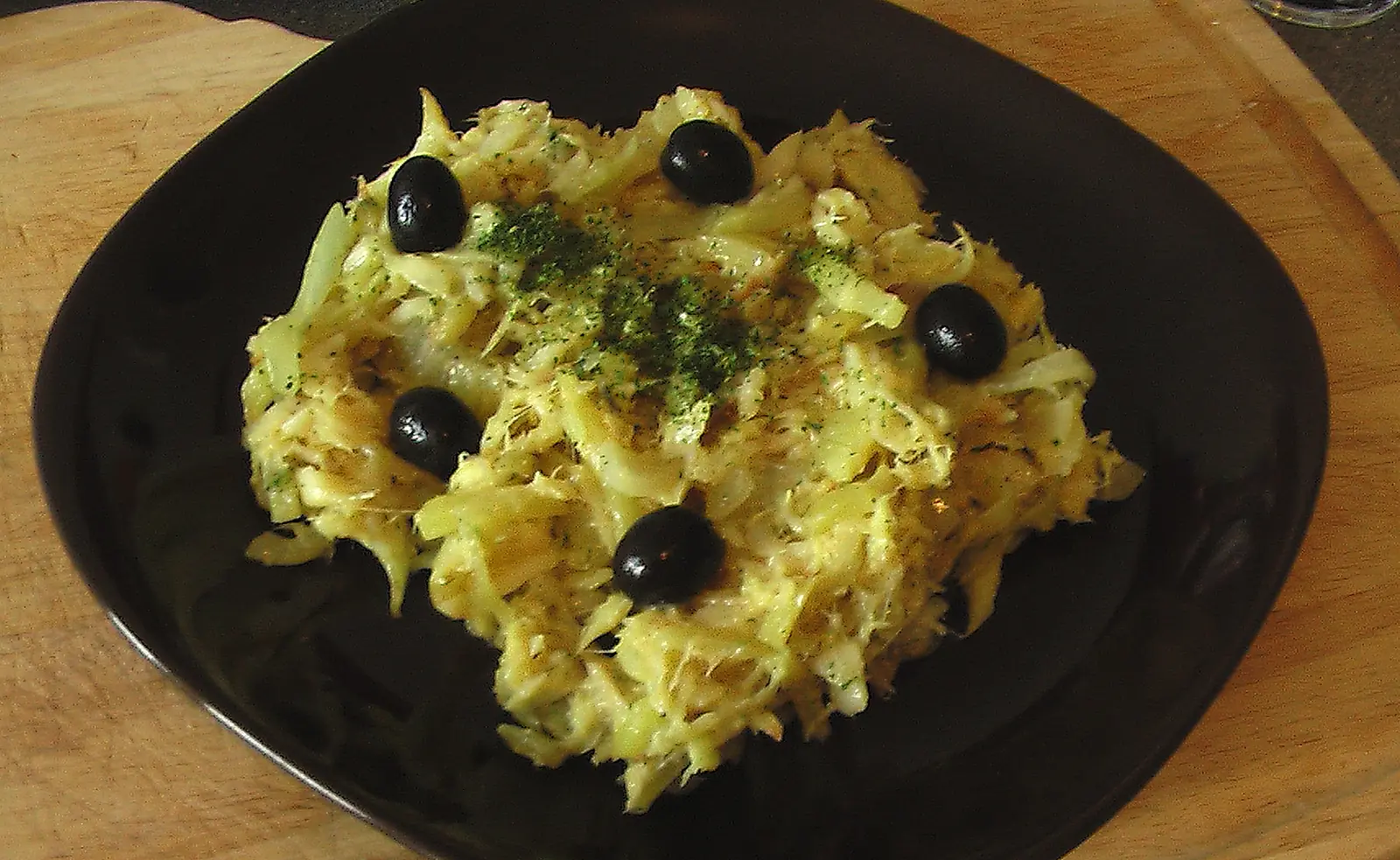
A plate of bacalhau à brás — shredded salt cod with egg and matchstick potatoes, black olives and parsley Portugal flag Portugal 50m
Dinner •Lisbon Tavern Classic

Bacalhau à Brás

Bacalhau à brás recipe: desalted shredded cod, golden matchstick potatoes and softly scrambled egg, finished with black olives and parsley. One serving is about 350 g.

Comfort & Protein

Shredded salt cod folded with egg and crisp matchstick potatoes — a filling, protein-rich Lisbon supper.

Pairs Well With
A simple green salad and a glass of vinho verde
High Protein
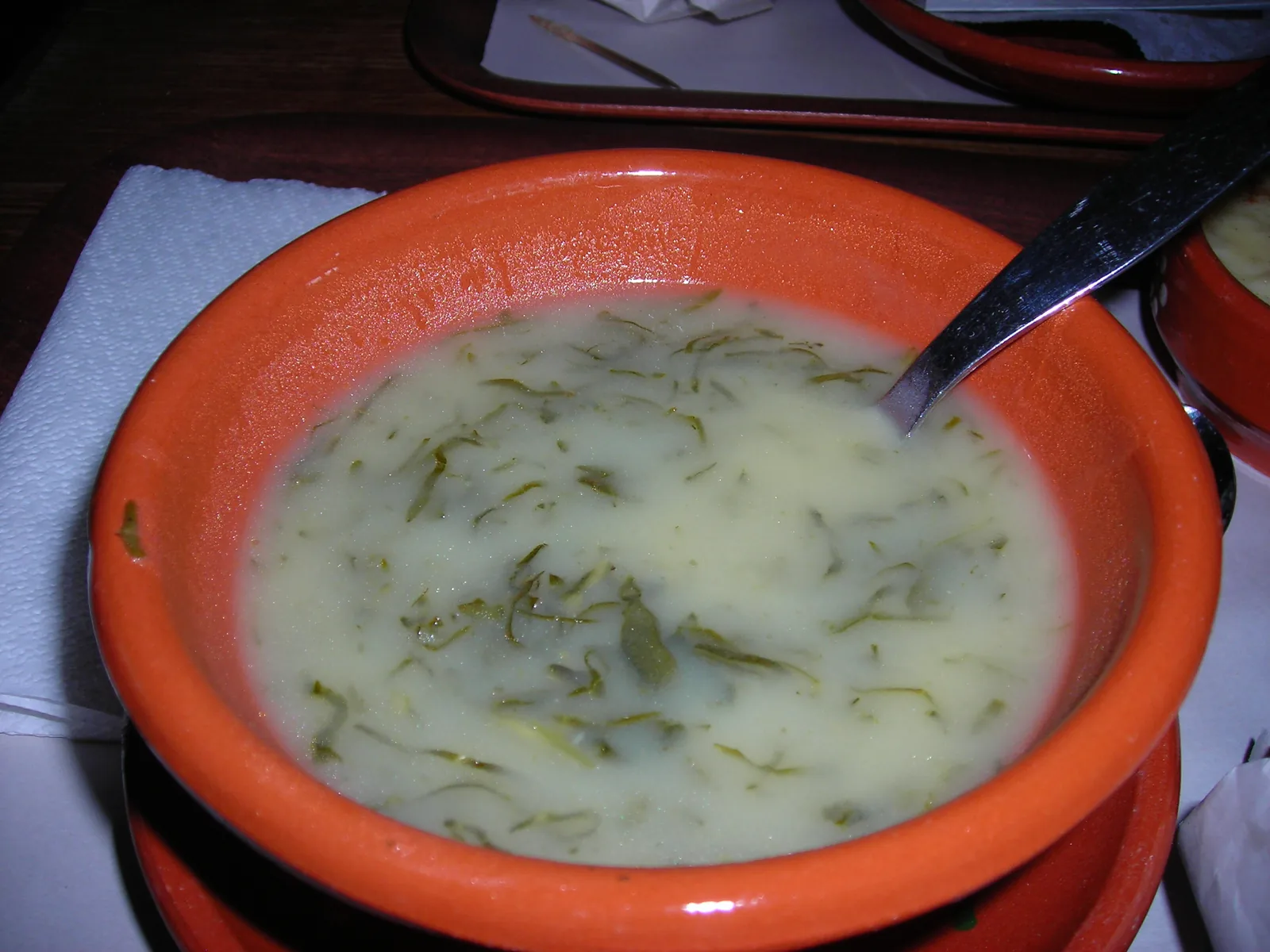
A terracotta bowl of caldo verde — pale potato soup with shredded green kale and a spoon Portugal flag Portugal 50m
Dinner •Minho National Soup

Caldo Verde

Caldo verde recipe: creamy potato soup blended smooth, with ribbons of kale and slices of chouriço, finished with a thread of olive oil. One serving is about 590 g.

Comfort & Warmth

Silky potato soup with finely shredded kale and smoky chouriço — Portugal's best-loved bowl.

Pairs Well With
Crusty broa bread and a glass of vinho verde
Soups & Broths
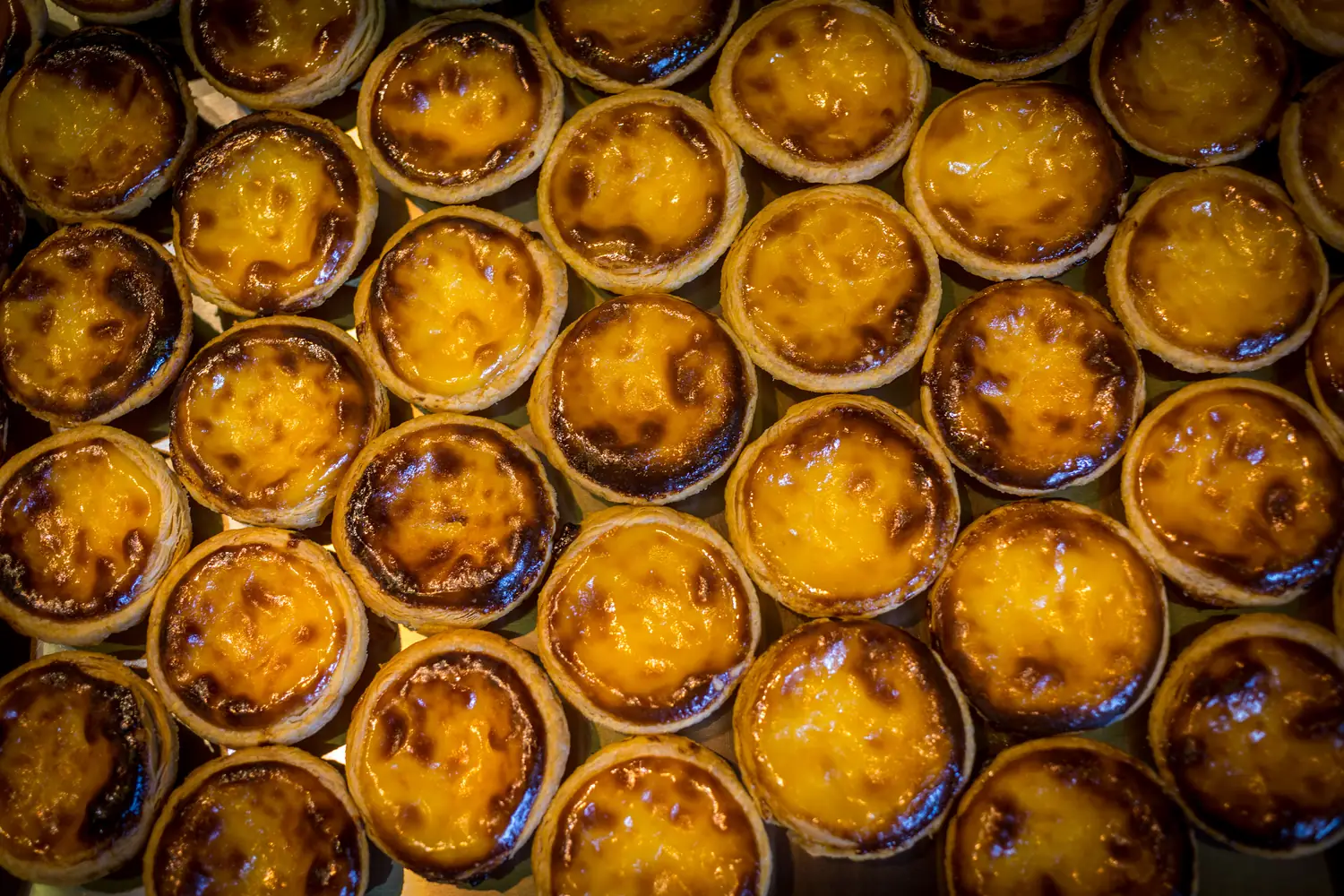
A tray of pastel de nata — golden custard tarts with blistered, caramelised tops in flaky pastry Portugal flag Portugal 50m
Snack & Tea •Belém Monastery Tart

Pastel de Nata

Pastel de nata recipe: shatteringly crisp puff pastry shells filled with warm, vanilla-cinnamon egg custard, baked until blistered on top. One serving is about 187 g (2 tarts).

Sweet Treat

Crisp, flaky pastry cups filled with cinnamon-scented egg custard, blistered in a very hot oven.

Pairs Well With
A small strong coffee (bica) and a dusting of cinnamon
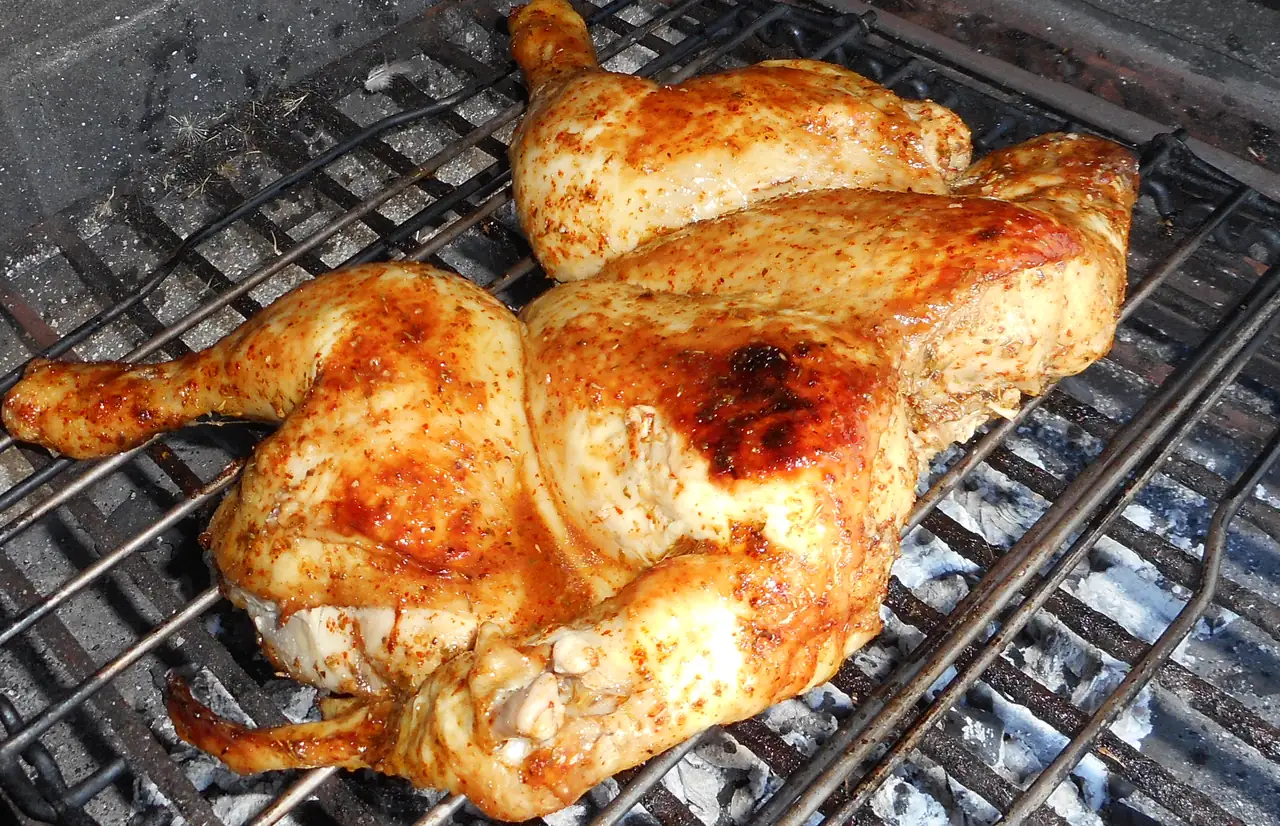
Butterflied piri piri chicken grilling over charcoal, golden-red with chilli spice Portugal flag Portugal 55m
Dinner •Algarve Heritage

Frango Piri Piri

Frango piri piri is Portugal's most famous chicken: a whole bird butterflied flat, rubbed with a fiery paste of piri piri chillies, garlic, lemon and paprika, then grilled over charcoal until the skin turns crisp and red-gold. This piri piri chicken recipe is the Algarve way — an overnight marinade, a hot grill, and a warm butter baste at the end. One serving is about 210 g.

Spicy Char-Grill

A butterflied chicken marinated in piri piri chilli, garlic and lemon, grilled over charcoal until the skin is crisp and reddened.

Pairs Well With
Chips, tomato-onion salad and a cold beer.
High Protein

The Dinner Gazette

Never wonder what’s for dinner again

One email a week with easy dinner ideas from around the world — ingredients, steps and nutrition, tested in our kitchen first.

Delivered every Thursday morning. Unsubscribe anytime.