Curated recipes from 193 countries  •  New seasonal Mediterranean issue out now

Overview

Cangrejo Criollo

Cangrejada, Ecuadorian Creole Crab, Cangrejo en Salsa Criolla

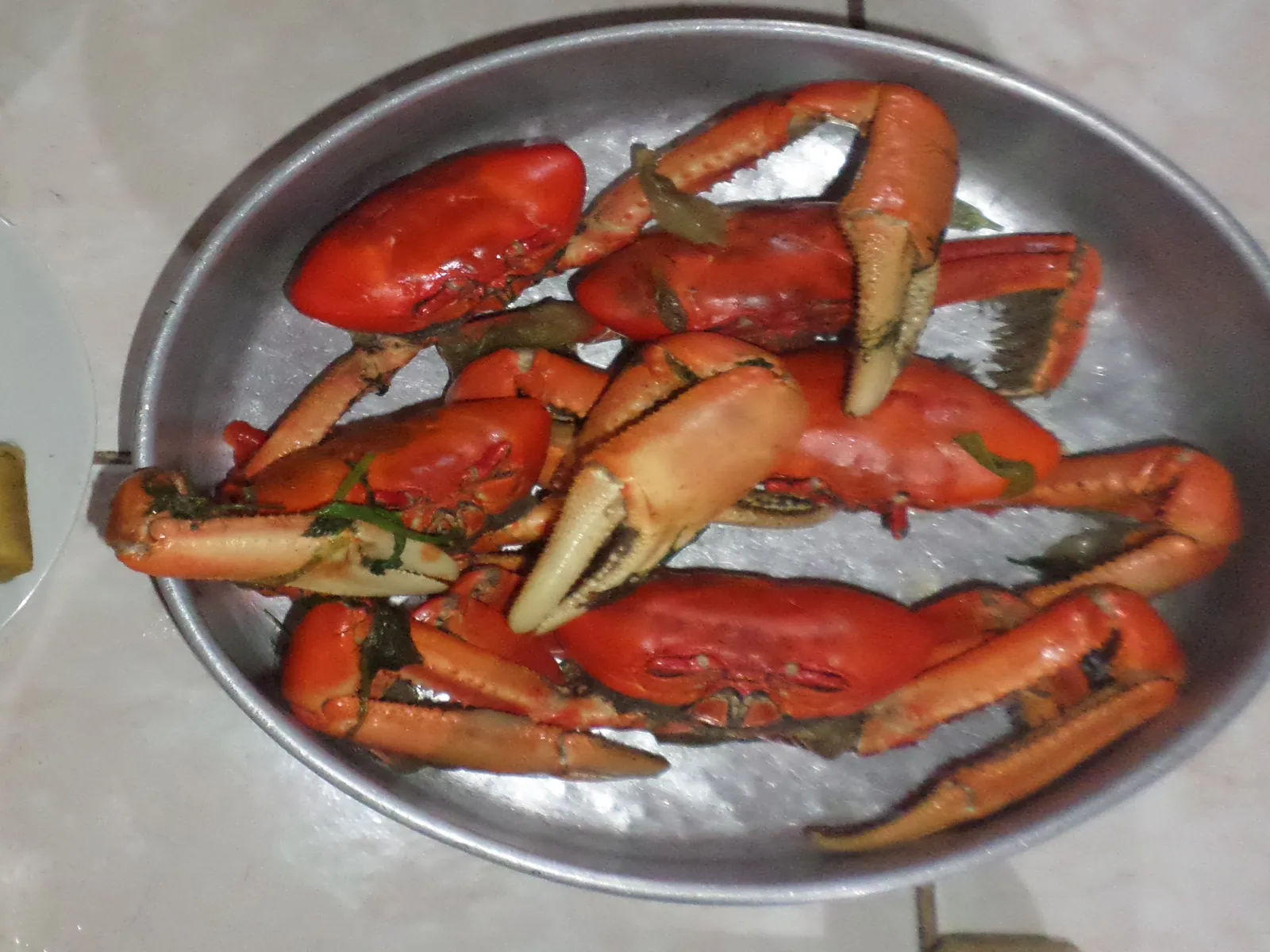
This cangrejo criollo recipe is the crab feast of Guayaquil: whole blue crabs simmered in a criollo sauce of tomato, onion, green pepper, garlic and achiote oil, loosened with beer, and served in a big bowl with white rice and boiled plantain. You crack the shells at the table and spoon the sauce over everything. One serving is about 391 g of crab meat and criollo sauce (two whole crabs, picked at the table).

The cangrejada is Guayaquil's great crab feast: blue crabs from the mangroves of the Gulf of Guayaquil, cooked in a criollo sauce and eaten by hand around a table piled with rice, boiled plantain and tomato-onion salad, with a wooden mallet for the claws. It is a weekend and family-occasion meal, and Ecuador pauses crab fishing in closed seasons so the stocks can recover.

Pairs well with: White rice, boiled green plantain and tomato-onion salad, with an ice-cold beer

Provenance

Ecuador flag Ecuador

Guayaquil Coastal Classic

Latin America & Caribbean

Time Dedication

1h

25m prep • 35m cook

Batch Yield

4 Servings

276 kcal per serving

1 serving ≈ 391 g

Technical Skill

Intermediate

Medium (Whole Crabs)

Meal Timing & Digestive Fit

Breakfast

Not Advised

Lunch

Hearty Midday Main

Dinner

Ideal Hearty Main

Snack & Tea

Inappropriate

Occasions: Family feasts, weekend gatherings, coastal celebrations, Sunday lunch Cost: Medium — about $6–8 per serving at home
A metal bowl of bright red cooked crabs in criollo sauce, served Ecuadorian cangrejada style

Guayaquil Coastal Classic

Photo: Aaronmormot, CC BY-SA 4.0, via Wikimedia Commons

The Heritage Formulary

Measured Ingredients

Estimated cost: Medium — about $6–8 per serving at home (USD)

Cangrejo criollo made with whole blue crabs simmered in a tomato, onion and pepper criollo sauce with achiote oil and beer.

Execution Methodology & Culinary Technique

Step-by-Step Cooking Guide

Active 1h
P

Prep Stage: Clean Crabs, Chop the Sauce

25 Mins • Cleaning & Chopping

Rinse the 8 live crabs under cold running water and scrub the shells clean with a brush. Dice the 400 g tomatoes, 200 g onion and 150 g green pepper, mince the 20 g garlic, and have the 30 ml achiote oil, 240 ml beer, 2 g cumin, 2 g pepper and 3 g salt within reach — once the sauce is on the heat, everything moves fast.

Maestro Tip: Cook the crabs the same day you buy them, and keep them cool and covered until then — a crab that dies before cooking spoils fast.

  1. 1

    Clean the Crabs

    15 Mins Cold running water, about 10°C (50°F)

    Rinse each crab under cold running water and scrub the shell, legs and claws with a stiff brush to remove mud and grit. Pull off the apron underneath if you like, and give the crabs a final rinse. Keep them in a covered bowl in the fridge until the sauce is ready.

    Handle live crabs from behind, holding the shell — the claws are strong, and a pinch is no joke.

    Done when: Clean shells, no mud or grit, crabs still lively.

  2. 2

    Build the Criollo Sauce

    10 Mins Medium heat, about 175°C (350°F)

    Heat the 30 ml achiote oil in a wide, deep pot over medium heat. Add the 200 g onion, 150 g green pepper and 20 g garlic and cook for about 5 minutes until soft and fragrant. Stir in the 400 g tomatoes, 2 g cumin, 2 g black pepper and 3 g salt, then pour in the 240 ml beer and simmer for 5 minutes until the sauce thickens slightly.

    Taste the sauce now and go easy on the salt — the crab meat will add its own saltiness later.

    Done when: Soft vegetables, thickened golden-red sauce.

  3. 3

    Simmer the Crabs in the Sauce

    20 Mins Gentle simmer, about 95°C (200°F)

    Nestle the 8 crabs into the sauce, spooning sauce over them, and put the lid on. Simmer gently for about 20 minutes, turning the crabs once halfway, until the shells are bright red all over and the meat is opaque white and hot through — about 63°C (145°F) in the thickest part of a claw.

    Do not boil hard — a fierce boil toughens the meat and splashes sauce everywhere; a lazy simmer is what you want.

    Done when: Shells bright red, meat opaque white, 63°C (145°F).

  4. 4

    Rest and Check

    5 Mins Resting off the heat, about 80°C (175°F)

    Take the pot off the heat and leave it covered for 5 minutes so the crabs finish cooking gently and soak up the sauce. Crack one claw open to check: the meat should be white, firm and steaming, with no grey or translucent patches.

    If a claw still looks translucent, put the pot back on a low heat for 3–4 more minutes — it is better to wait than to serve undercooked crab.

    Done when: White, firm, steaming meat in the test claw.

  5. 5

    Serve at the Table

    5 Mins Serve hot, about 65°C (150°F)

    Pile the crabs into a big bowl, spoon the criollo sauce over them, and scatter the 15 g chopped cilantro on top. Serve at once with white rice, boiled green plantain and tomato-onion salad, with lime wedges, a crab mallet (or the back of a heavy spoon) and plenty of napkins — this is a hands-on meal.

    Put a bowl in the middle of the table for the empty shells, and give everyone their own small bowl of sauce for dipping.

    Done when: Hot crabs in sauce, sides on the table, mallets at hand.

Finishing Touches & Plating

Eat the crabs with your hands, cracking the claws with the mallet and spooning the criollo sauce over the rice. The sauce is half the dish — do not leave it in the pot.

Nutritional Physiology & Benefits

Nutrition

Energy

276

kcal / serving

Protein

31g

Complete AA

Carbs

14g

Complex

Fats

9g

Healthy

Per serving (4 servings · 1 serving ≈ 391 g)
Energy276 kcal
Protein31 g
Carbohydrates14 g
Fat9 g
Fibre2.9 g
Sugar5.8 g
Sodium798 mg
Per 100g
Energy70 kcal
Protein7.9 g
Carbohydrates3.5 g
Fat2.4 g
Fibre0.7 g
Sugar1.5 g
Sodium203 mg

Nutrition values are estimated — calculated from USDA FoodData Central values for the listed ingredients.

Vitamins & minerals: Selenium and vitamin B12 from the crab, vitamin C from the tomato and green pepper, and vitamin A from the achiote oil. Nutrition is estimated.

High Protein, Low Fat

About 31.0 g of protein and 9.4 g of fat per serving — crab meat is lean, filling protein, and the sauce is mostly vegetables.

Selenium and B12

Crab is a good source of selenium and vitamin B12, both of which the body needs in small amounts every day.

A Sauce of Vegetables

Tomato, onion and green pepper make up most of the sauce — about 2.9 g of fibre per serving comes from them.

Food Pairings

What to Eat With

To optimize nutrient absorption and elevate the sensory depth, pair with these authentic accompaniments:

Sides

White Rice

Plain white rice is the essential partner — it soaks up the criollo sauce, and every cangrejada in Guayaquil is served with a mound of it.

Boiled Green Plantain

Boiled green plantain is the other classic accompaniment: its mild, starchy flesh steadies the rich sauce, and it is what the crab sellers serve alongside.

Vegetables

Tomato and Onion Salad

A sharp salad of tomato, red onion and lime cuts through the richness of the crab and the sauce, and its acidity wakes up the palate between crabs.

Drinks

Ice-Cold Lager

An ice-cold lager is the traditional drink with a cangrejada — cold, light and malty, it cools the mouth after the warm, spiced sauce.

Complete menu

Cangrejo criollo with white rice, boiled plantain and tomato-onion salad.

Digestive Guardrails

What NOT to Combine

To prevent digestive distress, sluggishness, or palate clash, avoid pairing the dish with these elements:

Eating Crabs That Died Before Cooking

A crab that dies before it is cooked spoils very fast and can make you ill — buy live crabs, cook them the same day, and throw out any that smell of ammonia. This is general food information, not medical advice.

Cracking Shells with Your Teeth

Crab shells are hard and sharp — use a mallet or the back of a heavy spoon, never your teeth, or you risk chipping a tooth or cutting your mouth. This is general food information, not medical advice.

Leaving Cooked Crab Out for Hours

Cooked crab left at room temperature for more than two hours is a food-safety risk — refrigerate leftovers promptly and reheat them to 74°C (165°F). This is general food information, not medical advice.

General information only, not medical advice — consult a doctor for personal dietary decisions.

Who Should Eat It

Who Should Eat

  • General adultsA hands-on feast for most adults — two crabs each with rice and plantain is the classic serving.
  • ChildrenChildren can eat the picked meat, but watch for shellfish allergy and help them with the shells — serve them picked meat, not whole crabs.
  • ElderlyThe meat is soft and easy to eat once picked, but whole crabs are hard work — serve picked meat with sauce for older eaters.
  • Pregnant womenCooked crab is low in mercury and fine in moderation when fully cooked — ask your clinician about portion size.
  • Breastfeeding womenCooked crab is a lean protein that suits breastfeeding — ask your clinician if you have any shellfish concerns.
  • AthletesAbout 31.0 g of protein per serving makes this a strong post-training meal, especially with rice and plantain.
  • Weight gainProtein-rich and filling, with rice and plantain alongside — a solid higher-energy meal.
  • Weight lossAbout 276 kcal per serving of crab and sauce, but the rice and plantain add more — keep those portions modest.

Health Conditions — Adjust or Avoid

Conditions

  • DiabetesAbout 13.6 g of carbohydrate per serving of crab and sauce, which is low — watch the rice and plantain portions instead, and ask your clinician about portion size.
  • High blood pressureAbout 798 mg of sodium per serving, which is high — crab is naturally salty, so skip extra salt and ask your clinician if you are on a low-sodium plan.
  • Kidney diseaseHigh in protein and sodium, which both matter on a kidney plan; ask your clinician whether this portion suits your plan.
  • GoutShellfish is high in purines, which can raise uric acid — people with gout should be cautious, and ask your clinician.
  • Stomach issuesA rich, spiced sauce with shellfish can be heavy on a sensitive stomach; a smaller portion with plain rice is gentler, and ask your clinician if your stomach keeps bothering you.
  • Cardiovascular diseaseThe crab itself is lean, but the sodium is high — enjoy it occasionally and keep the rice portion modest, and ask your clinician about the right portion for you.
  • Fatty liverLean crab with a vegetable sauce is a reasonable choice; keep the beer to one glass and the rice portion modest — ask your clinician about the right portion for you.
  • Food allergiesContains crustacean shellfish (crab) — a major allergen. If you have a shellfish allergy, do not eat this dish; ask your clinician if you are unsure.
  • Special therapeutic dietsFollow your clinician's guidance on shellfish, protein and sodium portions; this is general information, not medical advice.

If you have a medical condition, consult your doctor before changing your diet.

Storage & Use

Storage & Use

How to store
Pick the meat from the shells and keep meat and sauce together in a covered container in the fridge.
In the fridge
Up to 2 days refrigerated.
In the freezer
Picked meat in sauce freezes for up to 2 months; whole crabs in the shell do not freeze well.
How to reheat
Reheat gently in the sauce until steaming hot, at least 74°C (165°F).
Freezing recommended
Yes — picked meat only, up to 2 months.
Signs it has spoiled
Ammonia smell, slimy meat, or a sour taste — throw it out.

More recipes to explore

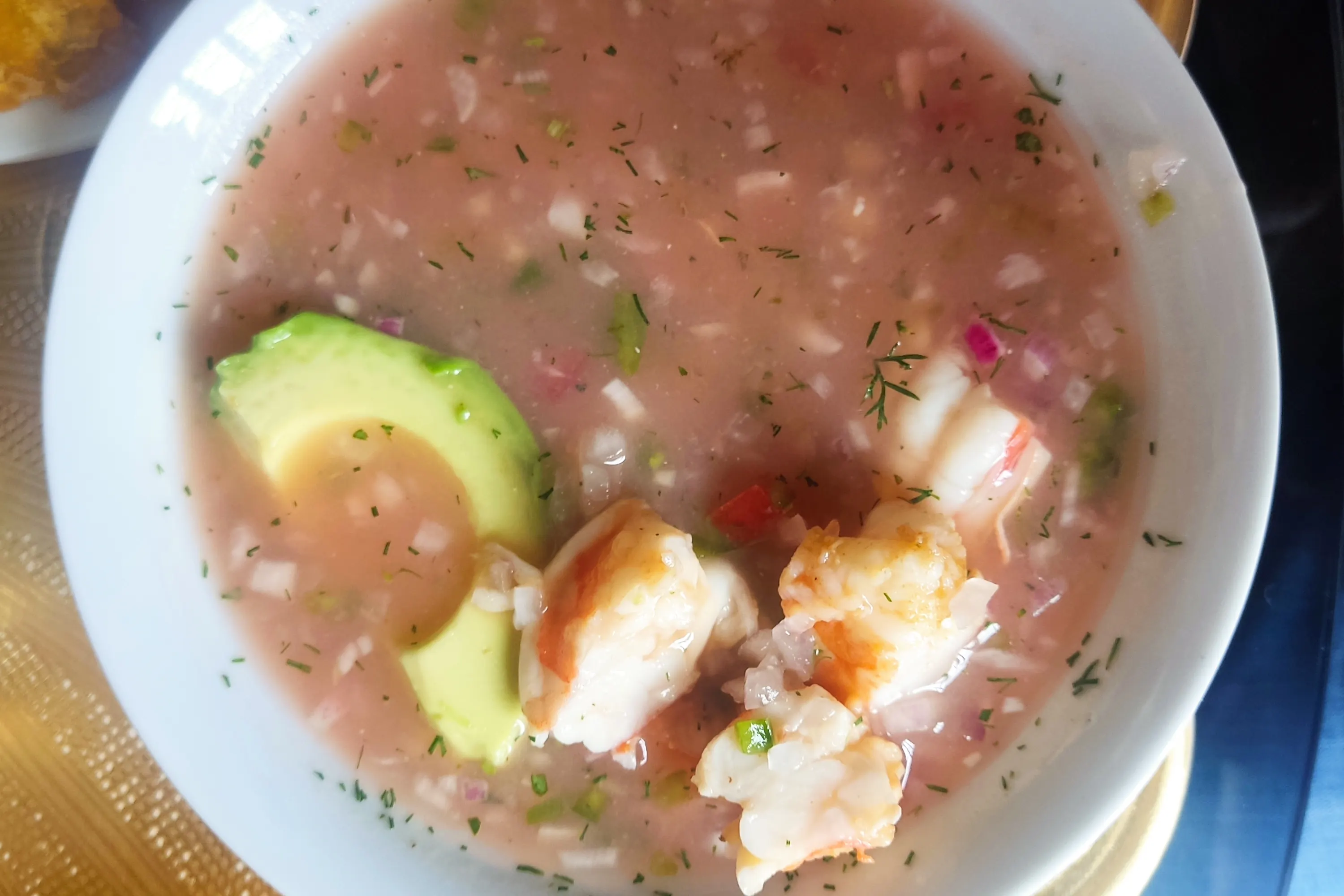
A white bowl of Ecuadorian shrimp ceviche in pink tomato-citrus sauce with cooked shrimp, red onion, cilantro and an avocado slice Ecuador flag Ecuador 30m
Lunch •Coastal Ecuador

Ecuadorian Ceviche

Ecuadorian ceviche is a bowl of poached shrimp in a pink-orange sauce of tomato, lime and orange juice, with red onion and cilantro. Unlike the Peruvian version, where raw fish is cured in lime juice, the shrimp here is cooked first, so the dish is saucy, cold and gentle rather than sharp. One serving is about 341 g.

Light & Fresh

Poached shrimp in a bright lime, orange and tomato sauce, served chilled with crunchy sides.

Pairs Well With
Chifles, popcorn and avocado slices
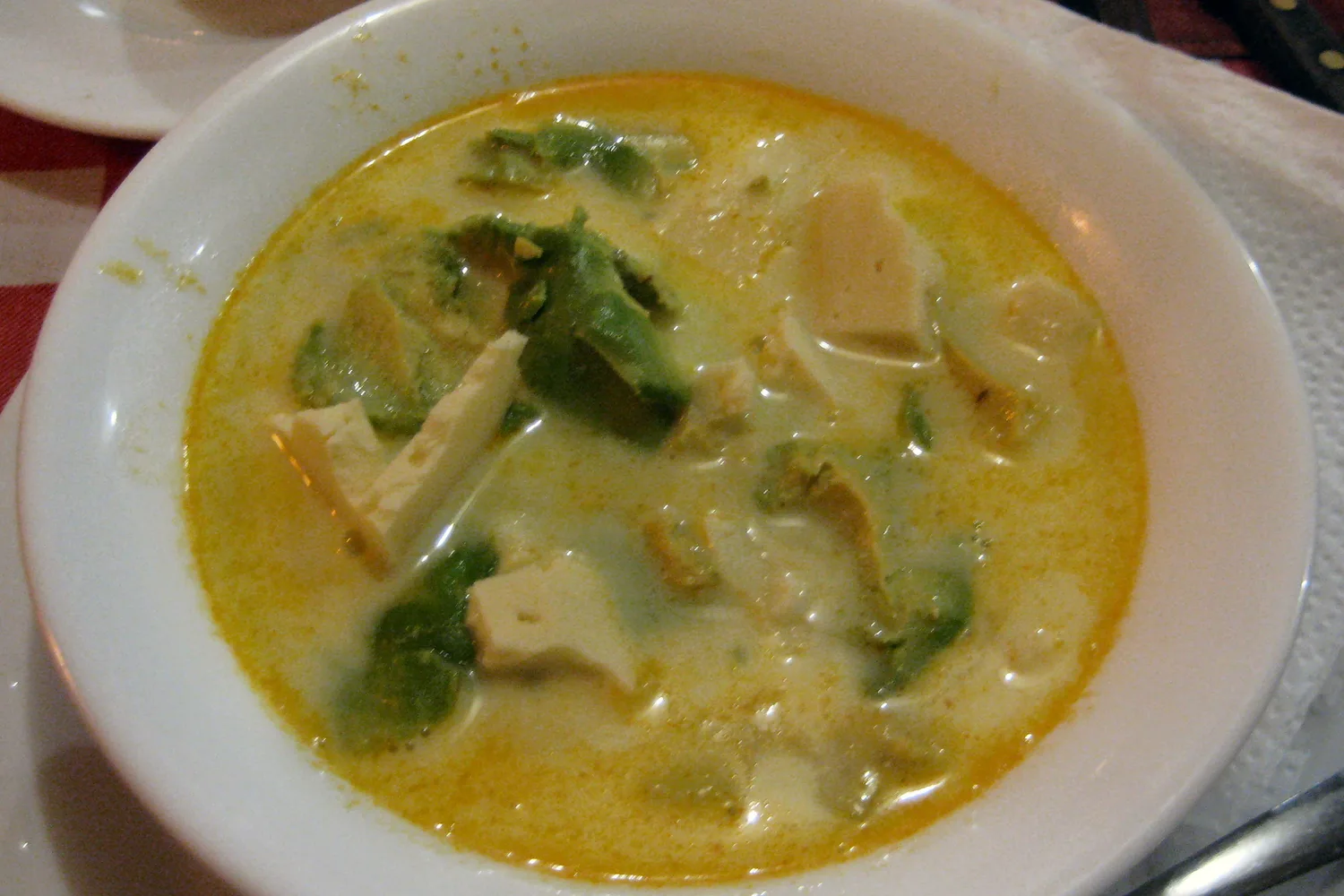
A bowl of golden locro de papa, Ecuadorian potato and cheese soup, topped with avocado chunks and cubes of white cheese Ecuador flag Ecuador 55m
Dinner •Andean Heritage

Locro de Papa

Locro de papa is Ecuador's golden potato and cheese soup, thickened by the potatoes themselves and finished with creamy avocado and crumbled queso fresco. One serving is about 675 g. It is a one-pot, meat-free dinner that tastes like the cool Andean evenings it comes from.

Comfort & Warmth

A thick, golden potato and cheese soup from the Ecuadorian highlands, finished with fresh avocado.

Pairs Well With
Crusty bread and a simple lettuce and tomato salad, with hot panela water or herbal tea to drink.
Soups & Broths
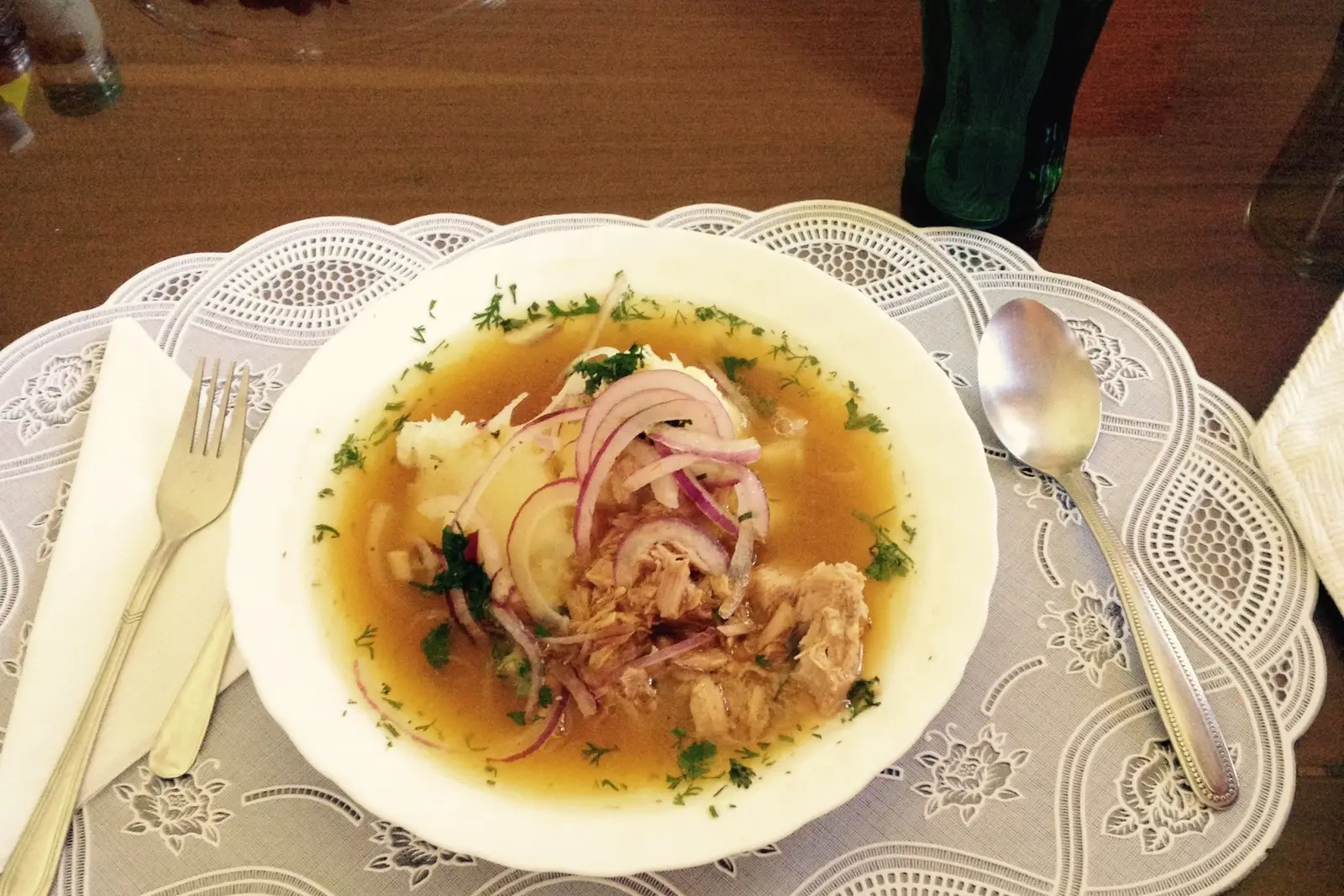
A bowl of encebollado with flaked tuna, pickled red onion rings, yuca and golden broth, sprinkled with cilantro Ecuador flag Ecuador 1h 20m
Lunch •Guayaquil Heritage

Encebollado

This encebollado recipe is Ecuador's beloved coastal soup: fresh albacore tuna simmered in a tomato, onion and cumin broth with tender chunks of yuca, then ladled into bowls under a bright mound of lime-pickled red onion and tomato. The broth is light and savoury, the onion topping is sharp and fresh, and the chifles and tostado on the side add the crunch every Ecuadorian expects. One serving is about 600 g, soup and toppings together.

Comfort & Warmth

Fresh tuna and yuca simmered in a tomato-cumin broth, finished with lime-pickled red onion and crunchy plantain chips.

Pairs Well With
Chifles (plantain chips) and tostado (toasted corn) for crunch, avocado slices, and lime wedges to squeeze over the bowl.
Soups & Broths
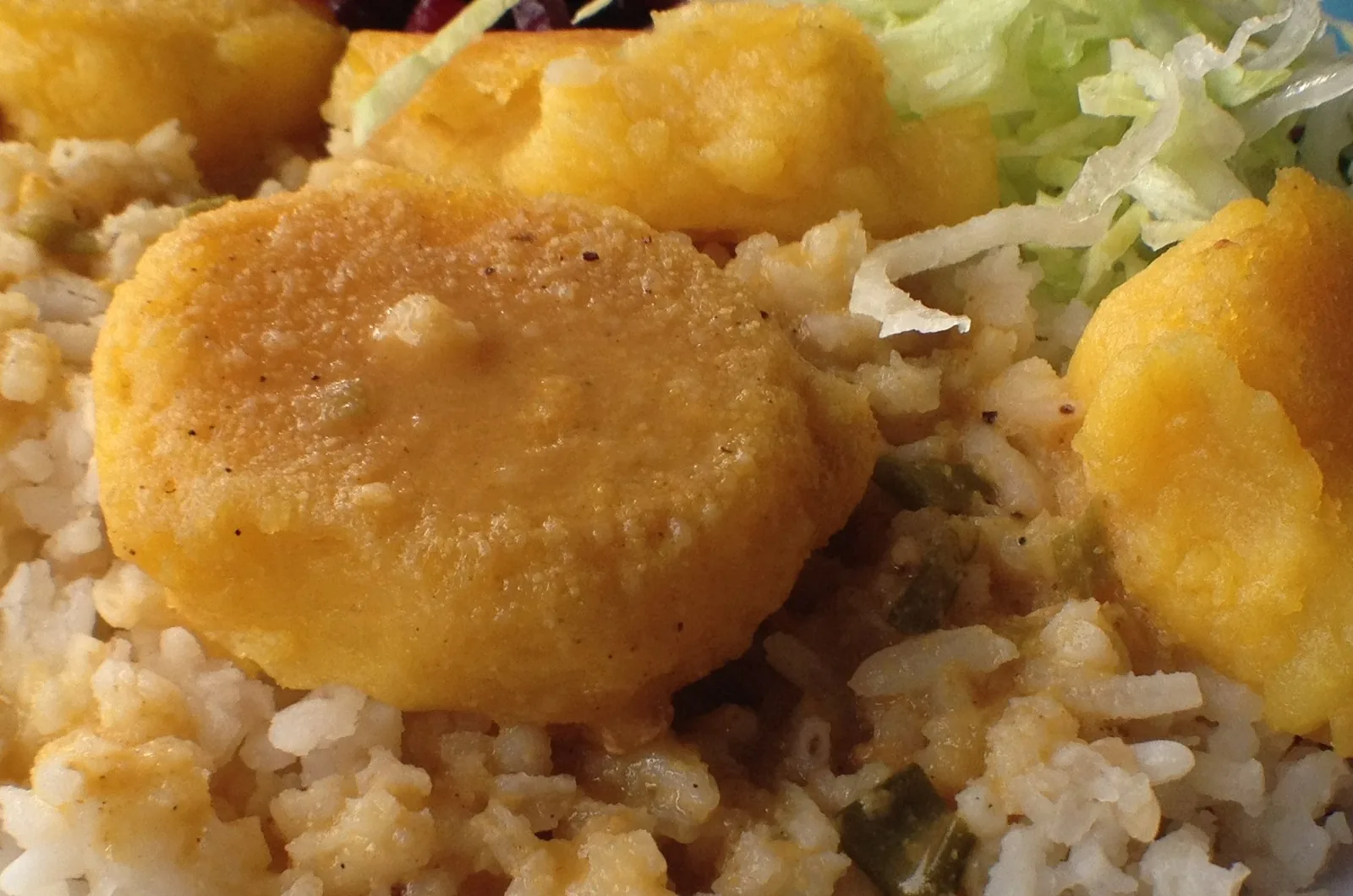
Golden llapingacho potato patties on rice with peanut sauce and shredded lettuce Ecuador flag Ecuador 1h
Lunch •Andean Heritage

Llapingacho

Llapingacho is Ecuador's most loved potato dish: mashed potato mixed with onion and annatto oil, wrapped around fresh cheese, flattened into cakes and fried until the outside is crisp and golden and the centre turns gooey. It is served with a fried egg, peanut sauce and a little salad. One serving is about 464 g.

Golden & Comforting

Mashed potato mixed with onion and annatto oil, stuffed with fresh cheese and fried golden.

Pairs Well With
Fried egg, peanut sauce and a fresh salad

The Dinner Gazette

Never wonder what’s for dinner again

One email a week with easy dinner ideas from around the world — ingredients, steps and nutrition, tested in our kitchen first.

Delivered every Thursday morning. Unsubscribe anytime.