Curated recipes from 193 countries  •  New seasonal Mediterranean issue out now

Overview

Carbonada

Carbonada Criolla, Carbonada en Zapallo

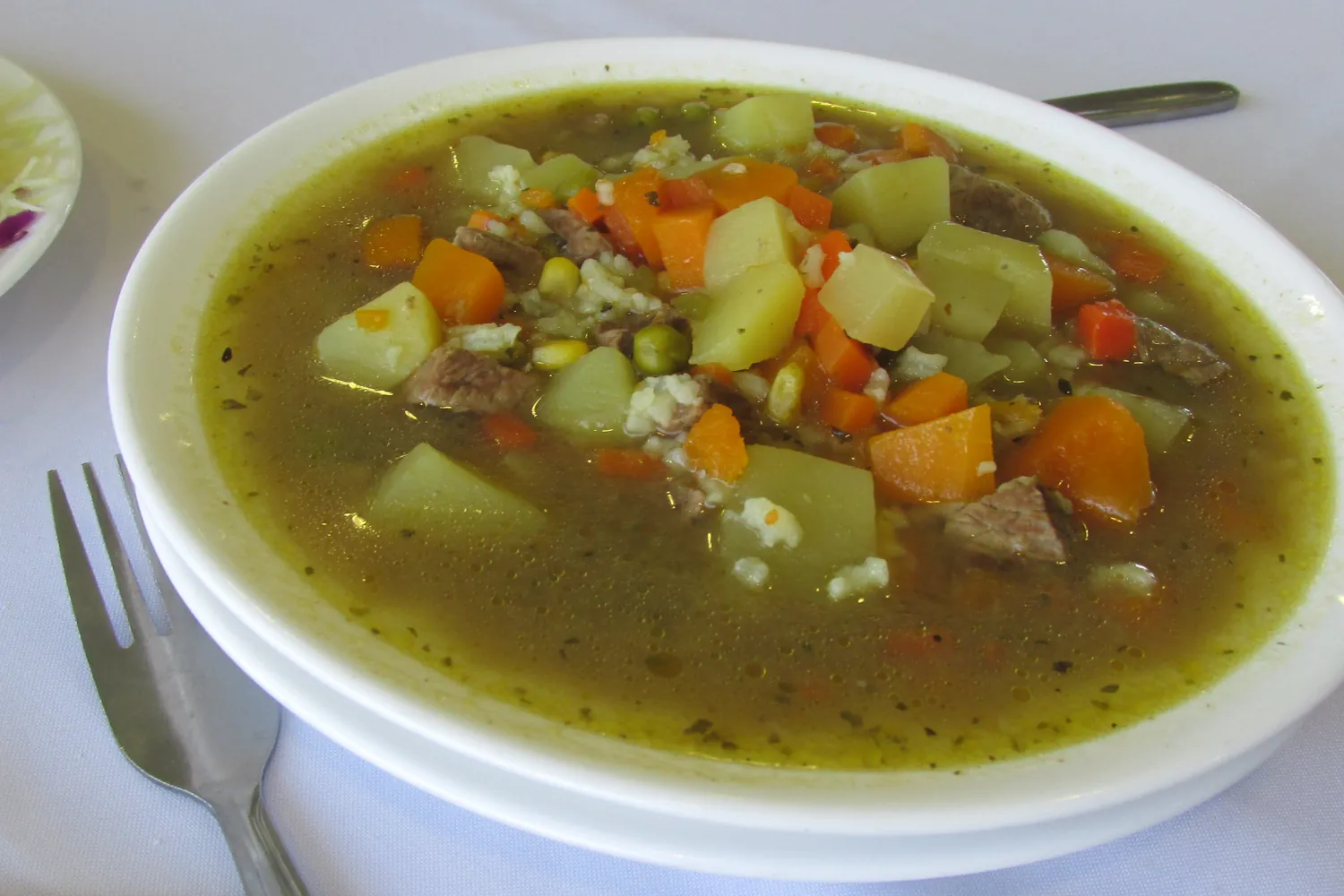
This carbonada recipe braises beef chuck low and slow with butternut squash, sweet potato, corn and carrots, then finishes the pot with dried apricots, peaches and raisins, so every spoonful turns sweet and savoury at once. One serving is about 768 g.

Carbonada is a criollo stew of the Rio de la Plata region, shaped by Spanish colonial cooking and the dried fruit and squash of the Andean pantry. Its signature move is the sweet-savoury pairing of beef with dried peaches, apricots and raisins, and in its most festive form it is served inside a hollowed-out pumpkin, the carbonada en zapallo. It remains an Argentine winter classic, cooked in big pots for family Sundays and national holidays.

Pairs well with: Crusty bread and a glass of Malbec

Provenance

Argentina flag Argentina

Argentine Winter Classic

Latin America & Caribbean

Time Dedication

2h

25m prep • 95m cook

Batch Yield

4 Servings

717 kcal per serving

1 serving ≈ 768 g

Technical Skill

Intermediate

Intermediate (Slow Braise)

Meal Timing & Digestive Fit

Breakfast

Not Advised

Lunch

Hearty Midday Main

Dinner

Ideal Hearty Main

Snack & Tea

Inappropriate

Occasions: Cold winter evenings, family Sunday lunches, Argentine national holidays Cost: Moderate — about $4–5 per serving at home
A white bowl of Argentine carbonada stew with beef, potato, carrot, corn and peas in a golden broth

Argentine Winter Classic

Photo: Marco Antonio Correa Flores, CC BY-SA 4.0, via Wikimedia Commons

The Heritage Formulary

Measured Ingredients

Estimated cost: Moderate — about $4–5 per serving at home (USD)

A good carbonada balances sweet dried fruit against savoury beef and squash — the broth should be rich and glossy, never sugary.

Execution Methodology & Culinary Technique

Step-by-Step Cooking Guide

Active 2h
P

Prep Stage: Cube Everything Evenly

25 Mins • Knife Work

Cut the beef into even 3 cm chunks and cube the squash, sweet potato and potatoes to the same size so everything cooks at the same pace. Chop the onion, pepper, tomatoes and garlic, slice the carrots, halve the apricots and slice the dried peaches. Measure the stock, oil and spices so the pot never waits on you.

Maestro Tip: Even 3 cm cubes are the whole secret: small pieces fall apart in two hours, big ones stay hard in the middle.

  1. 1

    Brown the Beef

    15 Mins Medium-high heat, ~200°C (400°F)

    Heat the olive oil in a heavy pot over medium-high heat until it shimmers. Brown the beef in two batches, about 4 minutes a side, without crowding the pan, then lift it out onto a plate. The brown crust is where the flavour lives, so do not rush this step.

    Crowding the pan steams the beef grey instead of browning it — cook in batches and the stew will taste twice as rich.

    Done when: Beef is deep brown on at least two sides; the pot bottom is coated with browned bits.

  2. 2

    Build the Savoury Base

    10 Mins Medium heat, ~160°C (320°F)

    Turn the heat to medium and cook the onion and red pepper in the same pot for 5 minutes until soft. Stir in the garlic, paprika and cumin and cook for 1 minute more, then add the tomatoes and cook until they collapse into a thick, rust-red base. Scrape up the browned bits from the bottom as you stir.

    Frying the paprika for a minute in the oil wakes it up; adding it later leaves it raw and dusty-tasting.

    Done when: Onion is soft and translucent; the tomato base is thick and rust-red.

  3. 3

    Simmer the Stew

    60 Mins Gentle simmer, ~95°C (203°F)

    Return the beef to the pot with any juices, pour in the beef stock, and add the bay leaves and half the salt. Bring to a gentle simmer, then add the squash, sweet potato, potatoes, carrots and corn. Cover with the lid ajar and simmer gently for 60 minutes, stirring now and then, until the beef is nearly tender.

    A bare simmer, not a rolling boil, keeps the beef tender — boiling hard makes stew meat tough and stringy.

    Done when: Beef yields to a fork but still holds its shape; vegetables are almost tender.

  4. 4

    Add the Dried Fruit and Finish

    25 Mins Gentle simmer, ~95°C (203°F)

    Stir in the dried apricots, dried peaches and raisins and simmer for 25 minutes more, uncovered, until the fruit is plump and the broth has thickened to coat a spoon. The beef should be completely tender and read at least 74°C (165°F) in the centre of the largest piece. Fish out the bay leaves, taste, and adjust the salt.

    The fruit goes in late on purpose: added at the start it dissolves into mush and makes the whole pot too sweet.

    Done when: Beef is fork-tender and at least 74°C (165°F); the fruit is plump and the broth coats a spoon.

  5. 5

    Rest and Serve

    10 Mins Serve hot, ~75°C (167°F)

    Take the pot off the heat and rest it, lid on, for 10 minutes so the flavours settle and the broth thickens a little more. Ladle into deep bowls, making sure every serving gets beef, squash, potato, corn and fruit, and serve at once with crusty bread.

    Like most stews, carbonada tastes even better the next day — the fruit and beef swap flavours overnight.

    Done when: The stew is steaming, the broth is glossy and slightly thickened, and every bowl has a share of everything.

Finishing Touches & Plating

Ladle the stew into deep bowls with a generous share of beef, squash and fruit in each one. Serve steaming hot with crusty bread for the broth, and a glass of Malbec if you like.

Nutritional Physiology & Benefits

Nutrition

Energy

717

kcal / serving

Protein

42g

Complete AA

Carbs

92g

Complex

Fats

23g

Healthy

Per serving (4 servings · 1 serving ≈ 768 g)
Energy717 kcal
Protein42 g
Carbohydrates92 g
Fat23 g
Fibre13.2 g
Sugar35.9 g
Sodium980 mg
Per 100g
Energy93 kcal
Protein5.4 g
Carbohydrates11.9 g
Fat3 g
Fibre1.7 g
Sugar4.7 g
Sodium128 mg

Nutrition values are estimated — calculated from USDA FoodData Central values for the listed ingredients.

Vitamins & minerals: Vitamin A (squash, carrot, sweet potato), vitamin C (pepper, tomato), B vitamins and iron (beef), potassium (potato, squash, dried fruit).

Warming and Satisfying

A long, slow simmer with squash, sweet potato and dried fruit makes this the kind of bowl that warms you from the inside on a cold evening.

High in Protein

About 42 g of protein per serving from the beef, plus slow-release carbohydrate from the potato and squash, keeps you full for hours.

Vegetables and Fruit in Every Bowl

Squash, carrot and sweet potato bring vitamin A and fibre, while the dried fruit adds potassium — a stew that earns its richness.

Food Pairings

What to Eat With

To optimize nutrient absorption and elevate the sensory depth, pair with these authentic accompaniments:

Sides

Crusty Bread

Crusty bread is made for this broth — it soaks up the sweet-savoury juices that a spoon leaves behind.

Vegetables

Green Salad with Vinaigrette

A simple green salad with a sharp vinaigrette cuts through the richness and refreshes the palate between spoonfuls.

Drinks

Malbec

A glass of Mendoza Malbec matches the stew's weight and its sweet-savoury fruit notes without overpowering them.

Full Menus

As Part of a Winter Meal

Serve the carbonada as the main bowl beside bread, a green salad and Malbec — the classic Argentine winter table.

Complete menu

Serve the carbonada as the main bowl with crusty bread, a green salad with vinaigrette and a glass of Malbec — the classic Argentine winter table.

Digestive Guardrails

What NOT to Combine

To prevent digestive distress, sluggishness, or palate clash, avoid pairing the dish with these elements:

Very Sweet Drinks With the Meal

The stew already carries plenty of sweetness from the dried fruit; a sweet dessert wine or sugary soft drink on top can make the whole meal cloying. Plain water or Malbec is a kinder match. This is general guidance, not medical advice.

Another Heavy Main Alongside

A second rich, heavy main such as a cheese-laden pasta will leave you overfull — carbonada is a complete meal on its own. Keep the sides light. This is general guidance, not medical advice.

General information only, not medical advice — consult a doctor for personal dietary decisions.

Who Should Eat It

Who Should Eat

  • General adultsA complete, filling dinner — beef, vegetables and fruit in one hearty bowl.
  • ChildrenSuitable from age 6+; the fruit makes it naturally sweet, but cut the beef small and check for dried-fruit allergy first.
  • ElderlySoft, slow-cooked beef and vegetables are easy to eat; serve a modest portion because it is rich and filling.
  • Pregnant womenGenerally suitable if the beef is cooked through to 74°C (165°F); keep the portion moderate because of the natural sugars from the fruit.
  • Breastfeeding womenGenerally suitable; the protein, iron and energy support recovery — drink water alongside, as the stew is salty.
  • AthletesA strong post-training meal: about 42 g of protein and plenty of carbohydrate, plus salt and fluids. Eat it after, not just before, hard exercise.
  • Weight gainA good choice — the bowl is energy-dense at about 717 kcal; add bread on the side for more energy.
  • Weight lossA heavy choice at about 717 kcal — take a smaller bowl, load up on the vegetables, and skip the bread.

Health Conditions — Adjust or Avoid

Conditions

  • DiabetesThe dried fruit and starchy vegetables raise blood sugar — keep the fruit and potato portions modest and favour the beef and vegetables. Ask your clinician about portion size.
  • High blood pressureMost of the sodium sits in the stock and the added salt; use low-sodium stock and skip extra salt at the table. Ask your clinician about a suitable portion.
  • Kidney diseaseLimit the portion; the protein load and the potassium from the potato, squash and dried fruit are both high for one meal. Ask your clinician about portion size.
  • GoutEat occasionally and in smaller portions — beef and rich meat stock are moderately high in purines.
  • Stomach issuesDried fruit and a rich, long-cooked stew can feel heavy on a sensitive stomach — take a smaller portion and eat slowly.
  • Cardiovascular diseaseThe beef and its fat make this a rich dish; enjoy it occasionally and in a modest portion, with extra vegetables. Ask your clinician about frequency.
  • Fatty liverKeep the portion modest and favour the beef and vegetables over the sweet fruit and starchy potatoes; save it for an occasional meal.
  • Food allergiesContains beef and sulphites (some dried fruit is treated with sulphur dioxide — check the packet). No gluten, egg, dairy or nuts in the recipe as written.
  • Special therapeutic dietsIf you follow a prescribed low-sodium or low-potassium diet, use less stock and salt, and cut back the potato and dried fruit — and check with your clinician.

If you have a medical condition, consult your doctor before changing your diet.

Storage & Use

Storage & Use

How to store
Cool quickly and store in airtight containers in the fridge; the flavours deepen overnight.
In the fridge
3–4 days.
In the freezer
Up to 3 months in portion containers.
How to reheat
Reheat gently on the hob until steaming throughout, reaching 74°C (165°F); add a splash of stock if it has thickened.
Freezing recommended
Yes — it freezes very well and tastes even better after a night in the fridge.
Signs it has spoiled
Sour or off smell, slimy meat, or mould on the surface.

More recipes to explore

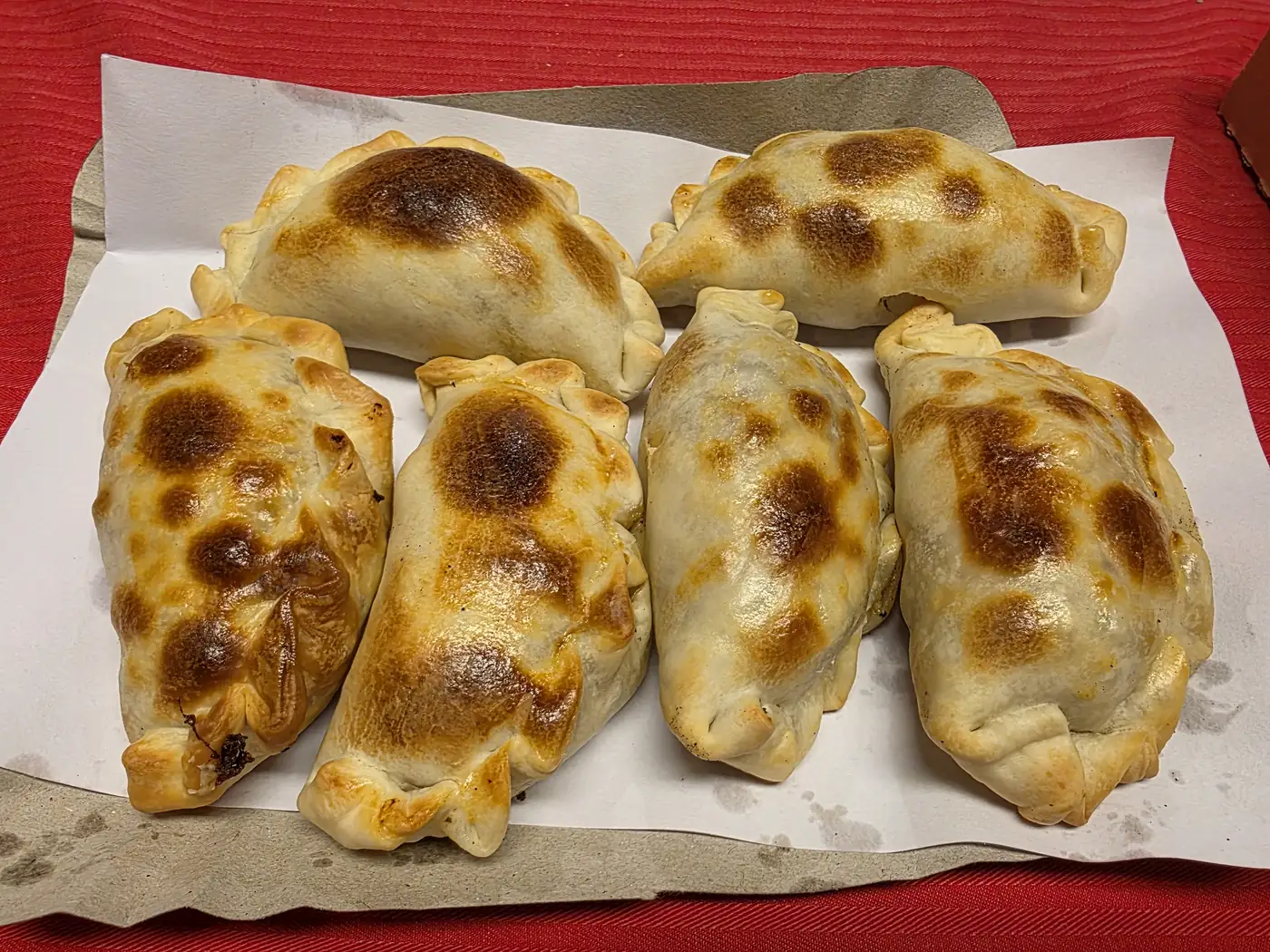
Golden baked Argentine beef empanadas with crimped edges on a plate Argentina flag Argentina 1h 25m
Lunch •Buenos Aires Heritage

Argentine Empanadas

Argentine empanadas are half-moon pastries of short, flaky wheat pastry — no yeast, no puff — folded over a savoury filling of seasoned ground beef, onion, hard-boiled egg, green olives and a few raisins, then sealed with the classic rope crimp called the repulgue and baked until deep gold. This is the beef empanada de carne found in bakeries and rotisseries across Buenos Aires. One serving (two empanadas) is about 260 g.

Hearty & Satisfying

Golden baked pastry wrapped around spiced beef, olive and egg — the hand-held lunch Argentina runs on.

Pairs Well With
Chimichurri & a simple green salad
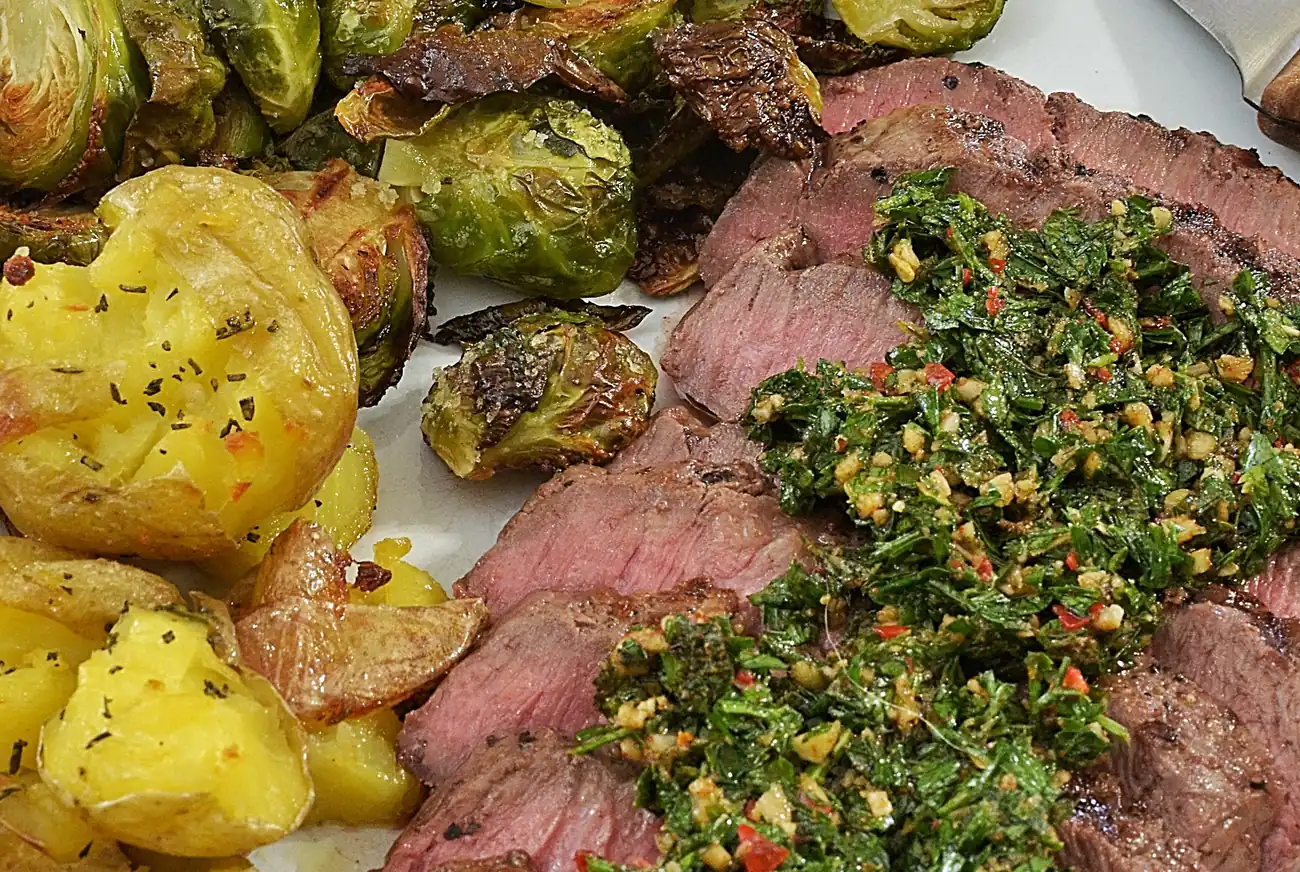
Sliced flat iron steak topped with green chimichurri on a plate Argentina flag Argentina 32m
Dinner •Pampas Asado Heritage

Chimichurri Steak

Chimichurri steak is the centrepiece of the Argentine asado: a thick sirloin grilled over high heat until charred outside and juicy inside, rested, sliced, and served with chimichurri — the raw sauce of parsley, garlic, oregano, red wine vinegar and olive oil that Argentina puts on almost everything grilled. The sauce is made first so its flavours can meld while the steak cooks. One serving is about 215 g.

High-Protein & Satisfying

A thick grilled sirloin, rested and sliced, drowned in bright garlicky chimichurri — the heart of the Argentine asado.

Pairs Well With
Roasted potatoes & grilled vegetables
High Protein
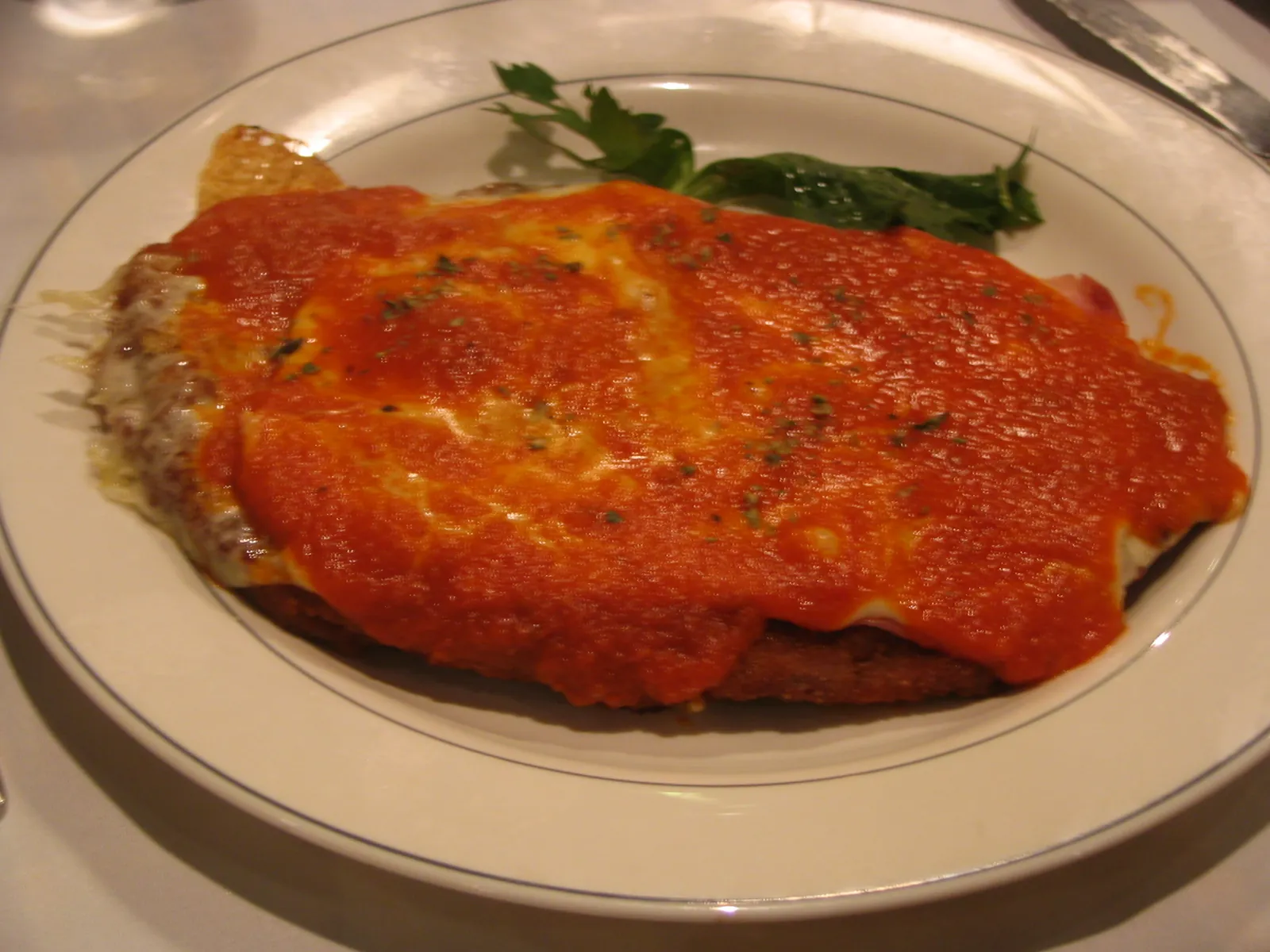
Breaded milanesa steak topped with tomato sauce and melted cheese Argentina flag Argentina 45m
Dinner •Buenos Aires Heritage

Milanesa a la Napolitana

Milanesa a la napolitana starts as a milanesa — a thin beef steak pounded flat, dredged in flour and egg, coated in breadcrumbs and fried until crisp — and then becomes something else entirely: topped with tomato sauce, a slice of ham and a blanket of mozzarella, it goes back into the oven until the cheese bubbles. It is the dish Argentine families order at the neighbourhood bodegon, always with French fries. One serving is about 350 g, before the fries.

Comforting & Satisfying

A crisp breaded steak, fried golden, then finished in the oven under tomato sauce, ham and bubbling mozzarella — Argentina's favourite comfort plate.

Pairs Well With
French fries & a green salad
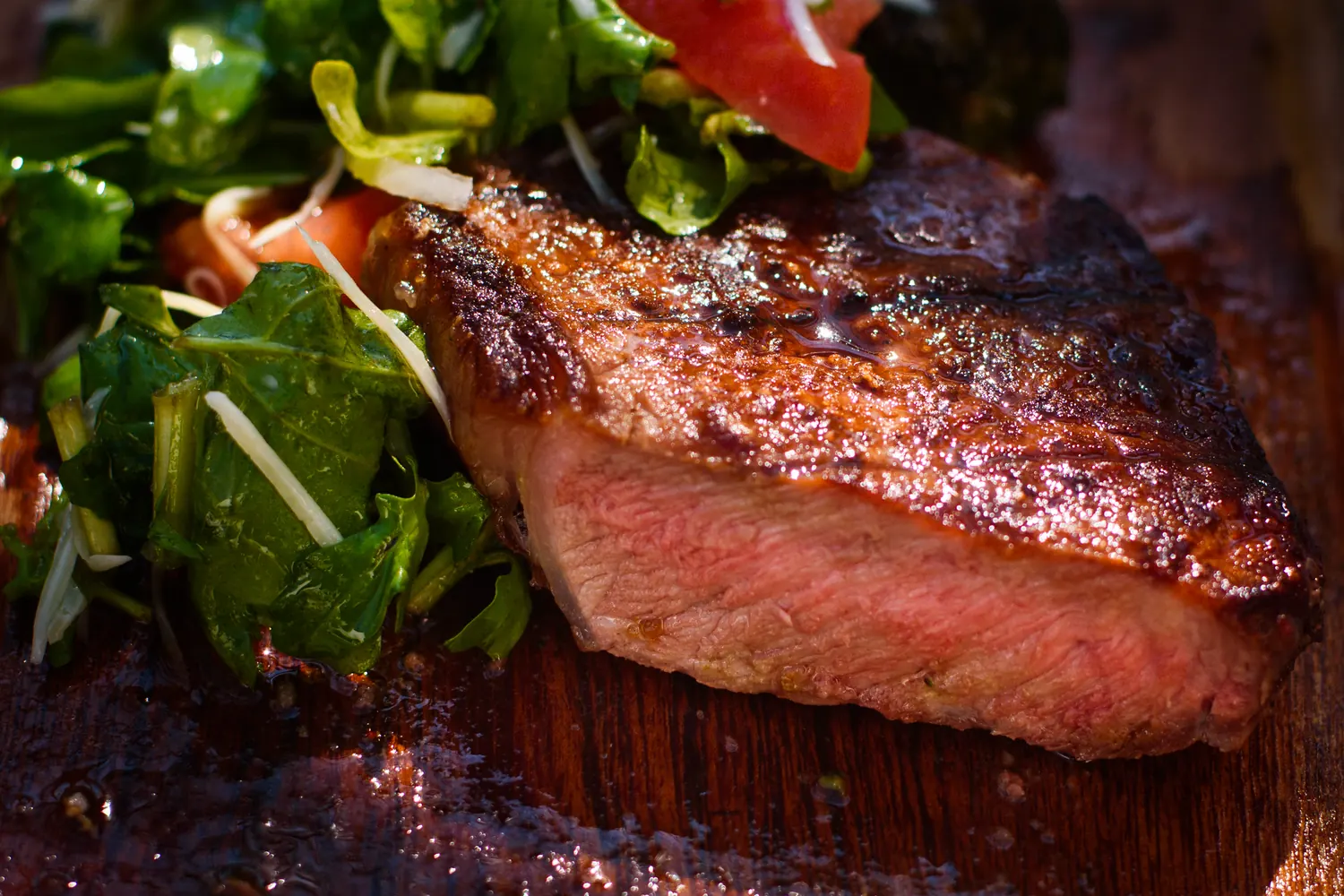
A grilled bife de chorizo steak, pink inside, with green salad on a wooden board Argentina flag Argentina 2h 30m
Dinner •Buenos Aires Parrilla Heritage

Argentine Asado

This argentine asado recipe is the full Sunday parrillada: tira de asado, vacio, entrana and bife de chorizo, plus chorizo, morcilla, mollejas and chinchulines, all cooked slowly over quebracho charcoal embers and seasoned with nothing but coarse salt. It opens with provoleta, grilled provolone with oregano, and the meat is served piece by piece as each cut is ready, with chimichurri and salsa criolla on the table. One serving is about 460 g.

High-Protein & Satisfying

A slow mixed grill of beef cuts, chorizo, morcilla and achuras over quebracho embers, opened with grilled provoleta and served with chimichurri and salsa criolla.

Pairs Well With
Chimichurri, salsa criolla & Malbec
High Protein

The Dinner Gazette

Never wonder what’s for dinner again

One email a week with easy dinner ideas from around the world — ingredients, steps and nutrition, tested in our kitchen first.

Delivered every Thursday morning. Unsubscribe anytime.