-
1
Salt and Stake the Beef
25 Mins
Room temperature, about 22°C (72°F)
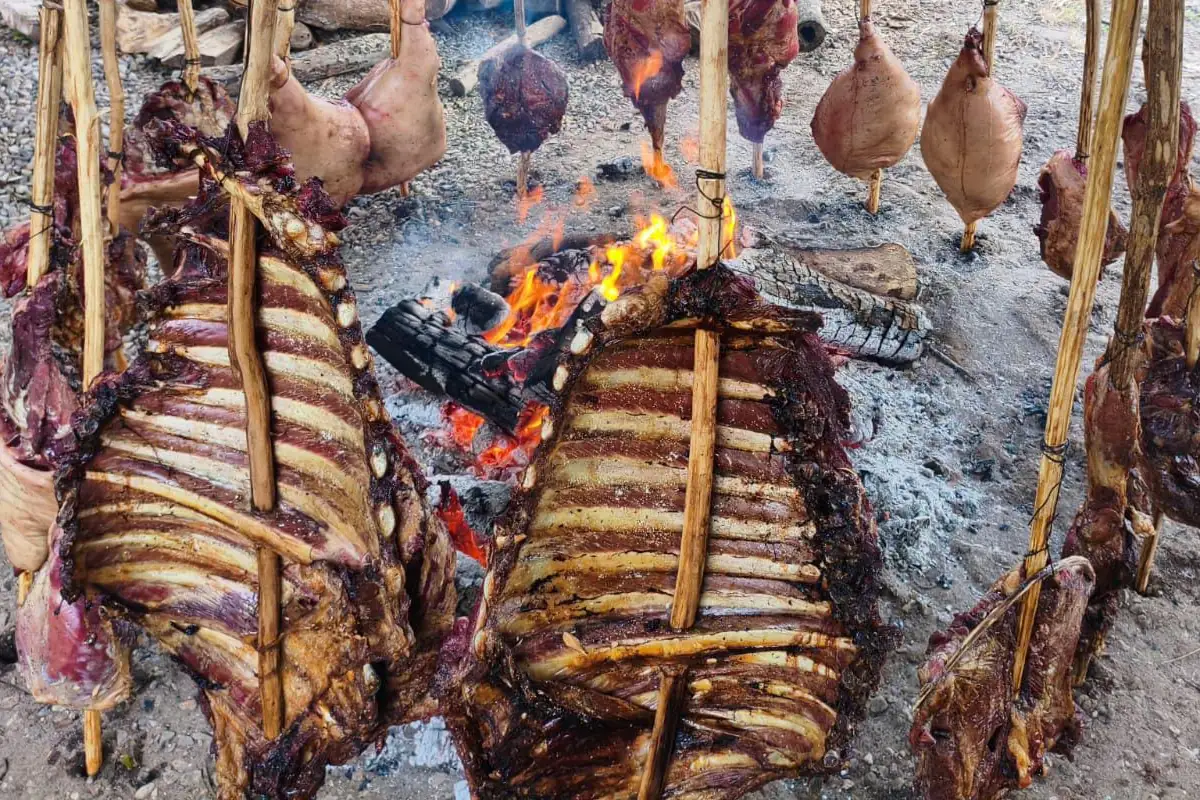
Pat the rib rack completely dry with paper towels, then rub 12 g of coarse sea salt over every surface, pressing it into the meat. Tie the rack firmly to two long, sturdy wooden stakes with kitchen string or wire, bone-side facing out, so it stands upright. If you are using the home version, season the rack the same way and set it on a large roasting rack instead.
Tie the stakes tight — a loose rack slips as the fat renders and the meat shrinks.
Done when: Meat evenly salted, tied firmly, standing upright on its stakes.
-
2
Build the Fire
20 Mins
Fire built to glowing embers, about 200°C (390°F) at the cooking spot
Traditional method: build a hardwood fire on open ground and let it burn down to a bed of glowing embers with lively flames at the edges — the meat roasts beside the fire on radiant heat, never directly over the flames. Home version: light a charcoal grill for indirect heat, piling the coals to one side and aiming for about 150–180°C (300–350°F) on the cool side, and brush the grates with the vegetable oil.
Patience pays here — a fire that is still flaming hard will scorch the outside before the inside cooks.
Done when: A steady bed of embers with flames at the edges; grill holding 150–180°C (300–350°F) on the indirect side.
-
3
Slow-Roast Beside the Fire
3 Hrs 30 Mins
Radiant heat, about 150–180°C (300–350°F); meat to 63°C (145°F)
Stand the staked rack beside the fire, about 60 cm (2 ft) from the embers, leaning slightly toward the heat. Turn the stakes every 30–40 minutes so each side faces the fire in turn, and move the rack closer or further away to keep the heat gentle and even. The meat is ready after 3–4 hours, when the outside is deep golden-brown and crisp and the thickest part reaches at least 63°C (145°F) on a meat thermometer. Home version: set the rack on the indirect side of the grill, lid on, and turn it every 40 minutes for the same time.
This is not a fast steak — do not rush it. Slow, gentle heat is what keeps a whole primal juicy while the outside crisps.
Done when: Deep golden-brown, crisp crust; thickest part at least 63°C (145°F).
-
4
Boil the Yuca and Potatoes
40 Mins
Boiling water, 100°C (212°F)
During the last hour of roasting, put the yuca chunks and whole potatoes in a large pot, cover with cold salted water and bring to a boil. Simmer for 30–40 minutes until the yuca is tender all the way through and a knife slides easily into the potatoes. Drain well and keep warm.
Start the yuca first if your chunks are large — it takes longer than the potatoes.
Done when: Yuca tender and slightly fluffy; potatoes soft right through.
-
5
Grill the Plantains and Make the Ají
15 Mins
Grill heat, about 180°C (350°F)
Lay the whole plantains in their skins at the edge of the fire or on the grill for 10–15 minutes, turning once, until the skins blacken and the flesh inside is soft and sweet. Meanwhile stir the diced tomato, onion, cilantro and chili with the lime juice and the remaining 2 g of salt to make the ají, and let it sit for 10 minutes so the flavours mix.
Do not peel the plantains before grilling — the skin protects the flesh and steams it sweet.
Done when: Plantain skins blackened, flesh soft when pressed; ají bright and juicy.
-
6
Rest and Carve
20 Mins
Resting, about 60°C (140°F)
Lift the rack away from the fire, untie the stakes and rest the meat on a warm board for 15–20 minutes so the juices settle — the temperature will rise a few more degrees as it rests. Carve the meat off the bones and slice it across the grain into generous pieces. Serve on a large platter with the boiled yuca, potatoes, grilled plantains and a bowl of ají on the side.
Cut across the grain, not along it — that is what keeps each slice tender.
Done when: Juices settled; slices juicy with a crisp, golden edge.
auto_awesome Finishing Touches & Plating
Pile the carved beef on a warm platter, scatter a little extra coarse salt over the top if you like, and bring everything to the table at once — the meat, the yuca, the potatoes, the plantains and the ají — so everyone can build their own plate.

 Colombia
2h