
Curated recipes from 193 countries  •  New seasonal Mediterranean issue out now

Overview

Chicken Cordon Bleu

Cordon Bleu, Swiss Chicken Cordon Bleu, Schnitzel Cordon Bleu

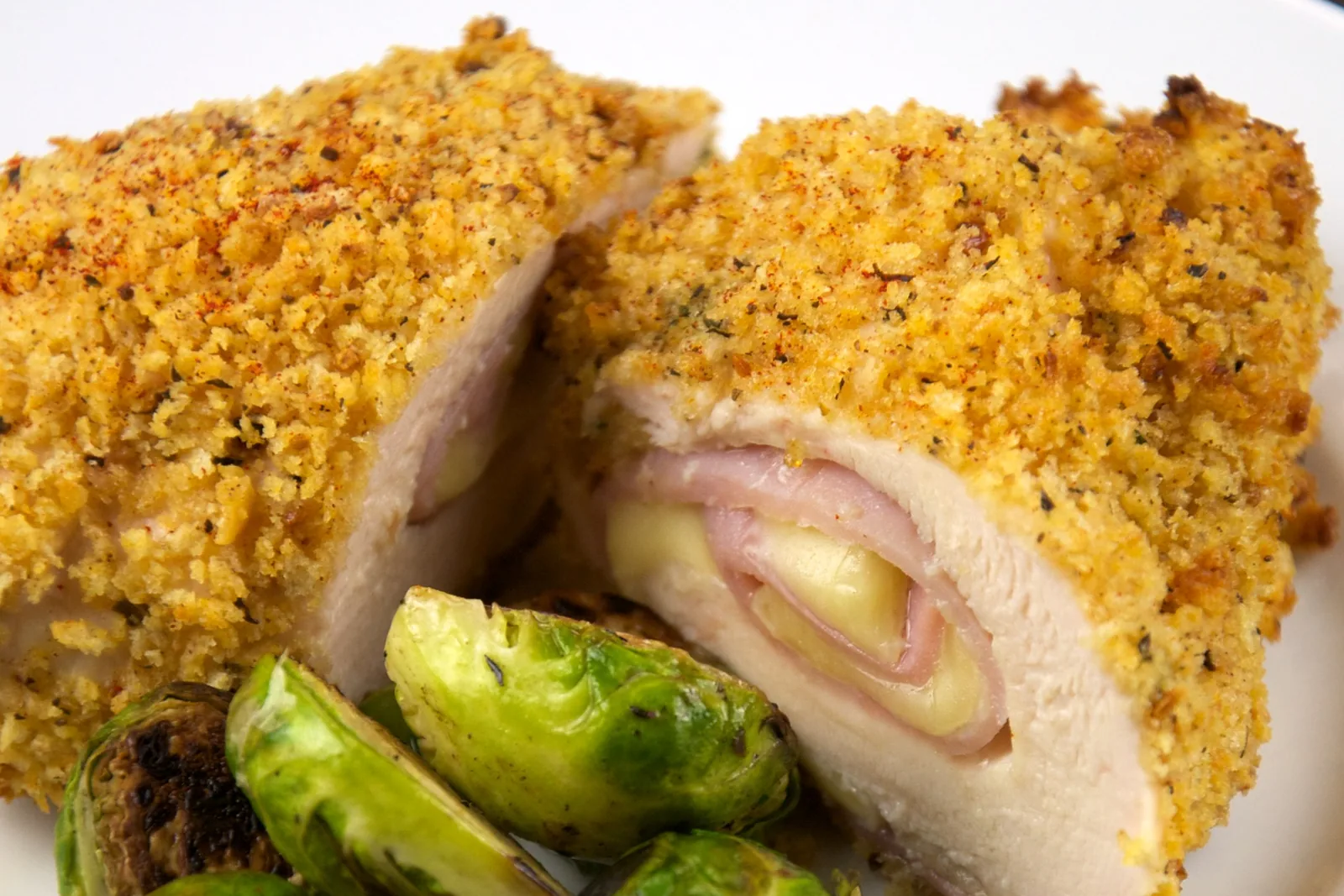
This chicken cordon bleu recipe stuffs butterflied chicken breasts with ham and Emmental cheese, rolls them tight, coats them in flour, egg and panko, and fries them until golden and crisp. One serving is one stuffed breast, about 265 g.

Cordon bleu began in Switzerland, not France: a veal schnitzel stuffed with ham and cheese, said to have been created in Brig in the 1940s and first mentioned in a cookbook in 1949. The chicken version came later, as cooks swapped the veal for the cheaper, milder chicken breast — the earliest reference to chicken cordon bleu appears in The New York Times in 1967. The name means blue ribbon, a mark of the finest cooking, and the dish has stayed a favourite because the combination is so simple: crisp outside, juicy chicken, salty ham and melted cheese inside.

Pairs well with: One sliced cordon bleu with buttered green beans, mashed potatoes and a little Dijon on the side.

Provenance

Switzerland flag Switzerland

Swiss Heritage

Nordic & European

Time Dedication

45m

20m prep • 25m cook

Batch Yield

4 Servings

801 kcal per serving

1 serving ≈ 265 g

Technical Skill

Intermediate

Medium (Frying)

Meal Timing & Digestive Fit

Breakfast

Not Advised

Lunch

Hearty Midday Main

Dinner

Ideal Hearty Main

Snack & Tea

Inappropriate

High Protein Occasions: Family dinners, Sunday lunch, dinner parties, celebration meals Cost: Medium — about $5–6 per serving at home
Chicken cordon bleu sliced open showing ham and melted cheese, with Brussels sprouts

Swiss Heritage

Photo: TheCulinaryGeek, CC BY 2.0, via Wikimedia Commons

The Heritage Formulary

Measured Ingredients

Estimated cost: Medium — about $5–6 per serving at home (USD)

Made the traditional way: chicken pounded thin, layered with ham and Emmental, rolled tight, crumbed in panko and fried until the centre reaches 74°C (165°F).

Execution Methodology & Culinary Technique

Step-by-Step Cooking Guide

Active 45m
P

Prep Stage: Butterfly, Fill & Roll

20 Mins • Butterflying & Rolling

Butterfly each chicken breast and pound flat to about 1 cm thick between sheets of cling film. Season, spread with a little Dijon, and layer a slice of ham and a slice of Emmental inside. Roll up tightly, tucking the ends in, and press the seam closed. Secure with cocktail sticks if needed and chill for 10 minutes so the rolls hold their shape.

Maestro Tip: Pound the chicken evenly — a thin edge cooks before the thick middle, and an even roll fries evenly.

  1. 1

    Bread the Rolls

    5 Mins No heat

    Set up three plates: flour, beaten egg, and panko. Roll each chilled chicken roll in flour and shake off the excess, dip in the egg, then coat generously in panko, pressing the crumbs on firmly so they stick.

    Press the crumbs on with your palm — a loose coat falls off in the pan.

    Done when: Rolls evenly coated in a thick, even layer of panko.

  2. 2

    Fry Until Golden

    15 Mins 175°C (350°F)

    Heat the oil and butter in a wide pan to about 175°C (350°F). Fry the rolls for about 6 to 7 minutes per side until deep golden and crisp, turning once. The chicken inside must reach 74°C (165°F) — check with a thermometer at the thickest part.

    If the crumb browns before the centre is cooked, finish the rolls in a 180°C (350°F) oven for 5 minutes instead of turning the heat up.

    Done when: Deep golden crumb, and the centre reads 74°C (165°F).

  3. 3

    Rest & Slice

    5 Mins No heat

    Lift the rolls onto a rack and rest for 5 minutes so the cheese sets slightly and the juices settle. Pull out any cocktail sticks, slice each roll on the diagonal, and serve at once.

    Resting matters — cutting straight away lets the melted cheese run out onto the plate instead of staying in the roll.

    Done when: A clean diagonal cut showing the spiral of ham and melted cheese.

Finishing Touches & Plating

Rest the cordon bleu for 5 minutes, slice on the diagonal to show the ham-and-cheese spiral, and serve at once while the crumb is still crisp.

Nutritional Physiology & Benefits

Nutrition

Energy

801

kcal / serving

Protein

77g

Complete AA

Carbs

34g

Complex

Fats

37g

Healthy

Per serving (4 servings · 1 serving ≈ 265 g)
Energy801 kcal
Protein77 g
Carbohydrates34 g
Fat37 g
Fibre1.6 g
Sugar1.7 g
Sodium1174 mg
Per 100g
Energy302 kcal
Protein29.1 g
Carbohydrates12.8 g
Fat13.9 g
Fibre0.6 g
Sugar0.6 g
Sodium443 mg

Nutrition values are estimated — calculated from USDA FoodData Central values for the listed ingredients.

Vitamins & minerals: The chicken and cheese supply vitamin B12 and calcium, the egg adds vitamin D and choline, and the mustard adds a little selenium.

Very High in Protein

One serving carries about 77.2 g of protein from the chicken, ham and cheese — one of the highest-protein dishes on the site.

B12, Zinc & Calcium

The chicken and Emmental supply vitamin B12, zinc and calcium in one satisfying portion.

A Classic for a Reason

Crisp crumb, juicy chicken, salty ham and melted cheese in every bite — a combination that has lasted for eighty years.

Food Pairings

What to Eat With

To optimize nutrient absorption and elevate the sensory depth, pair with these authentic accompaniments:

Vegetables

Buttered Green Beans

Buttered green beans are the classic Swiss side, and their snap balances the rich crumb.

Roasted Brussels Sprouts

Roasted Brussels sprouts add a bitter edge that cuts through the cheese and ham.

Sides

Mashed Potatoes

Creamy mash soaks up any cheese that escapes and makes the plate a proper dinner.

Drinks

Dry White Wine

A dry Swiss white wine is the traditional partner for a rich, cheesy chicken dish.

Complete menu

Serve chicken cordon bleu with buttered green beans and mashed potatoes, follow with a light salad, and finish with a lemon tart and coffee.

Digestive Guardrails

What NOT to Combine

To prevent digestive distress, sluggishness, or palate clash, avoid pairing the dish with these elements:

Frying in Oil That Is Too Cool

A cool pan makes the crumb soak up oil and fall off, so fry at a steady 175°C (350°F) and do not crowd the pan. This is general food information, not medical advice.

Loose Rolls That Leak Cheese

Cheese escapes if the roll is not sealed well, so tuck the ends in, press the seam firmly, and chill the rolls before breading. This is general food information, not medical advice.

General information only, not medical advice — consult a doctor for personal dietary decisions.

Who Should Eat It

Who Should Eat

  • General adultsA rich dinner — about 801 kcal, best eaten as the main event with a green vegetable.
  • ChildrenChildren love the crispy outside and melty middle; cut into strips and serve with a dip.
  • ElderlySoft chicken and melted cheese are easy to eat; one piece with vegetables is the comfortable portion.
  • Pregnant womenFine as an occasional dinner when the chicken is cooked right through to 74°C (165°F) and the ham is heated through. Ask your clinician about portions.
  • Breastfeeding womenA protein-rich, energy-dense meal; one piece is enough, as the crumb and cheese are very filling.
  • AthletesExcellent recovery food, with about 77.2 g protein per serving — pair with potatoes or rice and vegetables.
  • Weight gainEnergy-dense and high in protein, so it suits weight gain when served with its usual starchy sides.
  • Weight lossRich at about 801 kcal; eat one piece with a big salad and skip the fries.

Health Conditions — Adjust or Avoid

Conditions

  • DiabetesThe crumb is the main carbohydrate, so keep the portion as stated and fill the plate with vegetables instead of fries. Ask your clinician about portions.
  • High blood pressureOne serving carries about 1174 mg sodium, so keep other salty foods out of the same meal. Ask your clinician about portions.
  • Kidney diseasePortions should stay modest, and the salt and protein content matter for some kidney diets. Ask your clinician about portions.
  • GoutChicken and ham are the main purine sources here, so keep to one modest serving and drink water with the meal. Ask your clinician about portions.
  • Stomach issuesFried and rich, so eat slowly, take a smaller portion, and skip the mustard if it bothers you. Ask your clinician about portions.
  • Cardiovascular diseaseRich in fat and salt, so one modest serving with a big plate of vegetables is a better balance than a second helping. Ask your clinician about portions.
  • Fatty liverThe dish is energy-dense, so keep portions modest and avoid eating it late at night. Ask your clinician about portions.
  • Food allergiesContains egg, wheat (gluten), milk and mustard. People with egg, wheat, milk or mustard allergy should not eat it unless a safe substitute is used. Ask your clinician about safe alternatives.
  • Special therapeutic dietsNot suitable for a low-fat therapeutic diet as written; any lighter version changes the dish and should be discussed with a clinician.

If you have a medical condition, consult your doctor before changing your diet.

Storage & Use

Storage & Use

How to store
Cool quickly and store in a covered container; keep any sauce separate.
In the fridge
Cooked cordon bleu keeps 2 days in the fridge at 4°C (40°F) or below.
In the freezer
Freeze uncooked, breaded rolls for up to 1 month; fry from thawed, never from frozen.
How to reheat
Reheat in a hot oven at 180°C (350°F) for 10 minutes until hot through, to 74°C (165°F); the microwave makes the crumb soggy.
Freezing recommended
Yes — uncooked, breaded rolls.
Signs it has spoiled
Sour smell, slimy crumb, or cheese that has turned grey.

More recipes to explore

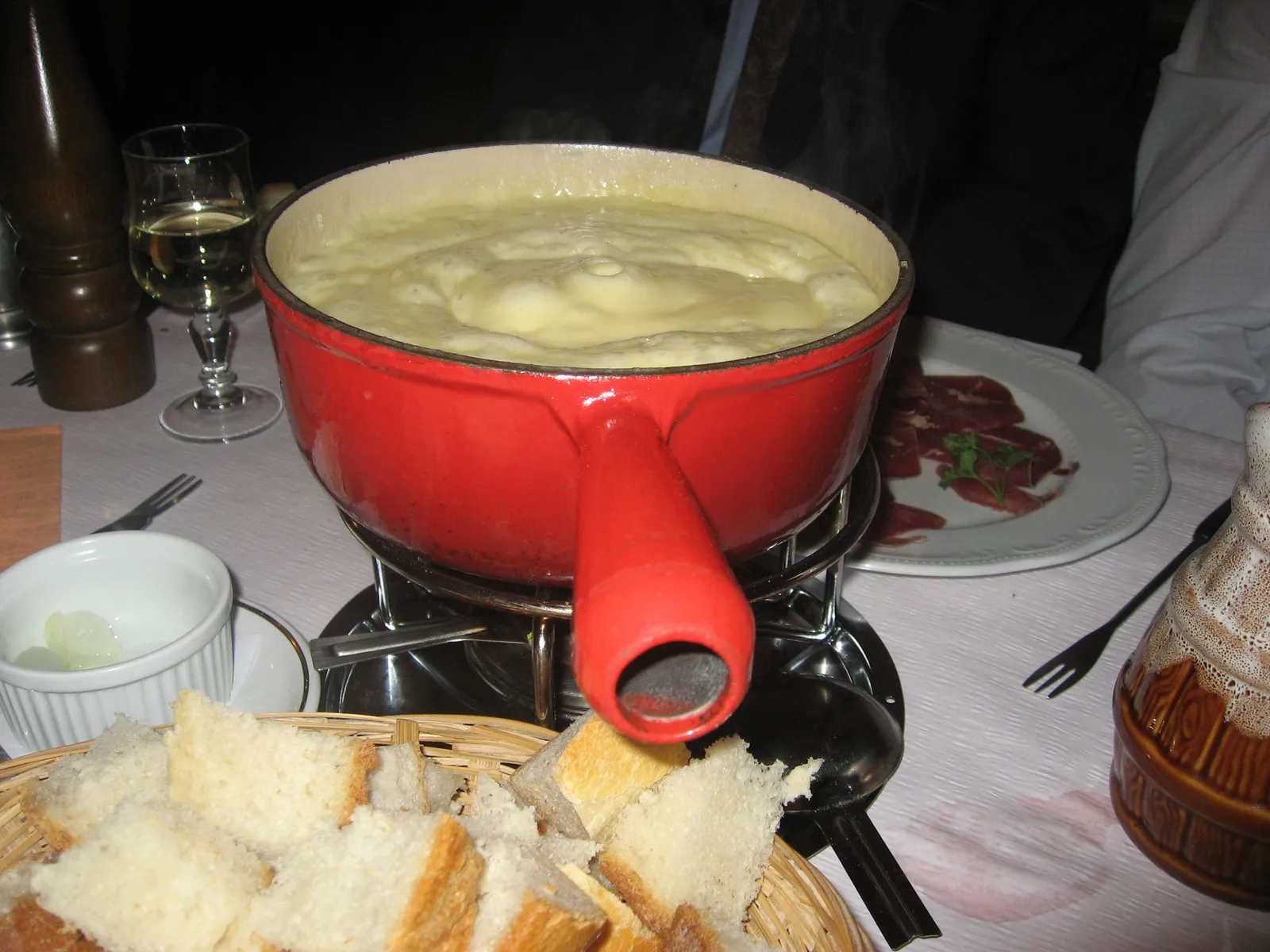
A red fondue pot of melted cheese with bread cubes and a glass of white wine Switzerland flag Switzerland 40m
Dinner •Swiss Alpine Classic

Swiss Cheese Fondue

Swiss cheese fondue is the Alps in a pot: Gruyere and Emmental melted slowly into dry white wine with garlic and a splash of kirsch, kept warm at the table while everyone dips cubes of bread into the bubbling cheese. One serving is about 310 g.

Comfort & Togetherness

Gruyere and Emmental melted in white wine, shared from one pot.

Pairs Well With
Cubes of crusty bread, boiled potatoes and cornichons on the side
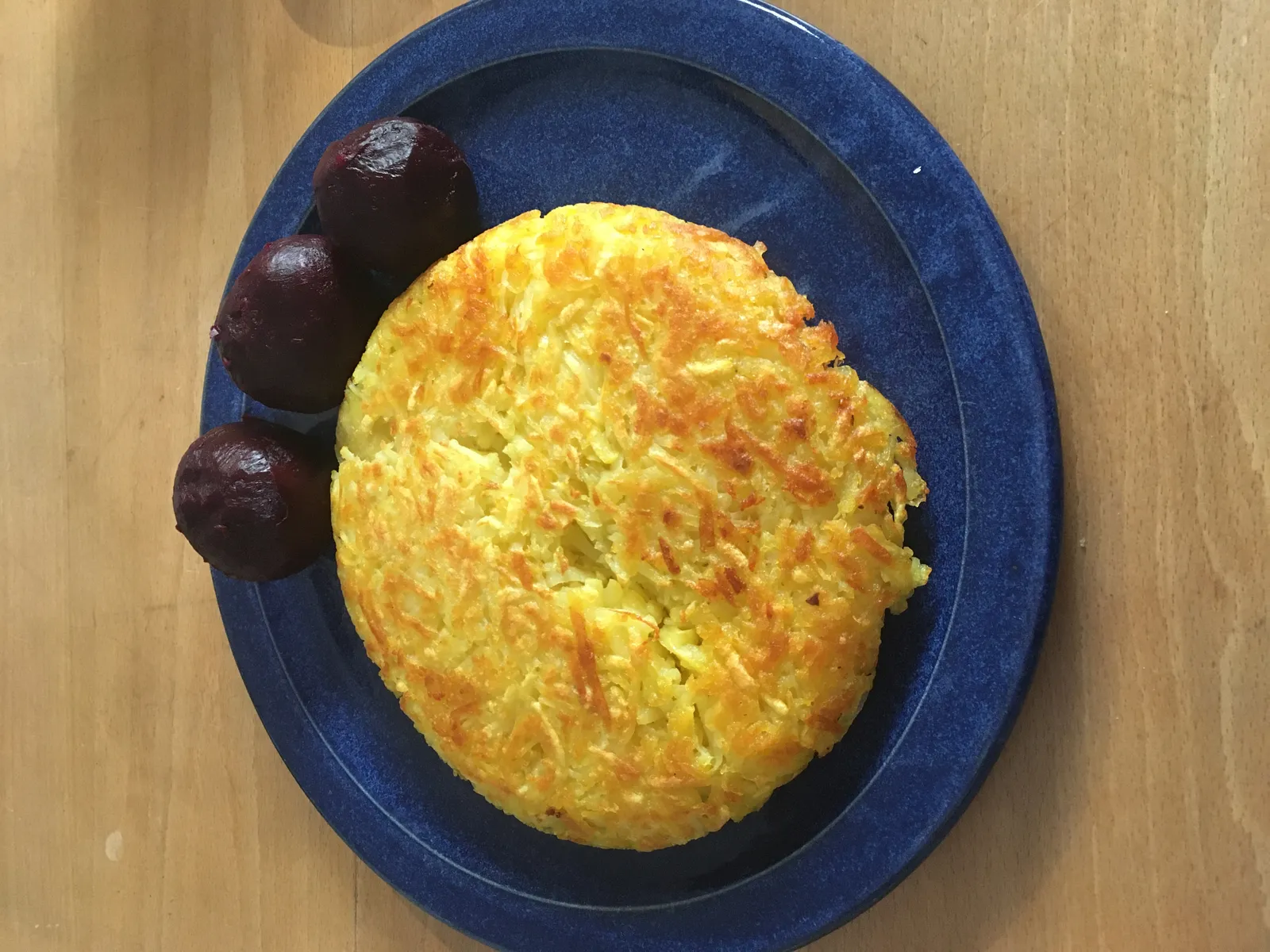
A large golden rosti potato cake on a blue plate Switzerland flag Switzerland 40m
Lunch •Bernese Farmhouse Classic

Rösti

Rösti is Switzerland's crisp potato cake: grated potato pressed into one large golden disc and fried in butter until the outside shatters and the inside stays soft, then topped with a fried egg. One serving is about 240 g.

Simple & Satisfying

One large crisp cake of grated potato, pan-fried in butter and topped with a fried egg.

Pairs Well With
A fried egg on top and a simple green salad with sharp vinaigrette
Quick Prep (<30m)
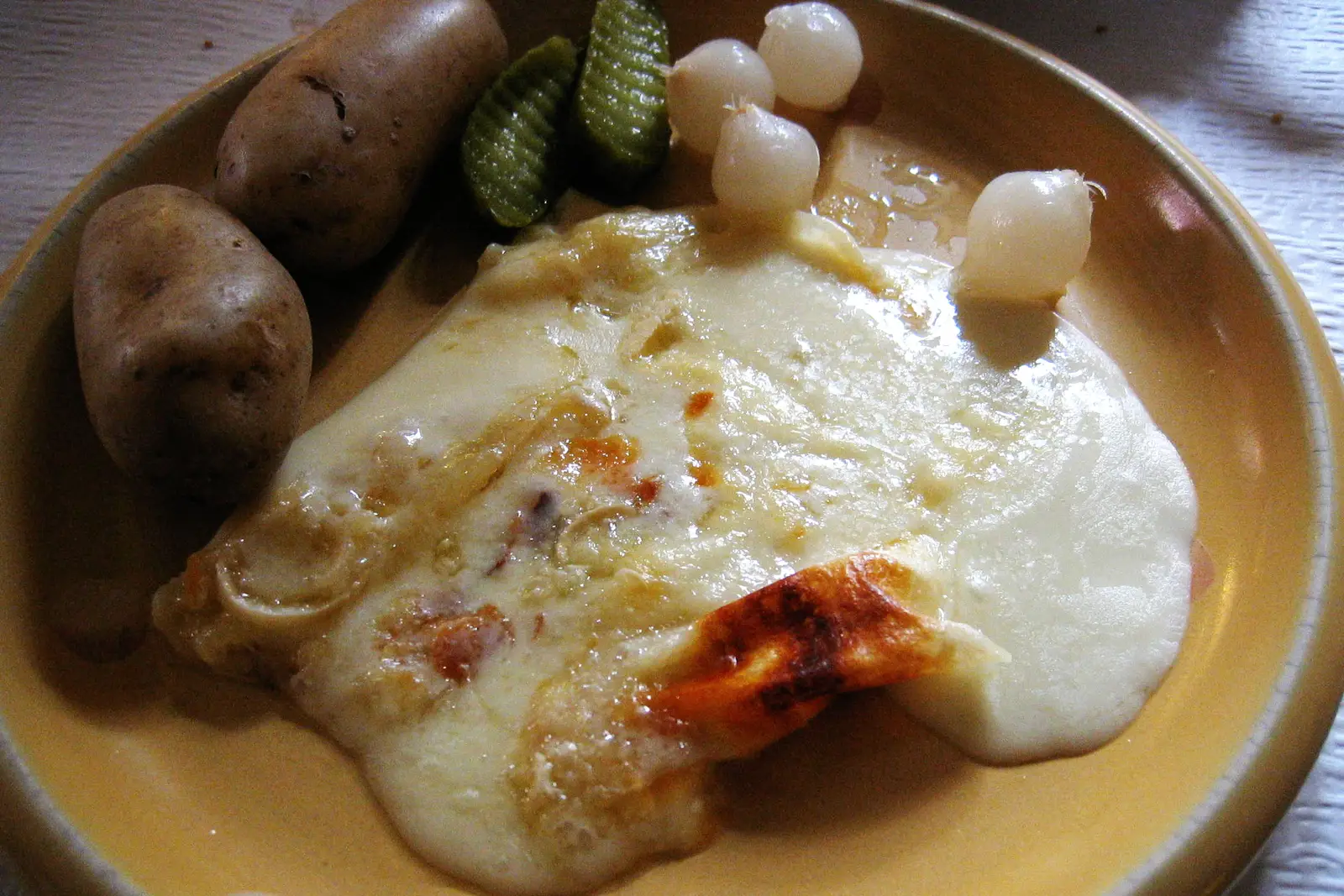
Melted raclette cheese scraped over a plate with boiled potatoes and pickles Switzerland flag Switzerland 40m
Dinner •Valais Alpine Classic

Raclette

Raclette is the Swiss Alps' other great melted-cheese meal: a half-wheel of raclette cheese is warmed until the cut face bubbles, then scraped in ribbons over boiled potatoes, with cornichons and pickled onions to cut the richness. One serving is about 365 g.

Comfort & Togetherness

Melted raclette cheese scraped over boiled potatoes with pickles.

Pairs Well With
Boiled potatoes, cornichons, pickled onions and a green salad
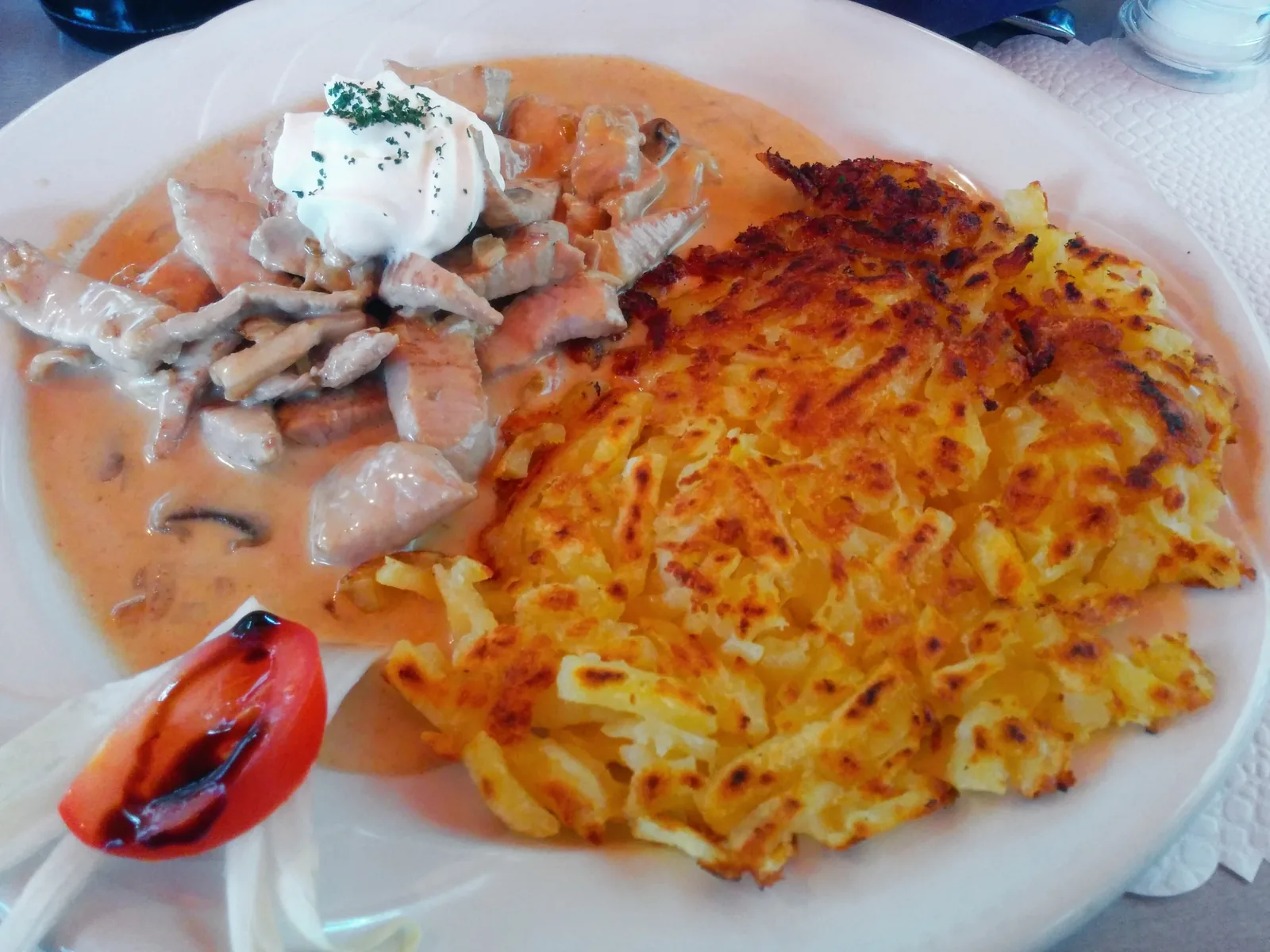
A plate of Zürcher Geschnetzeltes — veal strips in cream sauce with a dollop of cream — beside golden rösti. Switzerland flag Switzerland 40m
Dinner •Zurich Classic

Zürcher Geschnetzeltes

Zürcher Geschnetzeltes is Zurich's signature dish: thin strips of veal quickly seared, then finished in a white-wine and cream sauce with mushrooms and onion. One serving is about 335 g, before the rösti it is traditionally served with.

Rich & Comforting

Tender strips of veal in a white-wine cream sauce with mushrooms — Zurich's classic, with rösti.

Pairs Well With
Serve with golden rösti and a glass of dry Swiss white wine.
High Protein

The Dinner Gazette

Never wonder what’s for dinner again

One email a week with easy dinner ideas from around the world — ingredients, steps and nutrition, tested in our kitchen first.

Delivered every Thursday morning. Unsubscribe anytime.