
Curated recipes from 193 countries  •  New seasonal Mediterranean issue out now

Overview

Christmas Stollen

Dresdner Christstollen, Dresden Stollen

This Christmas stollen recipe makes Dresden's classic fruit bread: a buttery yeasted loaf packed with rum-soaked raisins, currants, candied citrus peel and almonds, wrapped around a marzipan centre and buried under snowy icing sugar. It is baked once, rested for a day so the flavours settle, then sliced thin with coffee or mulled wine. One serving is about 125 g.

Stollen was first recorded in Dresden in 1474 as a plain Advent loaf, made without butter because the church banned butter and milk during Advent. In 1491 Pope Innocent VIII issued the Butter Letter allowing butter in the dough, and the rich loaf we know today took shape. Dresden's bakers still guard the recipe, and Dresdner Christstollen holds protected geographical indication status in the European Union.

Pairs well with: Serve thin slices with coffee, black tea or mulled wine, and a little extra butter if you like.

Provenance

Germany flag Germany

Dresden Christmas Classic

Nordic & European

Time Dedication

3h 55m

180m prep • 55m cook

Batch Yield

12 Servings

500 kcal per serving

1 serving ≈ 125 g

Technical Skill

Intermediate

Medium (Yeasted Loaf)

Meal Timing & Digestive Fit

Breakfast

Not Advised

Lunch

Inappropriate

Dinner

Inappropriate

Snack & Tea

Ideal Light Bite

Occasions: Christmas, Advent, Christmas markets, festive breakfasts, gifts Cost: Low — about $1–2 per serving at home
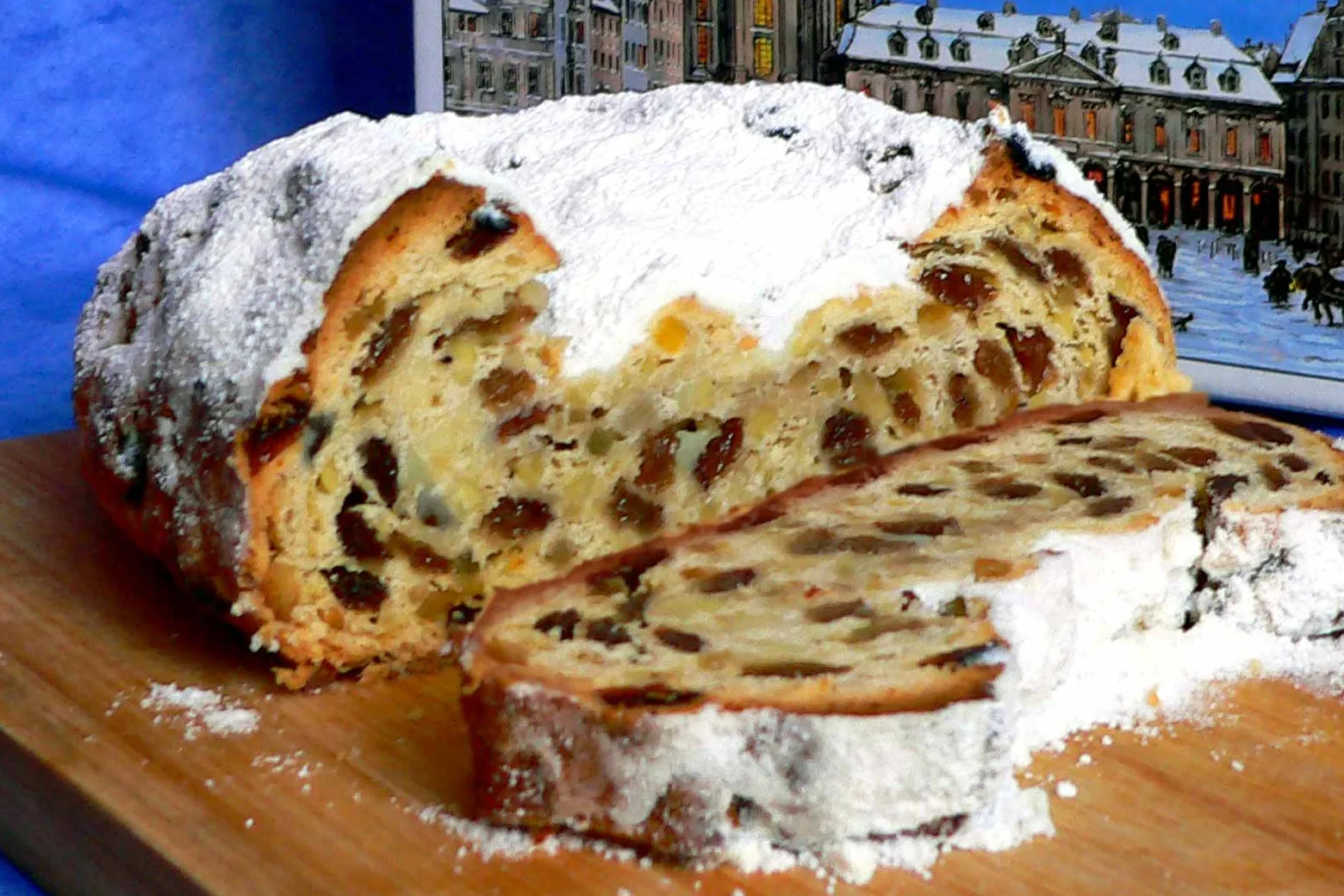
A sugar-dusted Christmas stollen loaf on a wooden board, cut open to show raisins and candied peel, with one slice in front

Dresden Christmas Classic

Photo: Gürgi, Public domain, via Wikimedia Commons

The Heritage Formulary

Measured Ingredients

Estimated cost: Low — about $1–2 per serving at home (USD)

A good stollen is dense but not heavy, studded with plump fruit, with a soft marzipan centre and a thick snowy sugar coat — never dry, and never underbaked in the middle.

Execution Methodology & Culinary Technique

Step-by-Step Cooking Guide

Active 3h 55m
P

Prep Stage: Soak, Mix, Knead

30 Mins active + overnight soak and 2 hours rising • Large Bowl & Baking Tray

The night before, put the raisins and currants in a bowl with the rum and leave them to soak. On baking day, warm the milk, dissolve the yeast in it, then mix and knead the dough with the butter, sugar, egg, zest and spices until smooth. Fold in the soaked fruit, peel and almonds last so they stay whole.

Maestro Tip: Soak the fruit the night before; the dough itself takes about 30 minutes of hands-on work.

  1. 1

    Soak the fruit overnight

    5 minutes + overnight Room temperature, about 20°C (68°F)

    Put the raisins (150 g) and currants (50 g) in a small bowl, pour over the dark rum (40 g), cover and leave overnight. The fruit plumps up and stays juicy in the oven instead of drying out and burning.

    If you forgot to soak, warm the rum and fruit together for 2 minutes and leave for 30 minutes.

    Done when: Fruit plump and soft, most of the rum absorbed.

  2. 2

    Make and knead the dough

    20 minutes Room temperature, about 20°C (68°F)

    Warm the milk (150 g) to about 35°C (95°F) and crumble in the fresh yeast (25 g). Put the flour (500 g), caster sugar (80 g), salt (5 g), cinnamon (3 g) and lemon zest (10 g) in a large bowl, add the yeasty milk, the beaten egg (50 g) and vanilla (5 g), and mix to a shaggy dough. Knead in the softened butter (150 g) a little at a time until the dough is smooth and elastic, about 10 minutes by hand or 6 minutes in a mixer. Fold in the drained fruit, candied peel (80 g) and almonds (80 g) until evenly spread.

    The dough is meant to be soft and a little sticky; resist adding much extra flour or the loaf turns dry.

    Done when: Smooth dough that springs back when poked; fruit evenly mixed through.

  3. 3

    Shape the loaf around the marzipan

    15 minutes + 90 minutes rising Warm place, about 25°C (77°F)

    Pat the dough into a rectangle about 30 cm by 20 cm. Lay the marzipan log (150 g) along the centre, fold the dough over it and pinch the seam shut. Shape into the classic stollen hump: one side higher than the other, like a loaf folded over on itself. Cover and leave to rise in a warm place for about 90 minutes until puffy.

    Seal the marzipan in fully, or it will leak out and burn on the tray.

    Done when: Loaf risen by about half, soft and puffy to the touch.

  4. 4

    Bake until deep golden

    55 minutes 180°C (350°F)

    Heat the oven to 180°C (350°F). Bake the loaf on a lined tray for 50 to 55 minutes until deep golden brown. If it colours too fast, tent it loosely with foil after 30 minutes. It is done when the base sounds hollow when tapped and a skewer in the centre comes out clean, with an internal temperature of about 93°C (200°F).

    Stollen is dense, so trust the skewer test over the clock; underbaked centres stay doughy.

    Done when: Deep golden crust, hollow tap, clean skewer, about 93°C (200°F) inside.

  5. 5

    Butter, sugar and rest

    10 minutes + 24 hours resting Room temperature, about 20°C (68°F)

    While the loaf is still warm, brush it all over with the melted butter (50 g), then dust thickly with half the icing sugar (30 g). When it is cold, dust again with the remaining icing sugar (30 g) so the loaf looks snow-covered. Wrap tightly and rest for at least 24 hours before slicing so the crumb settles and the flavours mellow.

    The butter seals the crumb and the sugar coat is what keeps a stollen fresh for weeks.

    Done when: Loaf fully coated in white sugar, cool and firm enough to slice thin.

Finishing Touches & Plating

Slice the stollen thin with a sharp serrated knife, wiping the blade between cuts so the sugar coat stays neat. Serve at room temperature, when the marzipan centre is soft and the fruit tastes its best.

Nutritional Physiology & Benefits

Nutrition

Energy

500

kcal / serving

Protein

9g

Complete AA

Carbs

70g

Complex

Fats

21g

Healthy

Per serving (12 servings · 1 serving ≈ 125 g)
Energy500 kcal
Protein9 g
Carbohydrates70 g
Fat21 g
Fibre3.5 g
Sugar31.9 g
Sodium181 mg
Per 100g
Energy400 kcal
Protein6.8 g
Carbohydrates56.4 g
Fat16.8 g
Fibre2.8 g
Sugar25.5 g
Sodium145 mg

Nutrition values are estimated — calculated from USDA FoodData Central values for the listed ingredients.

Vitamins & minerals: Vitamin E and magnesium from the almonds, iron and potassium from the raisins and currants, and B vitamins from the flour and yeast. Nutrition values are estimated.

Slow, steady energy

Each slice carries about 70.4 g of carbohydrate from the flour and dried fruit, which is why stollen has always been a filling festive snack rather than a light one.

Almonds and dried fruit

The almonds bring vitamin E and magnesium, and the raisins and currants add iron and potassium, so the loaf carries more nutrients than a plain sweet bread.

Keeps without preservatives

Butter, sugar and a long rest give stollen its famous shelf life, so one bake covers the whole Christmas week with no additives needed.

Food Pairings

What to Eat With

To optimize nutrient absorption and elevate the sensory depth, pair with these authentic accompaniments:

Drinks

Coffee

Strong black coffee cuts through the butter and sugar and makes the fruit flavours stand out.

Mulled wine

Warm spiced wine echoes the cinnamon and citrus in the loaf and is the classic Dresden Christmas-market pairing.

Sides

Butter and jam

A thin spread of butter, or a little sharp jam, balances the sweetness of a slice that is already rich.

More Pairings

A cheese board

A mild cheese with a slice of stollen turns it into a proper afternoon snack, the way it is often served in Saxony.

Full Menus

Christmas breakfast table

Thin slices of stollen with coffee, fruit and eggs make a festive breakfast that feeds a crowd from one loaf.

Complete menu

Thin slices of stollen with strong coffee or mulled wine, followed by a light cheese board, make a complete festive afternoon table.

Digestive Guardrails

What NOT to Combine

To prevent digestive distress, sluggishness, or palate clash, avoid pairing the dish with these elements:

Slicing it warm

Cutting stollen while it is still warm crumbles the crumb and squeezes out the marzipan. Wait until it is fully cold, ideally the next day. This is general information, not medical advice.

Skipping the sugar coat

The butter and icing sugar seal the loaf; without them it dries out within days and the fruit hardens. This is general information, not medical advice.

General information only, not medical advice — consult a doctor for personal dietary decisions.

Who Should Eat It

Who Should Eat

  • General adultsOne thin slice is a rich festive snack; it is very filling, so a second slice is rarely needed.
  • ChildrenChildren usually love the sweet fruit and marzipan, but keep slices small because of the sugar, and note that the rum is mostly baked off, not entirely gone.
  • ElderlySoft, easy to chew when sliced thin, but the sugar and dried fruit make it a treat rather than an everyday bread.
  • Pregnant womenThe small amount of rum is largely baked off, but anyone avoiding alcohol entirely should use the orange-juice soak instead and ask their clinician.
  • Breastfeeding womenFine in small slices as an occasional treat; the energy and sugar are high, so it is not an everyday snack.
  • AthletesA dense, carbohydrate-rich snack that works as quick energy after training, though it is high in sugar and fat.
  • Weight gainAt about 500 kcal a slice, stollen is an easy way to add energy, but it is mostly sugar and fat rather than protein.
  • Weight lossEnjoy one thin slice and stop there; the sugar and butter make it very easy to eat far more calories than planned.

Health Conditions — Adjust or Avoid

Conditions

  • DiabetesOne slice carries about 70.4 g of carbohydrate and 31.9 g of sugar, so it raises blood sugar quickly. Keep to a thin slice, eat it with protein such as cheese, and ask your clinician about portion size.
  • High blood pressureSodium is modest at about 181 mg a slice, but the loaf is sweet and buttery, so keep portions small and ask your clinician.
  • Kidney diseaseDried fruit and almonds are high in potassium, which matters for some kidney diets. Keep to a small slice and ask your clinician.
  • GoutStollen contains no meat or seafood, so purines are low; the concern is the sugar, which can raise uric acid if eaten often. Keep it occasional and ask your clinician.
  • Stomach issuesThe rich butter, dried fruit and citrus peel can be hard on a sensitive stomach. A small slice with tea is usually better tolerated; ask your clinician if unsure.
  • Cardiovascular diseaseButter and sugar are the main concern here, with about 21.0 g of fat per slice. Treat it as an occasional festive food and ask your clinician.
  • Fatty liverThe sugar load, about 31.9 g a slice, is the issue for fatty liver. Keep slices thin and occasional, and ask your clinician.
  • Food allergiesContains wheat (gluten), milk, egg, almonds and marzipan (almonds). The fruit is soaked in rum. Anyone with a nut, gluten, egg or dairy allergy should not eat it; ask your clinician.
  • Special therapeutic dietsThis is a high-sugar, high-fat festive bread that does not fit low-sugar, low-fat or gluten-free plans as written. Ask your clinician or dietitian before including it.

If you have a medical condition, consult your doctor before changing your diet.

Storage & Use

Storage & Use

How to store
Cool completely, then wrap tightly in foil and then in a tea towel or bag to keep the sugar coat intact.
In the fridge
No need to refrigerate; keep at cool room temperature for up to 3 weeks.
In the freezer
Freezes well for up to 3 months, wrapped tightly; thaw overnight at room temperature, still wrapped.
How to reheat
No reheating needed; if you like it warm, heat a slice gently in a low oven at 150°C (300°F) for 5 minutes.
Freezing recommended
Yes — it freezes very well and slices neatly from frozen once partly thawed.
Signs it has spoiled
Mould on the cut surface, a sour or rancid smell from the butter, or fruit that has gone hard and dry — discard if any appear.

More recipes to explore

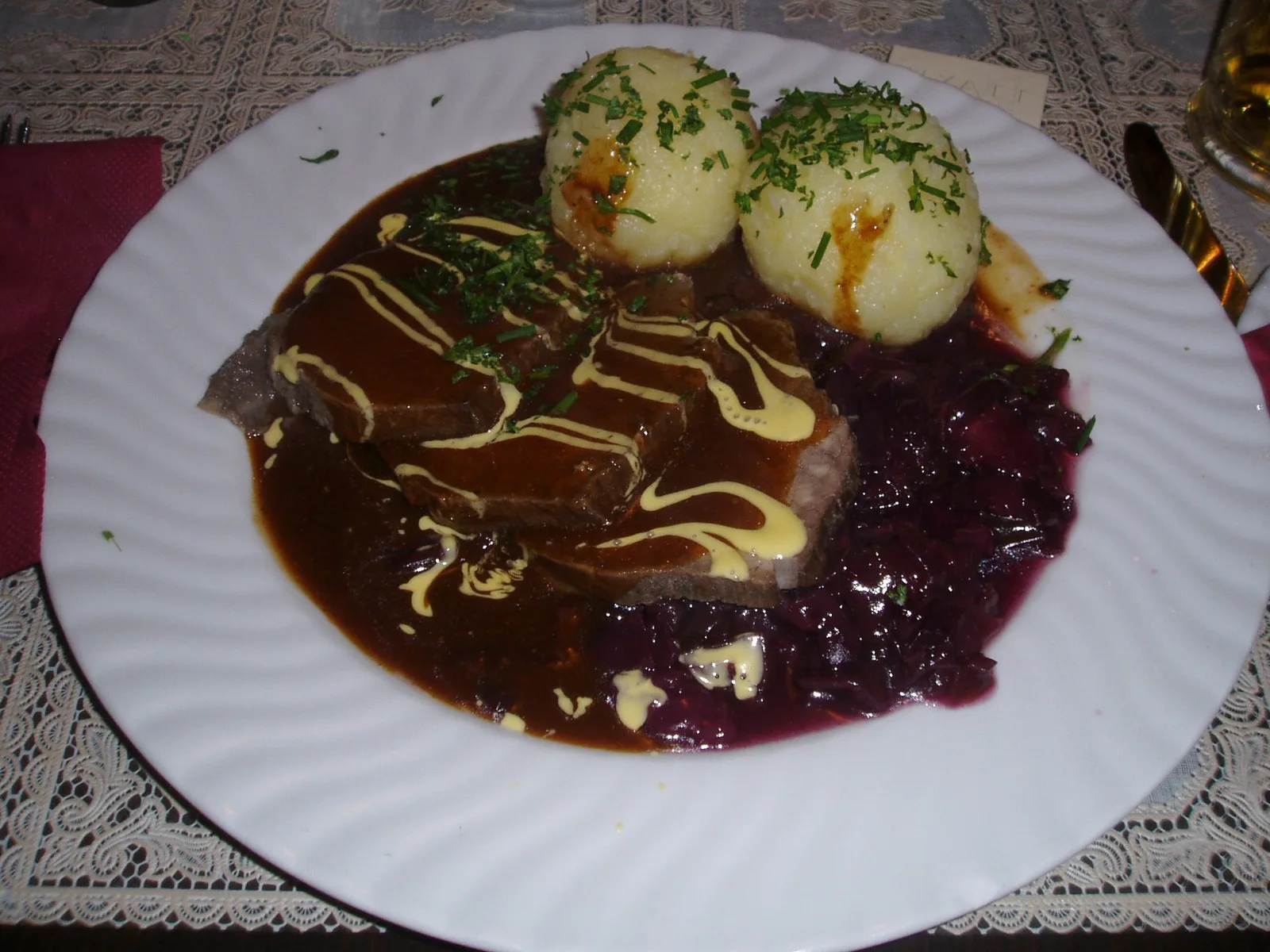
Sliced sauerbraten in dark sweet-sour gravy with potato dumplings and braised red cabbage on a white plate Germany flag Germany 3h 30m
Dinner •Rhineland Heritage

Sauerbraten

This sauerbraten recipe starts with a beef chuck roast steeped for three days in red wine vinegar, red wine and warm spices, then braised slowly until it slices like butter. The marinade becomes a dark, sweet-sour gravy thickened with crushed gingersnaps and studded with raisins, the Rhineland way. One serving is about 300 g, with gravy.

Comfort & Warmth

A slow-braised German pot roast in a sweet-sour vinegar gravy, sliced thick and served hot with potato dumplings and red cabbage.

Pairs Well With
Potato dumplings, braised red cabbage & a glass of Spätburgunder
High Protein
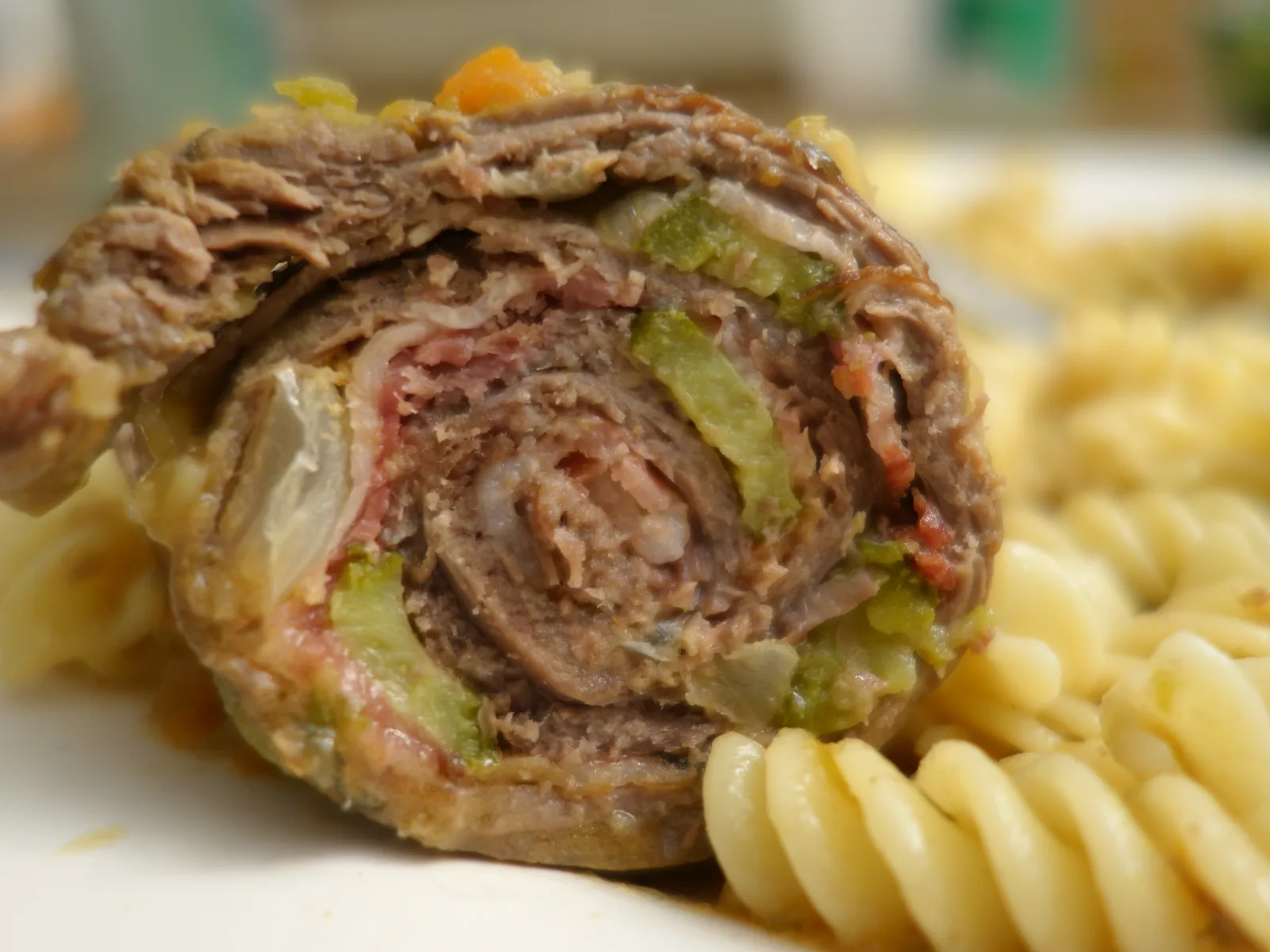
A sliced German beef roulade showing the spiral of beef, bacon and dill pickle, served with pasta Germany flag Germany 2h 10m
Dinner •German Sunday Heritage

Rouladen

This rouladen recipe spreads thin slices of top round with mustard, then rolls them around smoky bacon, dill pickles and onion into neat parcels. The rolls are browned, then braised slowly in red wine and beef stock until tender, and the braising liquid becomes a rich gravy. One serving is about 375 g — two rolls with gravy.

Comfort & Warmth

Thin beef rolls stuffed with bacon, dill pickle and onion, braised in red wine gravy and served hot with dumplings.

Pairs Well With
Potato dumplings, braised red cabbage & a German lager
High Protein
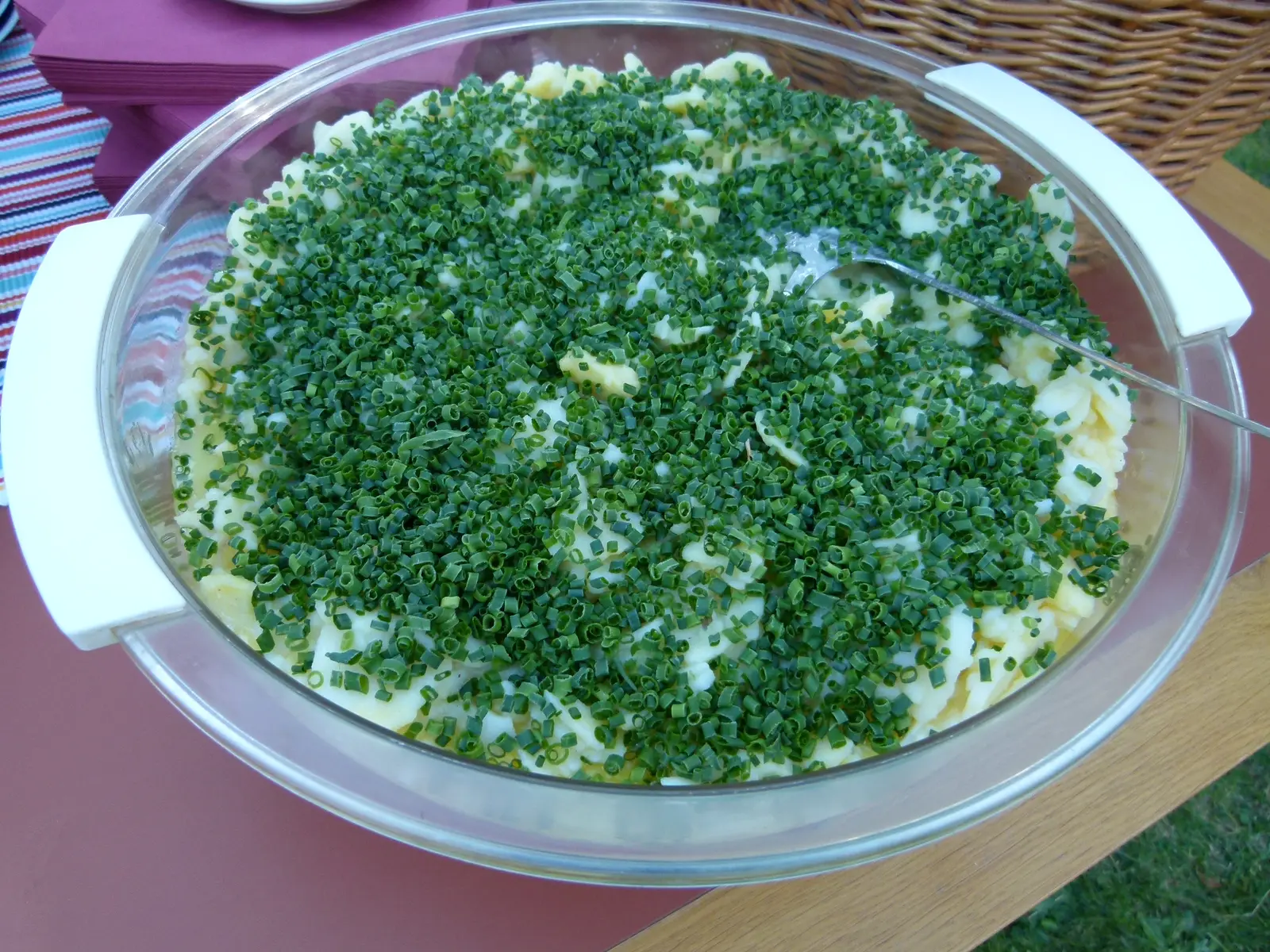
A glass bowl of warm Swabian potato salad topped with chopped chives Germany flag Germany 45m
Lunch •Swabian Heritage

German Potato Salad

This german potato salad recipe is the warm Swabian kind: waxy potatoes sliced while still hot, tossed with crisp bacon, soft onion and sliced egg, then dressed with hot beef stock, vinegar and mustard so every slice drinks up the tangy dressing. No mayonnaise anywhere — the potatoes stay light, glossy and warm. One serving is about 292 g.

Comfort & Warmth

Warm waxy potatoes in a bacon, mustard and vinegar dressing, served straight from the bowl while still steaming.

Pairs Well With
Grilled sausages, schnitzel & a cold German lager
Quick Prep (<30m)
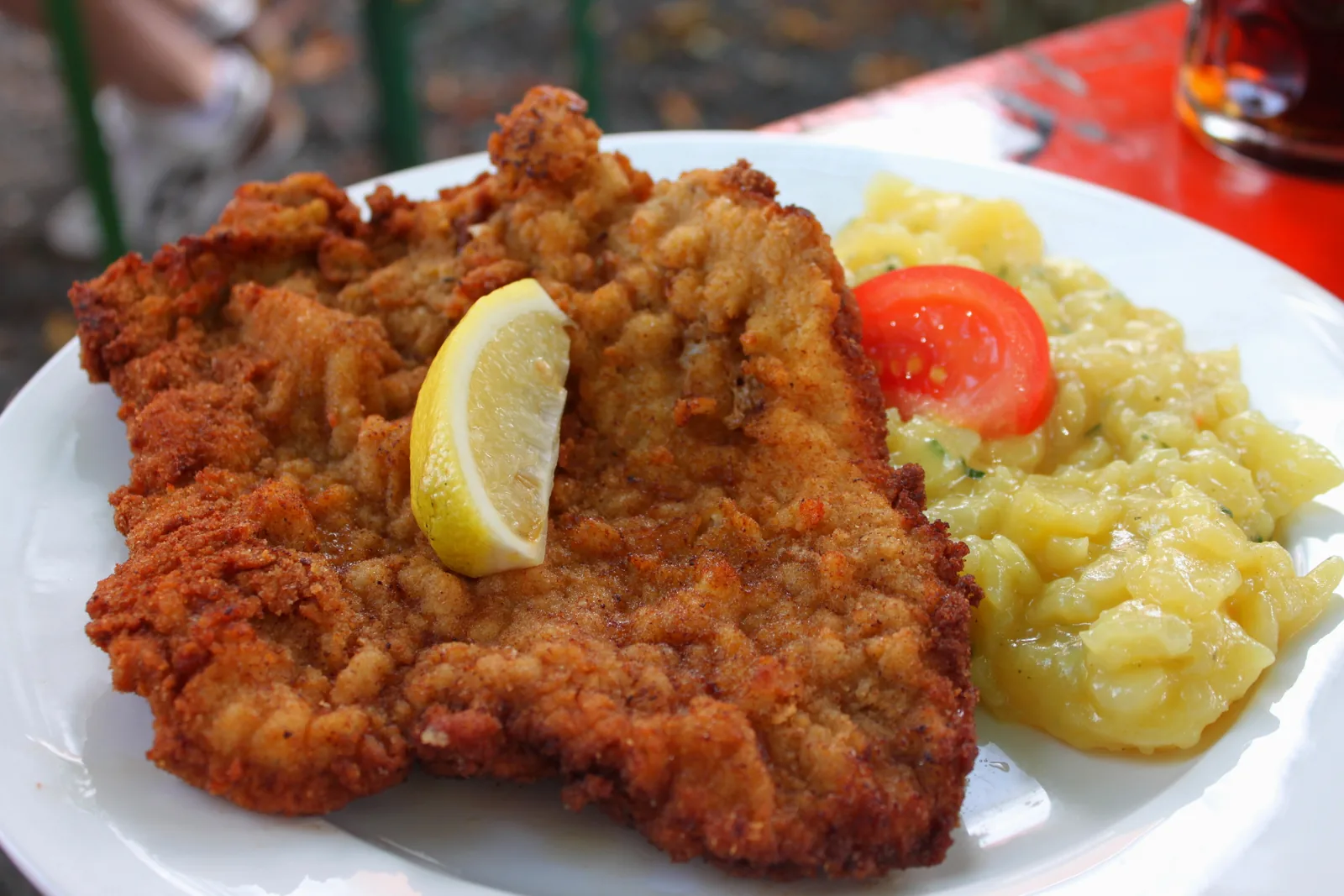
Golden breaded pork schnitzel with a lemon wedge and potato salad on a white plate Germany flag Germany 40m
Dinner •German Heritage

German Pork Schnitzel

German pork schnitzel is the everyday hero of German cooking: a pork cutlet pounded thin, coated in flour, egg and breadcrumbs, and fried in butter until it turns deep golden and crisp. This german schnitzel recipe follows the German way — real pork, a loose crumb, and a wedge of lemon on the side, with potato salad to mop up. One serving is about 200 g.

Classic Comfort

A golden, crisp pork cutlet with lemon and potato salad — a satisfying, protein-rich German dinner.

Pairs Well With
Warm potato salad, cucumber salad and a cold lager.
High Protein

The Dinner Gazette

Never wonder what’s for dinner again

One email a week with easy dinner ideas from around the world — ingredients, steps and nutrition, tested in our kitchen first.

Delivered every Thursday morning. Unsubscribe anytime.