-
1
Cut and marinate the rabbit
15 minutes active + 3 hours marinating
Fridge-cold, about 4°C (39°F)
Rinse the rabbit pieces, pat them very dry with kitchen paper, and put them in a glass or ceramic dish. Rub in 4 crushed garlic cloves, the oregano, half the salt, the peppercorns and a tablespoon of the vinegar. Cover and refrigerate for 3 to 4 hours, turning the pieces once halfway through.
Do not marinate in metal: the vinegar reacts with it and can give the meat a tinny taste. Dry meat browns; wet meat steams.
Done when: The pieces smell lightly of garlic and vinegar and feel tacky to the touch; keep them cold the whole time.
-
2
Brown the rabbit
10 minutes
Medium-high heat, about 190°C (375°F)
Heat the olive oil in a large, heavy pot over medium-high heat. Lift the rabbit out of the marinade, letting the excess drip off, and brown the pieces in batches for 3 to 4 minutes on each side. Do not crowd the pot. Set the browned pieces aside on a plate.
Leave the pieces alone once they hit the pan; moving them stops the crust forming. Brown in two batches if your pot is small.
Done when: Deep golden on all sides, with browned bits stuck to the bottom of the pot — that is flavour for the sauce. The meat is not cooked through yet; the simmer finishes it.
-
3
Soften the vegetables
8 minutes
Medium heat, about 160°C (320°F)
Lower the heat to medium. In the same pot, cook the sliced onions, carrots, green pepper and the 2 chopped garlic cloves for about 5 minutes, stirring and scraping up the browned bits, until the onions turn translucent. Stir in the cumin and paprika and cook for 30 seconds more.
If the paprika catches and smells bitter, it has burned: wipe the pot and start this step again with fresh paprika.
Done when: Onions translucent, carrots just starting to bend, and the paprika fragrant but not scorched.
-
4
Build the escabeche and simmer
40 minutes
Gentle simmer, about 95°C (200°F)
Return the rabbit to the pot and tuck the bay leaves between the pieces. Pour in the red wine vinegar, white wine and water, and add the remaining salt. The liquid should come about two-thirds of the way up the rabbit; add a splash more water if it looks short. Bring to a gentle simmer, cover, and cook on low for 35 to 40 minutes, turning the pieces once, until the rabbit is tender.
Keep it at the barest simmer, with only a few bubbles breaking the surface. A hard boil toughens rabbit and clouds the sauce.
Done when: The meat yields easily when pressed and pulls cleanly from the bone; a thermometer in the thickest piece reads at least 74°C (165°F). The sauce tastes bright and sharp.
-
5
Rest and serve hot or cold
10 minutes
Serving temperature, about 70°C (160°F) hot, or chilled, about 4°C (39°F)
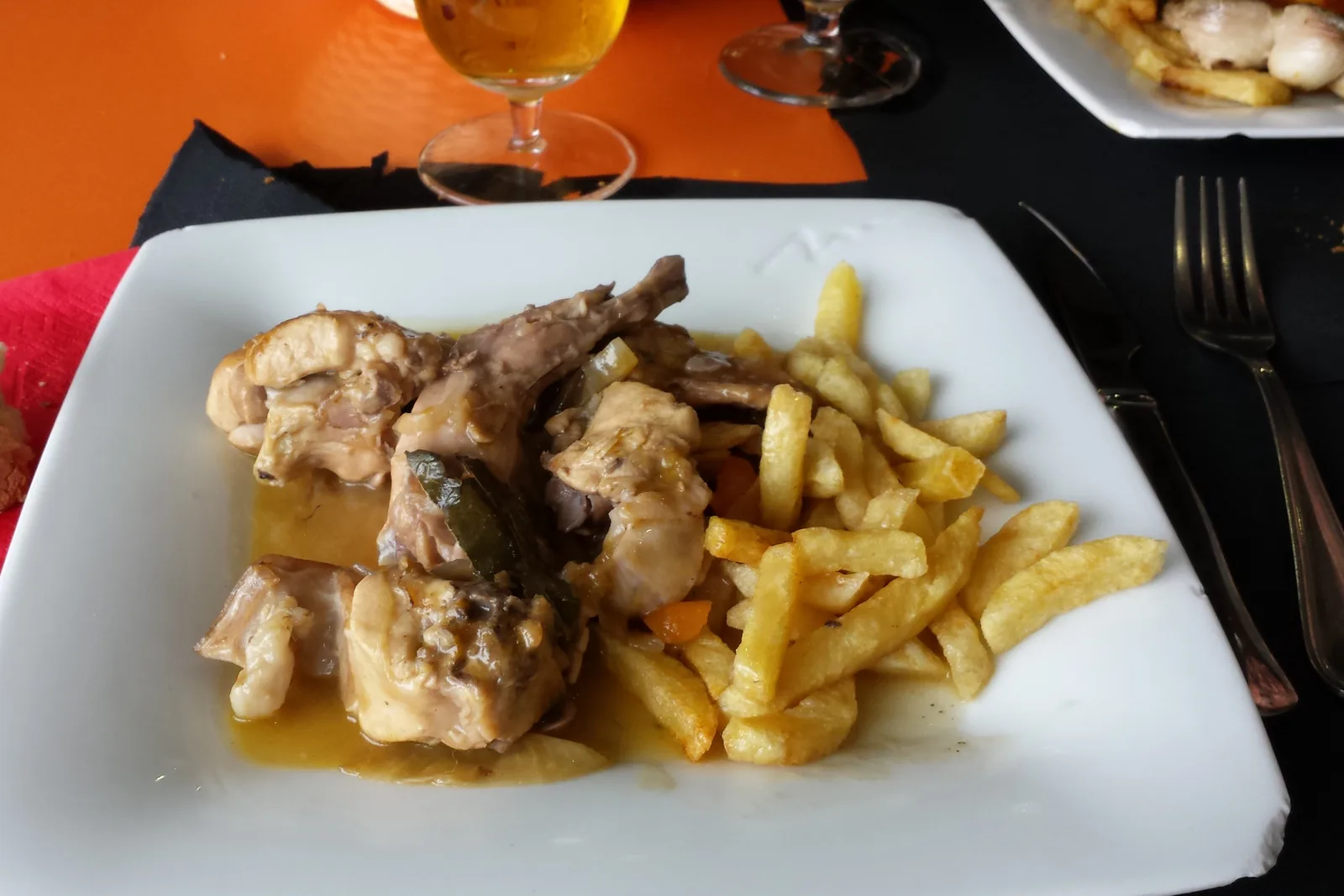
Take the pot off the heat and rest the rabbit in its liquid for 10 minutes. Fish out the bay leaves. Serve the pieces hot with a ladle of the pickling liquid and the softened vegetables over the top, scattered with parsley — or cool the pot, refrigerate overnight, and serve the rabbit cold the next day, when the vinegar flavour has deepened.
Cold is the traditional way to enjoy it, and the flavour is better on the second day. Always keep the rabbit covered by its liquid in the fridge.
Done when: Flavours settled and the rabbit tender but still holding its shape, not falling apart.
auto_awesome Finishing Touches & Plating
Spoon the rabbit and its vegetables onto warm plates with a generous ladle of the pickling liquid, scatter with parsley, and let everyone help themselves to the sauce — it is the best part.

 Chile
35m