Curated recipes from 193 countries  •  New seasonal Mediterranean issue out now

Overview

Cougnou

Cougnole, Coquille de Noël, Bread of Jesus

This cougnou recipe makes the Christmas brioche of Wallonia: a soft, golden, enriched dough studded with raisins and crunchy pearl sugar, shaped into a long loaf pinched at both ends like a swaddled baby, and crowned with a little pink sugar figure of the Christ Child. Bakers in southern Belgium have made it for Christmas and Saint Nicholas Day for generations, and children still receive it on Christmas morning with a cup of hot chocolate. One serving is about 137 g, a thick festive slice.

The cougnou, also called cougnole or coquille de Noël, is the Christmas bread of Wallonia and northern France, and its shape is the whole point: a long loaf pinched at both ends to look like a baby wrapped in swaddling clothes, the Christ Child. It probably began in the old province of Hainaut and spread through the southern Low Countries, and it is traditionally given to children on Christmas Day and Saint Martin's Day, eaten with a cup of hot chocolate. The loaf is an enriched dough of flour, eggs, milk, yeast, raisins and sugar, often studded with pearl sugar, and in Hainaut it was once topped with a plaster or pink marzipan figure of the baby Jesus — the pink sugar baby on the loaf in the photograph is that same tradition.

Pairs well with: Hot chocolate, butter and a pot of coffee

Provenance

Belgium flag Belgium

Walloon Heritage

Nordic & European

Time Dedication

2h 25m

120m prep • 25m cook

Batch Yield

8 Servings

424 kcal per serving

1 serving ≈ 137 g

Technical Skill

Intermediate

Intermediate (Yeast Bread)

Meal Timing & Digestive Fit

Breakfast

Prime Morning Fit

Lunch

Inappropriate

Dinner

Inappropriate

Snack & Tea

Inappropriate

Occasions: Christmas morning, Saint Nicholas Day, Advent breakfasts, festive family tables Cost: Low — about $1–2 per serving at home

A golden cougnou loaf with a small pink sugar baby figure on top, on a white background

Walloon Heritage

Photo: Zinneke, CC BY-SA 3.0, via Wikimedia Commons

The Heritage Formulary

Measured Ingredients

Estimated cost: Low — about $1–2 per serving at home (USD)
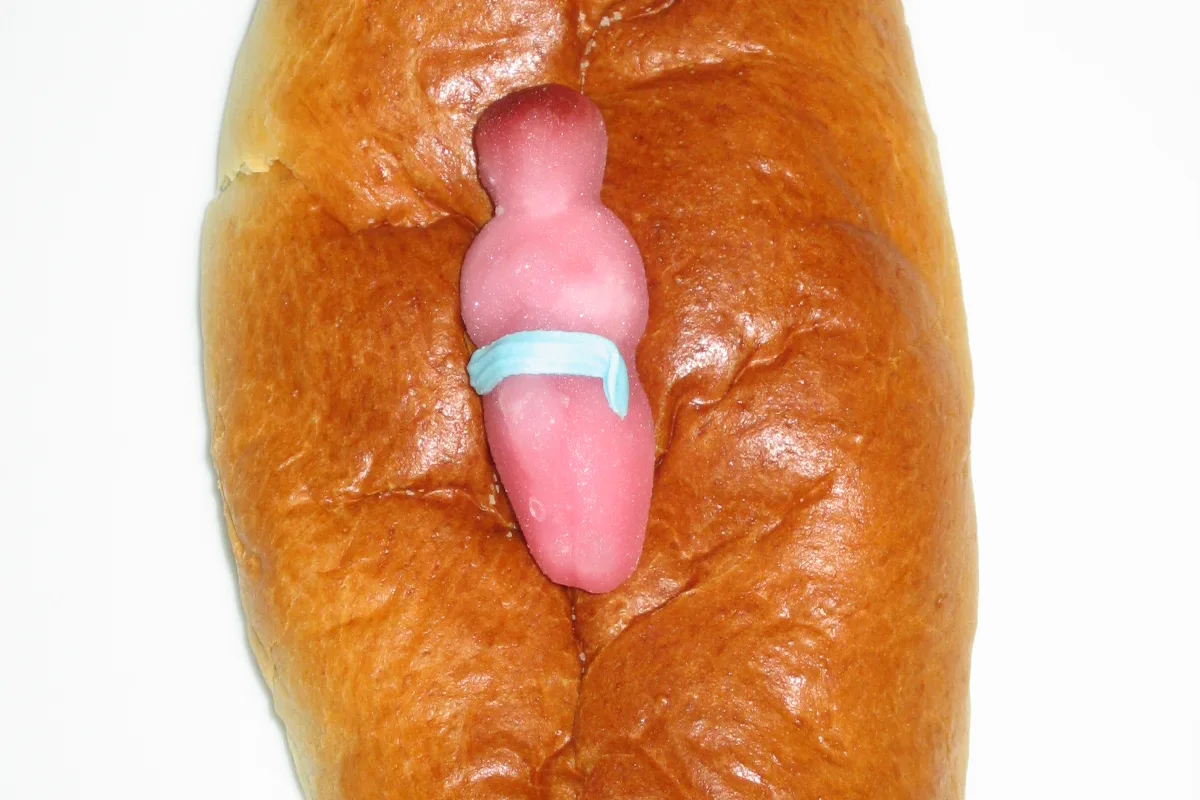
A good cougnou is deep golden, soft and light inside, studded with raisins and crunchy pearl sugar, with the baby shape still clear after baking.

Execution Methodology & Culinary Technique

Step-by-Step Cooking Guide

Active 2h 25m
P

Prep Stage: Mix, Knead and Rise

120 Mins • Mixing, Kneading & Rising

Warm the milk until lukewarm, dissolve the yeast in it, and whisk in the eggs and sugar. Mix in the flour and salt, knead in the softened butter, then fold in the raisins and pearl sugar. Cover and leave the dough to rise until doubled, then shape it and leave it to rise again.

Maestro Tip: Lukewarm milk wakes the yeast; milk hotter than about 40°C (104°F) kills it, so test it on your wrist first.

  1. 1

    Mix and knead the dough

    15 Mins Room temperature, about 20°C (68°F); milk lukewarm, about 35°C (95°F)

    Pour the 200 ml of lukewarm milk into a large bowl, sprinkle in the 10 g of yeast and leave it for 5 minutes until foamy. Whisk in the 2 eggs and 60 g of sugar, then add the 500 g of flour and 8 g of salt. Knead for 8–10 minutes until smooth, then knead in the 80 g of softened butter a little at a time until the dough is soft and elastic. Fold in the 60 g of raisins and 30 g of pearl sugar.

    Adding the butter last keeps the dough from turning greasy before the gluten has formed.

    Done when: Dough smooth, soft and slightly tacky, stretching thin without tearing.

  2. 2

    First rise

    60 Mins Warm place, about 25°C (77°F)

    Shape the dough into a ball, place it in a lightly oiled bowl, cover with a clean cloth and leave it in a warm, draught-free place for about 60 minutes, until doubled in size.

    A turned-off oven with the light on is a reliable warm spot for rising.

    Done when: Dough doubled in size; a fingertip pressed in leaves a dent that springs back slowly.

  3. 3

    Shape the baby and rise again

    45 Mins Warm place, about 25°C (77°F)

    Turn the dough onto a floured surface and roll it into a long log about 35 cm (14 in) long. Pinch the dough in from both ends, about 5 cm (2 in) from each tip, so the middle stays full and the ends narrow — the swaddled baby shape. Place it on a lined baking tray, cover, and leave to rise for 30–45 minutes until puffy.

    Pinch firmly: a shallow pinch disappears as the loaf rises in the oven.

    Done when: Loaf visibly puffed, about one and a half times its shaped size.

  4. 4

    Glaze and bake

    25 Mins 180°C (350°F)

    Heat the oven to 180°C (350°F). Beat the egg yolk with a teaspoon of water and brush it gently over the loaf for a golden sheen. Bake for 20–25 minutes until deep golden brown and the loaf sounds hollow when tapped underneath. Cool for 10 minutes, then set the pink sugar baby figure on top.

    The sugar figure goes on after baking — in the oven it would melt and lose its shape.

    Done when: Deep golden crust, hollow sound when tapped, soft crumb inside.

Finishing Touches & Plating

Slice the cougnou thickly while it is still slightly warm and serve it with butter and hot chocolate, the way Walloon children eat it on Christmas morning.

Nutritional Physiology & Benefits

Nutrition

Energy

424

kcal / serving

Protein

10g

Complete AA

Carbs

71g

Complex

Fats

11g

Healthy

Per serving (8 servings · 1 serving ≈ 137 g)
Energy424 kcal
Protein10 g
Carbohydrates71 g
Fat11 g
Fibre2.3 g
Sugar21.0 g
Sodium421 mg
Per 100g
Energy310 kcal
Protein7.3 g
Carbohydrates51.5 g
Fat8.4 g
Fibre1.7 g
Sugar15.3 g
Sodium308 mg

Nutrition values are estimated — calculated from USDA FoodData Central values for the listed ingredients.

Vitamins & minerals: Eggs and milk provide vitamin B12, vitamin D, calcium and riboflavin; raisins add iron and potassium. All nutrition values are estimated.

A Softer Festive Bread

A light, enriched crumb with raisins for natural sweetness — festive without the heavy dried fruit and marzipan of a stollen.

Made from Pantry Staples

Flour, milk, butter, eggs and yeast: the whole loaf comes from ordinary ingredients, with no special equipment.

One Loaf Feeds Eight

A single loaf makes eight thick slices, so one bake covers the whole Christmas breakfast table.

Food Pairings

What to Eat With

To optimize nutrient absorption and elevate the sensory depth, pair with these authentic accompaniments:

Drinks

Hot Chocolate

The classic partner: thick hot chocolate with a slice of cougnou is what Walloon children get on Christmas morning.

Coffee

A pot of coffee turns the sweet loaf into an adult breakfast that still feels festive.

Sides

Salted Butter

A smear of salted butter melts into the warm crumb and balances the sweetness of the pearl sugar.

Vegetables

Clementines

Fresh clementines add a sharp, juicy contrast to the rich, sweet bread.

Full Menus

Full Menu: Cougnou, Hot Chocolate, Fruit

Cougnou with hot chocolate, butter and a bowl of clementines is the Walloon Christmas breakfast, served as it has been for generations.

Complete menu

Cougnou with hot chocolate, salted butter and a bowl of clementines — the Walloon Christmas breakfast.

Digestive Guardrails

What NOT to Combine

To prevent digestive distress, sluggishness, or palate clash, avoid pairing the dish with these elements:

Using Milk That Is Too Hot

Milk hotter than about 40°C (104°F) kills the yeast and the loaf will never rise. Lukewarm, like a baby's bath, is right. This is general food information, not medical advice.

Skipping the Second Rise

A loaf baked straight after shaping stays dense and heavy; the second rise is what gives the cougnou its soft, light crumb. This is general food information, not medical advice.

Baking the Sugar Figure

The pink sugar baby melts in a hot oven. Place it on the loaf after baking, once it has cooled for 10 minutes. This is general food information, not medical advice.

General information only, not medical advice — consult a doctor for personal dietary decisions.

Who Should Eat It

Who Should Eat

  • General adultsA sweet festive bread for most adults; one thick slice with coffee is a generous breakfast.
  • ChildrenChildren love cougnou — it is their Christmas bread. Cut a thinner slice for small children and watch the raisins, which can be a choking hazard for toddlers.
  • ElderlySoft and easy to chew when sliced thickly; serve with hot chocolate and a little butter.
  • Pregnant womenThe eggs are fully baked through, which is the safe way to eat eggs in pregnancy; eat it freshly baked. Ask your clinician if unsure.
  • Breastfeeding womenAn energy-rich festive bread for nursing mothers; the sugar is high, so one slice is enough.
  • AthletesAbout 71 g of carbohydrate a serving — a fast energy source, best as a treat rather than a training staple.
  • Weight gainAt 424 calories a slice, it is an easy way to add energy at breakfast during the holidays.
  • Weight lossA 424-calorie slice that is mostly carbohydrate and sugar; keep it to one thin slice and skip the butter.

Health Conditions — Adjust or Avoid

Conditions

  • DiabetesAbout 71 g of carbohydrate per serving, mostly from the flour and sugar; keep it to one thin slice and skip extra spreads. Ask your clinician about portions.
  • High blood pressureSodium is about 421 mg per serving, mostly from the salt in the dough; use less salt if you need to. Ask your clinician about portions.
  • Kidney diseaseEggs and milk add protein and phosphorus; keep the portion as stated and eat it occasionally if you are on a restricted diet. Ask your clinician.
  • GoutEggs and milk are low in purines; the dish is fine in normal portions. Ask your clinician.
  • Stomach issuesRich, yeasted bread with raisins can be heavy on a sensitive stomach; eat a small slice and chew well. Ask your clinician if unsure.
  • Cardiovascular diseaseThe butter and egg yolk add saturated fat, so this is a festive sometimes food rather than an everyday bread. Ask your clinician about portions.
  • Fatty liverHigh in sugar and refined flour, so keep it to festive occasions and pair it with fruit rather than more butter. Ask your clinician about portions.
  • Food allergiesContains egg, milk (butter), wheat (gluten) and raisins. Do not serve it to anyone with an egg, milk or wheat allergy.
  • Special therapeutic dietsVegetarian as written. Not gluten-free, dairy-free or low-sugar. Ask your clinician about any therapeutic diet.

If you have a medical condition, consult your doctor before changing your diet.

Storage & Use

Storage & Use

How to store
Cool completely, then wrap tightly in cling film or keep in a sealed bread box.
In the fridge
Up to 4 days at 4°C (40°F) or below; bring back to room temperature before serving.
In the freezer
Freeze sliced for up to 2 months at -18°C (0°F), wrapped well.
How to reheat
Warm slices in a 160°C (320°F) oven for 5 minutes, or toast lightly; serve warm.
Freezing recommended
Yes — it freezes well sliced, ready to toast.
Signs it has spoiled
Mould, sour smell, or a hard, dry crumb that will not soften — throw it away.

More recipes to explore

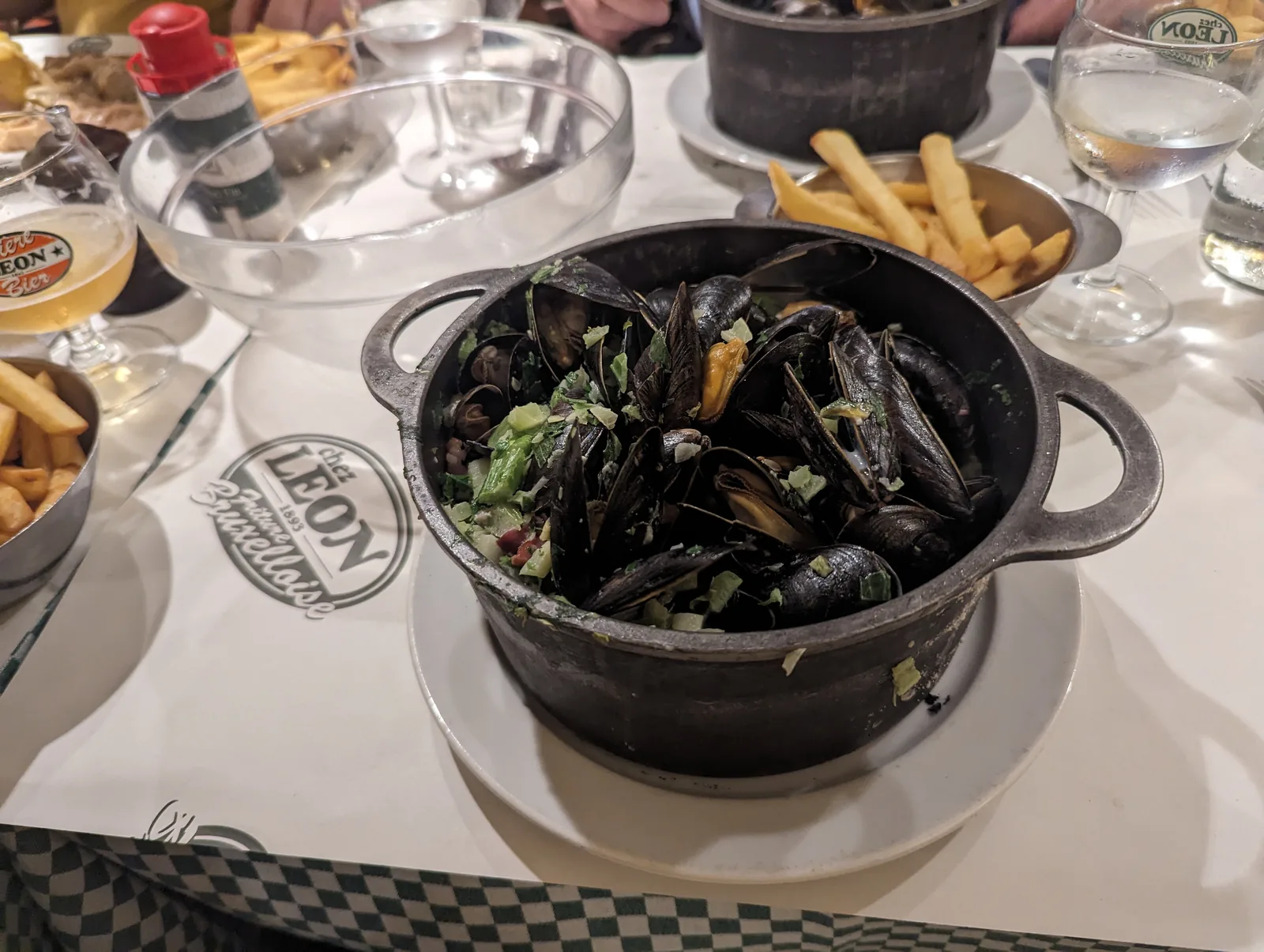
Moules-frites — a black pot of steamed mussels with herbs, served with golden fries at a Brussels brasserie Belgium flag Belgium 1h
Dinner •Brussels Brasserie Classic

Moules-Frites

This moules frites recipe makes the plate Belgium is proudest of: a black pot of mussels steamed open in white wine, shallots and cream, served with a heap of crisp, twice-cooked fries and a pot of mayonnaise. The mussels are sweet and briny, the broth is made for dipping, and the fries stay crisp if you keep them out of the pot. One serving is about 350 g.

Seaside Comfort

Sweet mussels steamed in white wine and cream, piled next to golden twice-cooked fries.

Pairs Well With
Crisp Belgian lager & mayonnaise
High Protein
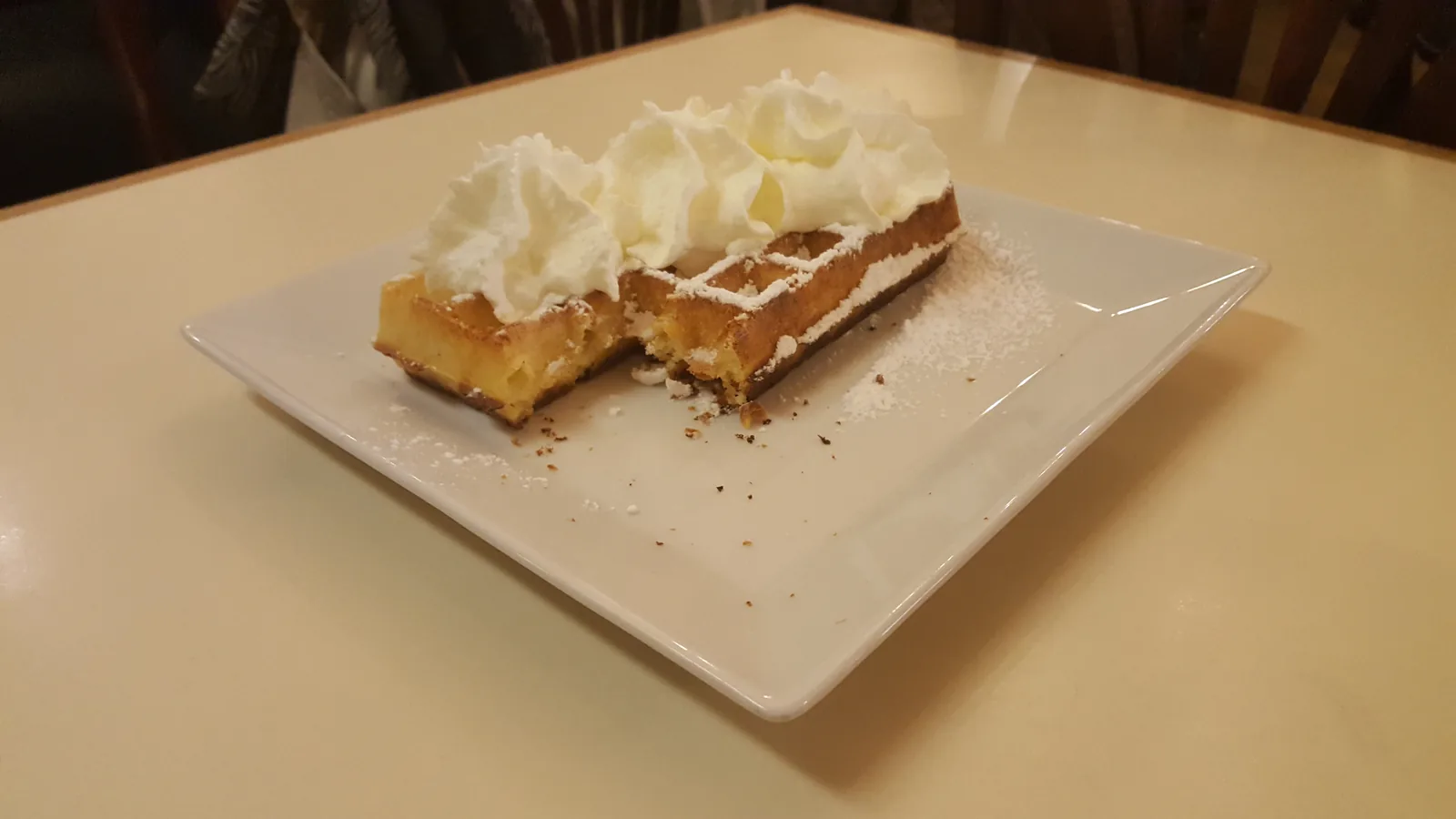
Belgian waffles — a golden Brussels waffle topped with whipped cream and icing sugar on a white plate Belgium flag Belgium 1h 35m
Breakfast •Brussels Bakery Classic

Belgian Waffles

This Belgian waffles recipe makes the light, yeasted kind: a risen batter cooked in a hot iron until the outside is crisp and golden and the inside stays soft and airy. The deep pockets hold butter, syrup or berries, and a dusting of icing sugar is all they really need. This recipe makes 8 waffles; one serving is 2 waffles, about 210 g. Nutrition is for the plain waffles, before toppings.

Weekend Breakfast Treat

Light, yeasted Brussels waffles with deep pockets, crisp outside and soft inside.

Pairs Well With
Strong coffee & fresh berries
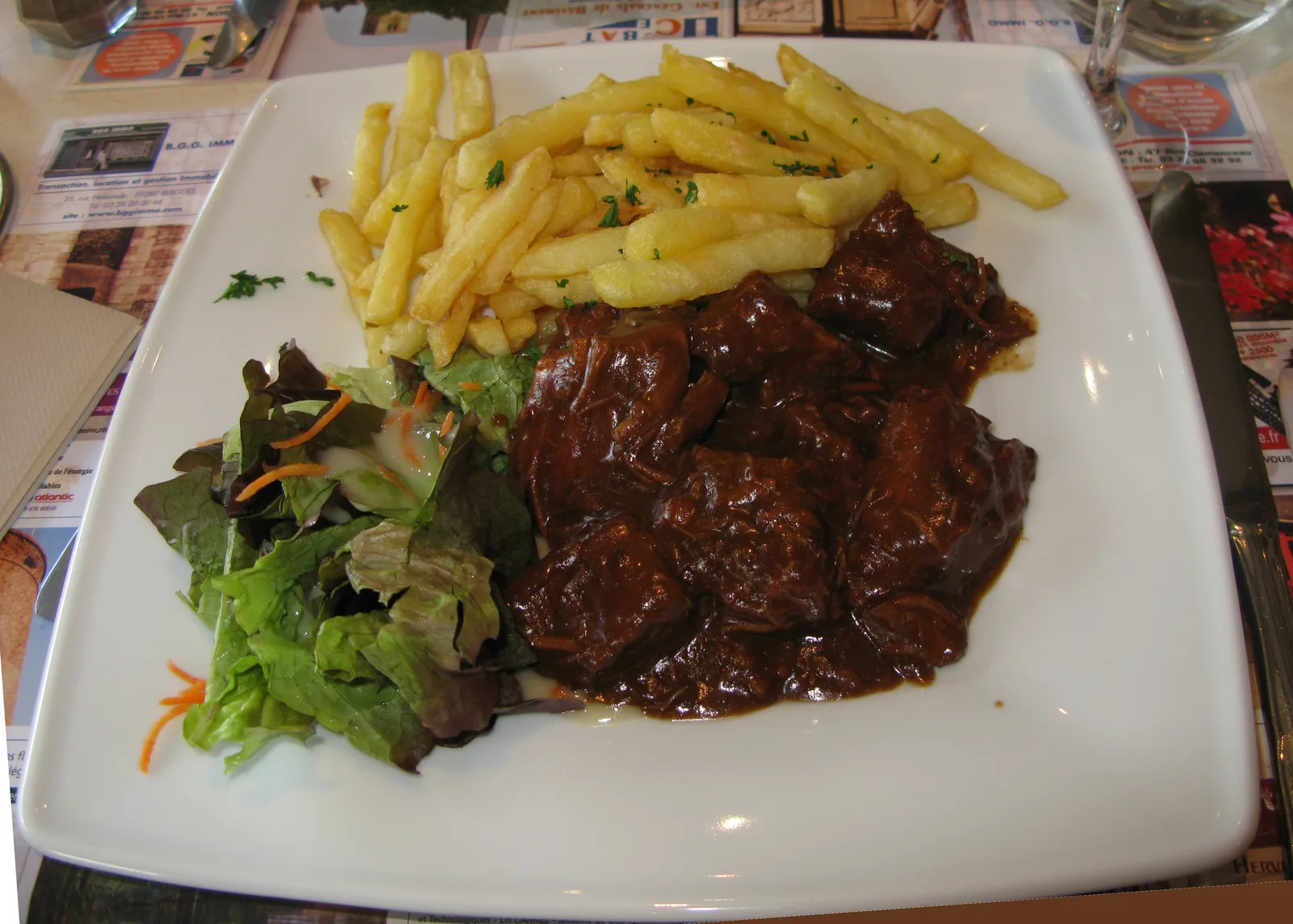
Carbonade flamande — dark beer-braised beef stew with fries and a small salad on a white plate Belgium flag Belgium 2h 55m
Dinner •Flemish Farmhouse Classic

Carbonade Flamande

This carbonade flamande recipe is Flanders' answer to the French beef stew: chunks of beef braised for hours in dark Belgian ale with sweet caramelised onions, thyme and bay, thickened the old way with slices of bread spread with mustard. The sauce turns dark, glossy and sweet-sour, and the beef goes spoon-tender. One serving is about 250 g, not counting the fries or potatoes served alongside.

Slow Sunday Comfort

Beef braised low and slow in dark Belgian ale with onions and mustard bread.

Pairs Well With
Dark Belgian ale & fries
High Protein
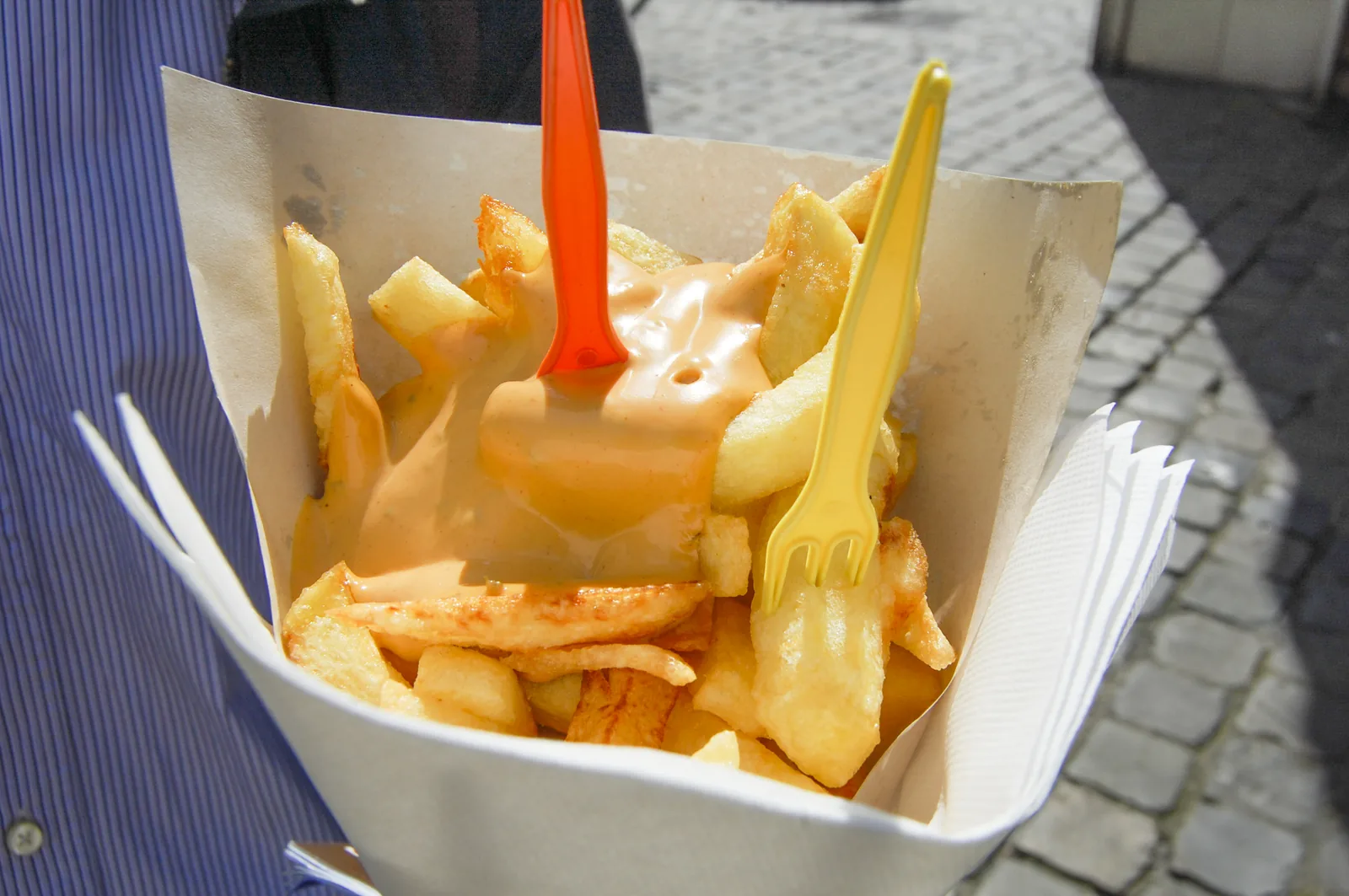
A paper cone of golden Belgian fries topped with andalouse sauce and two small plastic forks. Belgium flag Belgium 55m
Snack & Tea •Brussels Friterie Classic

Belgian Fries

Belgian fries are the real thing: thick batons of floury potato, fried twice — once gently to cook them through, once hot to shatter the outside — and served in a paper cone with andalouse sauce. One serving is about 253 g.

Crisp & Golden

Thick-cut potatoes fried twice in vegetable oil — crisp outside, fluffy inside, with andalouse sauce.

Pairs Well With
Serve hot in a paper cone with andalouse sauce and a cold lager.
Quick Prep (<30m)

The Dinner Gazette

Never wonder what’s for dinner again

One email a week with easy dinner ideas from around the world — ingredients, steps and nutrition, tested in our kitchen first.

Delivered every Thursday morning. Unsubscribe anytime.