
Curated recipes from 193 countries  •  New seasonal Mediterranean issue out now

Overview

Couque de Dinant

Cake of Dinant, Dinant honey biscuit

This couque de dinant recipe makes the famously hard honey biscuit of Dinant in Wallonia: equal weights of wheat flour and honey, pressed into a mould and baked hot until the honey caramelises. The result is a beautiful, rock-hard biscuit that you break into pieces and let melt in your mouth. One serving is one biscuit, about 95 g.

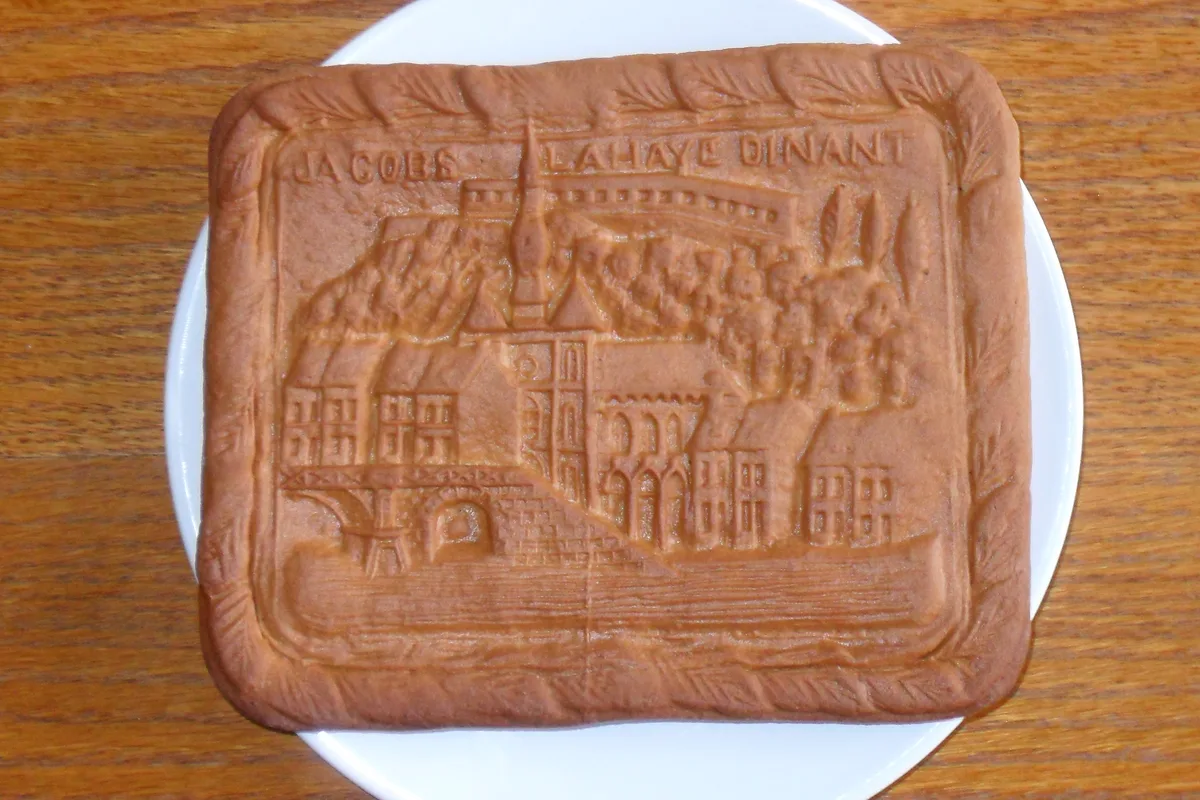
The couque de Dinant is the hard honey biscuit of Dinant, a city in Wallonia in southern Belgium. A popular legend says it was born during the sacking of Dinant in 1466, when the citizens supposedly had nothing but flour and honey — though historians note the biscuit more certainly appeared in the 18th century. What is certain is the recipe: equal weights of flour and honey, nothing else, pressed into carved wooden moulds showing animals, flowers, people or views of Dinant, and baked hot until the honey caramelises. The biscuits are so hard they are broken, not bitten, and they keep almost indefinitely — they have even been hung as Christmas decorations.

Pairs well with: Break into pieces and eat with coffee, or let a piece melt slowly in your mouth.

Provenance

Belgium flag Belgium

Dinant Honey Biscuit

Nordic & European

Time Dedication

40m

25m prep • 15m cook

Batch Yield

8 Servings

343 kcal per serving

1 serving ≈ 95 g

Technical Skill

Intermediate

Medium (Stiff Dough)

Meal Timing & Digestive Fit

Breakfast

Not Advised

Lunch

Inappropriate

Dinner

Inappropriate

Snack & Tea

Ideal Light Bite

Occasions: Saint Nicholas Day in December, Christmas gifts, Belgian souvenir snacks, coffee breaks Cost: Low — about $1–2 per serving at home
A large couque de Dinant honey biscuit moulded with a view of Dinant, on a white plate

Dinant Honey Biscuit

Photo: Oreo Priest, CC0, via Wikimedia Commons

The Heritage Formulary

Measured Ingredients

Estimated cost: Low — about $1–2 per serving at home (USD)

A true couque de Dinant is judged by its hardness and its pattern: rock hard when cold, with a sharp, clear moulded design.

Execution Methodology & Culinary Technique

Step-by-Step Cooking Guide

Active 40m
P

Prep Stage: Weigh, Warm & Knead

25 Mins

Weigh the flour and honey exactly equal — 400 g each. Warm the honey gently until runny, mix it into the flour, and knead the stiff dough until smooth. Press it into a greased wooden mould, or roll it out and cut it into shapes.

Maestro Tip: Equal weights are the whole recipe: weigh, do not measure by volume, or the dough will be too soft or too dry.

  1. 1

    Warm the Honey

    5 Mins 50°C (122°F)

    Put the honey in a saucepan over the lowest heat, or in a bowl over hot water, and warm it gently until it flows easily — about 50°C (122°F). Do not let it boil: boiling darkens the honey and makes the biscuit bitter.

    Warm honey mixes into flour far more easily than cold honey, and you will knead half as long.

    Done when: The honey pours in a slow, clear ribbon.

  2. 2

    Mix and Knead the Dough

    15 Mins 20°C (68°F)

    Pour the warm honey into the sifted flour and stir with a wooden spoon until it clumps together. Turn it out and knead firmly for 10 minutes, until the dough is smooth, stiff and no longer sticky.

    The dough is meant to be stiff — if it feels soft like bread dough, you have too much honey; knead in a spoonful of flour at a time.

    Done when: The dough is smooth, firm and holds its shape when pressed.

  3. 3

    Mould the Biscuits

    5 Mins 20°C (68°F)

    Dust a wooden couque mould lightly with flour, press a ball of dough firmly into it so every detail fills, then trim the back flat with a knife and tap the biscuit out. Without a mould, roll the dough 1 cm thick and cut it into rounds or rectangles.

    Press hard into the corners of the mould: the pattern is the whole charm, and a half-filled mould bakes into a blur.

    Done when: The biscuit comes out with a sharp, clear pattern on its face.

  4. 4

    Bake Until Caramelised

    15 Mins 300°C (575°F)

    Heat the oven to 300°C (575°F) with a baking tray inside. Lay the biscuits on the hot tray lined with baking paper and bake for 15 minutes, until deep golden brown and smelling of caramel. If your oven only reaches 250°C (480°F), bake for 20 minutes instead.

    Do not open the door to peek: the honey needs steady, fierce heat to caramelise, and a draught can make the biscuits fall flat.

    Done when: The biscuits are deep golden, firm at the edges, and smell richly of caramelised honey.

  5. 5

    Cool Until Rock Hard

    5 Mins 20°C (68°F)

    Lift the biscuits onto a wire rack and leave them to cool completely. They firm up as they cool and become famously hard — that is correct. Break them into pieces to eat; never try to bite a whole one.

    A warm couque feels soft and will bend; judge the hardness only once it is fully cold.

    Done when: The cooled biscuit is hard, glossy and rings faintly when tapped.

Finishing Touches & Plating

Let the couques cool completely on a rack until rock hard, then break them into pieces and serve with coffee — or wrap a whole one in paper as a gift, the way Dinant bakeries have done for centuries.

Nutritional Physiology & Benefits

Nutrition

Energy

343

kcal / serving

Protein

5g

Complete AA

Carbs

79g

Complex

Fats

1g

Healthy

Per serving (8 servings · 1 serving ≈ 95 g)
Energy343 kcal
Protein5 g
Carbohydrates79 g
Fat1 g
Fibre1.5 g
Sugar41.2 g
Sodium3 mg
Per 100g
Energy361 kcal
Protein5.6 g
Carbohydrates83.5 g
Fat0.5 g
Fibre1.5 g
Sugar43.4 g
Sodium3 mg

Nutrition values are estimated — calculated from USDA FoodData Central values for the listed ingredients.

Vitamins & minerals: Small amounts of B vitamins and iron (flour), plus traces of minerals from honey. Nutrition values are estimated.

Long-Lasting Energy

One biscuit gives about 343 kcal, mostly from honey and flour, so a piece with coffee is a genuinely sustaining snack.

Just Two Ingredients

Flour and honey, nothing else — no butter, no egg, no raising agent, no preservatives.

Keeps Almost Forever

Baked hard and dry, a couque keeps for months in a tin, which is why they were once given as keepsakes and decorations.

Food Pairings

What to Eat With

To optimize nutrient absorption and elevate the sensory depth, pair with these authentic accompaniments:

Drinks

Black Coffee

Hot black coffee is the classic partner: dipping or soaking a broken piece softens the biscuit and its bitterness balances the honey.

Tea

A cup of plain tea lets the honey flavour lead, and a piece left to melt in the mouth goes well with a slow afternoon cup.

Sides

Soft Cheese

A mild soft cheese with a piece of broken couque makes a simple sweet-savoury snack, the way honey and cheese are paired across Belgium.

Complete menu

Break a couque de Dinant into pieces and serve with black coffee, or with a mild soft cheese as a sweet-savoury snack.

Digestive Guardrails

What NOT to Combine

To prevent digestive distress, sluggishness, or palate clash, avoid pairing the dish with these elements:

Biting a Whole Biscuit

A couque is famously hard and can crack a tooth or a filling if bitten into whole. Always break it into pieces first, or let a piece melt in your mouth. This is general information, not medical advice.

Honey for Babies Under One Year

Honey can carry spores that are unsafe for infants under 12 months, so do not give couque de Dinant to babies under one year old. This is general food-safety information, not medical advice.

General information only, not medical advice — consult a doctor for personal dietary decisions.

Who Should Eat It

Who Should Eat

  • General adultsA sweet, energy-rich snack; one biscuit with coffee is plenty for most adults.
  • ChildrenChildren enjoy breaking the biscuit and letting it melt, but it is very sweet — one piece at a time, and never for babies under one year.
  • ElderlyBreak it into small pieces and let them melt; whole biscuits are too hard to bite safely.
  • Pregnant womenFlour and honey only, with no egg or milk; keep to a small piece because of the sugar. Ask your clinician if you have concerns.
  • Breastfeeding womenA quick energy snack with coffee, but it is almost all sugar and flour — pair it with something with protein.
  • AthletesFast carbohydrate energy, useful as a quick snack, but with little protein; eat it with cheese or nuts after training.
  • Weight gainEnergy-dense at about 343 kcal a biscuit, so it suits people who need extra calories.
  • Weight lossVery high in sugar at about 41.2 g per biscuit, so keep to a small broken piece and do not eat a whole one as a snack.

Health Conditions — Adjust or Avoid

Conditions

  • DiabetesAlmost entirely sugar and flour, so a whole biscuit is a large sugar load; eat a small piece only and ask your clinician.
  • High blood pressureVery low in sodium at about 3 mg per biscuit, which is helpful for a low-sodium pattern; ask your clinician about the sugar.
  • Kidney diseaseLow in protein and sodium; people with kidney disease should watch the sugar and ask their clinician.
  • GoutLow in purines, but very high in sugar; keep portions small and ask your clinician.
  • Stomach issuesHard, dry and very sweet; a small piece melted in the mouth is gentler than a large piece, and coffee can add acidity. Ask your clinician if unsure.
  • Cardiovascular diseaseAlmost no fat, which suits a low-fat pattern, but the sugar load is high; eat a small piece and ask your clinician.
  • Fatty liverLow in fat, but very high in sugar, which matters for fatty liver; keep to a small piece and ask your clinician.
  • Food allergiesContains wheat (gluten). No egg, milk, nuts or fish in the classic recipe. If you have any food allergy, check every ingredient and ask your clinician.
  • Special therapeutic dietsNot suitable as a low-sugar therapeutic diet without changes; discuss adaptations with your clinician or dietitian.

If you have a medical condition, consult your doctor before changing your diet.

Storage & Use

Storage & Use

How to store
Cool completely, then store in an airtight tin at room temperature.
In the fridge
Not needed; keep at room temperature in a dry tin.
In the freezer
Not needed; the biscuit keeps for months at room temperature.
How to reheat
No reheating; eat at room temperature, or warm briefly in a low oven at 120°C (250°F) for 3 minutes to soften slightly.
Freezing recommended
No — it keeps for months without freezing.
Signs it has spoiled
Soft or damp texture, or any mould from storage in a damp place.

More recipes to explore

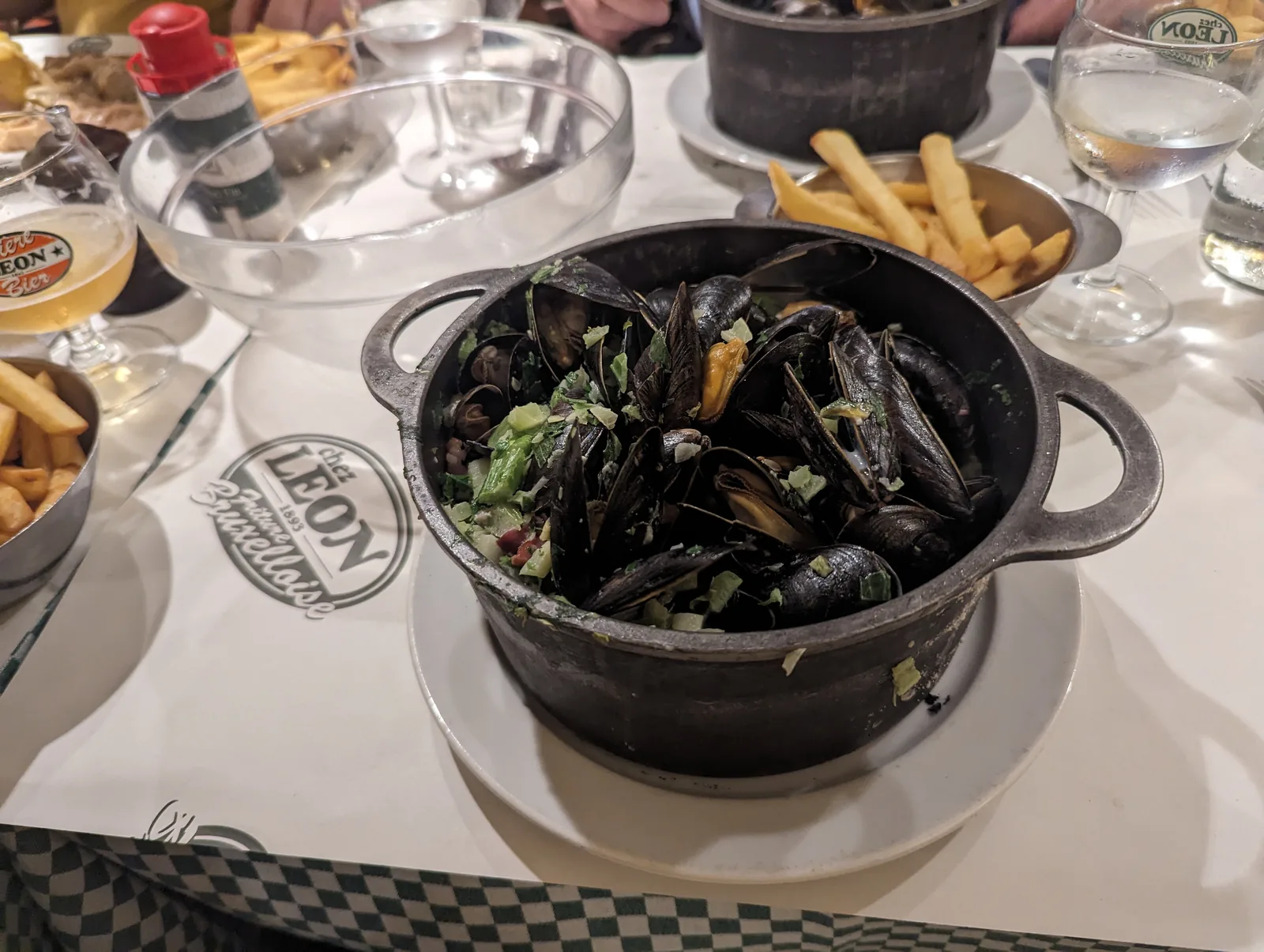
Moules-frites — a black pot of steamed mussels with herbs, served with golden fries at a Brussels brasserie Belgium flag Belgium 1h
Dinner •Brussels Brasserie Classic

Moules-Frites

This moules frites recipe makes the plate Belgium is proudest of: a black pot of mussels steamed open in white wine, shallots and cream, served with a heap of crisp, twice-cooked fries and a pot of mayonnaise. The mussels are sweet and briny, the broth is made for dipping, and the fries stay crisp if you keep them out of the pot. One serving is about 350 g.

Seaside Comfort

Sweet mussels steamed in white wine and cream, piled next to golden twice-cooked fries.

Pairs Well With
Crisp Belgian lager & mayonnaise
High Protein
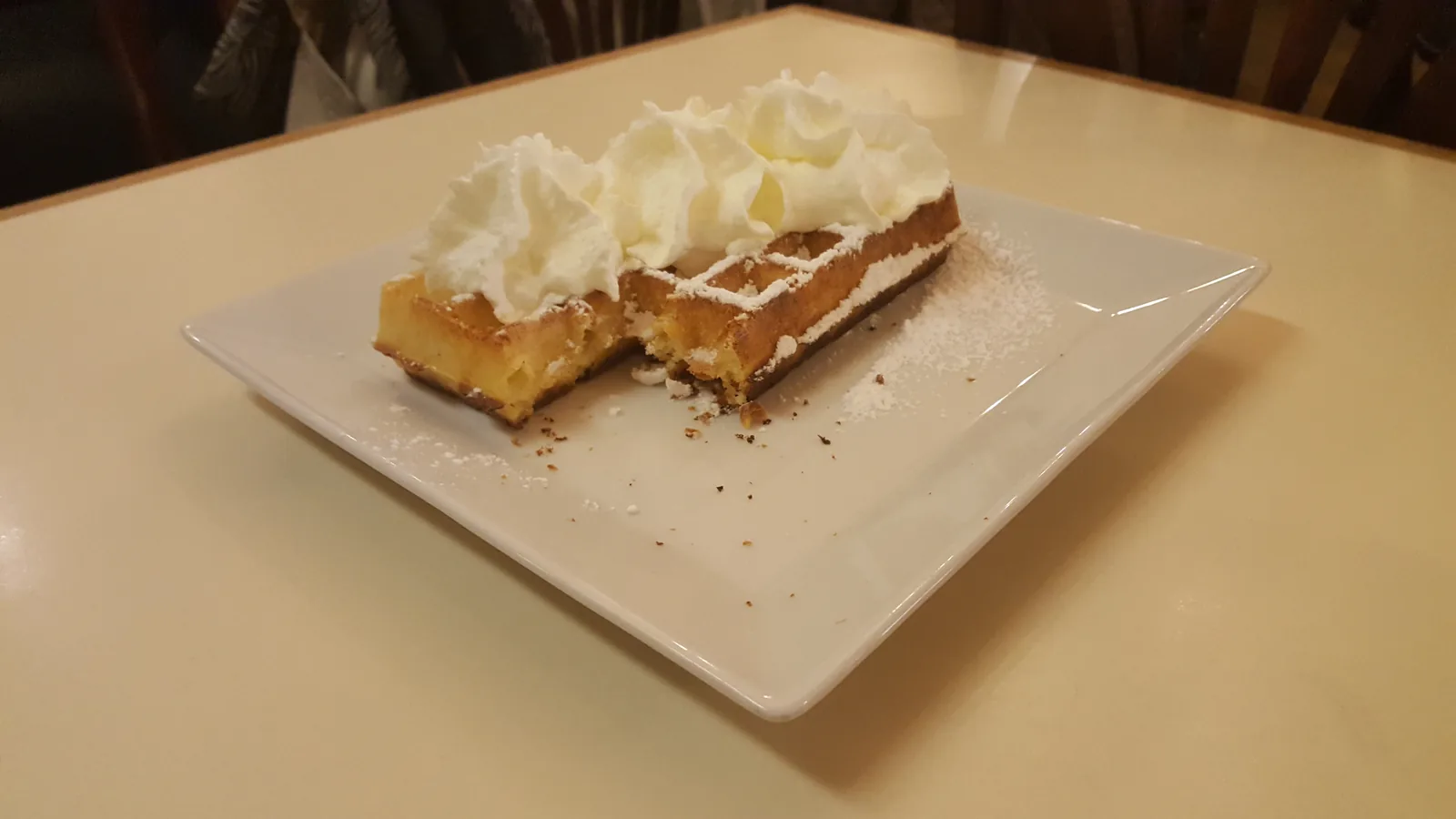
Belgian waffles — a golden Brussels waffle topped with whipped cream and icing sugar on a white plate Belgium flag Belgium 1h 35m
Breakfast •Brussels Bakery Classic

Belgian Waffles

This Belgian waffles recipe makes the light, yeasted kind: a risen batter cooked in a hot iron until the outside is crisp and golden and the inside stays soft and airy. The deep pockets hold butter, syrup or berries, and a dusting of icing sugar is all they really need. This recipe makes 8 waffles; one serving is 2 waffles, about 210 g. Nutrition is for the plain waffles, before toppings.

Weekend Breakfast Treat

Light, yeasted Brussels waffles with deep pockets, crisp outside and soft inside.

Pairs Well With
Strong coffee & fresh berries
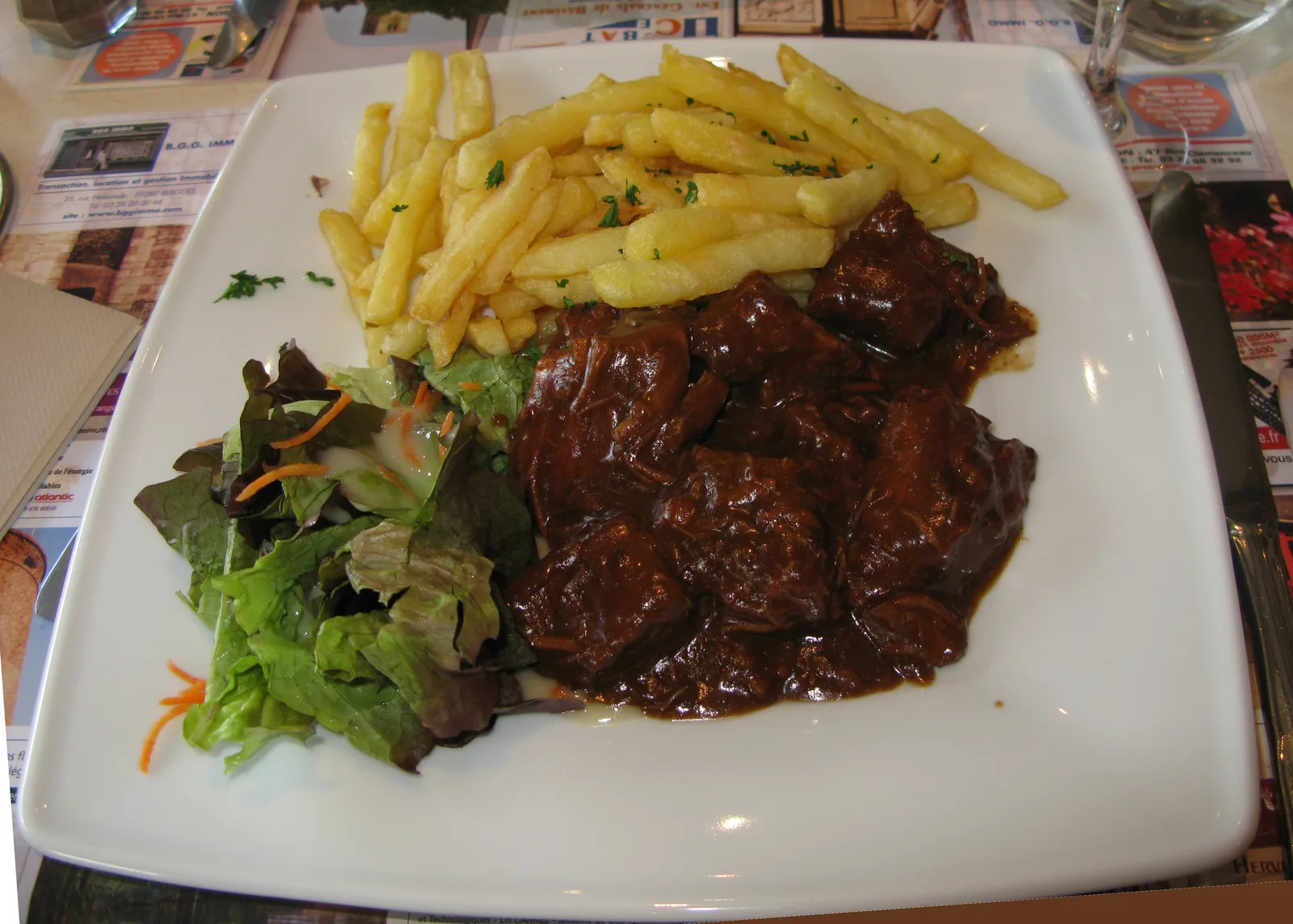
Carbonade flamande — dark beer-braised beef stew with fries and a small salad on a white plate Belgium flag Belgium 2h 55m
Dinner •Flemish Farmhouse Classic

Carbonade Flamande

This carbonade flamande recipe is Flanders' answer to the French beef stew: chunks of beef braised for hours in dark Belgian ale with sweet caramelised onions, thyme and bay, thickened the old way with slices of bread spread with mustard. The sauce turns dark, glossy and sweet-sour, and the beef goes spoon-tender. One serving is about 250 g, not counting the fries or potatoes served alongside.

Slow Sunday Comfort

Beef braised low and slow in dark Belgian ale with onions and mustard bread.

Pairs Well With
Dark Belgian ale & fries
High Protein
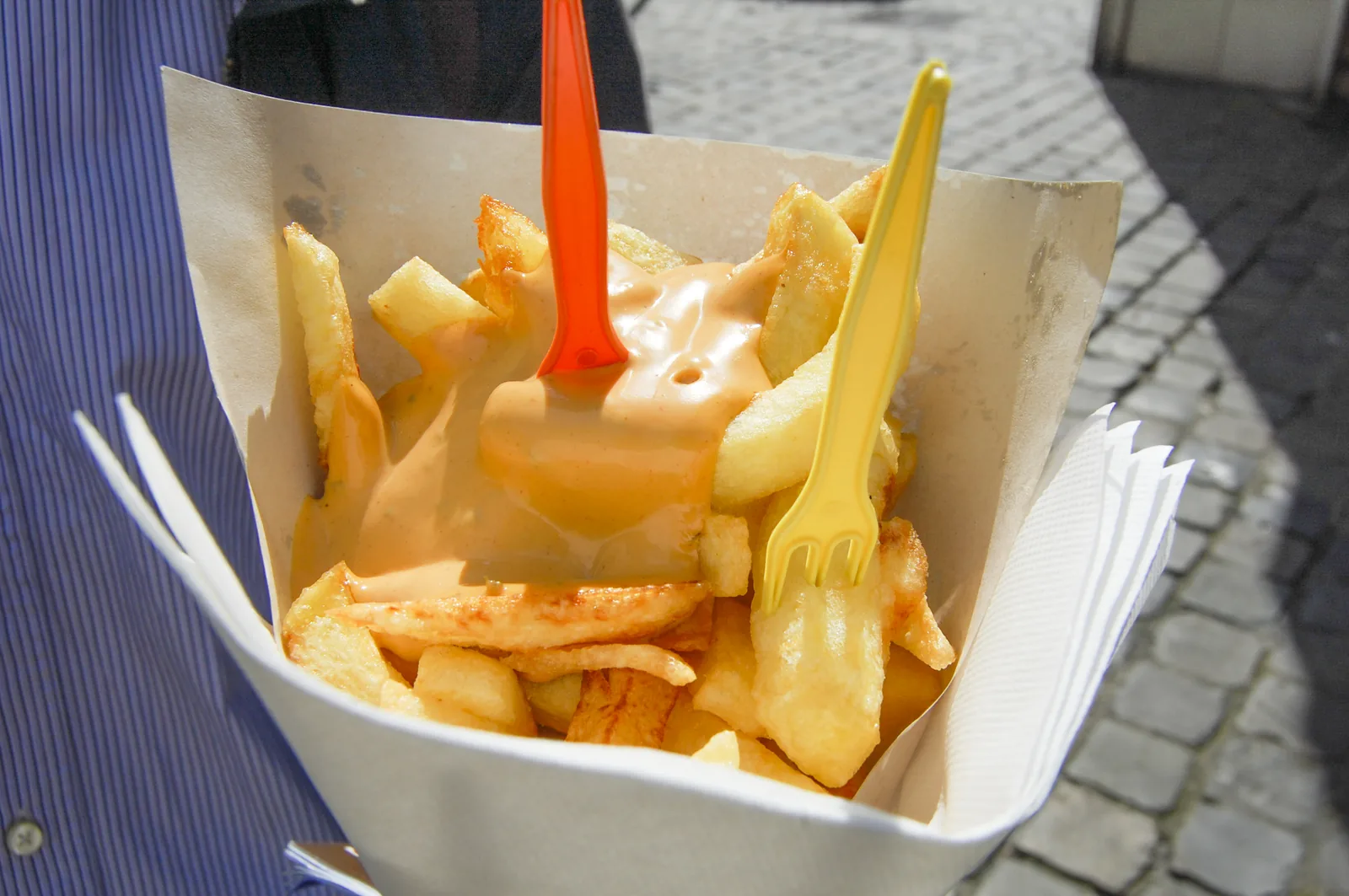
A paper cone of golden Belgian fries topped with andalouse sauce and two small plastic forks. Belgium flag Belgium 55m
Snack & Tea •Brussels Friterie Classic

Belgian Fries

Belgian fries are the real thing: thick batons of floury potato, fried twice — once gently to cook them through, once hot to shatter the outside — and served in a paper cone with andalouse sauce. One serving is about 253 g.

Crisp & Golden

Thick-cut potatoes fried twice in vegetable oil — crisp outside, fluffy inside, with andalouse sauce.

Pairs Well With
Serve hot in a paper cone with andalouse sauce and a cold lager.
Quick Prep (<30m)

The Dinner Gazette

Never wonder what’s for dinner again

One email a week with easy dinner ideas from around the world — ingredients, steps and nutrition, tested in our kitchen first.

Delivered every Thursday morning. Unsubscribe anytime.