
Curated recipes from 193 countries  •  New seasonal Mediterranean issue out now

Overview

Cuban Natilla

Natilla Cubana; Cuban Cinnamon Custard

This cuban natilla recipe makes the thick, silky custard Cuban home cooks serve chilled from a single dish: milk and cream infused with cinnamon and lime, bound with egg yolks and cornstarch, and dusted with cinnamon before serving. It sets soft and glossy, like a spoonable pudding, and tastes of cinnamon, vanilla and lime. One serving is about 195 g.

Natilla came to Cuba from Spain, where egg custards had long been a home dessert, and Cuban cooks made it their own: they thickened it with cornstarch so it sets soft and glossy, and scented it with lime peel and cinnamon from the island's kitchens. It became a fixture of family meals, served chilled from a single large dish with coffee, and it is still the custard most Cuban families reach for first.

Pairs well with: Café cubano, Maria biscuits & fresh fruit

Provenance

Cuba flag Cuba

Cuban Heritage

Latin America & Caribbean

Time Dedication

40m

15m prep • 25m cook

Batch Yield

6 Servings

325 kcal per serving

1 serving ≈ 195 g

Technical Skill

Intermediate

Easy (Stovetop)

Meal Timing & Digestive Fit

Breakfast

Not Advised

Lunch

Inappropriate

Dinner

Inappropriate

Snack & Tea

Ideal Light Bite

Occasions: Family desserts, Sunday lunch, Christmas, afternoon snack, after a Cuban meal Cost: Low — about $1–2 per serving at home
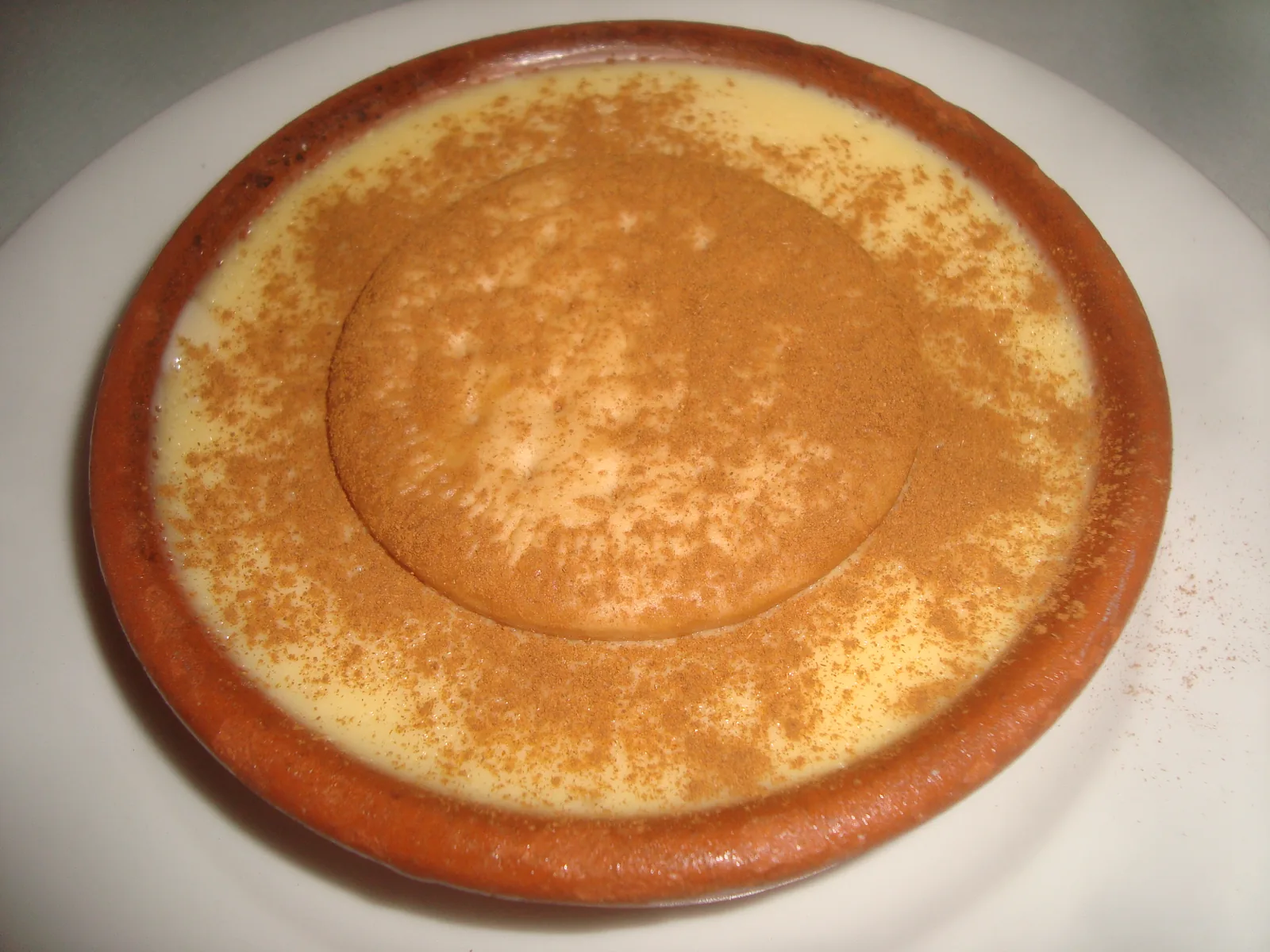
A bowl of pale yellow custard dusted with cinnamon, with a round biscuit on top, in a terracotta bowl on a white plate

Cuban Heritage

Photo: Juan Emilio Prades Bel, CC BY-SA 4.0, via Wikimedia Commons

The Heritage Formulary

Measured Ingredients

Estimated cost: Low — about $1–2 per serving at home (USD)

A good natilla is thick enough to coat a spoon, glossy and smooth, never lumpy or runny.

Execution Methodology & Culinary Technique

Step-by-Step Cooking Guide

Active 40m
P

Prep Stage: Measure, Separate and Infuse

15 Mins • Prep

Separate the egg yolks and set them in a medium bowl with the sugar. Measure the milk, cream, cornstarch and vanilla, and pare one wide strip of lime peel. Put the milk, cream, cinnamon stick, lime peel and salt in a heavy saucepan, ready for the stove. Everything should be measured before the milk heats, because the custard thickens fast once it is on the heat.

Maestro Tip: Dissolve the cornstarch in a little cold milk before it meets the hot pan — cornstarch added dry to hot milk clumps instantly.

  1. 1

    Infuse the Milk

    10 minutes Simmer, about 85°C (185°F); never a rolling boil

    Put the milk, cream, cinnamon stick, lime peel and salt in a heavy saucepan over medium heat. Warm it slowly, stirring now and then, until it just reaches a simmer, about 85°C (185°F), and small bubbles ring the edge — about 8 minutes. Take it off the heat and leave it to steep for 5 minutes so the cinnamon and lime flavour the milk.

    Do not let the milk boil hard: it skins over and the cinnamon turns bitter.

    Done when: Milk steaming with small bubbles at the edge; cinnamon and lime fragrant.

  2. 2

    Whisk the Yolks and Cornstarch

    5 minutes Room temperature, about 20°C (68°F)

    While the milk steeps, whisk the egg yolks with the sugar in a medium bowl until pale and creamy, about 2 minutes. Stir the cornstarch into 60 ml (1/4 cup) of the warm infused milk until completely smooth, then whisk that slurry into the yolk mixture until no streaks remain.

    Whisk the slurry until it is perfectly smooth — any lump now becomes a lump in the finished custard.

    Done when: Pale, smooth yolk mixture with no cornstarch lumps.

  3. 3

    Temper the Yolks

    5 minutes Hot milk, about 80°C (176°F)

    Fish out the cinnamon stick and lime peel from the milk and discard them. Ladle the hot milk into the yolk bowl a little at a time, whisking constantly, until about half the milk is in. Pour the warmed yolk mixture back into the saucepan, whisking as you go.

    Add the milk slowly and keep whisking: hot milk poured all at once scrambles the yolks.

    Done when: One smooth, pale liquid with no curdled bits.

  4. 4

    Cook Until Thick

    12 minutes Medium-low heat, about 80°C (176°F); do not boil

    Set the saucepan over medium-low heat and cook, stirring constantly with a wooden spoon, scraping the bottom and corners. After 8–10 minutes the custard thickens and coats the back of the spoon; it should reach about 80°C (176°F), safely past the 71°C (160°F) needed for egg yolks. Take it off the heat the moment it coats the spoon and stir in the vanilla.

    Never stop stirring and never let it boil — boiling curdles the yolks and turns the custard grainy.

    Done when: Thick enough to coat a spoon and hold a line when you draw a finger through it; glossy, not grainy.

  5. 5

    Strain, Pour and Chill

    5 minutes active, then at least 2 hours chilling Chill at 4°C (40°F) or below for at least 2 hours

    Strain the custard through a fine sieve into a large dish or 6 small ramekins — this catches any tiny lump and guarantees a silky finish. Press plastic wrap directly onto the surface so no skin forms, then chill at 4°C (40°F) or below for at least 2 hours, until fully cold and set. Dust with the ground cinnamon just before serving.

    Plastic wrap touching the surface is what stops the skin; a lid alone does not.

    Done when: Cold, set and glossy; dusted with cinnamon at the table.

Finishing Touches & Plating

Serve the natilla cold, straight from the fridge, dusted with cinnamon. It should quiver softly when the dish moves and spoon up thick and glossy.

Nutritional Physiology & Benefits

Nutrition

Energy

325

kcal / serving

Protein

7g

Complete AA

Carbs

39g

Complex

Fats

16g

Healthy

Per serving (6 servings · 1 serving ≈ 195 g)
Energy325 kcal
Protein7 g
Carbohydrates39 g
Fat16 g
Fibre0.5 g
Sugar32.1 g
Sodium134 mg
Per 100g
Energy167 kcal
Protein3.7 g
Carbohydrates20 g
Fat8.1 g
Fibre0.3 g
Sugar16.5 g
Sodium69 mg

Nutrition values are estimated — calculated from USDA FoodData Central values for the listed ingredients.

Vitamins & minerals: Calcium and vitamin B12 (milk, cream, egg yolk), vitamin D and vitamin A (egg yolk, cream), riboflavin (milk, egg).

Protein and Calcium from Milk and Egg

Milk, cream and egg yolks give each serving about 7 g of protein and a good share of calcium, so this is a more nourishing dessert than a plain sugary sweet.

Quick, Satisfying Energy

Milk sugars and a little fat make natilla a satisfying snack that steadies hunger between meals — which is why Cuban families serve it as an afternoon treat.

No Baking, No Fuss

The whole dessert comes together in one saucepan on the stove, with no oven and no special equipment beyond a sieve and a spoon.

Food Pairings

What to Eat With

To optimize nutrient absorption and elevate the sensory depth, pair with these authentic accompaniments:

Drinks

Café Cubano

A small, strong Cuban coffee cuts through the custard's richness and its bitterness balances the sweetness — the classic Cuban pairing.

Sides

Maria Biscuit for Dipping

A plain, crisp Maria biscuit is made for dipping into soft custard: it soaks up a little natilla without falling apart and adds a gentle crunch.

Fresh Fruit

Sliced mango, guava or orange brings acidity and freshness that lift the rich, sweet custard and clean the palate.

Full Menus

After a Cuban Main

Natilla is the natural finish to a Cuban meal: follow ropa vieja or moros y cristianos with a small bowl of natilla and coffee, and the meal ends light and sweet.

Complete menu

Serve a small bowl of chilled natilla dusted with cinnamon after ropa vieja or moros y cristianos, with a café cubano and a Maria biscuit for dipping.

Digestive Guardrails

What NOT to Combine

To prevent digestive distress, sluggishness, or palate clash, avoid pairing the dish with these elements:

A Large Bowl on an Empty Stomach

Natilla is rich and sweet, with about 32 g of sugar a serving, so a big bowl on an empty stomach can spike blood sugar and feel heavy; keep to one small serving. This is general information, not medical advice.

Boiling the Custard

Boiling curdles the egg yolks and turns the custard grainy and thin — if it boils, it cannot be fixed, so keep the heat medium-low and stir constantly. This is general information, not medical advice.

General information only, not medical advice — consult a doctor for personal dietary decisions.

Who Should Eat It

Who Should Eat

  • General adultsA rich, comforting dessert — one small bowl with coffee is a full, satisfying treat.
  • ChildrenChildren love natilla, but it is sweet and rich, so serve a small bowl as a treat, not an everyday snack.
  • ElderlySoft, smooth and easy to swallow; serve a small portion, well chilled, and go easy on the extra sugar.
  • Pregnant womenFine when freshly made and fully cooked through — the custard reaches about 80°C (176°F) — but keep portions moderate because it is sweet.
  • Breastfeeding womenAn energy-rich, comforting dessert; enjoy a normal portion and drink water alongside.
  • AthletesGood quick energy from milk sugars with some protein; best as a treat after training, not before.
  • Weight gainAn easy way to add energy: milk, cream, egg and sugar in one appetising bowl, at about 325 kcal a serving.
  • Weight lossAt about 325 kcal a serving with 32 g of sugar, keep natilla an occasional treat and serve a half portion with fresh fruit.

Health Conditions — Adjust or Avoid

Conditions

  • DiabetesHigh in sugar, so keep to a half portion and skip any extra sweet topping; ask your clinician about your sugar target.
  • High blood pressureSalt is low in this dish; the bigger concern is the sugar, so keep portions small and ask your clinician about your overall diet.
  • Kidney diseaseMilk, cream and egg add up in protein, potassium and phosphorus; keep the portion small and ask your clinician about your limits.
  • GoutEggs and milk are low in purines, so a normal portion is usually fine; ask your clinician if you have frequent flares.
  • Stomach issuesRich, sweet custard can sit heavily; eat a small portion, slowly, and ask your clinician if symptoms persist.
  • Cardiovascular diseaseCream and egg yolk add saturated fat, so keep it an occasional treat in a small portion; ask your clinician about your fat and sugar targets.
  • Fatty liverHigh in sugar and rich, so enjoy rarely and in a small portion; ask your clinician about your overall diet.
  • Food allergiesContains milk and egg; do not serve to anyone with a milk or egg allergy.
  • Special therapeutic dietsNot suitable for low-sugar or dairy-free diets without changes; if you follow a prescribed diet, ask your clinician before eating it.

If you have a medical condition, consult your doctor before changing your diet.

Storage & Use

Storage & Use

How to store
Store chilled, covered, with plastic wrap pressed onto the surface.
In the fridge
Keeps 3 days in the fridge at 4°C (40°F) or below, covered.
In the freezer
Do not freeze: the custard turns watery and grainy on thawing.
How to reheat
If serving warm, reheat gently in a pan over low heat, stirring constantly, until hot through, to 74°C (165°F); do not boil.
Freezing recommended
No — natilla does not freeze well.
Signs it has spoiled
Sour smell, watery separation, or mould on the surface.

More recipes to explore

A plate of ropa vieja, shredded beef in tomato sauce, with yellow rice, black beans and fried plantains Cuba flag Cuba 3h
Dinner •Cuba's National Dish

Ropa Vieja

This ropa vieja recipe braises flank steak low and slow until it falls into long shreds, then simmers it in a tomato, pepper and olive sauce. One serving is about 310 g. Serve it over white rice with black beans and fried plantains, the way Cuban families do.

Comfort & Warmth

Slow-braised shredded beef in a tomato and pepper sauce, served with rice and black beans.

Pairs Well With
White rice, black beans and fried plantains
High Protein
A pressed Cuban sandwich cut in half, with melted Swiss cheese and layers of ham and pork, served with pickle spears Cuba flag Cuba 25m
Lunch •Havana Classic

Cuban Sandwich

This cuban sandwich recipe layers mojo roast pork, ham, Swiss cheese, pickles and mustard on Cuban bread, then presses it flat until the crust crackles and the cheese melts. One serving is about 345 g. It is a great use for leftover roast pork and comes together in 25 minutes.

Comfort & Warmth

A pressed sandwich of roast pork, ham, Swiss cheese, pickles and mustard on Cuban bread.

Pairs Well With
Plantain chips and a cold lager or lime soda
A plate of dark moros y cristianos rice cooked with black beans, served with slices of roast pork and golden fried plantains Cuba flag Cuba 1h 30m
Lunch •Cuban Heritage

Moros y Cristianos

This moros y cristianos recipe cooks Cuban black beans and rice together in one pot: dried black beans simmered until tender, then long-grain rice cooked in the dark bean liquid with a sofrito of onion, green pepper and garlic, cumin, oregano and bay leaf. The grains come out dark, fragrant and fluffy, never pale or plain. One serving is about 272 g.

Comfort & Warmth

Cuban black beans and white rice cooked together in one pot with sofrito, cumin, oregano and bay leaf, until the grains turn dark.

Pairs Well With
Roast pork or ropa vieja with fried sweet plantains and a crisp cabbage salad, the classic Cuban plate.
A plate of Cuban lechon asado with shredded mojo pork, onions and lime, yellow rice with black beans and fried plantains Cuba flag Cuba 5h 30m
Dinner •Havana Heritage

Cuban Lechon Asado

This cuban lechon asado recipe marinates a pork shoulder overnight in mojo — sour orange juice, a whole head of garlic, oregano and cumin — then roasts it low and slow until the meat is so tender it pulls apart with a fork. It is the centrepiece of Nochebuena, the Cuban Christmas Eve feast, and it is nothing like Filipino lechon: there is no whole crispy-skinned pig here, just a mojo-soaked shoulder roast. One serving is about 250 g.

Celebration & Sharing

A whole pork shoulder marinated overnight in sour-orange mojo, then roasted low and slow until it pulls apart — the centrepiece of Nochebuena.

Pairs Well With
Shredded mojo pork with black beans, yellow rice and fried plantains
High Protein

The Dinner Gazette

Never wonder what’s for dinner again

One email a week with easy dinner ideas from around the world — ingredients, steps and nutrition, tested in our kitchen first.

Delivered every Thursday morning. Unsubscribe anytime.