Curated recipes from 193 countries  •  New seasonal Mediterranean issue out now

Overview

Cuberdons

Neuzekes, Ghent Noses, Cuberdon

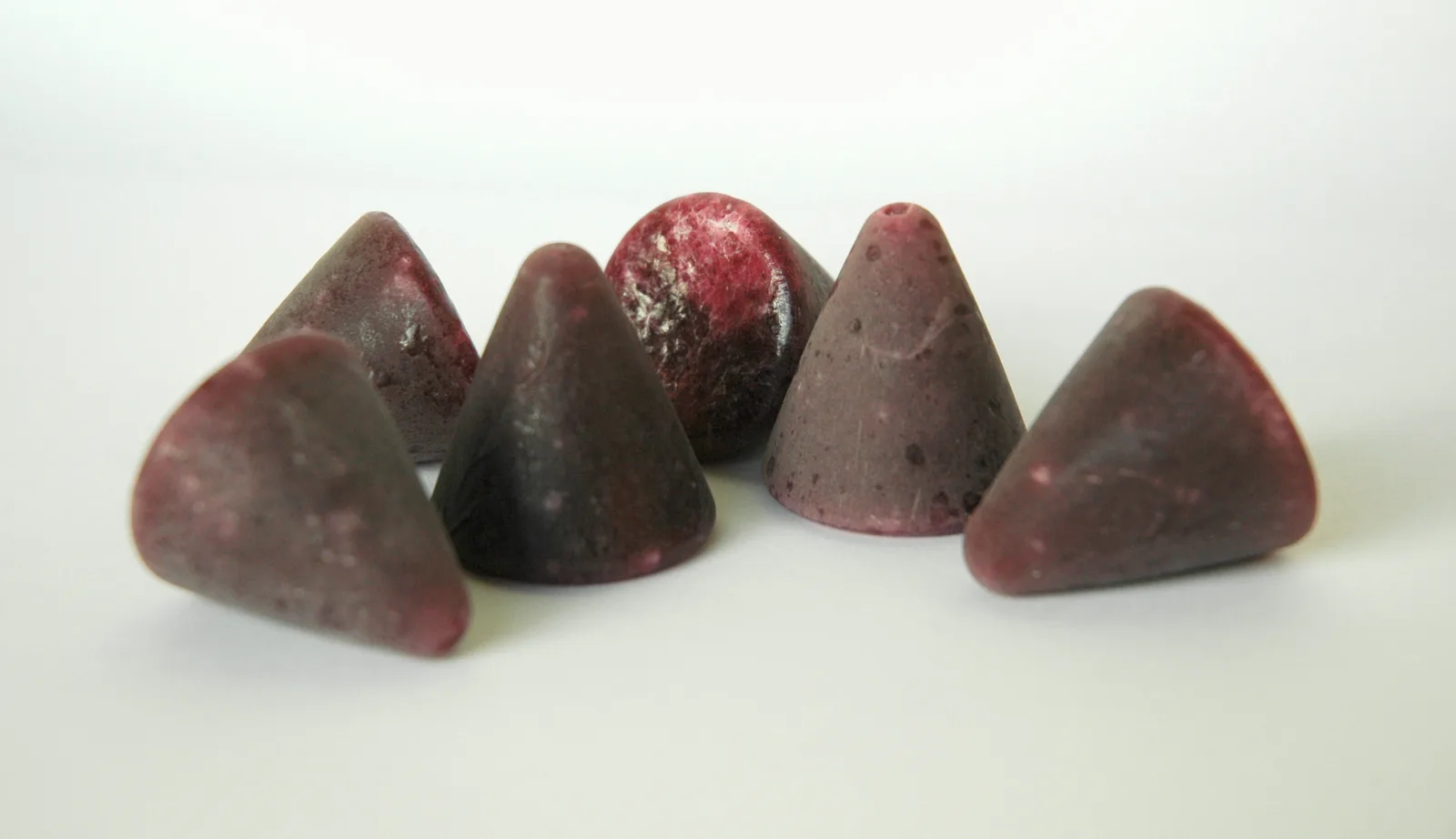
Cuberdons are cone-shaped raspberry sweets from Ghent, with a thin crisp shell and a soft, syrupy centre that melts as you bite in. They are nicknamed neuzekes, or little noses, because of their shape. This cuberdons recipe makes 24 cones at home with sugar, real raspberries and gum arabic. One serving is about 45 g (2 cones).

Cuberdons were first sold in Ghent in the 1870s, and the little cone-shaped sweets — nicknamed neuzekes, or little noses, for their shape — became a symbol of the city. The original recipe was a closely guarded family secret for decades, passed down through generations of Ghent confectioners. Today cuberdons are still sold from market stalls and sweet shops across Ghent, most famously in raspberry, though other fruit flavours have joined them.

Pairs well with: Serve with black coffee or a pot of tea — the bitter drink balances the sweet, syrupy centre.

Provenance

Belgium flag Belgium

Ghent Heritage

Nordic & European

Time Dedication

1h 10m

45m prep • 25m cook

Batch Yield

12 Servings

161 kcal per serving

1 serving ≈ 45 g

Technical Skill

Intermediate

Medium (Candy Thermometer)

Meal Timing & Digestive Fit

Breakfast

Not Advised

Lunch

Inappropriate

Dinner

Inappropriate

Snack & Tea

Ideal Light Bite

Occasions: Afternoon snack, Coffee break, Gifts and holidays, Children's parties Cost: Low — about $1 per serving at home
Six deep-purple raspberry cuberdons, cone-shaped Ghent sweets, arranged on a plain white surface

Ghent Heritage

Photo: DimiTalen, CC0, via Wikimedia Commons

The Heritage Formulary

Measured Ingredients

Estimated cost: Low — about $1 per serving at home (USD)

A traditional Ghent sweet made with real raspberries and gum arabic, with a crisp shell and a soft syrupy centre.

Execution Methodology & Culinary Technique

Step-by-Step Cooking Guide

Active 1h 10m
P

Prep Stage: Gum Arabic Soaked and Raspberries Pureed

45 Mins Active + Overnight Soak • Soaking and Pureeing

The night before, stir the gum arabic powder into 60 ml of the water until smooth, cover and leave it at room temperature overnight so it dissolves completely into a thick, clear liquid. On the day, blend the raspberries to a smooth puree and push it through a fine sieve so no seeds remain. Set out a 24-hole silicone cone mould (or small paper sweet cups), a candy thermometer and a heavy-bottomed pan.

Maestro Tip: If any grainy gum arabic remains in the morning, warm the liquid gently to about 40°C (104°F) and stir until it is completely smooth — lumps will show up as cloudy spots in the finished sweets.

  1. 1

    Soak the Gum Arabic

    12 Hrs • Soaking Room temperature, about 20°C (68°F)

    Put the gum arabic powder in a small bowl and stir in 60 ml of the water until no dry powder remains. Cover and leave it at room temperature overnight, or for at least 12 hours, until it has dissolved into a thick, clear liquid.

    Stir once after an hour — the powder sinks at first and clumps if it is left alone.

    Done when: The liquid is thick, clear and smooth, with no grainy bits when you rub a drop between your fingers.

  2. 2

    Make the Raspberry Puree

    10 Mins • Blending Room temperature, about 20°C (68°F)

    Blend the raspberries until completely smooth, then push the puree through a fine sieve with the back of a spoon, pressing well to get all the juice out. You should have about 150 ml of seedless puree. Stir in the lemon juice.

    Do not skip the sieve — seeds trapped in the syrup make the centres gritty instead of smooth.

    Done when: The puree is deep red, smooth and seed-free, and runs off the spoon in a thin stream.

  3. 3

    Cook the Sugar Syrup

    15 Mins • Cooking 115°C (239°F)

    Put the sugar, the remaining 60 ml of water and the corn syrup in a heavy-bottomed pan. Stir over medium heat only until the sugar has dissolved, then stop stirring, clip on the candy thermometer and boil until the syrup reaches 115°C (239°F). Brush down any sugar crystals on the sides of the pan with a wet pastry brush.

    Once the syrup is boiling, do not stir it — stirring makes sugar crystals form and the finished sweets turn grainy.

    Done when: The thermometer reads a steady 115°C (239°F) and the syrup is clear with large, slow bubbles.

  4. 4

    Add the Gum Arabic and Raspberry

    10 Mins • Cooking 108°C (226°F)

    Take the pan off the heat and let the bubbling settle for 30 seconds. Stir in the soaked gum arabic liquid, then the raspberry puree, a little at a time — the mixture will bubble up, so add it slowly. Return the pan to low heat and cook gently, stirring, until it reaches 108°C (226°F) and turns glossy and deep purple-red.

    Add the puree in three pours and stir between each one; dumping it in at once can make the syrup seize into lumps.

    Done when: The mixture is glossy, evenly coloured and coats the back of a spoon in a thick, slow ribbon.

  5. 5

    Fill the Moulds

    10 Mins • Moulding Warm syrup, about 80°C (175°F)

    Working quickly while the syrup is still warm and pourable, spoon or pour it into the cone moulds, filling each one almost to the top. Tap the mould tray gently on the counter once or twice to pop any air bubbles, then leave the moulds undisturbed at room temperature.

    If the syrup thickens before you finish, set the pan over very low heat for a minute to loosen it again — never add water.

    Done when: Every mould is filled level, with no bubbles visible on the surface.

  6. 6

    Dry Until the Shell Sets

    24 Hrs • Drying Room temperature, about 20°C (68°F)

    Leave the filled moulds uncovered at room temperature for 24 hours. The outside of each cone slowly dries into a thin, crisp shell while the inside stays soft and syrupy — that contrast is the whole point of a cuberdon. After 24 hours, gently push the cones out of the moulds.

    Do not rush this in the fridge or the oven — cold or forced heat makes the shell sticky instead of crisp, and the centres can leak.

    Done when: Each cone feels dry and firm on the outside and holds its shape when you lift it, with a soft give when you press it gently.

Finishing Touches & Plating

Roll the finished cones lightly in a little extra granulated sugar if you like a frosted look, then set them out on a plate. Bite through the crisp shell to reach the soft raspberry centre — that first crack and the syrup inside are what make a cuberdon.

Nutritional Physiology & Benefits

Nutrition

Energy

161

kcal / serving

Protein

0g

Complete AA

Carbs

41g

Complex

Fats

0g

Healthy

Per serving (12 servings · 1 serving ≈ 45 g)
Energy161 kcal
Protein0 g
Carbohydrates41 g
Fat0 g
Fibre2.9 g
Sugar35.8 g
Sodium3 mg
Per 100g
Energy358 kcal
Protein0.5 g
Carbohydrates91.8 g
Fat0.2 g
Fibre6.4 g
Sugar79.5 g
Sodium8 mg

Nutrition values are estimated — calculated from USDA FoodData Central values for the listed ingredients.

Vitamins & minerals: Raspberries add vitamin C and manganese, with small amounts of vitamin K and potassium; the finished sweet is otherwise almost entirely sugar, so it is a treat rather than a source of nutrients. Nutrition is estimated.

Real fruit flavour

The colour and flavour come from real raspberries, not just flavouring, so each cone tastes of fresh fruit.

Small, portioned treat

At about 20 g per cone, a serving of two is easy to portion, which helps keep a sweet treat small.

Quick energy

Almost all of the energy comes from sugar, so a cone gives a fast lift — best enjoyed as an occasional snack, not a meal.

Food Pairings

What to Eat With

To optimize nutrient absorption and elevate the sensory depth, pair with these authentic accompaniments:

Drinks

Black coffee

The bitterness of black coffee cuts through the sweet syrupy centre, so each bite tastes fresh again instead of cloying.

Plain black tea

Unsweetened tea cleanses the palate between cones, and its gentle tannins balance the raspberry sweetness.

Sides

Fresh raspberries

A few fresh raspberries on the side echo the flavour of the centre and add a tart, juicy contrast to the sweet shell.

Butter shortbread

A plain, crumbly shortbread gives a buttery, savoury counterpoint to the soft sweet, and both keep well on the same plate.

Complete menu

Two cuberdons with a small cup of black coffee and a few fresh raspberries on the side make a light Belgian afternoon snack; add a shortbread biscuit if you want something to nibble with the coffee.

Digestive Guardrails

What NOT to Combine

To prevent digestive distress, sluggishness, or palate clash, avoid pairing the dish with these elements:

Sugary soft drinks

A cuberdon is already almost entirely sugar, so a sweet fizzy drink on top adds a large sugar load in one sitting without adding anything the body needs. This is general information, not medical advice — ask your clinician if you are unsure.

Eating just before bed without brushing

The sticky syrup clings to teeth, and sugar left on teeth overnight feeds the bacteria that cause tooth decay. Enjoy cuberdons earlier in the day and brush afterwards. This is general information, not medical advice.

General information only, not medical advice — consult a doctor for personal dietary decisions.

Who Should Eat It

Who Should Eat

  • General adultsA classic Belgian sweet to enjoy in small portions — two cones with coffee is a satisfying snack.
  • ChildrenChildren usually love them, but they are very sweet and sticky, so keep to one or two cones and brush teeth afterwards.
  • ElderlySoft inside and easy to chew, but the high sugar content means small portions are best, especially for anyone watching blood sugar.
  • Pregnant womenSafe as an occasional sweet in small amounts; the ingredients are all ordinary foods, but keep portions small because of the sugar.
  • Breastfeeding womenFine as an occasional treat; no ingredient here is a concern for breastfeeding, but it adds sugar without nutrients.
  • AthletesA quick source of fast energy after training, but it has almost no protein, so pair it with a proper meal rather than treating it as recovery food.
  • Weight gainAn easy way to add energy — two cones add about 161 kcal — but they add little else, so do not let them replace nourishing food.
  • Weight lossBest kept as a rare, small treat: two cones carry about 36 g of sugar, so enjoy them slowly and count them in your day.

Health Conditions — Adjust or Avoid

Conditions

  • DiabetesAbout 41 g of carbohydrate and 36 g of sugar per serving, so blood sugar can rise quickly — most people with diabetes should avoid them or take only a single cone. Ask your clinician about portion size.
  • High blood pressureVery low in sodium (about 3 mg per serving), so salt is not the concern here — the sugar is. Keep portions small and ask your clinician if you are unsure.
  • Kidney diseaseLow in protein, potassium and sodium, so the sweet itself is not a heavy load on the kidneys, but the sugar still matters for overall health. Ask your clinician about portion size.
  • GoutNo purine-rich ingredients, but a large dose of sugar in one sitting can raise uric acid, so keep to a small portion. Ask your clinician if you are unsure.
  • Stomach issuesUsually gentle on the stomach in small amounts, but a very sweet, syrupy food can trigger reflux or nausea in some people — stop if it bothers you and ask your clinician.
  • Cardiovascular diseaseAlmost no fat and very little sodium, but the high sugar load is the issue for heart health, so treat cuberdons as an occasional small sweet. Ask your clinician about portion size.
  • Fatty liverHigh in sugar, and excess sugar is linked with fat building up in the liver, so people with fatty liver should keep this as a rare treat. Ask your clinician about portion size.
  • Food allergiesContains no gluten, dairy, egg, nuts or soy, but check the gum arabic and corn syrup labels — rare sensitivities to raspberry or to gum arabic exist, and shared factory lines can introduce traces. Ask your clinician if you have a known allergy.
  • Special therapeutic dietsNaturally gluten-free and vegetarian, but the very high sugar content rules it out of most low-sugar and diabetic meal plans. Ask your clinician or dietitian before including it.

If you have a medical condition, consult your doctor before changing your diet.

Storage & Use

Storage & Use

How to store
Cool completely, then store in a single layer in an airtight container at room temperature, with baking paper between layers.
In the fridge
Do not refrigerate — the cold makes the shells sticky and the centres can weep.
In the freezer
Not recommended — freezing and thawing breaks the crisp shell and the syrupy centre leaks.
How to reheat
No reheating — serve at room temperature, about 20°C (68°F).
Freezing recommended
No — cuberdons keep best at room temperature and do not freeze well.
Signs it has spoiled
Sticky or weeping shells, a sour or fermented smell, mould, or cones that have gone completely hard and dry.

More recipes to explore

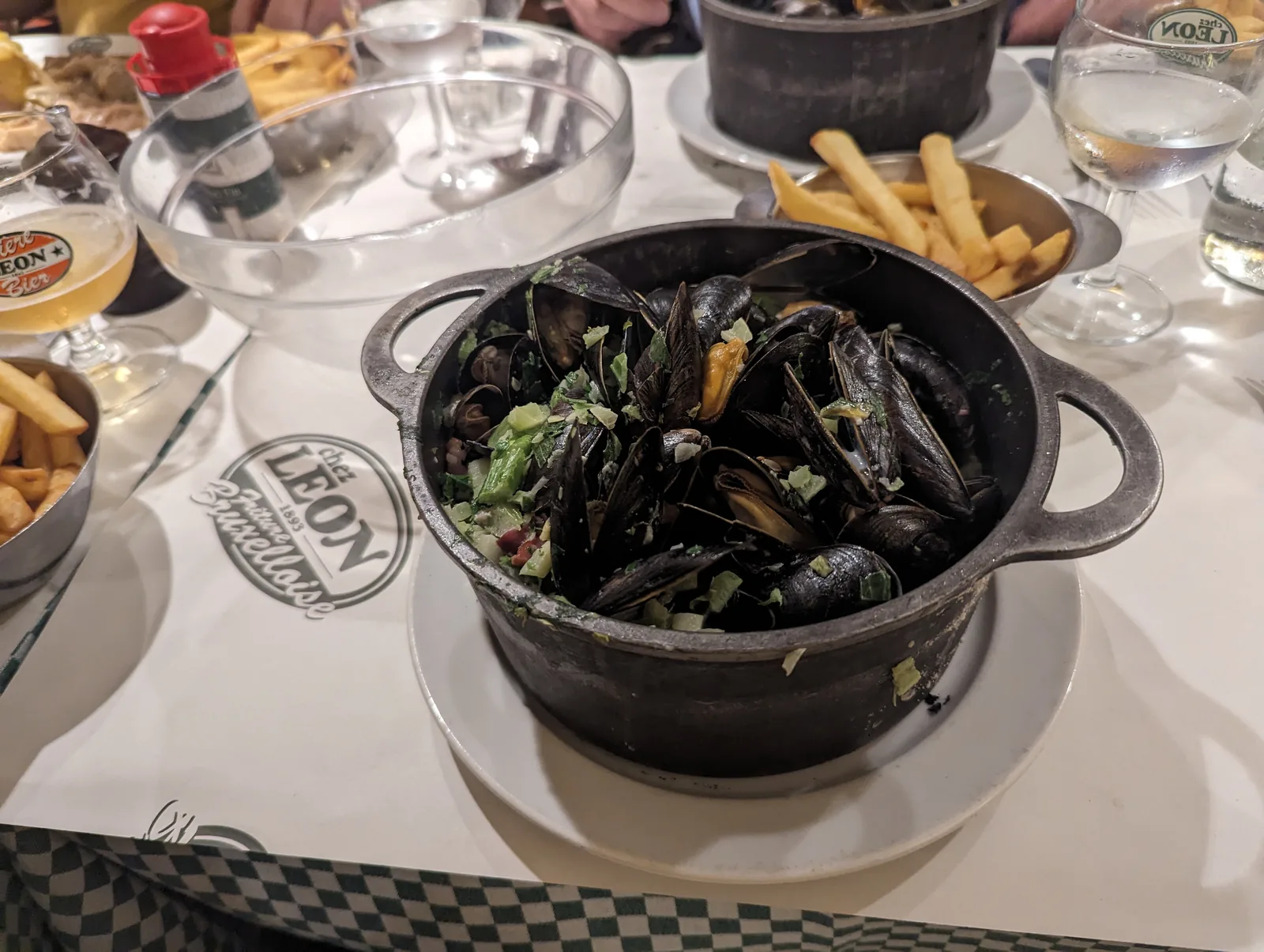
Moules-frites — a black pot of steamed mussels with herbs, served with golden fries at a Brussels brasserie Belgium flag Belgium 1h
Dinner •Brussels Brasserie Classic

Moules-Frites

This moules frites recipe makes the plate Belgium is proudest of: a black pot of mussels steamed open in white wine, shallots and cream, served with a heap of crisp, twice-cooked fries and a pot of mayonnaise. The mussels are sweet and briny, the broth is made for dipping, and the fries stay crisp if you keep them out of the pot. One serving is about 350 g.

Seaside Comfort

Sweet mussels steamed in white wine and cream, piled next to golden twice-cooked fries.

Pairs Well With
Crisp Belgian lager & mayonnaise
High Protein
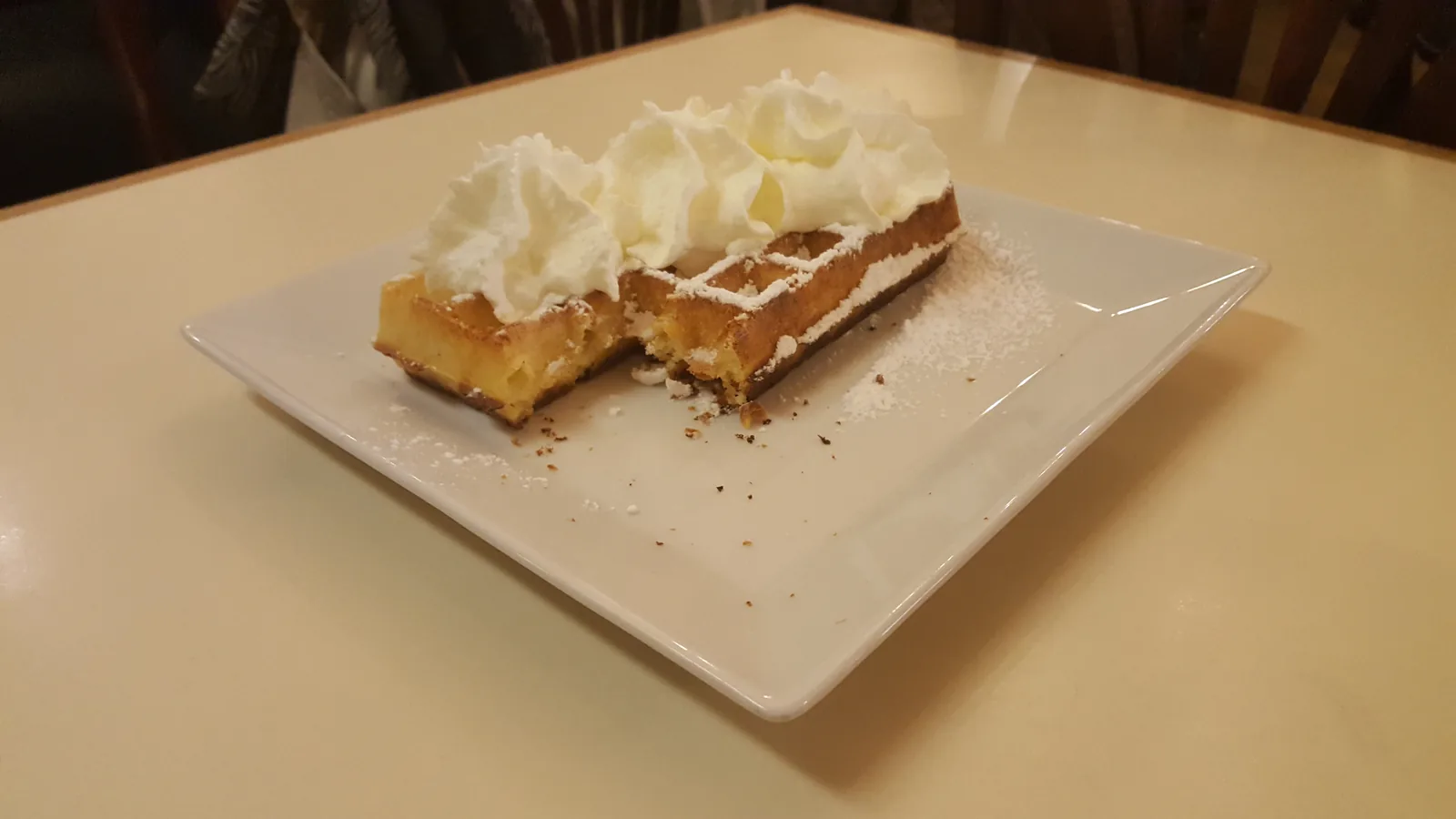
Belgian waffles — a golden Brussels waffle topped with whipped cream and icing sugar on a white plate Belgium flag Belgium 1h 35m
Breakfast •Brussels Bakery Classic

Belgian Waffles

This Belgian waffles recipe makes the light, yeasted kind: a risen batter cooked in a hot iron until the outside is crisp and golden and the inside stays soft and airy. The deep pockets hold butter, syrup or berries, and a dusting of icing sugar is all they really need. This recipe makes 8 waffles; one serving is 2 waffles, about 210 g. Nutrition is for the plain waffles, before toppings.

Weekend Breakfast Treat

Light, yeasted Brussels waffles with deep pockets, crisp outside and soft inside.

Pairs Well With
Strong coffee & fresh berries
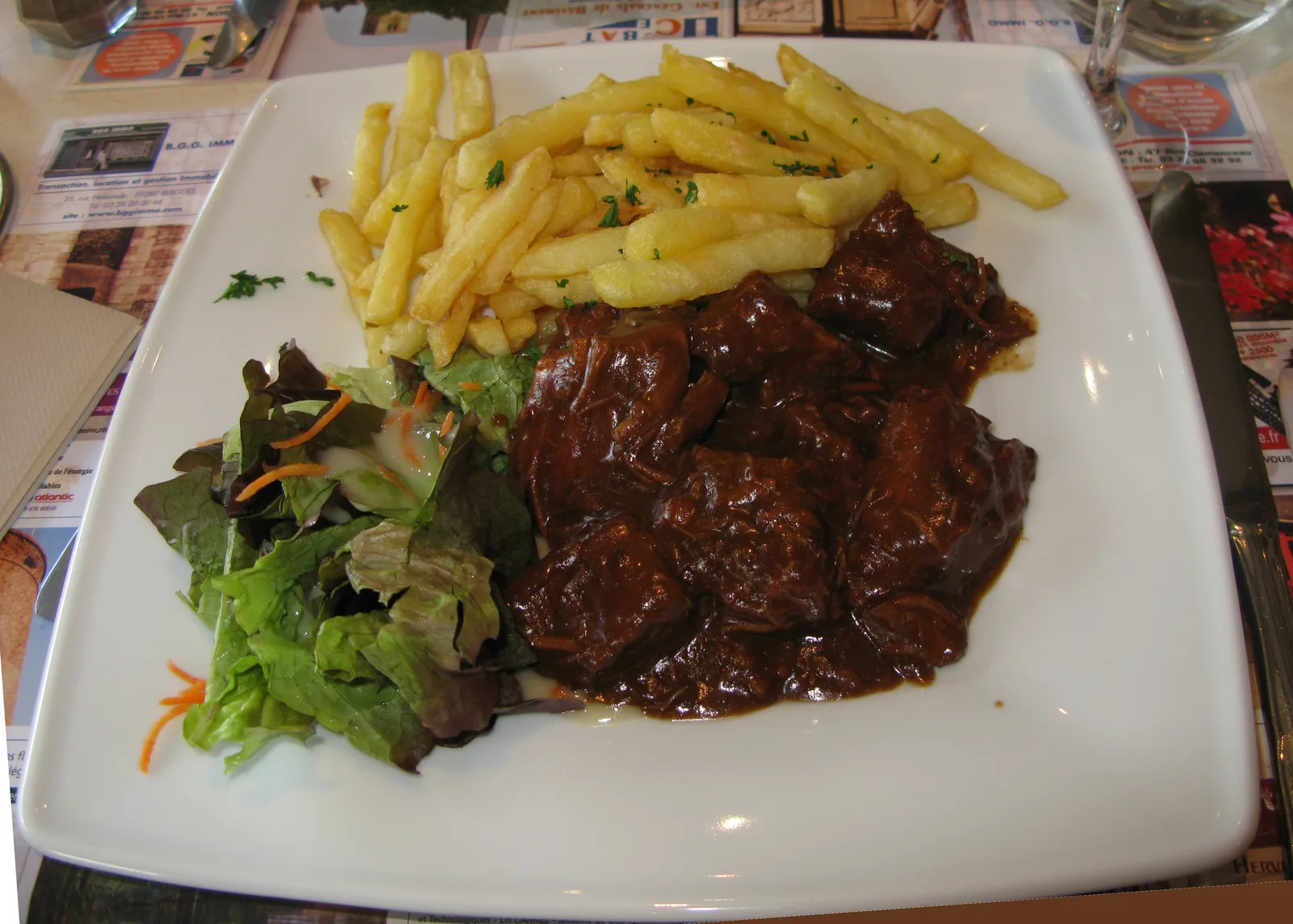
Carbonade flamande — dark beer-braised beef stew with fries and a small salad on a white plate Belgium flag Belgium 2h 55m
Dinner •Flemish Farmhouse Classic

Carbonade Flamande

This carbonade flamande recipe is Flanders' answer to the French beef stew: chunks of beef braised for hours in dark Belgian ale with sweet caramelised onions, thyme and bay, thickened the old way with slices of bread spread with mustard. The sauce turns dark, glossy and sweet-sour, and the beef goes spoon-tender. One serving is about 250 g, not counting the fries or potatoes served alongside.

Slow Sunday Comfort

Beef braised low and slow in dark Belgian ale with onions and mustard bread.

Pairs Well With
Dark Belgian ale & fries
High Protein
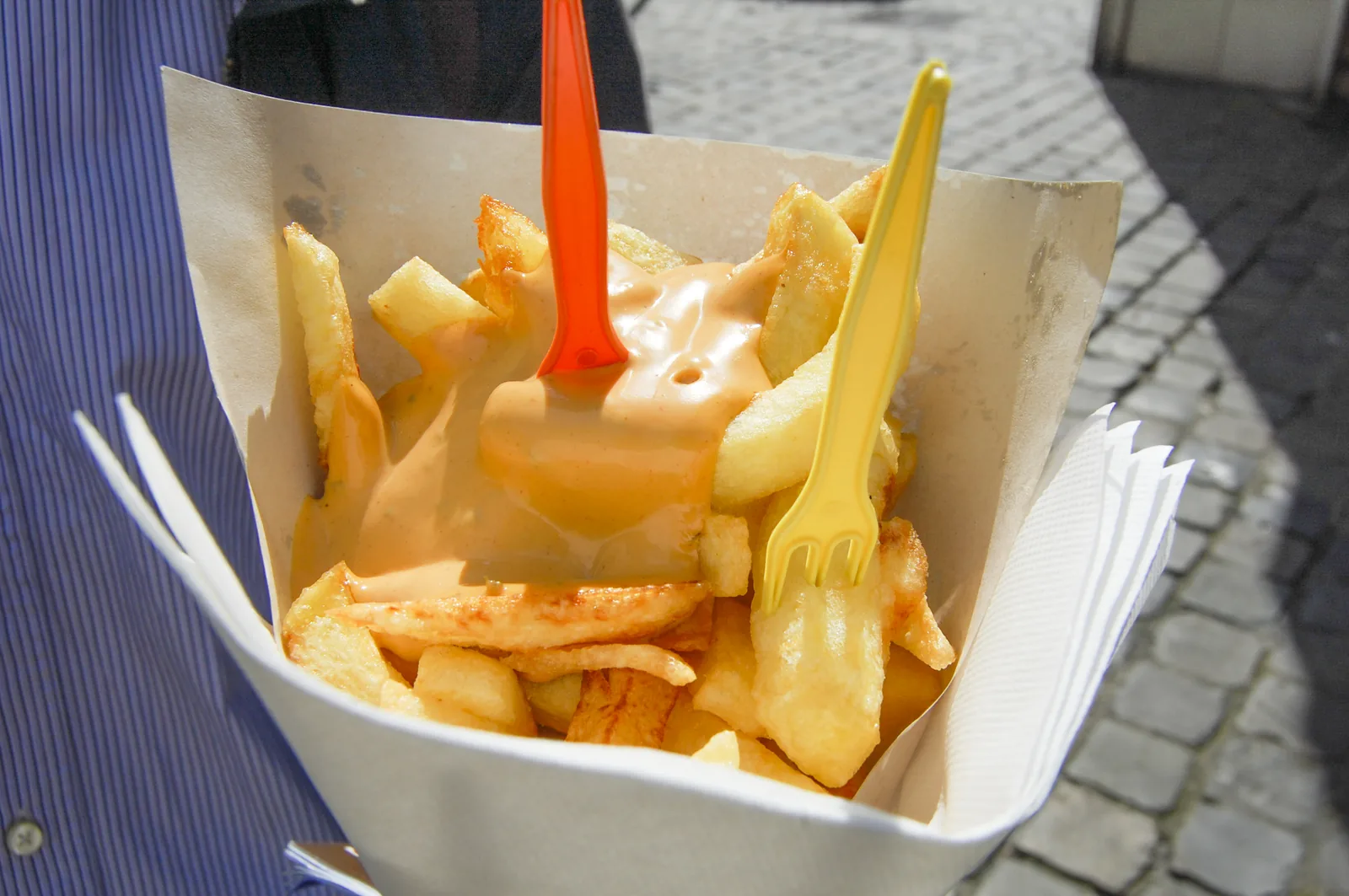
A paper cone of golden Belgian fries topped with andalouse sauce and two small plastic forks. Belgium flag Belgium 55m
Snack & Tea •Brussels Friterie Classic

Belgian Fries

Belgian fries are the real thing: thick batons of floury potato, fried twice — once gently to cook them through, once hot to shatter the outside — and served in a paper cone with andalouse sauce. One serving is about 253 g.

Crisp & Golden

Thick-cut potatoes fried twice in vegetable oil — crisp outside, fluffy inside, with andalouse sauce.

Pairs Well With
Serve hot in a paper cone with andalouse sauce and a cold lager.
Quick Prep (<30m)

The Dinner Gazette

Never wonder what’s for dinner again

One email a week with easy dinner ideas from around the world — ingredients, steps and nutrition, tested in our kitchen first.

Delivered every Thursday morning. Unsubscribe anytime.