-
1
Mix the Braising Sauce
5 Mins
Room temperature, ~20°C (68°F)
Whisk the gochujang, soy sauce, sugar, minced garlic, grated ginger and gochugaru into the water until the paste has fully dissolved and the liquid is an even brick red.
If the gochujang is stiff, whisk it with a little of the water first, then add the rest — lumps of paste will not dissolve once the pot is hot.
Done when: The liquid is smooth and evenly red, with no streaks of paste.
-
2
Brown the Chicken
8 Mins
Medium-high heat, ~180°C (350°F)
Heat the vegetable oil in a wide, heavy pot over medium-high heat. Add the chicken in a single layer and cook for 4 minutes a side, until the edges turn golden. Work in two batches if the pot is crowded.
Browning is for flavour, not for cooking through — the braise finishes the chicken, so do not worry if the middle is still pink.
Done when: The chicken is golden at the edges and the pot smells savoury, not burnt.
-
3
Add the Sauce and Vegetables
5 Mins
High heat, ~200°C (400°F)
Return all the chicken to the pot, pour in the braising sauce and add the potatoes and carrots. Bring to a lively boil, then turn the heat down until the liquid barely bubbles.
Scrape the browned bits off the bottom of the pot as the sauce goes in — that is where much of the flavour lives.
Done when: The sauce is boiling gently and the vegetables are covered by the liquid.
-
4
Braise Until Tender
30 Mins
Low heat, ~95°C (200°F), lid on
Cover with a lid and braise for 25 minutes, then add the onion wedges and cook for 5 minutes more. The chicken should read 74°C (165°F) at the thickest part and the potatoes should be soft when pierced with a knife.
Keep the heat low — a hard boil tears the chicken apart and turns the potatoes to mush.
Done when: The chicken is tender, the potatoes are soft, and the sauce has thickened slightly.
-
5
Reduce and Finish
5 Mins
Medium heat, ~160°C (320°F)
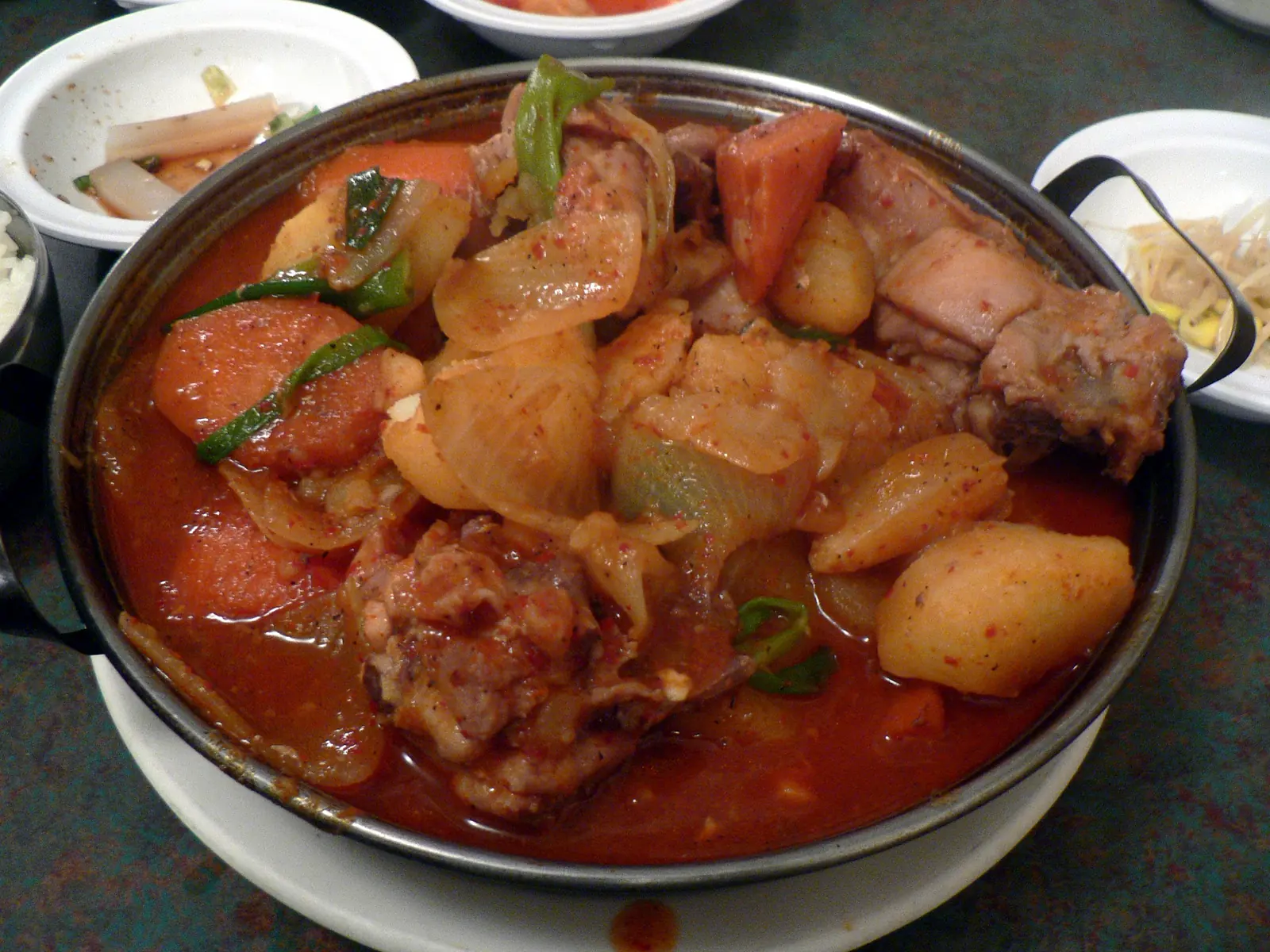
Take the lid off and cook for 5 minutes, stirring gently, until the sauce turns glossy and coats the chicken. Stir in the sesame oil, scatter the scallions and sesame seeds over the top, and serve straight from the pot.
If the sauce is still thin, cook 2 minutes more uncovered; if it looks dry, add a splash of water.
Done when: The sauce clings to every piece and the chicken is fall-apart tender.
auto_awesome Finishing Touches & Plating
Spoon the dakbokkeumtang into wide bowls with plenty of sauce, or set the pot in the middle of the table and let everyone help themselves. Eat it while it is still steaming — the potatoes firm up as they cool.

 South Korea
1h 5m