Curated recipes from 193 countries  •  New seasonal Mediterranean issue out now

Overview

Dal Bhat

Dal Bhat Tarkari; Dhal Bhat; Dal Chawal; Nepali Dal Bhat

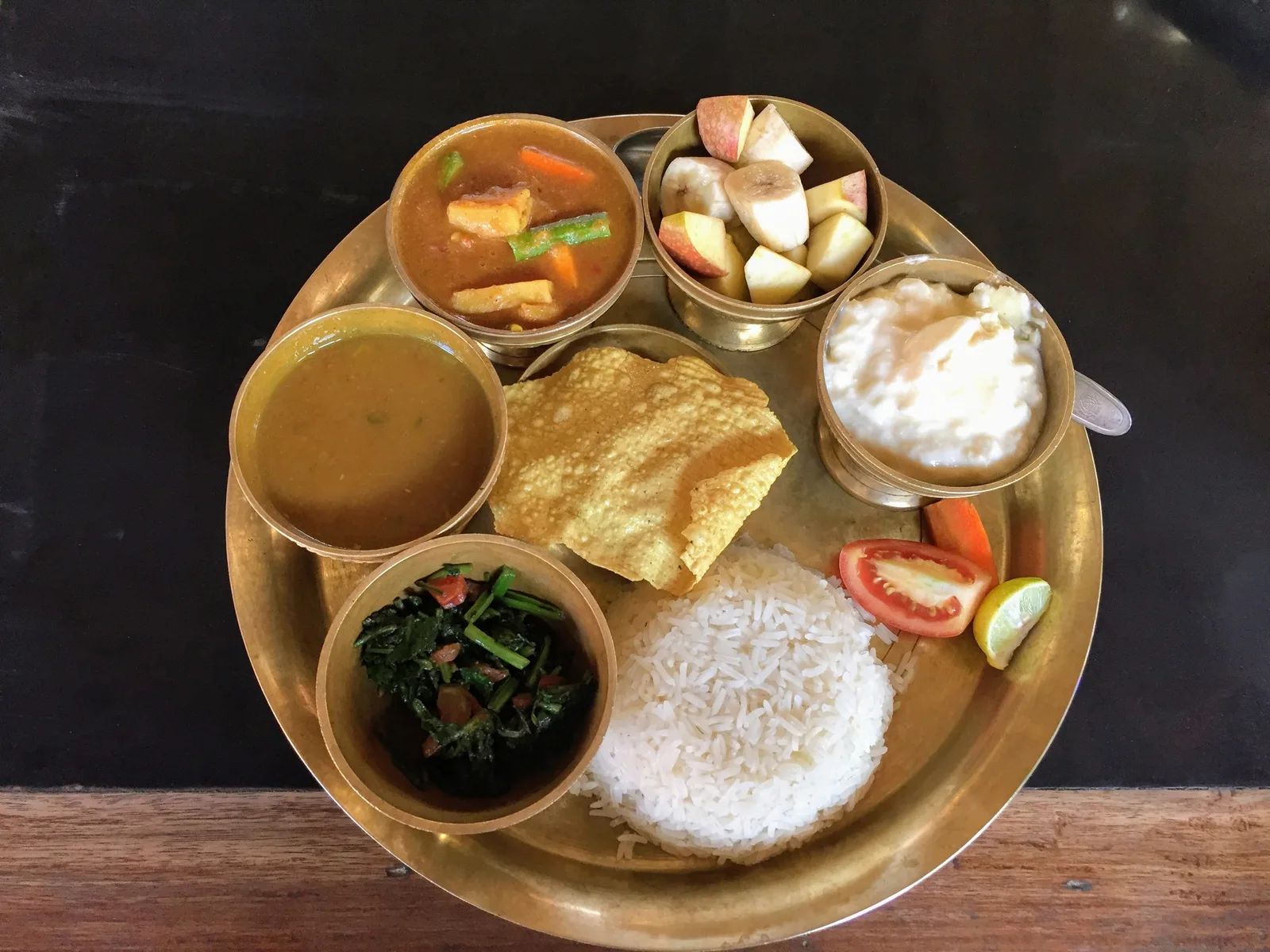
This dal bhat recipe is Nepal's everyday dinner plate: a mound of steamed basmati rice with a bowl of golden lentil dal, potato and cauliflower tarkari, wilted spinach saag, cool yogurt and a crisp papad, all served together on one plate. The dal is finished with a sizzling tempering of cumin, garlic and ginger in ghee, and a squeeze of lemon wakes the whole plate up. One serving is about 610 g.

Dal bhat is the national dish of Nepal and the everyday meal of most Nepali households, eaten twice a day in many homes — the saying goes that dal bhat gives you power for 24 hours. The full plate is really dal bhat tarkari: dal (lentil soup), bhat (rice) and tarkari (vegetable curry), always with saag (greens) and usually with achar (pickle), yogurt and papad on the side. The best-known restaurant version is Thakali dal bhat, named for the Thakali people of the Himalaya, where the set meal is served on a brass or steel thali and refills keep coming until the eater covers the plate.

Pairs well with: Tomato achar, cucumber salad & masala chiya

Provenance

Nepal flag Nepal

Nepal's National Dish

East & South Asia

Time Dedication

1h 5m

20m prep • 45m cook

Batch Yield

4 Servings

754 kcal per serving

1 serving ≈ 610 g

Technical Skill

Intermediate

Easy (Everyday Plate)

Meal Timing & Digestive Fit

Breakfast

Not Advised

Lunch

Hearty Midday Main

Dinner

Ideal Hearty Main

Snack & Tea

Inappropriate

Occasions: Weeknight dinners, family meals, vegetarian dinners, cold-weather comfort food, feeding a crowd cheaply Cost: Low — about $2–3 per serving at home
Nepali dal bhat on a brass thali — a mound of white rice with bowls of yellow dal, vegetable tarkari, saag greens, yogurt and papad, with fresh fruit

Nepal's National Dish

Photo: Subhashish Panigrahi, CC BY-SA 4.0, via Wikimedia Commons

The Heritage Formulary

Measured Ingredients

Estimated cost: Low — about $2–3 per serving at home (USD)

Nepali home cooking: lentils simmered soft, steamed rice, vegetable tarkari and saag served together on one plate.

Execution Methodology & Culinary Technique

Step-by-Step Cooking Guide

Active 1h 5m
P

Prep Stage: Lentils and Rice Rinsed, Vegetables Chopped

20 Mins • Rinsing, Chopping & Measuring

Rinse the red lentils in several changes of cold water until the water runs clear, and do the same for the basmati rice, then leave the rice to soak for 15 minutes while you work. Peel and cube the potatoes, cut the cauliflower into small florets, wash the spinach and strip off any tough stems, chop the tomatoes and onion, and mince the garlic and grate the ginger. Measure out the ghee, oil, spices and salt so everything is ready when the pans are hot.

Maestro Tip: Soak the rice while you chop — the soak is what makes basmati steam up fluffy instead of sticky.

  1. 1

    Rinse the Lentils and Rice

    10 Mins • Rinsing Room temperature, about 20°C (68°F)

    Put the lentils in a bowl, cover with cold water and swish them with your hand, then pour the cloudy water away. Repeat 3–4 times until the water runs clear, and pick out any small stones as you go. Do the same for the rice, then leave the rice to soak in clean cold water for 15 minutes and drain it well.

    Do not skip the rinse — it washes off the dusty coating on the lentils and the surface starch that makes rice sticky.

    Done when: Rinsing water runs clear; rice drained and ready.

  2. 2

    Cook the Rice

    20 Mins • Boiling & Steaming Rolling boil, 100°C (212°F), then lowest heat to steam

    Put the drained rice in a saucepan with 600 ml (2 1/2 cups) of the water and a pinch of the salt. Bring to a rolling boil over high heat, stir once, then turn the heat to the lowest setting, cover with a tight lid and cook for 15 minutes without lifting the lid. Take the pan off the heat and leave it covered for 5 minutes, then fluff the rice gently with a fork.

    Never lift the lid while the rice steams — the trapped steam is what finishes cooking the top grains.

    Done when: Rice tender and fluffy, every grain separate, no water left in the pan.

  3. 3

    Simmer the Dal

    25 Mins • Simmering Gentle simmer, about 95°C (200°F)

    Put the rinsed lentils in a large saucepan with 800 ml (3 1/3 cups) of water, half the chopped onion, half the chopped tomatoes, the grated ginger, the turmeric and the slit green chillies. Bring to a gentle simmer over medium heat, skim off any foam that rises, then cook for 20–25 minutes, stirring now and then, until the lentils have fallen apart into a thick, golden soup. Stir in half the salt and keep the dal warm over the lowest heat.

    If the dal gets too thick, stir in a splash of hot water — it should pour like thick soup, not sit like porridge.

    Done when: Lentils completely soft and broken down, dal thick enough to coat a spoon.

  4. 4

    Cook the Potato and Cauliflower Tarkari

    20 Mins • Frying & Simmering Medium heat, about 160°C (320°F)

    Heat the vegetable oil in a wide pan over medium heat. Add the remaining onion and cook for 3–4 minutes until soft, then add the remaining garlic and cook for 1 minute more. Stir in the coriander powder and garam masala, then add the potatoes, cauliflower and remaining tomatoes with a splash of water. Cover and cook for 15–18 minutes, stirring now and then, until the potatoes are tender all the way through. Season with the remaining salt and scatter over half the coriander leaves.

    Cut the potato cubes small and even — big cubes stay hard in the middle while the cauliflower turns to mush.

    Done when: Potatoes tender when pierced with a knife, cauliflower soft but holding its shape.

  5. 5

    Wilt the Spinach Saag

    5 Mins • Wilting Medium heat, about 160°C (320°F)

    While the tarkari cooks, melt half the ghee in a second pan over medium heat. Add the washed spinach a handful at a time, stirring as it wilts down — the whole pile will collapse into a small mound in 3–4 minutes. Season with a pinch of salt and take it off the heat while the leaves are still bright green.

    Do not cover the pan — trapped steam turns the spinach dull and grey instead of bright green.

    Done when: Spinach fully wilted, bright green, with no water pooling in the pan.

  6. 6

    Temper the Dal and Build the Plates

    5 Mins • Tempering & Plating Ghee heated to about 180°C (350°F); serve hot, above 60°C (140°F)

    Melt the remaining ghee in a small pan over medium-high heat until it shimmers. Add the cumin seeds — they should crackle and pop at once — then add the remaining garlic and cook for 30 seconds until golden. Pour the sizzling mixture straight over the hot dal; it will hiss loudly. Roast the papads one at a time over a flame or in a dry pan until they blister and crisp. To serve, mound rice on each plate with a bowl of dal, a spoonful of tarkari, a spoonful of saag, a dollop of yogurt and a papad, and squeeze lemon over the rice.

    Have the dal ready and the bowls beside the pan before you heat the ghee — the tempering takes 30 seconds and there is no time to hunt for a bowl.

    Done when: Tempering sizzling and fragrant, dal steaming hot, papads crisp and blistered.

Finishing Touches & Plating

Spoon the sizzling tempering over the dal just before serving so the cumin crackles and the garlic smells fill the kitchen, then squeeze lemon over the rice. Set the plate down hot, with the yogurt and papad on the side, and eat it while the dal is still steaming.
Nutritional Physiology & Benefits

Nutrition

Energy

754

kcal / serving

Protein

28g

Complete AA

Carbs

129g

Complex

Fats

16g

Healthy

Per serving (4 servings · 1 serving ≈ 610 g)
Energy754 kcal
Protein28 g
Carbohydrates129 g
Fat16 g
Fibre15.1 g
Sugar8.9 g
Sodium762 mg
Per 100g
Energy124 kcal
Protein4.6 g
Carbohydrates21.2 g
Fat2.6 g
Fibre2.5 g
Sugar1.5 g
Sodium125 mg

Nutrition values are estimated — calculated from USDA FoodData Central values for the listed ingredients.

Vitamins & minerals: Folate and iron (lentils, spinach), vitamin C (tomatoes, chillies, lemon), vitamin A (spinach, cauliflower), calcium (yogurt) and potassium (potatoes, lentils). All nutrition values are estimated.

A Plate That Fills You Up

About 754 kcal and 28 g of protein per serving make this a genuinely substantial dinner — one plate carries you through the evening.

Simple, Whole Ingredients

Lentils, rice, potatoes, cauliflower, spinach, tomatoes and yogurt — nothing processed, and the flavour comes from whole spices rather than a packet.

Iron, Folate and Calcium

Lentils and spinach provide iron and folate, nutrients that support normal red blood cell formation, while the yogurt adds calcium.

Food Pairings

What to Eat With

To optimize nutrient absorption and elevate the sensory depth, pair with these authentic accompaniments:

Sauces

Tomato Achar (Spicy Pickle)

A sharp, sour tomato pickle cuts through the mild, earthy dal and wakes the whole plate up — a spoonful is all it takes.

Vegetables

Cucumber and Tomato Salad

Cool cucumber and tomato give the plate a fresh crunch that balances the soft lentils, soft potatoes and warm spices.

Drinks

Masala Chiya (Spiced Milk Tea)

A hot, milky spiced tea after the meal is the classic Nepali finish — it settles a big plate and stretches the evening out.

More Pairings

Fresh Seasonal Fruit

Fresh seasonal fruit, like the apple and banana in the photograph, cleanses the palate after the spices and ends the meal lightly.

Complete menu

Serve the dal bhat plate with a spoonful of tomato achar on the side, a cucumber and tomato salad for crunch, and a cup of hot masala chiya afterwards, finishing with fresh seasonal fruit.

Digestive Guardrails

What NOT to Combine

To prevent digestive distress, sluggishness, or palate clash, avoid pairing the dish with these elements:

Rice Left Standing at Room Temperature

Cooked rice left at room temperature can grow bacteria that reheating does not always destroy. Serve the rice hot and refrigerate leftovers within 2 hours. This is general food-safety information, not medical advice.

Extra Ghee Over the Whole Plate

Pouring extra melted ghee all over the finished plate adds a lot of saturated fat for little flavour — the dal already carries its tempering. One spoonful over the rice is plenty. This is a cooking note, not medical advice.

General information only, not medical advice — consult a doctor for personal dietary decisions.

Who Should Eat It

Who Should Eat

  • General adultsA complete, filling dinner — one 610 g plate with 754 kcal and 28 g of protein is a full meal for most adults.
  • ChildrenChildren can eat the rice, dal and tarkari; leave the green chillies out of their portion and cut the papad into small pieces.
  • ElderlySoft, easy to chew and easy to digest once the lentils are cooked soft; serve a modest portion and go easy on the salt and chillies.
  • Pregnant womenServe freshly cooked and piping hot, with the yogurt and vegetables for extra calcium and folate. Ask your clinician about portion size.
  • Breastfeeding womenFilling and energy-rich, with lentils, rice and yogurt for steady energy; drink plenty of water alongside. Ask your clinician about portion size.
  • AthletesAbout 28 g of protein and 129 g of carbohydrate per serving make this a strong post-training dinner; the rice replaces glycogen after a hard session.
  • Weight gainEnergy-dense at 754 kcal a serving — take a full plate, add an extra spoonful of ghee over the rice and a second papad.
  • Weight lossAt 754 kcal a serving this is a big dinner — take a smaller mound of rice, load up on the dal, tarkari and saag, and skip the second papad.

Health Conditions — Adjust or Avoid

Conditions

  • DiabetesAbout 129 g of carbohydrate per serving, mostly from the rice — keep the rice mound modest and fill the rest of the plate with dal, tarkari and saag. Ask your clinician about portion size.
  • High blood pressureAbout 762 mg of sodium per serving, much of it from the papad and the salt — skip the papad and use less salt in the dal. Ask your clinician about portion size.
  • Kidney diseaseHigh in potassium from the lentils, potatoes and spinach, and moderate in protein — keep portions modest and skip the papad. Ask your clinician about portion size.
  • GoutLentils contain purines, so enjoy this as an occasional meal in a modest portion rather than every day if you are managing uric acid. Ask your clinician about portion size.
  • Stomach issuesWell-cooked lentils and plain rice are usually gentle, but the chillies, spices and raw onion in the salad can irritate — leave the chillies out and eat slowly. Ask your clinician about portion size.
  • Cardiovascular diseaseThe plate is plant-based and rich in fibre, but the ghee adds saturated fat — use oil instead of ghee for the tempering and skip the extra ghee on the rice. Ask your clinician about portion size.
  • Fatty liverA wholesome, fibre-rich plate, but at 754 kcal it is a large dinner — take a smaller portion of rice and go easy on the ghee. Ask your clinician about portion size.
  • Food allergiesContains milk (ghee and yogurt) and legumes (lentils and papad); papad is usually gluten-free but check the packet. This is general information, not medical advice.
  • Special therapeutic dietsNaturally vegetarian and gluten-free as written; for a vegan plate use oil instead of ghee and skip the yogurt or use a plant yogurt. Ask your clinician or dietitian before adapting it.

If you have a medical condition, consult your doctor before changing your diet.

Storage & Use

Storage & Use

How to store
Cool within 2 hours, then store the dal, rice, tarkari and saag in separate sealed containers.
In the fridge
3 days, in sealed containers, dal and rice stored separately.
In the freezer
2 months for the dal and tarkari; 1 month for the rice. Papad keeps crisp in an airtight tin and should not be frozen.
How to reheat
Reheat the dal, rice and tarkari in a pan or microwave until steaming hot all the way through, to 74°C (165°F), adding a splash of water to the dal if it has thickened.
Freezing recommended
Yes for dal, tarkari and rice; no for the papad and yogurt.
Signs it has spoiled
Sour smell from the dal or yogurt, slimy spinach, or rice that smells stale or feels slimy.

More recipes to explore

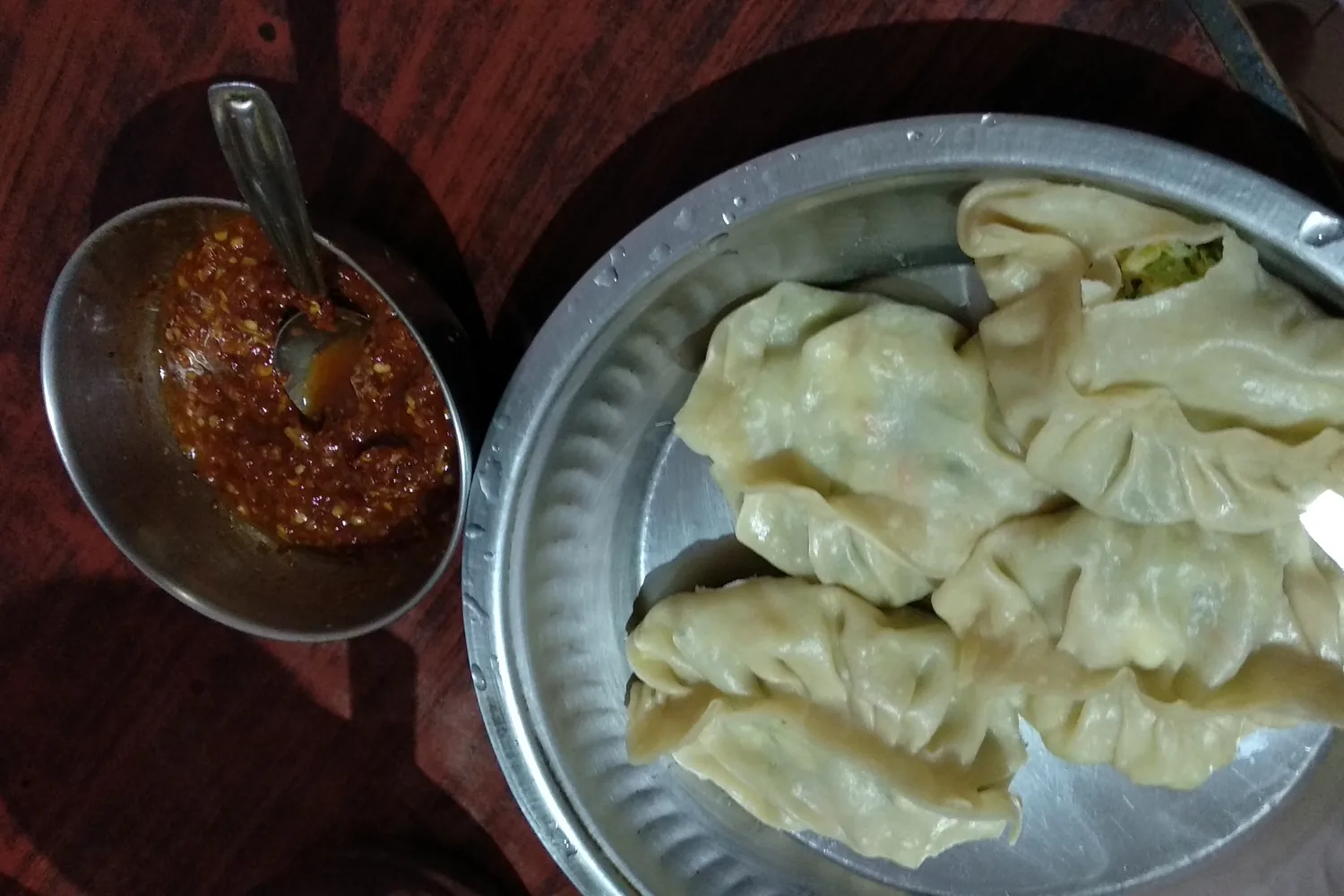
Nepalese momo — steamed chicken dumplings on a steel plate with a bowl of red chilli achar Nepal flag Nepal 1h 25m
Dinner •Nepalese Street-Food Favourite

Nepalese Momo

This nepalese momo recipe wraps spiced ground chicken, onion, cabbage, ginger and coriander in paper-thin wrappers, steams the little pleated dumplings until juicy, and serves them hot with a fiery tomato-sesame achar. One serving is about 410 g.

Comfort & Warmth

Small steamed dumplings filled with spiced chicken, served hot with a fiery tomato-sesame achar.

Pairs Well With
Tomato-sesame achar, cucumber salad, hot masala chiya
High Protein
A pile of golden-brown sel roti — crisp ring-shaped Nepali rice doughnuts Nepal flag Nepal 1h 5m
Snack & Tea •Nepal Festival Classic

Sel Roti

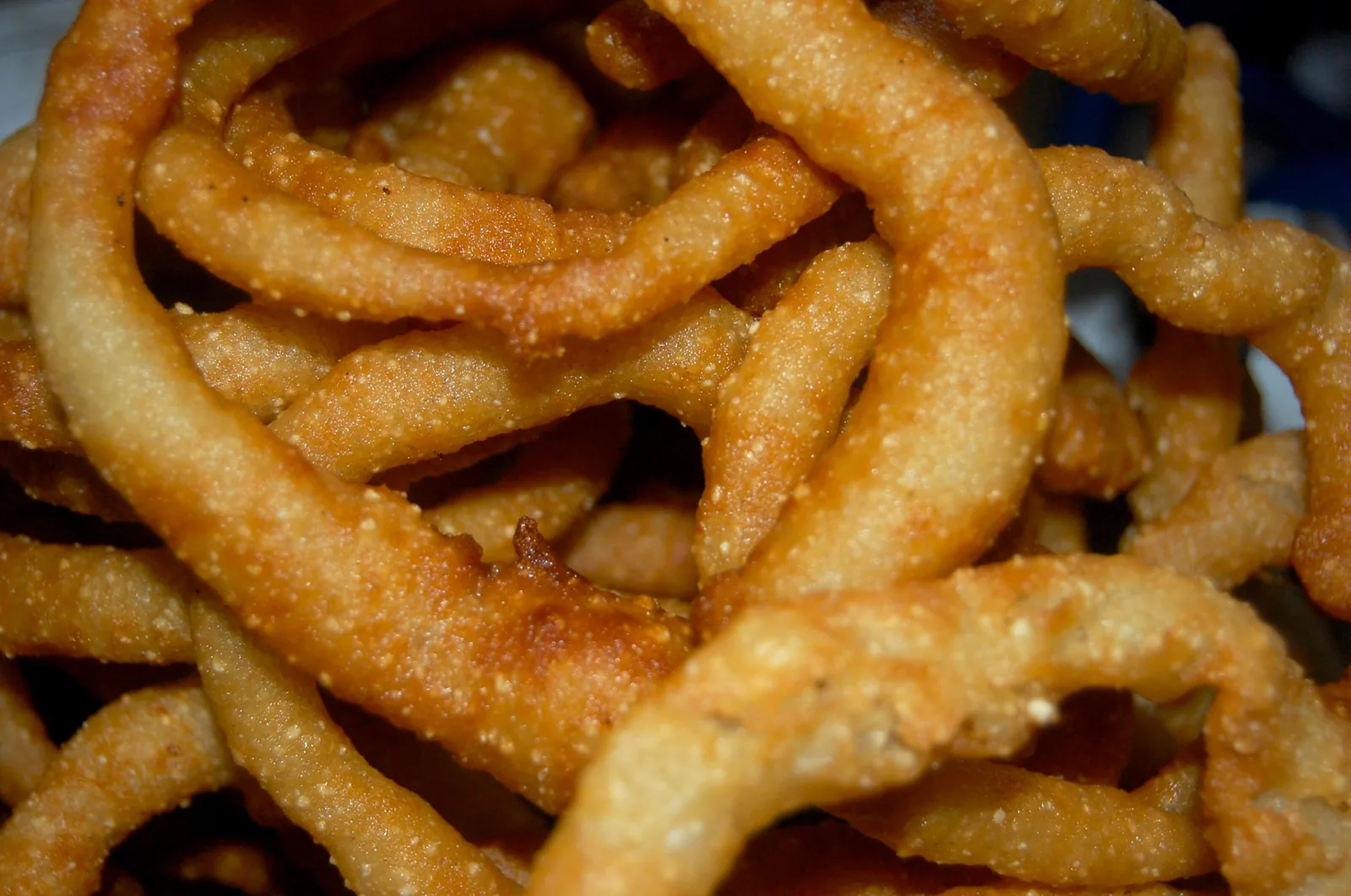
This sel roti recipe makes Nepal's beloved ring-shaped rice doughnuts: a sweet batter of soaked rice, banana, sugar and cardamom, poured in a circle into hot oil and fried until crisp outside and soft inside. The rings are best eaten warm, pulled apart by hand, with a cup of milky chiya. One serving is about 115 g (2 rings).

Festive Sweet Snack

A sweet, crisp-edged ring to share with tea at festivals and family gatherings.

Pairs Well With
Milky chiya, aloo achar & plain yoghurt
Bœuf bourguignon — French beef braised in red wine France flag France 4h
Dinner •Burgundy Terroir

Bœuf Bourguignon

Beef braised gently in red wine until the connective tissue melts into a velvet, gelatin-rich sauce — the classic Burgundy Sunday dinner.

Cellular Repair

Beef braised in red wine until spoon-tender, with mushrooms and pearl onions.

Pairs Well With
Parsnip Purée & Steamed French Haricots Verts
High Protein
Vietnamese braised pork belly with golden eggs in caramel sauce Vietnam flag Vietnam 1h 45m
Dinner •One Pot

Vietnamese Braised Pork and Eggs

Pork belly slowly braised in coconut water and caramel until meltingly tender, with golden eggs that soak up the sweet-savoury sauce — the Vietnamese family dish that tastes better the next day.

Comfort & Sustained Energy

Slow-braised pork belly and eggs in coconut water and caramel.

Pairs Well With
Steamed rice & pickled mustard greens
High Protein

The Dinner Gazette

Never wonder what’s for dinner again

One email a week with easy dinner ideas from around the world — ingredients, steps and nutrition, tested in our kitchen first.

Delivered every Thursday morning. Unsubscribe anytime.