
Curated recipes from 193 countries  •  New seasonal Mediterranean issue out now

Overview

Dendeng Balado

West Sumatran Crispy Beef with Red Chili Sambal

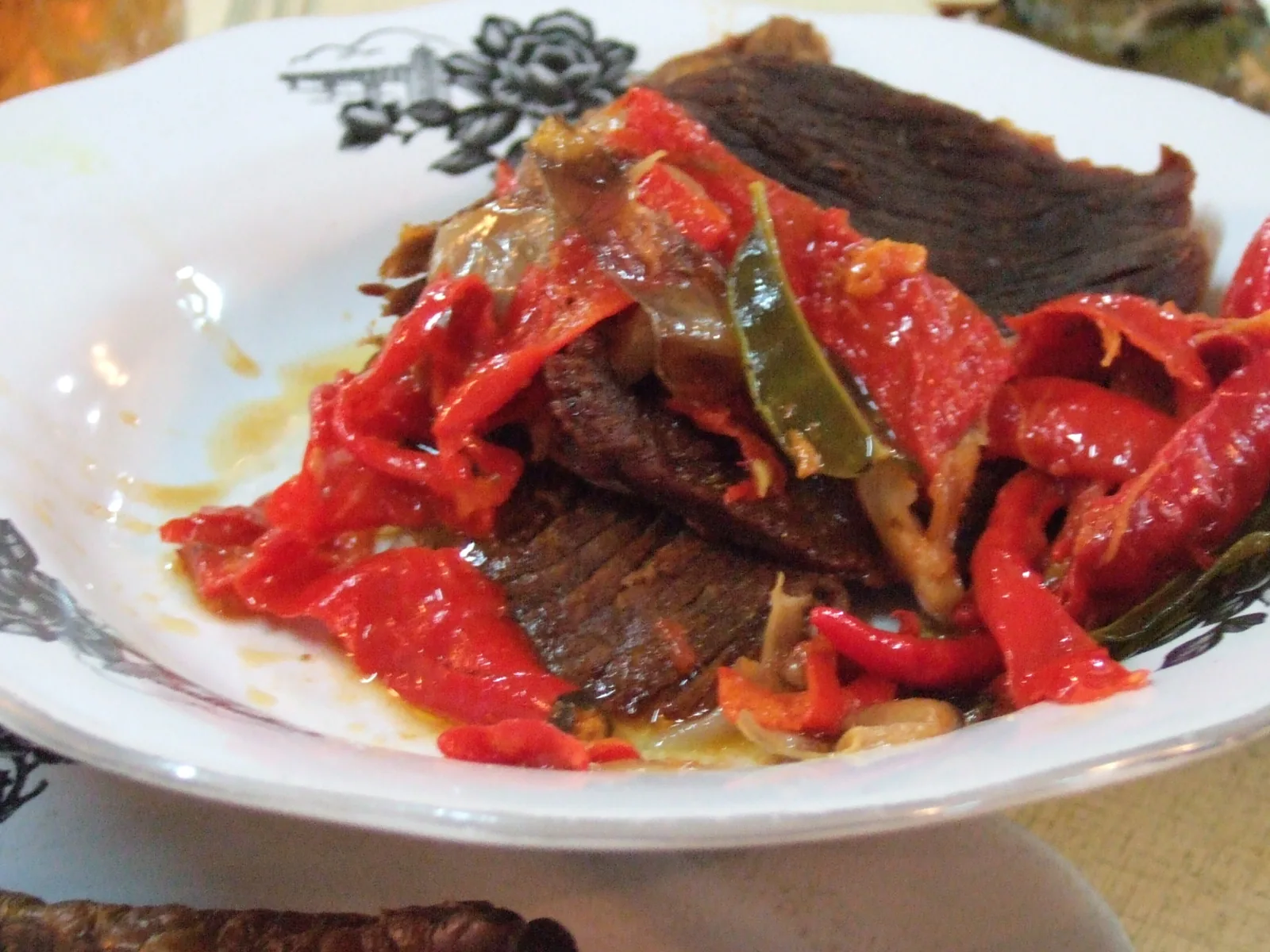
Thin slices of beef are simmered in garlic and spices, pounded flat, fried until crisp, then tossed in a fiery red chili balado with shallots and tomato. It is the Minangkabau answer to a steak night — crunchy, spicy and deeply savoury. One serving is about 170 g.

Dendeng comes from the Minangkabau kitchens of West Sumatra, where beef was sliced thin, seasoned and fried so it would keep in the tropical heat. Balado — the fiery red chili sambal pounded with shallots and tomato — is the region's signature sauce, and the combination is a fixture of Padang restaurants, where it sits among dozens of small dishes on the table. It is not empal gepuk: empal is simmered in coconut milk and spices until sweet and savoury, then fried, while dendeng balado is pounded flat, fried crisp and coated in fiery chili.

Pairs well with: Steamed jasmine rice, cucumber slices & iced tea

Provenance

Indonesia flag Indonesia

West Sumatra Heritage

East & South Asia

Time Dedication

1h 15m

25m prep • 50m cook

Batch Yield

4 Servings

421 kcal per serving

1 serving ≈ 170 g

Technical Skill

Intermediate

Intermediate (Pound & Fry)

Meal Timing & Digestive Fit

Breakfast

Not Advised

Lunch

Prime Metabolic Fit

Dinner

Ideal Hearty Main

Snack & Tea

Inappropriate

Occasions: Lunch, family meals, Padang restaurant feasts, spicy food nights Cost: Moderate — about $4–5 per serving at home
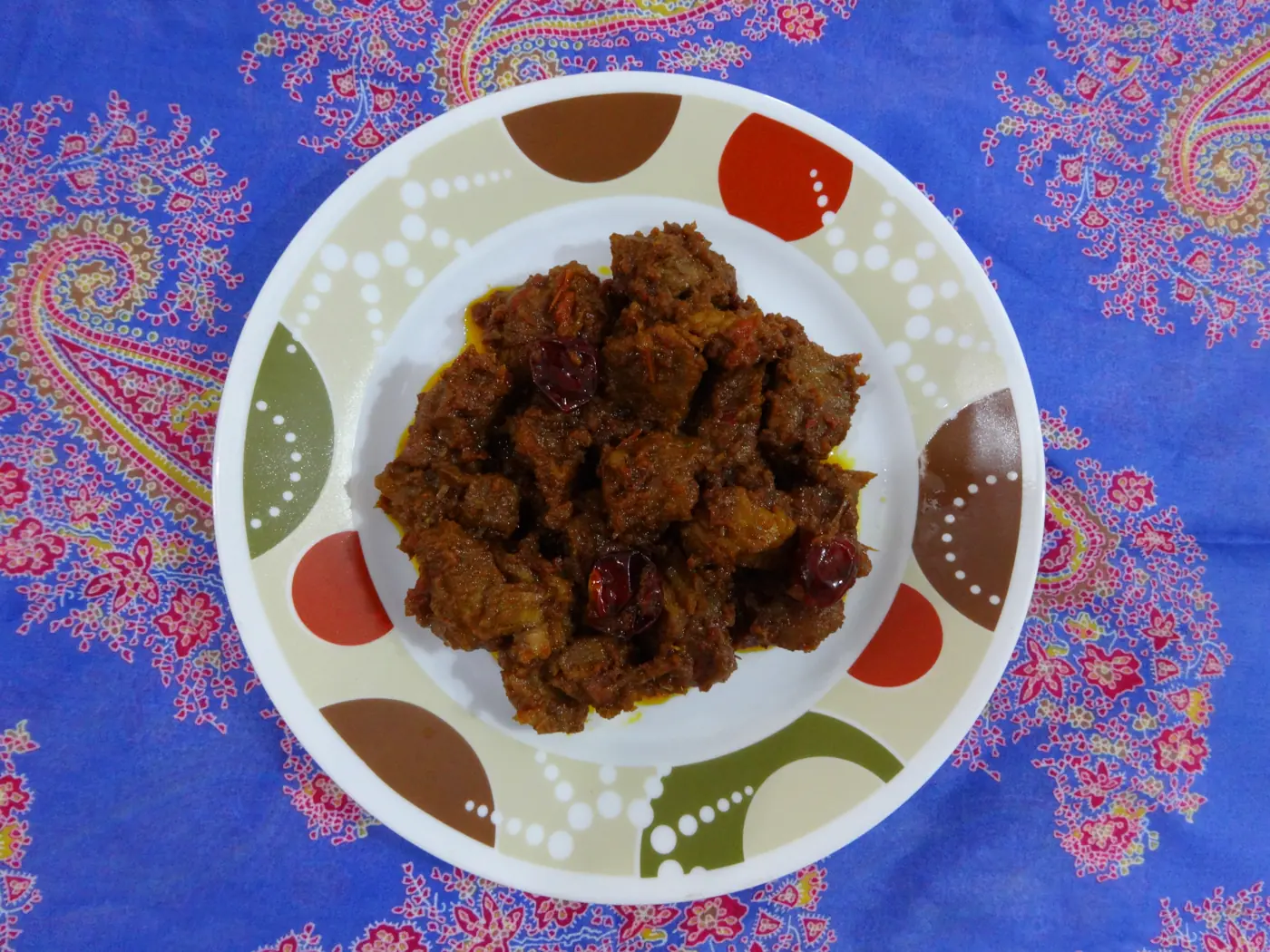
Crispy dark beef slices piled with bright red chili balado on a white plate

West Sumatra Heritage

Photo: Midori, CC BY-SA 3.0, via Wikimedia Commons

The Heritage Formulary

Measured Ingredients

Estimated cost: Moderate — about $4–5 per serving at home (USD)

Good dendeng balado is judged by the contrast: beef that shatters when you bite it, under a sambal that is hot, glossy and just a little sweet.

Execution Methodology & Culinary Technique

Step-by-Step Cooking Guide

Active 1h 15m
P

Prep Stage: Slice, Simmer & Pound

25 Mins • Knife Work

Slice the beef thin against the grain, then simmer it gently with garlic, ginger, galangal and tamarind until just tender. Lift the slices out, pat them dry, and pound each one flat with a pestle or rolling pin — this is what makes dendeng shatteringly crisp instead of chewy. While the beef cools, roughly chop the chilies, shallots, garlic and tomato for the balado.

Maestro Tip: Pat the beef completely dry before frying: wet beef steams, dry beef crisps.

  1. 1

    Simmer the Beef

    30 Mins Gentle simmer, ~95°C (203°F)

    Put the beef, garlic, ginger, galangal, tamarind water and half the salt in a pot, cover with water and simmer gently for 30 minutes until tender but not falling apart.

    Keep the simmer gentle — boiling hard toughens the beef.

    Done when: Beef yields to a fork but still holds its shape.

  2. 2

    Pound the Beef Flat

    10 Mins No heat

    Lift the slices out, pat them dry, and pound each one to about half its thickness with a pestle or meat mallet, working from the centre out.

    Pound on a damp board so the slices do not slide around.

    Done when: Slices are about 2 mm thick, with the fibres visibly loosened.

  3. 3

    Fry Until Crisp

    10 Mins Oil at 170°C (338°F)

    Heat the oil and fry the slices in small batches for 2–3 minutes per side until deep brown and crisp at the edges; drain on a wire rack.

    Do not crowd the pan — the temperature drops and the beef turns greasy.

    Done when: Deep mahogany brown, rigid when lifted, sizzling stops.

  4. 4

    Make the Balado

    10 Mins Medium heat, ~160°C (320°F)

    In 2 tbsp of the frying oil, fry the shallots, garlic and chilies for 3 minutes, add the tomato and lime leaves and cook for 5 minutes until the oil separates and the sambal turns glossy; season with the remaining salt and sugar.

    The sambal is ready when the oil glistens red at the edges of the pan.

    Done when: Thick, glossy, brick-red; the raw chili smell is gone.

  5. 5

    Toss and Serve

    2 Mins Off the heat

    Return the crisp beef to the pan and toss quickly so every slice is coated, then serve at once with steamed rice.

    Toss off the heat so the beef stays crisp under its chili coat.

    Done when: Every slice glossed red, still crackling crisp.

Finishing Touches & Plating

Serve the dendeng balado hot, piled over steamed jasmine rice with cool cucumber on the side — the rice and cucumber are not garnish, they are the balance to the chili heat.

Nutritional Physiology & Benefits

Nutrition

Energy

421

kcal / serving

Protein

36g

Complete AA

Carbs

17g

Complex

Fats

24g

Healthy

Per serving (4 servings · 1 serving ≈ 170 g)
Energy421 kcal
Protein36 g
Carbohydrates17 g
Fat24 g
Fibre2.0 g
Sugar7.5 g
Sodium572 mg
Per 100g
Energy248 kcal
Protein21 g
Carbohydrates9.7 g
Fat13.9 g
Fibre1.2 g
Sugar4.4 g
Sodium336 mg

Nutrition values are estimated — calculated from USDA FoodData Central values for the listed ingredients.

Vitamins & minerals: Vitamin B12 and iron (beef), vitamin C (red chilies and tomato), vitamin B6 (garlic and shallots).

Iron-Rich Protein

Beef supplies heme iron and B12, the nutrients that carry oxygen and keep energy steady.

Slow-Burn Energy

A high-protein, low-carbohydrate plate that keeps you full for hours without a sugar crash.

Chili Warmth

Capsaicin in red chilies brings a gentle warming heat and supports appetite.

Food Pairings

What to Eat With

To optimize nutrient absorption and elevate the sensory depth, pair with these authentic accompaniments:

Sides

Steamed Jasmine Rice

Soft, plain rice soaks up the chili oil and cools the heat between bites.

Kerupuk (Prawn Crackers)

Light, salty crunch that echoes the crisp beef and adds a second texture.

Vegetables

Cucumber & Tomato Salad

Cool, watery crunch that resets the palate after each fiery mouthful.

Drinks

Iced Tea, Unsweetened

Cold, unsweetened tea rinses the chili heat without adding sugar.

Complete menu

Serve dendeng balado as the centrepiece with steamed jasmine rice, cucumber salad and iced tea; add a simple vegetable soup if the table needs a second dish.

Digestive Guardrails

What NOT to Combine

To prevent digestive distress, sluggishness, or palate clash, avoid pairing the dish with these elements:

Milk or Creamy Desserts Immediately After

Dairy fat coats the mouth and traps capsaicin against the tongue, which can make the burn linger rather than fade; wait a little before dessert. This is general information, not medical advice.

Eating All the Chili Seeds if You Are Sensitive

The seeds and membranes hold most of the capsaicin; if your stomach is sensitive, remove them before cooking. This is general information, not medical advice.

General information only, not medical advice — consult a doctor for personal dietary decisions.

Who Should Eat It

Who Should Eat

  • General adultsA bold, satisfying lunch — high in protein, with real chili heat.
  • ChildrenBest for older children who enjoy spicy food; remove the chili seeds and serve a small portion with plenty of rice for younger ones.
  • ElderlySuitable in small portions; the beef is crisp rather than chewy, but go easy on the chili if digestion is sensitive.
  • Pregnant womenGenerally suitable if the beef is fried through and the chili level is comfortable; keep the portion moderate.
  • Breastfeeding womenGenerally suitable; very spicy food can unsettle some babies, so watch for any reaction and adjust the chili.
  • AthletesA strong post-training plate: about 36 g of protein per serving with rice for glycogen.
  • Weight gainA good choice — add a second helping of rice and eat the full portion of beef.
  • Weight lossKeep the portion to one serving, load up on cucumber salad, and go easy on the rice.

Health Conditions — Adjust or Avoid

Conditions

  • DiabetesLow in carbohydrate on its own; the rice is the main carbohydrate, so keep that portion modest. Ask your clinician if you are unsure.
  • High blood pressureGo easy on the added salt and eat a smaller portion — the sambal and fried beef carry a fair amount of sodium. Ask your clinician if you are unsure.
  • Kidney diseaseLimit the portion: beef and salt both add to the kidney load. Ask your clinician about portion size.
  • GoutEat occasionally and in smaller portions — beef is high in purines. Ask your clinician if you are unsure.
  • Stomach issuesThe chili balado can irritate a sensitive stomach; remove the seeds and eat a small portion with plenty of rice. Ask your clinician if you are unsure.
  • Cardiovascular diseaseChoose lean topside, keep the frying oil modest, and balance the plate with salad. Ask your clinician if you are unsure.
  • Fatty liverKeep the portion modest and favour the lean beef over extra fried pieces; load up on cucumber. Ask your clinician if you are unsure.
  • Food allergiesContains no common allergens as written; check that the tamarind paste and oil are free of peanut traces if you have a peanut allergy. Ask your clinician if you are unsure.
  • Special therapeutic dietsIf you follow a prescribed low-sodium or low-purine diet, use less salt and a smaller beef portion, and check with your clinician.

If you have a medical condition, consult your doctor before changing your diet.

Storage & Use

Storage & Use

How to store
Cool completely, then store beef and sambal together in an airtight container.
In the fridge
3 days.
In the freezer
Plain fried beef (before the sambal) 2 months; coated dendeng does not freeze well.
How to reheat
Reheat in a hot oven at 180°C (350°F) for 5 minutes, or in a dry pan, until heated through to 74°C (165°F); do not microwave — it goes soggy.
Freezing recommended
No — the crisp coating softens on thawing; freeze the plain fried beef instead.
Signs it has spoiled
Sour or rancid smell, slimy surface, or mould on the chili.

More recipes to explore

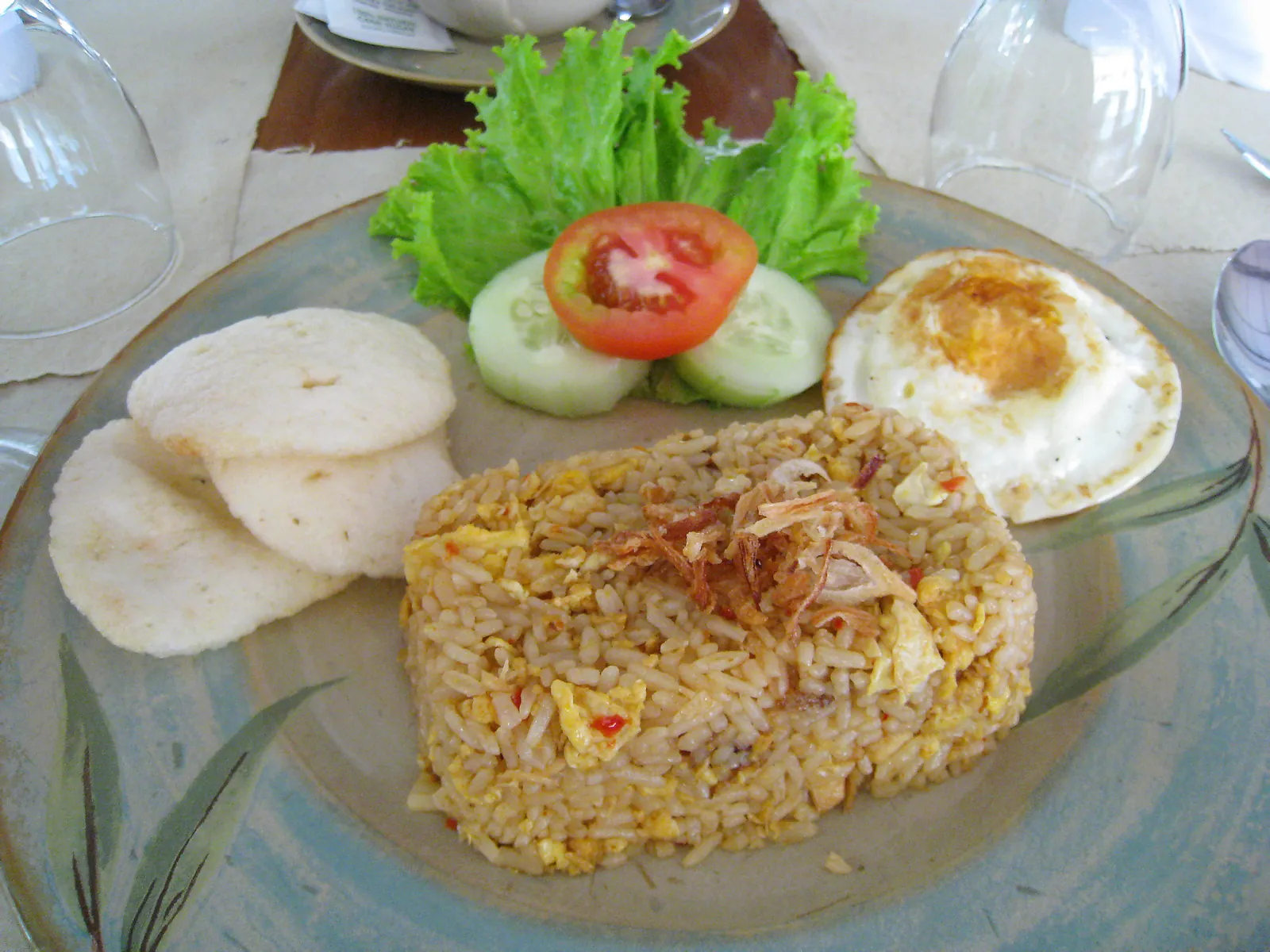
Indonesian nasi goreng — a mound of fried rice with egg and fried shallots, a fried egg, prawn crackers, cucumber, tomato and lettuce Indonesia flag Indonesia 35m
Dinner •Jakarta Street Classic

Indonesian Nasi Goreng

This Indonesian nasi goreng recipe turns a bowl of day-old rice into something far better than the sum of its parts: smoky, sweet-savoury grains coated in kecap manis, tossed with chicken, carrot and peas, and crowned with a fried egg and crunchy prawn crackers. It is the kind of dinner that comes together in one wok in about half an hour, and it tastes like a Jakarta street stall at its best. One serving is about 470 g.

Comfort & Satisfying

A one-wok dinner of sweet-savoury fried rice, chicken and a fried egg, served the Indonesian way with cucumber, tomato and prawn crackers.

Pairs Well With
A fried egg on top, cool cucumber and tomato, and a handful of prawn crackers, with iced tea to drink.
Quick Prep (<30m)
A plate of beef rendang — dark brown beef chunks coated in a dry, caramelised spice paste Indonesia flag Indonesia 4h
Dinner •West Sumatra Heritage

Beef Rendang

This beef rendang recipe slow-braises beef chuck in coconut milk with lemongrass, galangal, chillies and warm spices for about four hours, until the sauce has almost disappeared and the meat is coated in a dark, dry, caramelised spice paste. It is the Minangkabau dish from West Sumatra that sits at the heart of Padang cooking: deeply savoury, gently hot, and rich without being saucy. One serving is about 380 g.

Rich & Satisfying

Slow-braised beef in spiced coconut milk, reduced until the meat is coated in a dark, caramelised spice paste.

Pairs Well With
Steamed jasmine rice & pickled cucumber (acar timun)
High Protein
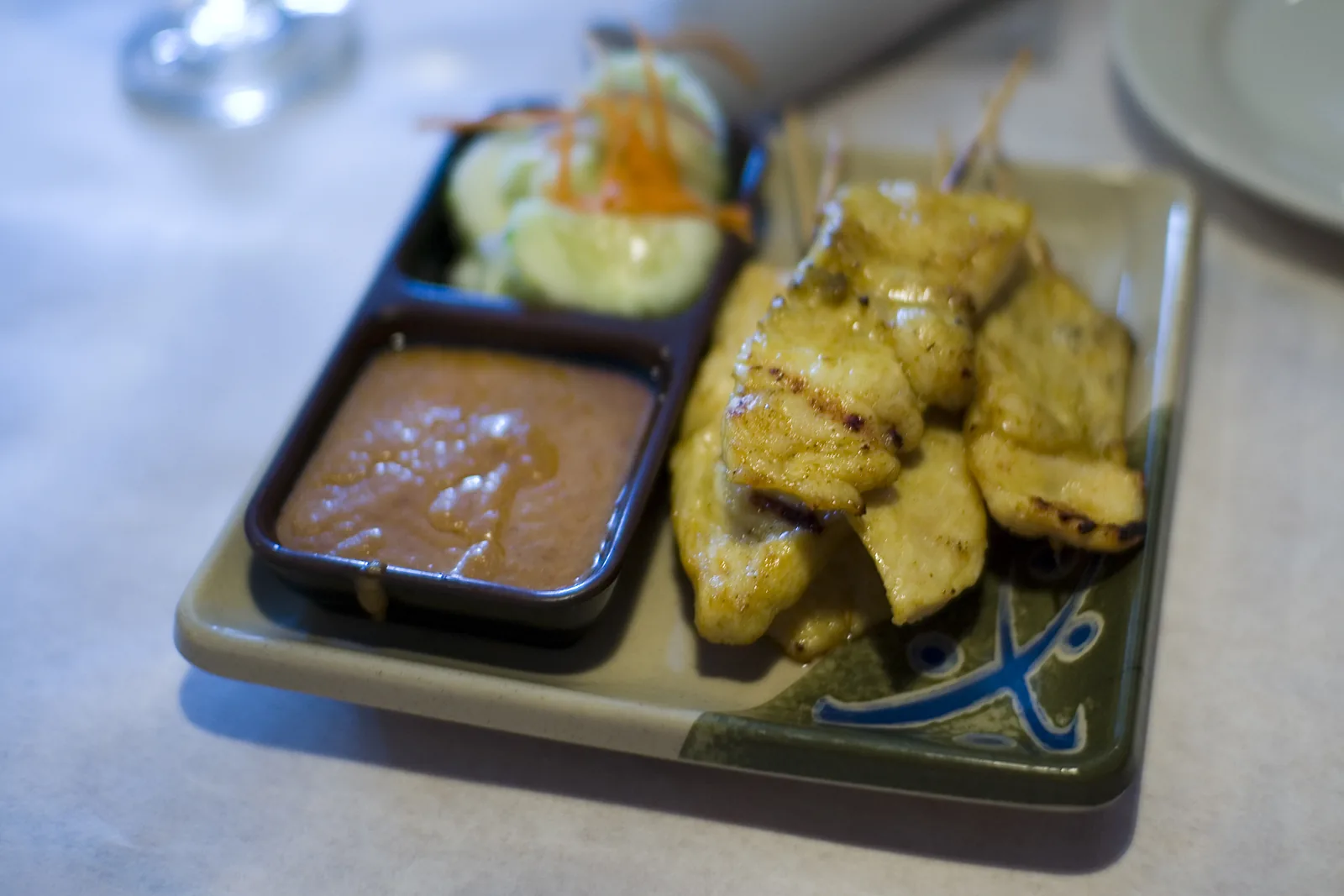
Grilled chicken satay skewers with peanut sauce and cucumber salad on a plate Indonesia flag Indonesia 45m
Dinner •Java Street Food

Chicken Satay

This chicken satay recipe turns chicken breast into golden, char-edged skewers marinated in turmeric, coconut milk, garlic and sweet soy sauce, then grilled and served with a warm, creamy peanut sauce. One serving is about 290 g: three skewers, a generous spoonful of peanut sauce and a cool cucumber-shallot salad. It is the Indonesian street-food classic — sate ayam — made for a weeknight grill.

High-Protein Grilling

Grilled chicken skewers in a turmeric-coconut marinade, served with a homemade peanut sauce — high in protein and cooked fast over high heat.

Pairs Well With
Lontong rice cakes and a cool cucumber-shallot salad balance the rich peanut sauce.
High Protein • Quick Prep (<30m)
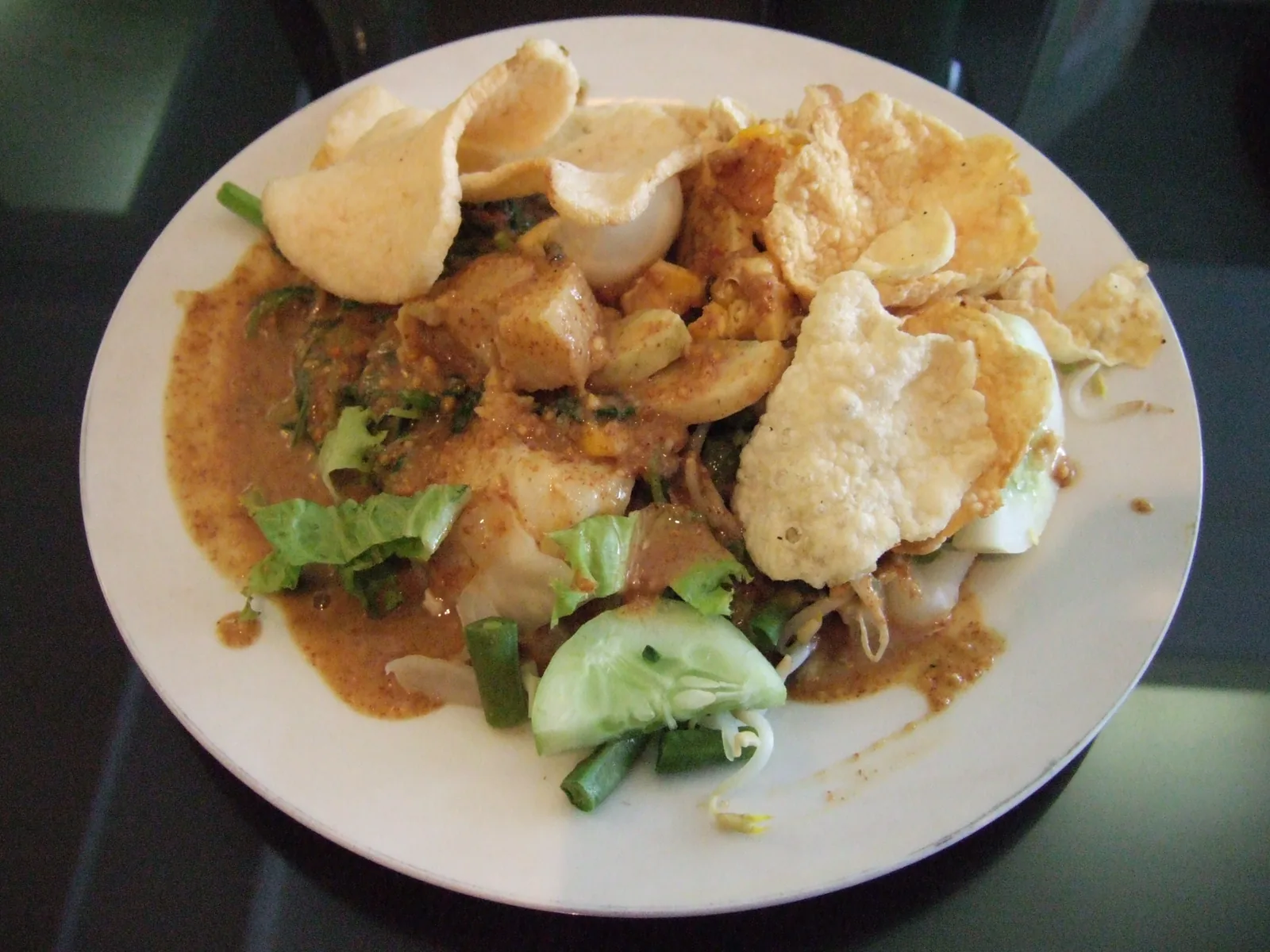
A plate of gado-gado: mixed vegetables, tofu and boiled egg coated in peanut sauce, topped with prawn crackers and cucumber slices. Indonesia flag Indonesia 45m
Lunch •Jakarta Street Food Classic

Gado-Gado

Gado-gado is Indonesia's best-loved salad: warm potatoes, green beans, cabbage, bean sprouts, cucumber and carrot, with fried tofu, boiled egg and crunchy prawn crackers, all coated in a thick, sweet-savoury peanut sauce. One serving is about 584 g.

Fresh & Filling

Warm vegetables, tofu and egg under a rich peanut sauce — a complete meat-free lunch.

Pairs Well With
Serve warm with prawn crackers on the side and a glass of iced tea.

The Dinner Gazette

Never wonder what’s for dinner again

One email a week with easy dinner ideas from around the world — ingredients, steps and nutrition, tested in our kitchen first.

Delivered every Thursday morning. Unsubscribe anytime.