Curated recipes from 193 countries  •  New seasonal Mediterranean issue out now

Overview

Dominican Empanadas

Pastelitos, Dominican pastelitos de carne

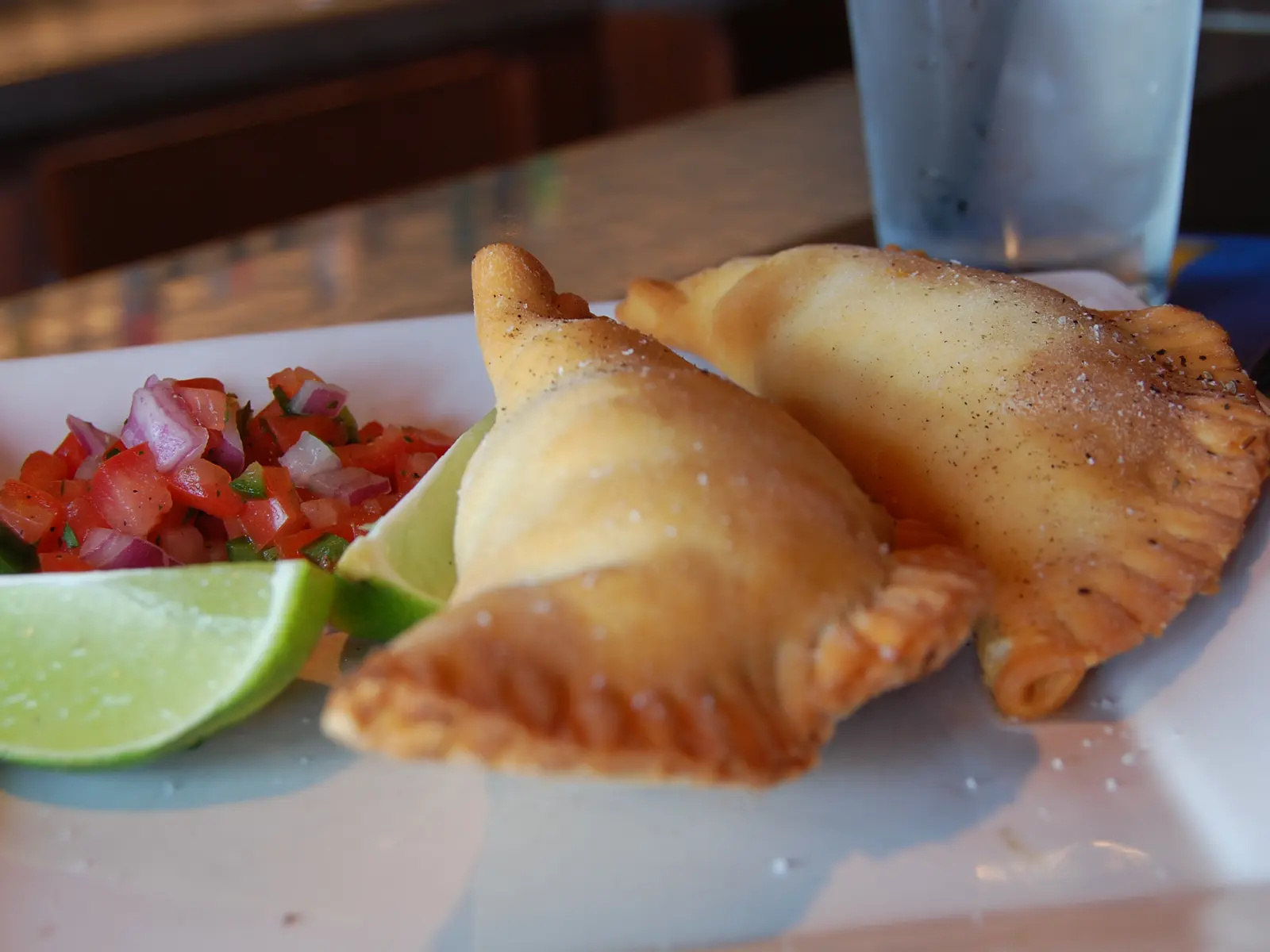
This Dominican empanadas recipe makes the fried market turnovers of the Dominican Republic: a flaky wheat-flour pastry, fork-crimped around a savoury beef picadillo stewed with sofrito, tomato paste and sazón, with melted mozzarella inside. Unlike the baked Argentine empanada and the corn-masa empanadas of Belize, these are fried until blistered and golden, and they are served hot with lime wedges and pico de gallo. One serving (one empanada) is about 165 g.

Empanadas reached the Dominican Republic with Spanish settlers, who brought the wheat-flour turnover from Spain, and they became a market staple as pastelitos, sold fried and hot from street stalls and colmados. Dominican cooks made the form their own with a picadillo filling — ground beef stewed with sofrito, tomato paste and sazón — and a fork crimp instead of the rope crimp of the Argentine baked empanada, and with cheese melted inside. They are the snack of beach days, parties and family gatherings across the island.

Pairs well with: Serve hot with lime wedges and pico de gallo, and a cold drink on the side.

Provenance

Dominican Republic flag Dominican Republic

Dominican Market-Food Heritage

Latin America & Caribbean

Time Dedication

1h 30m

60m prep • 30m cook

Batch Yield

8 Servings

479 kcal per serving

1 serving ≈ 165 g

Technical Skill

Intermediate

Medium (Dough & Frying)

Meal Timing & Digestive Fit

Breakfast

Not Advised

Lunch

Inappropriate

Dinner

Inappropriate

Snack & Tea

Ideal Light Bite

Occasions: Street-food nights, parties, beach snacks, family gatherings, game days Cost: Low — about $2–3 per serving at home
Tags: Beef Savory Fried
Two golden fried Dominican empanadas with fork-crimped edges on a white plate with pico de gallo and lime wedges

Dominican Market-Food Heritage

Photo: stu_spivack, CC BY-SA 2.0, via Wikimedia Commons

The Heritage Formulary

Measured Ingredients

Estimated cost: Low — about $2–3 per serving at home (USD)

Good Dominican empanadas are blistered and deep gold outside, with a flaky pastry that shatters a little when you bite it, and a juicy, well-seasoned filling inside — never pale, soggy or burst open.

Execution Methodology & Culinary Technique

Step-by-Step Cooking Guide

Active 1h 30m
P

Prep Stage: Dough, Picadillo, Rest

60 Mins • Bowl, Pan & Rolling Pin

Make the pastry first and let it rest for 30 minutes while you cook the picadillo — the rest makes the dough easy to roll thin without springing back. Cook the beef with the onion, pepper, garlic and tomato paste until the pan is almost dry, then cool it completely before you add the cheese, or the cheese melts early and leaks out in the fryer.

Maestro Tip: A dry filling is the whole secret — if the picadillo is wet, the empanadas burst open in the oil.

  1. 1

    Make the pastry

    15 minutes + 30 minutes resting Room temperature, about 20°C (68°F)

    Mix the flour (400 g), salt (6 g), baking powder (4 g) and sugar (5 g) in a large bowl. Add the oil (30 ml) and rub it in with your fingertips until the flour looks like coarse crumbs. Pour in the water (180 ml) a little at a time and knead for 5 minutes until the dough is smooth and soft, not sticky. Cover with a clean cloth and leave it to rest for 30 minutes.

    If the dough feels dry, add water a teaspoon at a time — a soft dough rolls thin without tearing.

    Done when: Dough smooth, soft and rested.

  2. 2

    Cook the beef picadillo

    18 minutes Medium heat, about 160°C (320°F)

    Heat a little of the frying oil in a wide pan and cook the onion (120 g) and green pepper (80 g) for 3 minutes until soft. Add the garlic (12 g) and cook for 1 minute more. Add the ground beef (450 g), breaking it up with a spoon, and cook for 8 minutes until it is browned all over and reaches 71°C (160°F). Stir in the tomato paste (30 g), oregano (2 g), cumin (2 g), paprika (3 g), black pepper (2 g) and salt (4 g), and cook for 5 more minutes, stirring, until the pan is almost dry.

    Keep the heat up at the end so the liquid cooks off — the filling must be dry, not saucy.

    Done when: Beef browned through to 71°C (160°F), pan almost dry.

  3. 3

    Cool the filling and add the cheese

    10 minutes Room temperature, about 20°C (68°F)

    Tip the picadillo onto a plate and spread it out to cool completely, about 10 minutes. Once it is cool, mix in the mozzarella (100 g). Taste and add a little more salt if it needs it — the filling should taste well seasoned on its own.

    Never mix the cheese into hot filling — it melts, clumps and leaks out during frying.

    Done when: Filling cool, cheese mixed through evenly.

  4. 4

    Roll, fill and seal

    15 minutes Room temperature, about 20°C (68°F)

    Divide the dough into 8 equal pieces and roll each one into a thin circle about 15 cm across. Spoon about 2 tablespoons of filling onto one half of each circle, leaving a 1 cm border. Fold the dough over into a half-moon, press the edges together, and crimp firmly with the tines of a fork. Trim any ragged edge with a knife if you like a neat shape.

    Roll the dough thin — thick pastry stays doughy inside while the outside burns.

    Done when: 8 neat half-moons, edges firmly fork-crimped.

  5. 5

    Fry until golden

    12 minutes Deep-fry 175°C (350°F)

    Heat the oil (500 ml) in a deep, heavy pan to 175°C (350°F). Fry the empanadas 3 or 4 at a time for 2 to 3 minutes a side until deep golden brown and blistered, turning once with tongs. Lift out with a slotted spoon and drain on paper.

    Do not crowd the pan — the oil temperature drops and the empanadas soak up oil instead of crisping.

    Done when: Deep golden brown and blistered, crisp to the touch.

  6. 6

    Drain and serve

    5 minutes Room temperature, about 20°C (68°F)

    Let the empanadas drain for a minute, then serve at once with lime wedges and pico de gallo on the side.

    Serve them hot — the cheese is at its best melted and stretchy in the first few minutes.

    Done when: Empanadas hot, crisp and drained, lime and salsa on the side.

Finishing Touches & Plating

Serve the Dominican empanadas at once, while the pastry is still crisp and the cheese inside is melted — fried empanadas go soft as they cool. Put the lime wedges and pico de gallo on the table and let everyone squeeze and spoon to taste.

Nutritional Physiology & Benefits

Nutrition

Energy

479

kcal / serving

Protein

23g

Complete AA

Carbs

43g

Complex

Fats

24g

Healthy

Per serving (8 servings · 1 serving ≈ 165 g)
Energy479 kcal
Protein23 g
Carbohydrates43 g
Fat24 g
Fibre2.2 g
Sugar2.3 g
Sodium662 mg
Per 100g
Energy290 kcal
Protein14.1 g
Carbohydrates25.9 g
Fat14.4 g
Fibre1.3 g
Sugar1.4 g
Sodium401 mg

Nutrition values are estimated — calculated from USDA FoodData Central values for the listed ingredients.

Vitamins & minerals: Iron and zinc from the beef, calcium from the mozzarella, vitamin C from the green pepper and lime, and potassium from the onion and tomato. Nutrition values are estimated.

High in protein

Each empanada carries about 23.3 g of protein from the beef and the mozzarella, a strong amount for a snack.

Vegetables in the filling

The onion, green pepper and tomato in the picadillo add fibre, vitamin C and potassium to the plate.

Iron, zinc and calcium

Beef and cheese together supply iron, zinc and calcium as part of a varied diet, and the lime wedges add a little vitamin C.

Food Pairings

What to Eat With

To optimize nutrient absorption and elevate the sensory depth, pair with these authentic accompaniments:

Sides

Pico de gallo and lime

The sharp tomato, onion and lime salsa cuts through the rich fried pastry and the melted cheese, which is why Dominican market stalls always serve it alongside.

Drinks

Cold beer or morir soñando

A cold lager or a glass of morir soñando cools the palate between bites of hot, savoury pastry.

Sauces

Wasakaka sauce

A spoonful of wasakaka, the Dominican garlic-herb sauce, adds a garlicky, herby note that suits the beef picadillo.

Vegetables

Green salad with avocado

A simple green salad with avocado turns two empanadas into a balanced light lunch without hiding the pastry.

Complete menu

Serve Dominican empanadas with pico de gallo, lime wedges and a cold Presidente-style lager or a glass of morir soñando, plus a simple green salad if they are lunch.

Digestive Guardrails

What NOT to Combine

To prevent digestive distress, sluggishness, or palate clash, avoid pairing the dish with these elements:

Filling the empanadas with a wet picadillo

A wet filling bursts the pastry and soaks the dough from the inside. Cook the picadillo until almost all the liquid has gone before you fill the empanadas. This is general information, not medical advice.

Serving without warning about gluten and dairy

Wheat flour and cheese are the main allergens here, and the filling is seasoned with cumin and paprika. Tell anyone with a gluten or dairy allergy before serving. This is general information, not medical advice.

General information only, not medical advice — consult a doctor for personal dietary decisions.

Who Should Eat It

Who Should Eat

  • General adultsA satisfying market snack as written; two empanadas with salad make a light lunch.
  • ChildrenChildren love the crisp pastry and mild beef filling; leave the hot sauce off their portion and cut the empanadas in half.
  • ElderlySoft filling and crisp pastry are easy to eat, but the empanadas are fried and salty — one with salad is a sensible portion.
  • Pregnant womenFine when fried fresh and served hot, with the beef cooked right through; avoid lukewarm leftovers from a market stall. Ask your clinician if unsure.
  • Breastfeeding womenFine in a normal portion; no special restriction, though very spicy food can occasionally unsettle a sensitive baby.
  • AthletesA handy post-training snack — about 23.3 g of protein per empanada, with carbohydrate from the pastry for energy.
  • Weight gainAt 479 kcal an empanada with plenty of protein, it is a solid choice for gaining weight.
  • Weight lossEnergy-dense and fried as written, so take one empanada with extra salad and skip a second helping.

Health Conditions — Adjust or Avoid

Conditions

  • DiabetesOne empanada carries about 42.7 g of carbohydrate, mostly from the pastry. Take one empanada with salad and ask your clinician about portion size.
  • High blood pressureAt about 662 mg of sodium per empanada this is a salty snack, mostly from the salt and the cheese. Use less salt in the dough and filling and ask your clinician.
  • Kidney diseaseHigh in protein and sodium, so it may not fit a restricted diet. Ask your clinician or dietitian before eating it.
  • GoutBeef is moderately high in purines, so this dish may matter for some people with gout. Keep portions small and ask your clinician if you have gout.
  • Stomach issuesFried pastry and spicy seasoning can trigger reflux or discomfort for some people. If that is you, skip the hot sauce. Ask your clinician if symptoms persist.
  • Cardiovascular diseaseFried and rich in saturated fat as written, so this is an occasional treat rather than a regular meal. Ask your clinician about how often it fits your diet.
  • Fatty liverEnergy-dense and fried, so keep to one empanada, load up the salad and skip a second helping. Ask your clinician for personalised advice.
  • Food allergiesContains gluten (wheat flour) and milk (mozzarella). The filling also contains cumin and paprika. Ask your clinician if you have a food allergy.
  • Special therapeutic dietsNot suitable for gluten-free or dairy-free diets as written; a gluten-free flour blend and a dairy-free cheese can be tried, though the pastry will be less flaky. Ask your clinician or dietitian before adapting it.

If you have a medical condition, consult your doctor before changing your diet.

Storage & Use

Storage & Use

How to store
Store cooked empanadas in a sealed container lined with paper; keep any leftover filling separate.
In the fridge
Cooked empanadas keep 2 days in the fridge at 4°C (40°F) or below; the uncooked picadillo keeps 3 days.
In the freezer
Unfried empanadas freeze well for up to 1 month, layered between baking paper; fry from frozen, adding 1 to 2 minutes. Do not freeze fried empanadas.
How to reheat
Reheat in a hot oven at 200°C (400°F) for 6 to 8 minutes until crisp and steaming hot, to 74°C (165°F); do not microwave them or the pastry goes soft.
Freezing recommended
Only the unfried empanadas, up to 1 month.
Signs it has spoiled
Sour smell from the filling, slimy pastry, or visible mould — discard if any appear.

More recipes to explore

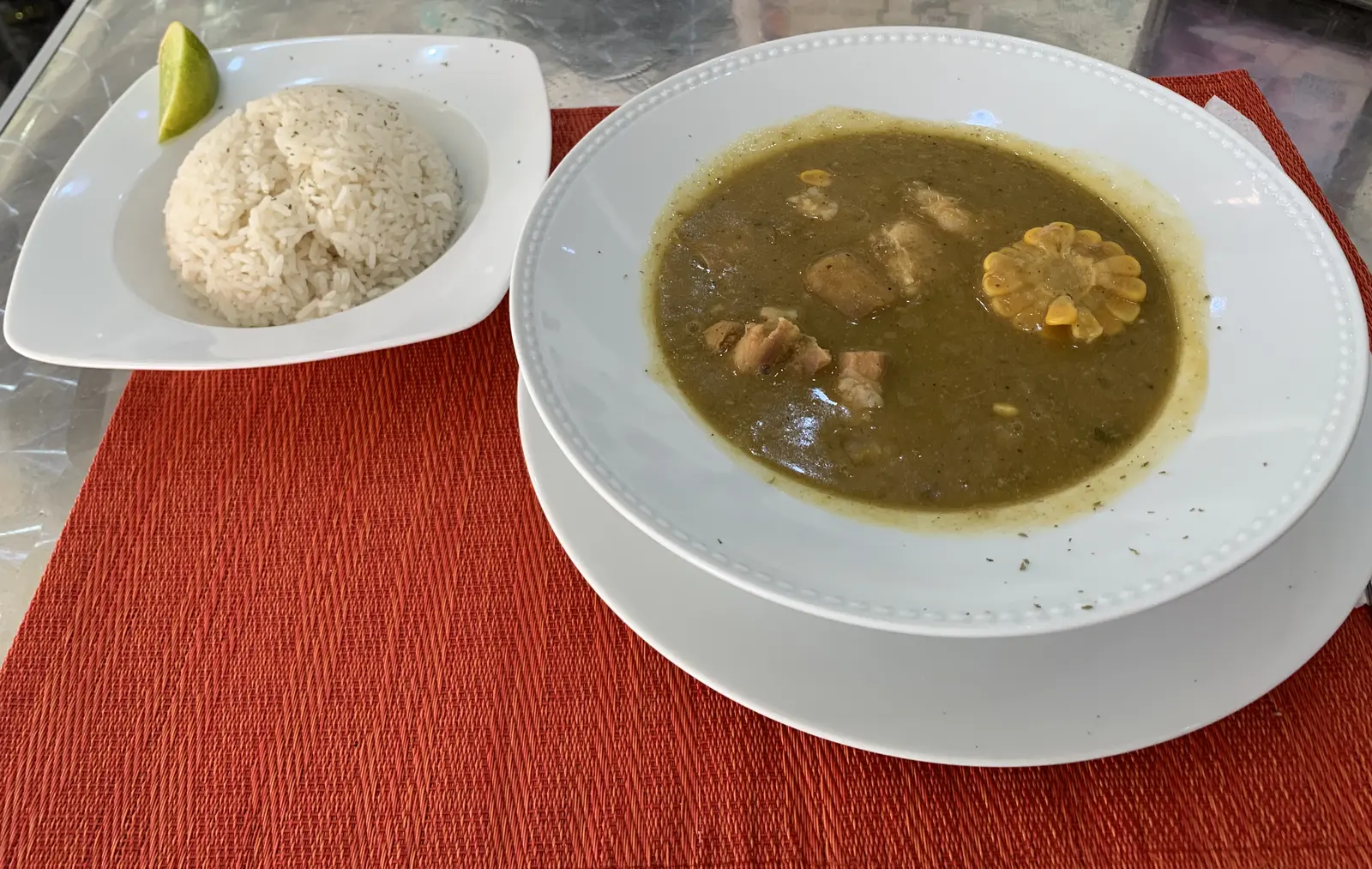
A bowl of Dominican sancocho stew with meat and a round of corn, served with white rice and a lime wedge Dominican Republic flag Dominican Republic 3h 15m
Dinner •Dominican Heritage

Sancocho Dominicano

This sancocho dominicano recipe simmers beef, pork ribs, chicken and longaniza sausage together with yuca, yautía, ñame, green plantain, pumpkin and corn until the broth turns thick and golden. The yautía slowly melts into the pot and gives the soup its signature body, while a squeeze of lime at the table brightens every spoonful. One serving is about 560 g.

Comfort & Warmth

A thick, slow-simmered celebration stew of mixed meats and starchy root vegetables, served hot in deep bowls with white rice on the side.

Pairs Well With
White rice, ripe avocado & lime wedges
Soups & Broths
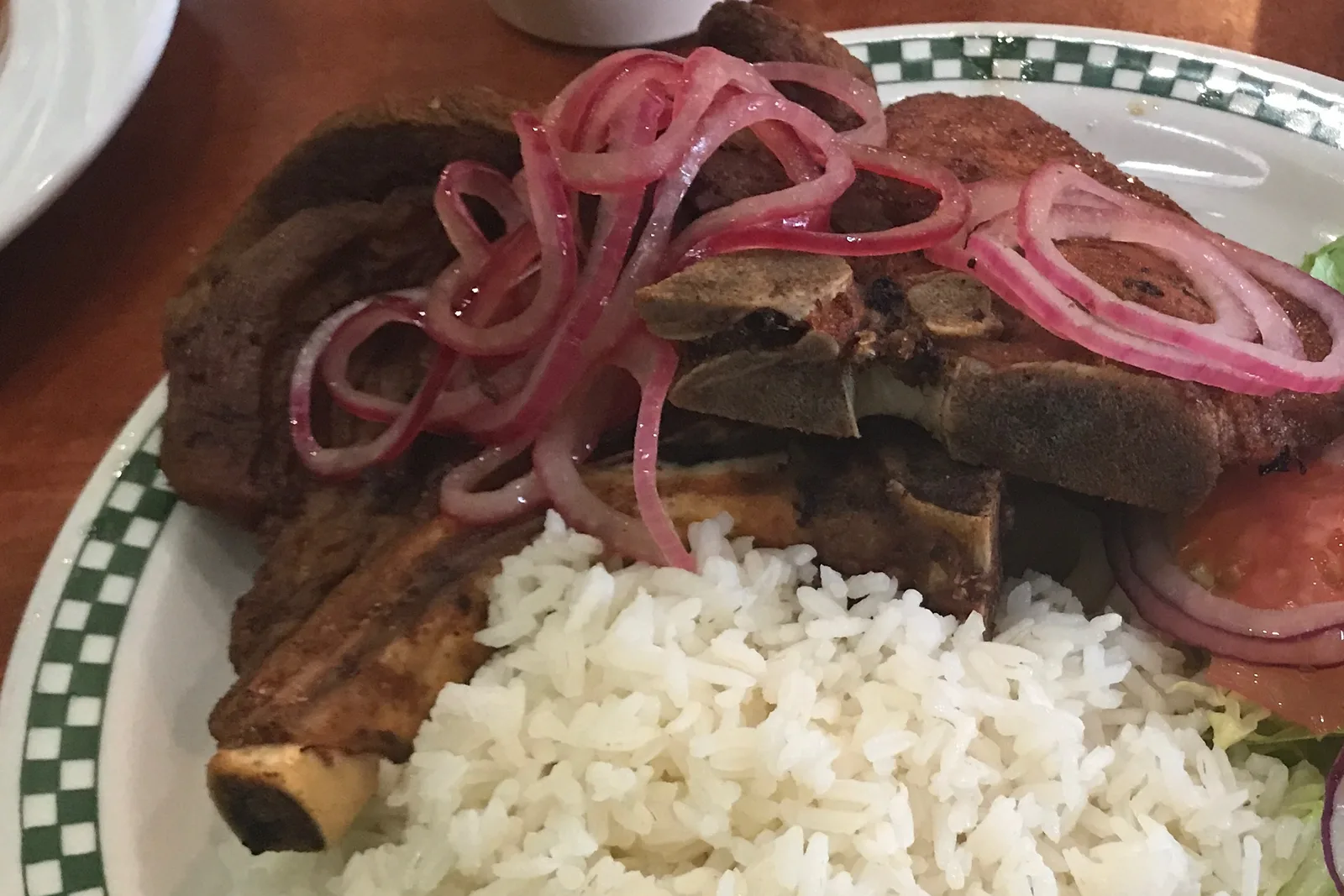
A La Bandera Dominicana plate with white rice, braised meat topped with pickled red onions, tomato and lettuce salad, with a cup of bean stew and tostones beside it Dominican Republic flag Dominican Republic 1h 30m
Lunch •Dominican Republic's National Lunch Plate

La Bandera Dominicana

This la bandera dominicana recipe makes the Dominican Republic's national lunch: a mound of white rice (arroz blanco) next to red beans stewed with squash (habichuelas guisadas) and chicken braised in sofrito and tomato (pollo guisado), with crisp twice-fried green plantains (tostones) and a fresh tomato and lettuce salad. The name means 'the flag', because the white rice, red beans and meat echo the colours of the Dominican flag. One serving is about 695 g.

Hearty & Satisfying

White rice, stewed red beans, braised chicken, tostones and salad on one plate — the lunch the Dominican Republic eats every day.

Pairs Well With
A tall glass of morir soñando, the Dominican orange-and-milk drink
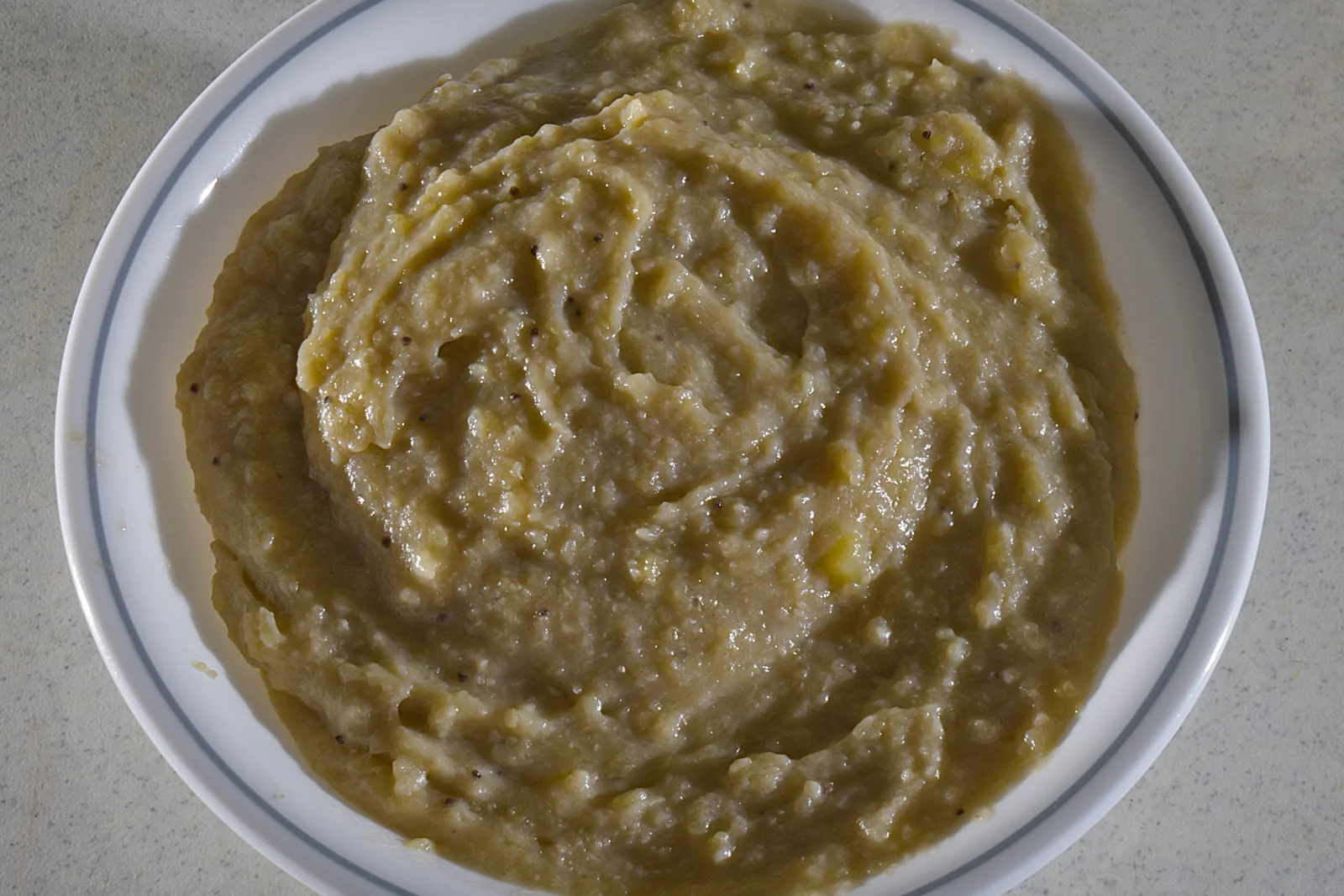
A bowl of smooth mashed green plantain (mangú) in a white bowl Dominican Republic flag Dominican Republic 40m
Breakfast •Dominican Breakfast Classic

Mangú Dominicano

Green plantains are boiled until tender, then mashed silky-smooth with butter and a little of their own cooking water, and finished with a tangle of red onions softened in vinegar and oil. It is the Dominican Republic's national breakfast dish, mild, starchy and comforting, with the sharp onions doing all the talking. One serving is about 280 g.

Hearty Breakfast Energy

Boiled green plantains mashed with butter and topped with tangy sautéed onions for a filling, slow-burning start to the day.

Pairs Well With
Sautéed red onions, fried eggs, fried cheese and fried Dominican salami (Los Tres Golpes)
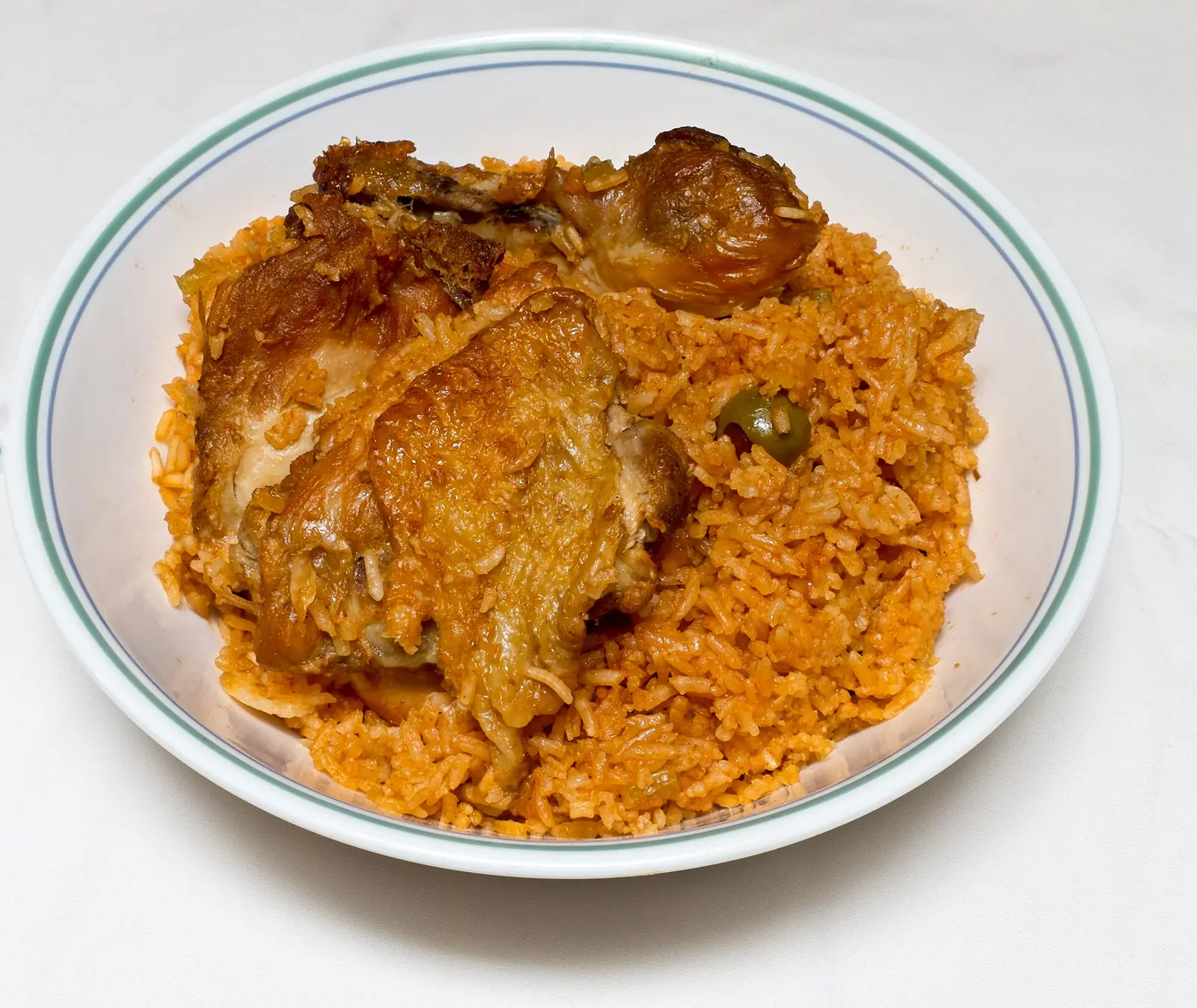
A white bowl of orange-red locrio de pollo with browned chicken pieces and a green olive on a white tablecloth Dominican Republic flag Dominican Republic 1h 20m
Dinner •Dominican One-Pot Classic

Locrio de Pollo

This locrio de pollo recipe starts with bone-in chicken thighs browned in a dark caramel — the quemado that gives the dish its deep colour — then simmers long-grain rice in the same pot with sofrito, tomato paste, pumpkin and green olives until every grain is orange-red and fragrant. It is a true one-pot dinner, and the crispy toasted rice at the bottom, the concón, is the prize everyone fights over. One serving is about 400 g.

Family Comfort

Bone-in chicken browned in caramelised sugar, then simmered with rice, sofrito, tomato, pumpkin and olives in one pot — the Dominican family dinner.

Pairs Well With
Fried plantains, avocado & green salad
High Protein

The Dinner Gazette

Never wonder what’s for dinner again

One email a week with easy dinner ideas from around the world — ingredients, steps and nutrition, tested in our kitchen first.

Delivered every Thursday morning. Unsubscribe anytime.