Curated recipes from 193 countries  •  New seasonal Mediterranean issue out now

Overview

Sancocho Dominicano

Dominican Sancocho, Sancocho de Siete Carnes

This sancocho dominicano recipe simmers beef, pork ribs, chicken and longaniza sausage together with yuca, yautía, ñame, green plantain, pumpkin and corn until the broth turns thick and golden. The yautía slowly melts into the pot and gives the soup its signature body, while a squeeze of lime at the table brightens every spoonful. One serving is about 560 g.

Sancocho takes its name from the Spanish verb sancochar, to parboil, and the dish travelled to the Caribbean from the Canary Islands with Spanish settlers. In the Dominican Republic it became a fusion of Taíno root vegetables, Spanish meat traditions and African seasoning, cooked as a big communal pot. The seven-meat version, sancocho de siete carnes, is the celebration form, served for New Year's Eve, birthdays and family gatherings, and most Dominicans will tell you it tastes even better on the second day.

Pairs well with: White rice, ripe avocado & lime wedges

Provenance

Dominican Republic flag Dominican Republic

Dominican Heritage

Latin America & Caribbean

Time Dedication

3h 15m

45m prep • 150m cook

Batch Yield

10 Servings

640 kcal per serving

1 serving ≈ 560 g

Technical Skill

Intermediate

Intermediate (One Pot, Long Simmer)

Meal Timing & Digestive Fit

Breakfast

Not Advised

Lunch

Hearty Midday Main

Dinner

Ideal Hearty Main

Snack & Tea

Inappropriate

Soups & Broths Occasions: New Year's Eve, birthdays, family gatherings, rainy days, Sunday lunch Cost: Moderate — about $4–5 per serving at home
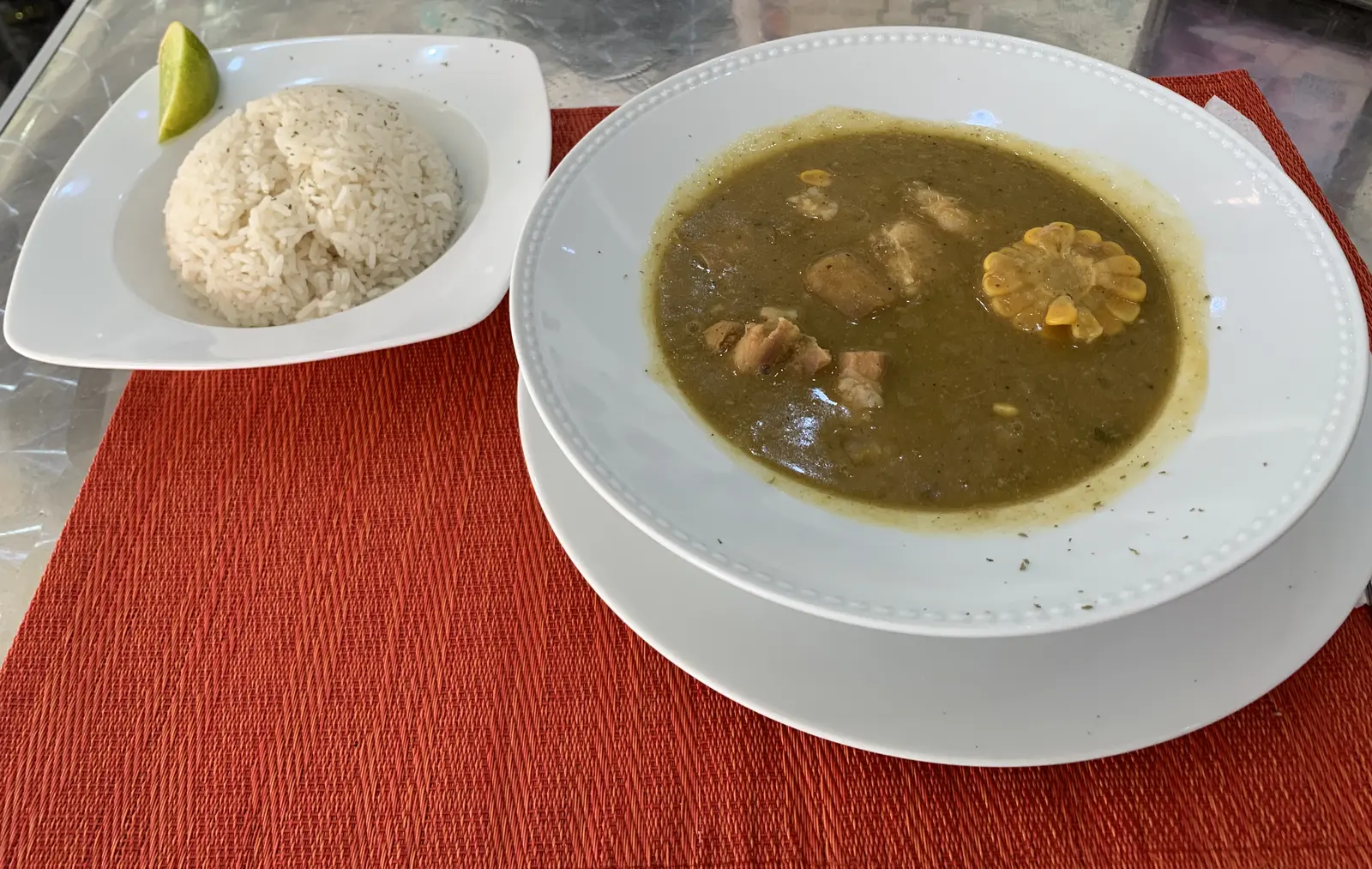
A bowl of Dominican sancocho stew with meat and a round of corn, served with white rice and a lime wedge

Dominican Heritage

Photo: LittleT889, CC BY-SA 4.0, via Wikimedia Commons

The Heritage Formulary

Measured Ingredients

Estimated cost: Moderate — about $4–5 per serving at home (USD)

A traditional Dominican celebration stew of mixed meats and root vegetables, simmered slowly until the broth thickens naturally.

Execution Methodology & Culinary Technique

Step-by-Step Cooking Guide

Active 3h 15m
P

Peel and cut the viandas

30 minutes

Peel the yuca, yautía, ñame and plantains, and cut all the root vegetables into large, even chunks so they cook at the same pace. Keep the cut roots in a bowl of cold water until they go into the pot, so they do not darken. Cut the corn into rounds and set the auyama aside with the rest.

Maestro Tip: Cut the roots big — about the size of a small fist. Small pieces fall apart and turn the stew to mush before the meats are tender.

  1. 1

    Season the meats

    30 minutes Refrigerated (4°C / 39°F)

    Pat the beef, pork ribs and longaniza dry with paper towels and season them well with salt, pepper, oregano and a little garlic. Keep the chicken in a separate covered bowl and season it the same way. Cover both bowls and refrigerate for 30 minutes so the seasoning sinks in. Do not rinse raw meat; wash your hands, utensils and surfaces after handling it.

    Seasoning ahead matters more than the exact spice mix — even 30 minutes makes the broth taste seasoned all the way through.

    Done when: Meats are evenly seasoned and cold from the fridge.

  2. 2

    Sear the meats

    15 minutes Medium-high heat (190°C / 375°F)

    Heat most of the olive oil in a very large stockpot (at least 8 litres / 8 quarts) over medium-high heat. Brown the beef, pork ribs and longaniza in batches, about 4–5 minutes per batch, turning once so each piece gets a deep brown crust. Do not crowd the pot — crowded meat steams instead of browning. Set the seared meats aside and keep the chicken refrigerated for now.

    Leave the brown bits stuck to the bottom of the pot; they dissolve into the broth later and are pure flavour.

    Done when: Each piece is browned on the outside; the inside is still raw and will finish in the simmer.

  3. 3

    Build the sofrito base

    10 minutes Medium heat (175°C / 350°F)

    In the same pot, add the onion, cubanelle peppers and garlic and cook for about 5 minutes, scraping the bottom as they soften. Stir in the cilantro and sofrito and cook for 2 minutes, then add the tomato paste and let it darken and caramelise for another 2 minutes. The base should smell sweet, herby and deeply savoury before any liquid goes in.

    Let the tomato paste fry until it turns a brick red — raw paste tastes tinny, caramelised paste tastes rich.

    Done when: Onions are soft and translucent; the paste has darkened to brick red.

  4. 4

    Simmer the tough meats

    60 minutes Low simmer (95°C / 200°F)

    Return the seared beef, pork ribs and longaniza to the pot. Pour in the water so it covers the meats by about 5 cm (2 inches), crumble in the bouillon cube and add the bay leaves. Bring to a boil, skim off any foam that rises, then lower the heat to a gentle simmer, cover, and cook for 1 hour. The broth should barely bubble — a hard boil toughens the meat and clouds the soup.

    Skim the foam in the first 10 minutes; it keeps the broth clear and clean-tasting.

    Done when: Beef and pork are starting to yield when poked with a fork, and the broth smells rich and meaty.

  5. 5

    Add the chicken and viandas

    45 minutes Low simmer (95°C / 200°F)

    Heat the reserved olive oil in a skillet and sear the chicken pieces in batches, then transfer each batch straight into the simmering pot so cooking never pauses. Add the yuca, yautía, ñame, plantains and auyama, pushing everything under the liquid and adding a splash more water if anything sits dry. Cover and simmer for 45 minutes. Check the chicken with a thermometer away from the bone — it must reach 74°C (165°F).

    Add the yuca and yautía first if you want perfect texture; they take longer than the plantain. The yautía will partly dissolve and thicken the broth on its own.

    Done when: Chicken reaches 74°C (165°F); yuca is tender when pierced and the broth coats a spoon.

  6. 6

    Add the corn and finish

    20 minutes Low simmer (95°C / 200°F)

    Add the corn rounds and simmer uncovered for 15–20 minutes, until the corn is tender and the broth has thickened slightly. Taste and adjust the salt and pepper — remember the sausage and bouillon already add salt, so add it a pinch at a time. Fish out the bay leaves. The finished sancocho should be thick enough to coat a spoon, with tender chunks of meat and roots in every ladle.

    If the broth is still thin, mash two or three pieces of yuca against the side of the pot and stir them in — it thickens in a minute.

    Done when: Corn kernels are tender, the roots are fork-tender, and the broth is thick and golden.

Finishing Touches & Plating

Ladle the sancocho into deep bowls, making sure each bowl gets a mix of meats, roots and a round of corn. Serve with white rice in a separate bowl, sliced ripe avocado and lime wedges on the side, and let everyone squeeze lime over their own bowl.
Nutritional Physiology & Benefits

Nutrition

Energy

640

kcal / serving

Protein

29g

Complete AA

Carbs

67g

Complex

Fats

29g

Healthy

Per serving (10 servings · 1 serving ≈ 560 g)
Energy640 kcal
Protein29 g
Carbohydrates67 g
Fat29 g
Fibre7.7 g
Sugar5.6 g
Sodium686 mg
Per 100g
Energy114 kcal
Protein5.1 g
Carbohydrates11.9 g
Fat5.2 g
Fibre1.4 g
Sugar1 g
Sodium122 mg

Nutrition values are estimated — calculated from USDA FoodData Central values for the listed ingredients.

Vitamins & minerals: The root vegetables supply vitamin C, vitamin B6, potassium and manganese, the meats add iron, zinc and B vitamins, and the corn and peppers add small amounts of vitamin A and folate. All nutrition values are estimated.

A filling, protein-rich meal

With about 29 g of protein per serving from beef, pork, chicken and sausage, one bowl works as a complete main meal that keeps you full for hours.

Root vegetables and fibre

Yuca, yautía, ñame, plantain and corn add about 8 g of fibre per serving, along with potassium, vitamin C and vitamin B6 from the starchy roots.

A balanced one-pot meal

Meat, starchy roots and vegetables cook together in one pot, so a single bowl covers protein, slow-release carbohydrates and vegetables without extra side dishes.

Food Pairings

What to Eat With

To optimize nutrient absorption and elevate the sensory depth, pair with these authentic accompaniments:

Sides

White rice (arroz blanco)

Plain white rice is served in a separate bowl, never stirred into the pot. It soaks up the thick broth and stretches the meal, and keeping it separate stops the rice from turning the stew starchy.

Vegetables

Ripe avocado slices

Cool, creamy avocado contrasts with the hot, salty, rich broth. Its mild flavour and soft texture give each spoonful a break from the intensity of the stew.

Drinks

Fresh limeade or passion fruit juice

A cold, tart drink cuts through the fat of the mixed meats and refreshes the palate between spoonfuls of the heavy stew.

Full Menus

Tostones and hot sauce

Crisp fried green plantain rounds are made for dipping into the broth, and a few drops of hot sauce add brightness and heat that lift the rich, earthy flavours.

Complete menu

Serve the sancocho as the main bowl with white rice on the side, sliced avocado and lime wedges to pass around, and tostones with hot sauce for dipping; finish with fresh limeade or passion fruit juice.

Digestive Guardrails

What NOT to Combine

To prevent digestive distress, sluggishness, or palate clash, avoid pairing the dish with these elements:

Very salty side dishes

Sancocho is already high in sodium from the longaniza sausage, bouillon and added salt (about 686 mg per serving). Pairing it with salty cured meats, salty cheese or extra soy sauce can push sodium far higher, which is a concern for blood pressure. This is general information, not medical advice — ask a clinician about your own sodium limits.

Heavy fried foods on the side

The stew is already rich in fat from the mixed meats (about 29 g per serving). Adding large portions of fried food on top of it makes the meal very heavy and hard to digest, and the extra oil competes with the broth's own flavour. A light salad or plain avocado balances the plate better. This is general information, not medical advice.

General information only, not medical advice — consult a doctor for personal dietary decisions.

Who Should Eat It

Who Should Eat

  • General adultsA complete, satisfying meal. Enjoy a normal portion and balance the rest of the day with lighter foods, since the stew is rich and salty.
  • ChildrenSuitable from about age 2 in small portions with the meat cut up and the broth cooled. Skip the hot sauce and go easy on the salt for young children.
  • ElderlyGood for appetite and protein, but serve the meat and roots cut into small, soft pieces and keep portions moderate because the stew is heavy and salty.
  • Pregnant womenSafe when the meats are fully cooked through — chicken to 74°C (165°F) — and the dish is served piping hot. The long simmer and high salt mean small portions are wiser; ask your clinician if you have pregnancy-related blood pressure concerns.
  • Breastfeeding womenA nourishing, energy-dense meal that fits well during breastfeeding. Drink water alongside it and keep portions moderate because of the salt.
  • AthletesExcellent after a hard session: about 29 g of protein and 67 g of carbohydrates per serving help recovery. Add extra rice on the side if you need more energy.
  • Weight gainA good choice — energy-dense, protein-rich and easy to eat in large portions. Add a full side of rice and avocado to raise the calories further.
  • Weight lossTricky at 640 kcal a serving. Take a smaller bowl, load it with the root vegetables rather than the fatty meats, and skip the extra rice or take only a small spoonful.

Health Conditions — Adjust or Avoid

Conditions

  • DiabetesThe starchy roots and plantain add about 67 g of carbohydrates per serving, so portion size matters and blood sugar should be monitored. A smaller bowl with more meat and less root vegetable helps; ask your clinician or dietitian for a portion that fits your plan.
  • High blood pressureAt about 686 mg of sodium per serving, this is a salty dish. Use low-sodium bouillon or skip the cube, go easy on added salt, and keep portions moderate. Ask your clinician about your sodium limit.
  • Kidney diseaseThe stew is high in protein, potassium (from the roots and plantain) and sodium, all of which may need limiting in kidney disease. This dish may not fit a renal diet — ask your clinician or renal dietitian before eating it.
  • GoutMixed meats and sausage are rich in purines, which can raise uric acid. People prone to gout should eat small portions and not too often; ask your clinician for personal guidance.
  • Stomach issuesA rich, fatty stew can be hard on a sensitive stomach and may trigger reflux or discomfort. Eat a small portion, avoid the hot sauce, and skip it during a flare-up; ask your clinician if symptoms persist.
  • Cardiovascular diseaseThe dish is high in saturated fat and sodium from the mixed meats and sausage. Occasional small portions with leaner meat choices and plenty of vegetables are safer; ask your clinician or dietitian for advice.
  • Fatty liverThe fat and energy density of this stew can work against a liver-friendly diet. Choose leaner meats, keep portions small, and eat it only occasionally; ask your clinician for personal guidance.
  • Food allergiesContains pork, chicken and beef. The sofrito and bouillon may contain celery, wheat or soy depending on the brand — check every label. The dish is naturally gluten-free only if the bouillon and sausage are certified gluten-free.
  • Special therapeutic dietsNot suitable for vegetarian, vegan or low-sodium diets as written. A vegetable version is possible with vegetable stock, chickpeas and extra roots, but it is a different dish; ask your clinician or dietitian before adapting it for a therapeutic diet.

If you have a medical condition, consult your doctor before changing your diet.

Storage & Use

Storage & Use

How to store
Cool quickly in shallow containers and store in an airtight container.
In the fridge
3–4 days in the refrigerator.
In the freezer
Up to 3 months in airtight containers; the roots soften slightly after freezing.
How to reheat
Reheat gently on the stove until steaming hot throughout, to 74°C (165°F); add a splash of water if the broth has thickened.
Freezing recommended
Yes, up to 3 months; the flavour is often better the next day as the broth settles.
Signs it has spoiled
Sour or off smell, slimy texture on the meat, or mould on the surface.

More recipes to explore

A La Bandera Dominicana plate with white rice, braised meat topped with pickled red onions, tomato and lettuce salad, with a cup of bean stew and tostones beside it Dominican Republic flag Dominican Republic 1h 30m
Lunch •Dominican Republic's National Lunch Plate

La Bandera Dominicana

This la bandera dominicana recipe makes the Dominican Republic's national lunch: a mound of white rice (arroz blanco) next to red beans stewed with squash (habichuelas guisadas) and chicken braised in sofrito and tomato (pollo guisado), with crisp twice-fried green plantains (tostones) and a fresh tomato and lettuce salad. The name means 'the flag', because the white rice, red beans and meat echo the colours of the Dominican flag. One serving is about 695 g.

Hearty & Satisfying

White rice, stewed red beans, braised chicken, tostones and salad on one plate — the lunch the Dominican Republic eats every day.

Pairs Well With
A tall glass of morir soñando, the Dominican orange-and-milk drink
A bowl of smooth mashed green plantain (mangú) in a white bowl Dominican Republic flag Dominican Republic 40m
Breakfast •Dominican Breakfast Classic

Mangú Dominicano

Green plantains are boiled until tender, then mashed silky-smooth with butter and a little of their own cooking water, and finished with a tangle of red onions softened in vinegar and oil. It is the Dominican Republic's national breakfast dish, mild, starchy and comforting, with the sharp onions doing all the talking. One serving is about 280 g.

Hearty Breakfast Energy

Boiled green plantains mashed with butter and topped with tangy sautéed onions for a filling, slow-burning start to the day.

Pairs Well With
Sautéed red onions, fried eggs, fried cheese and fried Dominican salami (Los Tres Golpes)
Bœuf bourguignon — French beef braised in red wine France flag France 4h
Dinner •Burgundy Terroir

Bœuf Bourguignon

Beef braised gently in red wine until the connective tissue melts into a velvet, gelatin-rich sauce — the classic Burgundy Sunday dinner.

Cellular Repair

Beef braised in red wine until spoon-tender, with mushrooms and pearl onions.

Pairs Well With
Parsnip Purée & Steamed French Haricots Verts
High Protein
Vietnamese braised pork belly with golden eggs in caramel sauce Vietnam flag Vietnam 1h 45m
Dinner •One Pot

Vietnamese Braised Pork and Eggs

Pork belly slowly braised in coconut water and caramel until meltingly tender, with golden eggs that soak up the sweet-savoury sauce — the Vietnamese family dish that tastes better the next day.

Comfort & Sustained Energy

Slow-braised pork belly and eggs in coconut water and caramel.

Pairs Well With
Steamed rice & pickled mustard greens
High Protein

The Dinner Gazette

Never wonder what’s for dinner again

One email a week with easy dinner ideas from around the world — ingredients, steps and nutrition, tested in our kitchen first.

Delivered every Thursday morning. Unsubscribe anytime.