Curated recipes from 193 countries  •  New seasonal Mediterranean issue out now

Overview

Dresdner Eierschecke

Dresden Egg Custard Cake, Dresdener Eierschecke

This dresdner eierschecke recipe builds the Saxon classic exactly as Dresden bakers do: a soft yeast dough base, a smooth quark cheesecake middle, and a vanilla egg-custard top baked until pale gold under a sugared crust. One serving is about 125 g and carries 307 calories. Slice it into neat rectangles and serve it cool with black coffee, the way Saxon coffee houses have done for generations.

Eierschecke is a speciality of Saxony and Thuringia, and the Dresden version is the most famous. Its name comes from the Schecke, a three-part tunic worn in the 14th century: the cake's yeast base, quark middle and egg-custard top mirror the garment's three parts — upper, belt and lower. Dresden's bakers have made it for generations, and it is still the cake Saxons order with their afternoon coffee — the writer Erich Kästner once joked that it was to the detriment of humanity that the rest of the world did not know it.

Pairs well with: Serve cool with black coffee or a pot of tea; a spoonful of lightly whipped cream on the side is optional.

Provenance

Germany flag Germany

Saxon Three-Layer Classic

Nordic & European

Time Dedication

2h 35m

100m prep • 55m cook

Batch Yield

12 Servings

307 kcal per serving

1 serving ≈ 125 g

Technical Skill

Intermediate

Intermediate (Three Layers)

Meal Timing & Digestive Fit

Breakfast

Not Advised

Lunch

Inappropriate

Dinner

Inappropriate

Snack & Tea

Ideal Light Bite

Occasions: Afternoon coffee, Saxon coffee houses, family gatherings, cake buffets Cost: Low — about $0.70 per serving at home
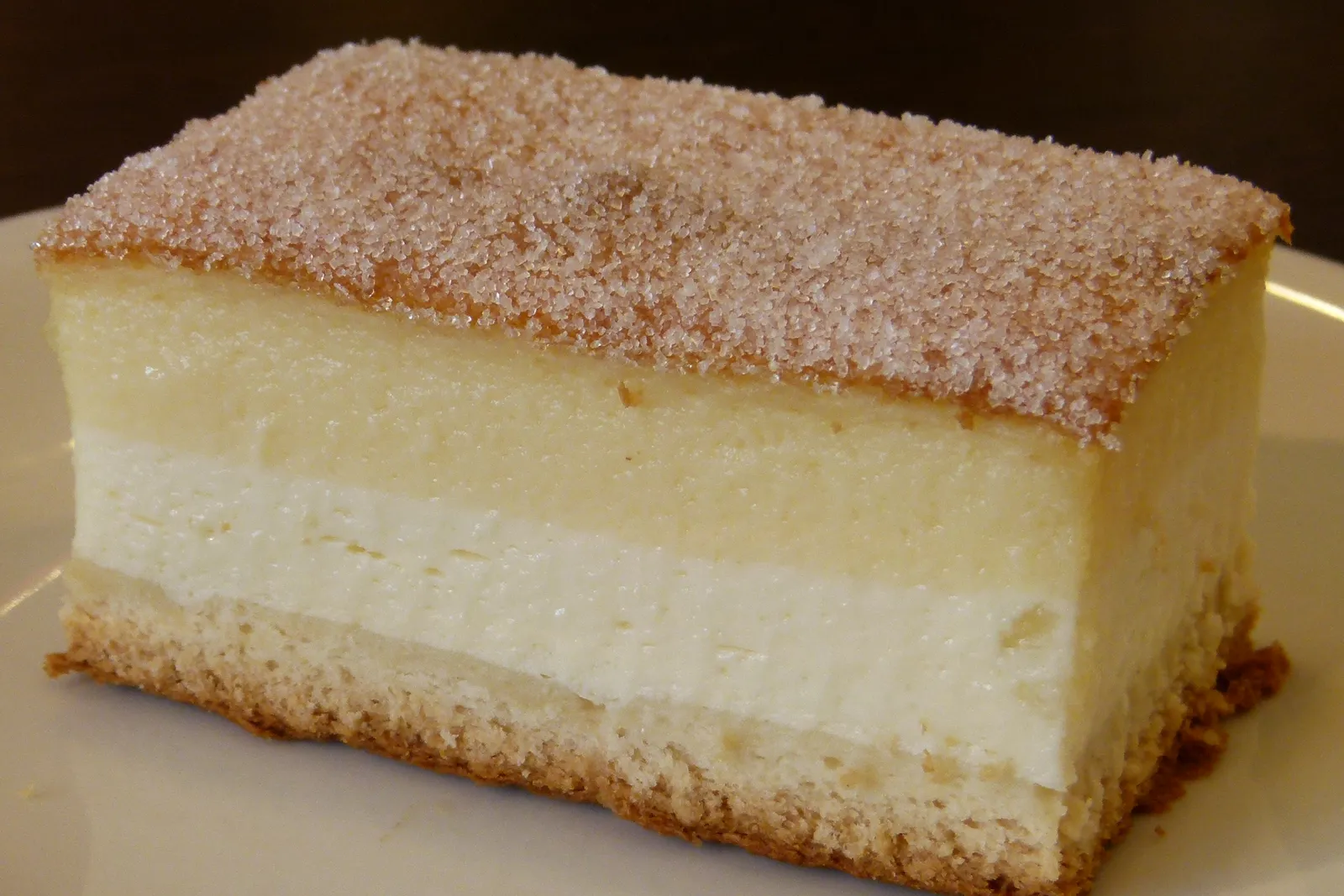
A slice of Dresdner Eierschecke showing its three layers — yeast base, white quark middle and golden egg-custard top with sugar — on a white plate

Saxon Three-Layer Classic

Photo: Brücke-Osteuropa, CC0, via Wikimedia Commons

The Heritage Formulary

Measured Ingredients

Estimated cost: Low — about $0.70 per serving at home (USD)

Bake until the custard top is pale gold with a crisp sugared crust and the centre barely wobbles; the cake must cool fully before slicing or the layers will slide.

Execution Methodology & Culinary Technique

Step-by-Step Cooking Guide

Active 2h 35m
P

Prep Stage: Dough, Quark Layer and Custard Top

100 Mins • Dough, Quark Layer and Custard Top

Warm 125 ml of the milk until lukewarm and stir in the yeast with a spoonful of the sugar; rest 10 minutes until foamy. Mix the flour, salt and 30 g sugar, add the yeasted milk, 40 g melted butter and 1 beaten egg, and knead for 10 minutes into a soft dough; cover and let it rise for 1 hour until doubled. While it rises, weigh the sugar into its four portions, separate the 4 eggs for the custard top, and bring the quark to room temperature. Then whisk the quark with 80 g sugar, 2 eggs, 15 g cornflour, the lemon zest and juice and 1 tsp vanilla until smooth, and whisk the 4 yolks with 60 g sugar, 200 ml milk, 25 g cornflour, 1 tsp vanilla and 20 g melted butter for the custard top.

Maestro Tip: The milk for the dough must feel just warm on your wrist — hotter than 43°C (110°F) kills the yeast and the dough will never rise.

  1. 1

    Make the yeast dough and let it rise

    10 Mins + 60 Mins rise Warm milk, about 37°C (98°F)

    Warm 125 ml of the milk until lukewarm, about 37°C (98°F), and stir in the yeast with a spoonful of the sugar. Rest for 10 minutes until foamy. Tip the flour, the salt and 30 g of the sugar into a large bowl, add the yeasted milk, 40 g melted butter and 1 beaten egg, and mix into a soft dough. Knead on a floured surface for 10 minutes until smooth and elastic, then put it in an oiled bowl, cover, and leave in a warm place for 1 hour until doubled in size.

    If the yeast milk never foams, the yeast is dead — start again with a fresh sachet rather than baking a flat base.

    Done when: The dough is smooth, springy, and twice its original size.

  2. 2

    Line the tin with the dough base

    10 Mins Oven preheats to 175°C (350°F)

    Heat the oven to 175°C (350°F) and grease a 26 cm springform tin with 5 g of the butter. Knock the risen dough back gently, roll it into a round about 28 cm across, and press it into the tin, pushing it about 2 cm up the sides to hold the fillings. Prick the base all over with a fork so it cannot puff up under the quark layer.

    A thin, even base bakes through properly — if the dough is thick in the middle, the centre stays doughy under the quark.

    Done when: The tin is lined edge to edge with a thin, even layer of dough.

  3. 3

    Mix the quark middle layer

    10 Mins Room temperature, about 20°C (68°F)

    Whisk the quark until completely smooth, then whisk in 80 g sugar, the 2 eggs, 15 g cornflour, the lemon zest and juice and 1 tsp vanilla. Keep whisking until the mixture is silky with no lumps of quark left. Spoon it over the dough base and spread it level with the back of a spoon — this is the middle layer, the 'belt' of the cake, so keep it even and do not let it run up the sides.

    Watery quark makes a soggy middle — drain it in a sieve for 30 minutes first if it looks at all loose.

    Done when: A smooth, level white layer covers the base from edge to edge.

  4. 4

    Whisk the vanilla egg-custard top

    10 Mins Room temperature, about 20°C (68°F)

    Whisk the 4 egg yolks with 60 g sugar until pale and thick, then whisk in 200 ml milk, 25 g cornflour, 1 tsp vanilla and 20 g melted butter until completely smooth. In a separate clean bowl, beat 2 of the egg whites to soft peaks — the whisk should leave a gentle curl, not a stiff spike — and fold them gently into the yolk mixture with a spatula, keeping as much air in as you can. This beaten white is what makes the top layer bake light instead of flat.

    Any trace of yolk or grease in the whites bowl stops them whipping — wipe the bowl with a little lemon juice first.

    Done when: A pale yellow, airy custard that falls from the spatula in a slow ribbon.

  5. 5

    Layer, sugar and bake

    5 Mins + 55 Mins bake 175°C (350°F)

    Pour the custard gently over the quark layer, starting at the edges and working inward so the two layers do not mix, and smooth the surface. Sprinkle the remaining 15 g sugar evenly over the top — it melts into the crisp, sugared crust you can see in the photo. Bake for 50 to 55 minutes until the top is pale gold and the centre barely wobbles when you nudge the tin. If the top browns too fast after 35 minutes, lay a loose sheet of foil over it.

    Pour slowly and do not stir once the custard is on — stirring mixes the layers and the three-layer look is lost.

    Done when: The top is pale gold with a sugared crust, and the centre moves only slightly when nudged.

  6. 6

    Cool, chill and slice

    30 Mins cooling Cool to room temperature, about 20°C (68°F)

    Leave the cake in the tin for 30 minutes until it is cool enough to handle, then run a thin knife around the edge and release the springform. Chill the cake for at least 1 hour before slicing — this hands-off chilling is not counted in the total time, but it is what lets the three layers set firmly so each slice shows them cleanly. Cut into 12 neat rectangles with a long, sharp knife, wiping the blade between cuts.

    Cutting the cake while it is still warm makes the custard slide off the quark — patience is part of the recipe.

    Done when: Each slice stands up on its own and shows all three layers: pale base, white quark middle, golden custard top.

Finishing Touches & Plating

Dust the chilled cake very lightly with icing sugar just before serving if you like, though the baked-on sugar crust is already there. Serve the slices cool, at room temperature, with black coffee — the sugared custard top should be pale gold and just crisp, the quark middle creamy, and the yeast base soft underneath.

Nutritional Physiology & Benefits

Nutrition

Energy

307

kcal / serving

Protein

10g

Complete AA

Carbs

38g

Complex

Fats

13g

Healthy

Per serving (12 servings · 1 serving ≈ 125 g)
Energy307 kcal
Protein10 g
Carbohydrates38 g
Fat13 g
Fibre0.8 g
Sugar18.6 g
Sodium155 mg
Per 100g
Energy245 kcal
Protein8.2 g
Carbohydrates30.4 g
Fat10 g
Fibre0.6 g
Sugar14.9 g
Sodium124 mg

Nutrition values are estimated — calculated from USDA FoodData Central values for the listed ingredients.

Vitamins & minerals: Provides calcium and phosphorus from quark and milk, vitamin B12 and riboflavin from eggs, and small amounts of vitamin A from butter and egg yolk.

Real Quark Protein

Each 125 g slice carries about 10 g of protein from quark and eggs, so it satisfies as an afternoon snack rather than leaving you hungry again in an hour.

Calcium From Quark and Milk

Quark and milk give the cake calcium and phosphorus, nutrients that help keep bones and teeth healthy as part of a varied diet.

Slow, Steady Energy

The yeast-dough base and the egg-rich layers release energy more slowly than a plain sponge cake, which is why one slice carries you through a long afternoon.

Food Pairings

What to Eat With

To optimize nutrient absorption and elevate the sensory depth, pair with these authentic accompaniments:

Drinks

Black Coffee

The Dresden classic: strong black coffee cuts the richness of the custard and quark, and this cake was made to be eaten with coffee.

Earl Grey Tea

The bergamot in Earl Grey lifts the vanilla in the custard top and gives the rich cake a lighter, fragrant finish.

Sides

Fresh Raspberries or Redcurrants

A small handful of sharp berries on the side cuts through the sweet custard with acidity and gives the plate a fresh, bright contrast.

Full Menus

Saxon Coffee Afternoon

Serve a slice as the centrepiece of a Saxon Kaffeetrinken, with a second, lighter cake alongside — the Eierschecke is rich enough to be the star of the table on its own.

Complete menu

Serve a slice of Eierschecke with black coffee as the centrepiece of a Saxon afternoon coffee, with a small bowl of fresh berries on the side — the cake is rich enough to be the sweet finish of the meal on its own.

Digestive Guardrails

What NOT to Combine

To prevent digestive distress, sluggishness, or palate clash, avoid pairing the dish with these elements:

Very Sweet Drinks With the Cake

Sweet soda or heavily sweetened coffee doubles the sugar of an already sweet cake and makes the whole plate cloying; black coffee, unsweetened tea or water are better. This is general nutrition information, not medical advice.

Eating It While Still Hot

The custard top needs time to set; cutting the cake hot makes the layers slide apart and the filling can scald the mouth. Wait until it is fully cool, then chill before slicing. This is general food information, not medical advice.

General information only, not medical advice — consult a doctor for personal dietary decisions.

Who Should Eat It

Who Should Eat

  • General adultsA rich afternoon cake — one slice with coffee is plenty for most adults.
  • ChildrenChildren usually love the sweet custard top; serve a smaller slice and keep the sugar in mind for the rest of the day.
  • ElderlySoft and easy to chew; serve a modest slice, as it is rich and sweet.
  • Pregnant womenThe cake is fully baked, so the eggs are cooked through; still, keep portions modest because of the sugar and richness, and ask your clinician if unsure.
  • Breastfeeding womenFine as an occasional treat; the calcium from quark and milk is useful, but it is not a meal replacement.
  • AthletesUseful as a post-training treat for energy and some protein, but pair it with a proper protein-rich meal rather than relying on cake alone.
  • Weight gainAn easy way to add energy — a slice with a milky coffee adds calories without a large volume of food.
  • Weight lossBest as a small, occasional slice; at about 307 calories a slice it is easy to overshoot a daily target, so share the cake or freeze slices in portions.

Health Conditions — Adjust or Avoid

Conditions

  • DiabetesOne slice carries about 19 g of sugar and 38 g of carbohydrate, so it can raise blood sugar quickly; a half slice, or none, is the safer choice — ask your clinician.
  • High blood pressureSodium is modest at about 155 mg a slice, but the butter and sugar mean it is a treat food, not an everyday one — ask your clinician if you are managing blood pressure.
  • Kidney diseaseQuark and eggs make this cake fairly high in protein and phosphorus, which some kidney diets limit — ask your clinician before eating it.
  • GoutEggs and dairy are low in purines, but the rich, sugary cake is still best kept occasional — ask your clinician.
  • Stomach issuesThe soft, low-fibre crumb is usually gentle on the stomach, but the butter-rich custard can feel heavy for some people — eat a small slice and see how you feel; ask your clinician if symptoms persist.
  • Cardiovascular diseaseButter, egg yolk and quark bring saturated fat, so keep it an occasional slice rather than a daily habit — ask your clinician.
  • Fatty liverHigh in sugar and saturated fat, both of which fatty-liver guidance usually limits — best kept to rare, small slices; ask your clinician.
  • Food allergiesContains wheat (gluten), milk, egg and butter. Do not serve to anyone with a wheat, milk or egg allergy — ask your clinician if you are unsure about an allergy.
  • Special therapeutic dietsNot suitable for gluten-free, dairy-free, vegan or low-sugar diets as written; a clinician or dietitian can advise on adapted versions.

If you have a medical condition, consult your doctor before changing your diet.

Storage & Use

Storage & Use

How to store
Cool completely, then cover the tin with foil or move slices to a sealed container.
In the fridge
4 days in the fridge at 4°C (39°F) or below.
In the freezer
Up to 3 months, wrapped well in foil and a freezer bag; thaw overnight in the fridge.
How to reheat
Best eaten cold or at room temperature; to warm a slice, heat it in an oven at 150°C (300°F) for 8 to 10 minutes until just warm through.
Freezing recommended
Yes — the baked cake freezes well for up to 3 months; freeze slices separately for easy portions.
Signs it has spoiled
Sour or off smell, mould on the crust or filling, or a slimy topping — discard it.

More recipes to explore

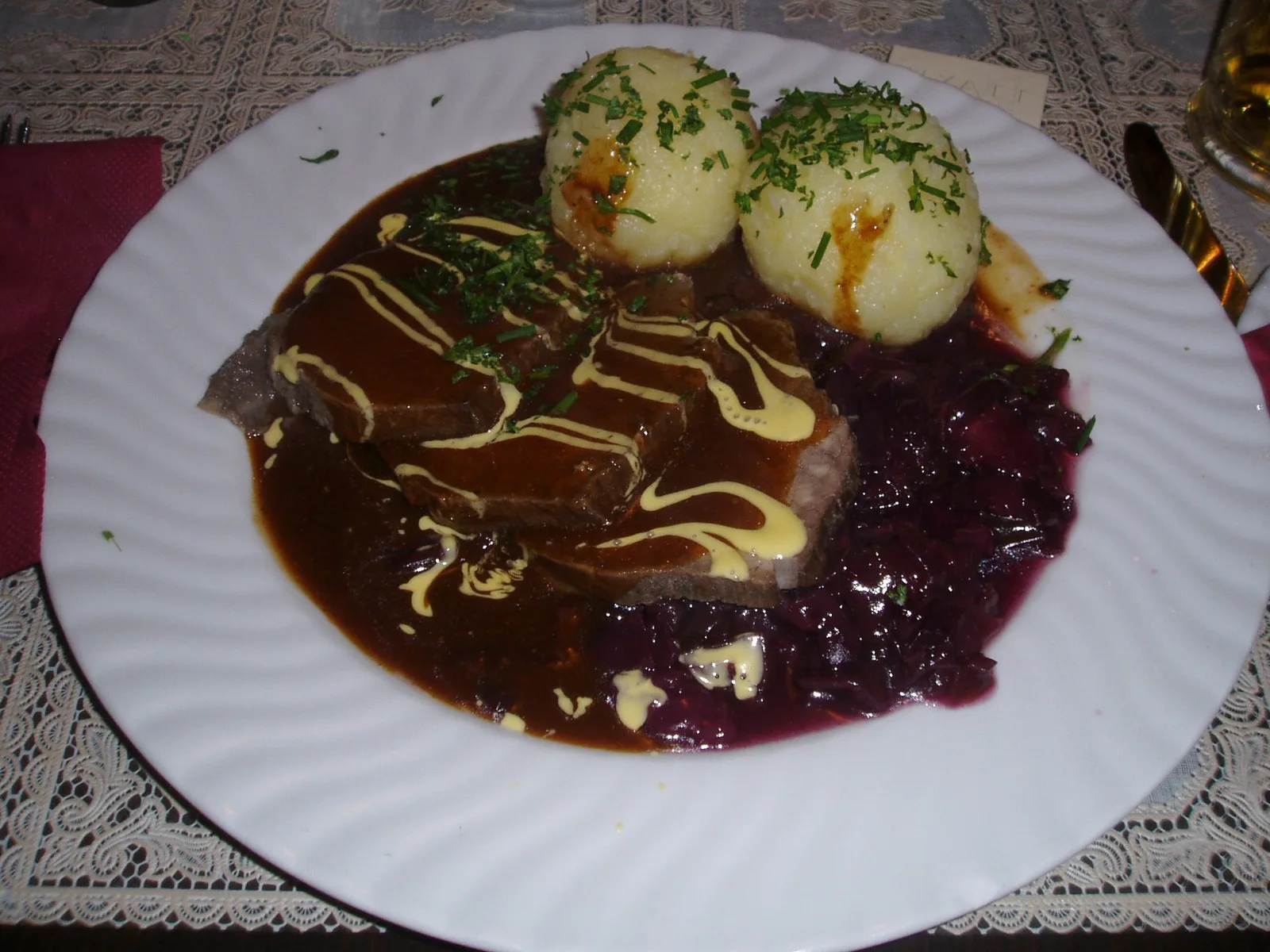
Sliced sauerbraten in dark sweet-sour gravy with potato dumplings and braised red cabbage on a white plate Germany flag Germany 3h 30m
Dinner •Rhineland Heritage

Sauerbraten

This sauerbraten recipe starts with a beef chuck roast steeped for three days in red wine vinegar, red wine and warm spices, then braised slowly until it slices like butter. The marinade becomes a dark, sweet-sour gravy thickened with crushed gingersnaps and studded with raisins, the Rhineland way. One serving is about 300 g, with gravy.

Comfort & Warmth

A slow-braised German pot roast in a sweet-sour vinegar gravy, sliced thick and served hot with potato dumplings and red cabbage.

Pairs Well With
Potato dumplings, braised red cabbage & a glass of Spätburgunder
High Protein
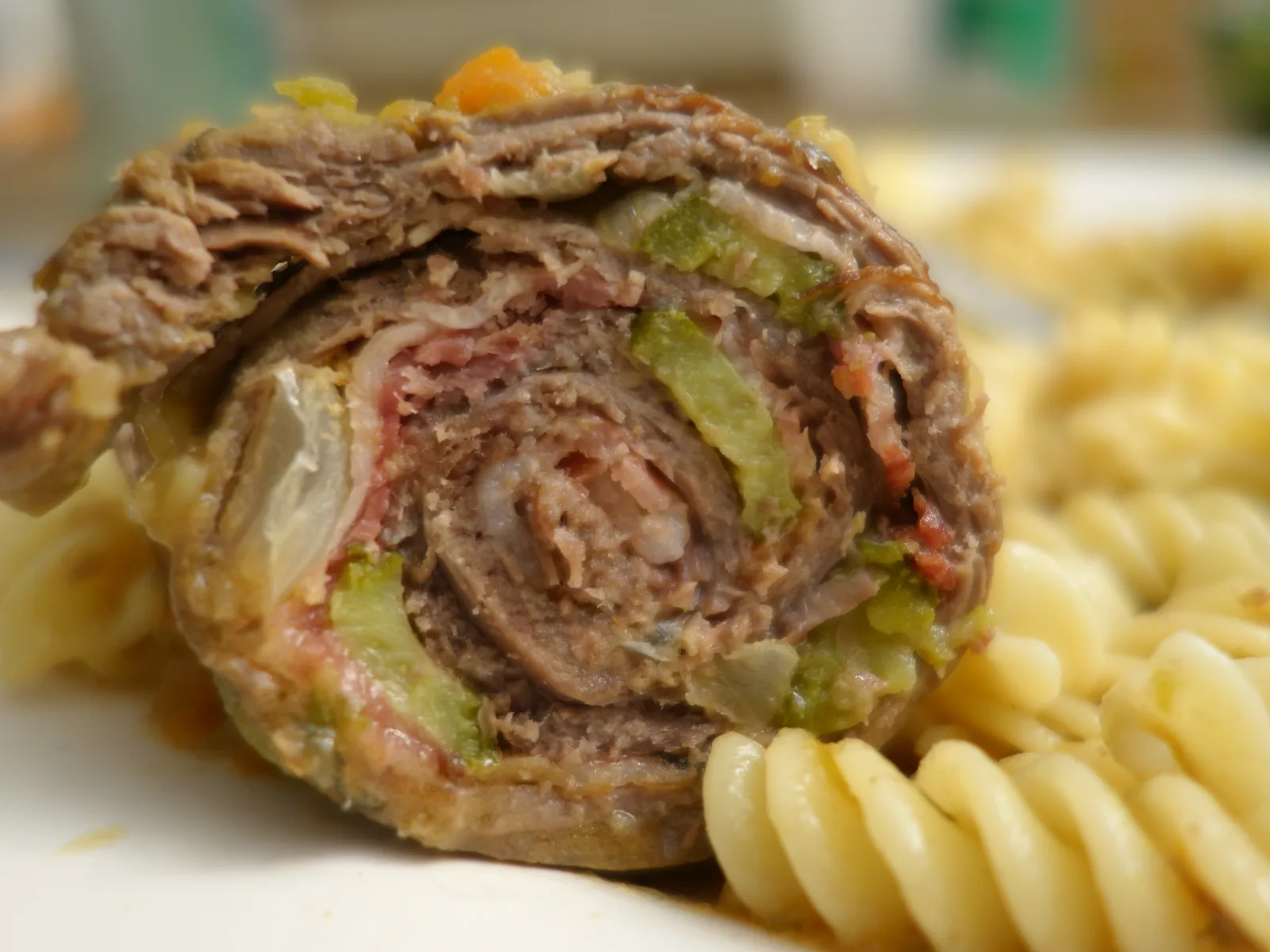
A sliced German beef roulade showing the spiral of beef, bacon and dill pickle, served with pasta Germany flag Germany 2h 10m
Dinner •German Sunday Heritage

Rouladen

This rouladen recipe spreads thin slices of top round with mustard, then rolls them around smoky bacon, dill pickles and onion into neat parcels. The rolls are browned, then braised slowly in red wine and beef stock until tender, and the braising liquid becomes a rich gravy. One serving is about 375 g — two rolls with gravy.

Comfort & Warmth

Thin beef rolls stuffed with bacon, dill pickle and onion, braised in red wine gravy and served hot with dumplings.

Pairs Well With
Potato dumplings, braised red cabbage & a German lager
High Protein
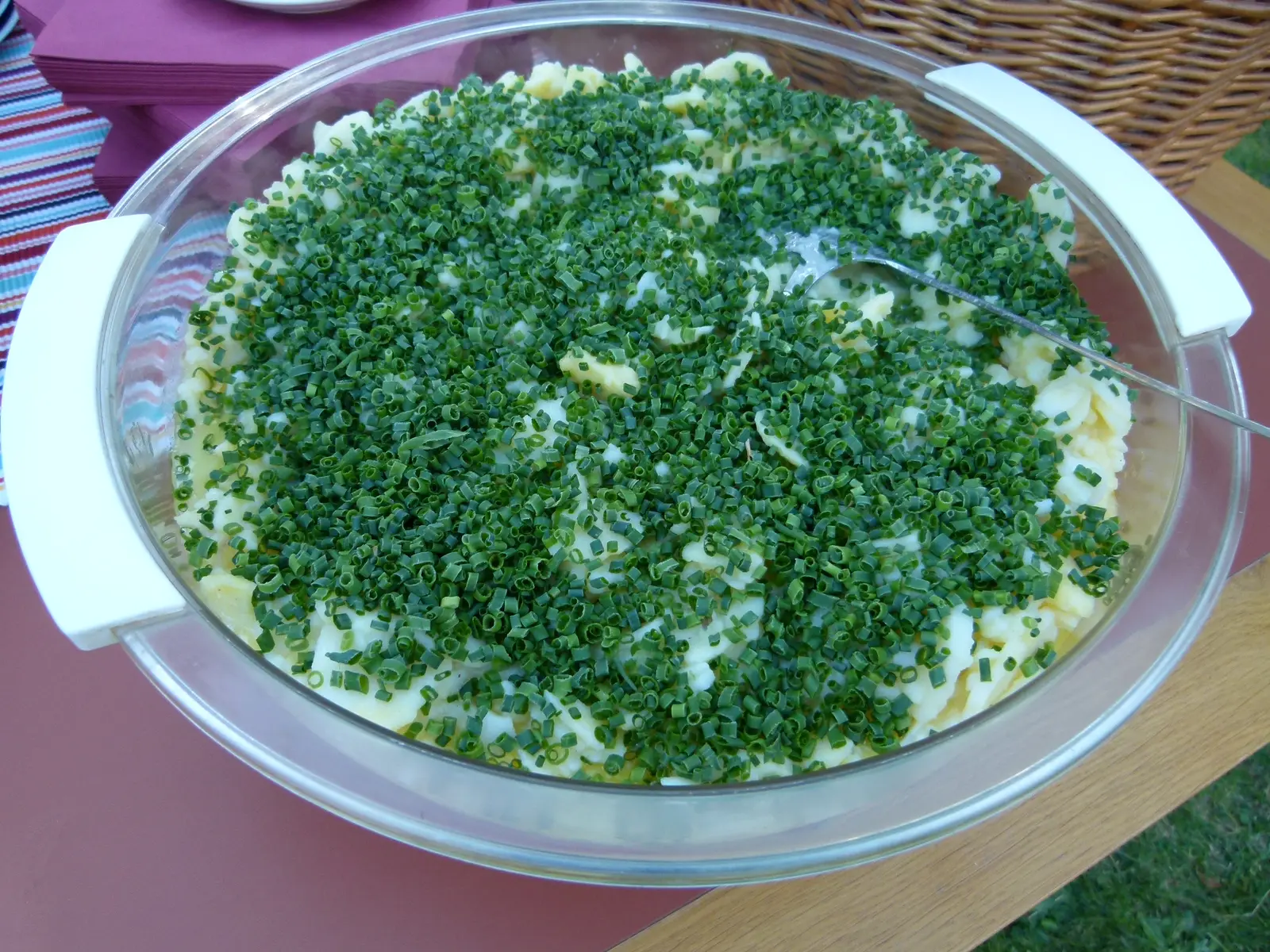
A glass bowl of warm Swabian potato salad topped with chopped chives Germany flag Germany 45m
Lunch •Swabian Heritage

German Potato Salad

This german potato salad recipe is the warm Swabian kind: waxy potatoes sliced while still hot, tossed with crisp bacon, soft onion and sliced egg, then dressed with hot beef stock, vinegar and mustard so every slice drinks up the tangy dressing. No mayonnaise anywhere — the potatoes stay light, glossy and warm. One serving is about 292 g.

Comfort & Warmth

Warm waxy potatoes in a bacon, mustard and vinegar dressing, served straight from the bowl while still steaming.

Pairs Well With
Grilled sausages, schnitzel & a cold German lager
Quick Prep (<30m)
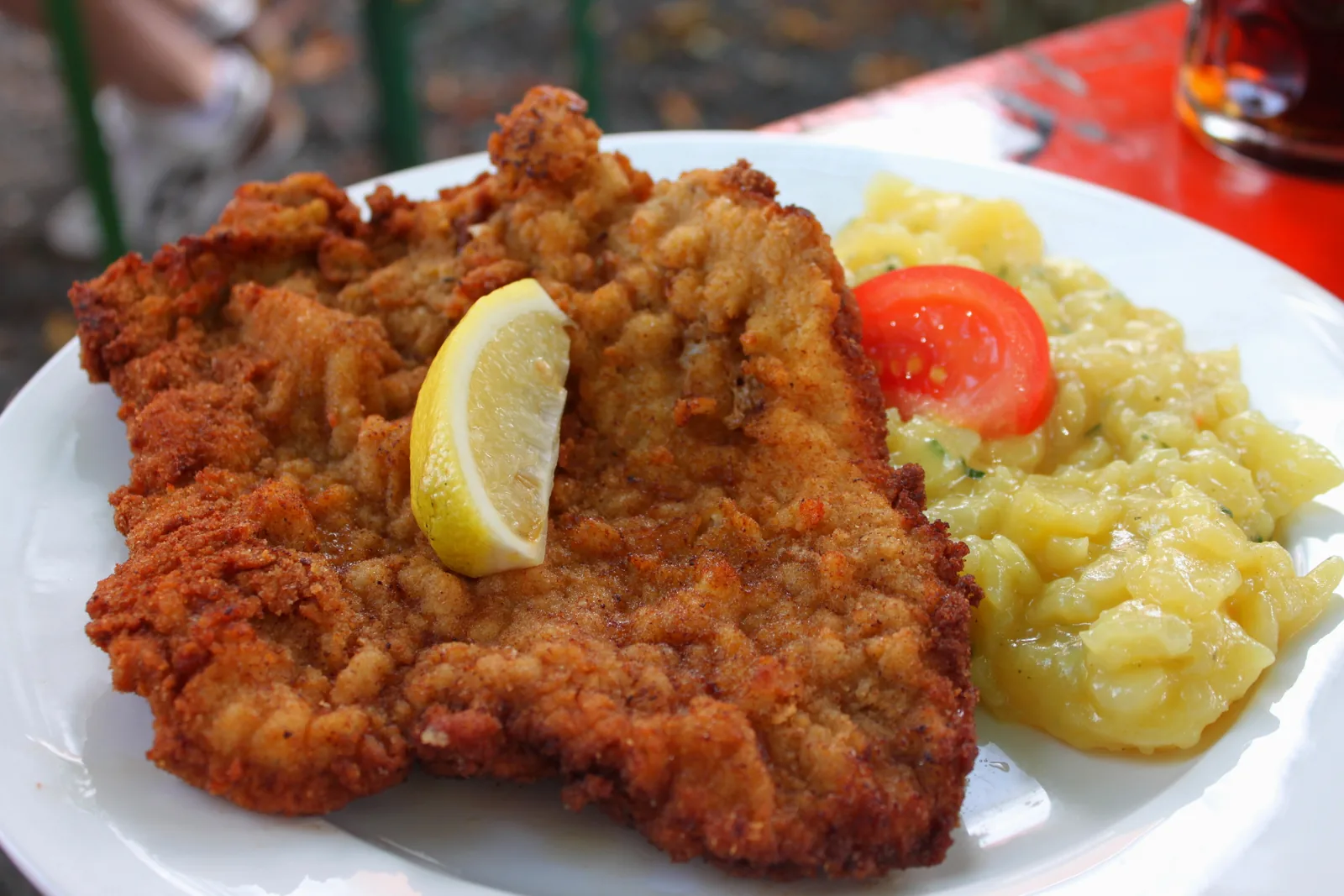
Golden breaded pork schnitzel with a lemon wedge and potato salad on a white plate Germany flag Germany 40m
Dinner •German Heritage

German Pork Schnitzel

German pork schnitzel is the everyday hero of German cooking: a pork cutlet pounded thin, coated in flour, egg and breadcrumbs, and fried in butter until it turns deep golden and crisp. This german schnitzel recipe follows the German way — real pork, a loose crumb, and a wedge of lemon on the side, with potato salad to mop up. One serving is about 200 g.

Classic Comfort

A golden, crisp pork cutlet with lemon and potato salad — a satisfying, protein-rich German dinner.

Pairs Well With
Warm potato salad, cucumber salad and a cold lager.
High Protein

The Dinner Gazette

Never wonder what’s for dinner again

One email a week with easy dinner ideas from around the world — ingredients, steps and nutrition, tested in our kitchen first.

Delivered every Thursday morning. Unsubscribe anytime.