Curated recipes from 193 countries  •  New seasonal Mediterranean issue out now

Overview

Egyptian Freekeh Pilaf

Freekeh Pilaf, Egyptian Roasted Green Wheat Pilaf

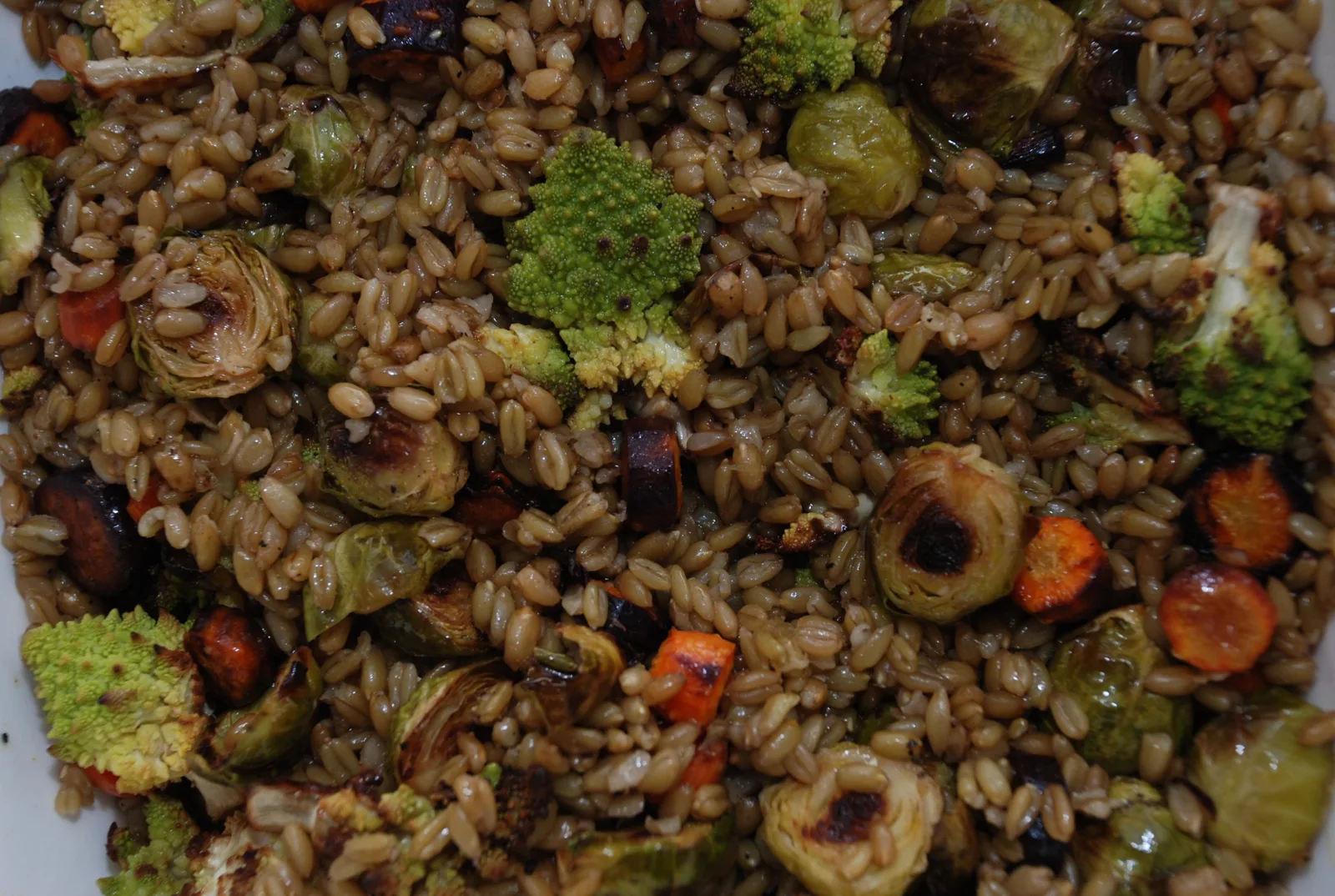
This egyptian freekeh pilaf recipe is Egypt's smoky grain dish: freekeh — young green wheat roasted in the husk — cooked in vegetable stock with onion, tomato, peas and carrots, seasoned with cumin, cinnamon and coriander, and piled with caramelised roasted vegetables. The grains stay chewy and nutty, the vegetables turn sweet at the edges, and the whole pot comes together in one hour. One serving is about 410 g.

Freekeh is wheat harvested while still green, then roasted in the husk — the fire gives the grain its smoky flavour and its name, from the Arabic word farik, meaning rubbed, for the way the charred husks are rubbed away. It has been a staple across Egypt and the Levant for centuries, cooked as a pilaf, stirred into soups, and used to stuff vegetables and pigeons. In Egyptian home cooking the pilaf is a generous, everyday pot: the grain simmers with onion, tomato and warm spices while vegetables roast alongside, and the two meet at the table.

Pairs well with: A drizzle of tahini and lemon, a crisp cucumber and tomato salad, and a pot of mint tea.

Provenance

Egypt flag Egypt

Egyptian Grain Classic

Middle Eastern

Time Dedication

1h

20m prep • 40m cook

Batch Yield

4 Servings

414 kcal per serving

1 serving ≈ 410 g

Technical Skill

Intermediate

Easy (One Pot)

Meal Timing & Digestive Fit

Breakfast

Not Advised

Lunch

Hearty Midday Main

Dinner

Ideal Hearty Main

Snack & Tea

Inappropriate

Occasions: Family dinners, vegan weeknights, Ramadan tables, a make-ahead grain bowl, a vegetarian main Cost: Low — about $2–3 per serving at home
A close-up bowl of Egyptian freekeh pilaf with roasted romanesco, Brussels sprouts and carrots.

Egyptian Grain Classic

Photo: Kristen Taylor, CC BY 2.0, via Wikimedia Commons

The Heritage Formulary

Measured Ingredients

Estimated cost: Low — about $2–3 per serving at home (USD)

Made with whole freekeh simmered in measured vegetable stock with onion, tomato and warm spices, steamed until tender and chewy.

Execution Methodology & Culinary Technique

Step-by-Step Cooking Guide

Active 1h
P

Prep Stage: Rinse the Freekeh and Cut the Vegetables

20 Mins • Hands-On

Rinse the freekeh in a sieve under cold water until the water runs clear, then soak it in cold water for 10 minutes and drain — rinsing removes dust and loose husk, and soaking shortens the cooking time so the grains turn tender without splitting. While it soaks, peel and chop the onion, dice the tomatoes, mince the garlic, cut the carrots into thick rounds, break the romanesco into small florets and halve the Brussels sprouts. Measure the tomato paste, the spices and the stock so everything is within reach once the pot is hot.

Maestro Tip: Cut the roasting vegetables to roughly the same size — thick carrot rounds, small romanesco florets and halved sprouts all roast in the same 25 minutes when they are evenly sized.

  1. 1

    Roast the Vegetables

    25 Mins • Cooking 200°C (400°F)

    Heat the oven to 200°C (400°F). Toss the carrot rounds, romanesco florets and halved Brussels sprouts with 1 tablespoon of the olive oil and a pinch of the salt on a baking tray, spreading them in a single layer. Roast for 20–25 minutes, turning once halfway, until the edges are caramelised and the vegetables are tender when pierced with a knife.

    Give the vegetables space on the tray — crowded vegetables steam instead of roasting and never get those sweet browned edges.

    Done when: Vegetables tender inside with browned, caramelised edges.

  2. 2

    Soften the Onion and Garlic

    8 Mins • Hands-On Medium heat, about 160°C (320°F)

    While the vegetables roast, heat the remaining 1 tablespoon of olive oil in a heavy pot with a tight lid over medium heat. Add the onion and cook for 4–5 minutes, stirring, until soft and translucent. Add the garlic and cook for 1 minute more until fragrant.

    Do not let the garlic brown — browned garlic turns bitter and will flavour the whole pot.

    Done when: Onion soft and translucent, garlic fragrant but not coloured.

  3. 3

    Build the Tomato and Spice Base

    5 Mins • Hands-On Medium heat, about 160°C (320°F)

    Stir in the tomato paste and cook for 1 minute, then add the diced tomatoes, the cumin, cinnamon, coriander and black pepper. Cook for 3–4 minutes, stirring, until the tomatoes soften and the raw tomato smell disappears and the spices smell warm and fragrant.

    Frying the tomato paste briefly in the oil deepens its colour and flavour — raw paste tastes sharp and tinny.

    Done when: Tomatoes softened into a thick sauce, spices fragrant, paste darkened.

  4. 4

    Add the Freekeh and Stock and Simmer

    25 Mins • Cooking Low heat, gentle simmer about 95°C (203°F)

    Stir the drained freekeh into the pot with the remaining salt, coating every grain in the tomato base. Pour in the vegetable stock, stir once, and bring the pot to a gentle boil. Turn the heat to low, put the lid on tightly, and simmer for 20–25 minutes without lifting the lid, until the freekeh has absorbed the stock and is tender but still chewy.

    Lifting the lid lets the steam out and the top grains stay hard. Trust the time and the smell instead.

    Done when: Stock absorbed, grains tender with a firm, chewy bite — not mushy.

  5. 5

    Stir in the Peas and Lemon and Rest

    10 Mins • Hands-On No heat

    Take the pot off the heat. Stir in the peas — the heat left in the pot cooks them in a few minutes without turning them grey — and the lemon juice. Put the lid back on and leave the pilaf to rest for 10 minutes so the grains finish steaming and the flavours settle.

    Adding the peas at the end, off the heat, keeps them bright green and sweet instead of dull and floury.

    Done when: Peas bright green and just tender, grains fluffy and separate.

  6. 6

    Serve with the Roasted Vegetables

    2 Mins • Hands-On No heat

    Fluff the pilaf gently with a fork, lifting the grains rather than stirring them. Spoon it into wide bowls and pile the roasted carrots, romanesco and Brussels sprouts over the top so every serving gets grains and vegetables together.

    Fluffing with a fork, not a spoon, keeps the grains separate — stirring mashes them into a porridge.

    Done when: Fluffy, separate grains, glossy with oil, vegetables golden on top.

Finishing Touches & Plating

Fluff the pilaf gently with a fork, squeeze the lemon over it, and spoon the roasted vegetables over the top so every serving gets grains and vegetables together. Serve hot, with the tahini drizzle on the side.

Nutritional Physiology & Benefits

Nutrition

Energy

414

kcal / serving

Protein

14g

Complete AA

Carbs

69g

Complex

Fats

9g

Healthy

Per serving (4 servings · 1 serving ≈ 410 g)
Energy414 kcal
Protein14 g
Carbohydrates69 g
Fat9 g
Fibre15.0 g
Sugar11.0 g
Sodium590 mg
Per 100g
Energy101 kcal
Protein3.4 g
Carbohydrates16.8 g
Fat2.3 g
Fibre3.7 g
Sugar2.7 g
Sodium144 mg

Nutrition values are estimated — calculated from USDA FoodData Central values for the listed ingredients.

Vitamins & minerals: Provides B vitamins and iron from the freekeh, vitamin A from the carrots, vitamin C from the tomato and romanesco, vitamin K and folate from the Brussels sprouts and peas. Nutrition values are estimated.

Fibre That Fills You Up

One serving carries about 15.0 g of fibre — mostly from the freekeh — which is why a modest bowl of this pilaf keeps you full far longer than the same amount of white rice.

A Whole Grain, Not a Refined One

Freekeh is whole young wheat, so it keeps its bran and germ: B vitamins, magnesium and iron that refined grains lose in milling.

Steady, Satisfying Energy

At about 414 kcal per serving, with slow-digesting whole-grain carbohydrate and 13.8 g of plant protein, this pilaf gives steady energy rather than a quick spike and crash.

Food Pairings

What to Eat With

To optimize nutrient absorption and elevate the sensory depth, pair with these authentic accompaniments:

Sauces

Tahini and Lemon Drizzle

A spoonful of tahini thinned with lemon juice and water is the classic creamy partner — its nutty richness softens the smoky grain and its acidity lifts the tomato base.

Vegetables

Cucumber and Tomato Salad

A crisp salad of cucumber, tomato and onion with lemon adds crunch and cool freshness against the warm, soft pilaf.

Sides

Warm Flatbread

Warm flatbread is the Egyptian way to scoop up a grain pilaf — it turns a bowl into a full meal and mops up every last bit of the tomato base.

Drinks

Mint Tea

Sweet mint tea is the traditional drink with a grain pilaf in Egypt; its cool mint and sweetness balance the warm cumin and cinnamon in the dish.

Complete menu

Serve egyptian freekeh pilaf in wide bowls topped with the roasted vegetables, with a tahini and lemon drizzle, a cucumber and tomato salad, warm flatbread and a pot of mint tea — the full Egyptian family dinner.

Digestive Guardrails

What NOT to Combine

To prevent digestive distress, sluggishness, or palate clash, avoid pairing the dish with these elements:

Very Salty Accompaniments for People Watching Sodium

One serving already carries about 590 mg of sodium, so pairing it with salty pickles, cured meats or salty cheese can push a meal's sodium very high. People with high blood pressure should keep the sides fresh and unsalted. This is general food information, not medical advice.

Leaving Cooked Pilaf Out Overnight

Cooked freekeh, like cooked rice, can grow bacteria if left at room temperature for hours. Cool it within 2 hours and refrigerate it — do not leave the pot on the stove overnight. This is general food-safety information, not medical advice.

General information only, not medical advice — consult a doctor for personal dietary decisions.

Who Should Eat It

Who Should Eat

  • General adultsAn excellent everyday vegan main for most adults — filling, high in fibre and easy to digest.
  • ChildrenA good family dish — soft grains, sweet roasted vegetables and mild spices. Children usually love it with the peas picked out on top.
  • ElderlyWell suited — the grains are tender, the vegetables are soft, and the fibre helps digestion. Keep the salt modest.
  • Pregnant womenGenerally safe and a good source of fibre, iron and B vitamins; make sure it is served hot and freshly cooked.
  • Breastfeeding womenA filling, fibre-rich dish that fits well into a breastfeeding diet; the freekeh brings steady energy.
  • AthletesA strong carbohydrate base for a training meal — at 69.0 g of carbohydrate and 13.8 g of protein per serving, it refuels well after exercise.
  • Weight gainEasy to eat in a large portion and energy-dense enough to help — add extra olive oil or tahini and a second helping of the roasted vegetables.
  • Weight lossA good choice in a measured portion: about 414 kcal per serving with 15.0 g of fibre, so it is filling for its calories — just keep the oil and tahini measured.

Health Conditions — Adjust or Avoid

Conditions

  • DiabetesWhole-grain freekeh digests more slowly than white rice, but one serving still carries about 69.0 g of carbohydrate — keep the portion measured and eat more of the roasted vegetables. Ask your clinician.
  • High blood pressureOne serving carries about 590 mg of sodium, mostly from the stock and added salt — cook it with low-sodium stock and less salt, and skip salty sides. Ask your clinician.
  • Kidney diseaseFreekeh is moderate in potassium and phosphorus; keep portions modest and ask your clinician.
  • GoutPlant-based and low in purines, so it is generally fine — ask your clinician.
  • Stomach issuesHigh in fibre, which can be gassy for a sensitive stomach — eat a modest portion and chew well. The tomato base can also bother people with reflux.
  • Cardiovascular diseaseWhole grain, fibre-rich and low in saturated fat — a heart-friendly base, especially with olive oil and no animal fat. Ask your clinician.
  • Fatty liverA good whole-grain choice in a measured portion; the fibre helps, and the fat is mostly unsaturated olive oil. Ask your clinician.
  • Food allergiesContains wheat (gluten) — freekeh is wheat. People with coeliac disease or wheat allergy must avoid it. If you have any food allergy, check every ingredient and ask your clinician.
  • Special therapeutic dietsNot suitable for a gluten-free diet, since freekeh is wheat. If you follow a prescribed low-sodium diet, cook it without added salt and use unsalted stock — check with your clinician.

If you have a medical condition, consult your doctor before changing your diet.

Storage & Use

Storage & Use

How to store
Cool the pilaf within 2 hours, then store in a sealed container in the fridge.
In the fridge
Up to 4 days in a sealed container.
In the freezer
Up to 3 months in portion-sized containers.
How to reheat
Reheat with a splash of water in a covered pan over medium heat, or in the microwave, until steaming hot throughout — reheat to 74°C (165°F).
Freezing recommended
Yes — it freezes and reheats very well.
Signs it has spoiled
Sour smell, slimy texture, or any mould.

More recipes to explore

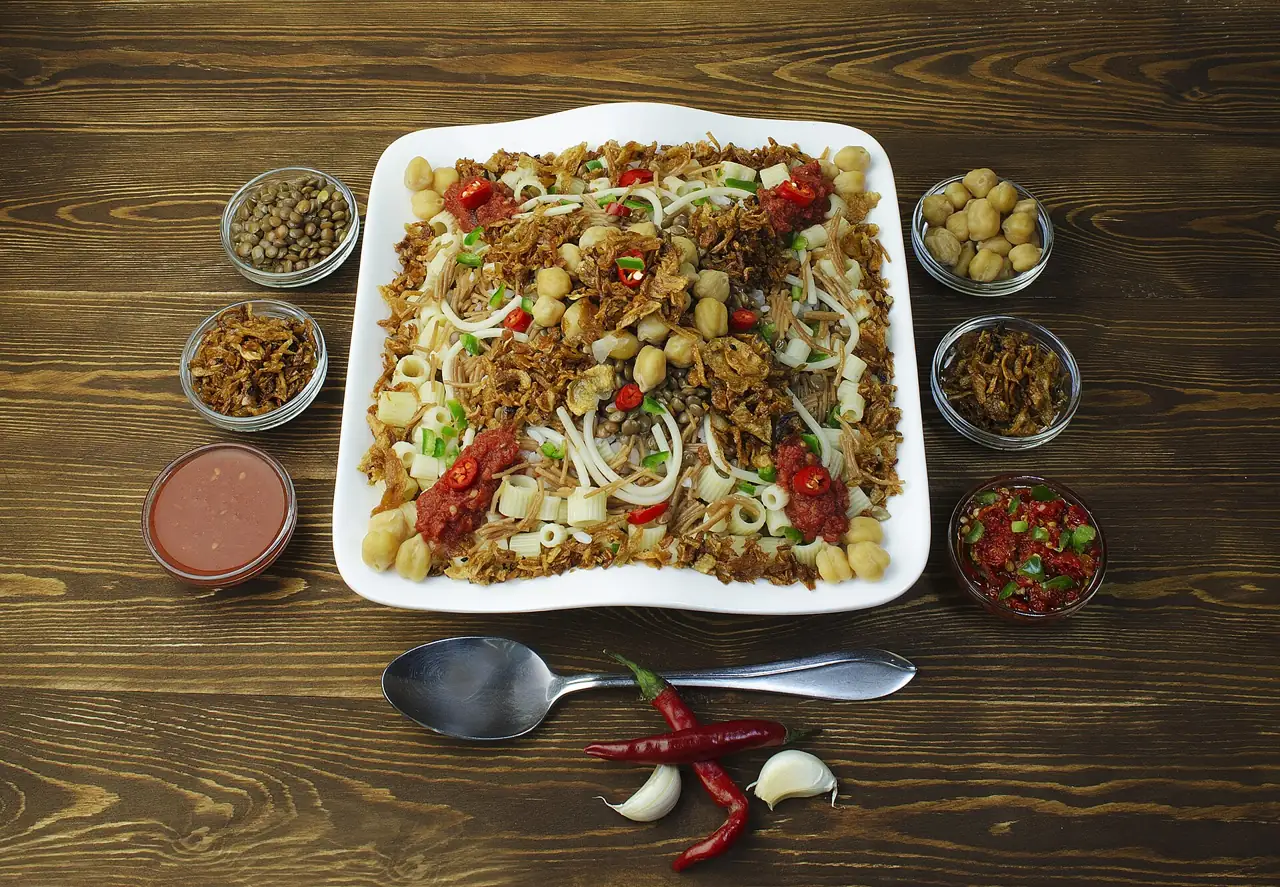
A platter of Egyptian koshari with rice, lentils, macaroni, chickpeas, crispy fried onions and tomato sauce Egypt flag Egypt 1h 15m
Dinner •Cairo Street Food

Egyptian Koshari

This egyptian koshari recipe builds Egypt's national dish at home: brown lentils and short-grain rice cooked with toasted vermicelli, layered with macaroni and chickpeas, then topped with a spiced tomato sauce, garlic vinegar and a heap of crispy fried onions. One serving is about 600 g.

Comfort & Warmth

Layers of lentils, rice and pasta with a spiced tomato sauce and crispy onions.

Pairs Well With
Garlic vinegar (daqqa), hot sauce and pickled vegetables
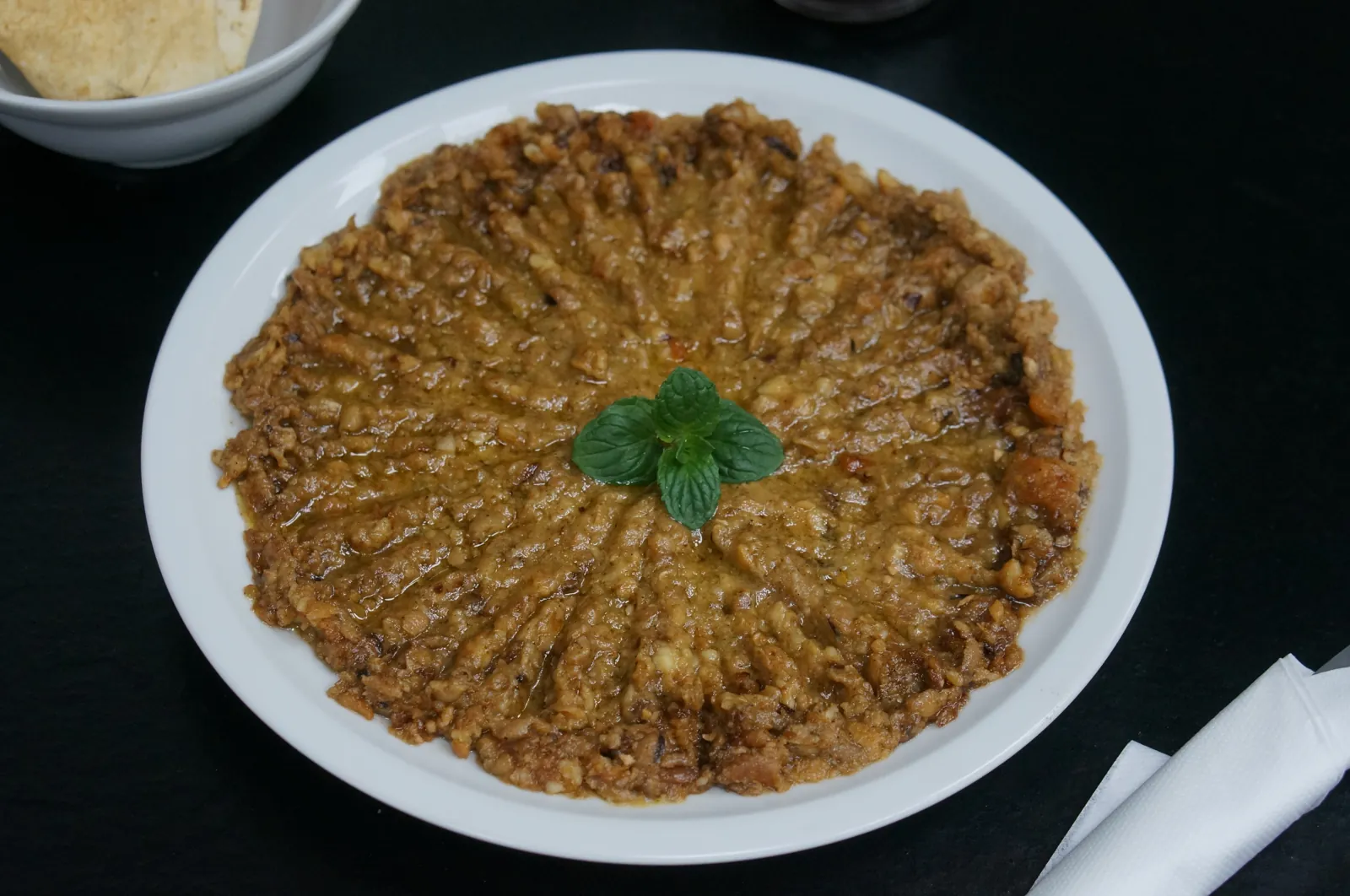
A white plate of mashed ful medames glistening with olive oil, garnished with fresh mint, with flatbread in a bowl beside it Egypt flag Egypt 1h 45m
Breakfast •Cairo Breakfast

Ful Medames

Ful medames is Egypt's beloved breakfast of fava beans simmered until soft, then lightly mashed and dressed with olive oil, lemon juice, garlic and cumin. It is creamy, tangy and deeply savoury, scooped up with warm flatbread. One serving is about 283 g.

Plant Protein & Energy

Slow-cooked fava beans with olive oil give steady energy and 15.9 g of protein per serving, with no meat at all.

Pairs Well With
Warm baladi bread, pickled vegetables and a boiled egg
High Protein
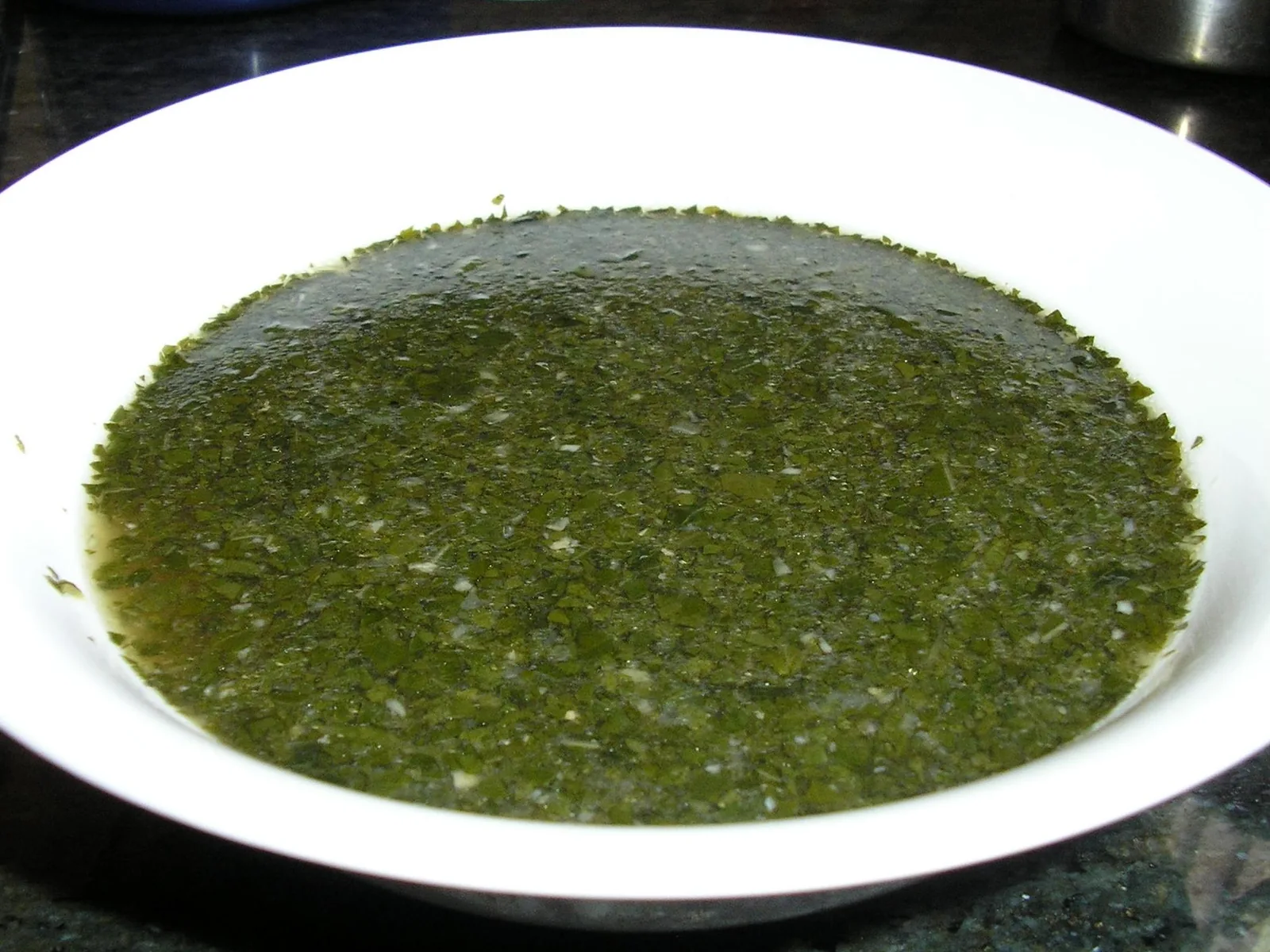
A white bowl of bright green molokhia soup made from finely chopped jute leaves Egypt flag Egypt 1h 15m
Dinner •Egyptian Family Table

Molokhia

This molokhia recipe turns finely chopped jute leaves into Egypt's beloved green soup: simmered briefly in a rich chicken broth, then finished with ta'leya — garlic and ground coriander fried in ghee until it sizzles. Ladled over white rice with a squeeze of lemon, it is slippery, garlicky and deeply comforting. One serving is about 550 g.

Comfort & Warmth

A bright green jute-leaf soup simmered in chicken broth and finished with a sizzling garlic and coriander ta'leya.

Pairs Well With
White rice, lemon wedges and browned chicken pieces
Soups & Broths
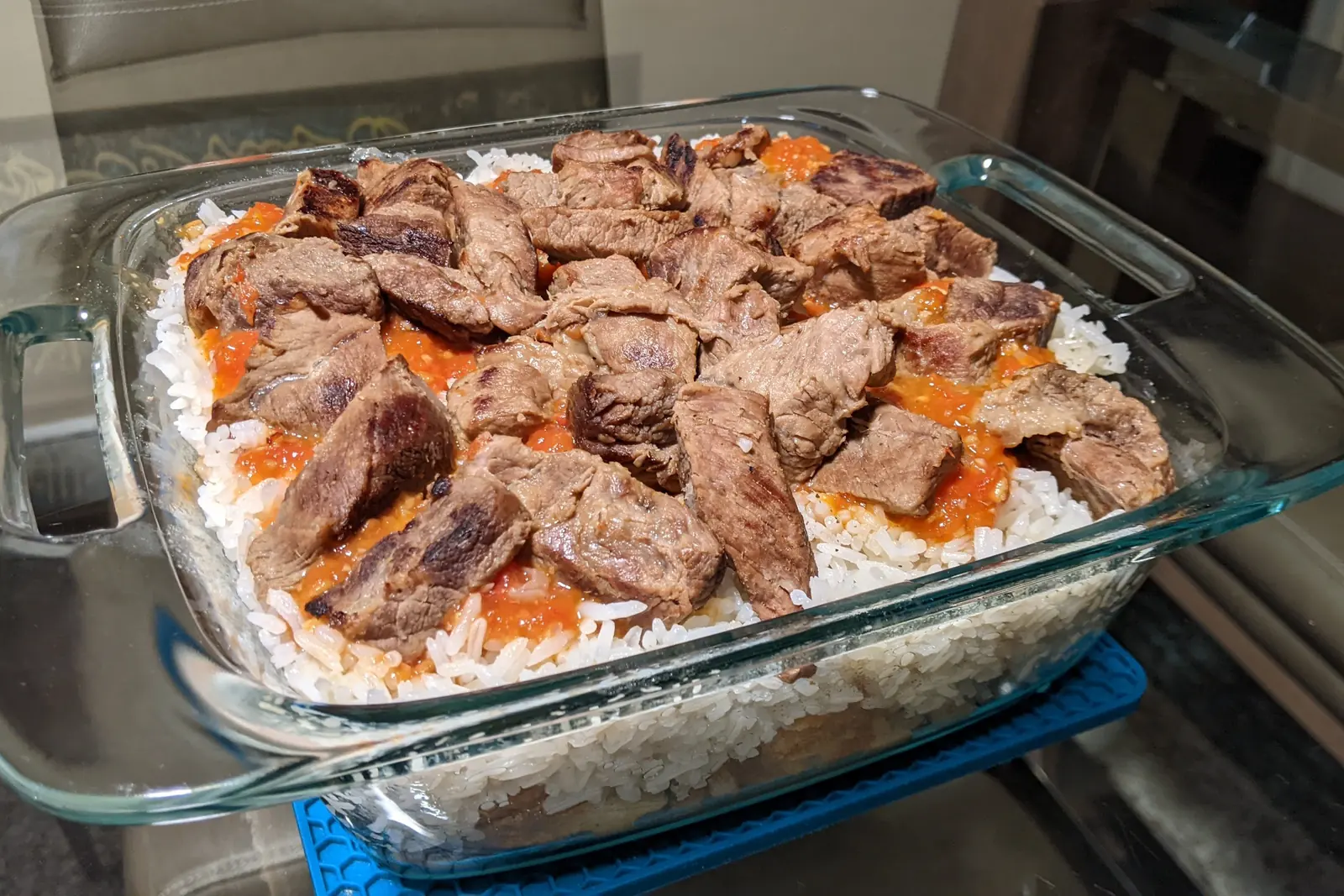
Egyptian fattah in a glass dish: white rice topped with tomato sauce and chunks of beef Egypt flag Egypt 2h 20m
Dinner •Cairo Heritage

Egyptian Fattah

Egyptian fattah is the dish Egypt celebrates with: crisp toasted bread soaked in beef broth, a deep layer of fluffy rice, tender chunks of beef, and a garlicky tomato-vinegar sauce spooned over the top. This egyptian fattah recipe is the Eid al-Adha classic — built in layers in one big dish, and carried to the table for everyone to share. One serving is about 330 g.

Feast & Celebration

Crisp bread, fluffy rice, tender beef and garlicky tomato sauce layered in one generous sharing dish.

Pairs Well With
Green salad, pickles and mint tea.
High Protein

The Dinner Gazette

Never wonder what’s for dinner again

One email a week with easy dinner ideas from around the world — ingredients, steps and nutrition, tested in our kitchen first.

Delivered every Thursday morning. Unsubscribe anytime.