Curated recipes from 193 countries  •  New seasonal Mediterranean issue out now

Overview

Egyptian Macaroni Bechamel

Macarona bil-Bechamel, Macarona Forn

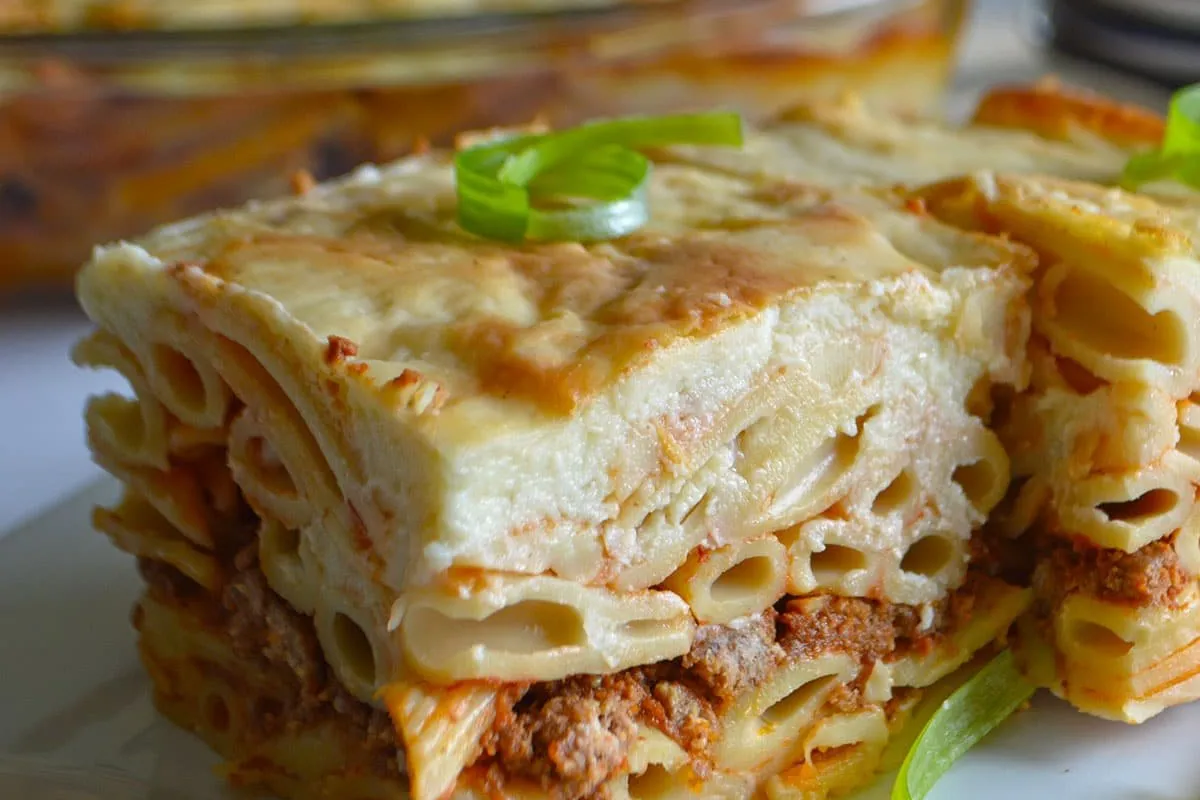
This egyptian macaroni bechamel recipe is Egypt's great family bake: penne layered with a spiced beef and tomato sauce, covered in a thick, creamy bechamel, and baked until the top is golden and bubbling. It is the dish that appears at family gatherings and Ramadan tables across the country — rich, generous, and made to be shared. One serving is about 470 g.

Macarona bil-bechamel came to Egypt through French-trained chefs who worked in the khedival palace kitchens and luxury hotels in the mid-19th century, bringing the bechamel technique with them, and it picked up a Greek influence in the early 20th century, when a large Greek community lived in Egypt — which is why it resembles the Greek pastitsio. Egyptians made it their own: penne instead of long pasta, a cinnamon-spiced beef sauce, and a thick bechamel enriched with egg, baked in a big dish and cut into squares. Today it is a fixture of family gatherings and Ramadan tables, the dish Egyptian home cooks make when everyone is coming over.

Pairs well with: A green salad with a sharp vinaigrette, pickles, and bread for the sauce.

Provenance

Egypt flag Egypt

Egyptian Family Bake

Middle Eastern

Time Dedication

1h 25m

30m prep • 55m cook

Batch Yield

6 Servings

705 kcal per serving

1 serving ≈ 470 g

Technical Skill

Intermediate

Intermediate (Three Parts, One Bake)

Meal Timing & Digestive Fit

Breakfast

Not Advised

Lunch

Hearty Midday Main

Dinner

Ideal Hearty Main

Snack & Tea

Inappropriate

Pasta & Noodles Occasions: Family gatherings, Ramadan iftar, weekend dinners, a crowd-pleasing main for a potluck Cost: Low — about $2–3 per serving at home
A slice of Egyptian macaroni bechamel showing layers of penne, spiced beef and a golden bechamel top.

Egyptian Family Bake

Photo: Zebi2424, CC0, via Wikimedia Commons

The Heritage Formulary

Measured Ingredients

Estimated cost: Low — about $2–3 per serving at home (USD)

Made with penne, a cinnamon-spiced beef and tomato sauce, and a thick bechamel with egg, baked until golden and bubbling.

Execution Methodology & Culinary Technique

Step-by-Step Cooking Guide

Active 1h 25m
P

Prep Stage: Dice, Grate and Warm the Milk

15 Mins • Hands-On

Dice the onion, mince the garlic, and grate the mozzarella. Warm the milk gently in a small pan — it should be warm to the touch, not boiling — and beat the eggs lightly in a bowl. Butter a large baking dish (about 33 x 23 cm) and heat the oven to 190°C (375°F). Put a large pot of salted water on to boil for the pasta.

Maestro Tip: Warm milk is the secret to a smooth bechamel — cold milk hitting a hot roux is what makes lumps. Warm it while you cook the beef.

  1. 1

    Cook the Pasta Until Just Underdone

    10 Mins • Cooking Boiling water, 100°C (212°F)

    Cook the penne in the boiling salted water for 2 minutes less than the packet says — it will finish in the oven. Drain, toss with a drizzle of olive oil so it does not stick, and set aside.

    Undercooking the pasta is essential — pasta cooked fully now will turn soft and mushy after 35 minutes in the oven.

    Done when: Pasta firm and slightly underdone in the centre — it finishes cooking in the bake.

  2. 2

    Make the Spiced Beef and Tomato Sauce

    20 Mins • Cooking Medium-high heat, about 180°C (355°F)

    Heat the olive oil in a large pan over medium-high heat, add the onion and cook for 4 minutes until soft. Add the garlic and cook for 1 minute more, then add the ground beef, breaking it up with a spoon. Cook for 8–10 minutes until browned all over and no pink remains. Stir in the tomato paste, crushed tomatoes, cinnamon, cumin, half the salt and the pepper, and simmer for 10 minutes until thick.

    Let the beef brown properly before you stir it too much — constant stirring steams it grey instead of browning it, and the browned bits are where the flavour lives.

    Done when: Beef browned with no pink left, sauce thick and dark red — ground meat is safe at 71°C (160°F).

  3. 3

    Make the Thick Bechamel

    10 Mins • Cooking Medium heat, about 160°C (320°F)

    Melt the butter in a saucepan over medium heat, stir in the flour and cook for 2 minutes until it smells nutty and turns pale gold. Take it off the heat, pour in the warm milk a little at a time, whisking hard after each addition, then return to the heat and stir for 5–6 minutes until thick enough to coat a spoon. Season with the nutmeg and the rest of the salt, take off the heat, and whisk in the beaten eggs.

    Add the milk slowly and whisk hard — a little at a time is what keeps the sauce smooth. If lumps do appear, push the sauce through a sieve.

    Done when: Thick, smooth sauce that coats the back of a spoon; no lumps.

  4. 4

    Layer Pasta, Beef and Bechamel

    5 Mins • Hands-On No heat

    Spread half the pasta in the buttered dish and pour over half the bechamel, tossing gently to coat. Spoon the beef sauce over it in an even layer, then add the rest of the pasta. Pour over the remaining bechamel, spread it to the edges, and scatter the grated mozzarella on top.

    Push the bechamel right to the edges of the dish — the corners are the first place to dry out in the oven.

    Done when: Three even layers — pasta and bechamel, beef, pasta and bechamel — with cheese on top.

  5. 5

    Bake Until Golden, Then Rest

    35 Mins • Cooking Oven 190°C (375°F)

    Bake at 190°C (375°F) for 30–35 minutes until the top is deep golden and bubbling at the edges. Rest for 10 minutes before cutting so the layers hold. Cut into squares and serve hot.

    If the top browns too fast, cover it loosely with foil for the last 10 minutes — the centre still needs its time.

    Done when: Top deep golden and bubbling; the centre is hot through and the layers hold when cut.

Finishing Touches & Plating

Rest the bake for 10 minutes before cutting — this is what lets it hold its layers when you serve it. Cut into squares, lift each one out with a wide spatula, and serve hot.

Nutritional Physiology & Benefits

Nutrition

Energy

705

kcal / serving

Protein

37g

Complete AA

Carbs

72g

Complex

Fats

29g

Healthy

Per serving (6 servings · 1 serving ≈ 470 g)
Energy705 kcal
Protein37 g
Carbohydrates72 g
Fat29 g
Fibre4.2 g
Sugar11.8 g
Sodium741 mg
Per 100g
Energy150 kcal
Protein8 g
Carbohydrates15.3 g
Fat6.3 g
Fibre0.9 g
Sugar2.5 g
Sodium158 mg

Nutrition values are estimated — calculated from USDA FoodData Central values for the listed ingredients.

Vitamins & minerals: Provides calcium and phosphorus from the milk, eggs and mozzarella, iron from the beef, and vitamin A from the tomato sauce.

Protein from Beef, Milk and Eggs

One serving carries about 37.4 g of protein — the beef, the milk, the eggs and the mozzarella all add up, which is why a single square is so filling.

Calcium and Iron

The milk, eggs and mozzarella make it a strong source of calcium and phosphorus, and the beef adds iron — nutrients that support normal bones and red blood cells.

Cooked from Scratch

Pasta, beef, tomato, milk, butter and flour — everyday ingredients, a sauce made from scratch, and nothing from a jar or a packet.

Food Pairings

What to Eat With

To optimize nutrient absorption and elevate the sensory depth, pair with these authentic accompaniments:

Vegetables

Green Salad with Sharp Vinaigrette

A crisp green salad with a sharp vinegar dressing is the classic partner — its acidity cuts through the rich bechamel and resets the palate between bites.

Sides

Egyptian Pickles (Torshi)

Egyptian pickles — pickled cucumber, carrot or cauliflower — add crunch and sourness, which is exactly what a rich cheese bake needs.

Crusty Bread

Bread is for the sauce left on the plate — nobody wants to leave the bechamel behind, and a crusty slice gets every last bit.

Drinks

Cold Lemon-Mint Drink

A glass of cold lemon-mint drink is the Egyptian table answer to a rich bake: cold, sour and refreshing against the warm, creamy pasta.

Complete menu

Serve egyptian macaroni bechamel as the main with a green salad and pickles, or as part of a family table with soup and bread — the salad is what keeps a rich bake balanced.

Digestive Guardrails

What NOT to Combine

To prevent digestive distress, sluggishness, or palate clash, avoid pairing the dish with these elements:

Undercooked Beef and a Lumpy Bechamel

Ground beef that is not cooked right through is a food-safety risk, and a bechamel made with cold milk goes lumpy. Brown the beef until no pink remains and the juices run clear, and warm the milk before it goes into the roux. Cook ground meat to at least 71°C (160°F). This is general food-safety information, not medical advice.

Very Large Portions for People Watching Fat or Sodium

One serving carries about 29.4 g of fat and 741 mg of sodium — this is a rich bake by design. People watching saturated fat or blood pressure should keep the portion modest and load up on the salad. This is general food information, not medical advice.

General information only, not medical advice — consult a doctor for personal dietary decisions.

Who Should Eat It

Who Should Eat

  • General adultsA hearty, filling family main for most adults — rich, so a modest portion with salad is the sweet spot.
  • ChildrenChildren usually love it — pasta, a mild meat sauce and a creamy topping, with nothing spicy unless you add it. Let it cool a little first, as it holds its heat.
  • ElderlySoft, easy to chew and high in protein and calcium — a good choice, though the portion should stay modest for smaller appetites.
  • Pregnant womenGenerally fine — the beef is cooked right through and the eggs in the bechamel are baked, so everything is fully cooked. Keep the portion moderate because it is rich.
  • Breastfeeding womenA filling, calcium-rich main that suits a hungry appetite; pair it with salad for balance.
  • AthletesAbout 37.4 g of protein and 71.8 g of carbohydrate per serving — a strong recovery meal after training, with plenty of energy.
  • Weight gainVery useful — about 705 kcal per serving with good protein, and easy to eat a full portion.
  • Weight lossTricky — rich and energy-dense, so take a smaller portion, go heavy on the salad, and skip second helpings.

Health Conditions — Adjust or Avoid

Conditions

  • DiabetesHigh in carbohydrate — about 71.8 g per serving — so the portion matters more than anything. Take a smaller square with plenty of salad. Ask your clinician.
  • High blood pressureAbout 741 mg of sodium per serving, mostly from the cheese and salt. Use a little less salt in the sauce and keep the portion modest. Ask your clinician.
  • Kidney diseaseHigh in protein and phosphorus from the beef, milk and cheese; keep portions small and ask your clinician.
  • GoutBeef is moderately high in purines, so people with gout should eat it only occasionally and in a small portion — ask your clinician.
  • Stomach issuesRich and heavy, so it can sit uncomfortably on a sensitive stomach — eat a small portion slowly and skip the spicier seasonings if they bother you.
  • Cardiovascular diseaseHigh in saturated fat from butter, beef and cheese — an occasional treat rather than a regular meal. Ask your clinician.
  • Fatty liverEnergy-dense and rich in fat, so keep the portion small and pair it with salad. Ask your clinician.
  • Food allergiesContains wheat (gluten), milk and egg. People with coeliac disease, milk allergy or egg allergy must avoid it — ask your clinician.
  • Special therapeutic dietsNot suitable for gluten-free or dairy-free diets as written — a gluten-free pasta and a dairy-free bechamel change the dish and need testing, so check with your clinician.

If you have a medical condition, consult your doctor before changing your diet.

Storage & Use

Storage & Use

How to store
Cool within 2 hours and store in a sealed container in the fridge.
In the fridge
Up to 3 days in a sealed container.
In the freezer
Up to 2 months, in portions in sealed containers.
How to reheat
Reheat covered in the oven at 170°C (340°F) for 20–25 minutes until hot through, or in the microwave in portions. Reheat to 74°C (165°F).
Freezing recommended
Yes — it freezes and reheats well.
Signs it has spoiled
Sour smell, slimy pasta, or mould on the cheese topping.

More recipes to explore

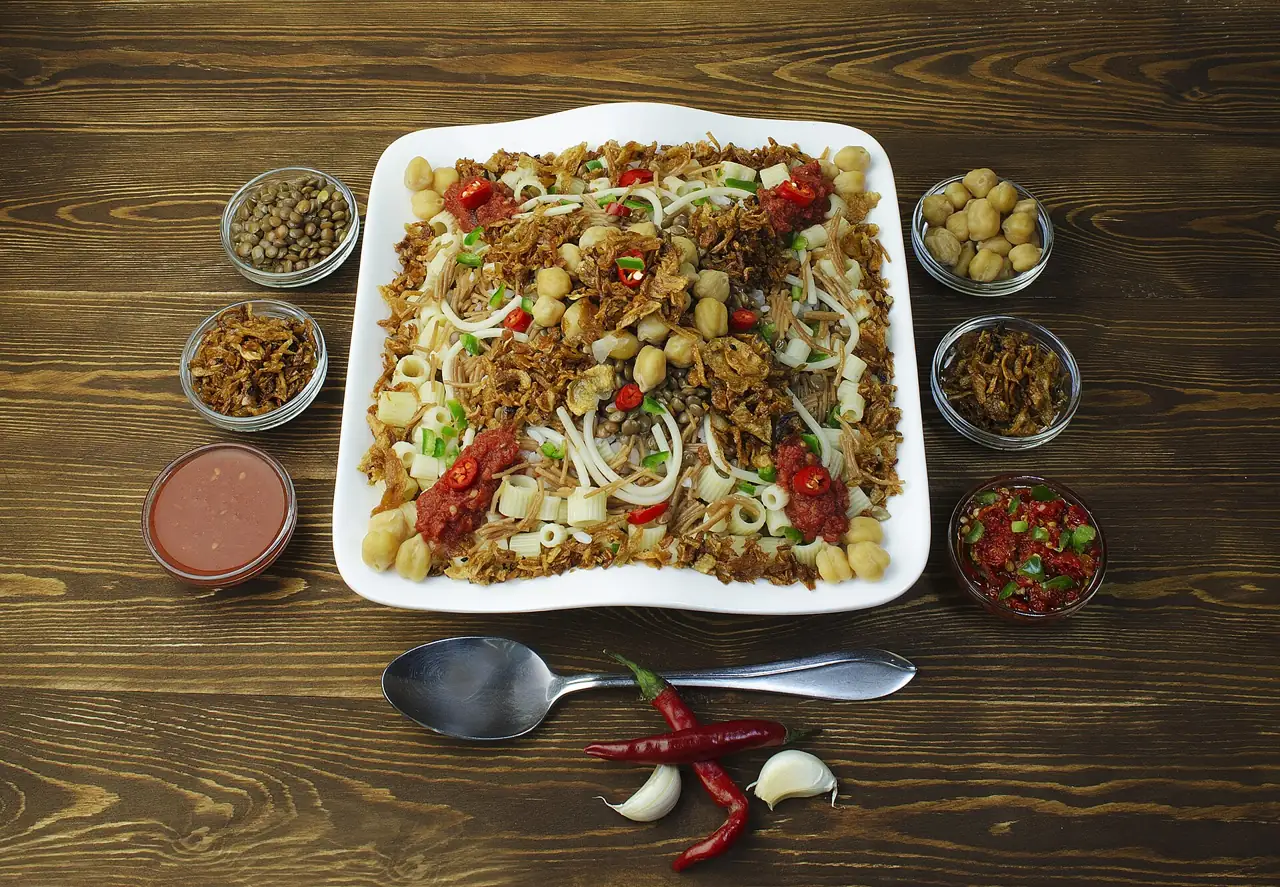
A platter of Egyptian koshari with rice, lentils, macaroni, chickpeas, crispy fried onions and tomato sauce Egypt flag Egypt 1h 15m
Dinner •Cairo Street Food

Egyptian Koshari

This egyptian koshari recipe builds Egypt's national dish at home: brown lentils and short-grain rice cooked with toasted vermicelli, layered with macaroni and chickpeas, then topped with a spiced tomato sauce, garlic vinegar and a heap of crispy fried onions. One serving is about 600 g.

Comfort & Warmth

Layers of lentils, rice and pasta with a spiced tomato sauce and crispy onions.

Pairs Well With
Garlic vinegar (daqqa), hot sauce and pickled vegetables
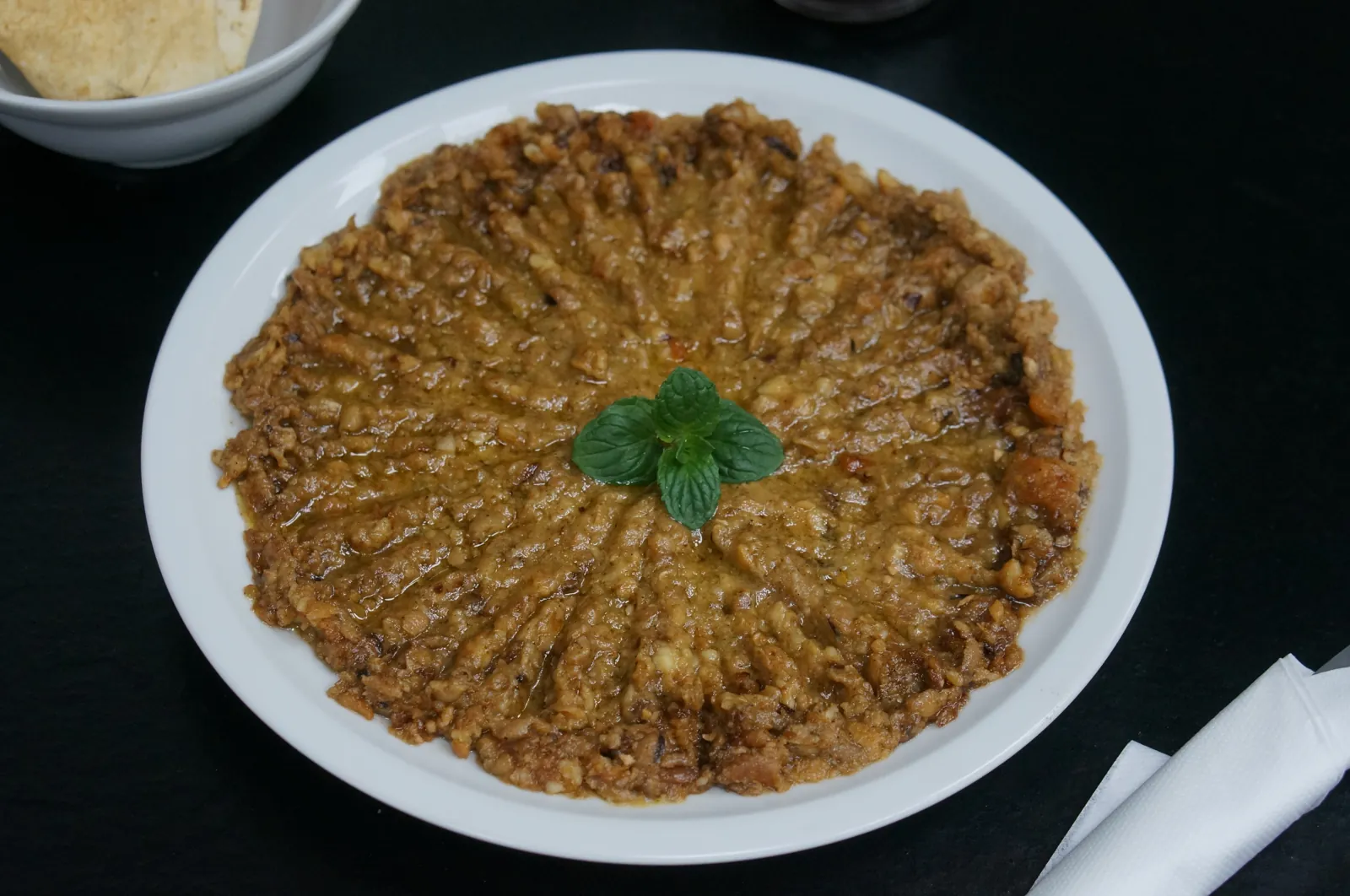
A white plate of mashed ful medames glistening with olive oil, garnished with fresh mint, with flatbread in a bowl beside it Egypt flag Egypt 1h 45m
Breakfast •Cairo Breakfast

Ful Medames

Ful medames is Egypt's beloved breakfast of fava beans simmered until soft, then lightly mashed and dressed with olive oil, lemon juice, garlic and cumin. It is creamy, tangy and deeply savoury, scooped up with warm flatbread. One serving is about 283 g.

Plant Protein & Energy

Slow-cooked fava beans with olive oil give steady energy and 15.9 g of protein per serving, with no meat at all.

Pairs Well With
Warm baladi bread, pickled vegetables and a boiled egg
High Protein
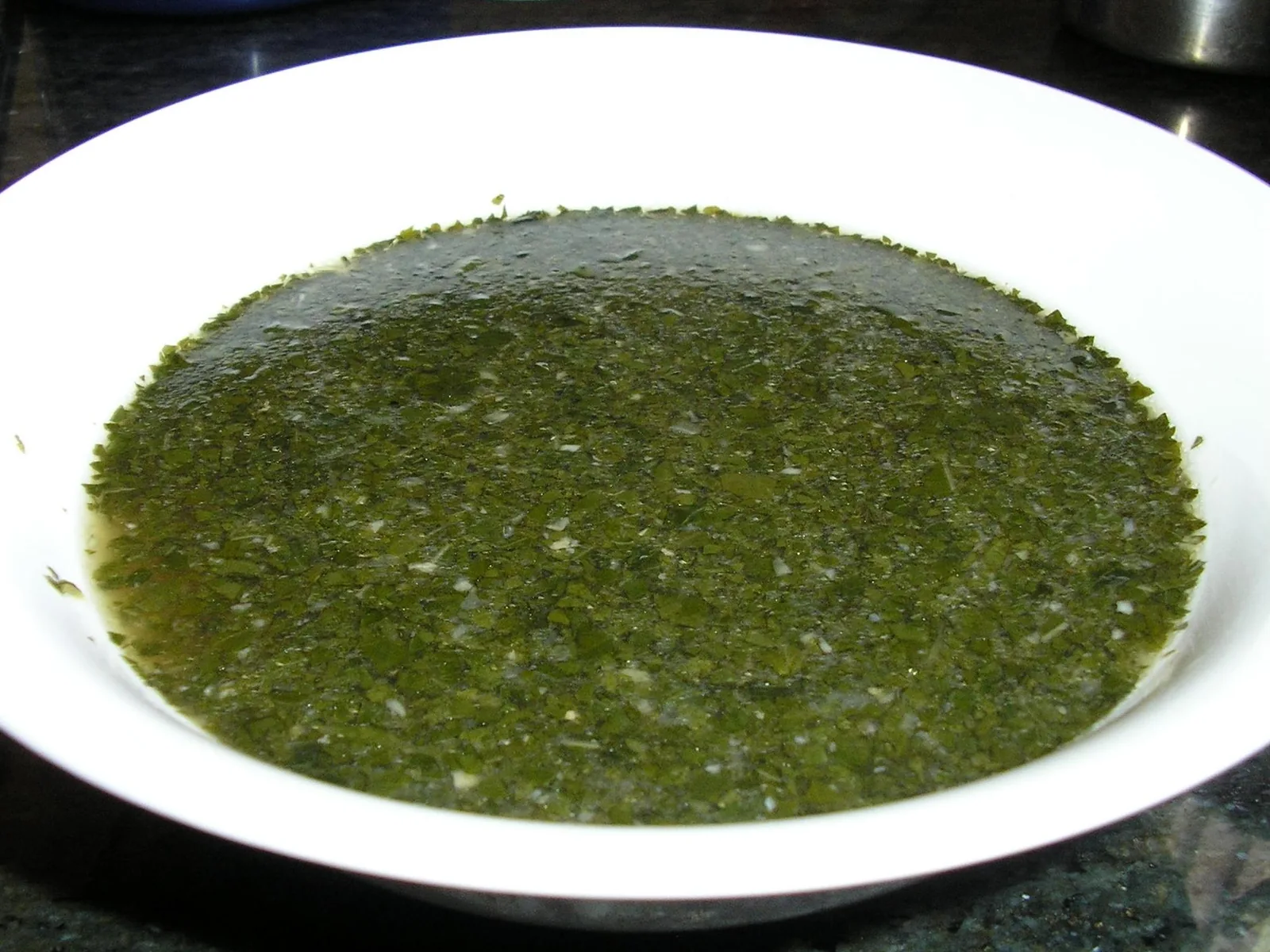
A white bowl of bright green molokhia soup made from finely chopped jute leaves Egypt flag Egypt 1h 15m
Dinner •Egyptian Family Table

Molokhia

This molokhia recipe turns finely chopped jute leaves into Egypt's beloved green soup: simmered briefly in a rich chicken broth, then finished with ta'leya — garlic and ground coriander fried in ghee until it sizzles. Ladled over white rice with a squeeze of lemon, it is slippery, garlicky and deeply comforting. One serving is about 550 g.

Comfort & Warmth

A bright green jute-leaf soup simmered in chicken broth and finished with a sizzling garlic and coriander ta'leya.

Pairs Well With
White rice, lemon wedges and browned chicken pieces
Soups & Broths
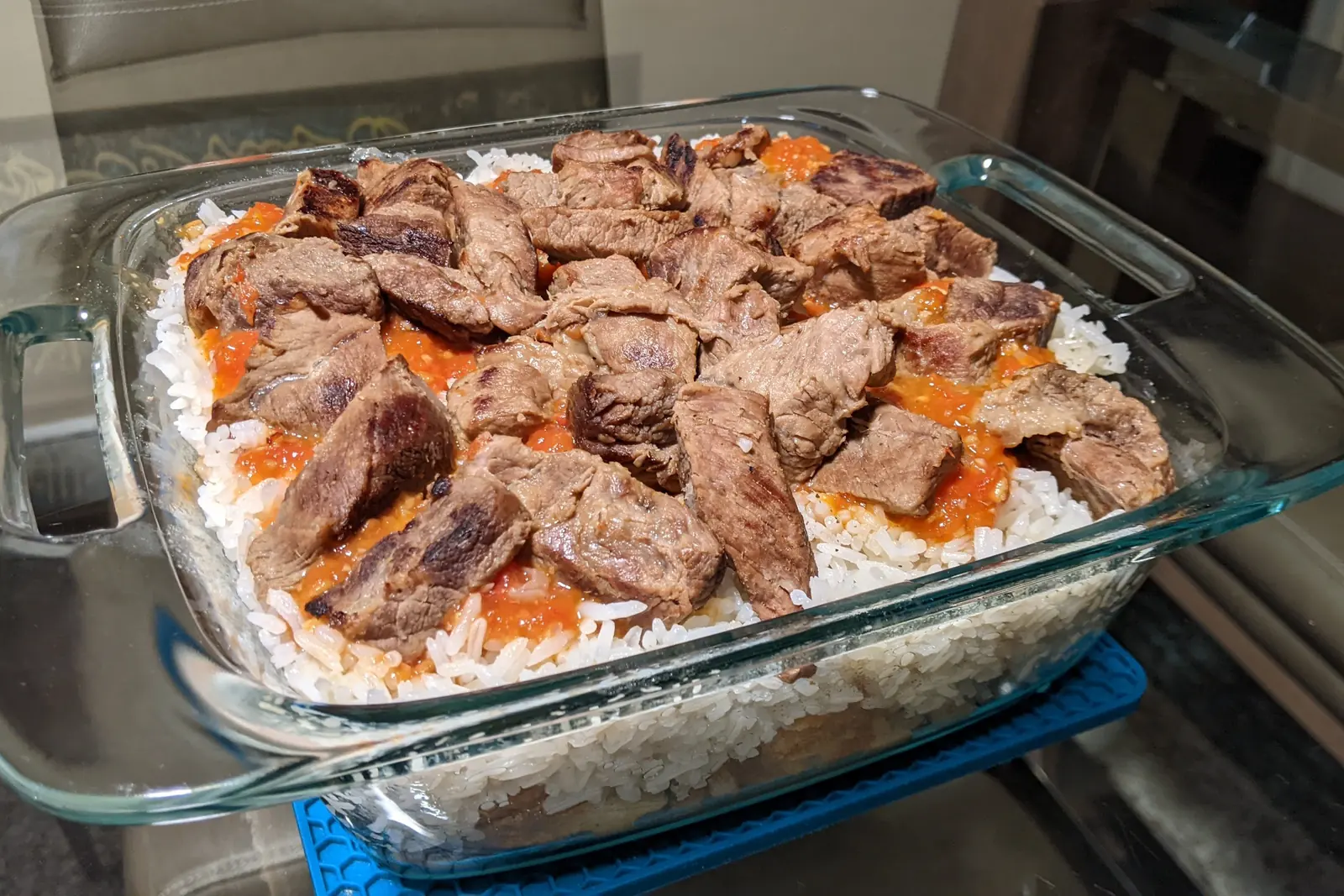
Egyptian fattah in a glass dish: white rice topped with tomato sauce and chunks of beef Egypt flag Egypt 2h 20m
Dinner •Cairo Heritage

Egyptian Fattah

Egyptian fattah is the dish Egypt celebrates with: crisp toasted bread soaked in beef broth, a deep layer of fluffy rice, tender chunks of beef, and a garlicky tomato-vinegar sauce spooned over the top. This egyptian fattah recipe is the Eid al-Adha classic — built in layers in one big dish, and carried to the table for everyone to share. One serving is about 330 g.

Feast & Celebration

Crisp bread, fluffy rice, tender beef and garlicky tomato sauce layered in one generous sharing dish.

Pairs Well With
Green salad, pickles and mint tea.
High Protein

The Dinner Gazette

Never wonder what’s for dinner again

One email a week with easy dinner ideas from around the world — ingredients, steps and nutrition, tested in our kitchen first.

Delivered every Thursday morning. Unsubscribe anytime.