
Curated recipes from 193 countries  •  New seasonal Mediterranean issue out now

Overview

Eritrean Ga'at

Ga'at; Genfo; Eritrean Barley Porridge

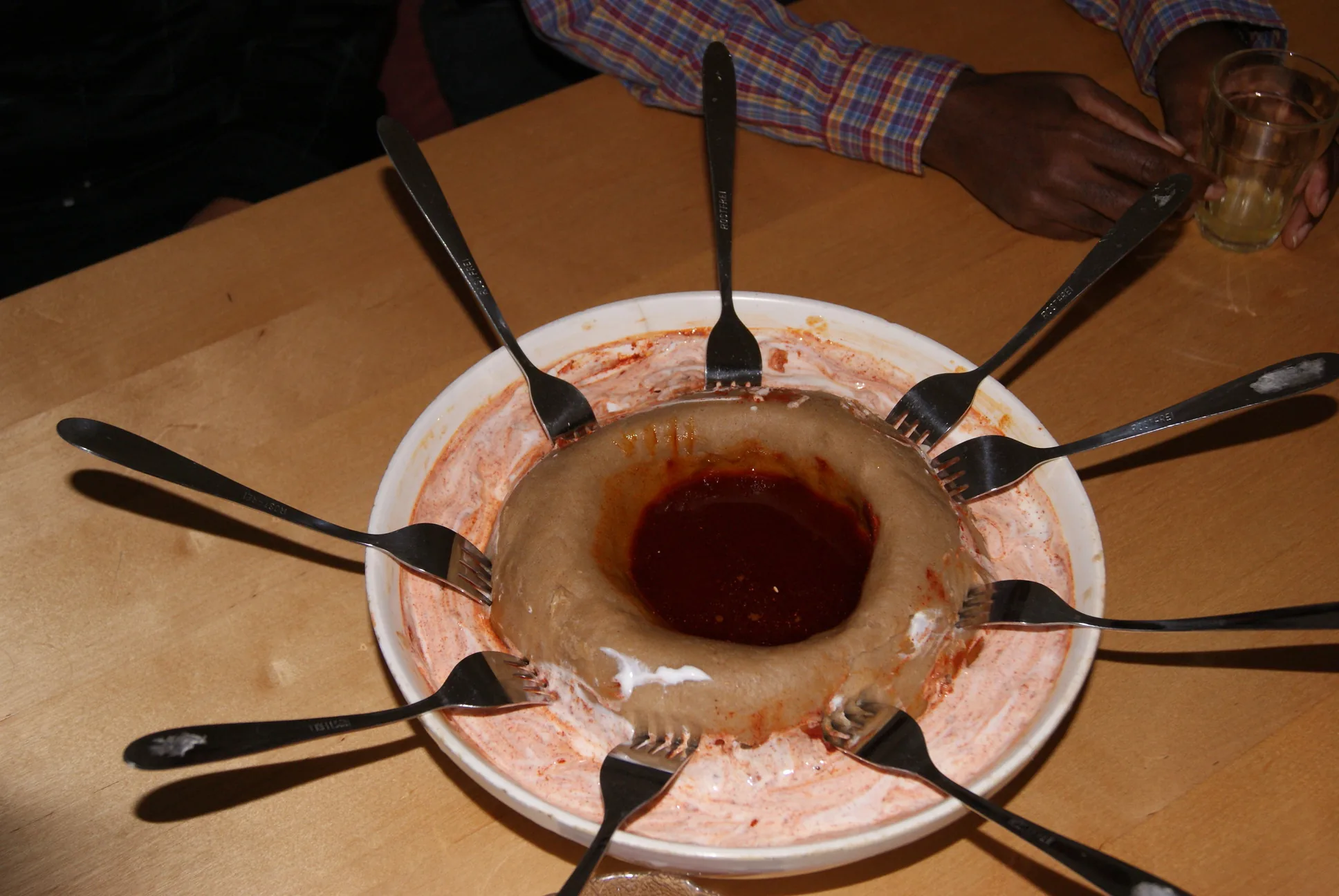
This Eritrean gaat recipe stirs roasted barley flour into boiling water until it turns thick, smooth and stiff, then moulds it into a ring with a well of hot berbere butter in the centre. It is the celebratory breakfast traditionally served when a new child is born, eaten communally from one dish with a fork for each person. One serving is about 389 g.

Ga'at, also called genfo, is the stiff porridge of the Eritrean and Ethiopian highlands, traditionally made from roasted barley flour stirred into boiling water and shaped by hand. It is a communal dish: one ring of porridge, one well of spiced butter, one fork for each person at the table. It is traditionally served when a new child is born, and the same shape — a ring with a red butter well — is how it is recognised at a glance.

Pairs well with: Hot berbere butter and cool plain yogurt

Provenance

Eritrea flag Eritrea

Eritrean Heritage

African Heritage

Time Dedication

35m

10m prep • 25m cook

Batch Yield

4 Servings

571 kcal per serving

1 serving ≈ 389 g

Technical Skill

Intermediate

Intermediate (Stirred Porridge)

Meal Timing & Digestive Fit

Breakfast

Prime Morning Fit

Lunch

Inappropriate

Dinner

Inappropriate

Snack & Tea

Inappropriate

Occasions: Birth celebrations, family breakfasts, cold mornings, honouring a guest Cost: Low — about $2–3 per serving at home
A ring of Eritrean ga'at barley porridge with a well of red berbere butter in the centre and forks stuck around it

Eritrean Heritage

Photo: Alfonx~commonswiki, CC BY-SA 3.0, via Wikimedia Commons

The Heritage Formulary

Measured Ingredients

Estimated cost: Low — about $2–3 per serving at home (USD)

A true ga'at is judged by its texture: stiff enough to hold a ring, smooth with no lumps, and a well that holds the butter.

Execution Methodology & Culinary Technique

Step-by-Step Cooking Guide

Active 35m
P

Prep Stage: Sift, Toast & Measure

10 Mins • Sift & Toast

Sift the barley flour to remove lumps, then dry-toast it in a skillet for 3–4 minutes, stirring constantly, until it smells nutty and turns pale gold. Meanwhile measure the water, salt, butter, berbere and yogurt, and set a wide serving plate and a bowl of cold water nearby for shaping.

Maestro Tip: Do not let the flour brown — toasted is nutty, browned is bitter, and there is no fixing it later.

  1. 1

    Toast the Flour

    5 Mins Dry skillet, low heat, ~140°C (285°F)

    Put the sifted barley flour in a large, dry skillet over low heat. Stir constantly for 3–4 minutes until it smells warm and nutty and turns a pale gold colour, then take it off the heat.

    Keep the flour moving the whole time — it scorches in seconds if it sits still.

    Done when: The flour smells nutty and looks pale gold, with no dark specks.

  2. 2

    Build the Porridge

    15 Mins Rolling boil, 100°C (212°F), then low simmer, ~90°C (194°F)

    Bring the water and salt to a rolling boil in a heavy pot. Lower the heat slightly and add the toasted flour in a thin, steady stream, stirring vigorously with a wooden spoon the whole time. Keep stirring hard for 10–12 minutes over low heat until the porridge is smooth, stiff and pulls away from the sides of the pot, then stir in 50 g of the butter until it melts through.

    Pour the flour slowly and stir without stopping — a thin stream and a strong wrist are what keep the porridge lump-free.

    Done when: The porridge is thick and smooth, holds its shape when scooped, and a spoon stands up in it.

  3. 3

    Melt the Berbere Butter

    5 Mins Low heat, ~70°C (158°F)

    While the porridge rests, melt the remaining 50 g of butter in a small pan over low heat. Take it off the heat and stir in the berbere until the butter turns a deep, even red.

    Do not fry the berbere — it burns easily and turns bitter; warm butter off the heat is enough.

    Done when: The butter is deep red, glossy and fragrant, with no browned specks.

  4. 4

    Shape the Ring & Serve

    5 Mins Serve hot, ~65°C (149°F)

    Wet your hands and a small bowl with cold water. Turn the hot porridge onto the serving plate and shape it into a smooth ring, pressing a deep well into the centre with the wet bowl. Pour the hot berbere butter into the well, spoon the yogurt around the outside of the ring, and stick a fork in for each person at the table.

    Wet hands are the trick — dry hands stick to the hot porridge and tear the ring.

    Done when: The ring holds its shape, the well holds the butter without leaking, and the dish is hot to the touch.

Finishing Touches & Plating

Serve the ga'at hot in the middle of the table, one dish for everyone, with a fork for each person. Each person digs a piece from the ring with their fork, dips it in the berbere butter, and cools it with a spoonful of yogurt.

Nutritional Physiology & Benefits

Nutrition

Energy

571

kcal / serving

Protein

13g

Complete AA

Carbs

79g

Complex

Fats

24g

Healthy

Per serving (4 servings · 1 serving ≈ 389 g)
Energy571 kcal
Protein13 g
Carbohydrates79 g
Fat24 g
Fibre11.4 g
Sugar3.9 g
Sodium785 mg
Per 100g
Energy147 kcal
Protein3.4 g
Carbohydrates20.4 g
Fat6.3 g
Fibre2.9 g
Sugar1 g
Sodium202 mg

Nutrition values are estimated — calculated from USDA FoodData Central values for the listed ingredients.

Vitamins & minerals: B vitamins, iron and magnesium (barley), vitamin A (berbere chilli), calcium and vitamin B12 (yogurt).

Slow, Steady Energy

About 79 g of carbohydrate per serving from whole barley, released slowly, so one bowl keeps you going through the morning.

Fibre That Fills You Up

About 11 g of fibre per serving from barley, including beta-glucan, the soluble fibre barley is known for — the porridge is filling without being heavy.

Whole-Grain Goodness

Roasted barley flour brings B vitamins, iron and magnesium, and the yogurt on the side adds calcium and protein.

Food Pairings

What to Eat With

To optimize nutrient absorption and elevate the sensory depth, pair with these authentic accompaniments:

Sides

Ayib or Plain Yogurt

Cool, mild yogurt or fresh ayib is the classic partner — it tames the berbere heat and its sourness cuts through the rich butter, which is why it is spooned around the ring.

Vegetables

Gomen (Sauteed Greens)

Mild, garlicky greens add a fresh, leafy contrast to the dense porridge and give the plate something light beside all that butter.

Drinks

Eritrean Coffee (Bun)

A small cup of strong Eritrean coffee after the meal is the traditional finish, and its bitterness clears the richness of the butter.

Full Menus

As a Birth Celebration

Set the ga'at in the middle of the table with a fork for each guest — it is a sharing dish, made for the morning a new child is welcomed.

Complete menu

Serve the ga'at in the middle of the table with yogurt spooned around the ring and gomen on the side, and finish with a small cup of strong Eritrean coffee.

Digestive Guardrails

What NOT to Combine

To prevent digestive distress, sluggishness, or palate clash, avoid pairing the dish with these elements:

A Second Very Buttery Main

Ga'at already carries about 24 g of fat per serving from the butter. Pairing it with another fried or buttery main can leave the meal heavy and hard to digest — keep the sides plain. This is general guidance, not medical advice.

Very Sugary Drinks With the Meal

Sweet sodas add a lot of sugar to an already energy-dense breakfast and dull the flavour of the berbere. Water, sparkling water or unsweetened tea are better matches. This is general guidance, not medical advice.

General information only, not medical advice — consult a doctor for personal dietary decisions.

Who Should Eat It

Who Should Eat

  • General adultsA complete, hearty breakfast — whole-grain porridge, butter and yogurt in one dish.
  • ChildrenSuitable from age 3+; hold back the berbere for small children and serve their portion with extra yogurt.
  • ElderlyVery suitable — the porridge is soft, warm and easy to chew; keep the butter portion modest.
  • Pregnant womenGenerally suitable; use pasteurised yogurt and make sure the butter is fully melted and hot.
  • Breastfeeding womenGenerally suitable; the energy, calcium and protein support recovery — take a full serving.
  • AthletesA strong pre-training meal: about 79 g of carbohydrate per serving for glycogen, with modest protein from barley and yogurt.
  • Weight gainA good choice — take a generous helping of porridge with the full butter well and extra yogurt.
  • Weight lossKeep the portion modest, halve the butter in the well, and load the plate with yogurt and greens instead.

Health Conditions — Adjust or Avoid

Conditions

  • DiabetesThe carbohydrate load is high at about 79 g per serving, so watch the portion and ask your clinician about a suitable serving size.
  • High blood pressureMost of the sodium comes from the added salt and the berbere; season lightly and ask your clinician about a suitable portion.
  • Kidney diseaseLimit the portion and the added salt; ask your clinician about portion size.
  • GoutBarley is low in purines, but the meal is energy-dense — eat it occasionally and in modest portions. Ask your clinician.
  • Stomach issuesThe porridge itself is usually gentle, but berbere and butter can irritate a sensitive stomach — keep the berbere mild and the butter modest. Ask your clinician.
  • Cardiovascular diseaseThe dish is high in saturated fat from the butter; eat it occasionally, halve the butter, and keep the portion modest. Ask your clinician.
  • Fatty liverKeep the portion modest, favour the porridge and yogurt over extra butter, and skip a second helping. Ask your clinician.
  • Food allergiesContains gluten (barley) and milk (butter, yogurt). Naturally nut-free. Check the berbere label for wheat or other allergens.
  • Special therapeutic dietsIf you follow a prescribed low-sodium or low-fat diet, use less salt and butter and a larger yogurt portion, and check with your clinician.

If you have a medical condition, consult your doctor before changing your diet.

Storage & Use

Storage & Use

How to store
Cool quickly and store the porridge, berbere butter and yogurt in separate airtight containers.
In the fridge
Porridge 3 days; berbere butter 1 week; yogurt per its tub date.
In the freezer
Porridge up to 2 months (the texture softens on thawing); butter 3 months.
How to reheat
Reheat the porridge gently with a splash of water until steaming, at least 74°C (165°F) throughout; melt the butter separately and stir in fresh berbere.
Freezing recommended
Yes for the porridge and the butter — the yogurt does not freeze well, so keep it fresh.
Signs it has spoiled
Sour or off smell, slimy surface, mould spots on the porridge, or rancid butter.

More recipes to explore

A white dish of dark red zigni beef stew served with folded injera and a basket of rolled injera Eritrea flag Eritrea 3h
Dinner •Eritrea's National Dish

Zigni

This zigni recipe slow-cooks cubes of beef chuck in caramelised red onions, tomatoes and berbere until the meat is spoon-tender and the sauce turns a deep, glossy red. It is the celebratory stew Eritrean families cook for gatherings, eaten by tearing injera and scooping. One serving is about 400 g.

Rich & Celebratory

Slow-cooked beef in a deep red berbere and tomato sauce, ladled over spongy injera.

Pairs Well With
Fresh injera, gomen (sautéed collard greens) and a cold glass of tej or lager
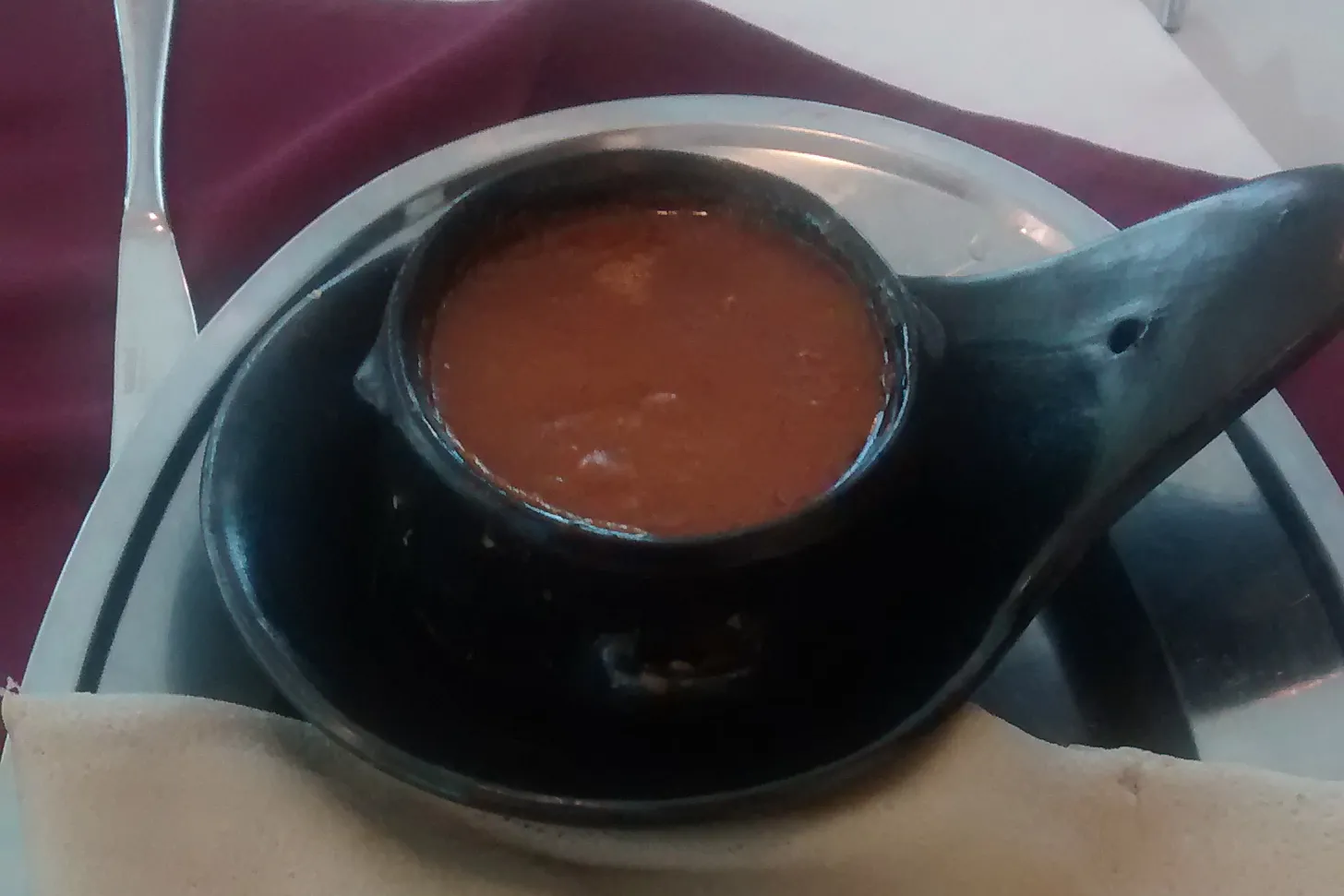
A black clay pot of smooth orange-red shiro wat served with folded injera Eritrea flag Eritrea 55m
Dinner •Eritrean Fasting Classic

Shiro Wat

This shiro wat recipe roasts chickpea flour until nutty, then whisks it into caramelised onions, tomato paste and berbere until the stew turns thick, smooth and glossy. It is the dish Eritrean families reach for on fasting days, when no meat, egg or dairy is eaten — spooned onto injera straight from the clay pot. One serving is about 250 g.

Comfort & Warmth

A silky, slow-stirred stew of roasted chickpea flour, berbere and onion — the fasting-day favourite.

Pairs Well With
Fresh injera, gomen and a simple tomato salad, with hot spiced tea
A bowl of Vietnamese phở bò with rare beef, rice noodles and fresh herbs Vietnam flag Vietnam 3h 30m
Breakfast •Hanoi Heritage

Phở Bò Tái Nạm

Slow-simmered star anise and cinnamon bone broth with hand-cut rice noodles, supplying clean restorative warmth and collagen. One serving is about 775 g.

Immunity & Warming

Slow-simmered bone broth with rice noodles, rare beef and fresh herbs.

Pairs Well With
Crispy quẩy, fresh lime & sawtooth coriander
Soups & Broths • High Protein
Golden butter croissants on a wooden board France flag France 20m
Breakfast •Parisian Boulangerie

Croissant au Beurre & Café

Laminated cultured butter pastry paired with washed Arabica, for a slow, pleasurable Parisian morning — best with a little protein alongside. One serving is about 390 g.

Sustained Focus

Flaky all-butter croissant with café au lait, Comté and green apple.

Pairs Well With
Comté cheese wedge & Green apple slices
Quick Prep (<30m)

The Dinner Gazette

Never wonder what’s for dinner again

One email a week with easy dinner ideas from around the world — ingredients, steps and nutrition, tested in our kitchen first.

Delivered every Thursday morning. Unsubscribe anytime.