Curated recipes from 193 countries  •  New seasonal Mediterranean issue out now

Overview

Filet Américain

Filet Americain, Belgian Beef Spread, Broodje Filet Americain

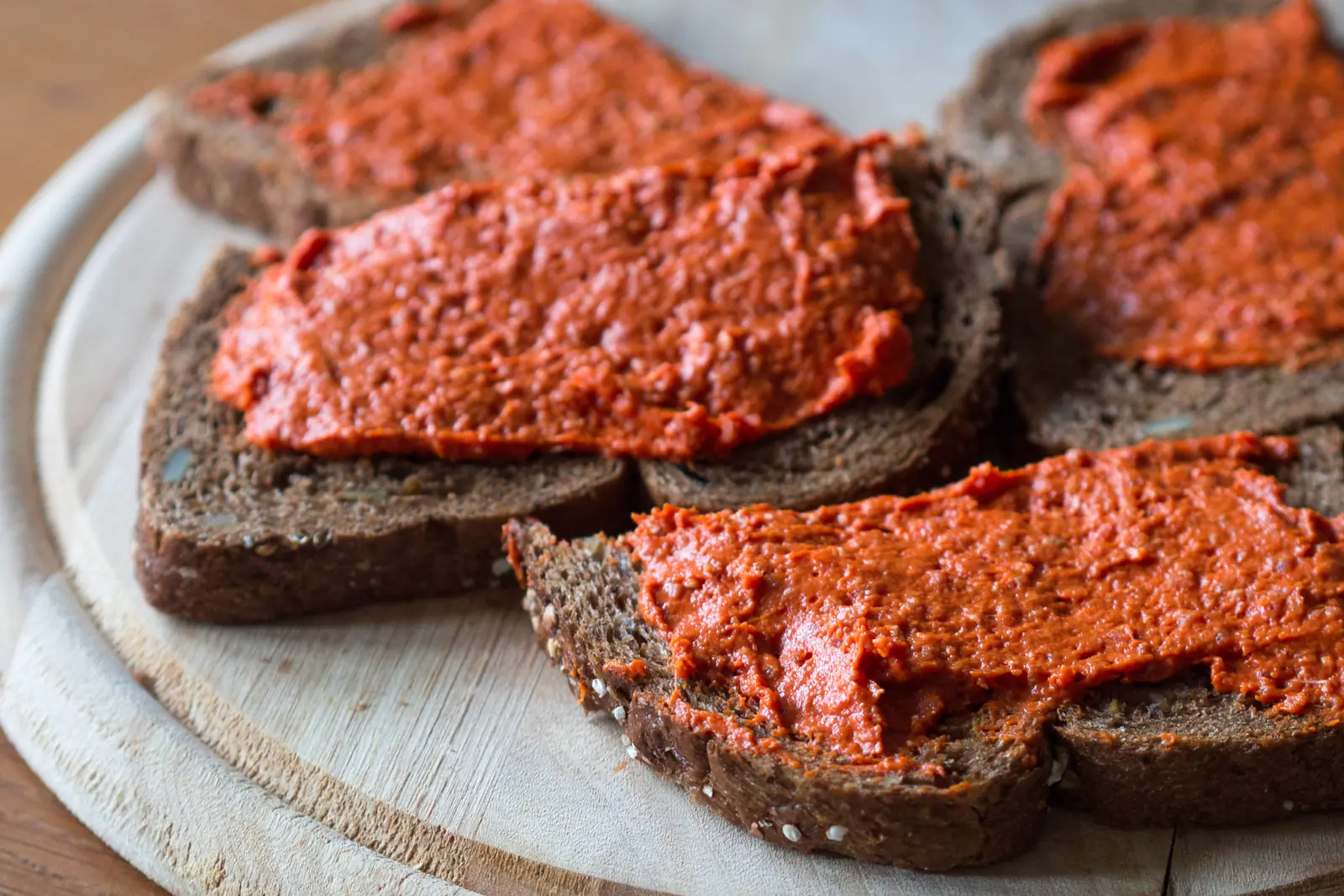
This filet americain recipe is Belgium's beloved sandwich spread: very fresh beef fillet minced fine and seasoned with mayonnaise, Dijon mustard, Worcestershire sauce, capers, cornichons and paprika, then spread thickly on bread. It is served raw and cold, never cooked, so everything depends on the freshness of the beef and on keeping it chilled until the moment it is eaten. One serving is about 175 g.

Filet americain is a Belgian classic that grew out of the country's cafe and sandwich culture: finely minced raw beef, seasoned like a tartare but mixed into a spread and eaten on bread, often as a broodje from a sandwich shop or a butcher's counter. It is often confused with French steak tartare, but the two are different dishes: tartare is hand-cut beef served as a plated dish with the yolk on top, while filet americain is a seasoned spread made for bread.

Pairs well with: Dark wholemeal bread, pickles and a cold beer or sparkling water.

Provenance

Belgium flag Belgium

Belgian Bistro Classic

Nordic & European

Time Dedication

25m

25m prep • 0m cook

Batch Yield

4 Servings

394 kcal per serving

1 serving ≈ 175 g

Technical Skill

Intermediate

Medium (Knife Work & Chilling)

Meal Timing & Digestive Fit

Breakfast

Not Advised

Lunch

Prime Metabolic Fit

Dinner

Ideal Hearty Main

Snack & Tea

Inappropriate

Occasions: Lunch, Cafe meals, Sandwich lunches, Picnics (chilled) Cost: Medium — about $4–5 per serving at home
Tags: Beef Savory Raw
Dark bread slices spread thickly with red-orange filet americain on a round wooden board

Belgian Bistro Classic

Photo: Takeaway, CC BY-SA 3.0, via Wikimedia Commons

The Heritage Formulary

Measured Ingredients

Estimated cost: Medium — about $4–5 per serving at home (USD)

Made the Belgian way: hand-minced from very fresh fillet, seasoned into a spread, and served cold on bread the same day.

Execution Methodology & Culinary Technique

Step-by-Step Cooking Guide

Active 25m
P

Prep Stage: Chill, Mince & Season the Beef

25 Mins • Knife Work & Mixing

Chill the beef, your knife and the bowl in the freezer for 15 minutes: cold beef minces cleanly instead of smearing. Mince the fillet finely by hand with a sharp knife, then fold in the mayonnaise, mustard, Worcestershire sauce, tomato paste, paprika, shallot, capers, cornichons, egg yolk, parsley, pepper, Tabasco and salt. Taste and adjust the seasoning, then spread on bread and serve immediately, still cold.

Maestro Tip: Never use a food processor: it smears the meat into a paste. Hand-mincing with a cold, sharp knife is what gives filet americain its texture.

  1. 1

    Choose the beef and chill everything

    10 Mins No cooking — keep chilled at 4°C (40°F) or below

    Buy the beef the same day you plan to eat it, from a butcher you trust, and tell them it is for filet americain: they will cut it from a whole fillet. Put the beef, your knife, the cutting board and the mixing bowl in the freezer for 15 minutes. Raw beef is only safe to eat raw when it is very fresh and kept cold, so do not skip this step, and never use beef that has been sitting in the fridge for days.

    If the beef smells of anything at all, do not use it raw. Fresh beef for this dish has almost no smell.

    Done when: Beef, knife, board and bowl all cold to the touch; beef deep red with no grey patches.

  2. 2

    Mince the beef finely by hand

    10 Mins No cooking — keep chilled at 4°C (40°F) or below

    Trim every bit of fat, sinew and silver skin from the cold fillet. Slice it thin, cut the slices into strips, then rock a sharp knife through the strips until the meat is finely minced, like coarse mince, not a smooth paste. Work quickly and put the bowl back in the fridge whenever you pause: the meat must stay cold.

    A heavy, sharp knife does the work; a blunt knife tears the meat and warms it up. Sharpen before you start.

    Done when: Fine, even mince that still shows tiny fibres, never a smooth puree.

  3. 3

    Season and mix the spread

    5 Mins No cooking — keep chilled at 4°C (40°F) or below

    Fold the mayonnaise, Dijon mustard, Worcestershire sauce, tomato paste, paprika, shallot, capers, cornichons, egg yolk, parsley, black pepper, Tabasco and salt into the cold mince with a fork until it is evenly mixed and spreadable. Taste a little and adjust: more mustard for sharpness, more paprika for colour, a little more salt only if it needs it. This filet americain recipe should taste rich, tangy and well seasoned, never flat.

    Fold, do not stir hard: overworking warms the meat and turns it dense.

    Done when: An evenly pink-red spread that holds its shape on a knife and tastes balanced.

  4. 4

    Spread on bread and serve at once

    5 Mins No cooking — serve chilled at 4°C (40°F) or below

    Spread the filet americain thickly on the bread slices and serve immediately, straight from the fridge, with extra cornichons and a little more parsley on the side. Do not leave it sitting out: raw beef must be eaten within 2 hours of making it, and within 30 minutes at warm room temperature.

    Serve on chilled plates in warm weather, and make only as much as you will eat in one sitting.

    Done when: Cold, thickly spread sandwiches served at once, with the spread still pink and glossy.

Finishing Touches & Plating

Eat it cold, fresh and soon after making it, with a cold drink and good bread. That is the whole pleasure of it.

Nutritional Physiology & Benefits

Nutrition

Energy

394

kcal / serving

Protein

27g

Complete AA

Carbs

17g

Complex

Fats

24g

Healthy

Per serving (4 servings · 1 serving ≈ 175 g)
Energy394 kcal
Protein27 g
Carbohydrates17 g
Fat24 g
Fibre3.1 g
Sugar3.1 g
Sodium556 mg
Per 100g
Energy225 kcal
Protein15.2 g
Carbohydrates10 g
Fat13.5 g
Fibre1.8 g
Sugar1.8 g
Sodium318 mg

Nutrition values are estimated — calculated from USDA FoodData Central values for the listed ingredients.

Vitamins & minerals: Provides vitamin B12, niacin and vitamin B6 from the beef, plus iron and zinc, and small amounts of vitamin C from the parsley and cornichons.

High in Protein

About 26.6 g of protein a serving from the beef, which makes this filet americain recipe a genuinely filling lunch.

Iron and Vitamin B12

Raw beef is a rich source of iron and vitamin B12, both of which the body uses to make healthy red blood cells.

No Cooking, No Added Sugar

Nothing is fried or sweetened: the flavour comes from mustard, capers, pickles and paprika, not from sugar or heavy sauces.

Food Pairings

What to Eat With

To optimize nutrient absorption and elevate the sensory depth, pair with these authentic accompaniments:

Vegetables

Cornichons and Pickled Onions

Sharp pickles cut through the richness of the raw beef and mayonnaise and refresh the palate between bites.

Simple Green Salad

A lightly dressed green salad adds crunch and freshness and turns the sandwich into a complete lunch.

Sides

Dark Wholemeal Bread

Sturdy, slightly sour bread holds the soft spread without tearing and adds fibre and a nutty flavour.

Drinks

Cold Belgian Beer

A cold, crisp beer is the classic Belgian partner: its bitterness and fizz balance the rich, fatty spread.

Complete menu

Filet americain on dark bread with cornichons and a green salad, followed by fruit and a cold Belgian beer.

Digestive Guardrails

What NOT to Combine

To prevent digestive distress, sluggishness, or palate clash, avoid pairing the dish with these elements:

Eating It When You Are Vulnerable

Raw beef can carry bacteria such as E. coli and Salmonella, and no cooking step removes that risk. Children, pregnant women, elderly people and anyone with a weakened immune system should not eat raw beef. This is general food-safety information, not medical advice.

Making It Ahead or Keeping Leftovers

Filet americain must be eaten the same day, within 2 hours of making it. Leftovers cannot be made safe by cooking them later into another dish, so make only what you will eat. This is general food-safety information, not medical advice.

General information only, not medical advice — consult a doctor for personal dietary decisions.

Who Should Eat It

Who Should Eat

  • General adultsA rich, satisfying lunch for healthy adults — but only with very fresh beef from a trusted butcher, eaten the same day.
  • ChildrenNot suitable: raw beef carries a risk of food poisoning, and children are more vulnerable to it. Do not serve filet americain to children.
  • ElderlyNot recommended: raw beef carries a risk of food poisoning, and older people are more vulnerable to it — ask your clinician.
  • Pregnant womenNot suitable: raw beef and raw egg yolk both carry food-safety risks in pregnancy. Do not eat filet americain while pregnant — ask your clinician.
  • Breastfeeding womenBest avoided while breastfeeding because of the food-safety risk from raw beef — ask your clinician.
  • AthletesAbout 26.6 g of protein a serving is useful, but the raw beef carries a food-safety risk, so only eat it from a source you fully trust.
  • Weight gainA good choice for extra calories and protein — the beef, mayonnaise and bread add energy easily.
  • Weight lossAt 394 kcal a serving it is not heavy, but the fat is high: take one open sandwich and fill the plate with salad.

Health Conditions — Adjust or Avoid

Conditions

  • DiabetesAbout 17.4 g of carbohydrate a serving, mostly from the bread — use one slice instead of two if you are counting carbs; ask your clinician.
  • High blood pressureAt about 556 mg of sodium a serving, this is salty — use fewer capers and no extra salt; ask your clinician if you are on a sodium limit.
  • Kidney diseaseHigh in protein and salty — eat rarely and in small portions; ask your clinician.
  • GoutEat rarely and in small portions — beef is high in purines; ask your clinician.
  • Stomach issuesRaw beef, mustard and pickles can be hard on a sensitive stomach — eat a small portion and avoid it during a flare-up; ask your clinician if symptoms persist.
  • Cardiovascular diseaseHigh in saturated fat and sodium, so this is an occasional dish — keep the portion small; ask your clinician.
  • Fatty liverHigh in saturated fat, which is the opposite of a liver-friendly pattern — keep it rare and the portion small; ask your clinician.
  • Food allergiesContains egg (mayonnaise and yolk), mustard, wheat (bread) and fish (Worcestershire sauce contains anchovy). Gluten-free only on gluten-free bread with a gluten-free Worcestershire sauce.
  • Special therapeutic dietsRaw meat fits very few therapeutic diets, and the food-safety risk rules it out for many — ask your clinician or dietitian before eating it.

If you have a medical condition, consult your doctor before changing your diet.

Storage & Use

Storage & Use

How to store
Do not store: make only what you will eat in one sitting, and keep it chilled until serving.
In the fridge
Eat within 2 hours of making; do not keep overnight.
In the freezer
Do not freeze the finished spread.
How to reheat
Do not reheat: this dish is served raw and cold, and cooking leftovers does not make stored raw beef safe.
Freezing recommended
No — filet americain is a same-day dish only.
Signs it has spoiled
Any off smell, grey or brown colour, or a slimy surface: throw it away, do not taste it.

More recipes to explore

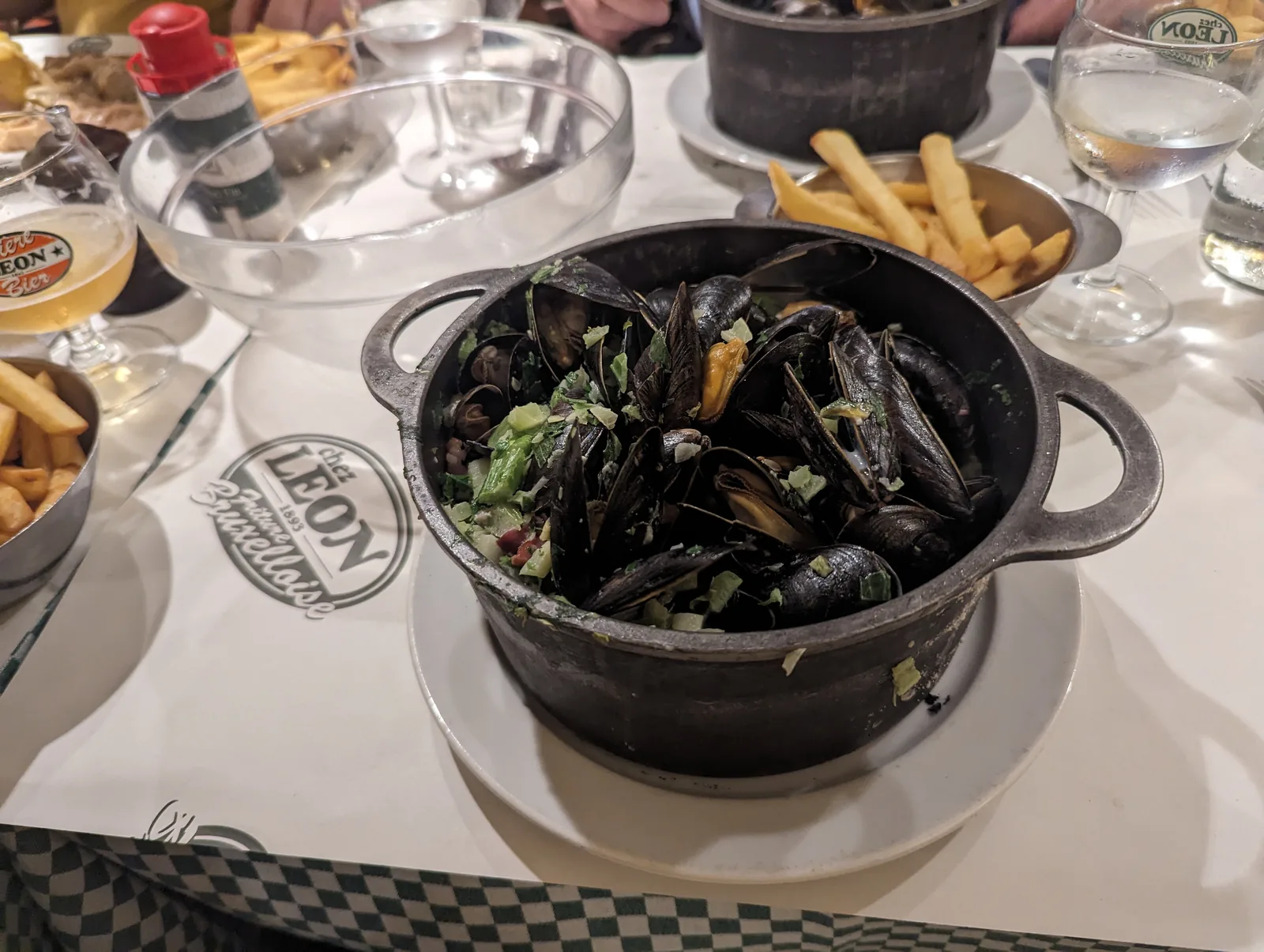
Moules-frites — a black pot of steamed mussels with herbs, served with golden fries at a Brussels brasserie Belgium flag Belgium 1h
Dinner •Brussels Brasserie Classic

Moules-Frites

This moules frites recipe makes the plate Belgium is proudest of: a black pot of mussels steamed open in white wine, shallots and cream, served with a heap of crisp, twice-cooked fries and a pot of mayonnaise. The mussels are sweet and briny, the broth is made for dipping, and the fries stay crisp if you keep them out of the pot. One serving is about 350 g.

Seaside Comfort

Sweet mussels steamed in white wine and cream, piled next to golden twice-cooked fries.

Pairs Well With
Crisp Belgian lager & mayonnaise
High Protein
Belgian waffles — a golden Brussels waffle topped with whipped cream and icing sugar on a white plate Belgium flag Belgium 1h 35m
Breakfast •Brussels Bakery Classic

Belgian Waffles

This Belgian waffles recipe makes the light, yeasted kind: a risen batter cooked in a hot iron until the outside is crisp and golden and the inside stays soft and airy. The deep pockets hold butter, syrup or berries, and a dusting of icing sugar is all they really need. This recipe makes 8 waffles; one serving is 2 waffles, about 210 g. Nutrition is for the plain waffles, before toppings.

Weekend Breakfast Treat

Light, yeasted Brussels waffles with deep pockets, crisp outside and soft inside.

Pairs Well With
Strong coffee & fresh berries
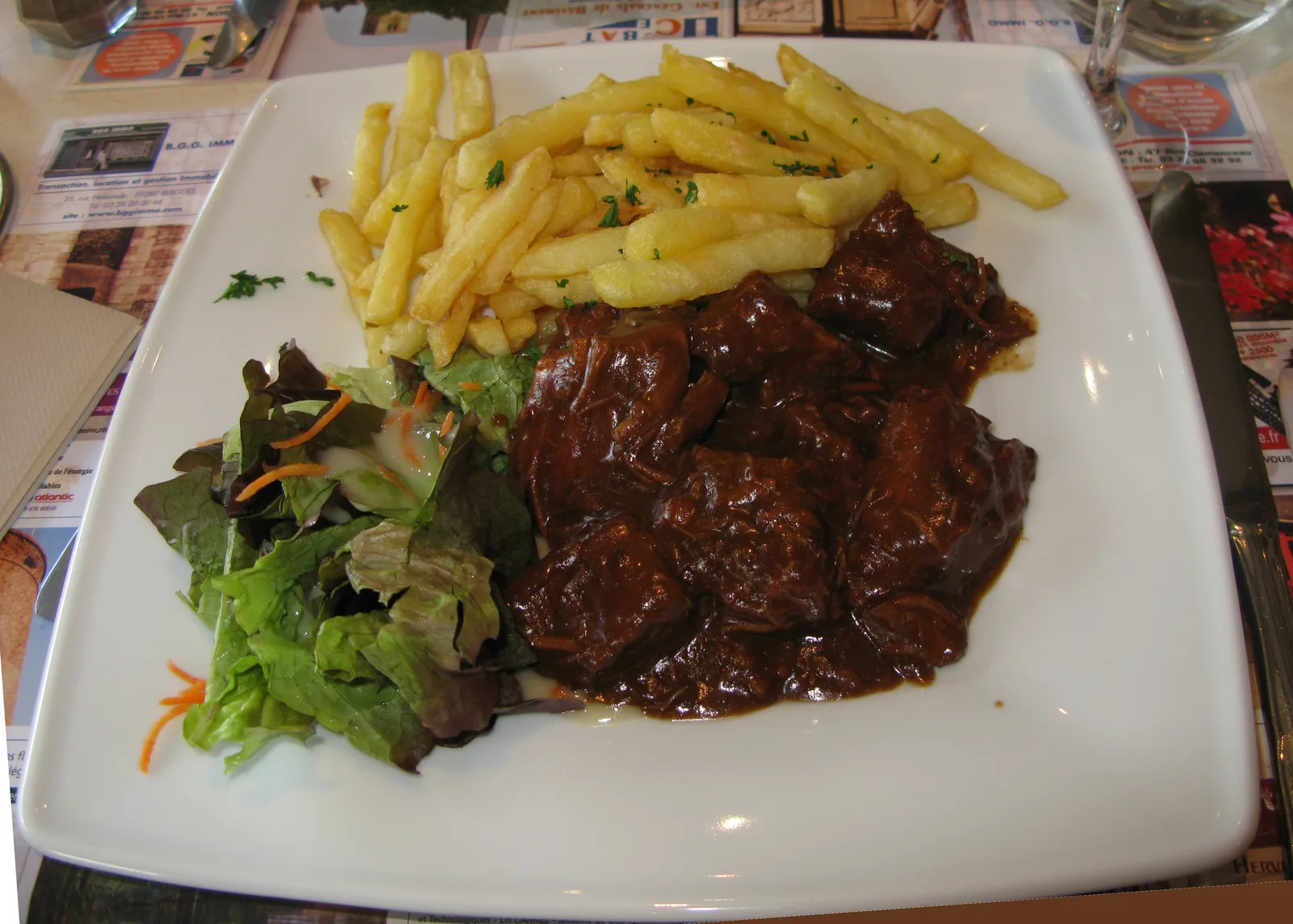
Carbonade flamande — dark beer-braised beef stew with fries and a small salad on a white plate Belgium flag Belgium 2h 55m
Dinner •Flemish Farmhouse Classic

Carbonade Flamande

This carbonade flamande recipe is Flanders' answer to the French beef stew: chunks of beef braised for hours in dark Belgian ale with sweet caramelised onions, thyme and bay, thickened the old way with slices of bread spread with mustard. The sauce turns dark, glossy and sweet-sour, and the beef goes spoon-tender. One serving is about 250 g, not counting the fries or potatoes served alongside.

Slow Sunday Comfort

Beef braised low and slow in dark Belgian ale with onions and mustard bread.

Pairs Well With
Dark Belgian ale & fries
High Protein
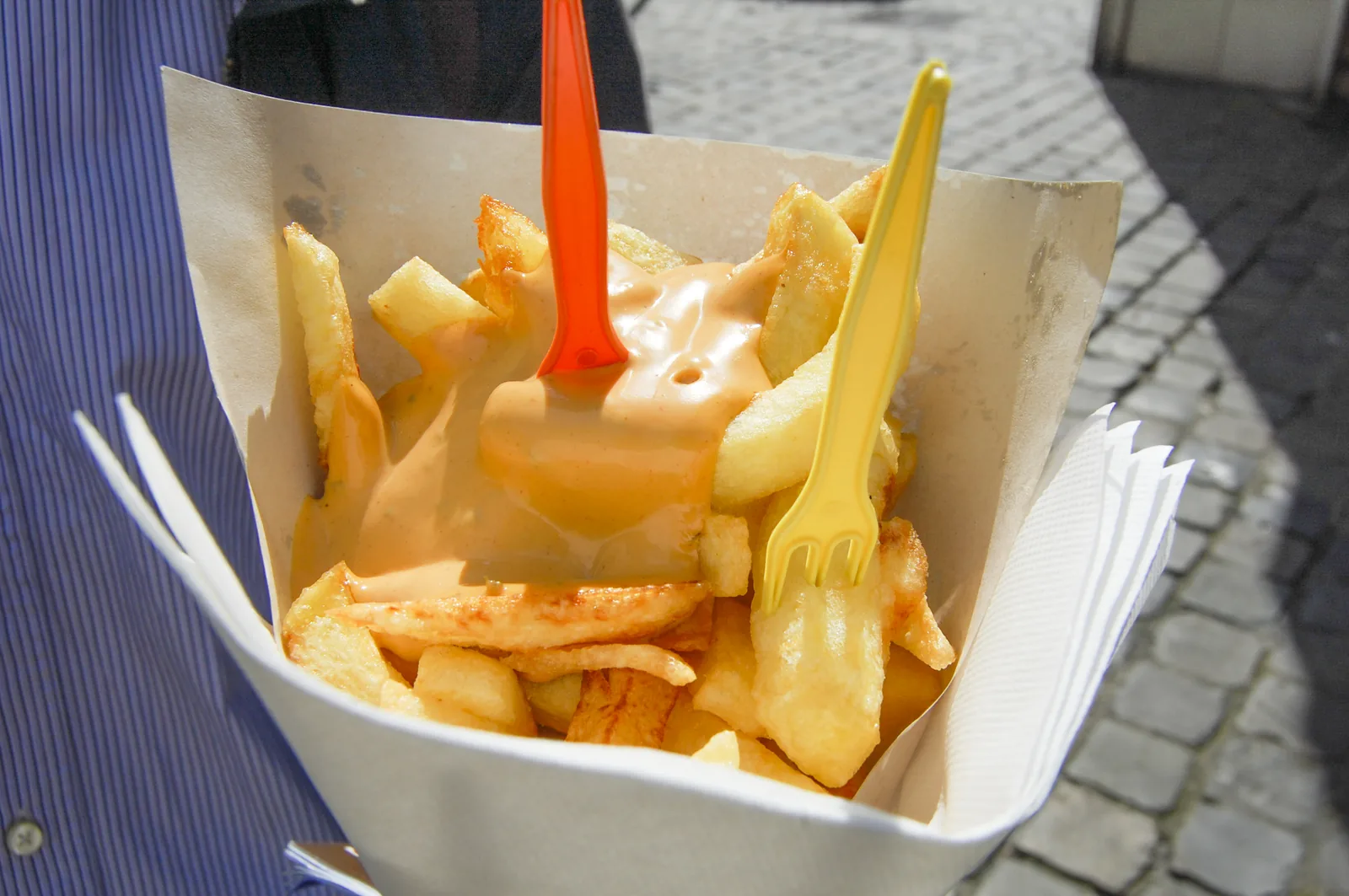
A paper cone of golden Belgian fries topped with andalouse sauce and two small plastic forks. Belgium flag Belgium 55m
Snack & Tea •Brussels Friterie Classic

Belgian Fries

Belgian fries are the real thing: thick batons of floury potato, fried twice — once gently to cook them through, once hot to shatter the outside — and served in a paper cone with andalouse sauce. One serving is about 253 g.

Crisp & Golden

Thick-cut potatoes fried twice in vegetable oil — crisp outside, fluffy inside, with andalouse sauce.

Pairs Well With
Serve hot in a paper cone with andalouse sauce and a cold lager.
Quick Prep (<30m)

The Dinner Gazette

Never wonder what’s for dinner again

One email a week with easy dinner ideas from around the world — ingredients, steps and nutrition, tested in our kitchen first.

Delivered every Thursday morning. Unsubscribe anytime.