Curated recipes from 193 countries  •  New seasonal Mediterranean issue out now

Overview

Folar de Chaves

Chaves Meat Folar, Folar de Carne de Chaves

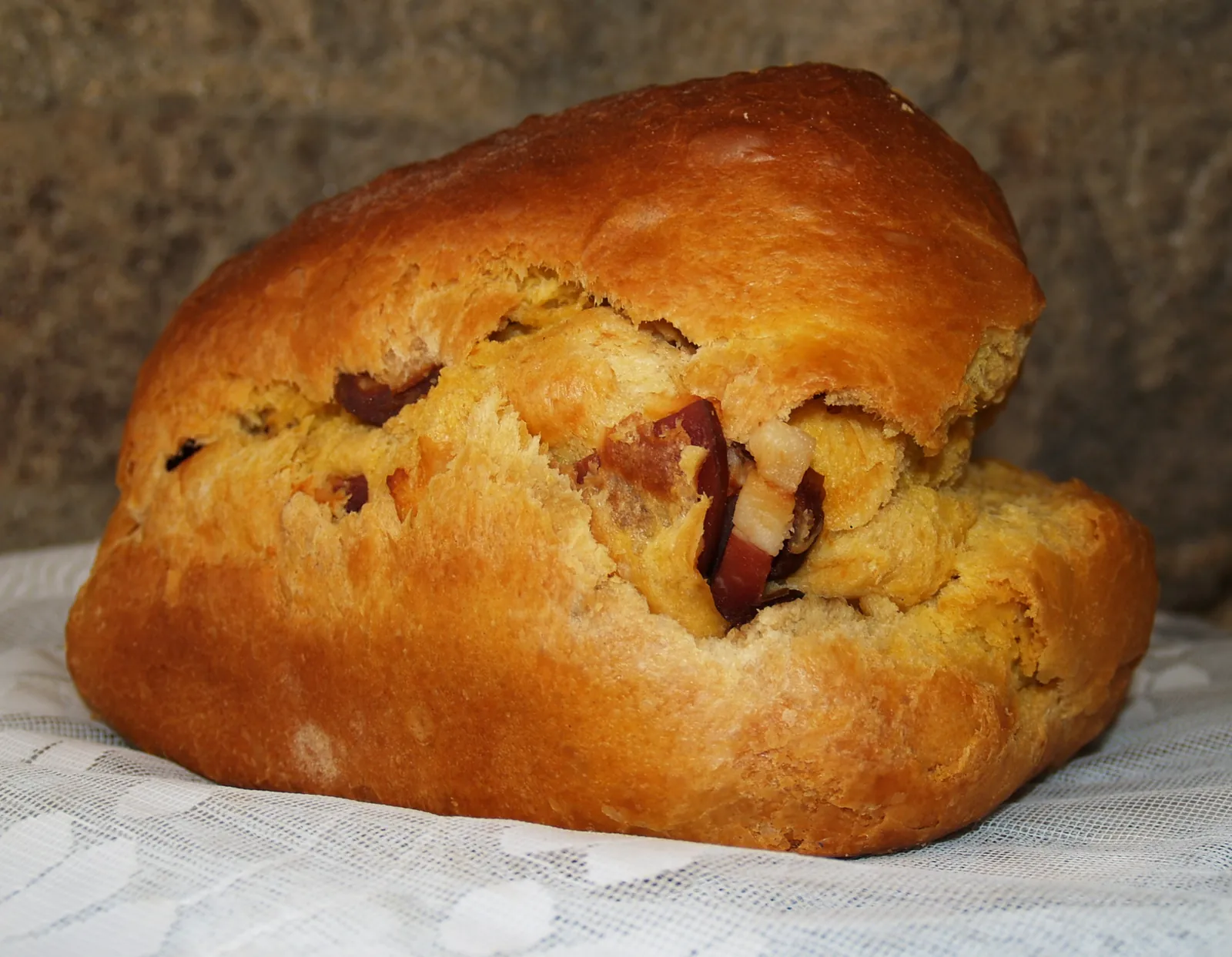
This folar de chaves recipe bakes a round, golden Easter bread from Chaves in north-eastern Portugal, made from an egg-enriched dough with olive oil and stuffed with cured ham and smoky chouriço. Slice it warm and every piece carries salty, smoky meat folded through a soft, tender crumb. One serving is about 165 g (one thick slice).

Folar is the Easter bread of Portugal, and its recipe changes from region to region — it may be sweet or savoury. In Chaves and Valpaços, in the far north-east, the folar is savoury: an enriched dough stuffed with pork, cured ham, salpicão and linguiça. Traditionally it was baked specially for Easter, a rich festive bread made after the restraint of Lent, and families in Chaves still gather around the great wooden kneading tray, the masseira, to make it together.

Pairs well with: Serve warm in thick slices with a crisp green salad and a glass of red wine.

Provenance

Portugal flag Portugal

Trás-os-Montes Easter Classic

Mediterranean & Italy

Time Dedication

1h 25m

40m prep • 45m cook

Batch Yield

8 Servings

535 kcal per serving

1 serving ≈ 165 g

Technical Skill

Intermediate

Medium (Yeast Bread)

Meal Timing & Digestive Fit

Breakfast

Not Advised

Lunch

Inappropriate

Dinner

Inappropriate

Snack & Tea

Ideal Light Bite

Occasions: Easter, Family gatherings, Picnics, Festive snacks Cost: Low–Medium — about $4–5 per serving at home
Golden savoury folar de Chaves loaf with ham and chouriço visible in the crumb

Trás-os-Montes Easter Classic

Photo: Elingunnur, CC BY-SA 4.0, via Wikimedia Commons

The Heritage Formulary

Measured Ingredients

Estimated cost: Low–Medium — about $4–5 per serving at home (USD)

A good folar de Chaves is deeply golden with a soft, egg-rich crumb and visible pieces of ham and chouriço in every slice — never pale, dry or sparsely filled.

Execution Methodology & Culinary Technique

Step-by-Step Cooking Guide

Active 1h 25m
P

Prep Stage: Wake the Yeast, Dice the Meats

15 Mins • Yeast & Filling Prep

Stir the 7 g yeast and 15 g sugar into the 60 ml warm water (35–40°C / 95–104°F) and leave it 10 minutes until foamy. While it wakes, peel the casing from the 200 g chouriço and dice it small, dice the 200 g presunto into small pieces, and beat 3 of the eggs in a bowl. Warm the 120 ml milk to the same lukewarm temperature and measure out the 60 ml olive oil. Lightly oil a large bowl for the rising dough.

Maestro Tip: Dice the meats small and evenly — big chunks tear the dough when you roll it, and small pieces spread through every slice.

  1. 1

    Wake the Yeast

    10 Mins Warm water at 35–40°C (95–104°F)

    Stir the 7 g active dry yeast and 15 g sugar into the 60 ml warm water and leave it for 10 minutes. It should turn cloudy and foamy on top — that foam is the yeast waking up and ready to lift the dough.

    No foam after 10 minutes means the yeast is dead or the water was too hot; start again with fresh yeast and cooler water.

    Done when: A thick layer of foam covers the surface of the water.

  2. 2

    Mix and Knead the Dough

    15 Mins Room temperature, about 22°C (72°F)

    Put the 600 g flour and 10 g salt in a large bowl and make a well in the middle. Pour in the foamy yeast, the 3 beaten eggs, the 120 ml warm milk and the 60 ml olive oil. Mix with a wooden spoon until a shaggy dough forms, then turn it onto a floured surface and knead for 10 minutes until smooth, soft and slightly tacky — it should spring back slowly when poked.

    Resist adding extra flour: this is a rich, soft dough and it firms up as the gluten develops. If it sticks badly, oil your hands instead of flouring the board.

    Done when: The dough is smooth, elastic and springs back slowly when poked.

  3. 3

    First Rise

    90 Mins Warm spot, about 25°C (77°F)

    Shape the dough into a ball, place it in the oiled bowl, and turn it once so the top is lightly oiled. Cover with a clean cloth or cling film and leave in a warm, draught-free spot for about 90 minutes, until doubled in size.

    A cool kitchen slows the rise — put the bowl in an oven with just the light on, or near (not on) a warm radiator.

    Done when: The dough has doubled in size and holds a dent when poked gently.

  4. 4

    Roll Out and Layer the Meats

    15 Mins Room temperature, about 22°C (72°F)

    Punch the dough down gently and divide it into two pieces, one slightly larger than the other. On a floured surface, roll the larger piece into a rectangle about 30 x 40 cm (12 x 16 in). Scatter half the diced presunto and half the diced chouriço evenly over it, leaving a 2 cm (3/4 in) border all round.

    Spread the meat right to the edges of the rectangle, not in a pile in the middle — every slice should carry meat.

    Done when: The rectangle is evenly covered with meat, with a clean border all round.

  5. 5

    Shape and Second Rise

    60 Mins Warm spot, about 25°C (77°F)

    Roll the second piece of dough into a rectangle the same size and lay it over the meat. Scatter the remaining presunto and chouriço over it, then fold the edges of the bottom layer up and over, pinching firmly to seal the loaf. Shape it into a round, place it seam-side down on a lined baking tray, cover loosely, and leave to rise for 60 minutes until puffy.

    Pinch the seam well — a loose seal lets the meat juices leak out and the loaf split in the oven.

    Done when: The loaf looks puffy and has grown by about half again; a gentle poke leaves a slow dent.

  6. 6

    Egg Wash and Bake

    45 Mins 180°C (350°F)

    Heat the oven to 180°C (350°F). Brush the loaf all over with the remaining beaten egg for a deep golden shine. Bake for 40–45 minutes until the crust is deep golden brown and the loaf sounds hollow when tapped underneath. If the top browns too fast, cover it loosely with foil for the last 10 minutes. The centre should reach about 93°C (200°F) on a thermometer.

    The egg wash is what gives the folar its glossy, mahogany crust — brush it on evenly, including the sides, and do not skip it.

    Done when: Deep golden crust, hollow sound when tapped underneath, centre about 93°C (200°F).

  7. 7

    Cool and Slice

    20 Mins Room temperature, about 22°C (72°F)

    Move the loaf to a wire rack and leave it for at least 20 minutes before cutting — the crumb is still setting inside and slices will squash if cut too soon. Cut into 8 thick slices with a serrated bread knife and serve warm or at room temperature.

    Use a serrated knife and a gentle sawing motion: pressing down crushes the soft crumb and pushes the meat out.

    Done when: Slices hold their shape and show ham and chouriço all through the crumb.

Finishing Touches & Plating

Let the loaf rest on a wire rack for at least 20 minutes before slicing, so the crumb sets and the slices hold their shape. Serve warm or at room temperature, cut in thick slices so each one shows the meat.

Nutritional Physiology & Benefits

Nutrition

Energy

535

kcal / serving

Protein

22g

Complete AA

Carbs

61g

Complex

Fats

22g

Healthy

Per serving (8 servings · 1 serving ≈ 165 g)
Energy535 kcal
Protein22 g
Carbohydrates61 g
Fat22 g
Fibre2.3 g
Sugar3.3 g
Sodium1138 mg
Per 100g
Energy324 kcal
Protein13.3 g
Carbohydrates37.1 g
Fat13.1 g
Fibre1.4 g
Sugar2 g
Sodium690 mg

Nutrition values are estimated — calculated from USDA FoodData Central values for the listed ingredients.

Vitamins & minerals: B vitamins and iron (flour, yeast, chouriço, ham), vitamin B12 (eggs, ham), vitamin E (olive oil), selenium (eggs). Nutrition values are estimated.

Good Protein in Every Slice

Each slice gives about 22 g of protein from the eggs, ham and chouriço — enough to make a snack that actually keeps you full.

Olive Oil, Not Butter

The dough is enriched with olive oil, the traditional fat of Trás-os-Montes, which keeps the crumb soft and moist for days.

Eggs and Whole Ingredients

Eggs, flour, milk, olive oil and cured meat — the loaf is made from whole, recognisable ingredients with nothing artificial added.

Food Pairings

What to Eat With

To optimize nutrient absorption and elevate the sensory depth, pair with these authentic accompaniments:

Sides

Crisp Green Salad

A sharp, lemon-dressed green salad cuts through the richness of the ham and chouriço and the oily crumb, so the bread feels lighter.

Drinks

Douro Red Wine

A medium-bodied red from the Douro stands up to the smoky, salty meat without overwhelming the bread, and it is the wine of the region.

Soups

Caldo Verde

Portugal's potato and kale soup is the classic partner — the light, brothy bowl balances the dense, meaty loaf, and both share the chouriço flavour.

More Pairings

Pickled Vegetables

Sharp pickled onions or peppers give an acidic crunch that refreshes the palate between rich, salty bites of bread.

Complete menu

Start with a bowl of caldo verde, serve thick slices of folar de Chaves with a green salad and a glass of Douro red wine, and finish with fresh fruit.

Digestive Guardrails

What NOT to Combine

To prevent digestive distress, sluggishness, or palate clash, avoid pairing the dish with these elements:

More Salty Cured Meat on the Side

The loaf already carries a lot of salt from the presunto, chouriço and dough — a whole slice has about 1,138 mg of sodium. Piling on extra cured meats or salty cheese in the same meal pushes sodium far higher, which matters for blood pressure. This is general information, not medical advice.

Eating It While Still Hot from the Oven

Cutting into the loaf straight from the oven crushes the unset crumb and lets steam escape, leaving the bread dense and gummy. Wait at least 20 minutes before slicing. This is general information, not medical advice.

General information only, not medical advice — consult a doctor for personal dietary decisions.

Who Should Eat It

Who Should Eat

  • General adultsA satisfying snack or light meal; one thick slice is a full portion — two slices is a lot for one sitting.
  • ChildrenSuitable from about age 3 in a small slice with the meat cut small; the chouriço is mildly spiced, and the loaf is high in salt, so keep portions modest.
  • ElderlySoft crumb and easy to chew, but the salt and fat are high — a half slice with salad suits most older appetites.
  • Pregnant womenThe bread is baked through, so the meats are cooked, but it is a high-salt, high-fat food — enjoy an occasional small slice and ask your clinician about portion size if unsure.
  • Breastfeeding womenA filling, energy-rich snack between feeds; the salt is high, so balance it with plenty of water and vegetables across the day.
  • AthletesGood recovery food after training — about 22 g of protein and 61 g of carbohydrate per slice — but it is salty, so it suits a post-training meal rather than a pre-training one.
  • Weight gainAt about 535 kcal a slice, it is an easy way to add energy — a slice with soup makes a calorie-dense meal.
  • Weight lossChoose a thin slice, fill the rest of the plate with salad, and skip seconds — the loaf is delicious but energy-dense and salty.

Health Conditions — Adjust or Avoid

Conditions

  • DiabetesOne slice carries about 61 g of carbohydrate, so count it carefully and pair it with salad rather than bread-heavy sides. Ask your clinician about portion size.
  • High blood pressureHigh in sodium (about 1,138 mg per slice) from the cured meats and salt; eat a small portion, less often, and skip extra salt elsewhere that day. Ask your clinician about portion size.
  • Kidney diseaseHigh in sodium, potassium and protein from the cured meats — this is not a kidney-friendly food. Ask your clinician before eating it.
  • GoutContains pork and processed sausage, which are rich in purines; a small occasional slice is wiser than a large portion. Ask your clinician if unsure.
  • Stomach issuesThe rich, fatty crumb and smoked meat can feel heavy on a sensitive stomach; a small slice with plain salad is gentler than a large portion. Ask your clinician if unsure.
  • Cardiovascular diseaseHigh in saturated fat and sodium from the cured meats; enjoy rarely and in a small portion, with vegetables alongside. Ask your clinician about portion size.
  • Fatty liverEnergy-dense and high in fat from the sausage and oil; keep portions small and infrequent, and favour leaner meals most days. Ask your clinician if unsure.
  • Food allergiesContains gluten (wheat), egg and milk. The chouriço may contain traces of other allergens — check the label. Ask your clinician if unsure.
  • Special therapeutic dietsNot suitable for low-sodium, low-fat or gluten-free diets as written. Ask your clinician or dietitian about an adapted version.

If you have a medical condition, consult your doctor before changing your diet.

Storage & Use

Storage & Use

How to store
Cool completely, then wrap tightly in cling film or foil, or keep in a sealed container at room temperature for the first day.
In the fridge
Up to 4 days in the fridge, wrapped well so it does not dry out.
In the freezer
Up to 3 months, sliced and wrapped in portions — slices thaw quickly and toast well.
How to reheat
Warm slices in a 180°C (350°F) oven for 8–10 minutes until heated through to at least 74°C (165°F); avoid the microwave, which makes the crumb soggy.
Freezing recommended
Yes — the loaf freezes very well in slices, and frozen slices can go straight into a hot oven.
Signs it has spoiled
Discard if the crumb smells sour or musty, if mould appears (especially around the meat), or if the loaf feels slimy.

More recipes to explore

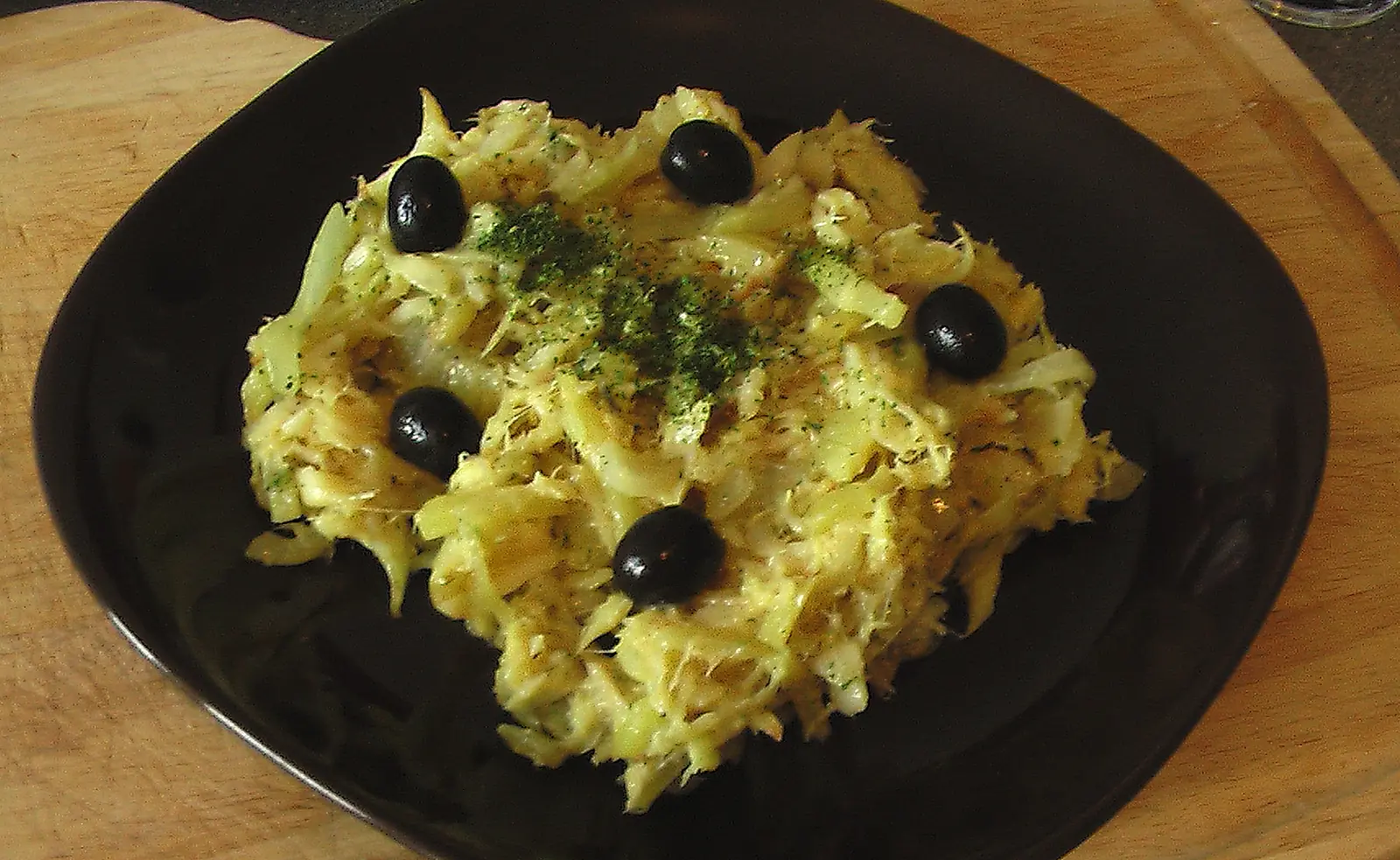
A plate of bacalhau à brás — shredded salt cod with egg and matchstick potatoes, black olives and parsley Portugal flag Portugal 50m
Dinner •Lisbon Tavern Classic

Bacalhau à Brás

Bacalhau à brás recipe: desalted shredded cod, golden matchstick potatoes and softly scrambled egg, finished with black olives and parsley. One serving is about 350 g.

Comfort & Protein

Shredded salt cod folded with egg and crisp matchstick potatoes — a filling, protein-rich Lisbon supper.

Pairs Well With
A simple green salad and a glass of vinho verde
High Protein
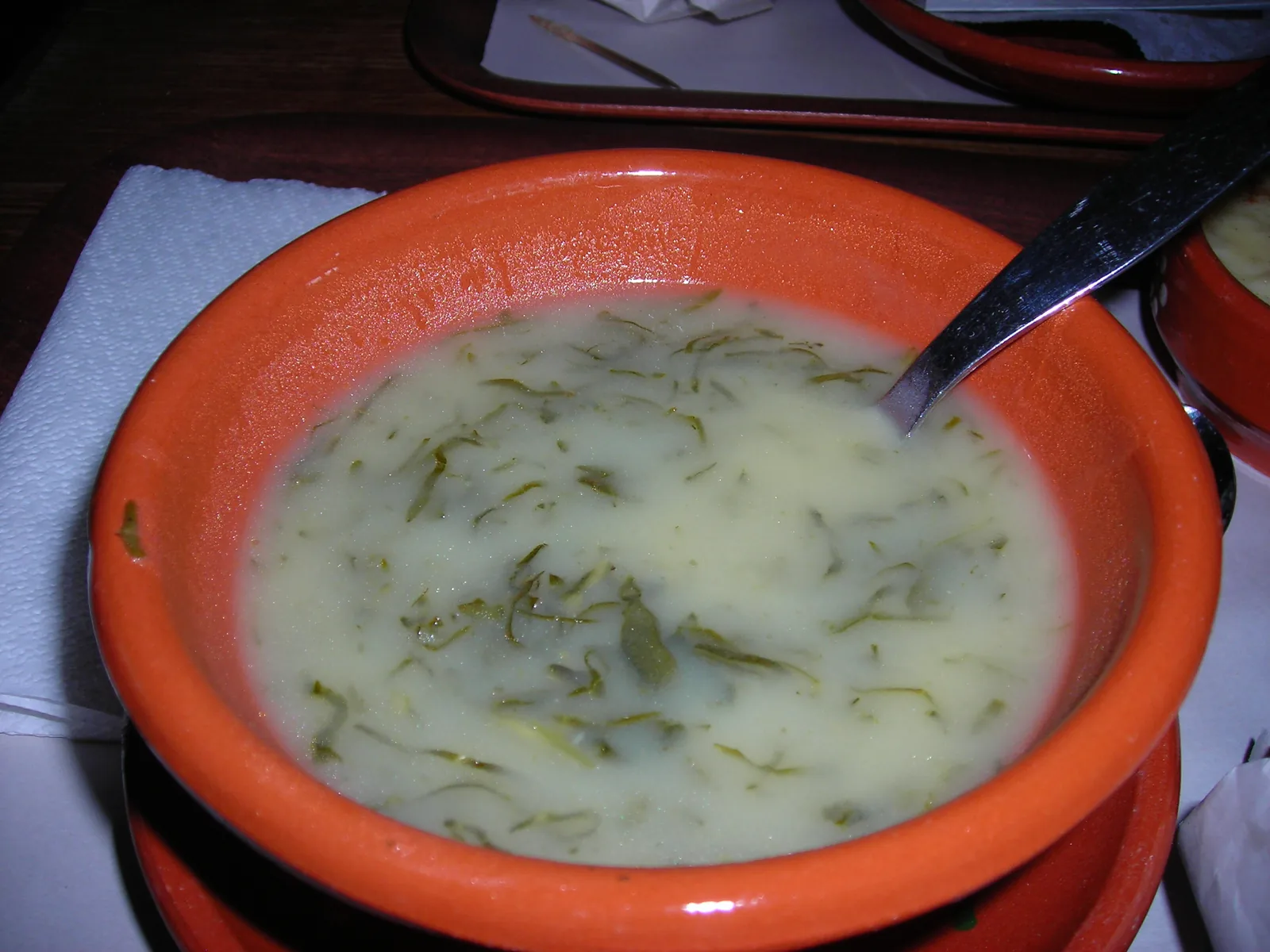
A terracotta bowl of caldo verde — pale potato soup with shredded green kale and a spoon Portugal flag Portugal 50m
Dinner •Minho National Soup

Caldo Verde

Caldo verde recipe: creamy potato soup blended smooth, with ribbons of kale and slices of chouriço, finished with a thread of olive oil. One serving is about 590 g.

Comfort & Warmth

Silky potato soup with finely shredded kale and smoky chouriço — Portugal's best-loved bowl.

Pairs Well With
Crusty broa bread and a glass of vinho verde
Soups & Broths
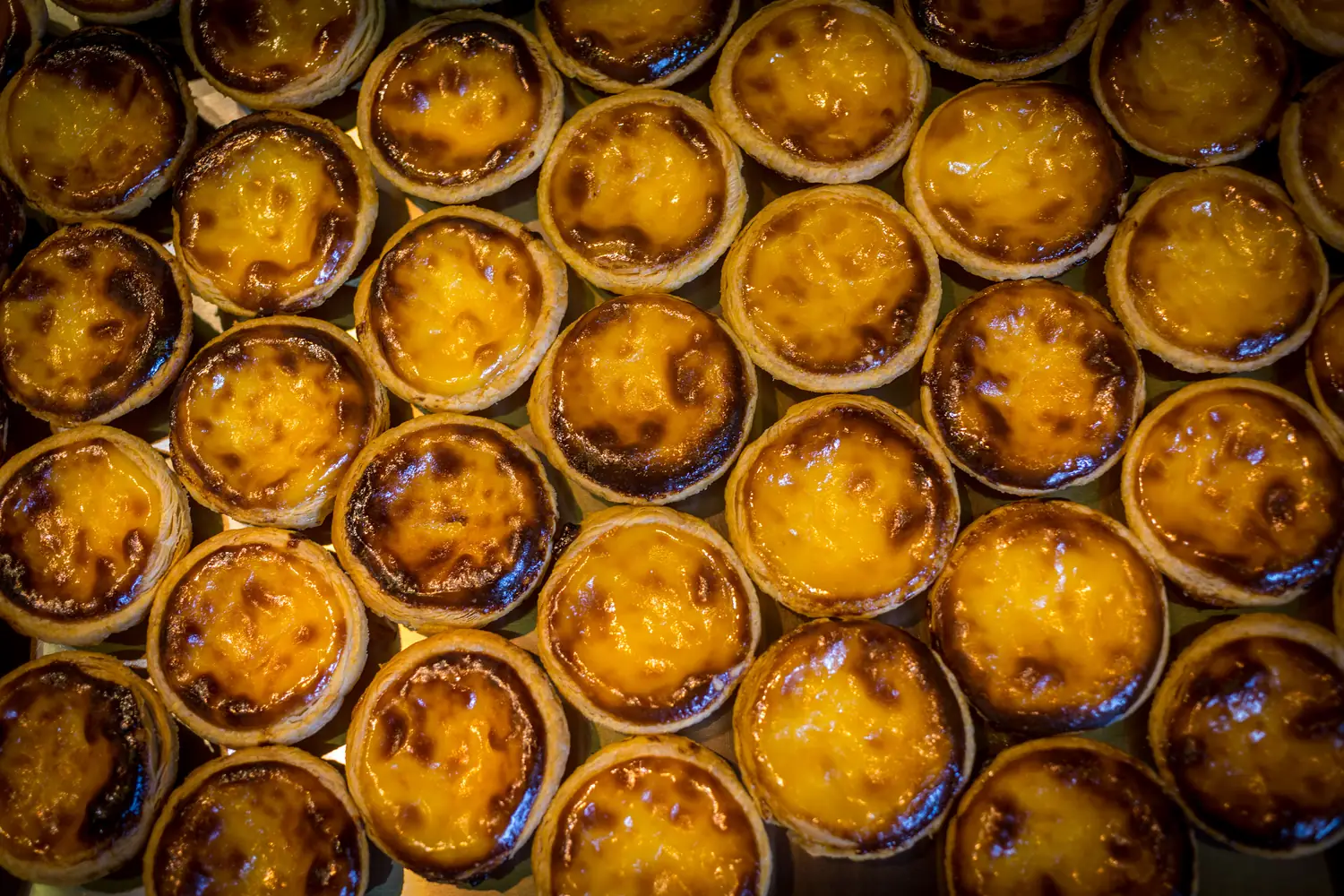
A tray of pastel de nata — golden custard tarts with blistered, caramelised tops in flaky pastry Portugal flag Portugal 50m
Snack & Tea •Belém Monastery Tart

Pastel de Nata

Pastel de nata recipe: shatteringly crisp puff pastry shells filled with warm, vanilla-cinnamon egg custard, baked until blistered on top. One serving is about 187 g (2 tarts).

Sweet Treat

Crisp, flaky pastry cups filled with cinnamon-scented egg custard, blistered in a very hot oven.

Pairs Well With
A small strong coffee (bica) and a dusting of cinnamon
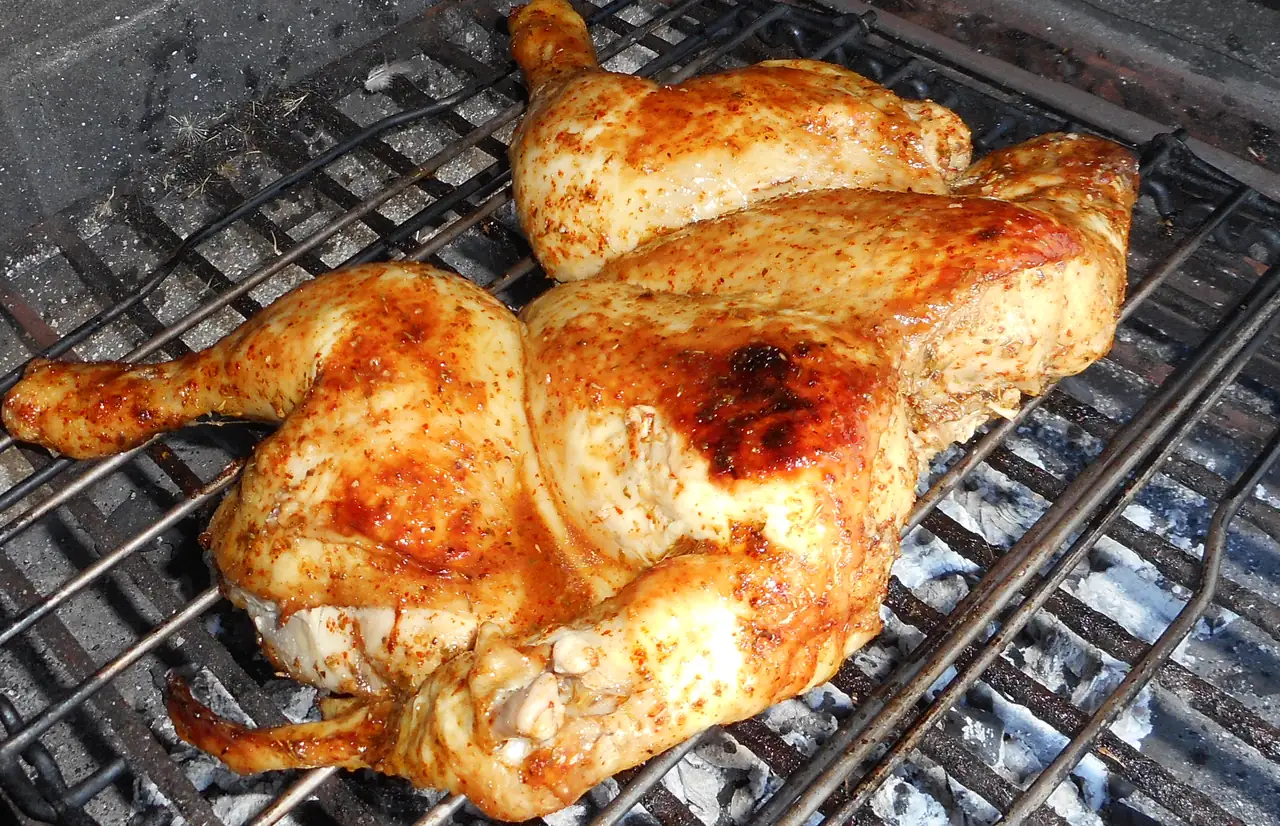
Butterflied piri piri chicken grilling over charcoal, golden-red with chilli spice Portugal flag Portugal 55m
Dinner •Algarve Heritage

Frango Piri Piri

Frango piri piri is Portugal's most famous chicken: a whole bird butterflied flat, rubbed with a fiery paste of piri piri chillies, garlic, lemon and paprika, then grilled over charcoal until the skin turns crisp and red-gold. This piri piri chicken recipe is the Algarve way — an overnight marinade, a hot grill, and a warm butter baste at the end. One serving is about 210 g.

Spicy Char-Grill

A butterflied chicken marinated in piri piri chilli, garlic and lemon, grilled over charcoal until the skin is crisp and reddened.

Pairs Well With
Chips, tomato-onion salad and a cold beer.
High Protein

The Dinner Gazette

Never wonder what’s for dinner again

One email a week with easy dinner ideas from around the world — ingredients, steps and nutrition, tested in our kitchen first.

Delivered every Thursday morning. Unsubscribe anytime.