Curated recipes from 193 countries  •  New seasonal Mediterranean issue out now

Overview

Fondue Bourguignonne

Burgundy Fondue, Meat Fondue, Beef Fondue in Oil

This fondue bourguignonne recipe is the Swiss meat fondue: cubes of beef tenderloin cooked in hot oil at the table on long forks, then dipped in garlic aioli, pink cocktail sauce and mustard sauce, with crusty baguette and a green salad alongside. One serving is about 400 g and carries 1,045 calories. It is a dinner to linger over — nobody hurries a fondue.

Fondue bourguignonne is named for Burgundy, the French region famous for its Charolais beef, but the dish as it is served today is Swiss in origin — a pot of hot oil in which each diner cooks their own cubes of meat. It was popularised in the 1950s, when the Swiss restaurateur Konrad Egli put it on the menu of his New York restaurant, and it spread from there as the sociable, slow alternative to the cheese fondue. The oil must be hot enough to sear, the beef must be tenderloin, and the sauces — mayonnaise, aioli, cocktail and mustard — are half the meal.

Pairs well with: A dry red wine or a cold lager, with crusty baguette and green salad.

Provenance

Switzerland flag Switzerland

Swiss Table-Cooking Classic

Nordic & European

Time Dedication

50m

30m prep • 20m cook

Batch Yield

4 Servings

1045 kcal per serving

1 serving ≈ 400 g

Technical Skill

Intermediate

Intermediate (Hot Oil)

Meal Timing & Digestive Fit

Breakfast

Not Advised

Lunch

Hearty Midday Main

Dinner

Ideal Hearty Main

Snack & Tea

Inappropriate

High Protein Occasions: Winter dinner parties, New Year's Eve, slow weekends, celebrations with friends Cost: High — about $10–12 per serving at home (tenderloin is the cost)
Tags: Beef Savory Rich
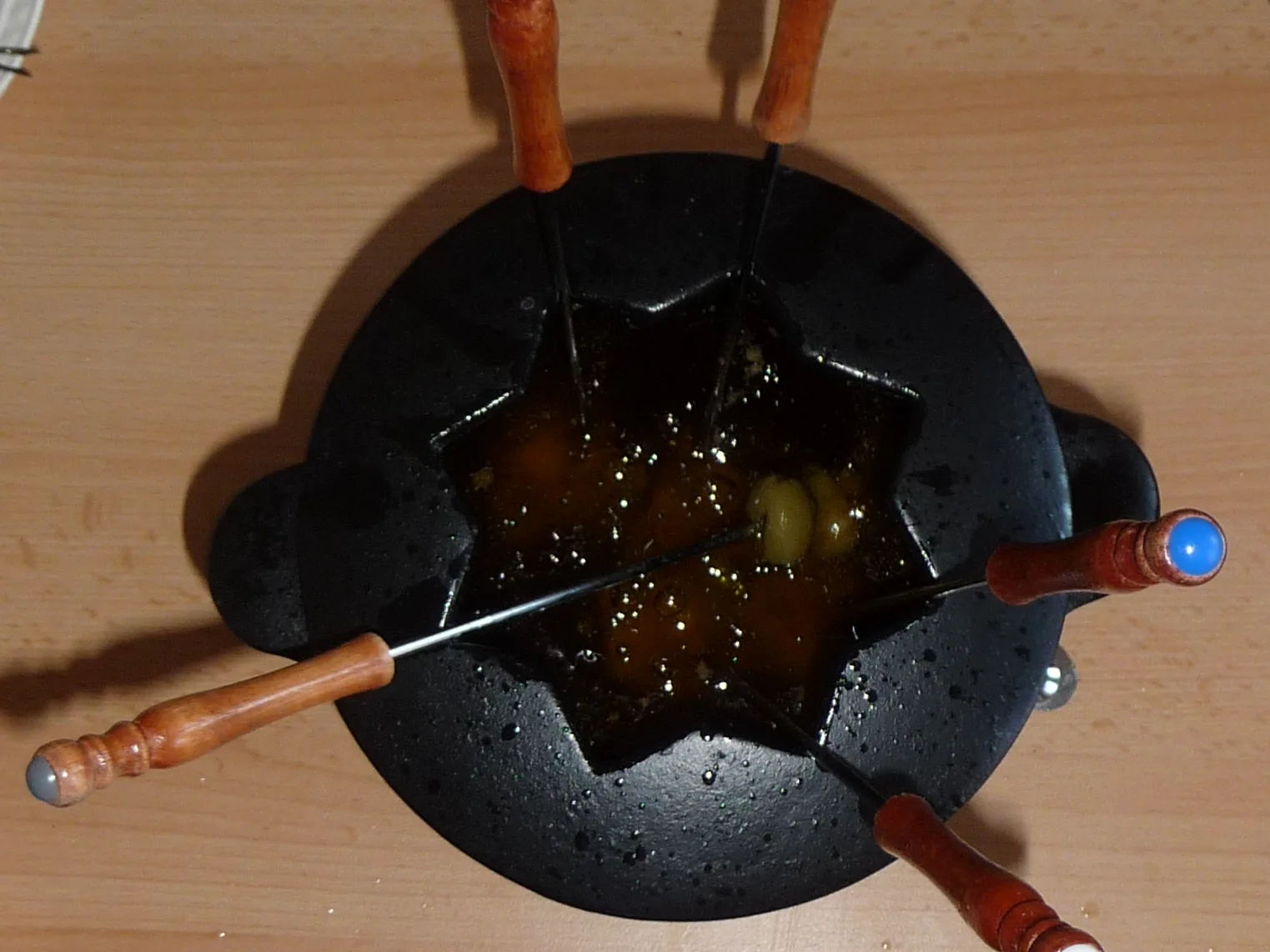
A black fondue pot of hot oil with long forks cooking beef, seen from above on a wooden table

Swiss Table-Cooking Classic

Photo: Pavel Ševela, CC BY-SA 3.0, via Wikimedia Commons

The Heritage Formulary

Measured Ingredients

Estimated cost: High — about $10–12 per serving at home (tenderloin is the cost) (USD)

This version uses beef tenderloin only, peanut oil heated to 180°C (350°F), and three classic sauces made from scratch; the oil is never allowed to smoke.

Execution Methodology & Culinary Technique

Step-by-Step Cooking Guide

Active 50m
P

Prep Stage: Beef, Sauces and Table

30 Mins • Beef, Sauces and Table

Cut the tenderloin into 2.5 cm cubes, pat them dry and season with salt and pepper just before cooking. Make the three sauces: aioli from 60g mayonnaise, crushed garlic and lemon juice; cocktail sauce from 40g mayonnaise and ketchup; mustard sauce from 20g mayonnaise, Dijon and snipped chives. Tear the baguette, dress the salad leaves with olive oil and lemon, and set the table with the fondue pot, burner, long forks and a plate of beef per diner.

Maestro Tip: Dry beef sears instead of spitting — pat every cube dry with kitchen paper, and season only at the last minute so the salt does not draw out moisture.

  1. 1

    Cut and season the beef

    10 Mins Room temperature, about 20°C (68°F)

    Trim the tenderloin of fat and sinew, then cut it into even 2.5 cm cubes — even cubes cook evenly. Pat each cube dry with kitchen paper and arrange them on plates, one plate per diner. Season with the salt and pepper just before the oil is hot.

    Keep the beef cold until the last moment; cold cubes in hot oil sear fast and stay juicy inside.

    Done when: Even, dry cubes with no sinew or ragged edges.

  2. 2

    Make the three sauces

    10 Mins Room temperature, about 20°C (68°F)

    Aioli: stir the crushed garlic and 1 teaspoon of lemon juice into the 60g mayonnaise. Cocktail sauce: stir the ketchup into the 40g mayonnaise until pink and smooth. Mustard sauce: stir the Dijon and snipped chives into the 20g mayonnaise. Taste each and adjust with salt or lemon. Chill the sauces until serving.

    Make the sauces at least 30 minutes ahead — the garlic and mustard flavours need time to bloom.

    Done when: Three smooth sauces: pale aioli, pink cocktail, speckled mustard.

  3. 3

    Set the table and dress the salad

    5 Mins Room temperature, about 20°C (68°F)

    Put the fondue pot on its stand in the centre of the table with the burner underneath, unlit. Give each diner a long fondue fork, a plate of beef, a small plate for the cooked meat, and the three sauces. Tear the baguette into chunks and dress the salad leaves with the olive oil, remaining lemon juice and a pinch of salt.

    Keep a spare plate for used forks and a folded towel beside the pot — the pot and forks stay very hot throughout the meal.

    Done when: Everything within reach before the oil is heated — nobody should be fetching things over a pot of hot oil.

  4. 4

    Heat the oil to 180°C (350°F)

    10 Mins 180°C (350°F)

    Pour the peanut oil into the fondue pot — no more than two-thirds full — and heat it on the stove over medium-high heat. Test with a small cube of bread: it should brown in about 30 seconds at 180°C (350°F). If the oil smokes, it is too hot — take it off the heat at once. Carry the pot carefully to its stand and light the burner underneath.

    Never leave hot oil unattended, never fill the pot more than two-thirds, and keep children and sleeves well away from the pot.

    Done when: A bread cube browns in 30 seconds and the oil shimmers without smoking.

  5. 5

    Cook the beef at the table

    15 Mins Oil at 180–190°C (350–375°F); beef to 63°C (145°F)

    Each diner spears one cube on a long fork and lowers it into the oil. Cook for 30 to 60 seconds for rare to medium-rare, or up to 90 seconds for medium — the cube should reach at least 63°C (145°F) inside. Lift it out, let the oil drip back for a few seconds, and slide it off the fork onto your plate with a table fork, never your teeth — the fork tip is scalding hot.

    Cook one cube at a time per fork and do not crowd the pot — too many cubes at once drops the oil temperature and the beef stews instead of searing.

    Done when: A crisp brown crust outside and a juicy pink centre; 63°C (145°F) or above inside.

  6. 6

    Dip, eat and keep the oil hot

    5 Mins Oil held at 180–190°C (350–375°F)

    Dip each cooked cube into a sauce, eat it with a chunk of baguette and a little salad, and cook the next cube. Keep the burner adjusted so the oil stays at 180–190°C (350–375°F) — if it cools, the beef turns greasy. When the meal ends, turn off the burner and leave the oil to cool completely in the pot before moving it.

    The sauces are the seasoning — taste the beef plain first, then choose the sauce that suits it.

    Done when: Every diner cooks at their own pace and the oil stays hot to the last cube.

Finishing Touches & Plating

Turn off the burner, let the oil cool completely in the pot, then strain and discard it safely — never pour hot oil down the sink.

Nutritional Physiology & Benefits

Nutrition

Energy

1045

kcal / serving

Protein

48g

Complete AA

Carbs

33g

Complex

Fats

80g

Healthy

Per serving (4 servings · 1 serving ≈ 400 g)
Energy1045 kcal
Protein48 g
Carbohydrates33 g
Fat80 g
Fibre2.4 g
Sugar6.1 g
Sodium1126 mg
Per 100g
Energy261 kcal
Protein12.1 g
Carbohydrates8.3 g
Fat19.9 g
Fibre0.6 g
Sugar1.5 g
Sodium281 mg

Nutrition values are estimated — calculated from USDA FoodData Central values for the listed ingredients.

Vitamins & minerals: Vitamin B12, iron and zinc (beef), vitamin E (peanut and olive oil), vitamin C and folate (salad leaves, lemon) and B vitamins (baguette).

Serious Protein

Each serving carries about 48 g of protein from the tenderloin, so this is a genuinely filling dinner, not just a snack with ceremony.

You Control the Cooking

Every diner cooks each cube to their own liking, so the meat is never overdone by the kitchen — rare, medium or well done is your call.

Slow Eating, Real Company

Cooking one cube at a time slows the meal down, which is the point: a fondue is an evening together, and slow eating is easier on digestion.

Food Pairings

What to Eat With

To optimize nutrient absorption and elevate the sensory depth, pair with these authentic accompaniments:

Drinks

Dry Red Wine

A dry red, such as a Burgundy or a dry Rhone red, stands up to the rich fried beef and echoes the dish's Burgundy name.

Cold Lager

A cold lager cuts through the oiliness of fried beef better than anything — the classic Swiss table drink with a fondue.

Sides

Crusty Baguette

The baguette is not a side dish, it is a tool: it mops up sauce, rests the hot beef, and turns the fondue into a full meal.

Vegetables

Green Salad With Vinaigrette

Sharp, lemony leaves are essential — they cut the fat of the fried beef and the mayonnaise sauces and keep the meal from feeling heavy.

Complete menu

Start with a light green salad, then the fondue bourguignonne with baguette and three sauces, and finish with fresh fruit and coffee — nothing heavy after a rich, oily main.

Digestive Guardrails

What NOT to Combine

To prevent digestive distress, sluggishness, or palate clash, avoid pairing the dish with these elements:

Biting Meat Off the Fondue Fork

The fork tip stays scalding hot long after it leaves the oil and will burn lips and tongue — always slide the meat off with a table fork. This is general food-safety information, not medical advice.

Water Near the Hot Oil

Water in hot oil explodes into spitting fat — keep drinks, wet hands and wet meat away from the pot, and never try to cool the oil with water. This is general food-safety information, not medical advice.

General information only, not medical advice — consult a doctor for personal dietary decisions.

Who Should Eat It

Who Should Eat

  • General adultsA rich, sociable dinner — one serving with salad and bread is plenty.
  • ChildrenChildren love spearing their own meat, but an adult must handle the hot oil and the forks — never let a child cook unsupervised at a fondue pot.
  • ElderlyTenderloin is easy to chew and the portions are self-chosen; take care with the hot oil and the hot fork tips.
  • Pregnant womenCook every cube right through to at least 63°C (145°F) and let it cool a moment — avoid rare beef. Ask a clinician about undercooked meat in pregnancy.
  • Breastfeeding womenFine in normal portions; the protein and iron are welcome, but the meal is very rich.
  • AthletesHigh in protein and energy — a good post-training dinner, best balanced with plenty of salad.
  • Weight gainAn easy way to add calories: full portions of beef, bread and all three sauces.
  • Weight lossChoose smaller beef portions, load the plate with salad, and go easy on the mayonnaise sauces — the oil and sauces are where the calories sit. Ask a clinician about portion size if you are following a plan.

Health Conditions — Adjust or Avoid

Conditions

  • DiabetesAbout 33 g of carbohydrate per serving, mostly from the baguette — take half the bread and load up on salad instead. Ask a clinician about portion size.
  • High blood pressureAbout 1,126 mg of sodium per serving, mostly from the sauces — go easy on the mustard and cocktail sauces. Ask a clinician if you are managing blood pressure.
  • Kidney diseaseVery high in protein and potassium from the beef, so large portions may not suit a restricted diet — ask a clinician before eating freely.
  • GoutBeef is high in purines and the meal is large, so this is a dish to eat rarely and in small portions if you have gout — ask a clinician about frequency.
  • Stomach issuesFried beef and rich sauces can be hard on a sensitive stomach — eat slowly, take small portions, and lean on the salad. Ask a clinician if symptoms persist.
  • Cardiovascular diseaseSaturated fat is high from the fried beef and mayonnaise, so treat this as an occasional celebration meal, not a regular dinner. Ask a clinician about how often it fits your diet.
  • Fatty liverThe fried beef and mayonnaise sauces make this a very rich meal — small portions, plenty of salad, and only occasionally. Ask a clinician about rich meals in your plan.
  • Food allergiesContains egg (mayonnaise), mustard, wheat (baguette) and peanut oil — a serious allergen for peanut allergy; use sunflower oil instead and check every sauce. Ask a clinician about safe substitutes.
  • Special therapeutic dietsNot low-fat, low-sodium or low-protein as written; swapping the oil does not make it a light meal. Ask a clinician or dietitian before adapting it to a therapeutic diet.

If you have a medical condition, consult your doctor before changing your diet.

Storage & Use

Storage & Use

How to store
Refrigerate leftover cooked beef and sauces separately in sealed containers; discard leftover oil once cool.
In the fridge
2 days in the fridge at 4°C (39°F) or below for cooked beef; sauces 2 days.
In the freezer
Cooked beef freezes for up to 2 months; the sauces do not freeze well.
How to reheat
Reheat beef in a hot pan or oven at 180°C (350°F) until steaming and at least 74°C (165°F) inside; never reheat in the fondue oil.
Freezing recommended
Only the cooked beef — the sauces and the oil are not worth freezing.
Signs it has spoiled
Sour or off smell, grey or slimy beef, or separated, sour sauces — discard them.

More recipes to explore

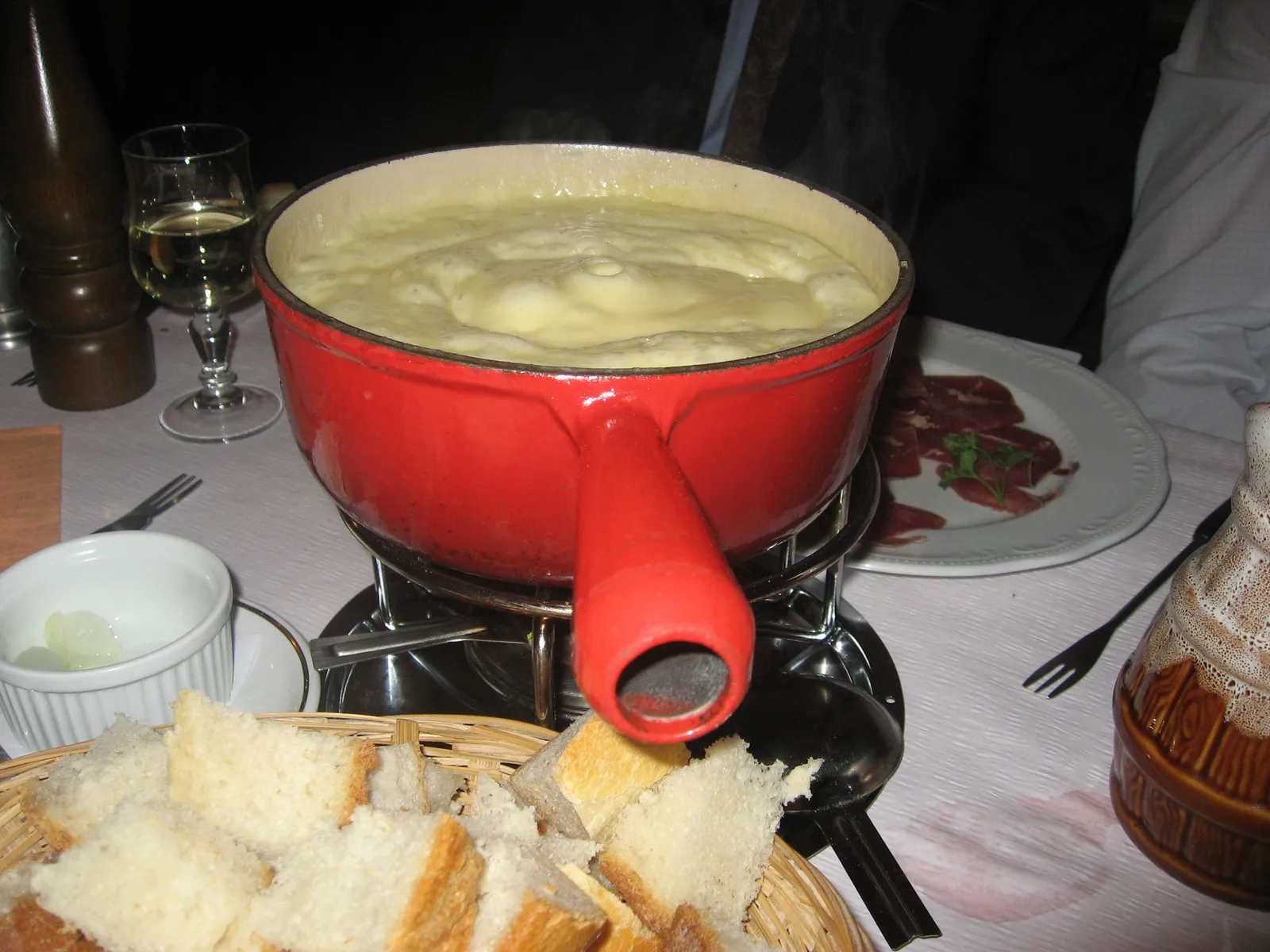
A red fondue pot of melted cheese with bread cubes and a glass of white wine Switzerland flag Switzerland 40m
Dinner •Swiss Alpine Classic

Swiss Cheese Fondue

Swiss cheese fondue is the Alps in a pot: Gruyere and Emmental melted slowly into dry white wine with garlic and a splash of kirsch, kept warm at the table while everyone dips cubes of bread into the bubbling cheese. One serving is about 310 g.

Comfort & Togetherness

Gruyere and Emmental melted in white wine, shared from one pot.

Pairs Well With
Cubes of crusty bread, boiled potatoes and cornichons on the side
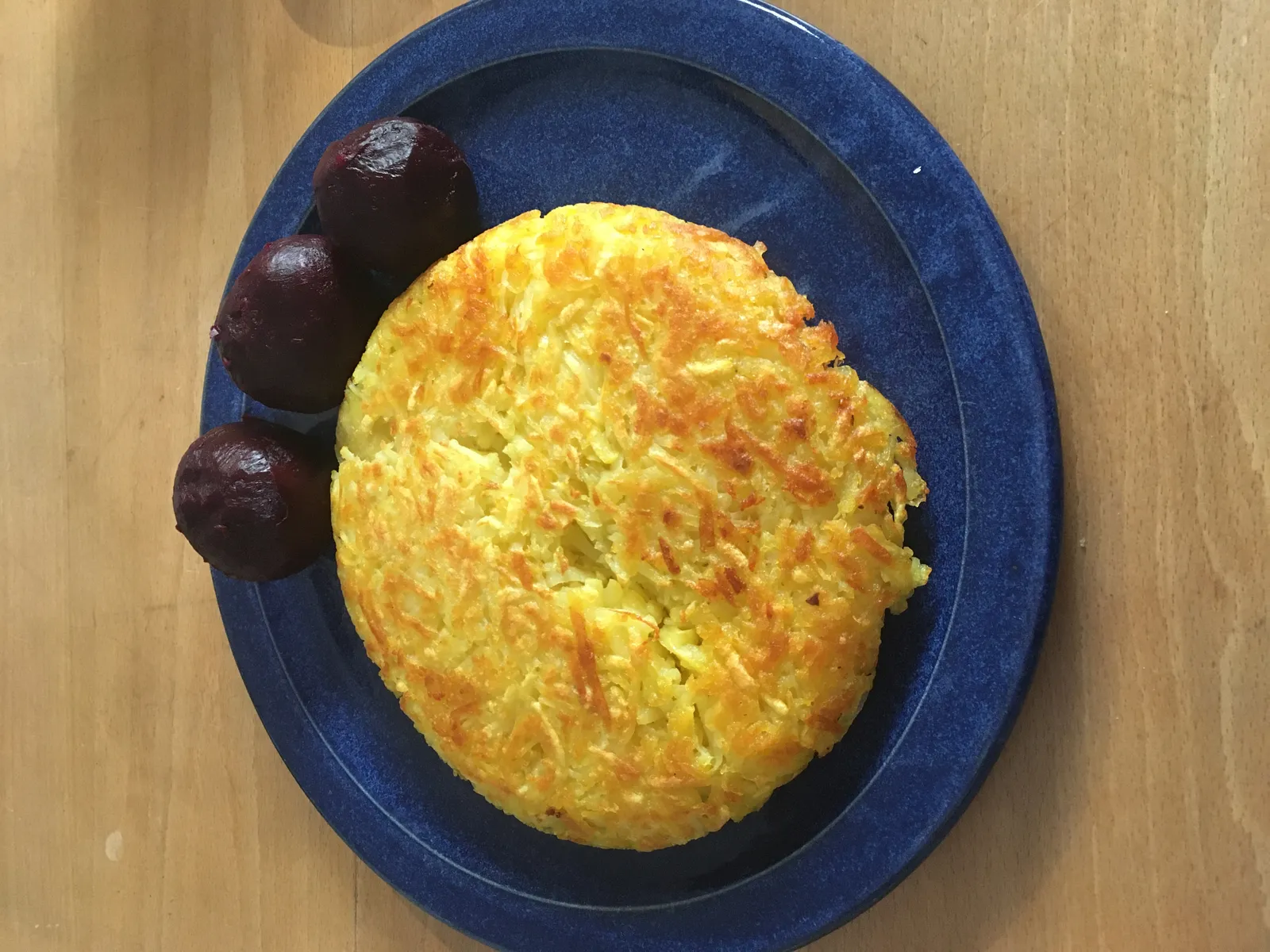
A large golden rosti potato cake on a blue plate Switzerland flag Switzerland 40m
Lunch •Bernese Farmhouse Classic

Rösti

Rösti is Switzerland's crisp potato cake: grated potato pressed into one large golden disc and fried in butter until the outside shatters and the inside stays soft, then topped with a fried egg. One serving is about 240 g.

Simple & Satisfying

One large crisp cake of grated potato, pan-fried in butter and topped with a fried egg.

Pairs Well With
A fried egg on top and a simple green salad with sharp vinaigrette
Quick Prep (<30m)
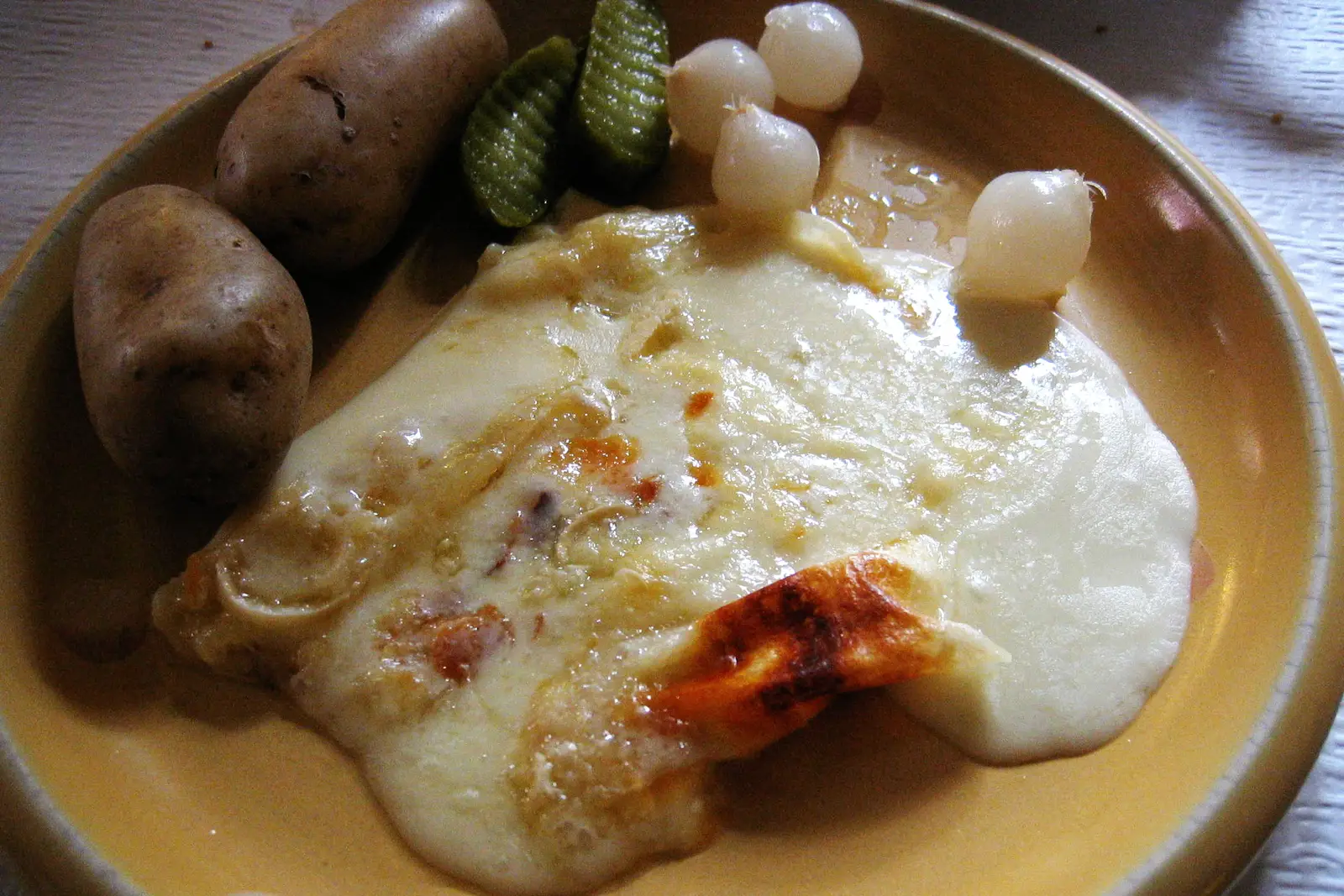
Melted raclette cheese scraped over a plate with boiled potatoes and pickles Switzerland flag Switzerland 40m
Dinner •Valais Alpine Classic

Raclette

Raclette is the Swiss Alps' other great melted-cheese meal: a half-wheel of raclette cheese is warmed until the cut face bubbles, then scraped in ribbons over boiled potatoes, with cornichons and pickled onions to cut the richness. One serving is about 365 g.

Comfort & Togetherness

Melted raclette cheese scraped over boiled potatoes with pickles.

Pairs Well With
Boiled potatoes, cornichons, pickled onions and a green salad
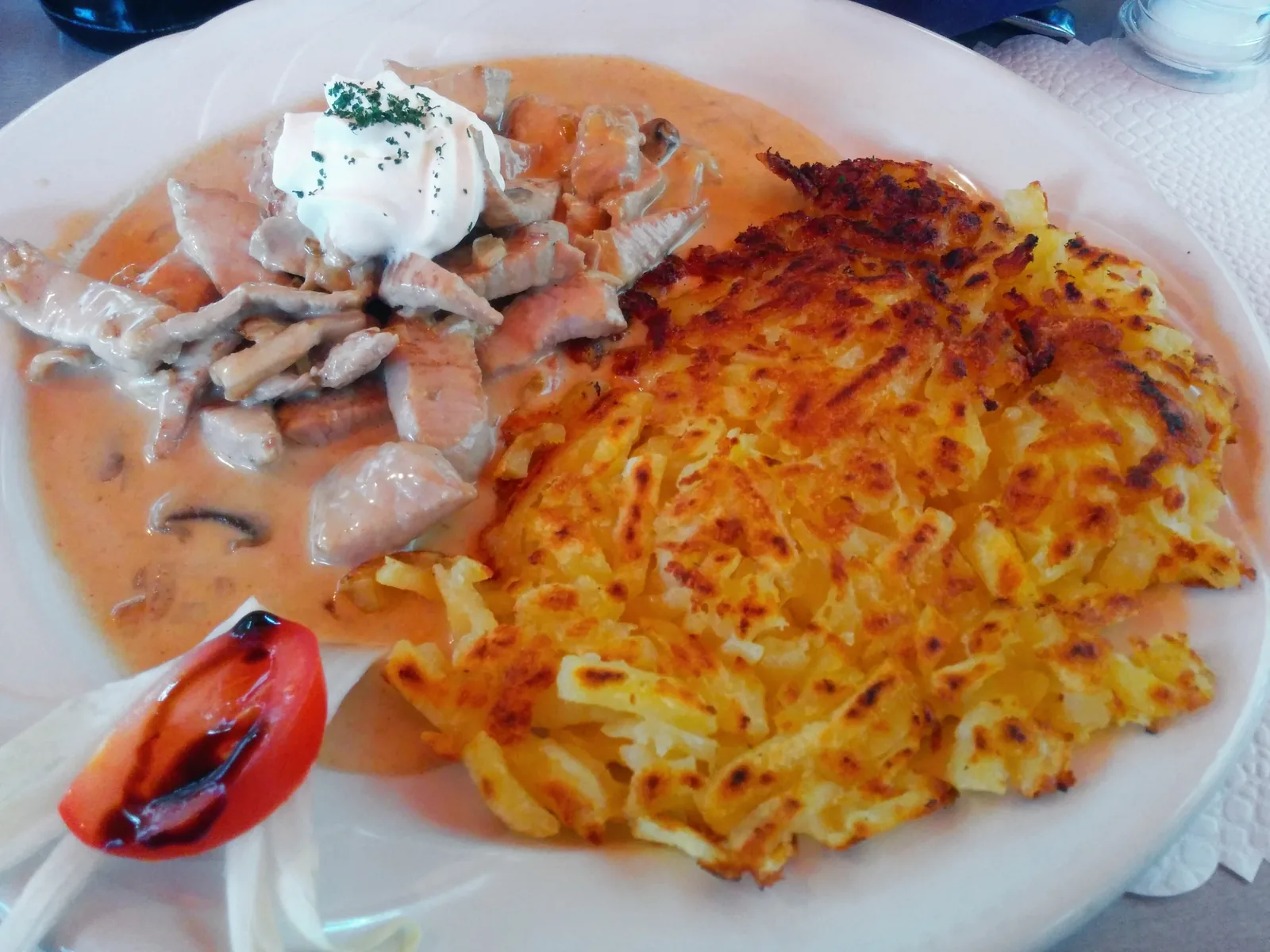
A plate of Zürcher Geschnetzeltes — veal strips in cream sauce with a dollop of cream — beside golden rösti. Switzerland flag Switzerland 40m
Dinner •Zurich Classic

Zürcher Geschnetzeltes

Zürcher Geschnetzeltes is Zurich's signature dish: thin strips of veal quickly seared, then finished in a white-wine and cream sauce with mushrooms and onion. One serving is about 335 g, before the rösti it is traditionally served with.

Rich & Comforting

Tender strips of veal in a white-wine cream sauce with mushrooms — Zurich's classic, with rösti.

Pairs Well With
Serve with golden rösti and a glass of dry Swiss white wine.
High Protein

The Dinner Gazette

Never wonder what’s for dinner again

One email a week with easy dinner ideas from around the world — ingredients, steps and nutrition, tested in our kitchen first.

Delivered every Thursday morning. Unsubscribe anytime.