-
1
Make the shortcrust base and chill it
15 Mins + 30 Mins chilling
Cold butter, about 5°C (41°F)
Tip the flour into a bowl with 50 g of the sugar and the salt. Rub in 100 g cold cubed butter with your fingertips until the mixture looks like coarse breadcrumbs, then add the egg yolk and knead briefly — just until the dough comes together in a ball. Flatten it into a disc, wrap it, and chill for 30 minutes. Do not overwork it: a short dough should barely hold together.
If the dough feels sticky, dust your hands with flour rather than adding more flour to the bowl.
Done when: A firm, smooth disc of dough that holds its shape when unwrapped.
-
2
Line the tin with the pastry
10 Mins
Oven preheats to 175°C (350°F)
Heat the oven to 175°C (350°F) and grease a 26 cm springform tin with a little of the melted butter. Roll the chilled dough into a round about 28 cm across and press it into the tin, covering the base in a thin, even layer and pushing it about 2 cm up the sides. Prick the base all over with a fork so it cannot puff up under the filling.
A thin, even base bakes through properly — if the pastry is thick in the middle, the centre stays doughy under the quark.
Done when: The tin is lined edge to edge with a thin, even layer of pastry.
-
3
Whisk the quark filling
10 Mins
Room temperature, about 20°C (68°F)
Whisk the quark until completely smooth, then whisk in 180 g sugar, the sour cream, 40 g cornflour, the lemon zest and juice, the vanilla and 60 g melted butter. Keep whisking until the mixture is silky with no lumps of quark left, then whisk in the 4 eggs one at a time, just until each disappears. Do not over-beat: too much air makes the cake puff up in the oven and sink as it cools.
Watery quark makes a soggy filling — drain it in a sieve for 30 minutes first if it looks at all loose.
Done when: A smooth, pale, pourable filling with no lumps.
-
4
Fill the tin and bake
5 Mins + 65 Mins bake
175°C (350°F)
Pour the filling over the pastry base and smooth the surface with the back of a spoon. Bake for 60 to 65 minutes until the top is golden and lightly speckled, the edges are set, and the centre still wobbles only slightly when you nudge the tin. If the top browns too fast after 40 minutes, lay a loose sheet of foil over it.
Do not open the oven door in the first 30 minutes — the rush of cool air can make the filling sink.
Done when: A golden, lightly speckled top with a centre that moves only slightly when nudged.
-
5
Cool slowly, then chill
30 Mins cooling + 2 Hrs chilling
Cool to room temperature, about 20°C (68°F)
Turn the oven off, open the door a crack, and leave the cake inside for 30 minutes so it cools slowly and does not crack or sink. Then take it out, run a thin knife around the edge, and chill the cake in the tin for at least 2 hours — this hands-off chilling is not counted in the total time, but it is what lets the quark filling set firmly so each slice shows a clean edge.
Cutting the cake while it is still warm makes the filling slide off the base — patience is part of the recipe.
Done when: The cake is cold, firm, and pulls cleanly away from the sides of the tin.
-
6
Release, slice and serve
10 Mins
Serve cool, about 10°C (50°F)
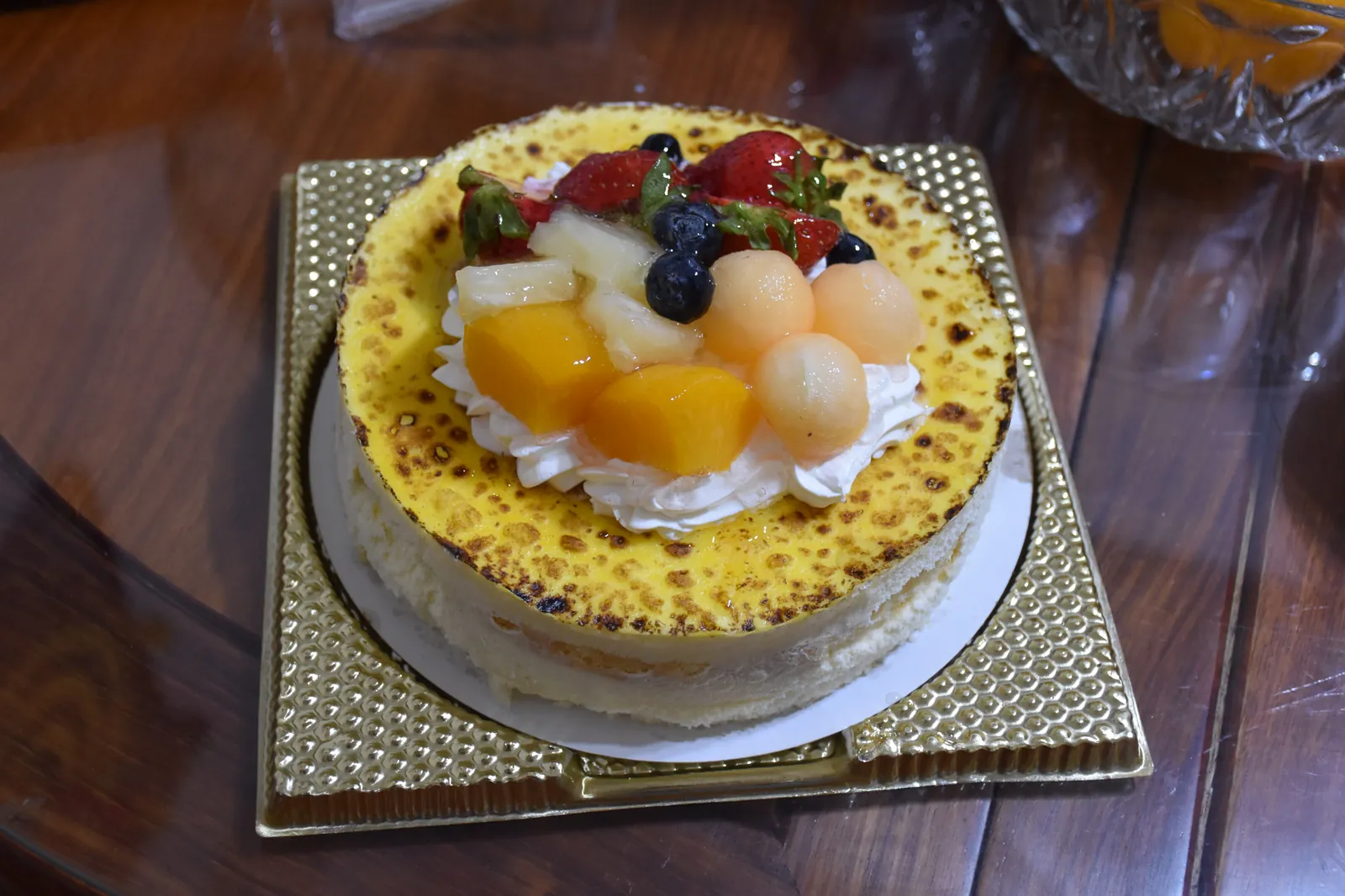
Release the springform and lift the cake onto a serving plate. Cut into 12 thin slices with a long, sharp knife, wiping the blade between cuts so each slice stays clean. Serve cool, as it is, or crown the whole cake with a ring of whipped cream and fresh fruit, as in the photo.
A hot, dry knife cuts the cleanest slices — dip the blade in hot water and wipe it dry between cuts.
Done when: Each slice stands up on its own with a pale, creamy filling and a thin golden base.
auto_awesome Finishing Touches & Plating
Serve the slices cool, at about 10°C (50°F), with black coffee. The top should be golden and lightly speckled, the filling pale, creamy and gently tangy, and the shortcrust base thin and crisp underneath. A ring of whipped cream and fresh berries on top is optional, as in the photo — the cake is complete without it.

 Germany
3h 30m