Curated recipes from 193 countries  •  New seasonal Mediterranean issue out now

Overview

German Pork Knuckle

Schweinshaxe, Schweinshaxn, Bavarian Roast Pork Knuckle

This german pork knuckle recipe roasts a bone-in pork knuckle low and slow in dark beer, then finishes it at high heat so the skin turns to glassy crackling. Serve it with potato dumplings and sauerkraut, and a spoonful of sharp mustard. One serving is about 450 g.

Schweinshaxe began as peasant food: a tough, cheap cut that Bavarian cooks turned tender by braising it slowly, then roasting it hard for crackling. It became the signature dish of Munich beer halls and Oktoberfest tents, where a knuckle, dumplings and a litre of beer are still the classic order.

Pairs well with: Potato dumplings, sauerkraut and a cold lager

Provenance

Germany flag Germany

Bavarian Beer-Hall Classic

Nordic & European

Time Dedication

3h 55m

25m prep • 210m cook

Batch Yield

4 Servings

972 kcal per serving

1 serving ≈ 450 g

Technical Skill

Intermediate

Intermediate (Long Roast)

Meal Timing & Digestive Fit

Breakfast

Not Advised

Lunch

Hearty Midday Main

Dinner

Ideal Hearty Main

Snack & Tea

Inappropriate

High Protein Occasions: Oktoberfest, beer-hall dinners, cold-weather Sundays, hearty family gatherings Cost: Medium — about $5–6 per serving at home
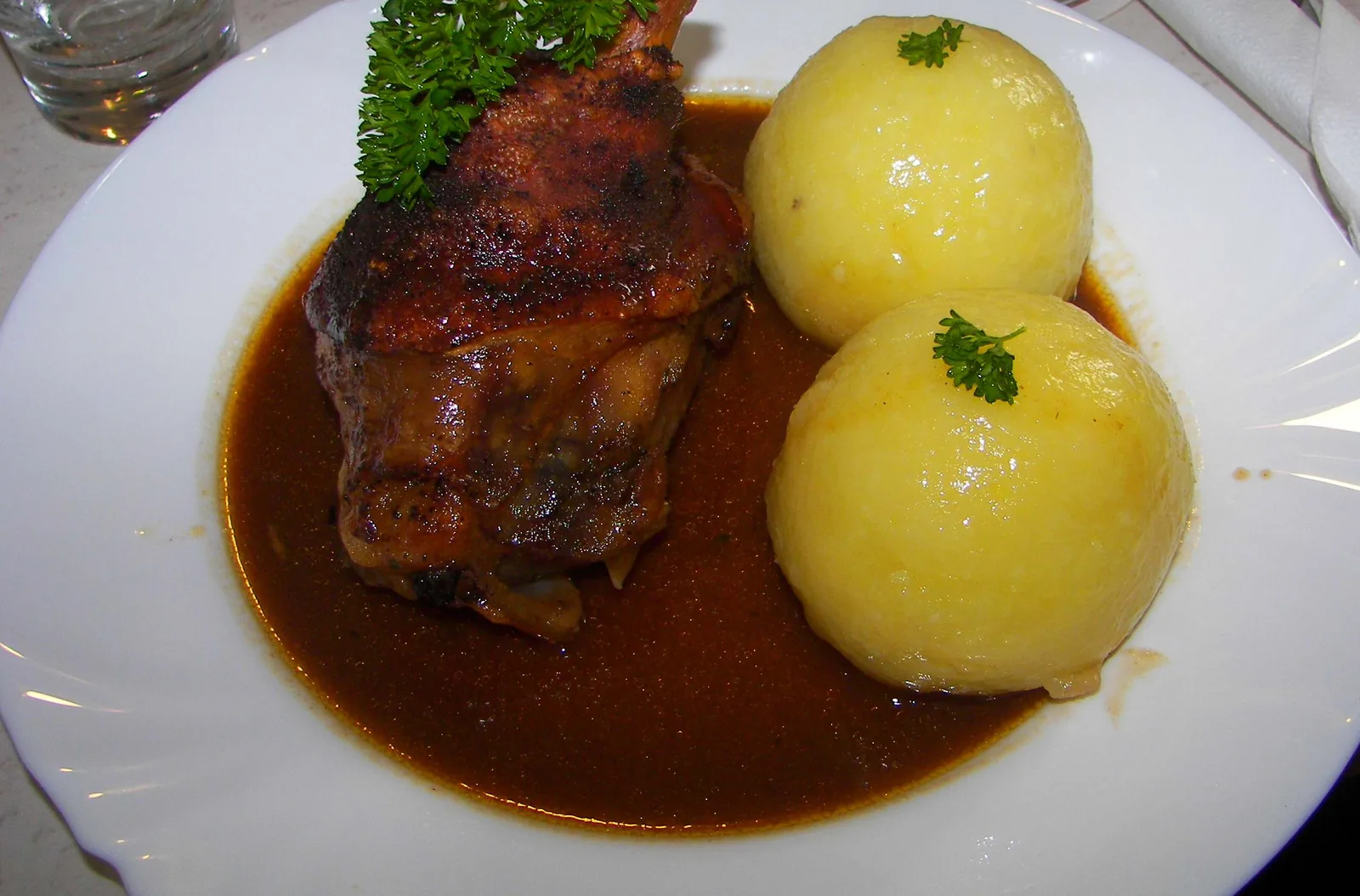
A roasted German pork knuckle with crisp dark crackling, served with potato dumplings and rich gravy

Bavarian Beer-Hall Classic

Photo: Benreis, CC BY-SA 3.0, via Wikimedia Commons

The Heritage Formulary

Measured Ingredients

Estimated cost: Medium — about $5–6 per serving at home (USD)

A traditional Bavarian roast: the knuckle is scored, rubbed with salt and caraway, braised in beer, then roasted until the skin crackles.

Execution Methodology & Culinary Technique

Step-by-Step Cooking Guide

Active 3h 55m
P

Prep Stage: Score, Rub & Rest

25 Mins • Rub 1 Hour Ahead (or Overnight)

Pat the knuckles completely dry, score the skin in a diamond pattern, and rub in coarse salt, pepper, crushed caraway and juniper. Rest the knuckles uncovered in the fridge for at least 1 hour, or overnight — dry skin is what makes crackling. Meanwhile quarter the onions, chunk the carrots and celery, and smash the garlic.

Maestro Tip: If the skin feels damp, blot it again just before roasting; wet skin steams instead of crackling.

  1. 1

    Rub and Rest the Knuckles

    25 Mins + 1 Hour Rest Fridge, ~4°C (39°F)

    Score the skin in 2 cm diamonds, cutting through skin and fat but not the meat. Rub the salt, pepper, crushed caraway and juniper all over, working salt into the cuts. Set the knuckles uncovered on a rack in the fridge for at least 1 hour, or overnight.

    Uncovered resting dries the skin — the single biggest factor in good crackling.

    Done when: Skin is dry to the touch and pale.

  2. 2

    Sear and Build the Braise

    15 Mins High heat, ~200°C (400°F) pan

    Heat the oil in a large ovenproof pot over high heat. Sear the knuckles on all sides for about 10 minutes until the skin is lightly browned. Lift them out, add the onions, carrots, celery, garlic and bay leaves, and cook for 3 minutes until the onions soften.

    Do not crowd the pot — sear one knuckle at a time if needed so the skin browns instead of steaming.

    Done when: Skin is browned in patches; vegetables are softened and fragrant.

  3. 3

    Braise Low and Slow in Beer

    2 Hours 30 Mins Oven at 160°C (320°F)

    Return the knuckles to the pot, pour in the 500 ml of dark beer and add water until the liquid comes halfway up the knuckles. Cover with a tight lid and roast at 160°C (320°F) for 2½ hours, turning the knuckles once halfway, until the meat is tender and nearly falling off the bone.

    Keep the skin above the liquid where possible — submerged skin will not crisp later.

    Done when: A fork slides into the meat with no resistance; the bone wiggles loosely.

  4. 4

    Crisp the Skin at High Heat

    30 Mins Oven at 230°C (450°F)

    Lift the knuckles onto a rack over a tray, brush the skin lightly with the braising liquid, and roast uncovered at 230°C (450°F) for 25–30 minutes, until the skin is deep mahogany, blistered and glassy. Watch closely in the last 5 minutes — crackling goes from perfect to burnt quickly.

    If some patches stay soft, brush them with a little more liquid and give them 5 extra minutes.

    Done when: Skin is hard, blistered and crackles when tapped with a knife; the meat inside is steaming hot.

  5. 5

    Make the Beer Gravy

    10 Mins Medium heat, ~180°C (350°F)

    Strain the braising liquid into a pan, discarding the vegetables and bay leaves. Simmer over medium heat for 8–10 minutes until reduced by about a third and slightly thickened. Taste and adjust the salt — the beer and pork make it well seasoned already.

    Skim any fat from the surface for a cleaner gravy, or leave it for a richer one.

    Done when: Gravy coats the back of a spoon.

  6. 6

    Rest and Carve

    10 Mins Resting, ~20°C (68°F)

    Rest the knuckles for 10 minutes so the juices settle. Carve the meat off the bone in thick slices, keeping the crackling in large shards on top. Serve one half-knuckle per person — about 450 g — with dumplings, sauerkraut, gravy and mustard.

    Cut the crackling with a heavy knife or kitchen scissors so it shatters cleanly instead of tearing.

    Done when: Meat is juicy and tender; crackling stays crisp on the plate.

Finishing Touches & Plating

Rest the knuckle, carve it at the table, and let everyone crack their own piece of skin over the meat — that sound is half the pleasure of Schweinshaxe.

Nutritional Physiology & Benefits

Nutrition

Energy

972

kcal / serving

Protein

97g

Complete AA

Carbs

10g

Complex

Fats

57g

Healthy

Per serving (4 servings · 1 serving ≈ 450 g)
Energy972 kcal
Protein97 g
Carbohydrates10 g
Fat57 g
Fibre1.9 g
Sugar3.1 g
Sodium912 mg
Per 100g
Energy216 kcal
Protein21.5 g
Carbohydrates2.1 g
Fat12.7 g
Fibre0.4 g
Sugar0.7 g
Sodium203 mg

Nutrition values are estimated — calculated from USDA FoodData Central values for the listed ingredients.

Vitamins & minerals: Vitamin B1 (thiamine) and B12 (pork), vitamin A (carrot), vitamin K (parsley garnish), iron and zinc (pork).

Very High in Protein

Each serving supplies about 96 g of complete protein, with all essential amino acids for muscle maintenance and repair.

Rich in B Vitamins

Pork is one of the best food sources of thiamine (vitamin B1), which supports normal energy metabolism, plus vitamin B12 and zinc.

Slow Cooking, Real Ingredients

A long, slow braise in beer and vegetables turns a tough cut tender with no additives — just meat, vegetables, beer and spice.

Food Pairings

What to Eat With

To optimize nutrient absorption and elevate the sensory depth, pair with these authentic accompaniments:

Sides

Potato Dumplings (Kartoffelknödel)

Soft, dense dumplings soak up the beer gravy and balance the rich pork — the traditional Bavarian partner for Schweinshaxe.

Vegetables

Sauerkraut

The sharp acidity of sauerkraut cuts through the fat of the knuckle and refreshes the palate between bites.

Sauces

Sharp Mustard

Dijon or sweet Bavarian mustard adds a hot, tangy contrast that lifts the rich, salty meat.

Drinks

Cold Lager

A cold Munich lager echoes the beer in the braise and cleanses the palate after the fatty crackling.

Full Menus

Full Beer-Hall Menu

Start with a pretzel and obatzda cheese, then the knuckle with dumplings and sauerkraut, and finish with apple strudel.

Complete menu

Start with a small salad, serve the knuckle with potato dumplings and sauerkraut, and finish with apple strudel and coffee.

Digestive Guardrails

What NOT to Combine

To prevent digestive distress, sluggishness, or palate clash, avoid pairing the dish with these elements:

Extra Salt on the Crackling

The skin is rubbed with coarse salt and the braise is salty, so adding more salt at the table easily makes the dish over-salty. Taste the meat first. This is general information, not medical advice.

Sweet Sauces on the Side

Sweet barbecue-style sauces clash with the beery, caraway-spiced flavour of the knuckle and add sugar without improving it — mustard is the better match. This is general information, not medical advice.

General information only, not medical advice — consult a doctor for personal dietary decisions.

Who Should Eat It

Who Should Eat

  • General adultsA rich, filling feast — best as an occasional dinner, not an everyday meal.
  • ChildrenSuitable in a small portion; the meat is soft, but trim off most of the fatty skin and skip the beer gravy for younger children.
  • ElderlyThe meat is very tender and easy to chew, but keep the portion modest — it is high in fat and salt.
  • Pregnant womenGenerally suitable when the pork is cooked right through and served hot; keep the portion moderate and go easy on the gravy.
  • Breastfeeding womenGenerally suitable; the protein and B vitamins are useful, but the dish is salty, so drink water alongside.
  • AthletesExcellent for protein after heavy training — about 96 g per serving — but pair it with vegetables and go lighter on the crackling.
  • Weight gainAn ideal choice — eat the crackling, take extra dumplings and a second ladle of gravy.
  • Weight lossEat the lean meat and sauerkraut, leave most of the skin and gravy, and keep the portion to about half a knuckle.

Health Conditions — Adjust or Avoid

Conditions

  • DiabetesThe pork itself is very low in carbohydrate; keep the dumplings to a small portion and fill the rest of the plate with sauerkraut and salad. Ask your clinician about portion size.
  • High blood pressureThis dish is high in sodium from the salt rub and gravy — eat it rarely, in a small portion, and skip extra salt. Ask your clinician about portion size.
  • Kidney diseaseHigh in protein, sodium and potassium; eat rarely and in a small portion, and ask your clinician first.
  • GoutEat occasionally and in smaller portions — pork is moderately high in purines. Ask your clinician about frequency.
  • Stomach issuesThe rich fat and crackling can be hard to digest; eat slowly, take a small portion, and skip the beer gravy if your stomach is sensitive. Ask your clinician if symptoms persist.
  • Cardiovascular diseaseVery high in saturated fat — eat rarely, choose the lean meat, leave the skin, and load up on sauerkraut and salad. Ask your clinician about portion size.
  • Fatty liverKeep the portion small, skip the crackling and gravy, and favour the lean meat with vegetables. Ask your clinician about portion size.
  • Food allergiesContains mustard and barley (beer). The dumplings served alongside usually contain wheat and egg — check if you have coeliac disease.
  • Special therapeutic dietsIf you follow a prescribed low-sodium or low-fat diet, this dish is hard to fit; check with your clinician before eating.

If you have a medical condition, consult your doctor before changing your diet.

Storage & Use

Storage & Use

How to store
Cool quickly, then store meat and crackling separately in airtight containers in the fridge.
In the fridge
3 days; keep the crackling in a paper bag so it stays crisp.
In the freezer
3 months for the meat (without crackling); the skin does not freeze well.
How to reheat
Reheat the meat covered in a 180°C (350°F) oven until steaming hot, 74°C (165°F); crisp the skin separately under the grill for 2–3 minutes.
Freezing recommended
Yes for the meat only — freeze the crackling separately is not recommended.
Signs it has spoiled
Sour smell, slimy skin, or grey discoloration of the meat.

More recipes to explore

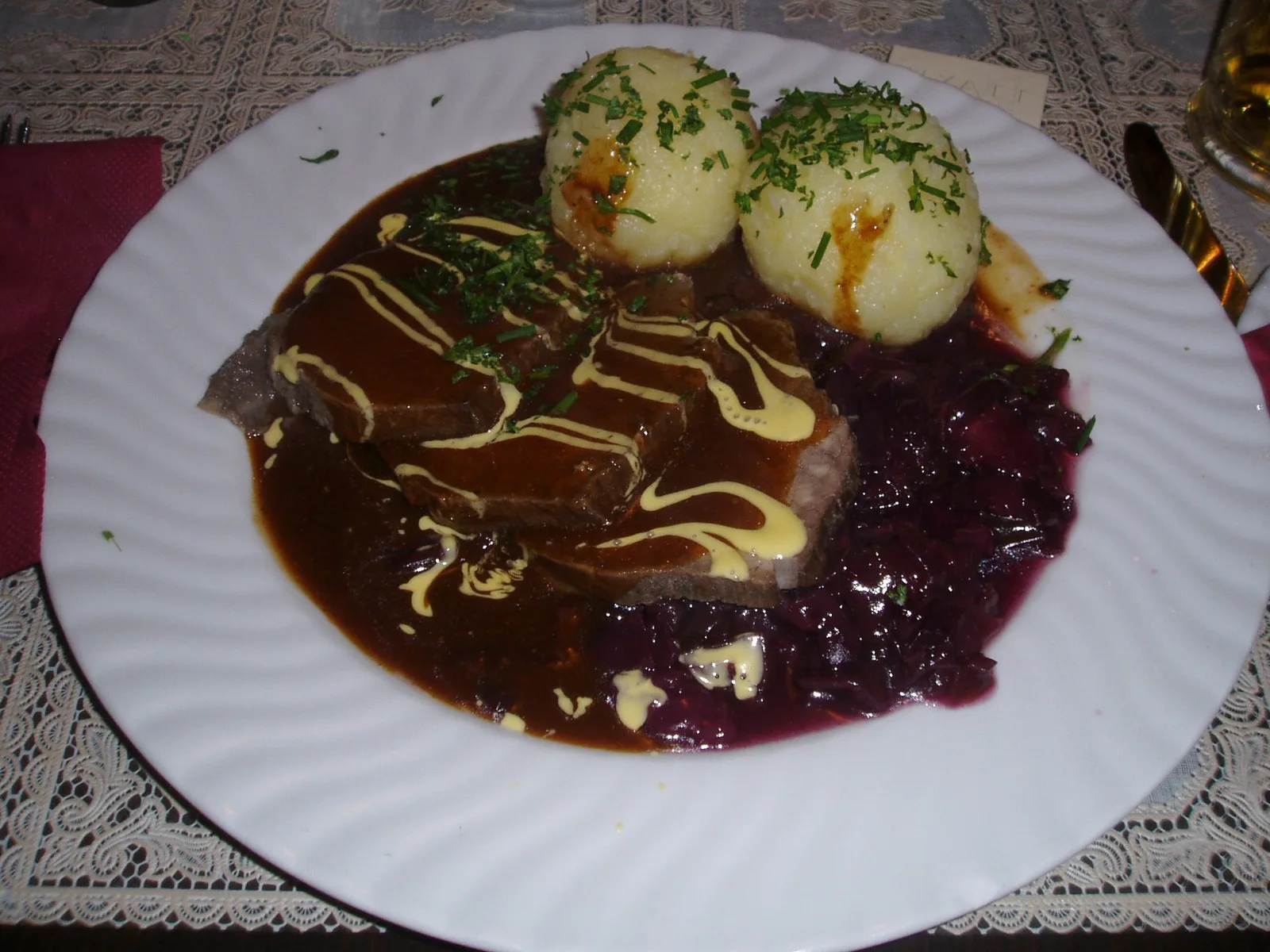
Sliced sauerbraten in dark sweet-sour gravy with potato dumplings and braised red cabbage on a white plate Germany flag Germany 3h 30m
Dinner •Rhineland Heritage

Sauerbraten

This sauerbraten recipe starts with a beef chuck roast steeped for three days in red wine vinegar, red wine and warm spices, then braised slowly until it slices like butter. The marinade becomes a dark, sweet-sour gravy thickened with crushed gingersnaps and studded with raisins, the Rhineland way. One serving is about 300 g, with gravy.

Comfort & Warmth

A slow-braised German pot roast in a sweet-sour vinegar gravy, sliced thick and served hot with potato dumplings and red cabbage.

Pairs Well With
Potato dumplings, braised red cabbage & a glass of Spätburgunder
High Protein
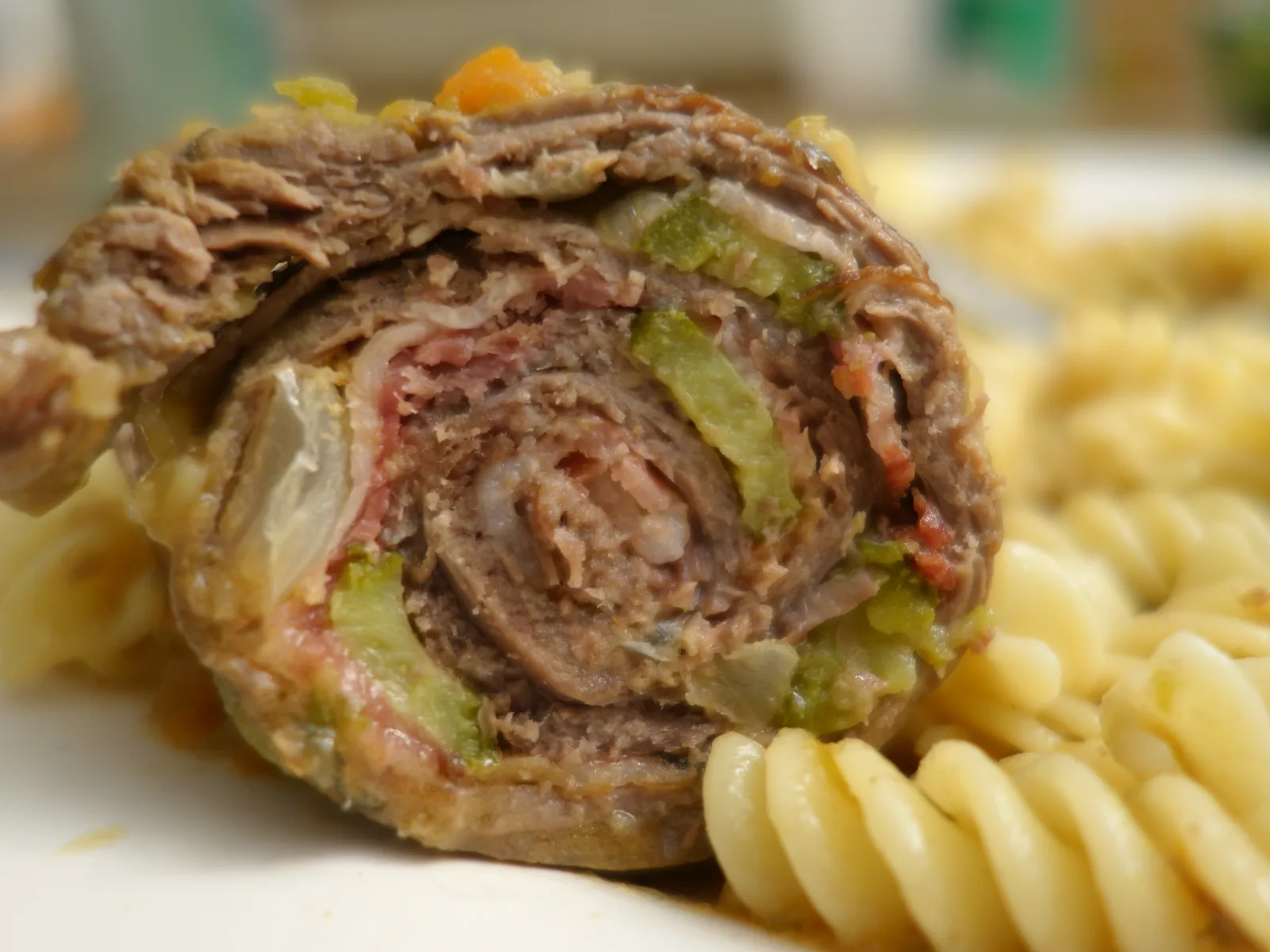
A sliced German beef roulade showing the spiral of beef, bacon and dill pickle, served with pasta Germany flag Germany 2h 10m
Dinner •German Sunday Heritage

Rouladen

This rouladen recipe spreads thin slices of top round with mustard, then rolls them around smoky bacon, dill pickles and onion into neat parcels. The rolls are browned, then braised slowly in red wine and beef stock until tender, and the braising liquid becomes a rich gravy. One serving is about 375 g — two rolls with gravy.

Comfort & Warmth

Thin beef rolls stuffed with bacon, dill pickle and onion, braised in red wine gravy and served hot with dumplings.

Pairs Well With
Potato dumplings, braised red cabbage & a German lager
High Protein
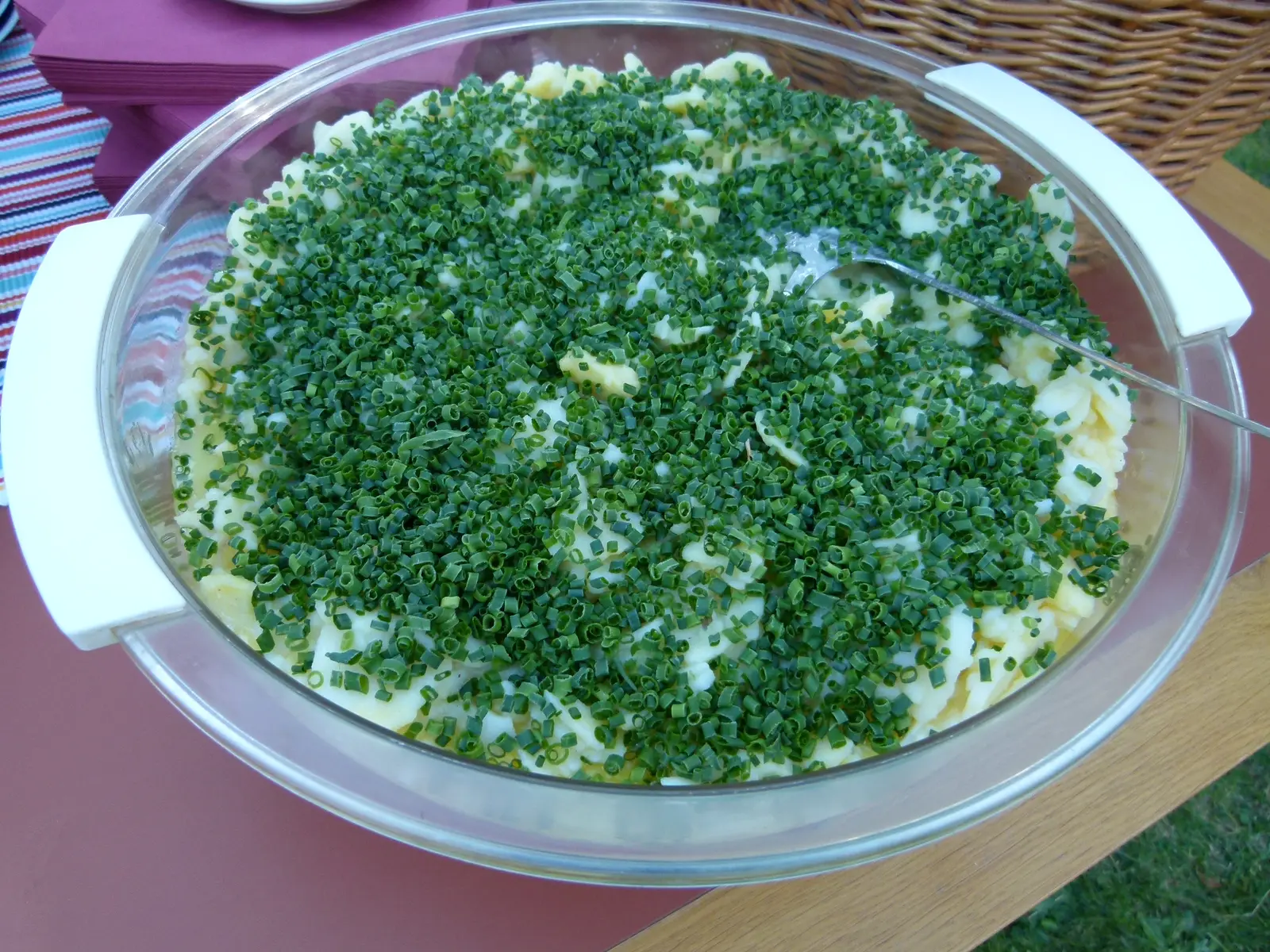
A glass bowl of warm Swabian potato salad topped with chopped chives Germany flag Germany 45m
Lunch •Swabian Heritage

German Potato Salad

This german potato salad recipe is the warm Swabian kind: waxy potatoes sliced while still hot, tossed with crisp bacon, soft onion and sliced egg, then dressed with hot beef stock, vinegar and mustard so every slice drinks up the tangy dressing. No mayonnaise anywhere — the potatoes stay light, glossy and warm. One serving is about 292 g.

Comfort & Warmth

Warm waxy potatoes in a bacon, mustard and vinegar dressing, served straight from the bowl while still steaming.

Pairs Well With
Grilled sausages, schnitzel & a cold German lager
Quick Prep (<30m)
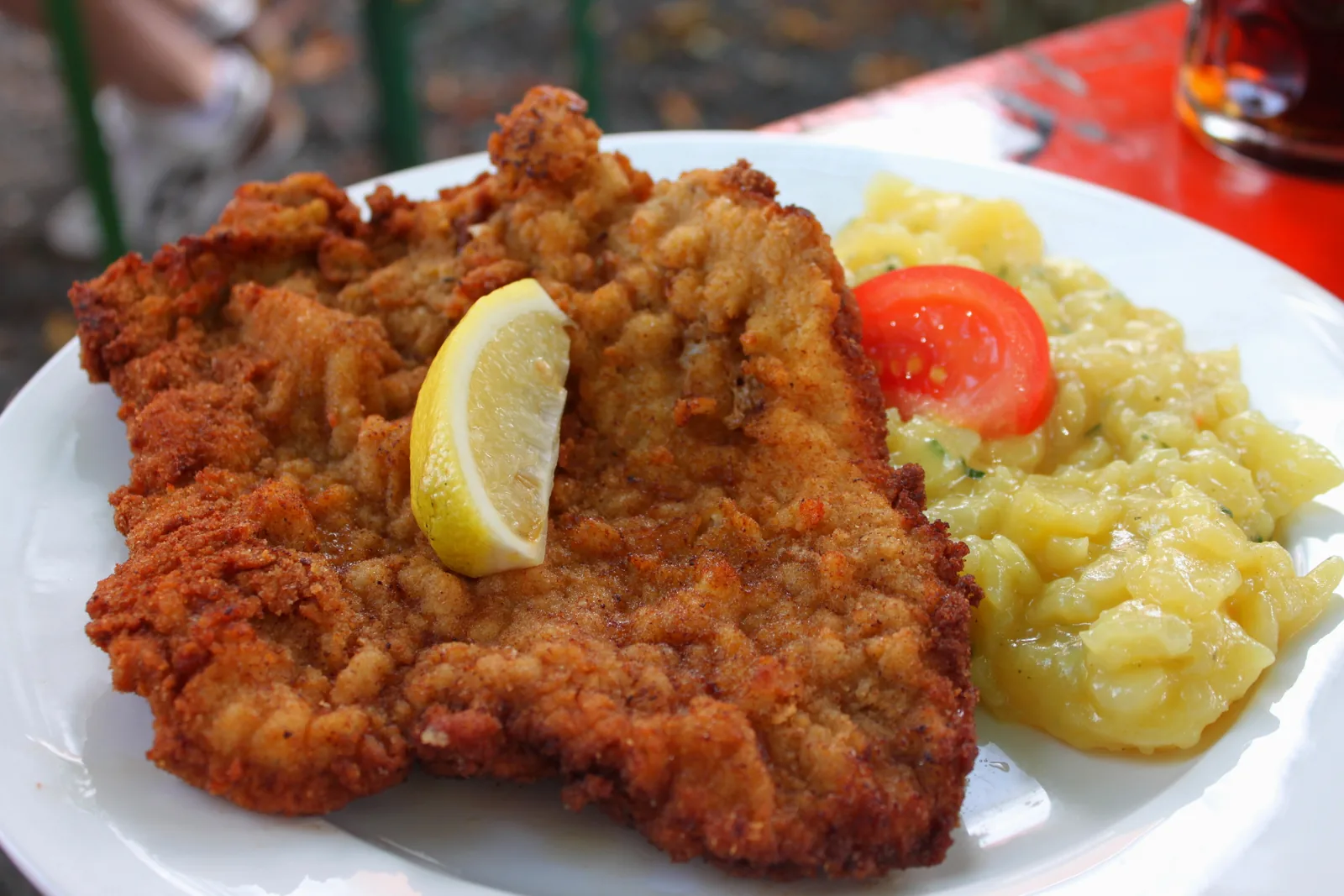
Golden breaded pork schnitzel with a lemon wedge and potato salad on a white plate Germany flag Germany 40m
Dinner •German Heritage

German Pork Schnitzel

German pork schnitzel is the everyday hero of German cooking: a pork cutlet pounded thin, coated in flour, egg and breadcrumbs, and fried in butter until it turns deep golden and crisp. This german schnitzel recipe follows the German way — real pork, a loose crumb, and a wedge of lemon on the side, with potato salad to mop up. One serving is about 200 g.

Classic Comfort

A golden, crisp pork cutlet with lemon and potato salad — a satisfying, protein-rich German dinner.

Pairs Well With
Warm potato salad, cucumber salad and a cold lager.
High Protein

The Dinner Gazette

Never wonder what’s for dinner again

One email a week with easy dinner ideas from around the world — ingredients, steps and nutrition, tested in our kitchen first.

Delivered every Thursday morning. Unsubscribe anytime.