Curated recipes from 193 countries  •  New seasonal Mediterranean issue out now

Overview

Greek Fava

Fava Santorinis, Yellow Split Pea Purée, Santorini Fava

This greek fava recipe turns yellow split peas into a silky golden purée with olive oil and lemon, finished with diced red onion, capers and oregano — the classic meze of Santorini. One serving is about 150 g.

Fava is not made from fava beans at all, but from yellow split peas — and the most famous version comes from Santorini, where the small, sweet Lathyrus clymenum pea has been grown on the island's volcanic soil for centuries. The Santorini pea carries EU protected designation of origin status, and the purée made from it — golden, silky, finished with olive oil, lemon and raw onion — is the island's signature meze, served in tavernas and homes across the Aegean. The name has caused confusion for centuries: fava, from the Latin faba, bean, attached itself to the pea purée long ago, and it has stuck ever since.

Pairs well with: Warm pita bread, olives and a glass of white wine

Provenance

Greece flag Greece

Santorini Meze Classic

Mediterranean & Italy

Time Dedication

55m

10m prep • 45m cook

Batch Yield

6 Servings

270 kcal per serving

1 serving ≈ 150 g

Technical Skill

Easy

Easy (One Pot)

Meal Timing & Digestive Fit

Breakfast

Not Advised

Lunch

Inappropriate

Dinner

Inappropriate

Snack & Tea

Ideal Light Bite

Occasions: Meze nights, summer lunches, a light snack with friends, a make-ahead starter Cost: Low — about $1–2 per serving at home
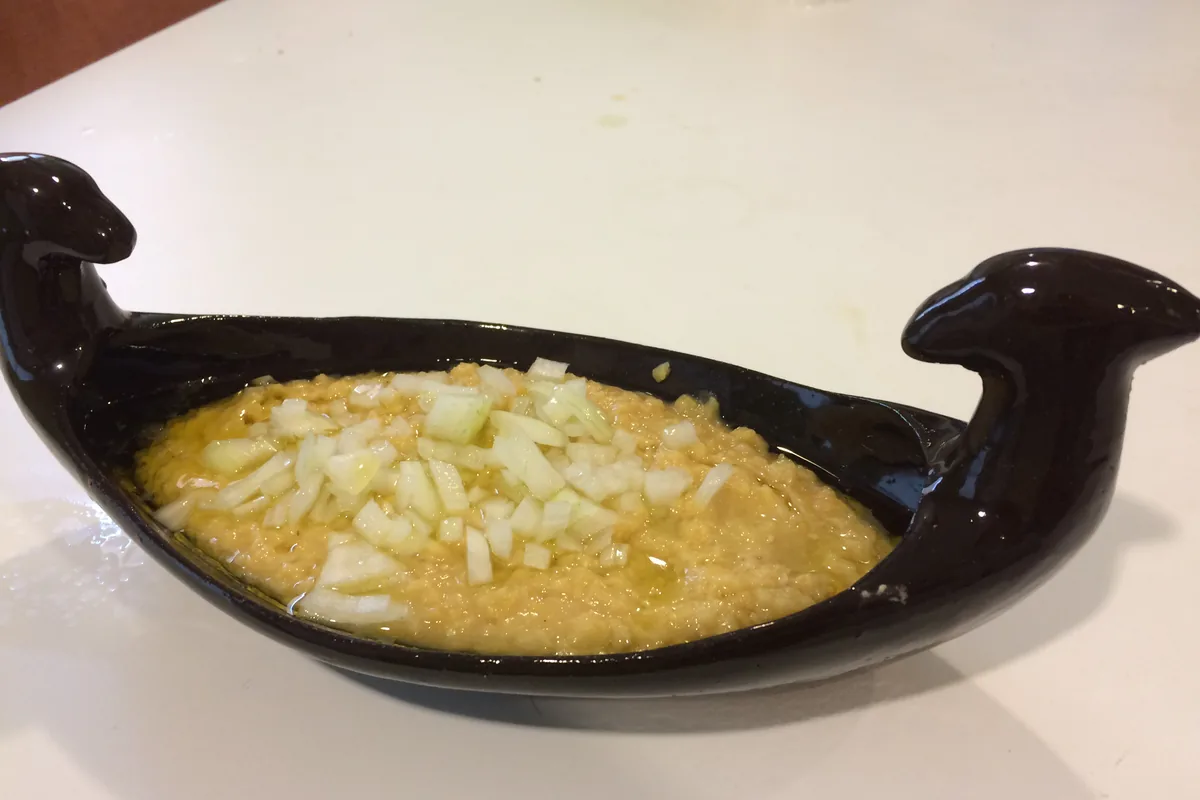
A bowl of golden greek fava purée topped with diced onion and olive oil

Santorini Meze Classic

Photo: Yannismarou, CC BY-SA 3.0, via Wikimedia Commons

The Heritage Formulary

Measured Ingredients

Estimated cost: Low — about $1–2 per serving at home (USD)

Good fava is golden and glossy, smooth as silk, and bright with lemon — never grey, grainy or dull.

Execution Methodology & Culinary Technique

Step-by-Step Cooking Guide

Active 55m
P

Prep Stage: Rinse and Chop

10 Mins • Knife Work

Rinse the yellow split peas in cold water until the water runs clear, then drain them. Quarter the onion, chunk the carrot, peel the garlic, and dice the red onion for the topping. Measure out the olive oil, lemon juice, salt, capers and oregano so everything is ready before the pot gets hot.

Maestro Tip: Rinsing the peas well keeps the purée from turning cloudy and removes any dust or grit.

  1. 1

    Rinse and Start the Peas

    5 Mins High heat to bring to a boil, ~100°C (212°F)

    Put the rinsed peas, quartered onion, carrot and garlic in a medium pot, pour in the water and bring to a rolling boil over high heat. Skim off the white foam that rises to the surface.

    Skimming the foam in the first minutes is what keeps the finished fava clear and golden instead of grey.

    Done when: The water is boiling and the foam has been skimmed away.

  2. 2

    Simmer Until the Peas Fall Apart

    35 Mins Gentle simmer, ~95°C (203°F)

    Turn the heat down to a gentle simmer, half-cover the pot with a lid and cook for 35 minutes, stirring now and then and skimming any foam that appears. The peas should collapse completely into a thick, porridge-like mass, and the onion and carrot should be soft enough to crush with a spoon.

    Keep the simmer gentle and stir the bottom of the pot — peas catch and burn very quickly once they thicken.

    Done when: The peas have dissolved and the mixture is thick, with no whole peas left.

  3. 3

    Blend Until Silky

    5 Mins Off the heat (purée ~90°C / 194°F)

    Take the pot off the heat and let it cool for 2 minutes. Blend the mixture with a stick blender, moving it slowly through the pot, until it is completely smooth and glossy. If it is thicker than soft mashed potato, blend in a splash of hot water.

    Blend in short bursts and keep the blender head under the surface, or the hot purée will splash.

    Done when: The purée is smooth, glossy and falls from a spoon in a slow ribbon.

  4. 4

    Whisk in Lemon and Olive Oil

    5 Mins Warm, ~60°C (140°F)

    Whisk half of the olive oil and the lemon juice into the warm purée, then taste and add salt a little at a time. The fava should taste bright and rounded, never flat or sharp.

    Add the lemon after blending, not before — its fresh flavour fades if it is cooked.

    Done when: The purée tastes bright, with the lemon and olive oil clear in the flavour.

  5. 5

    Top and Serve

    5 Mins Warm, ~60°C (140°F)

    Spoon the fava into a shallow bowl and smooth the top with the back of a spoon. Scatter the diced red onion and capers over it, drizzle the remaining olive oil in a slow spiral, and finish with a pinch of oregano. Serve warm with bread for dipping.

    Fava firms up as it cools, so serve it warm and a little looser than you think it should be.

    Done when: The bowl is golden, glossy, and scattered with onion, capers and a green thread of oil.

Finishing Touches & Plating

Spoon the warm fava into a shallow bowl, smooth the top, and finish with red onion, capers, a spiral of olive oil and a pinch of oregano. Serve at once with warm bread and olives, while the purée is still soft and glossy.

Nutritional Physiology & Benefits

Nutrition

Energy

270

kcal / serving

Protein

13g

Complete AA

Carbs

35g

Complex

Fats

10g

Healthy

Per serving (6 servings · 1 serving ≈ 150 g)
Energy270 kcal
Protein13 g
Carbohydrates35 g
Fat10 g
Fibre14.0 g
Sugar5.7 g
Sodium413 mg
Per 100g
Energy180 kcal
Protein8.6 g
Carbohydrates23.1 g
Fat6.6 g
Fibre9.3 g
Sugar3.8 g
Sodium275 mg

Nutrition values are estimated — calculated from USDA FoodData Central values for the listed ingredients.

Vitamins & minerals: Folate and iron (yellow split peas), vitamin A (carrot), vitamin C (lemon), potassium (split peas and onion).

Plant Protein That Fills You

Yellow split peas give about 13 g of protein per serving, so a bowl of fava with bread is a genuinely filling snack or light meal.

Fibre for Steady Digestion

Split peas are naturally rich in fibre — about 15 g per serving — which supports digestion and keeps you full for longer.

Good Fats, Nothing Complicated

The only fat in the dish is olive oil, the backbone of the Mediterranean table — no cream or butter is needed to make the purée feel rich.

Food Pairings

What to Eat With

To optimize nutrient absorption and elevate the sensory depth, pair with these authentic accompaniments:

Sides

Warm Pita Bread

Soft, warm pita is made for scooping fava — the bread turns a small bowl of purée into a satisfying meal.

Vegetables

Olives and Capers

Salty olives and capers are the classic counterpoint to the smooth, earthy peas — a little salt and sharpness against all that softness.

Drinks

A Glass of White Wine

A dry, crisp white wine, the kind poured on Santorini itself, lifts the lemon in the fava and refreshes the palate.

Full Menus

As the Heart of a Meze Table

On a Greek meze table fava sits beside grilled octopus, salads and bread — a golden, silky anchor for the whole spread.

Complete menu

Serve the warm fava with pita bread, olives and a small Greek salad, and finish with a glass of dry white wine — the classic Santorini meze table.

Digestive Guardrails

What NOT to Combine

To prevent digestive distress, sluggishness, or palate clash, avoid pairing the dish with these elements:

A Heavy Cream Sauce on the Side

Fava is already rich from the olive oil, and a creamy sauce on the same plate makes the meal feel heavy and greasy. Keep the accompaniments fresh and sharp instead. This is general guidance, not medical advice.

Overcooking Into a Grey Paste

Boiling the peas hard for too long, or skipping the skimming, turns the purée grey and dull. A gentle simmer and a skimmed pot keep it golden — the colour is part of the dish.

General information only, not medical advice — consult a doctor for personal dietary decisions.

Who Should Eat It

Who Should Eat

  • General adultsAn ideal meze or light snack — filling, high in fibre, and easy to make ahead.
  • ChildrenVery suitable from about age 2; the purée is smooth, soft and easy to eat. Keep the raw onion topping light for small children.
  • ElderlyExcellent — smooth, easy to swallow, and easy to digest.
  • Pregnant womenGenerally suitable; the split peas add folate and iron. Keep the salt moderate and the fava freshly made.
  • Breastfeeding womenGenerally suitable; the protein, fibre and fluids support recovery — eat a satisfying portion with bread.
  • AthletesA good light pre-training meal: complex carbs for steady energy, eaten 2–3 hours before exercise.
  • Weight gainA good choice — take a second helping with plenty of bread.
  • Weight lossA good choice — the fava is filling for its calories; keep the bread modest and load up on the purée itself.

Health Conditions — Adjust or Avoid

Conditions

  • DiabetesSplit peas raise blood sugar slowly, which is helpful — but watch the bread on the side and ask your clinician about portion size.
  • High blood pressureMost of the sodium comes from the capers and added salt; rinse the capers well and season lightly. Ask your clinician about a suitable portion.
  • Kidney diseaseLimit the portion (potassium from split peas); ask your clinician about portion size.
  • GoutEat occasionally and in smaller portions — legumes are moderately high in purines.
  • Stomach issuesUsually gentle, but the raw onion and lemon can irritate a sensitive stomach — use less onion and a little less lemon.
  • Cardiovascular diseaseA good choice — the fava is low in saturated fat and rich in fibre.
  • Fatty liverKeep the portion modest and favour the fava over extra bread.
  • Food allergiesNaturally vegan, dairy-free and gluten-free — no milk, egg, wheat or nuts in the recipe.
  • Special therapeutic dietsIf you follow a prescribed low-sodium or low-potassium diet, rinse the capers, season lightly and take a smaller portion, and check with your clinician.

If you have a medical condition, consult your doctor before changing your diet.

Storage & Use

Storage & Use

How to store
Cool quickly and store in an airtight container, with a thin layer of olive oil on top.
In the fridge
4 days.
In the freezer
2 months.
How to reheat
Reheat gently in a pot, stirring often, with a splash of water; reheat to 74°C (165°F). Whisk in a little olive oil and lemon at the end.
Freezing recommended
Yes — fava freezes well for up to 2 months; freeze before adding the onion topping.
Signs it has spoiled
Sour smell, mould on the surface, or a sharp fermented taste.

More recipes to explore

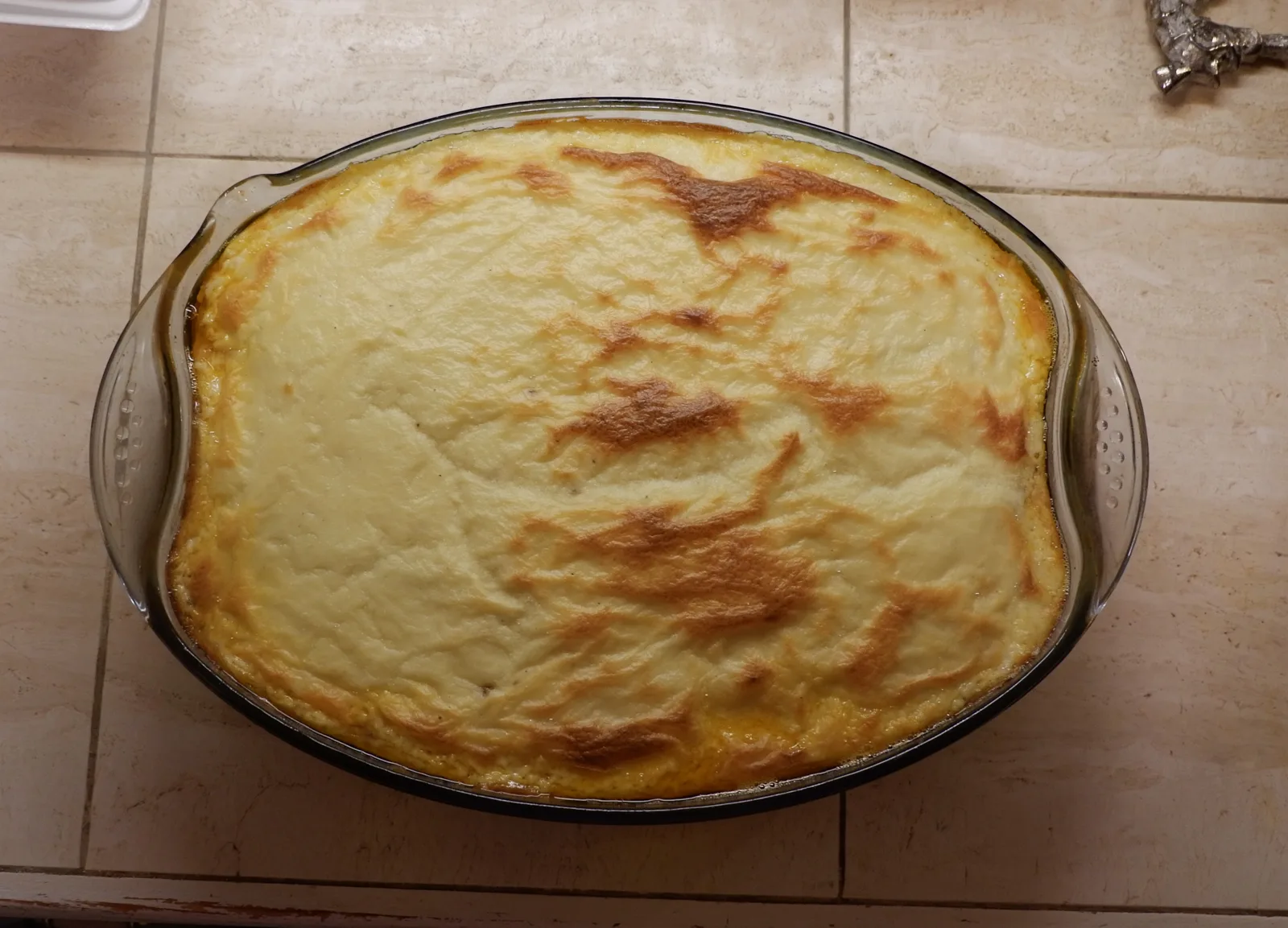
A whole Greek moussaka in a glass baking dish, its bechamel top baked golden brown with darker patches Greece flag Greece 2h
Dinner •Greek Classic

Greek Moussaka

Greek moussaka is a layered bake of fried aubergine and potato, a cinnamon-spiced beef sauce, and a thick bechamel that turns deep gold in the oven. It is the dish most Greek tavernas are judged by, and it is made for sharing at a slow family dinner. One serving is about 412 g.

Comfort & Warmth

A hearty layered bake built around aubergine, potatoes and a spiced meat sauce under a creamy bechamel topping.

Pairs Well With
Serve with a crisp Greek salad, warm bread and a glass of red wine.
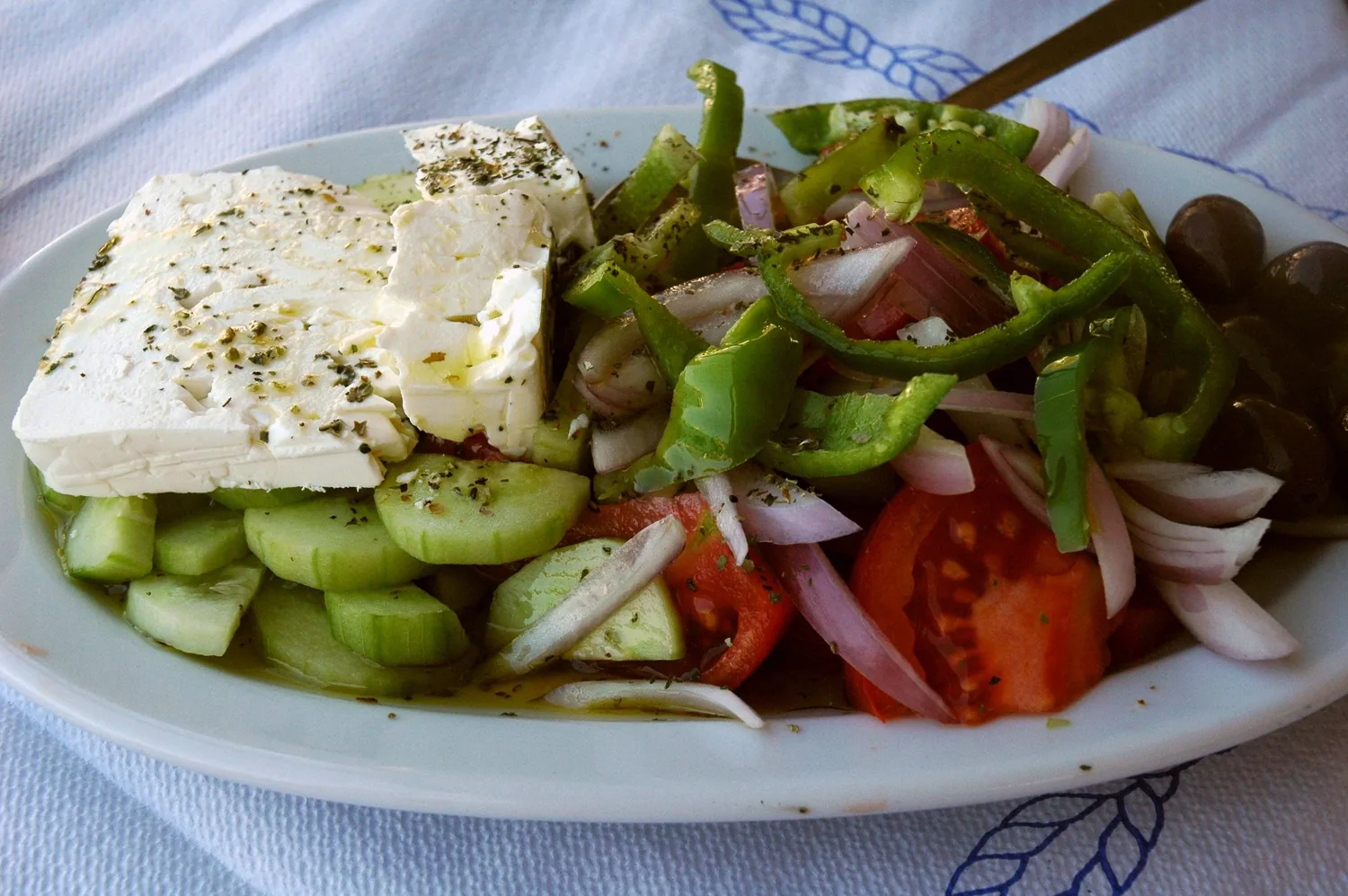
Greek salad (horiatiki) with a slab of feta sprinkled with oregano, Kalamata olives, tomato wedges, cucumber and red onion on a white plate Greece flag Greece 20m
Lunch •Aegean Table Classic

Greek Salad

This Greek salad recipe is the real horiatiki: chunky ripe tomatoes, peeled cucumber, red onion and green pepper, with Kalamata olives and a whole slab of feta on top, dressed with extra-virgin olive oil and dried Greek oregano. There is no lettuce and no heavy dressing — just summer vegetables at their best, ready in twenty minutes. One serving is about 411 g.

Fresh Summer Lunch

Crisp garden vegetables, salty feta and Kalamata olives under good olive oil — a bright, satisfying lunch with no cooking at all.

Pairs Well With
Crusty bread & grilled fish
Quick Prep (<30m)
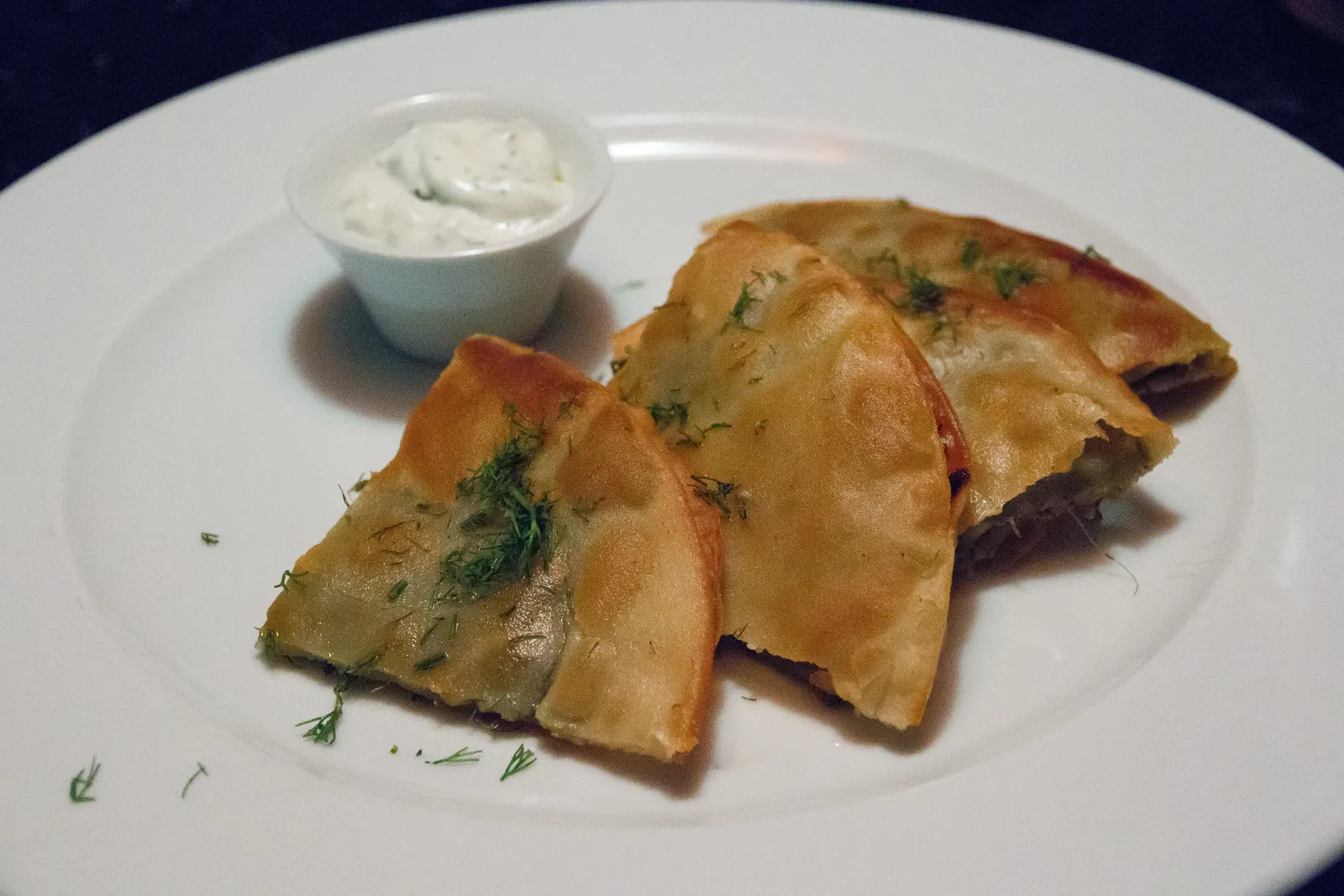
Golden spanakopita triangles sprinkled with fresh dill, served on a white plate with a small bowl of tzatziki Greece flag Greece 1h 20m
Lunch •Greek Bakery Classic

Spanakopita

This spanakopita recipe is the Greek spinach pie found in every bakery in Greece: paper-thin filo brushed with olive oil, layered over a filling of wilted spinach, salty feta, ricotta, leeks and a generous handful of fresh dill, then baked until the top shatters and the inside stays soft and savoury. It is the pie Greeks eat for lunch, take on picnics and set out on a mezze table. One serving is about 220 g.

Crisp Filo, Spinach & Feta

Layers of olive-oil-brushed filo wrapped around a spinach, feta, dill and leek filling, baked until golden and crisp.

Pairs Well With
Greek salad, tzatziki & lemon wedges
A terracotta bowl of thick white tzatziki with cucumber and a black olive, with a spoon Greece flag Greece 25m
Snack & Tea •Greek Meze Classic

Tzatziki

This tzatziki recipe is the real Greek version: thick strained yogurt, cucumber grated and squeezed bone dry, raw garlic, a thread of olive oil and a handful of dill. No cooking at all — just grating, squeezing and stirring — and the result is cool, creamy and sharp enough to cut through grilled meat. One serving is about 120 g.

Cool & Creamy

Thick Greek yogurt folded with grated cucumber, garlic and dill — the cool white dip at the heart of every Greek meze.

Pairs Well With
Spoon over grilled meat, or serve as a dip with warm pitta and raw vegetables.

The Dinner Gazette

Never wonder what’s for dinner again

One email a week with easy dinner ideas from around the world — ingredients, steps and nutrition, tested in our kitchen first.

Delivered every Thursday morning. Unsubscribe anytime.