Curated recipes from 193 countries  •  New seasonal Mediterranean issue out now

Overview

Guatita

Ecuadorian Tripe Stew in Peanut Sauce, Guatita Ecuatoriana

Guatita is Ecuador's beloved beef tripe stew, simmered until tender in a creamy peanut sauce with potatoes, achiote and cumin, and served with white rice, salad and a boiled egg. This guatita recipe makes 4 generous plates. One serving is about 915 g. Unlike the tripe soups of Honduras and Colombia, guatita is a thick stew, not a soup — the peanut sauce is the whole point, and the plate is finished with rice rather than extra broth.

Guatita takes its name from the Spanish word guata, meaning belly, and it is widely considered a national dish of Ecuador. The tripe is cleaned several times in a lemon-juice brine, then cooked for a long time until tender and finished in a peanut sauce with potatoes, a sauteed onion, garlic, cumin and achiote base known as refrito. It is served hot with rice and salad, and in Ecuador it is a classic weekend lunch and a famous cure for a heavy night out.

Pairs well with: White rice, a simple lettuce-tomato-avocado salad, and a glass of fresh juice.

Provenance

Ecuador flag Ecuador

Ecuadorian National Dish

Latin America & Caribbean

Time Dedication

3h 10m

40m prep • 150m cook

Batch Yield

4 Servings

969 kcal per serving

1 serving ≈ 915 g

Technical Skill

Advanced

Hard (Long Simmer)

Meal Timing & Digestive Fit

Breakfast

Not Advised

Lunch

Prime Metabolic Fit

Dinner

Ideal Hearty Main

Snack & Tea

Inappropriate

Occasions: Weekend lunch, Family gatherings, Festive meals Cost: Low — about $3–4 per serving at home
Tags: Beef Savory Rich
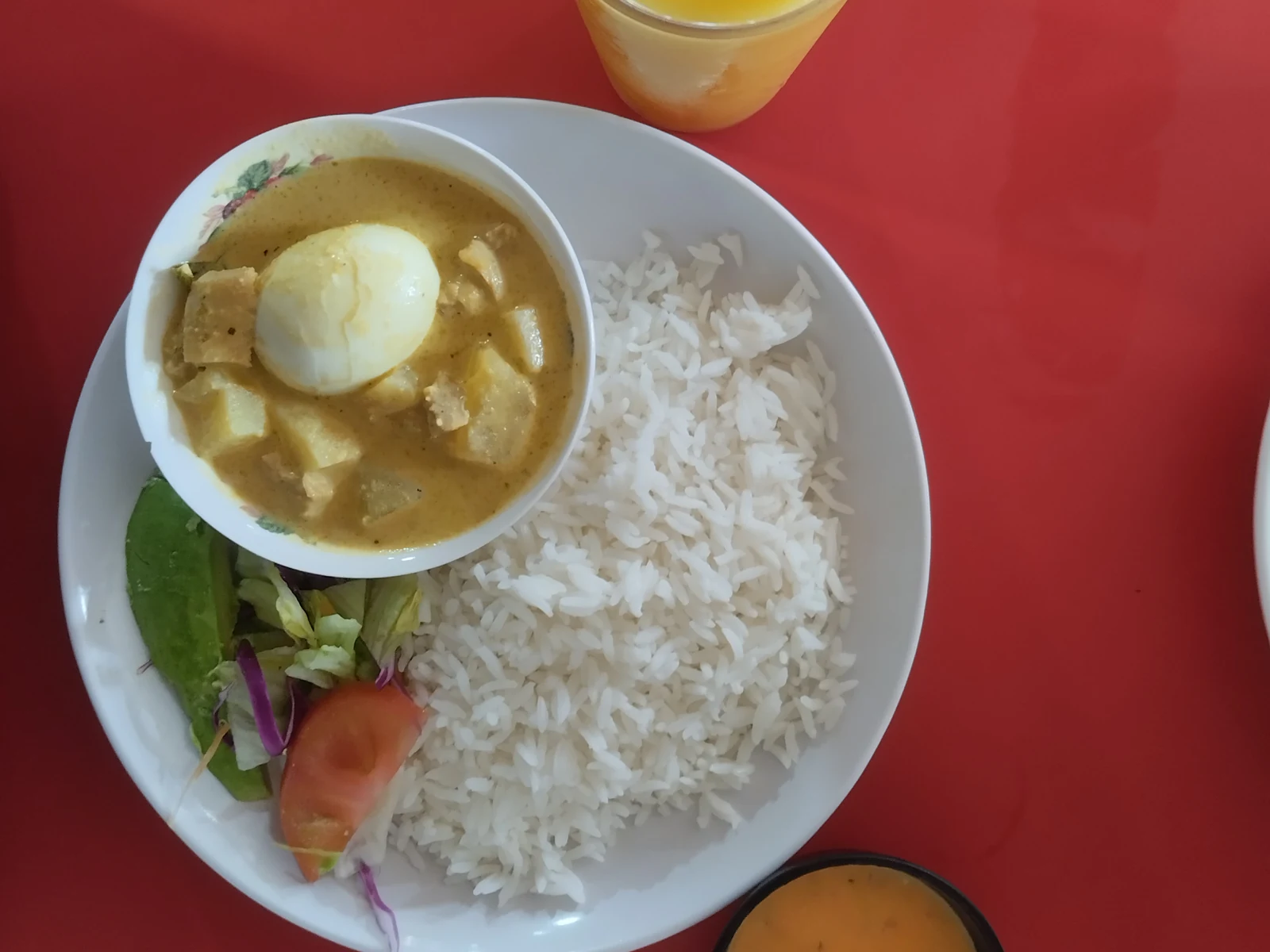
Overhead view of a plate of guatita: a bowl of beef tripe stew in peanut sauce topped with a whole boiled egg, beside white rice and a small salad, with a glass of juice at the edge of the frame.

Ecuadorian National Dish

Photo: TupakAmaruIshkay, CC BY-SA 4.0, via Wikimedia Commons

The Heritage Formulary

Measured Ingredients

Estimated cost: Low — about $3–4 per serving at home (USD)

Cooked the traditional way: tripe simmered until tender, then finished in a peanut and achiote sauce.

Execution Methodology & Culinary Technique

Step-by-Step Cooking Guide

Active 3h 10m
P

Prep Stage: Tripe, Refrito and Peanut Sauce

40 Mins • Tripe, Refrito and Peanut Sauce

Rinse the tripe, trim the fat and cut it into bite-size squares, then soak it in cold water with the lemon juice for 30 minutes. While it soaks, dice the potatoes, onion, tomato and pepper, crush the garlic, and whisk the peanut butter with the milk until smooth. Rinse the rice and set the eggs in a pan of cold water.

Maestro Tip: Do not skip the lemon soak: it freshens the tripe and takes away any strong smell before the long simmer.

  1. 1

    Clean the tripe and soak it in lemon

    20 Mins + 30 Mins soak Cool water, about 20°C (68°F)

    Rinse the tripe under cold running water, trim away any hard fat, and cut it into bite-size squares. Put it in a large bowl, cover with cold water, add the lemon juice, and leave it to soak for 30 minutes, then drain and rinse again.

    If the tripe still smells strong after the soak, rinse it once more in fresh lemon water — the finished stew should smell nutty, never sharp.

    Done when: The tripe is clean, pale and free of any strong smell.

  2. 2

    Simmer the tripe until tender

    120 Mins Gentle simmer, about 93°C (200°F)

    Put the tripe in a large pot with 2 litres of fresh water, the 3 crushed garlic cloves and a few cilantro stems. Bring to a gentle boil, skim off any foam, then lower the heat, cover, and simmer for about 2 hours until the tripe is completely tender. Lift the tripe out and keep 500 ml of the cooking liquid; discard the rest.

    Keep the pot at a lazy simmer, not a rolling boil — hard boiling tightens tripe and makes it rubbery.

    Done when: A piece of tripe yields easily when pressed between finger and thumb, with no chewiness left.

  3. 3

    Cook the refrito

    10 Mins Medium heat, about 175°C (350°F)

    Warm the oil in a wide pot, stir in the achiote powder, and cook the white onion, green pepper, minced garlic and tomato for about 8 minutes until soft and golden. Stir in the cumin and oregano and cook 1 minute more until fragrant.

    Let the onion truly soften before the tomato goes in — a pale, rushed refrito makes a thin, sharp sauce.

    Done when: The refrito is soft, glossy and deep golden-orange.

  4. 4

    Blend the peanut sauce

    5 Mins Room temperature, about 22°C (72°F)

    Spoon half the refrito into a blender with the peanut butter, the milk and 250 ml of the reserved cooking liquid, and blend until completely smooth. Pour it back into the pot with the rest of the refrito and stir well.

    Blend longer than you think — 2 full minutes — so the sauce turns silky instead of grainy.

    Done when: The sauce is smooth, thick and pale golden, with no peanut flecks.

  5. 5

    Simmer the stew with the potatoes

    30 Mins Gentle simmer, about 93°C (200°F)

    Add the simmered tripe, the diced potatoes and the remaining 250 ml of cooking liquid to the pot. Simmer gently for 25 to 30 minutes, stirring now and then, until the potatoes are tender and the sauce thickens enough to coat a spoon. Taste and add the salt.

    If the sauce gets too thick, loosen it with a splash of the reserved liquid, not plain water, so the peanut flavour stays strong.

    Done when: The potatoes are soft, the tripe is meltingly tender, and the sauce clings to a spoon.

  6. 6

    Cook the rice, boil the eggs and plate up

    20 Mins Boiling water, 100°C (212°F)

    While the stew simmers, cook the rinsed rice in salted water until fluffy, and boil the eggs for 10 minutes, then cool, peel and halve them. Toss the lettuce, salad tomato, red onion and avocado into a small salad. Spoon the rice onto each plate, ladle the stew into a bowl beside it, add the salad, and lay a halved boiled egg on top of the stew.

    Fluff the rice with a fork, not a spoon, so the grains stay separate beside the rich stew.

    Done when: The plate is hot, the rice is fluffy, the egg is set, and the stew is thick and glossy.

Finishing Touches & Plating

Scatter the chopped cilantro over the stew and serve at once, while the sauce is still glossy and the rice is hot. A glass of fresh juice on the side is the classic Ecuadorian finish.

Nutritional Physiology & Benefits

Nutrition

Energy

969

kcal / serving

Protein

46g

Complete AA

Carbs

105g

Complex

Fats

42g

Healthy

Per serving (4 servings · 1 serving ≈ 915 g)
Energy969 kcal
Protein46 g
Carbohydrates105 g
Fat42 g
Fibre9.3 g
Sugar12.5 g
Sodium821 mg
Per 100g
Energy106 kcal
Protein5 g
Carbohydrates11.5 g
Fat4.6 g
Fibre1 g
Sugar1.4 g
Sodium90 mg

Nutrition values are estimated — calculated from USDA FoodData Central values for the listed ingredients.

Vitamins & minerals: Provides vitamin B12, iron, zinc and selenium from tripe, plus vitamin E and magnesium from peanuts and vitamin C from the salad.

High in protein

One serving gives about 46 g of protein from tripe, egg and peanuts, which supports muscle maintenance and keeps you full for hours.

Steady, lasting energy

Potatoes, rice and peanuts supply slow-release carbohydrates and healthy fats, so the meal fuels a long afternoon rather than a quick spike.

Iron and vitamin B12

Tripe is naturally rich in iron and vitamin B12, nutrients that help carry oxygen in the blood and support normal energy levels.

Food Pairings

What to Eat With

To optimize nutrient absorption and elevate the sensory depth, pair with these authentic accompaniments:

Sides

White rice

Fluffy white rice is the classic partner: it soaks up the peanut sauce and balances the richness of the stew with plain, mild starch.

Vegetables

Lettuce, tomato and avocado salad

The cool, crisp salad cuts through the creamy sauce, and the avocado adds a buttery note that matches the peanuts.

Drinks

Fresh fruit juice

A glass of fresh orange or passion fruit juice is the traditional drink with guatita, and its brightness lifts the rich, nutty stew.

More Pairings

Pickled red onion (encurtido)

A spoonful of sharp pickled onion on the side gives a sour crunch that wakes up the peanut sauce between bites.

Complete menu

Guatita with white rice and a lettuce-tomato-avocado salad, pickled red onion on the side and a glass of fresh orange juice — a full Ecuadorian lunch.

Digestive Guardrails

What NOT to Combine

To prevent digestive distress, sluggishness, or palate clash, avoid pairing the dish with these elements:

Peanut allergy

This dish is built on peanut butter, so it is not suitable for anyone with a peanut allergy — even a small amount can trigger a serious reaction. This is general information, not medical advice.

Undercooked tripe

Tripe must simmer until fully tender, about 2 hours; short cooking leaves it tough and chewy, and undercooked offal carries a higher food-safety risk. When in doubt, simmer it longer. This is general information, not medical advice.

General information only, not medical advice — consult a doctor for personal dietary decisions.

Who Should Eat It

Who Should Eat

  • General adultsA rich, filling lunch for most adults; one plate is a full meal, so keep the rest of the day lighter.
  • ChildrenChildren can eat it once the tripe is fully tender and the pieces are cut small; skip the salad onion for younger children.
  • ElderlyGood for older adults who need protein, provided the tripe is simmered until very soft and easy to chew.
  • Pregnant womenGenerally fine in normal portions, but the dish is salty and rich, so keep portions moderate and ask your clinician if unsure.
  • Breastfeeding womenFine in normal portions; the egg, milk and peanuts add protein and energy, which many nursing mothers need.
  • AthletesThe high protein and energy suit a hard training day, and the rice refills glycogen after exercise.
  • Weight gainA generous, calorie-dense plate that helps add weight when eaten regularly as a main meal.
  • Weight lossTasty but heavy: about 969 kcal a plate, so take a smaller portion, go easy on the rice, and skip the second helping.

Health Conditions — Adjust or Avoid

Conditions

  • DiabetesRice and potatoes add up to about 105 g of carbohydrate per serving; take a smaller rice portion and ask your clinician about fitting it into your plan.
  • High blood pressureOne serving carries about 821 mg of sodium; season lightly, skip extra salt at the table, and ask your clinician if you are watching salt.
  • Kidney diseaseTripe, peanuts and egg are high in protein and minerals, so portion control matters; ask your clinician before eating it regularly.
  • GoutTripe is organ meat and contains purines, so people with gout should eat it only occasionally and in small portions, and ask their clinician.
  • Stomach issuesThe stew is soft and easy to digest once the tripe is fully tender, but the rich peanut sauce can feel heavy; eat slowly and in modest portions.
  • Cardiovascular diseaseThe dish is rich in saturated fat from tripe and peanut butter; enjoy it as an occasional meal rather than a daily habit, and ask your clinician if unsure.
  • Fatty liverHigh in fat and calories, so keep portions small and balance the plate with plenty of salad rather than extra rice.
  • Food allergiesContains peanut, egg and milk — three major allergens. Anyone allergic to any of them must avoid this dish entirely.
  • Special therapeutic dietsNot suitable for low-protein, low-fat or peanut-free therapeutic diets; ask your clinician or dietitian for a tailored alternative.

If you have a medical condition, consult your doctor before changing your diet.

Storage & Use

Storage & Use

How to store
Cool the stew and the rice separately, then store in sealed containers.
In the fridge
Stew keeps 3 days in the fridge; rice keeps 2 days. Keep the salad and boiled eggs separate.
In the freezer
The stew (without potatoes) freezes well for up to 2 months; potatoes turn grainy when frozen, so freeze the sauce and tripe only.
How to reheat
Reheat the stew gently on the stove until it reaches 74°C (165°F), stirring in a splash of milk or water if it has thickened.
Freezing recommended
Yes for the stew without potatoes; no for the rice, salad or boiled eggs.
Signs it has spoiled
Sour smell, slimy texture on the tripe, or a grey film on the sauce — throw it away if any of these appear.

More recipes to explore

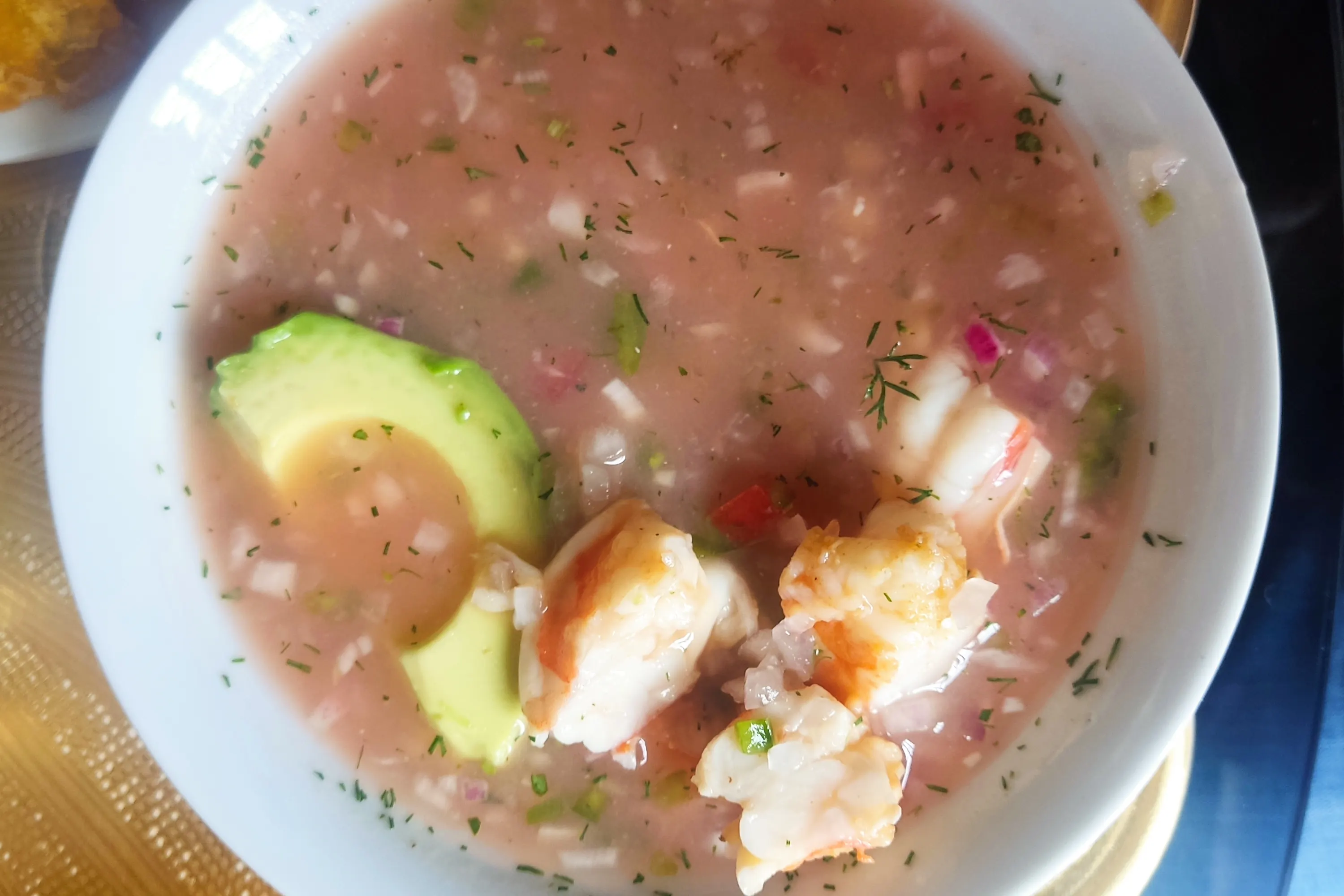
A white bowl of Ecuadorian shrimp ceviche in pink tomato-citrus sauce with cooked shrimp, red onion, cilantro and an avocado slice Ecuador flag Ecuador 30m
Lunch •Coastal Ecuador

Ecuadorian Ceviche

Ecuadorian ceviche is a bowl of poached shrimp in a pink-orange sauce of tomato, lime and orange juice, with red onion and cilantro. Unlike the Peruvian version, where raw fish is cured in lime juice, the shrimp here is cooked first, so the dish is saucy, cold and gentle rather than sharp. One serving is about 341 g.

Light & Fresh

Poached shrimp in a bright lime, orange and tomato sauce, served chilled with crunchy sides.

Pairs Well With
Chifles, popcorn and avocado slices
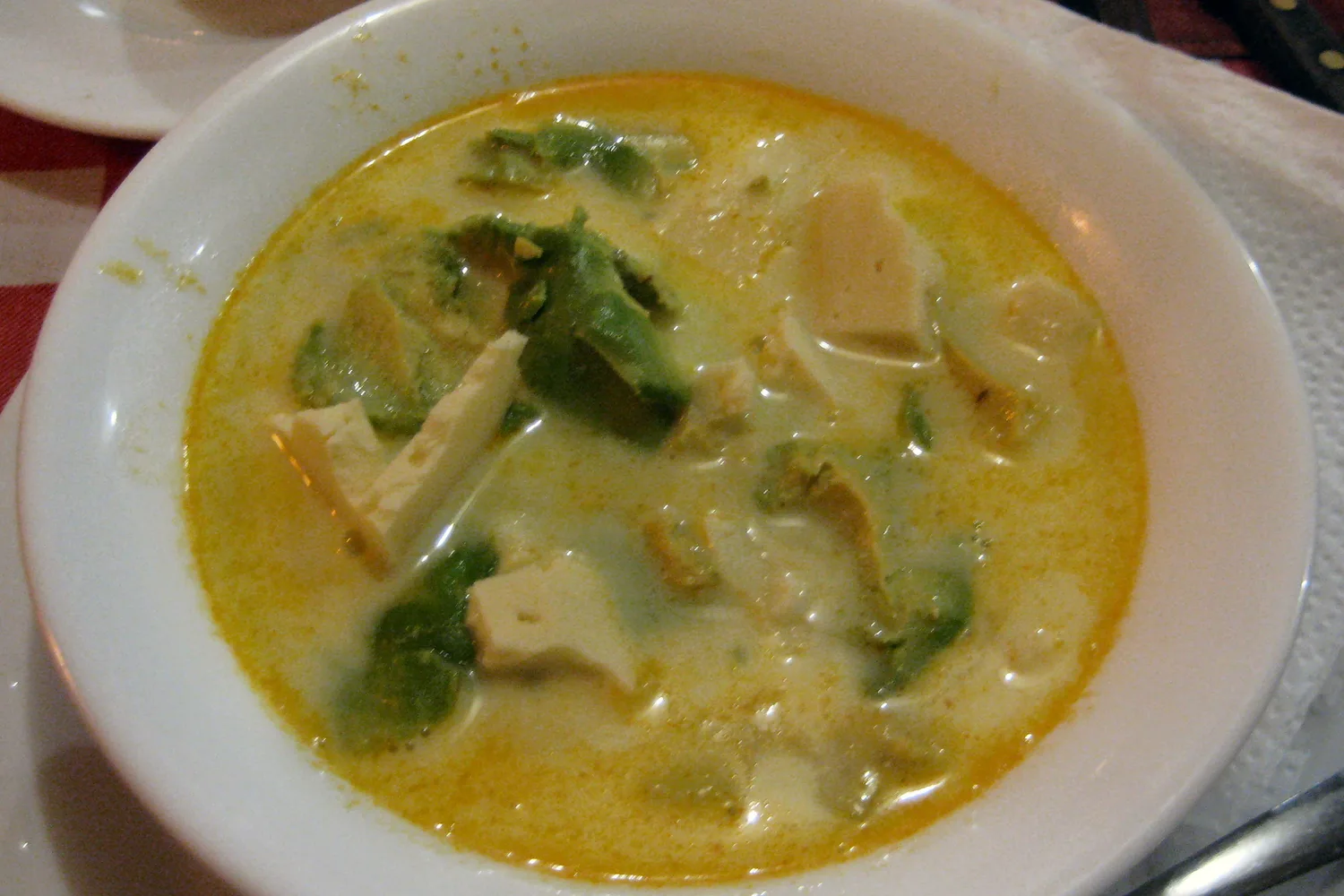
A bowl of golden locro de papa, Ecuadorian potato and cheese soup, topped with avocado chunks and cubes of white cheese Ecuador flag Ecuador 55m
Dinner •Andean Heritage

Locro de Papa

Locro de papa is Ecuador's golden potato and cheese soup, thickened by the potatoes themselves and finished with creamy avocado and crumbled queso fresco. One serving is about 675 g. It is a one-pot, meat-free dinner that tastes like the cool Andean evenings it comes from.

Comfort & Warmth

A thick, golden potato and cheese soup from the Ecuadorian highlands, finished with fresh avocado.

Pairs Well With
Crusty bread and a simple lettuce and tomato salad, with hot panela water or herbal tea to drink.
Soups & Broths
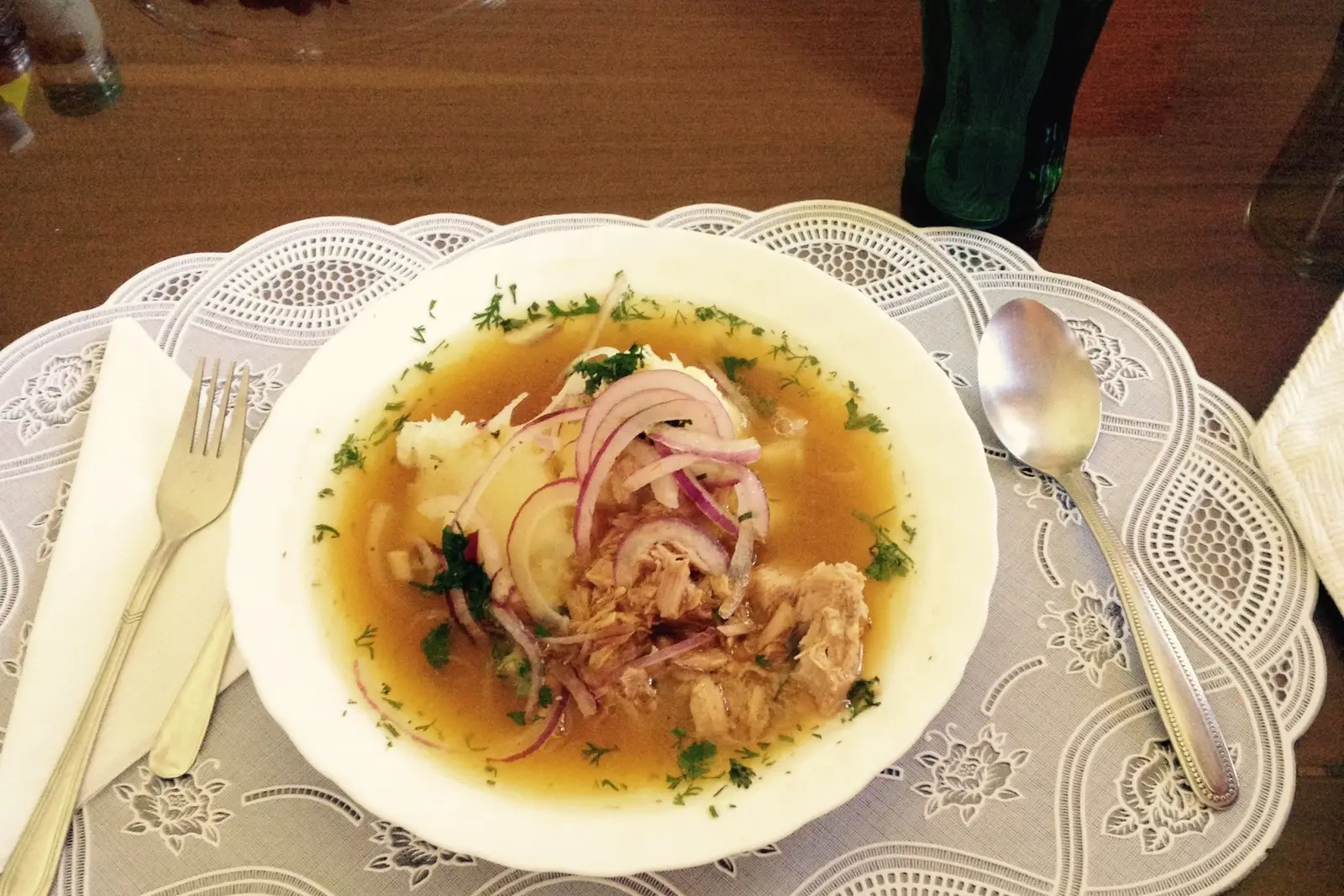
A bowl of encebollado with flaked tuna, pickled red onion rings, yuca and golden broth, sprinkled with cilantro Ecuador flag Ecuador 1h 20m
Lunch •Guayaquil Heritage

Encebollado

This encebollado recipe is Ecuador's beloved coastal soup: fresh albacore tuna simmered in a tomato, onion and cumin broth with tender chunks of yuca, then ladled into bowls under a bright mound of lime-pickled red onion and tomato. The broth is light and savoury, the onion topping is sharp and fresh, and the chifles and tostado on the side add the crunch every Ecuadorian expects. One serving is about 600 g, soup and toppings together.

Comfort & Warmth

Fresh tuna and yuca simmered in a tomato-cumin broth, finished with lime-pickled red onion and crunchy plantain chips.

Pairs Well With
Chifles (plantain chips) and tostado (toasted corn) for crunch, avocado slices, and lime wedges to squeeze over the bowl.
Soups & Broths
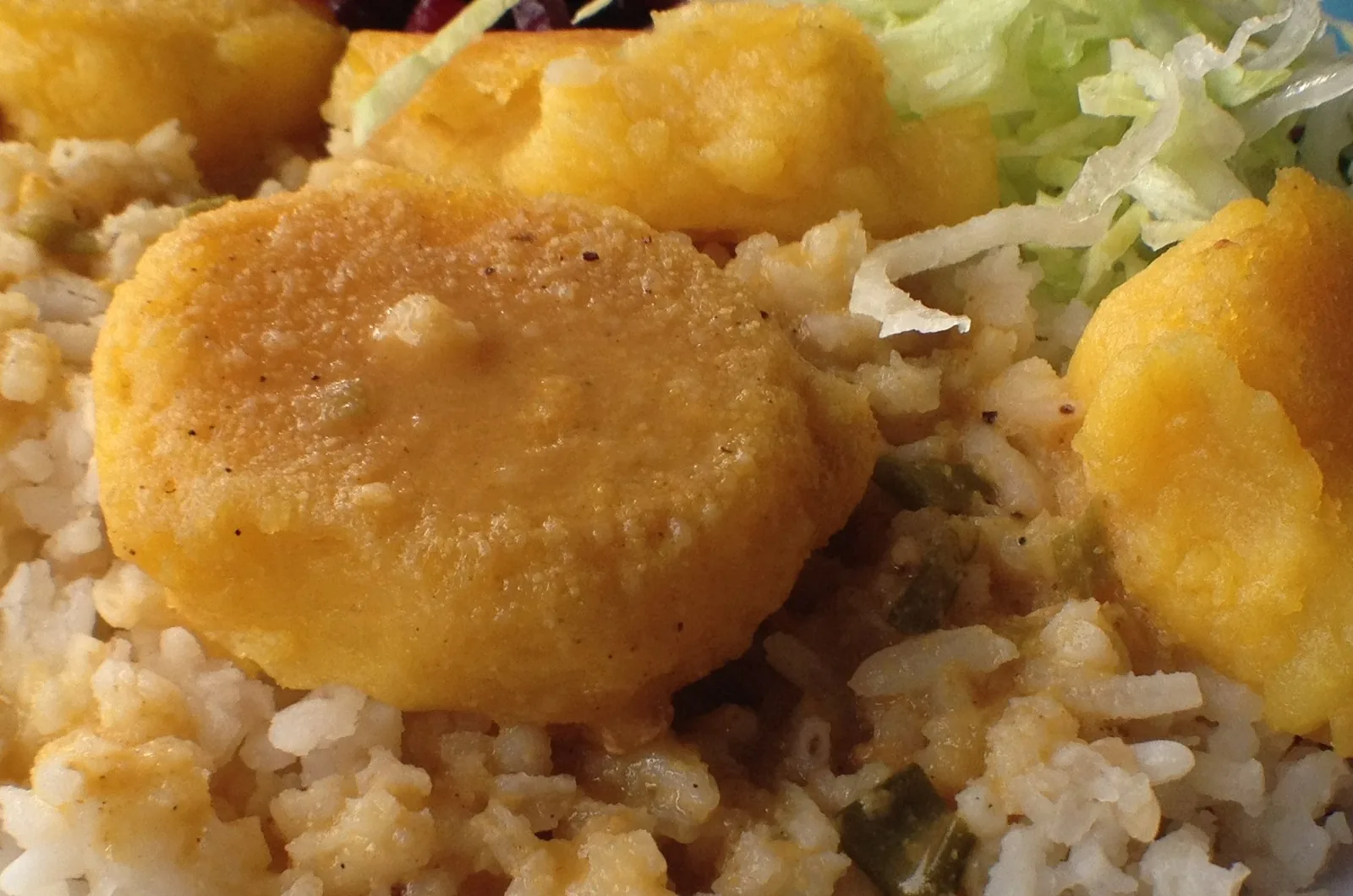
Golden llapingacho potato patties on rice with peanut sauce and shredded lettuce Ecuador flag Ecuador 1h
Lunch •Andean Heritage

Llapingacho

Llapingacho is Ecuador's most loved potato dish: mashed potato mixed with onion and annatto oil, wrapped around fresh cheese, flattened into cakes and fried until the outside is crisp and golden and the centre turns gooey. It is served with a fried egg, peanut sauce and a little salad. One serving is about 464 g.

Golden & Comforting

Mashed potato mixed with onion and annatto oil, stuffed with fresh cheese and fried golden.

Pairs Well With
Fried egg, peanut sauce and a fresh salad

The Dinner Gazette

Never wonder what’s for dinner again

One email a week with easy dinner ideas from around the world — ingredients, steps and nutrition, tested in our kitchen first.

Delivered every Thursday morning. Unsubscribe anytime.