Curated recipes from 193 countries  •  New seasonal Mediterranean issue out now

Overview

Hallacas

Ayaca, hayaca

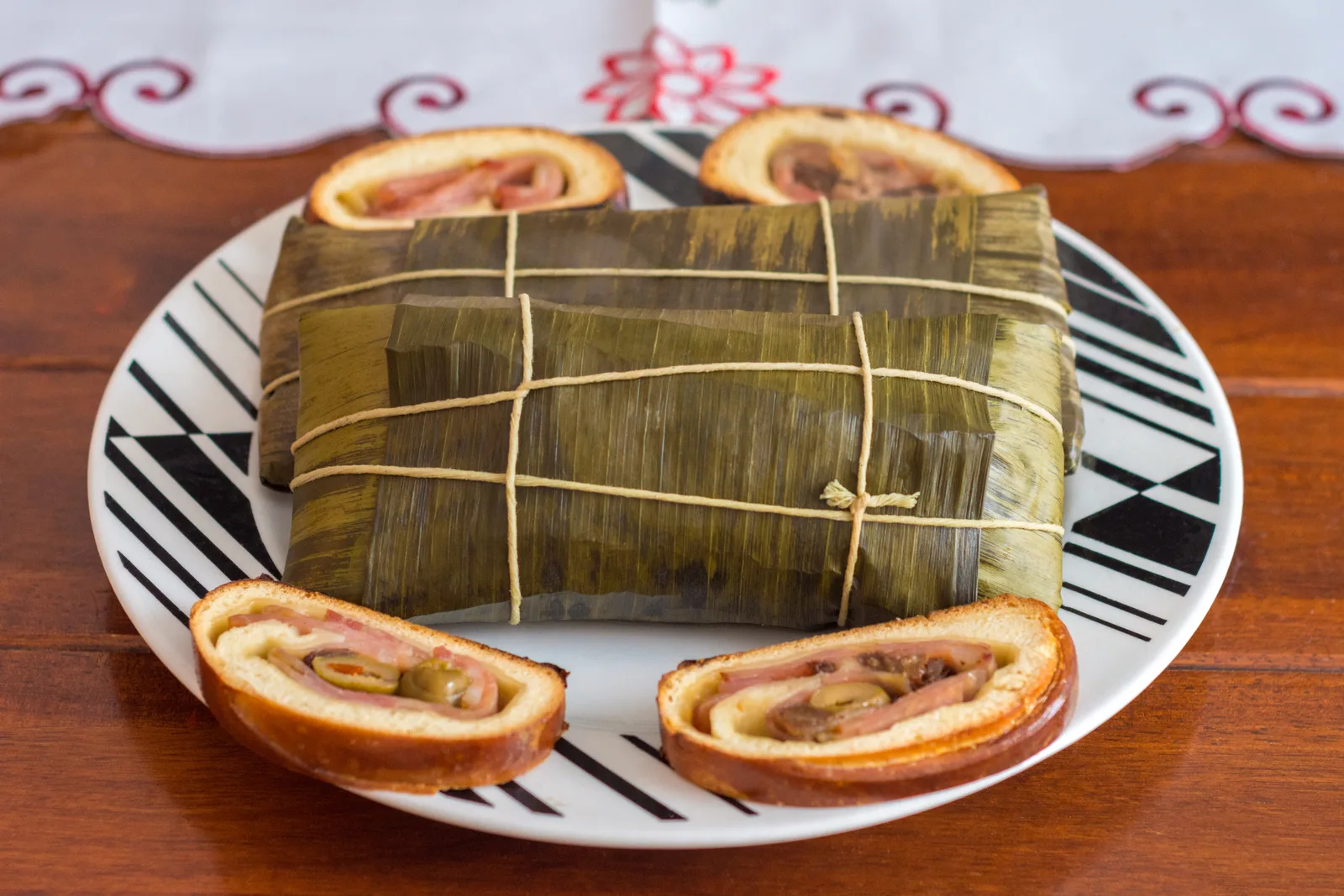
This hallacas recipe makes 12 golden parcels of annatto-coloured corn dough filled with a rich three-meat guiso, garnished with pepper, onion, olives, capers and raisins, then folded in banana leaves and boiled. One hallaca is about 300 g, a full festive dinner on its own. Hallacas are Venezuela's Christmas dish, made in big family batches and served with pan de jamón.

The name hallaca is thought to come from the Arawak word ayuaca, meaning mixed things, and the word appears in its modern sense in a 1781 document by the Italian missionary linguist Filippo Salvatore Gilij. In 1861, José A. Díaz published a recipe in his book El Agricultor Venezolano, describing corn dough wrapped in plantain leaves and cooked in water. Venezuelan writer Arturo Uslar Pietri once observed that several centuries of Venezuelan history can be found reflected in the hallaca, and in 2014 Venezuelan cooks made a hallaca about 400 feet long, a Guinness World Record.

Pairs well with: Pan de jamón and ensalada de gallina, with a glass of ponche crema

Provenance

Venezuela flag Venezuela

Venezuela's Christmas Dish

Latin America & Caribbean

Time Dedication

5h

150m prep • 150m cook

Batch Yield

12 Servings

560 kcal per serving

1 serving ≈ 300 g

Technical Skill

Advanced

Hard (A Christmas Project)

Meal Timing & Digestive Fit

Breakfast

Not Advised

Lunch

Hearty Midday Main

Dinner

Ideal Hearty Main

Snack & Tea

Inappropriate

Occasions: Christmas Eve, Christmas Day, New Year, family gatherings, December celebrations Cost: Moderate — about $4–5 per serving at home
Two hallacas wrapped in banana leaves and tied with string, served on a plate with slices of pan de jamón

Venezuela's Christmas Dish

Photo: Wilfredor, CC BY-SA 4.0, via Wikimedia Commons

The Heritage Formulary

Measured Ingredients

Estimated cost: Moderate — about $4–5 per serving at home (USD)

Made the Venezuelan Christmas way: a slow-cooked guiso of beef, pork and chicken with wine and panela, annatto-gold corn dough, garnish laid on top, folded flat in banana leaves and boiled.

Execution Methodology & Culinary Technique

Step-by-Step Cooking Guide

Active 5h
P

Prep Stage: Guiso, Annatto Oil, Leaves

2 Hrs 30 Mins • Bowls, Large Pot & Steamer

Cut all three meats into small cubes first, then chop the onion, pepper, tomato and garlic, and measure out the capers, olives, raisins and spices so the guiso comes together without stopping. While the guiso simmers, melt the lard with the annatto seeds, warm the stock, and soften the banana leaves — a leaf that bends without splitting is ready to fold.

Maestro Tip: Make the guiso the day before if you can: it tastes better the next day, and a cold guiso is much easier to spoon onto the dough.

  1. 1

    Cook the guiso

    90 Mins Medium heat, then low simmer

    Heat the olive oil in a large heavy pot over medium heat. Fry the chopped onion, red pepper and garlic for 5 minutes until soft, then add the beef, pork and chicken and fry for 8 minutes until browned on the outside. Stir in the tomato, red wine, Worcestershire sauce, cumin, oregano, black pepper, 6g of the salt, the panela, 30g of the capers, 60g of the chopped olives and 60g of the raisins. Turn the heat to low, cover, and simmer for 90 minutes, stirring now and then, until the meats are tender and the sauce is thick and dark. Taste and adjust the salt — the filling should be boldly seasoned, as the dough is mild.

    If the guiso looks watery after an hour, take the lid off for the last 20 minutes so it thickens; a runny guiso leaks out of the parcel.

    Done when: Meats tender enough to shred with a fork, sauce thick enough to mound on a spoon.

  2. 2

    Make the annatto dough

    20 Mins Warm stock, about 60°C (140°F)

    Melt the lard in a small pan over low heat, add the annatto seeds and stir for 3 minutes until the fat turns deep orange-red, then strain the seeds out and discard them. Put the cornmeal and 4g of salt in a large bowl, pour in the warm stock and the hot annatto oil, and knead for 5 minutes until you have a soft, smooth, golden dough that holds together without cracking. Cover and rest for 10 minutes so the cornmeal fully hydrates.

    The dough should feel like soft playdough: if it cracks at the edges, knead in a splash more warm stock; if it sticks to your hands, it needs a minute longer to rest.

    Done when: Smooth golden dough that spreads thin without tearing.

  3. 3

    Assemble the hallacas

    60 Mins Room temperature

    Lay a softened banana leaf flat, shiny side down, and brush it lightly with a little annatto oil. Spread about 100g of dough into a thin rectangle, about 1 cm (1/2 in) thick, leaving a border of leaf all round. Spoon about 80g of guiso down the centre, then lay the garnish on top: 2 onion rings, 2 pepper strips, 1 whole olive, a pinch of capers, a few raisins and a strip of bacon. Fold the two long sides of the leaf over the filling, fold the ends in like an envelope, and tie the parcel firmly with two lengths of string, one each way. Repeat to make 12 parcels.

    Keep a small bowl of water nearby to wet your fingers — it stops the dough sticking and lets you smooth the edges of each rectangle.

    Done when: Flat rectangular parcels, firmly tied, with no filling peeking out at the folds.

  4. 4

    Boil the hallacas

    60 Mins Boiling water, 100°C (212°F)

    Bring a very large pot of salted water to a rolling boil. Lower the parcels in gently — they should sit in a single layer or two loose layers, never packed tight — and boil for 60 minutes, turning once halfway through. The meats inside were already cooked in the guiso, so this step sets the dough and lets the leaf flavour soak in; make sure the parcels stay covered with water the whole time, topping up with boiling water if needed.

    Put a small plate on top of the parcels to keep them under the water, and keep a kettle of boiling water ready for topping up.

    Done when: Leaves darkened and glossy; a parcel opened to check shows firm, set dough that pulls cleanly away from the leaf.

  5. 5

    Rest and serve

    15 Mins Serve hot; reheat to 74°C (165°F)

    Lift the parcels out, drain well and rest for 15 minutes so the dough firms up. Cut the strings, open the leaf at the table and eat the hallaca straight from its leaf while it is hot, with pan de jamón and ensalada de gallina on the side.

    Open the leaf away from you — a puff of steam escapes when the fold is lifted.

    Done when: Steaming hot all the way through, dough firm but tender.

Finishing Touches & Plating

Open the leaf at the table and eat the hallaca while it is hot — the annatto dough first, then the dark, sweet-savoury guiso with its olives, capers and raisins, all perfumed by the banana leaf.

Nutritional Physiology & Benefits

Nutrition

Energy

560

kcal / serving

Protein

27g

Complete AA

Carbs

54g

Complex

Fats

26g

Healthy

Per serving (12 servings · 1 serving ≈ 300 g)
Energy560 kcal
Protein27 g
Carbohydrates54 g
Fat26 g
Fibre5.6 g
Sugar9.9 g
Sodium911 mg
Per 100g
Energy187 kcal
Protein9.1 g
Carbohydrates17.9 g
Fat8.7 g
Fibre1.9 g
Sugar3.3 g
Sodium304 mg

Nutrition values are estimated — calculated from USDA FoodData Central values for the listed ingredients.

Vitamins & minerals: Provides B vitamins and iron from the beef, pork and chicken, vitamin C from the red pepper and tomato, and potassium from the corn dough, onion and tomato. All nutrition values are estimated.

Three Meats, Plenty of Protein

Beef, pork and chicken together give about 27 g of protein per hallaca, which helps keep you full for hours.

A Whole Meal in One Leaf

Meat, corn dough and vegetables are all inside the parcel, so one hallaca covers protein, starch and vegetables without any sides.

Corn Dough for Steady Energy

The cornmeal dough provides slow-release carbohydrate and about 5.6 g of fibre per hallaca, with no wheat or gluten in the dough itself.

Food Pairings

What to Eat With

To optimize nutrient absorption and elevate the sensory depth, pair with these authentic accompaniments:

Sides

Pan de Jamón

The ham-and-olive Christmas bread is the classic partner — its sweet dough and salty filling echo the hallaca's own sweet-savoury balance, and it is how the Venezuelan Christmas plate is always served.

Ensalada de Gallina

Cold chicken, potato and carrot salad with mayonnaise cuts through the richness of the guiso and adds a cool, creamy contrast to the hot parcel.

Drinks

Ponche Crema

Venezuela's creamy Christmas liqueur is the traditional drink with hallacas — sweet and smooth, it matches the festive occasion rather than competing with the food.

Sauces

Hot Sauce

A few drops of picante wake up the rich, sweet guiso — the heat and vinegar lift the olives, capers and raisins instead of hiding them.

Complete menu

Serve one hallaca per person, opened in its leaf, with a slice of pan de jamón, a spoonful of ensalada de gallina and a glass of ponche crema — the full Venezuelan Christmas plate.

Digestive Guardrails

What NOT to Combine

To prevent digestive distress, sluggishness, or palate clash, avoid pairing the dish with these elements:

Very Salty Side Dishes

One hallaca already carries about 911 mg of sodium from the capers, olives, stock and salt, so avoid piling on very salty sides such as salted pork or soy-heavy sauces — the sodium adds up fast. This is general information, not medical advice.

Leaving Parcels Out Too Long

Do not leave cooked hallacas at room temperature for more than 2 hours — the meat filling is perishable and bacteria grow quickly in the warm, moist parcel. Cool them fast and refrigerate.

Unwrapping While Boiling Hot

Do not tear a parcel open straight out of the pot — trapped steam escapes suddenly and can scald your hands and face. Rest the hallacas for 15 minutes and open the leaf away from you.

General information only, not medical advice — consult a doctor for personal dietary decisions.

Who Should Eat It

Who Should Eat

  • General adultsOne hallaca is a complete, very filling festive meal — most people will not want a second.
  • ChildrenChildren usually love the soft dough and sweet raisins; give younger children half a hallaca and pick out the whole olive and bacon strip first.
  • ElderlySoft, moist and easy to chew once unwrapped; serve half a hallaca with the salad, as the full parcel is heavy and quite salty.
  • Pregnant womenFine when freshly cooked and steaming hot, as all the meats are fully cooked; avoid leftovers that have sat out, and ask your clinician about portion size.
  • Breastfeeding womenA nourishing, energy-dense meal; the three meats and corn dough cover extra energy needs, but keep portions moderate because of the salt.
  • AthletesGood after a hard session: about 27 g of protein plus 54 g of carbohydrate per hallaca for recovery, with plenty of fluid to balance the salt.
  • Weight gainEnergy-dense at 560 kcal per hallaca, which helps when more calories are needed — add a slice of pan de jamón.
  • Weight lossRich and filling, so one hallaca is plenty; skip the pan de jamón and pair it with salad instead, and eat half if you want a lighter meal.

Health Conditions — Adjust or Avoid

Conditions

  • DiabetesThe corn dough and raisins make this high in carbohydrate — eat half a hallaca, skip extra bread, and ask your clinician about portions.
  • High blood pressureAbout 911 mg of sodium per hallaca is high; eat half, rinse the capers and olives, and use low-salt stock. Ask your clinician.
  • Kidney diseaseHigh in sodium, potassium and protein, so this is not a regular choice — a small portion only, and ask your clinician first.
  • GoutThree meats in one parcel means a lot of purines; keep to half a hallaca on rare occasions and ask your clinician.
  • Stomach issuesThe rich, fatty guiso with olives and capers can be hard on a sensitive stomach — eat a small portion, chew slowly, and skip the hot sauce. Ask your clinician if symptoms flare.
  • Cardiovascular diseaseLard, bacon and fatty meats make this high in saturated fat; enjoy it as an occasional festive food in a half portion, with salad instead of extra bread. Ask your clinician.
  • Fatty liverRich and calorie-dense, so keep it to a rare half portion and balance the day with lighter meals. Ask your clinician.
  • Food allergiesAs written it contains no gluten, dairy, egg, nuts, soy or seafood, but check the cornmeal, stock and bacon labels, and note that annatto rarely causes allergy. Ask your clinician if you have a known food allergy.
  • Special therapeutic dietsNot suitable for low-sodium, low-fat or low-carbohydrate therapeutic diets as written; a clinician or dietitian can advise on a modified version. Ask your clinician.

If you have a medical condition, consult your doctor before changing your diet.

Storage & Use

Storage & Use

How to store
Cool quickly, keep in the banana leaf, and store in a covered container in the fridge.
In the fridge
Keeps 3 days in the fridge at 4°C (40°F) or below.
In the freezer
Freezes well for up to 3 months, wrapped in foil inside a bag.
How to reheat
Steam for 20 minutes, or microwave in the leaf until steaming hot throughout, to 74°C (165°F).
Freezing recommended
Yes — hallacas freeze very well, up to 3 months, which is why families make them in big December batches.
Signs it has spoiled
Sour smell, slimy dough, or mould on the leaf.

More recipes to explore

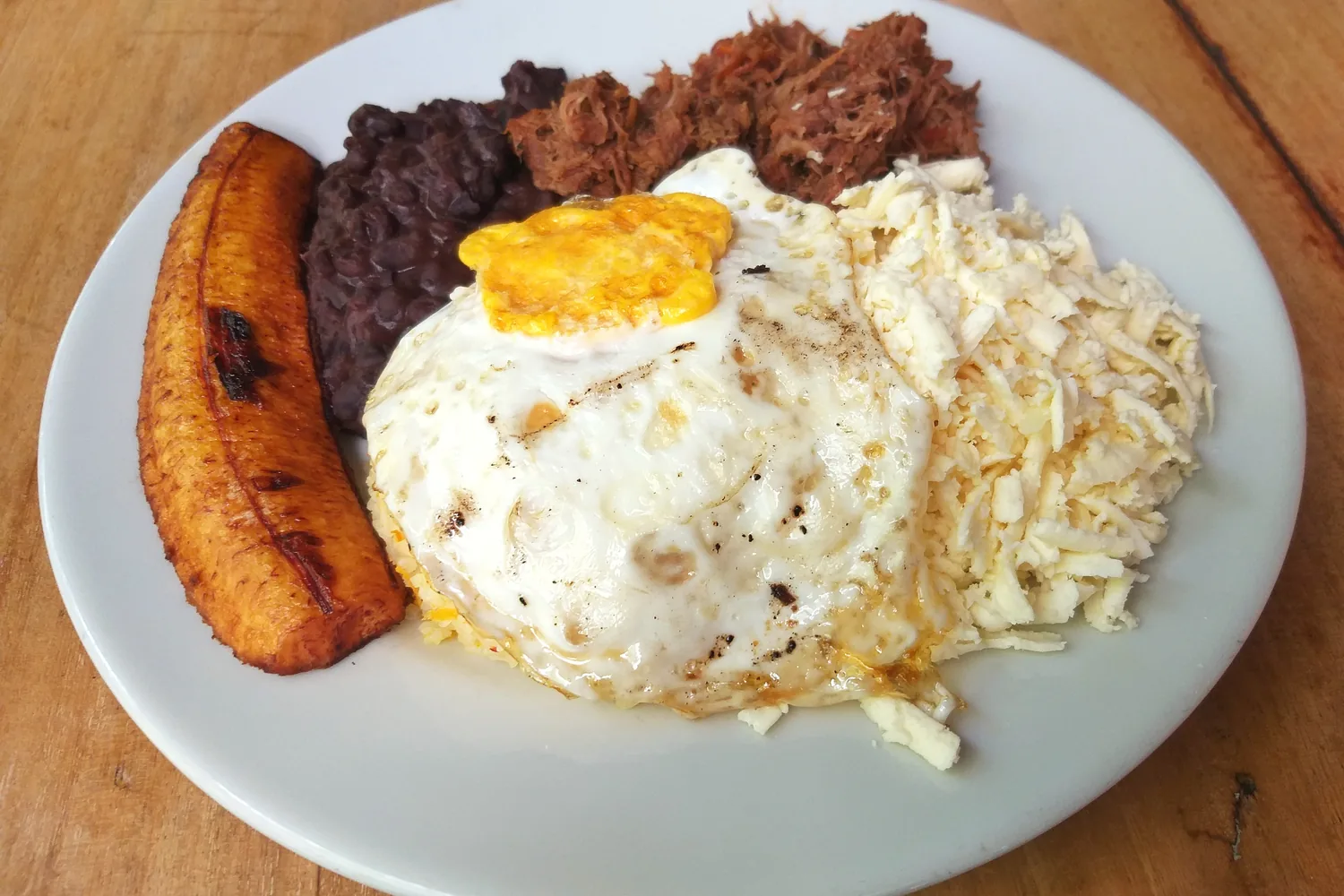
Pabellón Criollo plate with shredded beef, black beans, fried plantain, a fried egg and grated white cheese over white rice Venezuela flag Venezuela 3h
Lunch •Venezuelan National Dish

Pabellón Criollo

This pabellon criollo recipe is Venezuela's national plate: slow-braised shredded beef in a pepper and tomato sofrito, creamy black beans, fluffy white rice, sweet fried plantains and a fried egg, finished with grated white cheese. One serving is about 680 g.

Hearty & Satisfying

A complete plate of beef, beans, rice, plantain and egg that keeps you full for hours.

Pairs Well With
Serve with a cold papelón con limón or a light beer, and a simple avocado salad on the side.
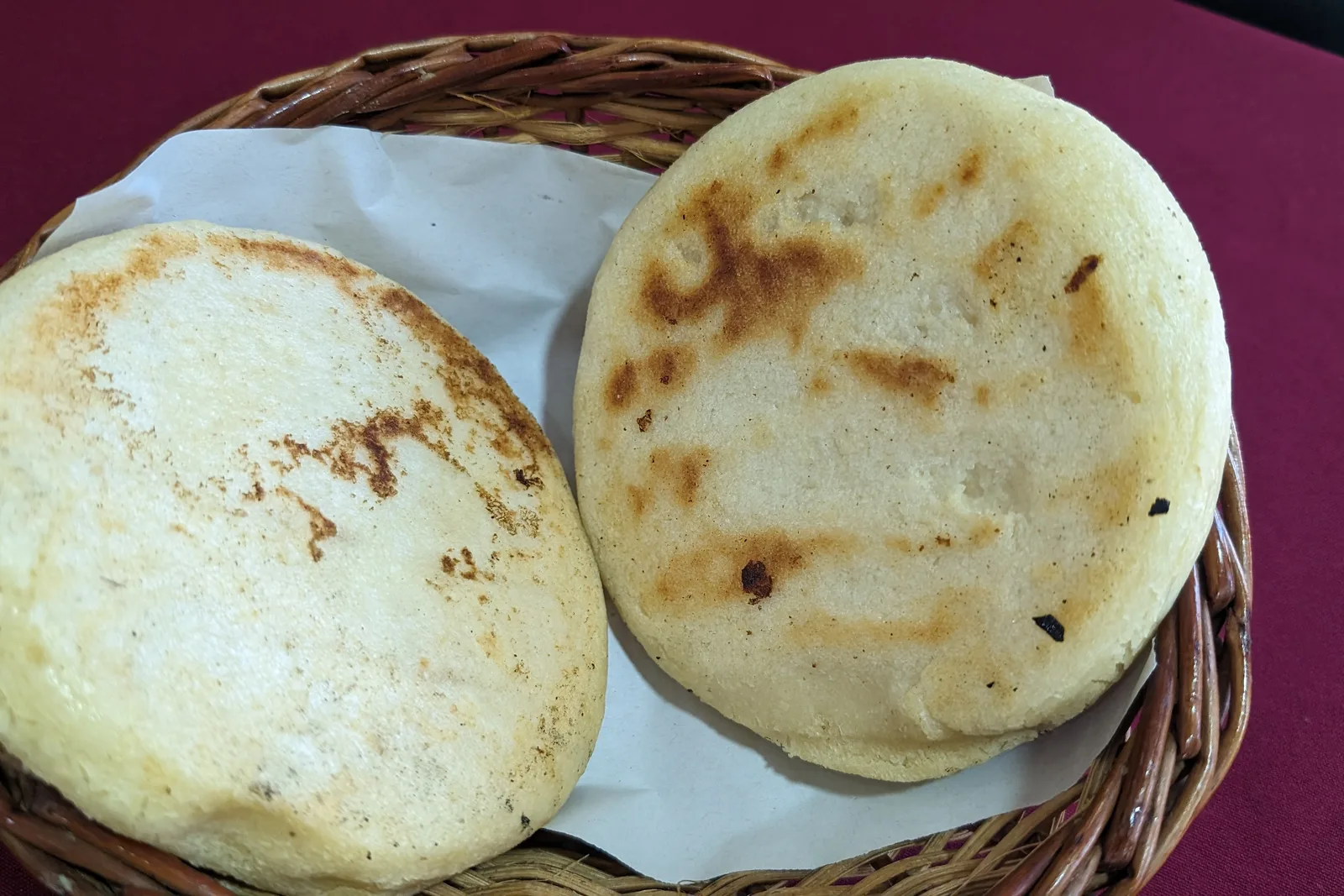
Two golden grilled Venezuelan arepas in a wicker basket lined with white paper Venezuela flag Venezuela 40m
Breakfast •Caracas Heritage

Venezuelan Arepas

This Venezuelan arepas recipe starts with just pre-cooked white cornmeal, warm water and salt, kneaded into a soft dough and shaped into thick cakes. They grill until crisp and golden outside and soft inside, finish in a hot oven so they puff, then get split open and stuffed with melted mozzarella, crumbled queso fresco, creamy avocado and tomato. Venezuelan arepas are the thick, stuffed kind: a whole breakfast you can hold in one hand. One serving is about 275 g, one stuffed arepa.

Comfort & Warmth

Thick grilled corn cakes made from white masarepa, split open like a pocket and stuffed with melting cheese, avocado and tomato.

Pairs Well With
Fresh orange juice or coffee, with a bowl of black beans or scrambled eggs on the side.
Bœuf bourguignon — French beef braised in red wine France flag France 4h
Dinner •Burgundy Terroir

Bœuf Bourguignon

Beef braised gently in red wine until the connective tissue melts into a velvet, gelatin-rich sauce — the classic Burgundy Sunday dinner.

Cellular Repair

Beef braised in red wine until spoon-tender, with mushrooms and pearl onions.

Pairs Well With
Parsnip Purée & Steamed French Haricots Verts
High Protein
Vietnamese braised pork belly with golden eggs in caramel sauce Vietnam flag Vietnam 1h 45m
Dinner •One Pot

Vietnamese Braised Pork and Eggs

Pork belly slowly braised in coconut water and caramel until meltingly tender, with golden eggs that soak up the sweet-savoury sauce — the Vietnamese family dish that tastes better the next day.

Comfort & Sustained Energy

Slow-braised pork belly and eggs in coconut water and caramel.

Pairs Well With
Steamed rice & pickled mustard greens
High Protein

The Dinner Gazette

Never wonder what’s for dinner again

One email a week with easy dinner ideas from around the world — ingredients, steps and nutrition, tested in our kitchen first.

Delivered every Thursday morning. Unsubscribe anytime.