Curated recipes from 193 countries  •  New seasonal Mediterranean issue out now

Overview

Pabellón Criollo

Pabellon Criollo, Venezuelan National Plate

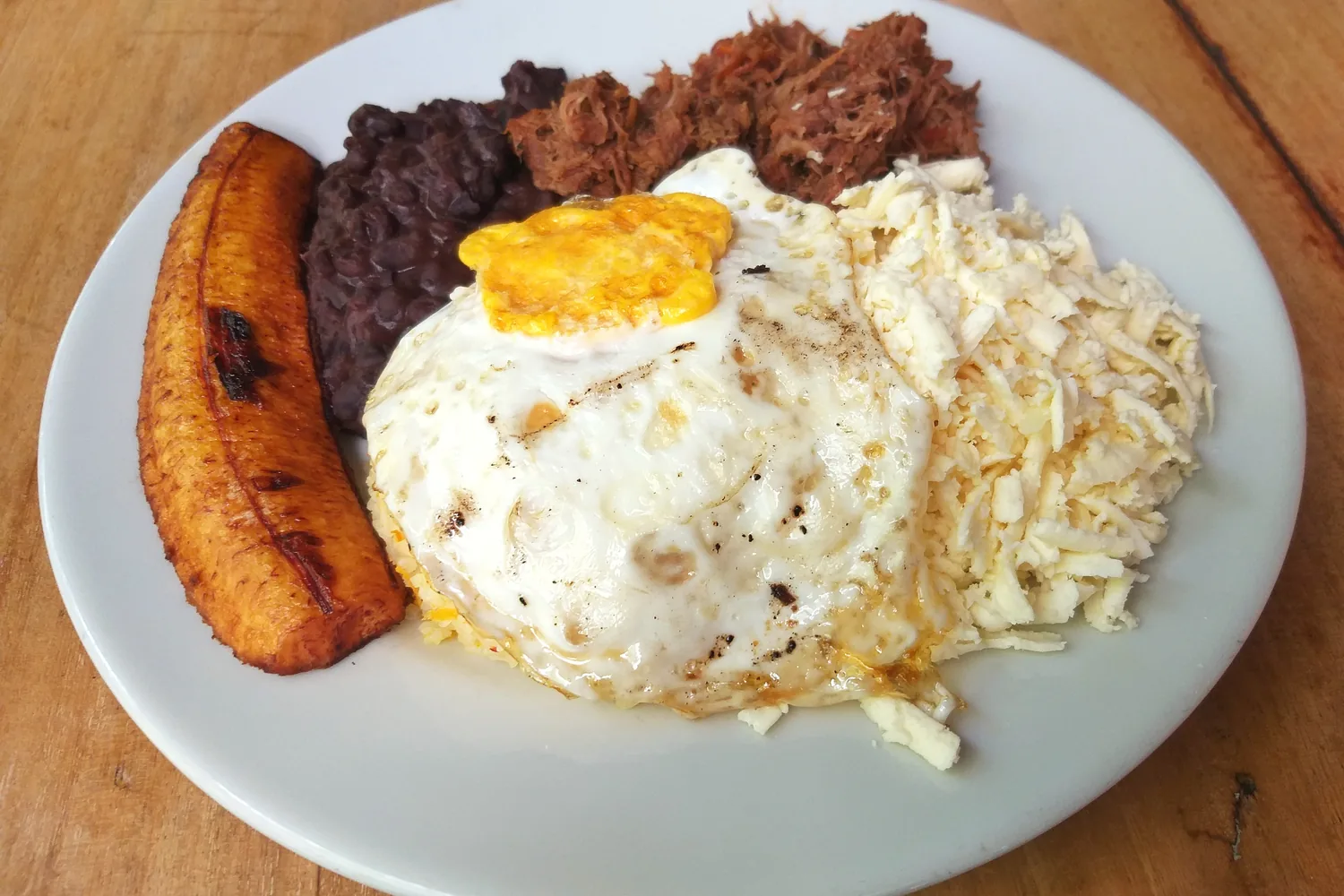
This pabellon criollo recipe is Venezuela's national plate: slow-braised shredded beef in a pepper and tomato sofrito, creamy black beans, fluffy white rice, sweet fried plantains and a fried egg, finished with grated white cheese. One serving is about 680 g.

Pabellón criollo is Venezuela's national dish, a plate that grew out of the colonial era from the meeting of Indigenous, African and Spanish food traditions: rice, shredded beef, black beans and fried plantains, each with a different origin, served side by side. The name means roughly 'creole pavilion' — pabellón is Spanish for a flag or pavilion, and the colourful separate piles are often read as the stripes of a banner. Common additions are the fried plantain strips, called tajadas, and a fried egg. In 2019 the Venezuelan government classified pabellón as intangible heritage, alongside the arepa, hallaca and cachapa.

Pairs well with: Serve with a cold papelón con limón or a light beer, and a simple avocado salad on the side.

Provenance

Venezuela flag Venezuela

Venezuelan National Dish

Latin America & Caribbean

Time Dedication

3h

30m prep • 150m cook

Batch Yield

4 Servings

1178 kcal per serving

1 serving ≈ 680 g

Technical Skill

Intermediate

Medium (Slow Braise)

Meal Timing & Digestive Fit

Breakfast

Not Advised

Lunch

Prime Metabolic Fit

Dinner

Ideal Hearty Main

Snack & Tea

Inappropriate

Occasions: Sunday family lunch, national holidays, everyday lunch Cost: Moderate — about $4–5 per serving at home
Pabellón Criollo plate with shredded beef, black beans, fried plantain, a fried egg and grated white cheese over white rice

Venezuelan National Dish

Photo: Caldobasico, CC BY-SA 4.0, via Wikimedia Commons

The Heritage Formulary

Measured Ingredients

Estimated cost: Moderate — about $4–5 per serving at home (USD)

No official codified recipe exists for this dish; this version follows the widely shared home-cooking form with the four classic parts plus egg and cheese.

Execution Methodology & Culinary Technique

Step-by-Step Cooking Guide

Active 3h
P

Prep Stage: Soak the Beans, Slice the Sofrito

30 Mins • Soak + Slice

The night before, pick over the black beans, rinse them and leave them to soak in plenty of cold water. On the day, trim and season the flank steak, slice the onion and both peppers into strips, mince the garlic, chop the tomatoes and measure out the broth, tomato paste, Worcestershire sauce and spices. The beef needs about two hours of gentle braising, and the beans and rice cook while it simmers, so a tidy station now keeps the whole plate on schedule.

Maestro Tip: Slice the plantains only when the beef is nearly done — cut plantain browns quickly and fries best fresh.

  1. 1

    Braise the beef until it shreds

    120 mins Gentle simmer, about 95°C (200°F)

    Put the seasoned flank steak in a large pot with the beef broth, Worcestershire sauce and enough water to cover. Bring to a boil, skim off any foam, then lower the heat to the gentlest simmer, cover, and cook for about 2 hours until the meat pulls apart easily with two forks. Keep the braising liquid — it becomes part of the sauce.

    A pressure cooker cuts this to about 45 minutes at high pressure; the beef should still fall apart in long strands.

    Done when: The beef shreds into long strands with almost no resistance.

  2. 2

    Cook the black beans until creamy

    60 mins Gentle simmer, about 95°C (200°F)

    While the beef braises, drain the soaked beans and put them in a second pot with fresh water to cover by about 5 cm, the chopped onion, half the garlic, the bay leaves and the cumin. Simmer gently for 50–60 minutes until the beans are tender and the liquid has thickened slightly. Season with salt only in the last 10 minutes, so the skins stay soft. Remove the bay leaves.

    Salting beans early can keep the skins tough — wait until they are nearly tender, then season and taste.

    Done when: Beans crush easily between two fingers and the cooking liquid coats a spoon.

  3. 3

    Cook the rice

    20 mins Low heat, about 90°C (195°F)

    Rinse the rice, then cook it in a covered pot with 450 ml of lightly salted water: bring to a boil, stir once, cover, and cook on the lowest heat for 15 minutes. Take off the heat and rest, still covered, for 5 minutes, then fluff with a fork. The rice should be separate and fluffy, not sticky.

    Do not lift the lid while the rice steams — the trapped steam is what finishes the grains.

    Done when: Grains are separate, tender and fluffy, with no water left in the pot.

  4. 4

    Shred the beef and finish it in sofrito

    15 mins Medium heat, about 175°C (350°F)

    Lift the beef out of its liquid and shred it along the grain into thin strands. Heat 1 tablespoon of the oil in a wide pan, soften the sliced onion and peppers for 5 minutes, then add the remaining garlic, the chopped tomatoes, tomato paste and oregano. Stir in the shredded beef and about 120 ml of the braising liquid and simmer for 8–10 minutes until the sauce clings to the meat and the beef is steaming hot, at least 74°C (165°F).

    Shred while the beef is still warm — cold beef tears into short, dry pieces instead of long strands.

    Done when: The beef is glossy, saucy but not soupy, and hot all the way through.

  5. 5

    Fry the plantains and the eggs

    10 mins Oil at about 175°C (350°F)

    Heat the remaining oil in a frying pan over medium-high heat. Fry the plantain strips for 2–3 minutes per side until deep golden and caramelised at the edges, then drain on paper. In the same pan, fry the eggs sunny-side up for 2–3 minutes until the whites are fully set and the yolks are still runny; season lightly.

    Do not crowd the plantains — they steam instead of caramelising if the pan is packed.

    Done when: Plantains are deep gold and sweet-smelling; egg whites are fully set with no clear jelly left.

  6. 6

    Plate the pabellón

    5 mins Serve hot, above 60°C (140°F)

    On each warm plate, set a mound of white rice next to a spoonful of black beans, a portion of shredded beef and the fried plantain strips along the side, like guard rails. Lay a fried egg over the rice and scatter the grated white cheese over the beans. Serve at once, while everything is hot.

    Keep the four parts side by side and unmixed — the separate piles are what make a pabellón a pabellón.

    Done when: The plate shows four distinct piles plus the egg, all steaming hot.

Finishing Touches & Plating

Eat it the Venezuelan way: a forkful of beef with a little rice and beans, then a bite of sweet plantain to reset the palate. The runny yolk is meant to spill over the rice, so break it last.

Nutritional Physiology & Benefits

Nutrition

Energy

1178

kcal / serving

Protein

73g

Complete AA

Carbs

134g

Complex

Fats

39g

Healthy

Per serving (4 servings · 1 serving ≈ 680 g)
Energy1178 kcal
Protein73 g
Carbohydrates134 g
Fat39 g
Fibre13.6 g
Sugar22.4 g
Sodium980 mg
Per 100g
Energy173 kcal
Protein10.7 g
Carbohydrates19.7 g
Fat5.8 g
Fibre2 g
Sugar3.3 g
Sodium144 mg

Nutrition values are estimated — calculated from USDA FoodData Central values for the listed ingredients.

Vitamins & minerals: Rich in iron, zinc and vitamin B12 from the beef, folate and magnesium from the black beans, potassium and vitamin C from the plantains and peppers, and vitamin D from the egg. Nutrition is estimated.

Long-lasting energy

With about 73 g of protein and 134 g of carbohydrate per serving, the plate digests slowly and keeps you full for hours — a practical lunch for a long afternoon.

Fibre from beans and plantain

About 13.6 g of fibre per serving comes mostly from the black beans and plantains, which support normal digestion as part of a varied diet.

Iron and B12 from beef

Beef is a source of iron and vitamin B12, nutrients the body uses to make red blood cells; the peppers and tomatoes add vitamin C, which helps the body absorb iron from food.

Food Pairings

What to Eat With

To optimize nutrient absorption and elevate the sensory depth, pair with these authentic accompaniments:

Vegetables

Avocado salad

Sliced avocado with tomato, onion and lime cuts through the richness of the beef and the sweetness of the plantain with cool, fresh fat and acidity.

Drinks

Papelón con limón

This Venezuelan drink of panela sugar and lime is the traditional partner: its tart sweetness echoes the caramelised plantains without adding heaviness.

Light lager

A cold, light lager refreshes the palate between bites of rich beef and sweet plantain, the way it is commonly served in Caracas restaurants.

Sides

Arepas

A small plain arepa on the side is how many Venezuelan families stretch the plate — its mild corn flavour soaks up the beef sauce and the bean liquid.

Full Menus

Full Venezuelan lunch

Start with a small black bean soup, serve the pabellón as the main plate, and finish with quesillo (Venezuelan flan) — the classic order at a family Sunday lunch.

Complete menu

Start with a small black bean soup, serve the pabellón as the main plate with avocado salad and papelón con limón, and finish with quesillo.

Digestive Guardrails

What NOT to Combine

To prevent digestive distress, sluggishness, or palate clash, avoid pairing the dish with these elements:

Very salty extras

The plate already carries about 980 mg of sodium per serving, so skip extra salty sauces, salty cheese or cured meats alongside it, especially if you watch your salt intake. This is general information, not medical advice — ask your clinician if you are unsure.

Heavy desserts straight after

A large, rich dessert on top of a 1,178 kcal plate can leave you sluggish; if you want something sweet, keep it small, such as fresh fruit. This is general information, not medical advice.

Raw or undercooked eggs

Fry the eggs until the whites are fully set. Runny yolks are fine once the white is set, but anyone with a weakened immune system should cook eggs until both white and yolk are firm. This is general information, not medical advice.

General information only, not medical advice — consult a doctor for personal dietary decisions.

Who Should Eat It

Who Should Eat

  • General adultsA hearty, complete lunch that suits most adults; the plate is large, so eat to appetite rather than finishing out of habit.
  • ChildrenMild and not spicy, so children usually enjoy it; shred the beef finely, cut the plantain into small pieces and serve a smaller portion of rice.
  • ElderlySoft shredded beef and creamy beans are easy to chew; serve a smaller portion and check the salt if sodium is a concern.
  • Pregnant womenBeef, beans, rice and a fully cooked egg are fine in pregnancy when the meat is cooked right through; make sure the egg white is fully set and ask your clinician about any dietary concerns.
  • Breastfeeding womenA nourishing, iron- and protein-rich meal that supports the extra energy needs of breastfeeding; drink water alongside it.
  • AthletesAbout 73 g of protein and 134 g of carbohydrate per serving make it a strong recovery lunch after heavy training.
  • Weight gainEnergy-dense at about 1,178 kcal with rice, plantains and egg, so it works well for anyone trying to gain weight in a balanced way.
  • Weight lossKeep the rice and plantains to modest portions, skip the cheese and load the plate with beef and beans; the protein and fibre help you stay full.

Health Conditions — Adjust or Avoid

Conditions

  • DiabetesThe rice and sweet plantains are the main carbohydrate sources, about 134 g per serving, so keep portions modest and pair the plate with salad; monitor blood sugar and ask your clinician for personal guidance.
  • High blood pressureAbout 980 mg of sodium per serving is fairly high, so cook with less salt, choose low-sodium broth and skip extra salty toppings; ask your clinician for personal guidance.
  • Kidney diseaseThe plate is high in protein (about 73 g) and potassium from beans and plantains, which may need limiting; ask your clinician or dietitian before eating it regularly.
  • GoutBeef and beans both contain purines, so large portions may be a problem for some people with gout; keep the beef portion modest and ask your clinician for personal guidance.
  • Stomach issuesBeans and fried plantains can cause gas or discomfort for sensitive stomachs; eat slowly, chew well and consider a smaller portion of beans; ask your clinician if symptoms persist.
  • Cardiovascular diseaseThe beef and frying add saturated fat, so use lean flank, measure the oil and keep the cheese light; ask your clinician or dietitian for personal guidance.
  • Fatty liverA large, energy-dense plate with fried foods is best eaten occasionally and in a modest portion; ask your clinician or dietitian for personal guidance.
  • Food allergiesContains egg and milk (cheese). The dish is naturally gluten-free, but check the Worcestershire sauce and broth labels, as some brands contain gluten or fish; ask your clinician if you have a food allergy.
  • Special therapeutic dietsNaturally gluten-free and high in protein, but not suitable for low-protein, low-potassium or low-purine diets without changes; ask your clinician or dietitian for personal guidance.

If you have a medical condition, consult your doctor before changing your diet.

Storage & Use

Storage & Use

How to store
Cool within 2 hours, then store each part in its own airtight container.
In the fridge
3 to 4 days at 0–4°C (32–39°F).
In the freezer
Beef, beans and rice freeze well for up to 3 months; plantains and fried eggs do not freeze well — fry them fresh.
How to reheat
Reheat the beef, beans and rice on the stove over medium heat, or in the microwave, until steaming hot all the way through, at least 74°C (165°F); add a splash of water or broth if they have dried out.
Freezing recommended
Yes for the beef, beans and rice — the plate is a classic batch-cook; fry the plantains and eggs fresh when serving.
Signs it has spoiled
Sour or off smell, slimy texture, or any mould on the surface — discard if any of these appear.

More recipes to explore

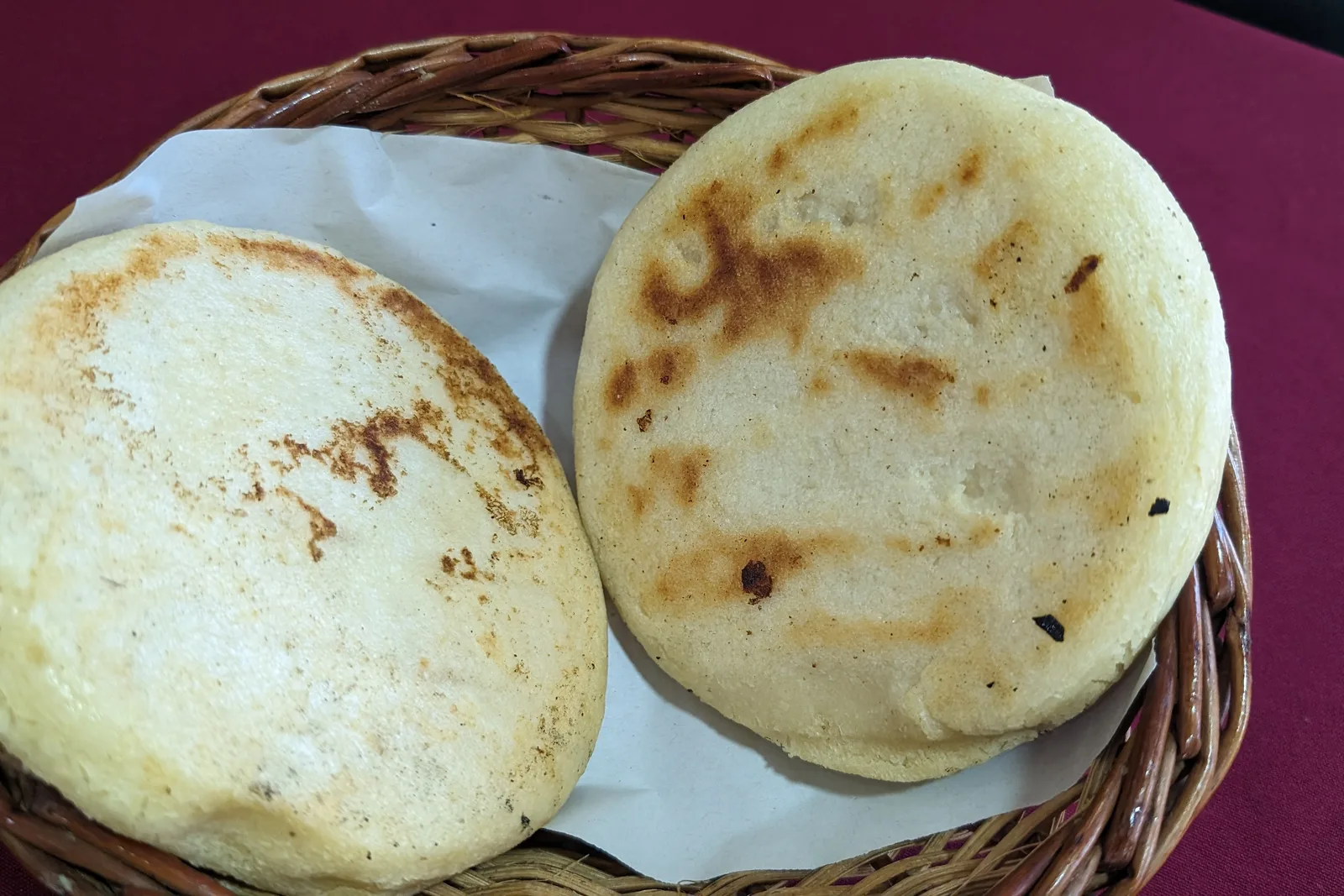
Two golden grilled Venezuelan arepas in a wicker basket lined with white paper Venezuela flag Venezuela 40m
Breakfast •Caracas Heritage

Venezuelan Arepas

This Venezuelan arepas recipe starts with just pre-cooked white cornmeal, warm water and salt, kneaded into a soft dough and shaped into thick cakes. They grill until crisp and golden outside and soft inside, finish in a hot oven so they puff, then get split open and stuffed with melted mozzarella, crumbled queso fresco, creamy avocado and tomato. Venezuelan arepas are the thick, stuffed kind: a whole breakfast you can hold in one hand. One serving is about 275 g, one stuffed arepa.

Comfort & Warmth

Thick grilled corn cakes made from white masarepa, split open like a pocket and stuffed with melting cheese, avocado and tomato.

Pairs Well With
Fresh orange juice or coffee, with a bowl of black beans or scrambled eggs on the side.
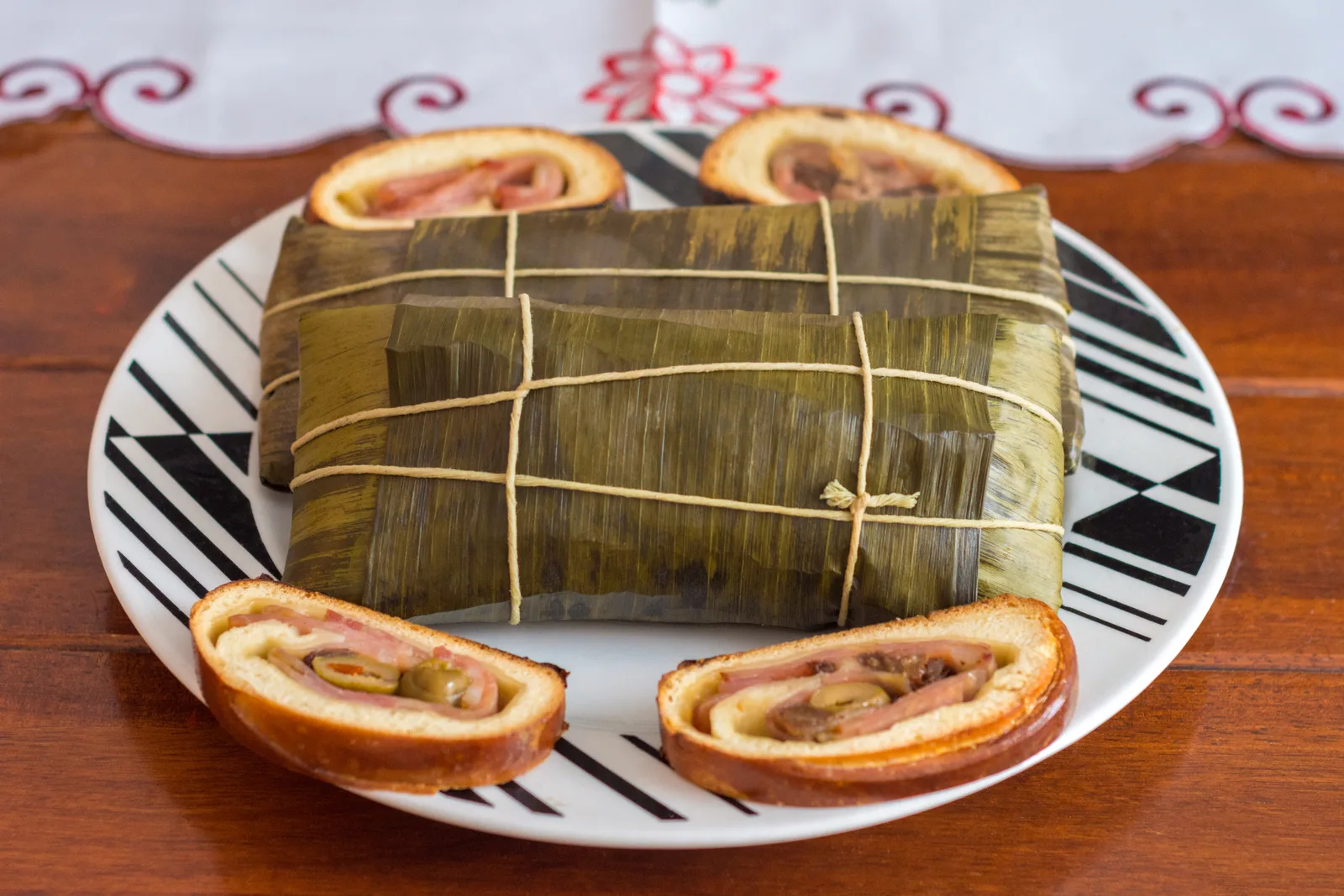
Two hallacas wrapped in banana leaves and tied with string, served on a plate with slices of pan de jamón Venezuela flag Venezuela 5h
Dinner •Venezuela's Christmas Dish

Hallacas

This hallacas recipe makes 12 golden parcels of annatto-coloured corn dough filled with a rich three-meat guiso, garnished with pepper, onion, olives, capers and raisins, then folded in banana leaves and boiled. One hallaca is about 300 g, a full festive dinner on its own. Hallacas are Venezuela's Christmas dish, made in big family batches and served with pan de jamón.

Festive & Filling

Golden annatto corn dough wrapped around a slow-cooked stew of beef, pork and chicken, folded in banana leaves — the parcel Venezuelan families gather to make every December.

Pairs Well With
Pan de jamón and ensalada de gallina, with a glass of ponche crema
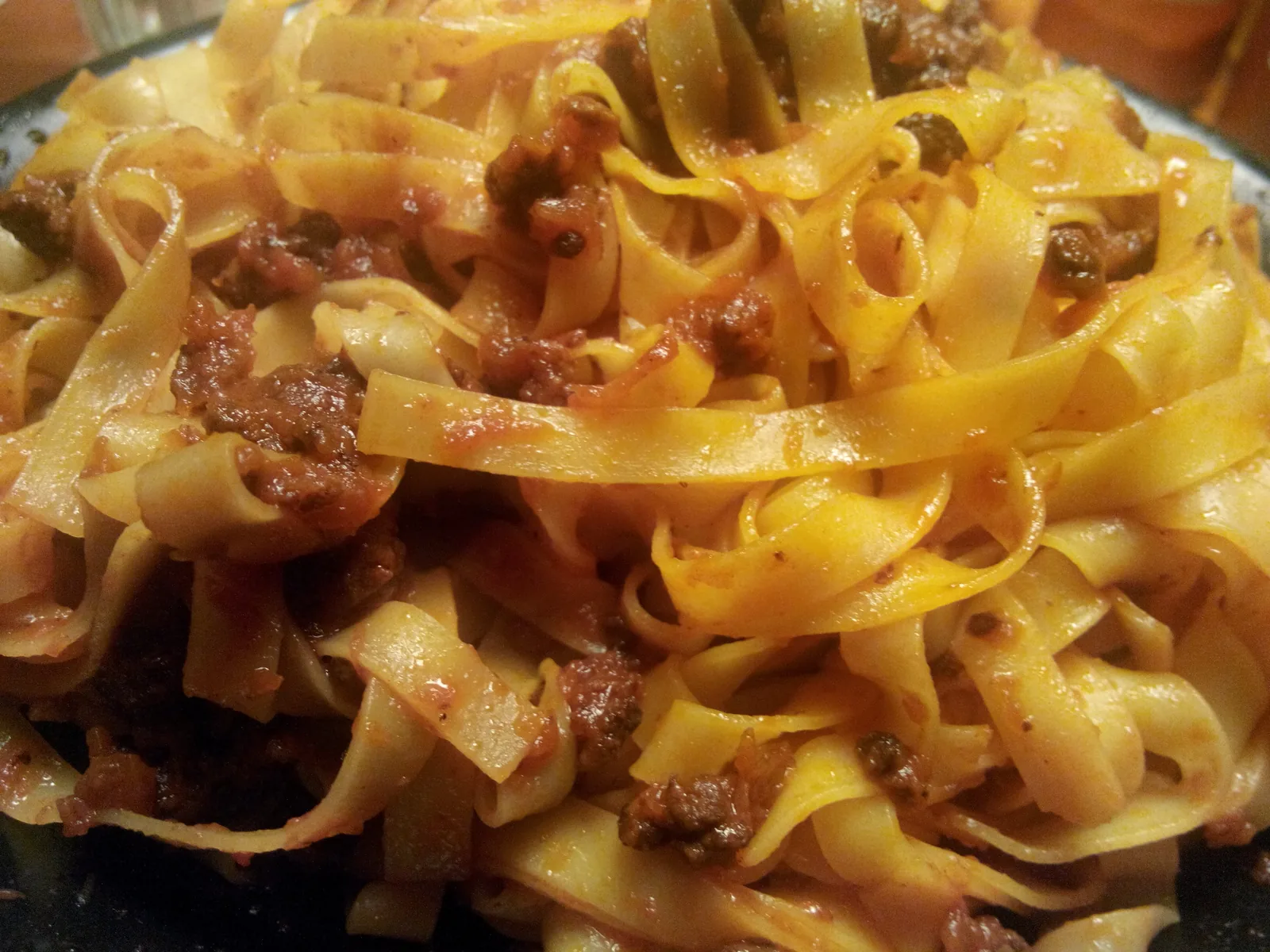
Tagliatelle al ragù Bolognese in a bowl with Parmigiano-Reggiano Italy flag Italy 4h 25m
Lunch •Emilia-Romagna

Tagliatelle al Ragù Bolognese

Slow-braised soffritto and coarse ground heritage meats layered over handmade egg yolk dough for mid-day stamina.

Lean Protein

Slow-simmered beef ragù tossed through fresh egg tagliatelle.

Pairs Well With
Bitter Radicchio & Aged Balsamico di Modena
Pasta & Noodles • High Protein
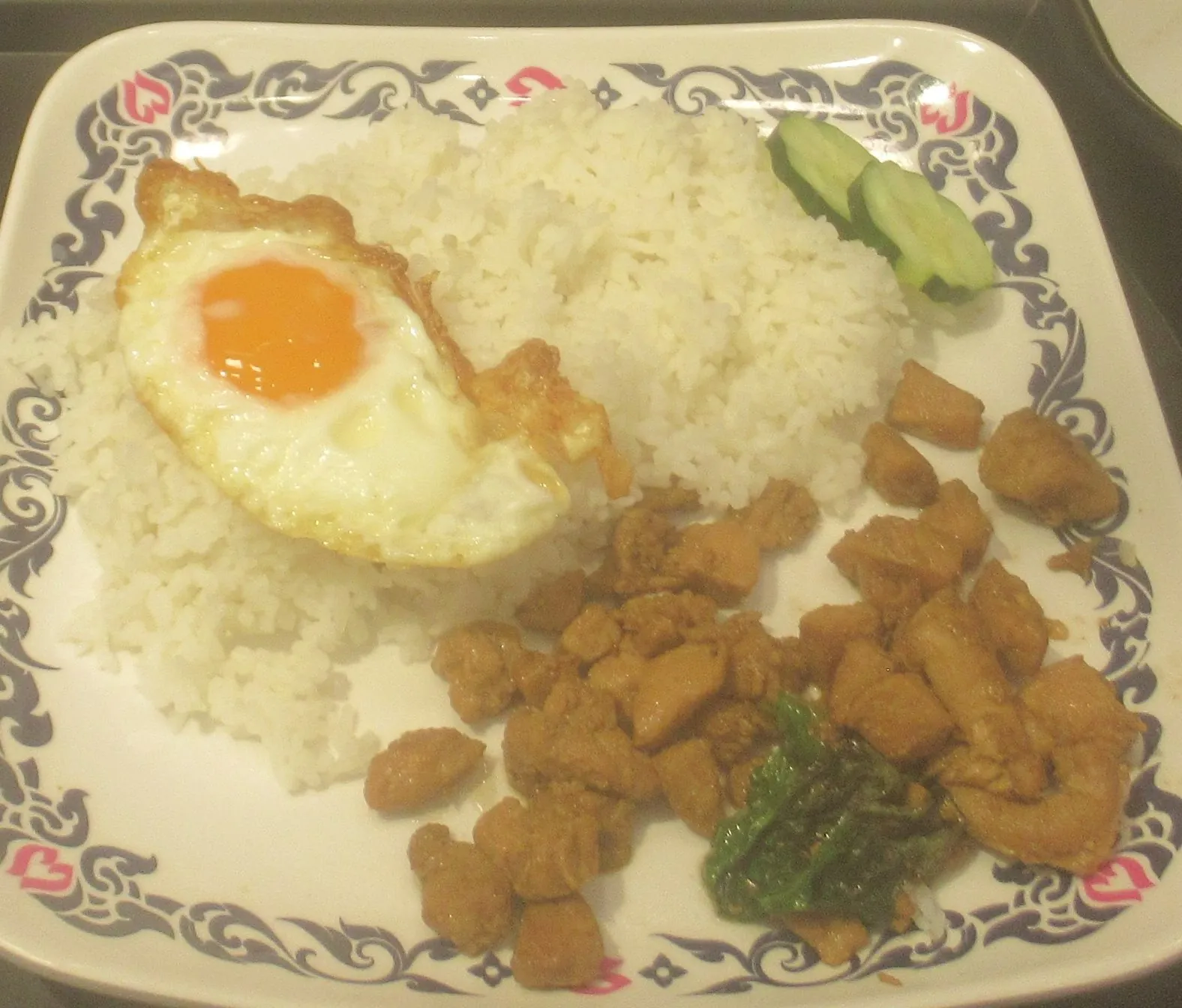
Pad kra pao gai — Thai holy basil chicken with fried egg and rice Thailand flag Thailand 30m
Lunch •Bangkok Street Flame

Pad Kra Pao Gai

High-heat wok flash of holy basil and crushed chillies over minced chicken, served over jasmine rice with a crispy-edged fried egg.

High Energy

Capsaicin brings the heat; holy basil adds a peppery, clove-like aroma.

Pairs Well With
Chilled Cucumber Salad & Fish Sauce Lime Dip
High Protein • Quick Prep (<30m)

The Dinner Gazette

Never wonder what’s for dinner again

One email a week with easy dinner ideas from around the world — ingredients, steps and nutrition, tested in our kitchen first.

Delivered every Thursday morning. Unsubscribe anytime.