Curated recipes from 193 countries  •  New seasonal Mediterranean issue out now

Overview

Hilib Geel

Somali Camel Meat with Cabbage

This hilib geel recipe is Somalia's camel meat cooked the traditional way: bone-in pieces browned, then simmered low and slow with onion, garlic, ginger, tomato and xawaash — cumin, coriander, turmeric, cardamom, cinnamon, cloves and black pepper — until the meat turns tender and the broth is rich. Cabbage goes in at the end to wilt in the spiced liquid, and the meat is piled on a platter with the cabbage, fresh coriander, lime and a ripe banana on the side. One serving is about 452 g of edible meat, cabbage and banana (bones not counted).

Camels are the backbone of Somali pastoral life, and Somalia keeps one of the largest camel herds in the world — the animals give milk, transport and, on feast days, meat. Camel meat is celebration food in Somalia, simmered slowly until tender and eaten at weddings, Eid and Friday gatherings, often served on a platter with cabbage as in the photograph of this dish taken at the Golis Restaurant in Hargeisa in 2014. Because the meat is lean and full of connective tissue, Somali cooks never rush it: the long, gentle simmer is what turns a tough cut into meat that pulls from the bone.

Pairs well with: Banana, lime & shaah

Provenance

Somalia flag Somalia

Somali Heritage

African Heritage

Time Dedication

2h

20m prep • 100m cook

Batch Yield

4 Servings

460 kcal per serving

1 serving ≈ 452 g

Technical Skill

Intermediate

Intermediate (Slow Simmer)

Meal Timing & Digestive Fit

Breakfast

Not Advised

Lunch

Hearty Midday Main

Dinner

Ideal Hearty Main

Snack & Tea

Inappropriate

High Protein Occasions: Weddings, Eid, Friday lunch, family gatherings, celebrations Cost: Moderate — about $5–6 per serving at home (camel meat is a speciality cut)
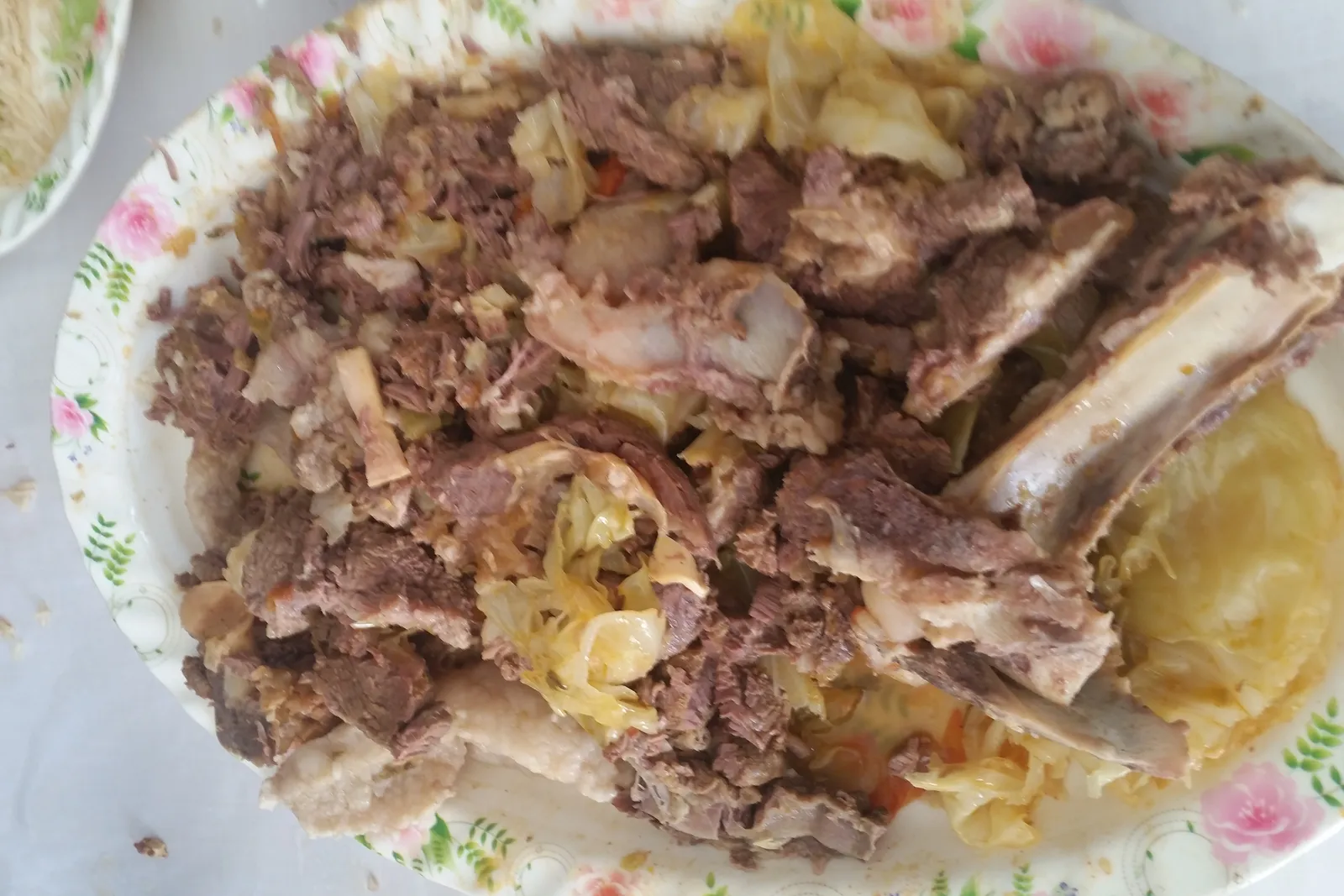
A platter of hilib geel — boiled camel meat on the bone with cooked cabbage, served at a restaurant in Hargeisa

Somali Heritage

Photo: Abdifatah7, CC BY-SA 4.0, via Wikimedia Commons

The Heritage Formulary

Measured Ingredients

Estimated cost: Moderate — about $5–6 per serving at home (camel meat is a speciality cut) (USD)
Good hilib geel is judged by its meat: tender enough to pull from the bone, fragrant with xawaash, with the cabbage wilted in the spiced liquid.

Execution Methodology & Culinary Technique

Step-by-Step Cooking Guide

Active 2h
P

Prep Stage: Cut, Shred & Measure

20 Mins • Knife Work

Rinse the camel meat, pat it dry and cut it into large bone-in pieces if the butcher has not already done so. Dice the onions and tomatoes, shred the cabbage into wide ribbons, mince the garlic, grate the ginger and slice the chillies. Measure the xawaash and salt, and keep the hot water by the stove.

Maestro Tip: Cut the meat into large pieces, not small ones: camel meat is lean and tough, and large pieces stay juicy through the long simmer.

  1. 1

    Brown the Camel Meat

    10 Mins Medium-high heat, ~190°C (375°F)

    Heat the oil in a heavy pot over medium-high heat. Add the camel meat in a single layer and brown on all sides for about 10 minutes, working in two batches if the pot is crowded. Lift the meat out and set it aside; leave the browned bits in the pot — they flavour the whole dish.

    Do not crowd the pot: crowded meat steams instead of browning, and you lose the deep savoury crust.

    Done when: Meat is browned on the outside and still pink inside; the pot base is browned and fragrant.

  2. 2

    Soften the Onions & Bloom the Xawaash

    8 Mins Medium heat, ~170°C (340°F)

    Add the diced onions to the pot and cook, stirring often, for 5–6 minutes until soft and golden. Stir in the garlic and ginger, then the xawaash, and cook for 30 seconds until the spices smell warm and fragrant. Add the diced tomatoes and cook for 2 minutes until they soften.

    Blooming the xawaash in hot oil for 30 seconds wakes up the spices — dumped straight into water, they taste flat.

    Done when: Onions are soft and golden; the spices smell warm and toasty; tomatoes are softening.

  3. 3

    Simmer the Camel Meat

    75 Mins Gentle simmer, ~95°C (203°F)

    Return the meat to the pot with any juices, add half the salt and the hot water, and stir. Bring to a gentle simmer, cover, and cook for 75 minutes until the meat is tender and pulls easily from the bone. The meat must reach at least 74°C (165°F) throughout. Keep the simmer gentle and top up with a little hot water if the pot runs dry.

    Keep the simmer gentle; hard boiling toughens camel meat instead of tenderising it. Patience is the whole recipe — young camel meat needs the full 75 minutes.

    Done when: Meat is tender and pulls easily from the bone; the liquid has reduced to a rich, spiced broth.

  4. 4

    Add the Cabbage & Chillies

    12 Mins Gentle simmer, ~95°C (203°F)

    Stir in the shredded cabbage and the sliced chillies with the remaining salt. Cover and cook for 12 minutes until the cabbage is wilted and tender but still holds its shape. Taste the broth and add salt if needed.

    Do not add the cabbage earlier — it only needs 12 minutes, and added at the start it would collapse into mush.

    Done when: Cabbage is wilted, tender and glossy with the spiced broth; meat is still on the bone and hot through.

  5. 5

    Rest & Serve on the Platter

    5 Mins Off the heat, lid on — meat stays above 74°C (165°F)

    Take the pot off the heat and leave it covered for 5 minutes. Then lift the meat onto a wide platter, spoon the cabbage and broth over the top, and scatter the coriander over it. Serve hot with the sliced banana and lime wedges on the side.

    Resting lets the meat relax so it stays juicy when you pull it from the bone at the table.

    Done when: Meat is piled on the platter with the cabbage over it; banana and lime are on the side.

Finishing Touches & Plating

Serve the hilib geel hot from the platter, with the cabbage spooned over the meat and the banana and lime wedges on the side. Eat it with your hands or a fork, picking the tender meat from the bones, and squeeze lime over each mouthful.

Nutritional Physiology & Benefits

Nutrition

Energy

460

kcal / serving

Protein

46g

Complete AA

Carbs

25g

Complex

Fats

22g

Healthy

Per serving (4 servings · 1 serving ≈ 452 g)
Energy460 kcal
Protein46 g
Carbohydrates25 g
Fat22 g
Fibre6.2 g
Sugar11.0 g
Sodium728 mg
Per 100g
Energy102 kcal
Protein10.1 g
Carbohydrates5.5 g
Fat4.8 g
Fibre1.4 g
Sugar2.4 g
Sodium161 mg

Nutrition values are estimated — calculated from USDA FoodData Central values for the listed ingredients.

Vitamins & minerals: Vitamin B12 and iron (camel meat), vitamin C and K (cabbage), vitamin A (tomato), potassium (banana and cabbage), zinc (camel meat). Nutrition values are estimated.

Protein That Stays With You

About 45.5 g of protein per serving from the camel meat, with cabbage and banana alongside, makes one platter genuinely filling through the evening.

Iron, B12 and Zinc

The camel meat supplies haem iron, vitamin B12 and zinc, while the cabbage adds vitamin C and K that help the body use the iron.

Cabbage and Banana in One Dish

Cabbage, tomato, onion and banana bring fibre, colour and different vitamins to a single platter, so the meal needs little else.

Food Pairings

What to Eat With

To optimize nutrient absorption and elevate the sensory depth, pair with these authentic accompaniments:

Sides

Ripe Banana

The banana is part of the dish, not a garnish: its cool sweetness and soft starch calm the warm spices and rich meat, and Somalis take bites of it between mouthfuls.

Lime Wedges

A squeeze of lime over the hot meat lifts the rich, spiced flavour and cuts through the fat, and its vitamin C helps the body absorb the iron from the meat.

Vegetables

Tomato & Onion Salad

A simple salad of tomato, onion and lemon adds acidity and crunch that cut through the richness of the camel meat.

Drinks

Shaah (Spiced Somali Tea)

Hot spiced tea with cardamom and cinnamon is the traditional finish to a hilib geel meal — warm, sweet and a natural match for the meat spices.

Complete menu

Serve the hilib geel piled on a platter with the cabbage, banana and lime on the side, a simple tomato-onion salad, and hot shaah to finish.

Digestive Guardrails

What NOT to Combine

To prevent digestive distress, sluggishness, or palate clash, avoid pairing the dish with these elements:

Very Sweet Drinks With the Meal

Sugary sodas add a large dose of sugar to a meal that already includes sweet banana; water or hot shaah is the better match. This is general information, not medical advice.

Extra Salty Sauces on Top

The meat is already salted and seasoned, so pouring over salty soy sauce or stock-based gravy pushes the sodium of the meal much higher for no extra flavour. This is general information, not medical advice.

General information only, not medical advice — consult a doctor for personal dietary decisions.

Who Should Eat It

Who Should Eat

  • General adultsA rich, slow-simmered meat dinner — camel meat and cabbage with banana on the side.
  • ChildrenSuitable from age 8+ in small portions; the meat is tender but the dish is very rich, and the chillies should be left out for children.
  • ElderlyGood in a modest portion — the long simmer makes the meat tender and easy to chew; pick the softer pieces.
  • Pregnant womenGenerally suitable if the camel meat is simmered until fully tender and steaming hot; keep the chillies mild.
  • Breastfeeding womenGenerally suitable; the iron and protein support recovery — keep portions moderate.
  • AthletesA strong post-training meal: about 45.5 g protein per serving with cabbage and banana for carbohydrate.
  • Weight gainA good choice — a generous serving with extra meat and a second banana.
  • Weight lossKeep the meat portion modest and fill the plate with the cabbage; the meat is lean but the serving is rich.

Health Conditions — Adjust or Avoid

Conditions

  • DiabetesLow in carbohydrate from the meat and cabbage, but the banana adds sugar, so keep the banana to one small piece; ask your clinician about portions.
  • High blood pressureKeep the added salt to the recipe amount; most sodium here is the salt. Ask your clinician about your daily sodium limit.
  • Kidney diseaseThe meat is high in protein and the cabbage and banana are high in potassium; keep the portion modest if your clinician has advised limits, and ask about portion size.
  • GoutEat occasionally and in smaller portions — camel meat is high in purines. Ask your clinician if gout flares are frequent.
  • Stomach issuesUsually gentle, but the spices and chillies can irritate a sensitive stomach; use half the xawaash and leave the chillies out if needed.
  • Cardiovascular diseaseCamel meat is leaner than beef, and the dish is simmered, not fried; keep the oil to the recipe amount. Ask your clinician about how often red meat fits your diet.
  • Fatty liverKeep the portion modest and fill the plate with the cabbage. Ask your clinician about red meat frequency.
  • Food allergiesContains no common allergens as written. Naturally gluten-free — just check any ready-made xawaash blend for hidden wheat.
  • Special therapeutic dietsIf you follow a prescribed low-sodium or low-potassium diet, use less salt and a smaller portion, and check with your clinician.

If you have a medical condition, consult your doctor before changing your diet.

Storage & Use

Storage & Use

How to store
Cool quickly and store in an airtight container.
In the fridge
Hilib geel 3 days.
In the freezer
Up to 2 months; the cabbage softens on thawing.
How to reheat
Reheat with a splash of water, covered, until steaming hot throughout, to 74°C (165°F).
Freezing recommended
Yes, up to 2 months.
Signs it has spoiled
Sour or off smell, slimy meat, or mould.

More recipes to explore

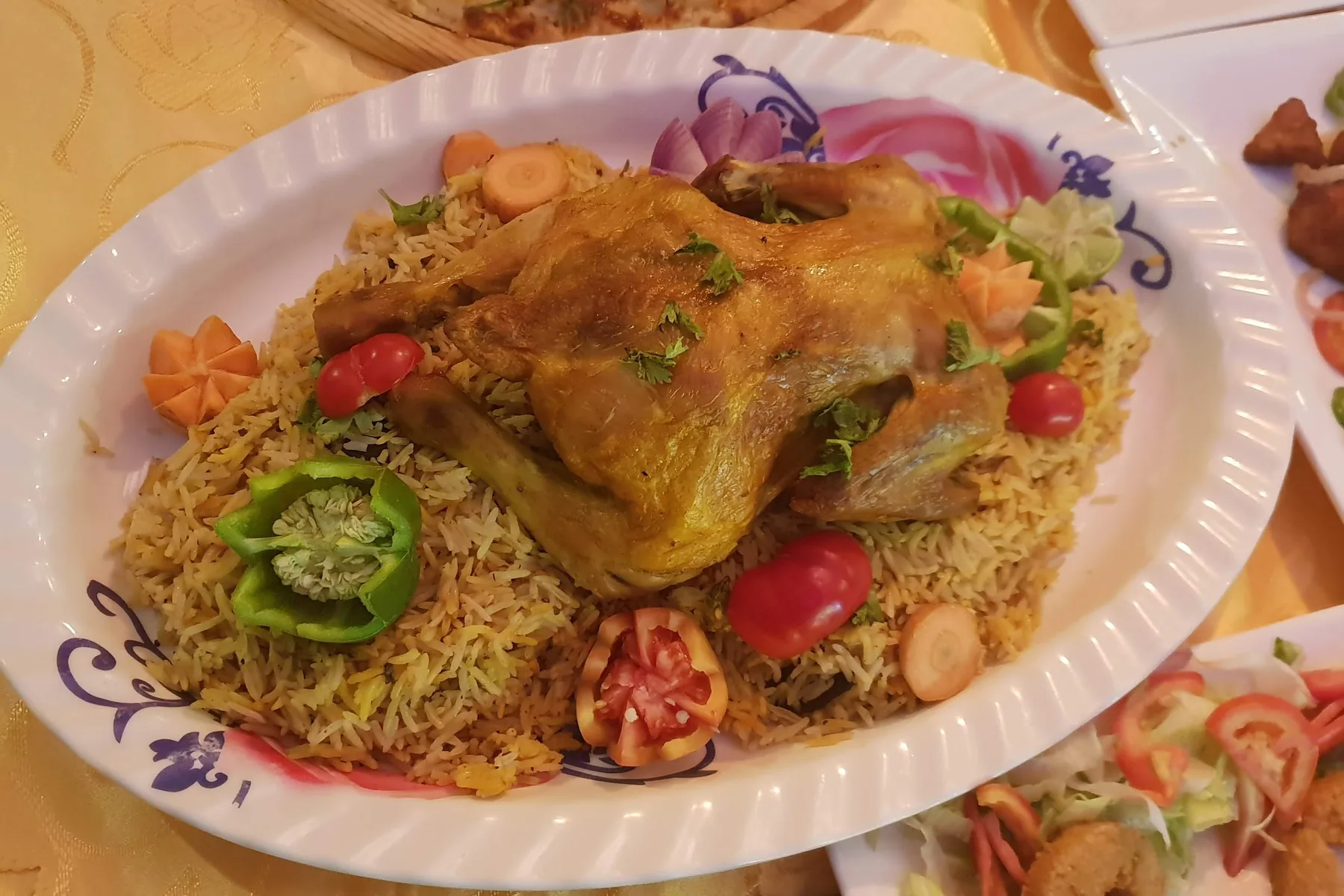
A platter of bariis iskukaris — golden spiced basmati rice topped with a whole roasted chicken, carrots, peppers and tomatoes Somalia flag Somalia 1h 15m
Dinner •Somali Heritage

Bariis Iskukaris

This bariis iskukaris recipe is Somalia's fragrant celebration rice: long-grain basmati cooked in one pot with tender lamb, carrots and raisins, perfumed with xawaash — cumin, coriander, turmeric, cardamom, cinnamon, cloves and nutmeg — and finished golden with saffron. The rice steams in the lamb braising liquid until every grain is separate and aromatic, then it is mounded on a platter with a ripe banana on the side, the traditional Somali way. One serving is about 568 g.

Celebration Rice

Basmati rice cooked with lamb and xawaash spices, raisins and saffron — Somalia's celebration dish.

Pairs Well With
Banana, basbaas & hot shaah
High Protein
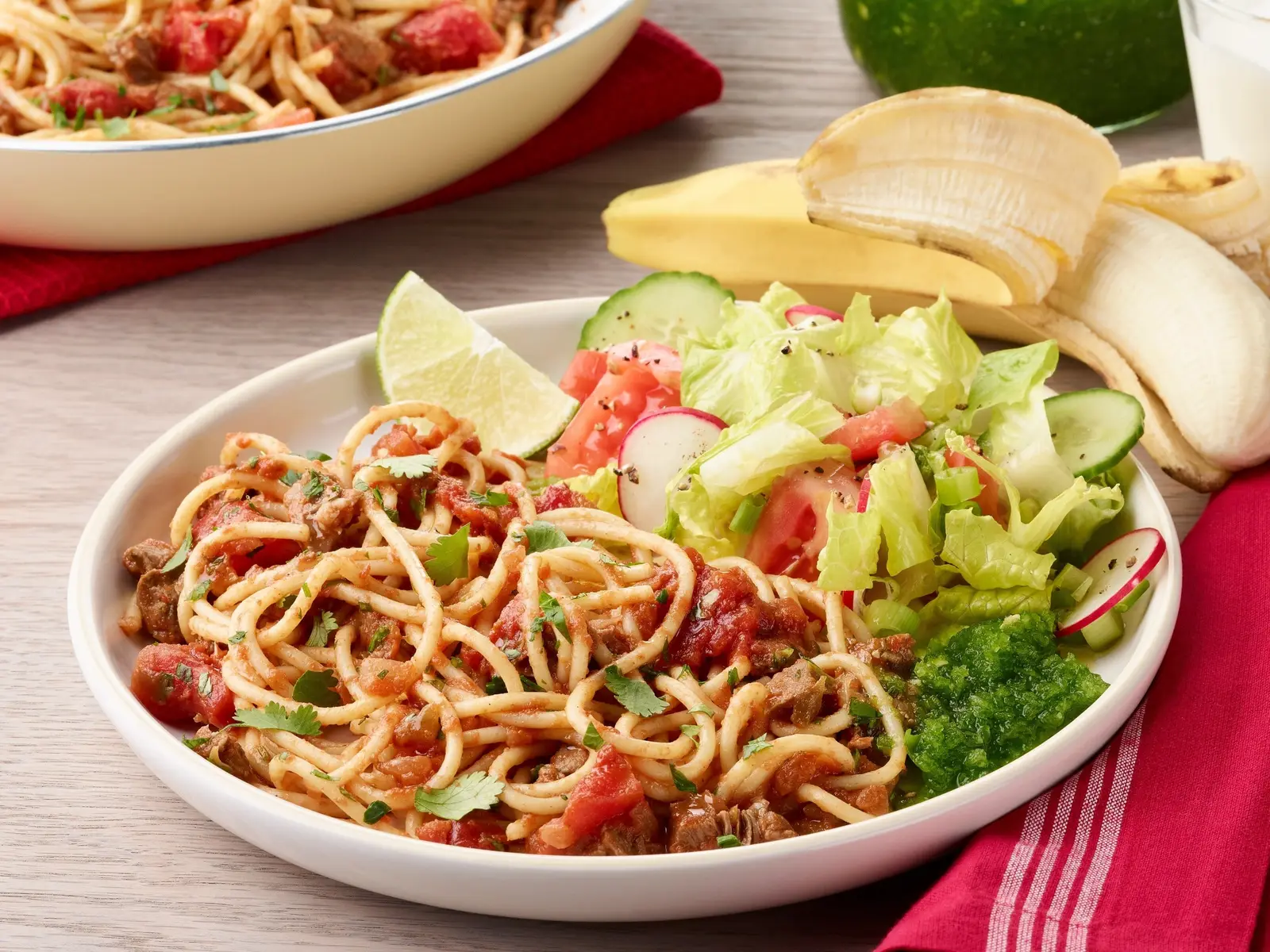
A plate of baasto — spaghetti in spiced beef and tomato suugo with salad, lime, green basbaas and a ripe banana Somalia flag Somalia 1h
Dinner •Somali Heritage

Baasto

This baasto recipe is Somalia's beloved spaghetti: al dente pasta tossed in suugo, a rich tomato sauce simmered with finely chopped beef, onion, green pepper and xawaash — cumin, coriander, turmeric, cardamom, cinnamon, cloves and black pepper — then finished with fresh coriander, a squeeze of lime and a spoonful of fiery basbaas. It is always served with a ripe banana on the side, the sweet counterpoint Somalis reach for between forkfuls. One serving is about 597 g.

Comfort & Warmth

Spaghetti tossed in a xawaash-spiced beef and tomato suugo, served Somali-style with a ripe banana.

Pairs Well With
Banana, basbaas & lime
Pasta & Noodles • High Protein
Bœuf bourguignon — French beef braised in red wine France flag France 4h
Dinner •Burgundy Terroir

Bœuf Bourguignon

Beef braised gently in red wine until the connective tissue melts into a velvet, gelatin-rich sauce — the classic Burgundy Sunday dinner.

Cellular Repair

Beef braised in red wine until spoon-tender, with mushrooms and pearl onions.

Pairs Well With
Parsnip Purée & Steamed French Haricots Verts
High Protein
Vietnamese braised pork belly with golden eggs in caramel sauce Vietnam flag Vietnam 1h 45m
Dinner •One Pot

Vietnamese Braised Pork and Eggs

Pork belly slowly braised in coconut water and caramel until meltingly tender, with golden eggs that soak up the sweet-savoury sauce — the Vietnamese family dish that tastes better the next day.

Comfort & Sustained Energy

Slow-braised pork belly and eggs in coconut water and caramel.

Pairs Well With
Steamed rice & pickled mustard greens
High Protein

The Dinner Gazette

Never wonder what’s for dinner again

One email a week with easy dinner ideas from around the world — ingredients, steps and nutrition, tested in our kitchen first.

Delivered every Thursday morning. Unsubscribe anytime.